

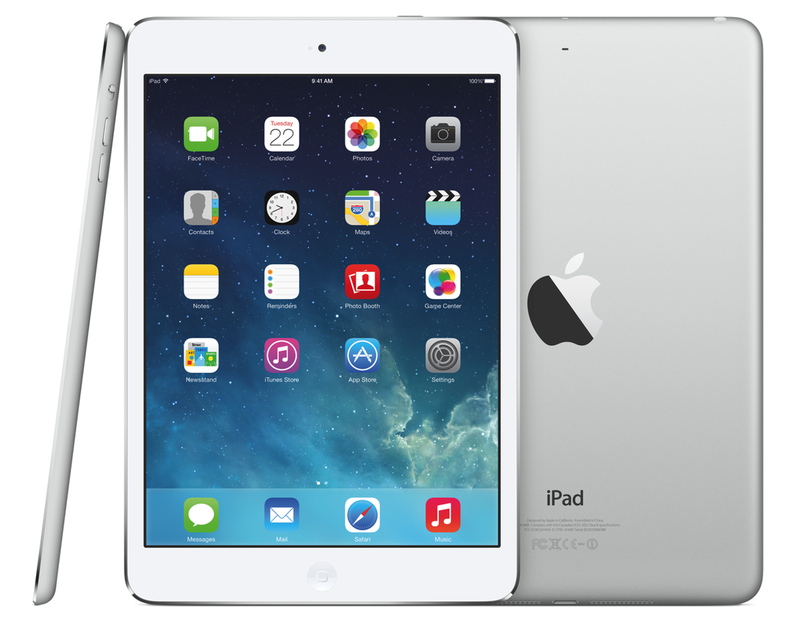
When I bought a Retina iPad mini in November, I published my first impressions of the device and promised that, like I did with the iPhone 5, I would revisit my article for a proper review. I work from my iPad every day, and I believe there is value in condensing thoughts on a product after continued and regular experience. Three months later, I think I’ve used the iPad mini enough to write my review.
Posts in reviews
Retina iPad mini Review
Threes: A Game of Multiples
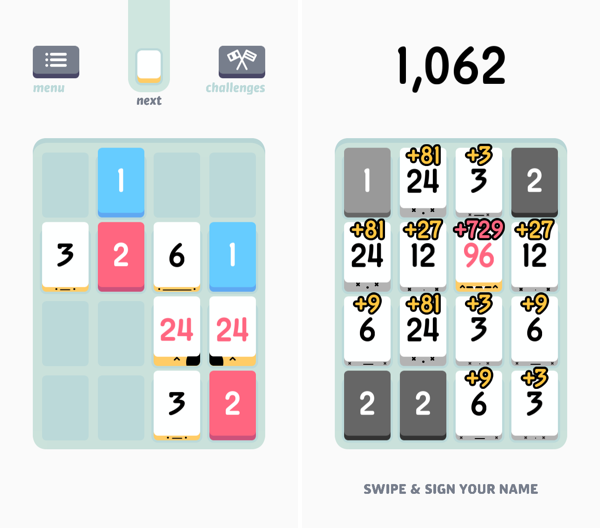
Threes is a game of multiples. It’s a game of combining pairs of numbers to make even bigger numbers. It plays on idea of a sliding puzzle, except the board becomes more populated the longer you play. A new piece falls onto the board after every slide, until the board is completely populated. The end goal is to end up with a board full of large numbers, hopefully in the greater double digits, and maybe even a triple, for a high score.
You play on a 4 x 4 grid, shaped like mahjong pieces, where you slide pieces up, down, left, and right. The game doesn’t really start until you begin combining your blue ones and red twos to create threes. Threes combine to make sixes, which combine to make twelves, etc. Every time you combine two numbers, the result doubles. Only multiples of three count towards your end score, thus the name of the game.
While Threes is largely a game about numbers, there’s lots of little touches in the game, including an unintended achievement system, where creating bigger multiples of three unlocks new personalities. Each multiple of three has a different face, and they’ll smile at each other if they can combine. Threes maintains a history of your previous scores, and includes a toggle to reduce animation frame-rate to save battery life if you’re out and about.
If you love games like Letterpress and Dots, you’ll love Threes. It’s easy to grasp and hard to master. It’s classy.
Threes is $1.99 on the App Store.
Efficient Writing On iOS with Phraseology 2.0
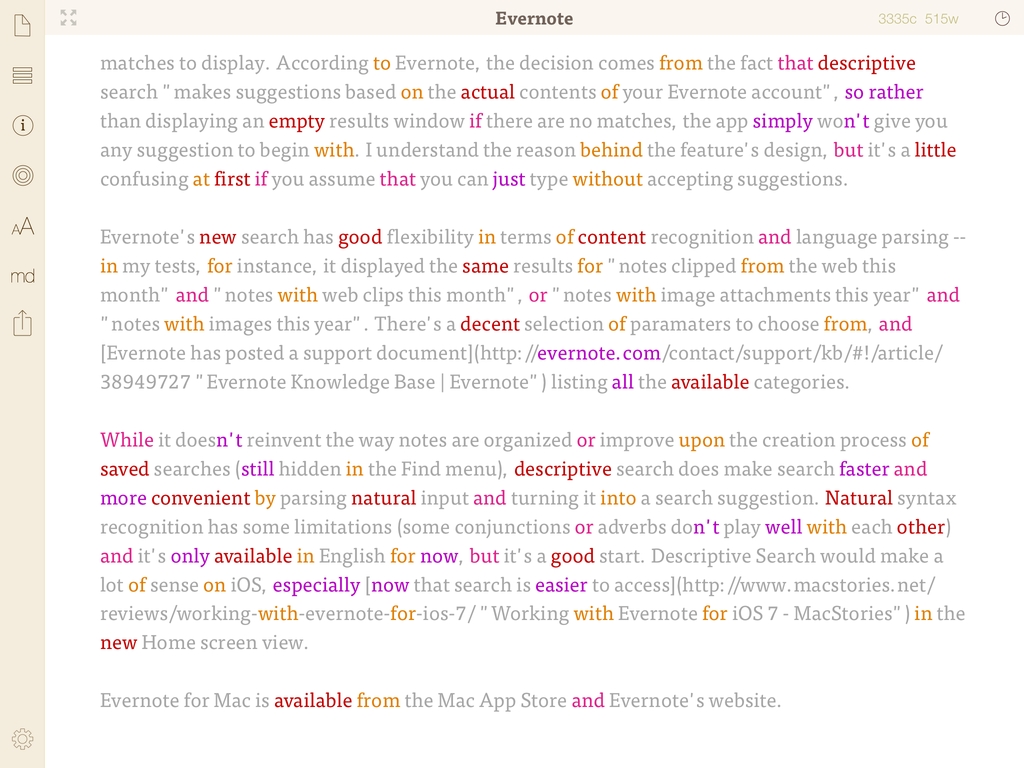
My iPad writing setup primarily consists of Evernote, Editorial, and WriteRight, three apps that I use to research, write & edit, and proofread my articles, respectively. For the past few months, I’ve been using Greg Pierce’s Phraseology 2.0 for iPad, which is out today on the App Store and which I consider a must-have companion app for people who write on the iPad and want to craft better text.
Collect and Share GIFs In Dropbox with GIFwrapped
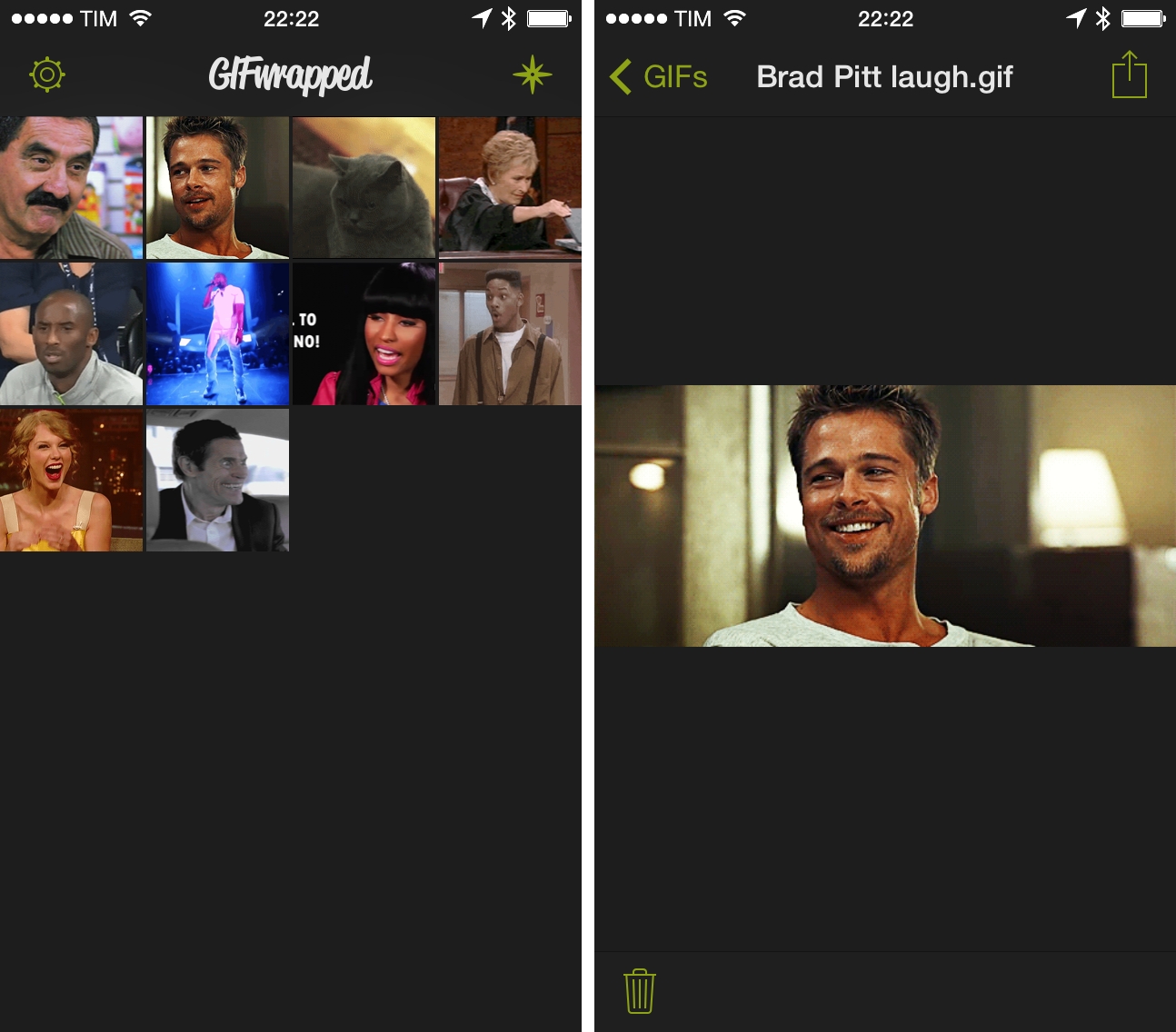
GIFwrapped, developed by Daniel Farrelly and brought to my attention by Casey Liss, is making me reconsider how I organize my collection of reaction GIFs.
Until today, I’ve stored my GIFs in Evernote, using tags to group them together and search to filter results. Just a few days ago, I noted that the improved note editor in Evernote for iOS makes for smoother GIF animations, but the sharing aspect remains one of my system’s shortcomings – when I want to get a GIF out of Evernote and send it to someone else, I have to upload it somewhere else. Evernote works as a GIF archiving tool, but it’s not optimized for it. Read more
Hoplite: A Mini Dungeon Turn-Based Strategy Game for iPhone and iPad
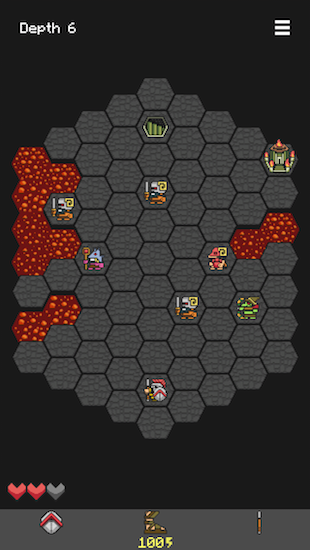
Each step feels more perilous than the last. As you dash over a pool of lava, you lunge to slay a demon archer, cornered and unprepared for the daring attack. Looking ahead it seems all but impossible to make the last jump, as demon footmen move to block the exit. Throwing your spear, you impale the dark beast, only to be greeted by a bomb that lands behind your feet. You bash away the bomb with your shield, taking out another demon as it explodes at a distance. Leaping across the last chasm, a lapse in judgement leaves you directly in the crosshairs of a second archer, who fires an arrow directly into your exposed side as you land.
And thus ends the quest for the Fleece.
This is Hoplite, where a pair of sandals, a trusty spear, sturdy shield, and three hearts are all that protect you from hordes of demons in the Underworld. Your quest is to recover the Fleece and make it out alive, but the journey is treacherous.
Unread Review
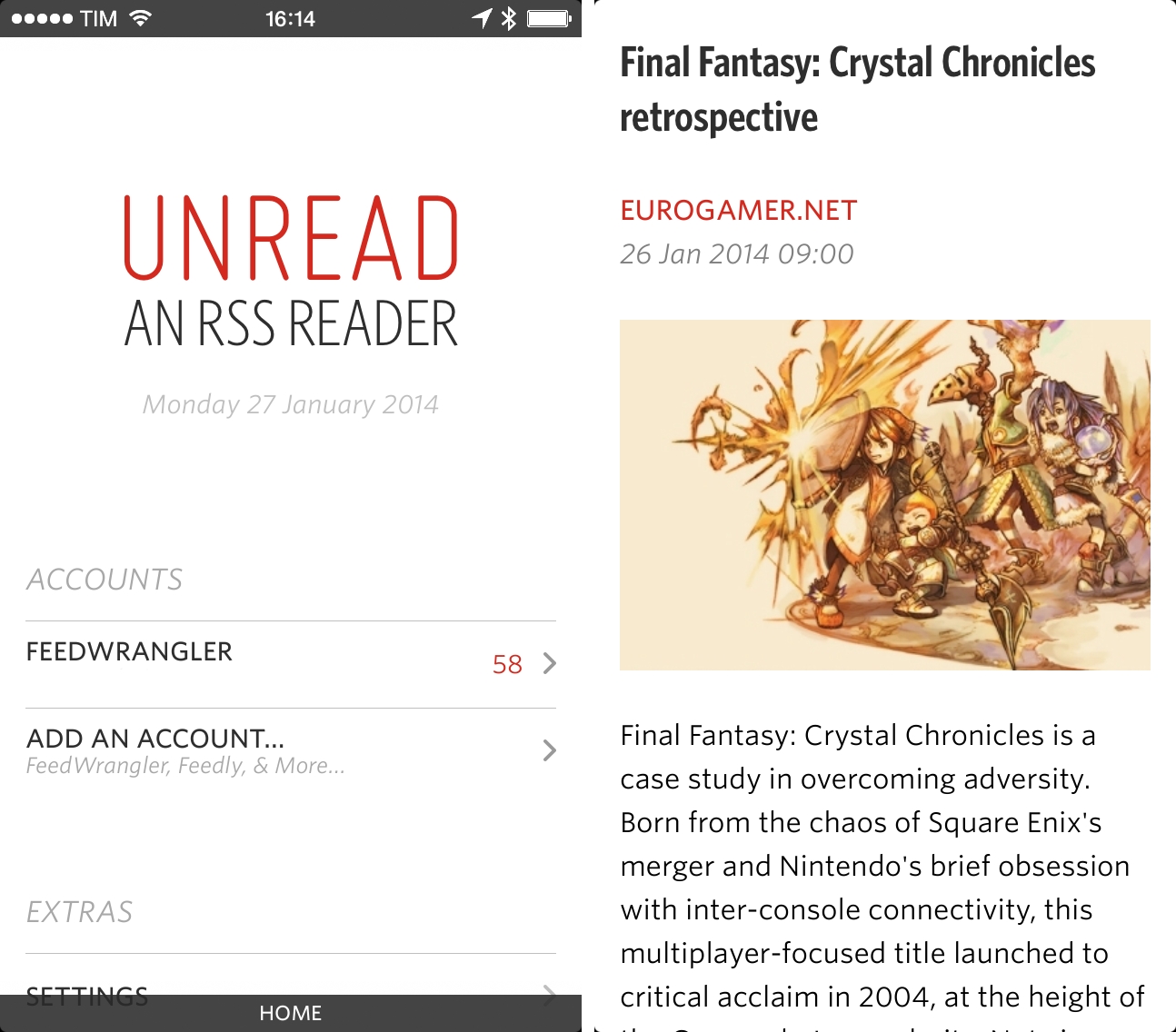
Unread, developed by Jared Sinclair, is my new favorite RSS reader for iPhone. Unread is on my Home screen, on the same spot that Reeder held since late 2009 when I first reviewed it. Unread provides a fantastic mix of elegant typography, intuitive gesture-based, one-handed navigation, iOS 7 features, and modern sharing tools that, in my opinion, make it the best RSS reader for iPhone today.
The Sound Of Settling
I’ve been using Reeder for over four years, and the app hasn’t changed much. It received interface refinements through the years and support for more RSS services was added after Google Reader’s demise in 2013, but it’s no secret that, for months, Reeder stagnated, with no updates to reassure users that Silvio Rizzi still had big plans for the app. Not that the lack of updates was a problem per se: Reeder was a great app and it always kept working, but seven months without updates on the iPhone and the removal of the iPad and Mac versions from the App Store didn’t suggest that Reeder was on track for major changes.
In September 2013, just a week before iOS 7, Rizzi released Reeder 2, a new app for iPhone and iPad. Reeder 2 brought a completely new UI for the iPad and an evolution of the iPhone’s one, leveraging new animations and transitions for navigation inside feeds and articles. My review wasn’t completely positive: while I lauded the app’s speed, elegance, and familiarity, I also stressed that, in the age of Mr. Reader, Reeder for iPad was too little, too late for my workflow. I concluded by saying that Reeder was a “beautiful and familiar app that could have taken bigger risks”. In spite of the fresh(ish) coat of paint, I couldn’t shake the feeling that Reeder 2 wasn’t exactly new or advancing the basics of the app in meaningful ways.
Especially if you’ve been waiting for an update to Reeder for iPad, maybe a redesigned Reeder that doesn’t go crazy with new features but that instead brings a cleaner reading and syncing experience is exactly what you wanted from Rizzi. Reeder 2 is a fine piece of software – it certainly looks and works better than the majority of RSS clients on the App Store – but my hope was that Rizzi would include new functionalities in the sharing and browsing departments. I guess that, with Reeder 2, I was expecting the same impact that Reeder 1 had in 2009, whereas what I found was a beautiful, solid, but familiar (and trite, in some areas) take on the same app.
I was hopeful that the new foundation would give Rizzi time to regroup and evaluate how Reeder could add new iOS 7 features without losing its nature in the process, but, four months and a 2.1 update later, things haven’t changed much. That’s not necessarily a bad thing – good software takes time, especially when you’re an indie developer – but, as a user, I was curious to see whether other RSS readers could satisfy my news-reading needs better.
Hence, Unread. Read more
Working with Evernote for iOS 7
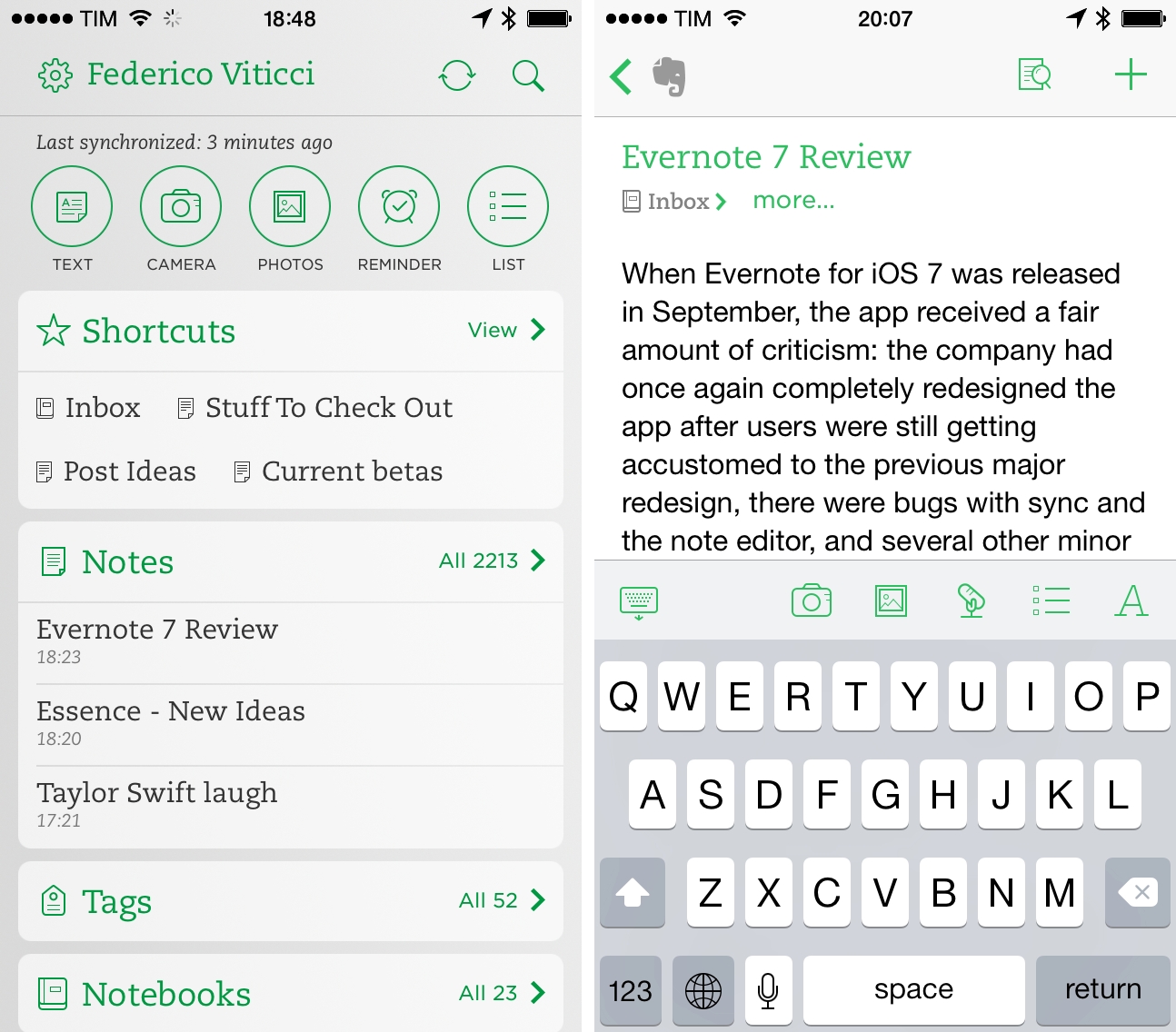
When Evernote for iOS 7 was released in September, the app received a fair amount of criticism: the company had once again completely redesigned the app after users were still learning their way around the previous major redesign, there were bugs with sync and the note editor, plus several other minor issues that, together, didn’t provide a smooth upgade experience. Evernote listened and started working on iOS updates aimed at fixing problems reported by the userbase, which had resulted in low ratings on the App Store.
A few weeks ago, an article by Jason Kincaid highlighted some of the troubles he had with the Evernote apps, which prompted CEO Phil Libin to publicly address his complaints and, in the process, commit to making 2014 the year of prioritizing fixes and improvements to the existing Evernote experience instead of more complete redesigns and big feature additions. In January alone, Evernote has completed the transition to a new sync infrastructure that made sync four times faster for all users, and, today, released version 7.3 of the iOS app, which I believe shows a good thinking process by Evernote.
A Look at SwiftKey Note
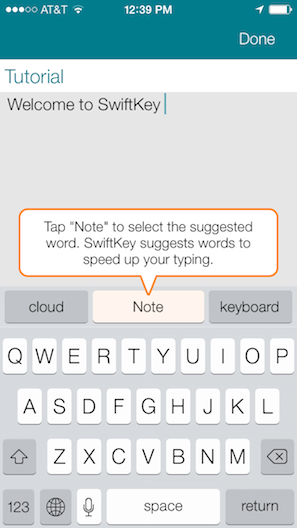
Third party keyboards have been showing up on iOS, not as system replacements, but as individual apps that aim to provide an alternative to Apple’s standard keyboard. Keyboard replacements on Android, and apps on iOS like Fleksy, aim to either provide an alternate method of inputting characters (such as swiping over characters with your finger) or predict what you’re going to say next.
Apple’s keyboard for iOS is good, but not great. Auto-Correct doesn’t provide the right balance of letting me decide what I want to say[1] without disabling it completely, and popovers dismiss corrections rather than select them. Apple’s keyboard feels counterintuitive, and dare I say Apple’s smaller displays don’t lend themselves well to cramped keyboards[2] with buttons for dictation and international keyboards.
SwiftKey Note doesn’t replace Apple’s keyboard layout, but it does attempt to improve upon automatic corrections while offering easy-to-tap suggestions as you type. Does it hit the ball out of the park? Not completely, but it’s decent and for the most part has better suggestions than Apple.
Launch Center Pro for iPad Review
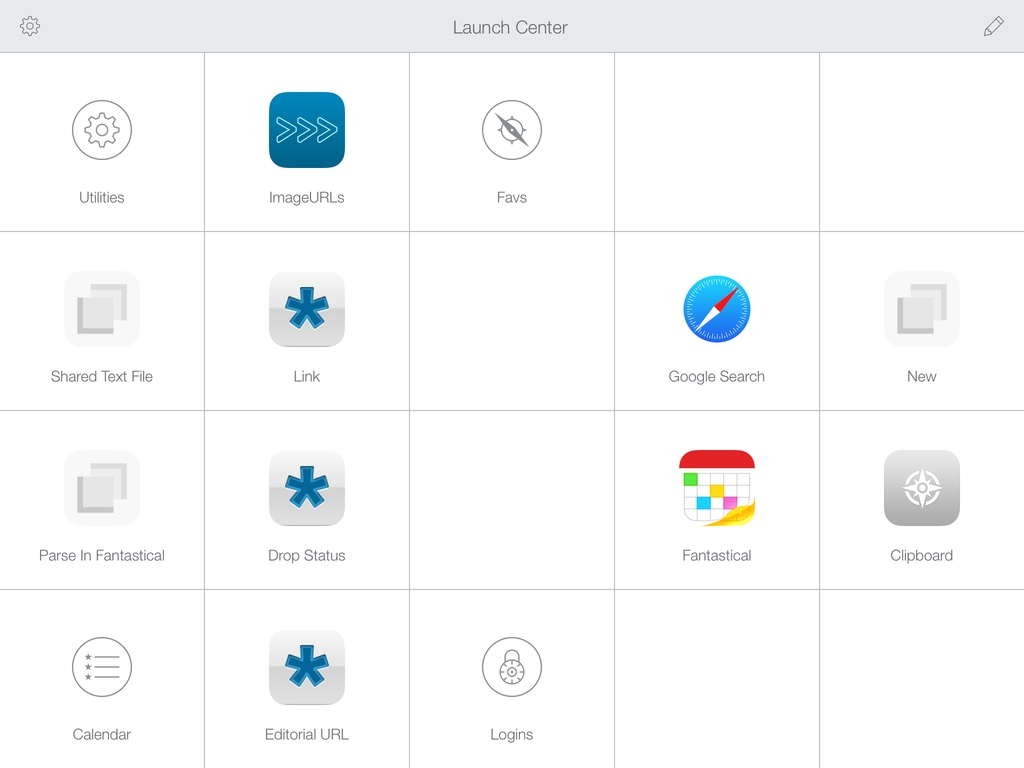
Contrast’s Launch Center Pro, the app that started the small revolution of iOS automation in June 2012, arrives today on the iPad with a new version (sold separately at $4.99) that takes everything you know about Launch Center Pro for iPhone and scales it up to the bigger screen. Launch Center Pro for iPad doesn’t do anything dramatically different from its iPhone counterpart: you can create custom actions, play around with Dropbox and clipboard integration, and do all the things that were possible in Launch Center Pro 2.1 – only now on your iPad too.
Finally.