Posts in news

Fantastical 2.4 for Mac Brings Travel Time, Attachment Support, and More

Today the team at Flexibits launched Fantastical 2.4 for Mac, and it is a release packed full of improvements. There’s nothing revolutionary here, but the changes make an already excellent calendar app even better.

Travel Time

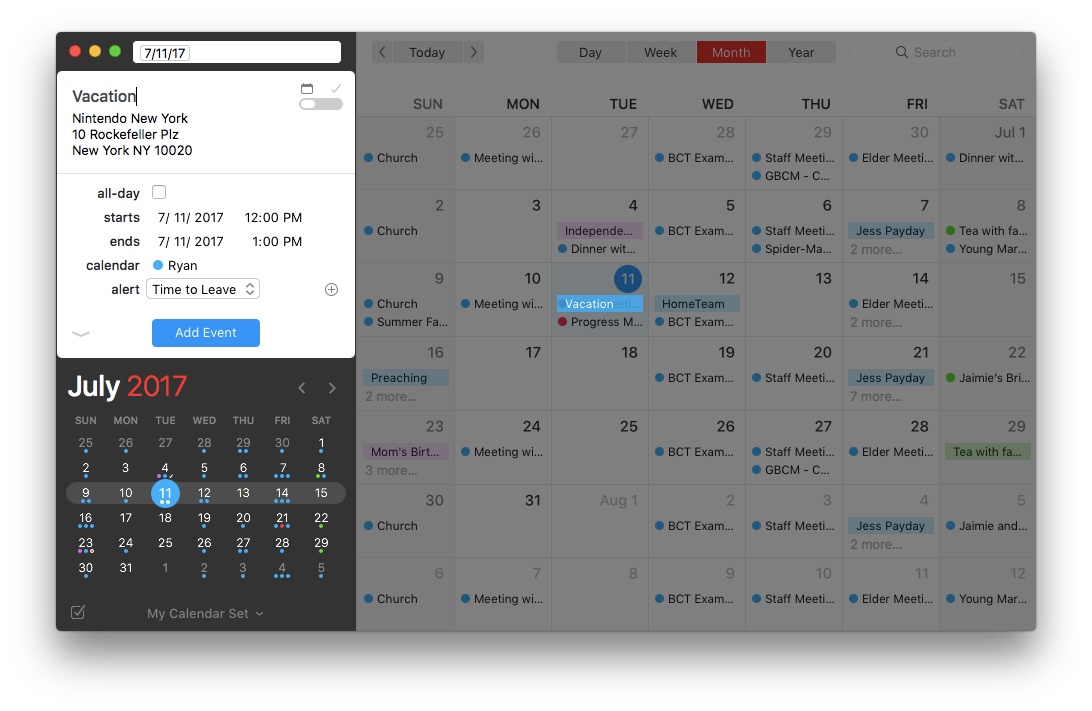
A long-requested feature, Fantastical now includes travel time as an option when setting event alerts. No longer do you need to provide a fixed alert time for each event – though that option still remains – because the travel time option will select an alert time that’s tailored to each event and the distance you’ll have to travel to get there, plus a few minutes of cushion.

Attachments

File attachments are now supported for events in Fantastical, with some stipulations. If you have an iCloud, Exchange, or other supported CalDAV-powered calendar, the full range of attachment powers will be at your disposal. With events on those types of calendars you can add, remove, and view attachments. If your calendar is Google-based, you still won’t be able to add or remove attachments directly from Fantastical, but you can view any attachments already present.

Month View

The popular month view in Fantastical has received two significant improvements. One is that if a day contains so many events that they won’t all fit, you can now click the ‘more’ button at the bottom of that day and the hidden events will pop out. When they pop out, they temporarily cover a portion of the day underneath so you can view all the day’s events in the same view. The second improvement is that you can now customize the number of weeks that are displayed at once, ranging from two on the low end to eight on the high end. This is a much-appreciated feature for tailoring the calendar to your personal needs – if you like plenty of breathing room for your events, you can display a smaller number of weeks, whereas if you want to pack a ton of information onscreen, now you can do that too.

Miscellany

Combined Duplicate Events: When you manage a variety of different calendars, including some that may be shared with family members or coworkers, your calendar app can quickly get clogged up with duplicate listings for the same event across those shared calendars. For example, if my wife and I are attending a wedding, which of us puts that on our calendar? Probably both of us, because we’ll both be attending. But Fantastical now condenses those duplicate events so they’re displayed as a single event only, reducing the visual clutter of your calendar while ensuring everyone keeps events on their own calendars as needed. For those who may not like this approach to duplicate events, you can turn it off in the app’s preferences.

Invitation Improvements: Google calendars have received three improvements in the area of invitations. Now you can add a customized message with your invitation response, and you can also view other people’s messages by hovering over their names on the invitation. Lastly, if an invitee is bringing guests with them, you can now see that information as a +1 to their response (or whatever the correct number is). With Exchange calendars there are two small updates to invitations: you can now forward invitations to other Exchange users, and you can respond to invitations without notifying the sender.

Undo and Redo: If you add, remove, or edit an event or reminder and wish to take that action back, now you can thanks to built-in support for undo and redo.

Push Updates for Facebook Events: Whenever a Facebook event has its information updated, or you first confirm that you’ll be attending a Facebook event, those changes are now pushed immediately to Fantastical.


Fantastical was already one of the most powerful, customizable calendar apps on the market, but the improvements in today’s update offer even more in the areas of power and flexibility.

Fantastical 2.4 is available on the Mac App Store and a trial version is available directly from Flexibits.


One Year of Pokémon GO

One year ago Pokémon GO launched and quickly became a phenomenon. In celebration of that anniversary, the game’s makers at Niantic announced that starting today a special Pikachu wearing Ash’s hat will begin appearing across the world for catching. It will disappear after July 24, so trainers will need to act quickly if they don’t want to miss out.

Also marking the first year of Pokémon GO’s life, The Verge’s Andrew Webster interviewed Niantic CEO John Hanke. One of the more interesting points from the interview centers on how the overwhelming success of the game early on altered the team’s plans for growing and expanding the user experience through new features. Hanke says:

We lost probably six months on our schedule because of the success of the game. Really all the way through November and December, from launch onward we were rebuilding and rewiring infrastructure just to keep the game running at the scale that we were running at. We were fortunate to have a massive launch, a massive success, and many, many more users than we had planned for. But we had to redirect a substantial portion of the engineering team to [work on] infrastructure versus new features. That switched off things like extending gyms, it pushed out things we still want to have, like player-versus-player and trading.

Hanke reiterates that both trading and player-versus-player battles are still in the works, but he gave no timetable for their release.

Despite Pokémon GO having nowhere near the number of users it once did, Niantic has still had its hands full this summer. They launched a significant update to the game just last month, introducing Raid Battles and new Gym features. And there are several major public events in the works, including one in Chicago on July 22 and others in parts of Europe and Japan.


AppStories, Episode 12 – The State of Non-Native Apps

On this week’s episode of AppStories, we look at the state of non-native apps, the trade-offs inherent to them, and discuss examples of non-native apps we like and a few we don’t.

Sponsored by:

  • FlightLogger – Elegantly-designed, real-time flight tracking for worry-free travels.
  • Deliveries – Simple package tracking that syncs everywhere.
    • Sign up here by Thursday, July 6, 2017 at 9 pm New York time for a chance to win one of 10 free copies of Deliveries for iOS.
AppStories+ Deeper into the world of apps

AppStories Episode 12 - The State of Non-Native Apps

0:00
38:29

AppStories+ Deeper into the world of apps

Permalink

Airmail: An Elegant, Customizable Email Client for Mac and iOS [Sponsor]

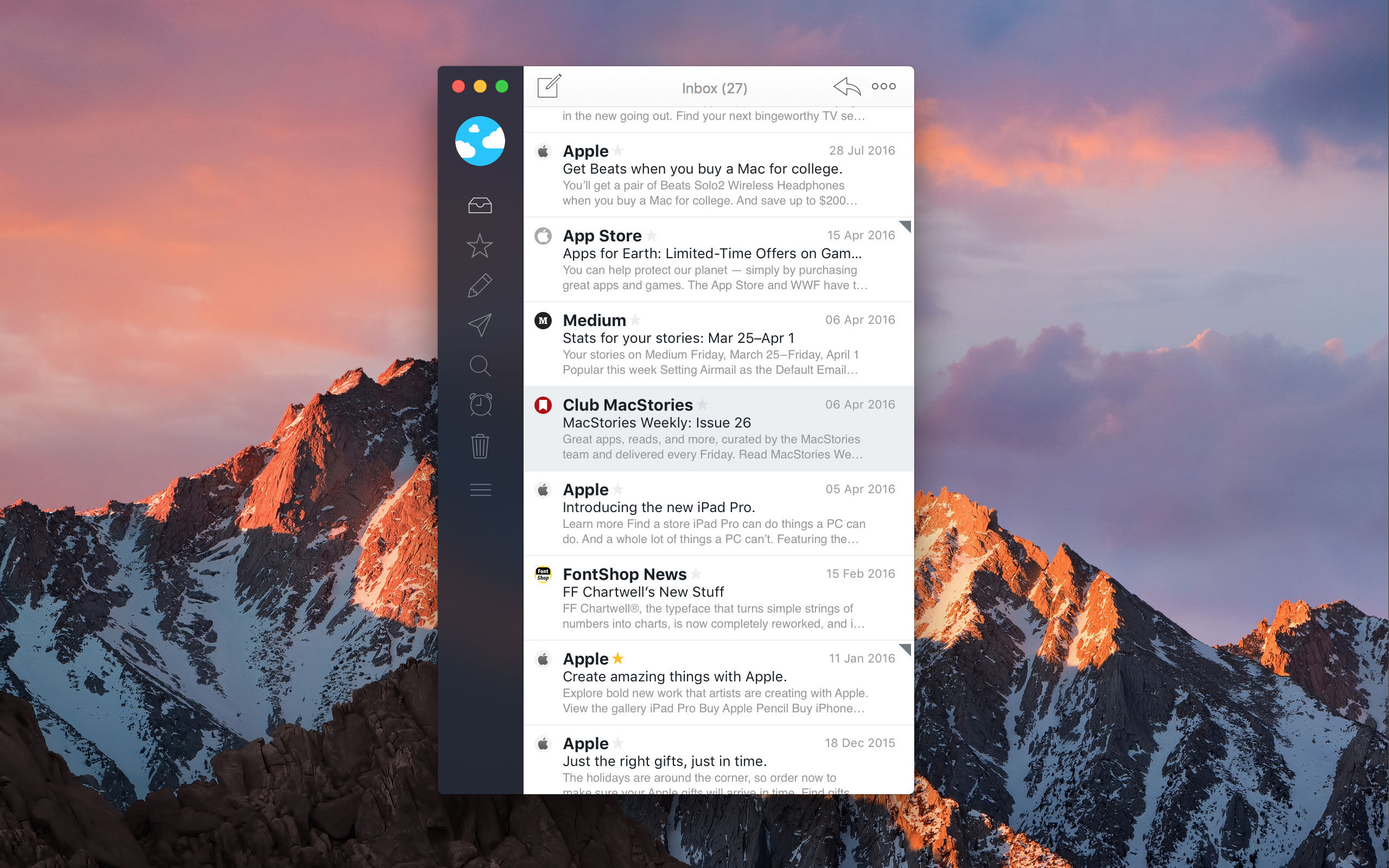
Airmail is the 2017 Apple Design Award-winning email client from Bloop that marries elegant design with rich, customizable features that tame your inbox.

Everyone approaches email a little differently. For some people, their inbox is a sort of task manager. For others, keeping their inbox empty and messages neatly organized into folders is paramount. No matter how you manage your email accounts, Airmail from Bloop has you covered.

Airmail is highly customizable while maintaining a clean, intuitive interface that makes it a pleasure to use. The app supports all major email technologies, including Gmail, iCloud, Exchange, IMAP, and POP3. On macOS, Airmail also incorporates the latest operating system features like the Touch Bar.

With Airmail, you can manage one or several email accounts. With multiple accounts, it’s just as easy to review messages from every account in a unified inbox as it is to dive into just one account. Airmail also features rich customization like the ability to send messages later, snooze messages, and create smart folders and rules. Actions let you send messages to other apps you use like task managers and your calendar or create a PDF from a message. Best of all, you only need to set up Airmail once because your settings sync via iCloud to all your Macs and iOS devices.

Airmail is available on macOS from the Mac App Store and on the iPhone, iPad, and Apple Watch from the App Store.

Our thanks to Airmail for sponsoring MacStories this week.


Apple to Recognize National Parks with Donations, Activity Badge

Paying homage to United States national parks, Apple announced today that it will introduce opportunities for customers to donate to the National Park Foundation and earn a new Activity badge and iMessage stickers.

For two weeks beginning July 1, Apple will donate $1 for every Apple Store purchase made with Apple Pay, whether made in-store or online, to the National Park Foundation.

In a press release, Apple explained that: “Proceeds will support the National Park Foundation’s mission to help protect and preserve national parks through conservation projects and other initiatives, as well as inspire the next generation of park enthusiasts with enriching youth programming.”

In addition, Apple will award an Activity badge for Apple Watch and a set of iMessage stickers when users complete a 3.5 mile or more workout on July 15. The distance, Apple says, is roughly the same as the trek from Old Faithful to Mallard Lake – but luckily, you don’t have to go to Yellowstone to get the badge.

For more information on how Apple is working to celebrate national parks, you can find their press release here.


Google Photos Launches Advanced Sharing Features

First announced last month at Google I/O, Google Photos for iOS has now been updated to include several new sharing features, including suggested sharing and shared libraries.

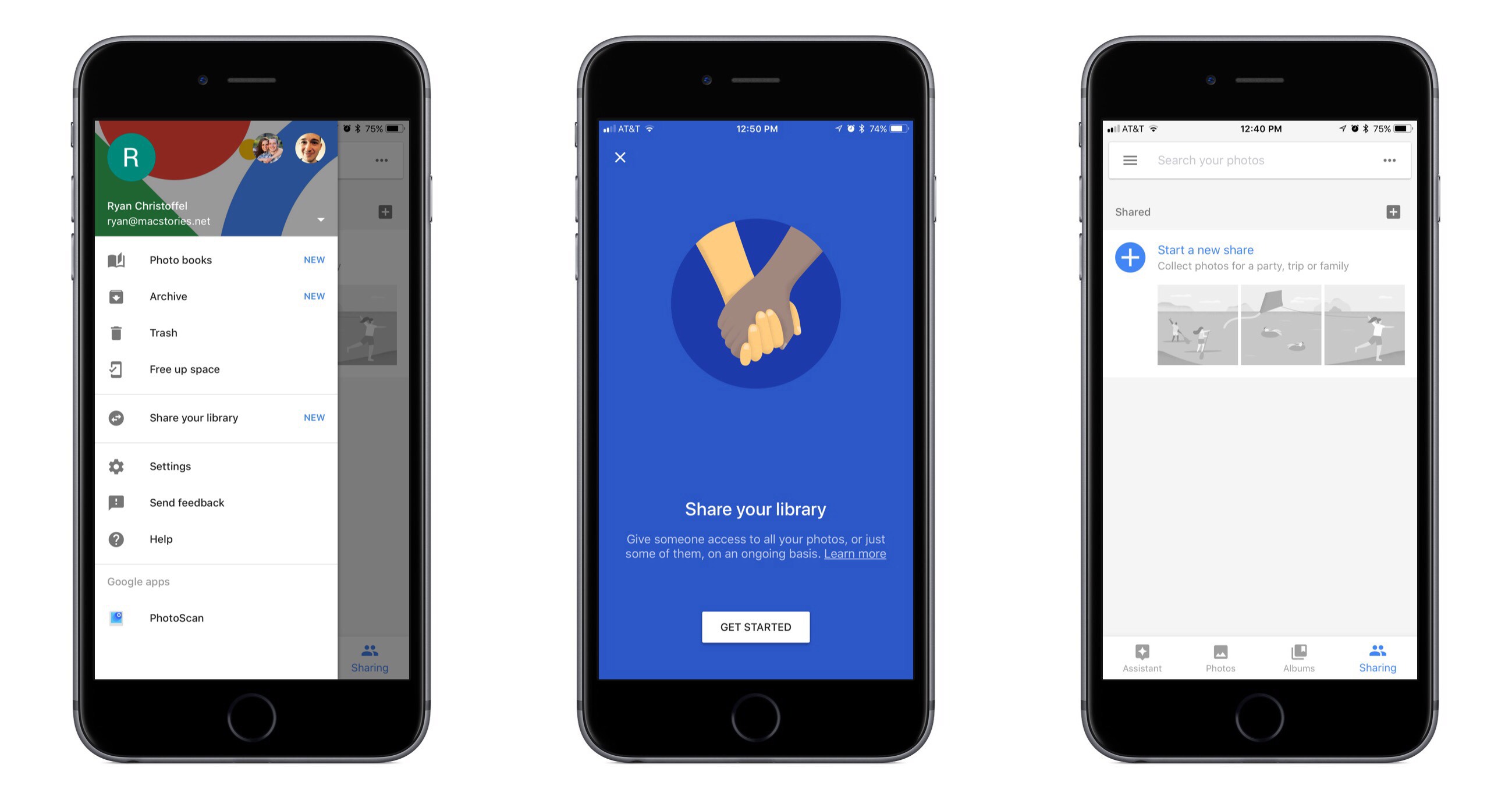
The suggested sharing feature brings with it a new dedicated navigation tab labeled ‘Sharing.’ Here you’ll find a listing of all prior sharing activity, as well as suggestions of photos you haven’t shared yet but may want to. These suggestions are made for one of two reasons: either the photos in question appear similar to images you’ve shared in the past with certain people, so Google thinks you may want to share them, or the photos contain people that Google knows are in your contacts, and thus you may want to share them.

If a Google Photos user shares images with another Google Photos user, and the sharing recipient appears to have photos from the same time and place, Google will suggest adding those images to the shared album. This can be used most effectively when sharing photos around a certain event, like a wedding or vacation. One person may initiate the sharing, but Google Photos makes it easy for the other people who attended the event to improve the shared album by seamlessly adding their own captured memories to it.

The new library sharing features are accessed from the sidebar menu’s ‘Share your library’ option, not the ‘Sharing’ tab. After you’ve selected one or more people to share with, there are a couple settings you can adjust. You can choose to share your entire library, or only photos of specific people. You can also set a time period from which the library sharing should begin – for example, you can set sharing to only happen with all photos from this day on, or from six months ago on, etc.

Google Photos was already an excellent service, but today’s updates make it even better. The automatic library sharing in particular has been on my wish list for Apple Photos for a long time. At the time these features were announced, details about iOS 11 were still unknown, but now that the WWDC unveiling has come and gone without any announced improvements to sharing in Apple Photos, Google Photos is more tempting than ever.


AppStories, Episode 11 – iOS 11’s Impact on Third-Party Apps

On this week’s episode of AppStories, we consider the effect on third-party apps of PDFKit, the system Markup extension, changes to Notes, and password AutoFill for apps.

Sponsored by:

  • Zapier - Connect your apps and automate your workflows.
  • Clear - Tasks, Reminders & To-Do Lists.
AppStories+ Deeper into the world of apps

AppStories Episode 11 - iOS 11’s Impact on Third-Party Apps

0:00
36:52

AppStories+ Deeper into the world of apps

Permalink

Apple Music’s New ‘My Chill Mix’

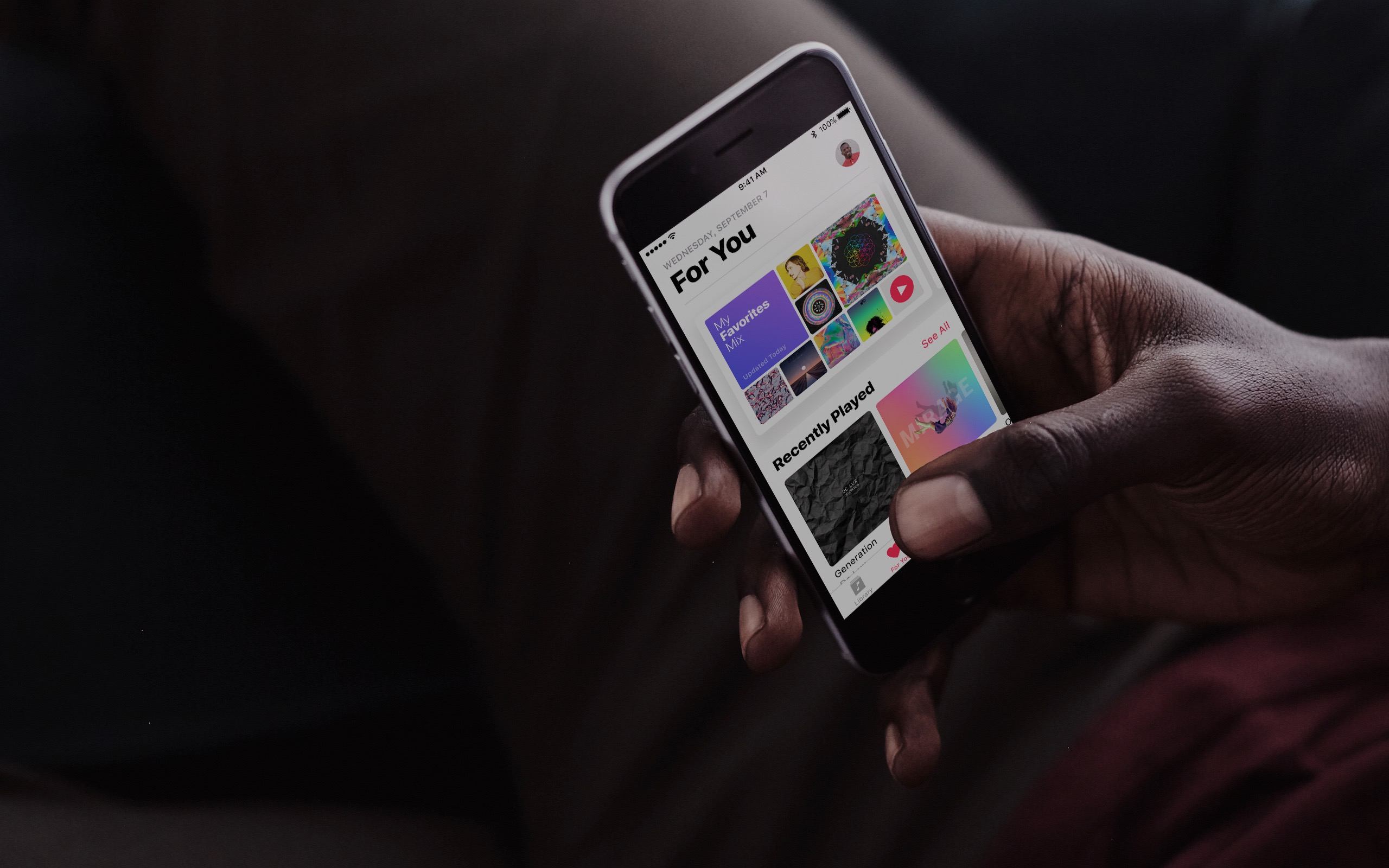
Apple Music is rolling out a new automatically-generated playlist called ‘My Chill Mix’ to subscribers. The music streaming service already includes a ‘My Favorites Mix’ and a ‘My New Music Mix,’ which show up every Wednesday and Friday respectively.

‘My Chill Mix,’ which will be added to subscribers’ ‘For You’ tab and updated every Sunday, features slower tempo music based on your Apple Music listening habits. According to Matthew Panzarino at TechCrunch, ‘a small number of test users got the new playlist yesterday evening.’ Other Apple Music subscribers will have to wait a little while longer. Apple told Jim Dalrymple of The Loop that:

…the new mix will not be available to everyone immediately, but it will show up over time.

It’s good to see that Apple is continuing to experiment with computer-generated playlists, one of the strongest selling points of Spotify, which includes an excellent Discovery Mix and a Daily Mix that debuted last fall. In addition to adding playlists like an up-tempo workouts mix and genre-specific mixes, I would like Apple Music to allow me to tweak its algorithm’s variables to create playlists myself, dialing in the exact balance of genres and favorites versus new music that I want to hear at any particular time.


Clean Up Your Inbox Today (and Keep It That Way Forever) with SaneBox [Sponsor]

What if you had someone who would sort through your email and find only the important messages? That is exactly what SaneBox does. After you set it up, SaneBox leaves your important messages in your inbox and moves the rest to a SaneLater folder for reviewing later. That initial inbox purge is powerful because it reduces your inbox to a manageable number of messages. With additional training to tell SaneBox what’s important to you, it only gets better at dealing with the daily deluge of messages.

There’s much more to SaneBox than shuffling unimportant messages into a designated folder, though. If there’s something you never want to see ever again, send it to the SaneBlackHole, which is much easier than unsubscribing to unwanted messages.

You can also set up SaneReminders by sending messages to an address that sends a reminder to you at a later date if the recipient of your message hasn’t responded after a certain amount of time. Or forward messages to SaneReminders to have it pop back into your inbox at a later date when you are ready to deal with it.

SaneBox works on top of your existing email setup. There’s no app to download or new email account to set up. It all works server-side so you can use any email client you want.

Sign up today for a free 14-day SaneBox trial to take back control of your email. MacStories readers can receive a special $25 credit automatically by using this link to sign up.

Our thanks to SaneBox for sponsoring MacStories this week.