Federico Viticci

10759 posts on MacStories since April 2009

Federico is the founder and Editor-in-Chief of MacStories, where he writes about Apple with a focus on apps, developers, iPad, and iOS productivity. He founded MacStories in April 2009 and has been writing about Apple since. Federico is also the co-host of AppStories, a weekly podcast exploring the world of apps, Unwind, a fun exploration of media and more, and NPC: Next Portable Console, a show about portable gaming and the handheld revolution.

Nasturtium Player Beta
Nasturtium Player Beta

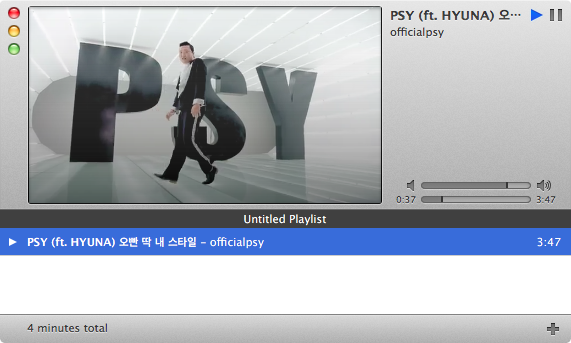
Interesting idea for a new Mac OS X audio player, currently in open beta. Nasturtium (which, by the way, is a plant that produces great-looking flowers) is based on playlists that you can save and re-open at any time; playlists can be made of music from iTunes or videos from YouTube.

Listen to your own music library alongside YouTube videos for the optimal mix of old favorites and new tunes. Both sources play directly in Nasturtium Player, with no extra helpers required. But if you like, you can also queue up tracks with drag and drop from iTunes and the YouTube website, and import and export your playlists.

The concept of combining local music with YouTube videos resonates with my music workflow. While I tend to listen to music on Rdio, there are some older albums and songs that I need to keep locally either in iTunes or, most recently, Plex with PlexSync; similarly, there are YouTube videos of older demoes or live concerts of my favorite bands that I want to access every once in a while. I like how Nasturtium unifies search of local media and YouTube videos in a single interface.

Nasturtium is in beta, so I’ll save longer considerations for a proper review of the final version. Right now, I can say that I appreciate the existing selection of keyboard shortcuts and the iTunes 11-like look of the mini player. The inline YouTube video player could probably use resizing options, and it’d be nice to have a system-wide keyboard shortcut to pause playback. I like the unified search panel, but I believe filters for YouTube-only content and inline thumbnail previews could come in handy.

I’ll keep an eye on Nasturtium as, like I said, it is a powerful concept that fits my music listening habits. You can download the free open beta here.
Permalink

Announcing Weekly Sponsorships

Developers willing to promote their company or product on MacStories have always been able to buy ad spots on our site.

Today we’re introducing weekly sponsorships.

The exclusive and week-long sponsorship is the best way to promote your app or service to MacStories’ fine, clever, and influential readership. MacStories’ audience includes creative, professional and tech-savvy readers who care about quality software designed for Macs, iOS devices, and the web, as well as detailed reviews and editorials.

MacStories’ readership consists of:

  • Over 1.3 million monthly page views
  • Over 23,000 daily RSS subscribers
  • 40,000 followers across our Twitter accounts

At the start of the week, we will publish a thank-you post telling our readers that you are the sponsor for the week and also informing then about your company or product(s). During the week of the sponsorship, your company or product will also be linked in the site’s sidebar. Two tweets will be sent – one at the start and one at the end of the week – thanking the sponsor.

To schedule a sponsorship or for additional information, please email us. BackBeat Media is taking care of this for us, and you’re in good hands with John, Jeff or Dave there.


A History Of iTunes Through The Years

A History Of iTunes Through The Years

Ahead of Apple’s highly anticipated release of iTunes 11, Jacqui Cheng of Ars Technica has published an interesting look back at 12 years of iTunes. From version 1.0 all the way up to the latest iTunes 10 features, Jacqui offers a brief yet complete overview of how, through the years, iTunes received more and more functionalities.

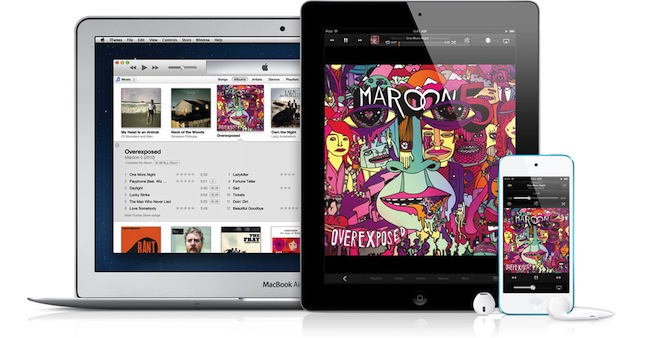
So what makes the next version of iTunes so great? For one, it has a revamped UI meant to provide a more themed experience when listening to albums. It also has better integration with iCloud, which now automatically downloads your iOS device purchases directly to your iTunes library on the computer. And finally, iTunes can pick up on a movie where you left off on your iPhone or iPad. Oh, and did we mention the redesigned Mini Player?

I (and others) have previously argued that, after 10+ years, it was time for Apple to change iTunes.

I’ll tell you what’s wrong with iTunes: in the age of iCloud, iTunes is a weirdly old-fashioned desktop software to organize media and manage devices in the same way we did 10 years ago. Only with more features and content types. iTunes is the epitome of old interfaces and interactions trying to hold onto the present.

iTunes 11 is certainly intriguing, but we haven’t been told much about its media management features except for Music. We know that there will be deeper integration with iCloud (as I hoped back in April), but I’m more interested in how Apple will try to slim down iTunes’ interface for app management, podcasts, and books. There’s a divide between what Apple has been doing on iOS and OS X: while iOS users have been able to split up their media in multiple apps (App Store, iTunes, Music, Podcasts, iBooks, Videos), Mac users have been forced into iTunes for everything except Mac apps. The new iTunes webpage mentions, for instance, podcast sync with iCloud, but will podcast management also go through an evolution, foregoing the old and clunky download & organize workflow many have come to despise? Will there be easier access to the Purchased area for apps, which is still curiously hidden inside the desktop iTunes Store?

Will iTunes 11 be a more modern iTunes or just a better music player?

According to Apple, the new iTunes will arrive before the end of November.

Permalink

Quickly Create Pythonista Shortcuts with Custom Icons

Quickly Create Pythonista Shortcuts with Custom Icons

Interesting set of scripts posted on the Pythonista Community Forums (which, by the way, are becoming a daily appointment for me as Pythonista users are coming up with all sorts of tricks). Using Pythonista as a web server and Safari, you can create local (and unsigned) .mobileconfig files to automate the installation of Pythonista webclip icons. As I explained in my review, Pythonista can launch specific scripts using webclips created from a special webpage:

Upon tapping, a Pythonista Home screen bookmark will briefly open a blank page and then immediately redirect to the script you’ve configured in the Pythonista app. I’m fairly certain there’s no way to avoid showing a blank page for a second before redirecting to Pythonista; fortunately, it’s really just the fraction of a second, as the redirecting process is instantaneous both on my iPad 3 and iPhone 5.

Using the scripts linked in the forums, I easily managed to create a custom icon for my Markdown-Poster workflow that uses Poster’s icon instead of the default Pythonista one. To extract and convert iOS icons for personal use, I recommend Crunch, which I’ve also previously reviewed. I was intrigued by how forum user pudquick figured out the installation of provisioning profiles from Pythonista:

When you run the code, it starts a web server in Pythonista - and copies the URL for the generated .mobileconfig file to the clipboard. When you switch to Safari and attempt to load the URL, the socket connects - but it’s waiting for communication from the web server in Pythonista (which is paused, since it’s in the background).

As soon as you switch back to Pythonista, this un-pauses the web server fast enough to cause Safari to finish loading the .mobileconfig file while it’s swapping to the background, which then triggers the installation screen!

Combining the script with this other one to easily generate base64 images, I suggest replacing Image.BILINEAR on line 20 with Image.ANTIALIAS for slower but better results in the overall crispness of the icon (I also changed the size to 114x114 for my Retina iPad).

Looking forward to improvements for Pythonista shortcuts (as mentioned by developer Ole Zorn in the thread), this is a nice stopgap solution to use scripts with custom shortcut icons in the Home screen.

Permalink

FTP Support, Short URLs, And Other Features Coming Back To Skitch

FTP Support, Short URLs, And Other Features Coming Back To Skitch

In a post published on the Evernote blog, Skitch co-founder Keith Lang has shared a bit of backstory regarding Evernote’s acquisition of the product and confirmed many old features of Skitch will be coming back “soon”.

I am really excited about the newest release of Skitch for Mac, but troubled by some of the negative reaction from some of our oldest and most loyal users. After thinking about this for the past few weeks, I’ve come to the realization that we’ve underestimated how deeply ingrained Skitch had become in many people’s daily workflows and how disruptive changes to the product could be. I’d like you to know that we’re going to fix it.

Skitch, an image annotation tool, was released as version 2.0 with deep Evernote integration earlier this year. The new version included an updated UI, new sync, and many simplified and/or removed options that weren’t met with excitement by the app’s existing userbase. Namely, users weren’t thrilled with Evernote’s decision to build every single Skitch sharing feature into Evernote, thus removing functionalities to upload images via FTP, directly link to them, and share them in multiple ways. The new Skitch also didn’t come with proper keyboard and menubar support, and, generally, it left much to be desired for those that were used to the old feature set and who had become dependent on the app for their workflows.

Evernote quickly went back to the drawing board and re-added a menubar icon and background options. In the blog post published today, Evernote confirms support for FTP/sFTP, image deep linking, and short URLs for shared images will come back to Skitch soon. Options for multiple fonts and custom colors, streamlined cropping and resizing, and automatic type tool selection will also be added to Skitch in future updates.

Of course we’ll be doing a lot more than just putting improved 1.x features back into the new Skitch. We’re working on some really amazing stuff that should appeal to our most loyal users as well as bring in many millions of new fans. Imagine being able to Skitch on top of different document types, communicate complex ideas via email without typing a single line of text, and going on a manned mission to Mars.

Read the Evernote blog post for all the details.

Permalink

Apple Airs New iPhone 5 Commercials: “Turkey” and “Orchestra”

Just in time for Thanksgiving, Apple aired two new iPhone 5 commercials today. Both commercials feature voiceover by Jeff Daniels as in the first run of iPhone 5 commercials aired after the device’s launch.

The first ad, aptly named “Turkey” focuses on Photo Stream. Using Thanksgiving as a background theme for taking family photos with an iPhone, the ad explains how Photo Stream lets you share the photos you want, with just the people you want. Jeff Daniels also shows his appreciation for pie at the end of the ad.

Orchestra is a little more peculiar. Apple wants to explain the iPhone’s background noise cancellation, which is made possible by an improved microphone design and audio system. The voice asks the director of an orchestra to lower the volume, which is similar to what happens to background noise when you make a phone call with the iPhone 5. It’s a clever and funny comparison.

Excuse me maestro? Bring it down please. Better. That’s what happens to background noise when you’re making a call on this. This microphone here picks up the sounds around you and helps turn them down. So when the world gets noisy, calls sound better.

Both ads are now available on Apple’s YouTube channel, and we’ve embedded them below. Read more


Tokens: Easy Promo Code Generation For Developers

I often hear from my developer friends that generating promo codes for iOS and Mac apps is a tedious and annoying chore. From what I’m told, you have to log into iTunes Connect – which hasn’t the most pleasant interface Apple ever made – and generate these codes that you have to manually copy somewhere to share them via email, Twitter, or other systems. It’s a slow process, and iTunes Connect forces developers to “submit requests” for how many codes they need without offering any sort of social integration.

Enter Tokens. Developed by Padraig Kennedy and Oisin Prendiville, Tokens is an automated promo code generator for Mac that makes it super simple to generate and share promo codes for apps available in iTunes Connect. Tokens couldn’t be approved in the Mac App Store because it uses HTML scraping to interact with iTunes Connect remotely; the developers offer a FAQ to understand how Tokens works, for which kind of apps, and why it’s built for OS X 10.8. Read more


ScriptKit - Drag and Drop Programming for iPad

ScriptKit - Drag and Drop Programming for iPad

Mark Wilson profiles Scriptkit by Kyle Buza, a new “touchable programming” app for iPad.

The app I’m using is Scriptkit, by Kyle Buza, and it allows you to drag and drop snippets of code from a library of well-annotated APIs. The goal? Rapidly prototype your app ideas on the very device you’re looking to run them on. Sure, you’ll still get your hands dirty on the iPad keyboard from time to time, tweaking the X/Y values determining size and shape of a button, for instance, but building a functional app really isn’t much harder than a few taps and a few drags–especially if you already know what you’re doing (which I don’t).

Only last week, I wrote:

I believe that, going forward, Pythonista and other similar apps will show a new kind of “scripting” and task automation built around the core strenghts of iOS.

I had no idea ScriptKit existed, but this is exactly what I was referring to in my Pythonista article. Yes, ScriptKit is limited, it’s confined in its own sandbox, and its initial set of APIs could use some additions. But look at what ScriptKit already enables: a touchable programming interface for building prototypes that use real data (Facebook photos, Dropbox files, etc) with real iOS core elements such as Camera and Location Services. Developers can use ScriptKit to build quick working prototypes; users with an interest in scripting like me can learn a basic syntax to build scripts and app demoes that may lead to bigger interests in other areas of iOS and languages. All within a touch-based interface, with real APIs, on an iPad.

Codea, Pythonista, ScriptKit – the future of iOS couldn’t be more exciting to me.

Permalink

Evernote 5.0 for iOS Review

Evernote 5

Evernote 5


I have been using the latest Evernote app for iOS, Evernote 5, for the past week. I am not an “Evernote power user”, but having recently revamped my paperless workflow, I thought I had a good opportunity to properly test the major update. I believe Evernote has a strong foundation to build upon, but the first result of this process – the new Evernote 5 for iOS – is far from solid. Read more