Federico Viticci

10758 posts on MacStories since April 2009

Federico is the founder and Editor-in-Chief of MacStories, where he writes about Apple with a focus on apps, developers, iPad, and iOS productivity. He founded MacStories in April 2009 and has been writing about Apple since. Federico is also the co-host of AppStories, a weekly podcast exploring the world of apps, Unwind, a fun exploration of media and more, and NPC: Next Portable Console, a show about portable gaming and the handheld revolution.

The iOS 7 App Store Opportunity

Marco Arment has a good take on what iOS 7 represents for developers: a huge opportunity to differentiate apps that will inevitably remain stuck on iOS 6 from those that will embrace iOS 7’s new modern approach later this year.

As I wrote today, it’ll be interesting to see how developers of existing apps will adapt to iOS 7’s dramatic reimagination of the OS. I do believe that many will try an in-between approach to a) keep their identity in the jump to iOS 7 or b) target both iOS 6 and iOS 7 with separate interfaces. I either case, I don’t think that’s a great solution. And, I am curious to see how long it’ll take designers and developers to exclusively target iOS 7 with different, custom interfaces – as many have done in the past five years.

I’m also thinking about how the App Store team will handle the transition from iOS 6 to iOS 7, which should coincide with Apple reaching the 1 million apps milestone (I was off by < 100,000 apps). Aside from App Store improvements that I mentioned in the past, I believe Apple should find a way to clearly promote and organize apps that have been built exclusively for iOS 7. The new OS isn’t just tweaking functionalities or refining some UI elements; I find it hard to envision an App Store that doesn’t make any distinction between “classic” and “modern” apps.

In the past, Apple launched App Store sections for apps taking advantage of new OSes or hardware features, and I’m wondering if, with 1 million iOS apps, differentiation between iOS 6 and iOS 7 should deserve another simple section or something more advanced like search filters, “made for iOS 7” badges, or new editorial efforts from the App Store team.

Properly promoting and organizing iOS 7 apps on the Store can benefit Apple, its users, and third-party developers. The App Store’s back catalog isn’t a new topic of discussion, but with iOS 7 and six zeros getting closer, it’s worth reconsidering it.
Permalink

iOS 7 and Aqua

The Iconfactory’s Craig Hockenberry was around when Aqua was first introduced:

Like with Aqua, these fundamental changes in how things work will stick around for a long time. We may complain about how things look in the short term, but improvements in usability will be something that we value much more in the long term.

But more importantly, and more subtly, is the change of focus within the apps themselves. In the design of Twitterrific 5, we went through the process of figuring out what content was most important and then designing controls around that information. Previous designs focused on the control structure first and then filled it with content.

The more I keep using iOS 7, the more I think apps like Twitterrific 5 and Vesper already are great fits for its new interface principles. They are actual, commercial proof that focusing on content first doesn’t imply ending up with boring, overly simplistic apps.

Permalink

Frank Chimero On iOS 7

Luckily, things like icons, colors, and typography are easier to iterate than userflows, information architecture, and features. They’re also the elements that take more time than expected to craft, so I can see all of these refinements being the most likely to be cut from a tight deadline, and the first up to be revisited by the design team before the official release, or quickly thereafter. If that awful Safari icon bugs you, imagine how the designers at Apple must feel.

I do think that some aspects of iOS 7 beta 1 interface are, indeed, poorly put together. Others simply look odd right now. And I agree with Frank: when you have to introduce a working demo on stage (multiple ones, in fact) and release a developer beta on the same day, refinements are likely cut. The problem is that the Internet will notice inconsistencies; the upside is that Apple designers use the Internet, too.

Permalink

Stephen Hackett On WWDC 2013 Keynote

When Tim Cook said that iOS 7 was the biggest change to iOS since the introduction of the iPhone, he wasn’t kidding. The UI is of course drastically different, but things like background-updating and better car integration are huge changes.

However, once we can all zoom out a little bit, I think iOS 7 will be seen as an evolutionary change. A big one, perhaps, but one that shouldn’t be seen as all that surprising.

iOS 7 is a new foundation. This is how Apple rolls.

Permalink

iOS 7: Thoughts and Questions

iOS 7

iOS 7

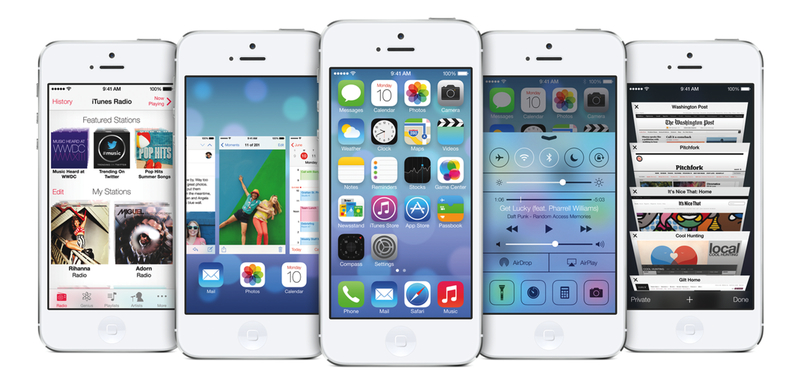
Announced yesterday at Apple’s WWDC 2013 keynote, iOS 7 is a dramatic reimagination of Apple’s mobile operating system.

iOS 7 introduces new user features and brings over 1500 new developer APIs. For users looking for a quick overview of what’s changed and improved in iOS 7, the OS’ user interface will immediately appear as the most visible change. Tim Cook referred to it as a “stunning new UI”, noting how iOS 7 is the biggest change to iOS since the introduction of the original iPhone, which ran iPhone OS 1.0. iOS 7 is unmistakably different, but how the interface looks is simply the first aspect that jumps out. Read more


The 2013 Apple Design Award Winners

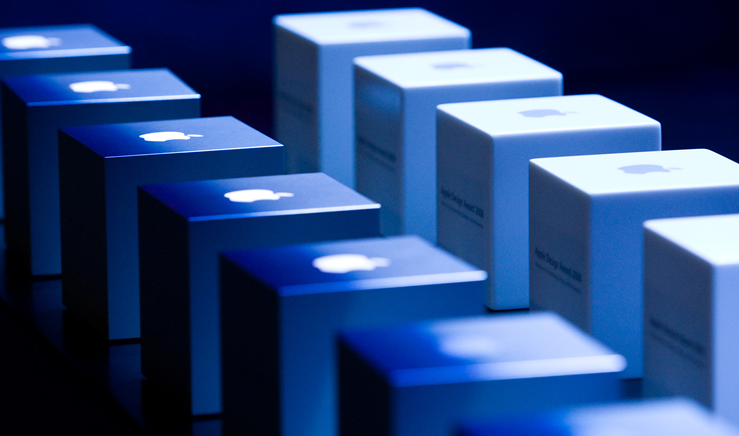
The Apple Design Awards recognize state of the art iOS and OS X apps that are well-designed, innovative, and take advantage of the latest technologies to provide an immersive, fun, and compelling experience. These apps set new standards in terms of interface design, system integration, rich functionality, and high performance; every year, Apple celebrates developers and their outstanding work by awarding them an Apple Design Award trophy and other special prizes.

After evaluating the “broadest set of apps possible”, Apple has picked this year’s winners with a dedicated event at Moscone West on WWDC 2013 opening day. We have compiled the full list of 2013 Apple Design Award Winners below.

For 2012 ADA winners, check out our previous coverage here.

Student

Mac & iOS

As noted by @SteveStreza, this year Apple also awarded students who wrote custom apps for their WWDC scholarships.

For more coverage, check out our WWDC 2013 news hub and follow @macstoriesnet on Twitter.


Apple Posts WWDC 2013 Keynote, iOS 7, “Designed by Apple” Videos

For those who didn’t follow a liveblog or the news as it unfolded on Twitter, Apple has now posted the keynote video of its WWDC 2013 keynote held earlier today in San Francisco.  The video can be streamed here, and a higher quality version should be made available in a few hours through iTunes (on the Apple Keynotes podcast). To avoid streaming errors, Safari is recommended for the best viewing experience.

Alongside the keynote, Apple has also posted promotional videos for iOS 7 (announced today) and “Designed by Apple”, a new campaign that the company will start running today as a TV ad. The iOS 7 video, featuring an introduction by Apple’s Jony Ive, is available here.

“Designed by Apple” has received its own webpage, where Apple has posted two videos. The first one was first shown today in San Francisco, before the keynote started; the second one is a TV ad that was aired at the end of the presentation. The first video features a series of animations with the following text:

If everyone is busy making everything, how can anyone perfect anything?

We start to confuse convenience with joy, abundance with choice. Designing something requires focus.

The first thing we ask is: what do we want people to feel? Delight. Surprise. Love. Connection. Then we begin to craft around our intention. It takes time…

There are a thousand no’s for every yes. We simplify. We perfect. We start over.

Until everything we touch enhances each life it touches.

Only then do we sign our work.

The new videos can be watched here.

For more coverage, check out our WWDC 2013 news hub and follow @macstoriesnet on Twitter.


The Numbers From Apple’s WWDC 2013 Keynote

As usual with keynotes in recent years, Apple’s CEO Tim Cook walked on stage today and offered an overview of the company’s state of the business and other noteworthy statistics. These numbers, which Apple typically shares during the year in separate press releases or product announcements, are always interesting as they provide a complete picture of Apple’s sales, installed base, and more.

  • 24th WWDC, longest developer conference with attendees from 60 countries
  • 6 million registered developers, 1.5 million since WWDC 2012
  • WWDC 2013 was sold out in 71 seconds
  • Over 1 million people per day visited Apple retail stores last year
  • 407 stores around the world in 14 countries
  • There are 900,000 apps on the App Store
  • There are 375,000 iPad apps
  • 575 million accounts on the Store
  • $10 billion paid to developers, $5 billion paid in the last year alone
  • 72 million installed Macs
  • 28 million Mountain Lion copies since announcement, best release yet
  • 35% of users adopted Mountain Lion it in first six months
  • 1.8 million iBooks available on the Store
  • 300 million iCloud accounts
  • 35 billion redownloads of iTunes content
  • Game Center has over 240 million users
  • 800 billion iMessages have been sent to date
  • 7.4 trillion push notifications sent to date
  • Over 600 million iOS devices sold

For more coverage, check out our WWDC 2013 news hub and follow @macstoriesnet on Twitter.


Apple To Live Stream Today’s WWDC Keynote

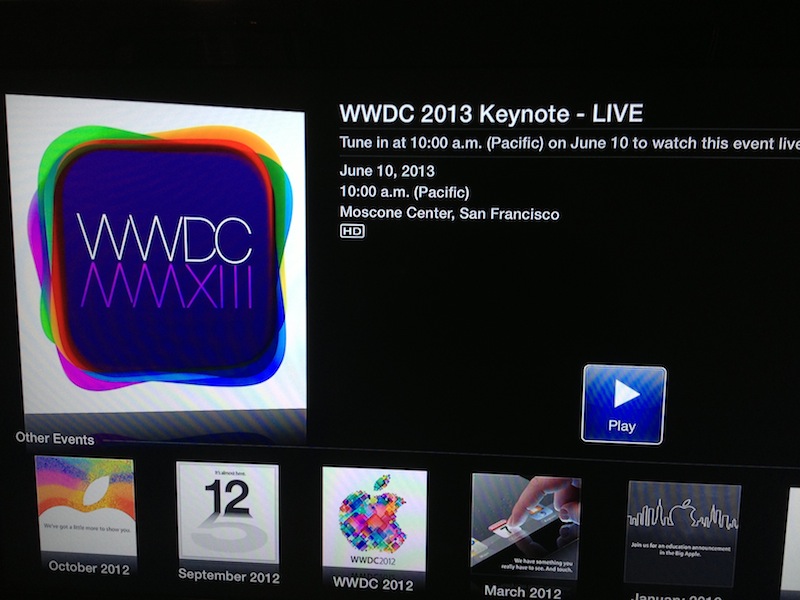
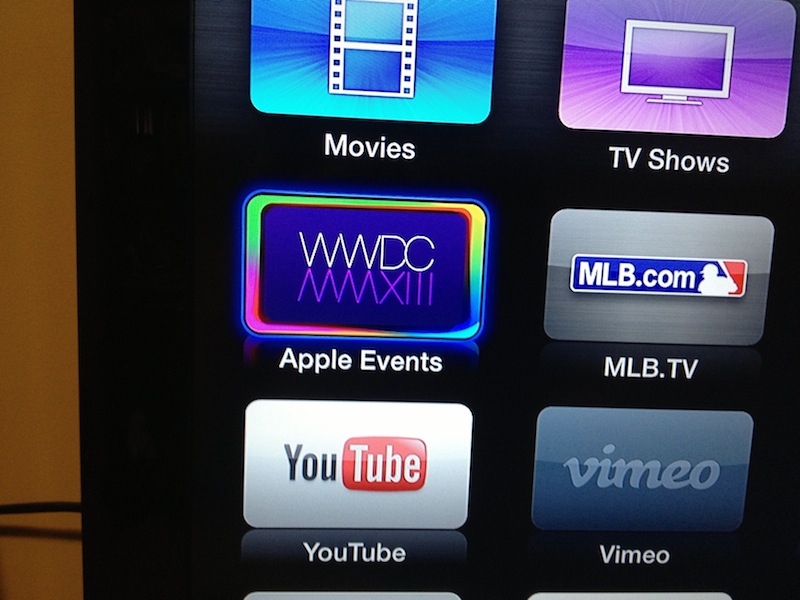
As noted by MacRumors, Apple will once again provide a live video stream of today’s WWDC 2013 keynote in San Francisco. With an update pushed overnight to Apple TV owners, Apple has added a live feed for WWDC 2013 to its existing Apple Events channel.

The last time Apple used the special Apple TV channel was on October 23, 2012, when they unveiled, among other announcements, the iPad mini. Before October 2012, Apple had offered a live stream for its “Back to the Mac” event in 2010, when the company introduced OS X Lion and a new line of MacBook Airs.

Apple hasn’t yet confirmed whether the event will also be streamed on its website to desktop and mobile browsers, but it’s likely that a link will be put up shortly on Apple’s Events webpage.

Update: As expected, Apple just confirmed that the keynote will also be streamed on its website.

Apple’s WWDC 2013 keynote kicks off at 10 AM PDT; you can check your own timezone here.

07:00 — Honolulu, Hawaii
10:00 — San Francisco, California
13:00 — New York, New York
14:00 — São Paulo, Brazil
18:00 — London, England
19:00 — Rome, Italy
20:00 — Riyadh, Saudi Arabia
21:00 — Moscow, Russia
22:30 — New Delhi, India
01:00 — Shanghai, China (June 11)
02:00 — Tokyo, Japan (June 11)
03:00 — Sydney, Australia (June 11)

We’ll be offering a liveblog of today’s keynote here.