John Voorhees

5638 posts on MacStories since November 2015

John is MacStories' Managing Editor, has been writing about Apple and apps since joining the team in 2015, and today, runs the site alongside Federico. John also co-hosts four MacStories podcasts: AppStories, which covers the world of apps, MacStories Unwind, which explores the fun differences between American and Italian culture and recommends media to listeners, Ruminate, a show about the weird web and unusual snacks, and NPC: Next Portable Console, a show about the games we take with us.

Adobe Adds Support for Editing Lightroom Images in Photoshop for iPad Alongside Other Updates

Adobe’s Lightroom and Photoshop are complementary tools that a lot of creative professionals use together on the desktop, moving images back and forth. Until now, however, that wasn’t possible on the iPad, which has made it a frequently-requested feature ever since Photoshop debuted on the iPad late last year.

With today’s update to Lightroom, there’s a new option in the share menu called ‘Edit in Photoshop.’ When you select that option, Lightroom converts your image for Photoshop and uploads it to Adobe’s cloud service. As soon as that process is complete, Lightroom automatically launches Photoshop and loads the image. When you’re finished making edits, tap the big, blue button at the top of the screen that says ‘Send to Lightroom,’ and a PSD version of the image is returned to Lightroom where you’ll also find the original image you sent to Photoshop. Alternatively, you can save the PSD file as a cloud-based document without sending it back to Lightroom.

Sending a RAW image to Photoshop, which is first converted to a cloud-based PSD file.

Sending a RAW image to Photoshop, which is first converted to a cloud-based PSD file.

Finalizing the import into Photoshop, which now includes a big blue button for sending the image back to Lightroom.

Finalizing the import into Photoshop, which now includes a big blue button for sending the image back to Lightroom.

Adobe debuted several other updates to Lightroom on the iPhone, iPad, and Mac too. The company is expanding the learning experiences available in the app with more guided tutorials and interactive edits that demonstrate the steps needed to achieve certain results. Lightroom also includes a new versioning system that permits users to experiment by applying different edits to the same image as different versions and compare them without creating multiple files. All users can also add watermarks to images now, which are synced across devices.

Users who upgrade to Lightroom’s premium service get several other features as well. Hues can be adjusted locally, allowing users to change hues in one area of an image without affecting other parts of it. Premium users can also share edits in the app’s Discover section, a community for sharing images, drawing inspiration, and learning.

With every major update of Adobe’s flagship apps on the iPad, I’m impressed by the progress that has been made. Lightroom is a terrific photo editor that’s made all the more powerful by the additional option of exporting images into Photoshop for iPad, which has been advancing itself quickly. Adobe announced updates to many of its desktop apps today too, but what’s striking about the announcements is just how quickly its mobile apps have begun playing a central role in Adobe’s pro product lineup.

Lightroom and Photoshop are available as free downloads on the App Store, with certain features requiring an In-App Purchase.


Apple Updates Its Developer App and Provides New Information About WWDC

Apple has updated its Developer app, which serves as a companion to developers for WWDC and a way to access past years’ session videos and other content year-round.

For the first time, there is now a Mac version of the Developer app, which appears based on Apple’s Mac Catalyst technology. The new app includes a left-hand sidebar that presents the same written and video content found in the iOS and iPadOS versions of the app. The iPhone and iPad versions of the Developer app have also been updated with a redesign of the Discover, Browse, and WWDC tabs and the option to mark Discover articles as favorites.

Apple’s developer website has new information about Labs and the Apple Design Awards too. Next week, one-on-one developer labs can be requested on Monday from 3:30 pm to 6:00 pm Pacific and Tuesday through Thursday from 6:00 am to 6:00 pm. According to Apple, “Requests will be reviewed and you’ll receive an email with your status within several hours.” Lab appointments will range from 10-55 minutes in length via a Webex audio call with an Apple engineer. Apple’s developer portal also says that the Apple Design Awards will be held on June 29th, the Monday after the online conference concludes.

It’s fantastic to have a dedicated Developer app on the Mac for the first time. The change will make it easier than ever to pick up where you left off with videos no matter what platform you’re using. The labs are about what I expected Apple would do. I’m not sure what to make of the ADAs coming the week after the conference. Perhaps Apple simply wasn’t ready in time.

Apple’s Developer app is available as a free download on the App Store.


Our iOS WWDC Wishes

AppStories+ Deeper into the world of apps

AppStories Episode 168 - Our iOS WWDC Wishes

0:00
47:32

AppStories+ Deeper into the world of apps

This week Federico and John cover the latest news about WWDC and conclude their WWDC wishes series with a look at iOS, including Messages, Files, Shortcuts, the share sheet, the App Store, and more.

Read more


Fontcase Simplifies Custom Font Installation on iOS and iPadOS

On Friday, The Iconfactory announced that it has collaborated with Manolo Sañudo, the developer of open-source font installation utility xFonts, on a new version of the app, which has been renamed Fontcase. The app greatly simplifies the process of installing custom fonts on iOS and iPadOS. Fontcase isn’t the first utility to do this. However, Fontcase has the advantage of being free and open-source, which should provide users confidence that it’s secure.

Security is an issue with font installers because they require a configuration profile to be installed in the Settings → General section of your iPhone or iPad. Configuration profiles can control important aspects of iOS and iPadOS that could be misused. Because Fontcase is open source, its code is publicly available for anyone to review to make sure it isn’t doing anything unexpected. However, even if you don’t review the code yourself, the mere fact that it is publicly available provides some comfort that someone else has done so.

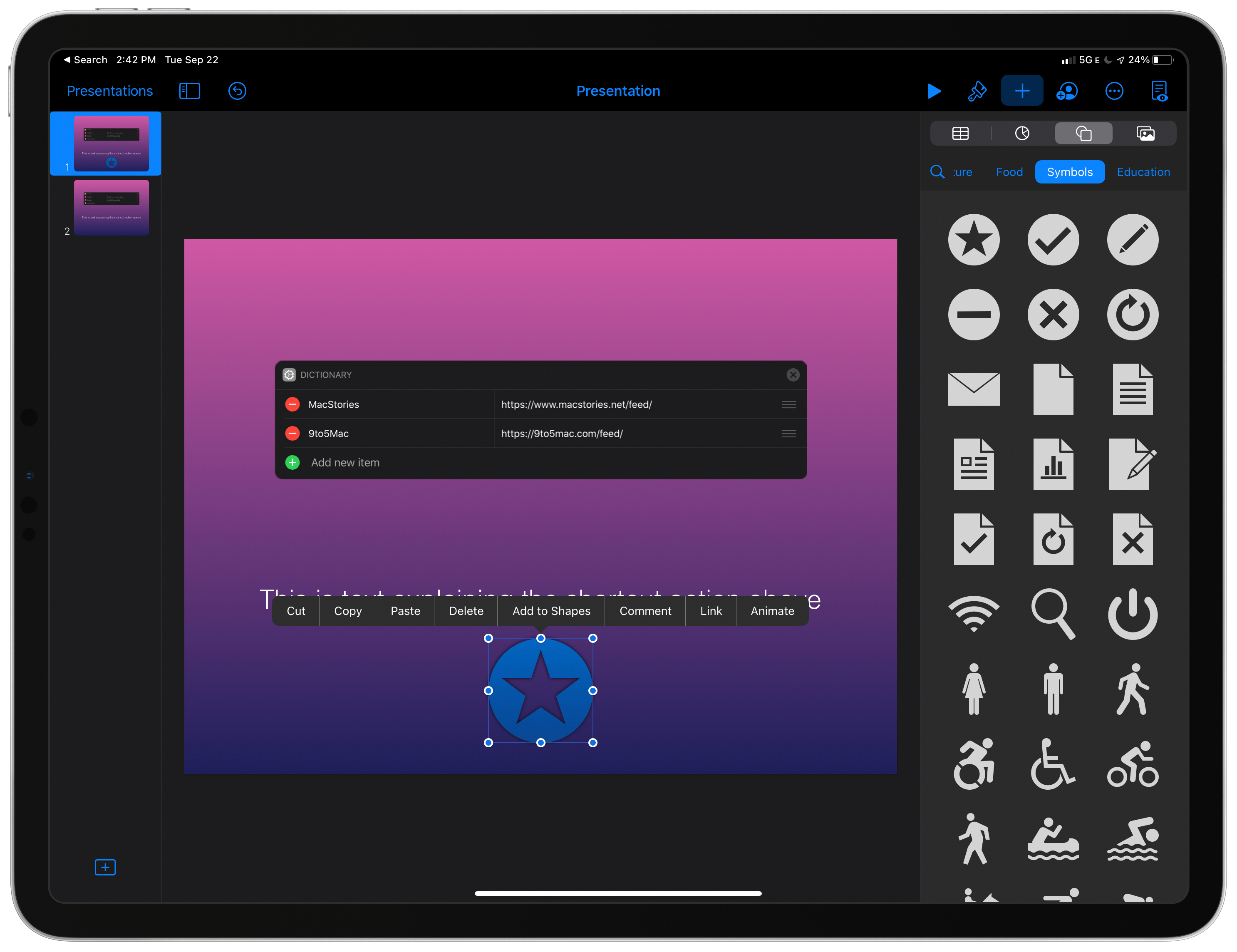
Using Fontcase’s document browser integration to locate fonts to install.

Using Fontcase’s document browser integration to locate fonts to install.

You’ll spend most of your time in Fontcase’s Fonts tab, which is controlled by two buttons marked Import and Install. Import takes advantage of the document browser feature of iOS and iPadOS, opening the familiar Files UI for navigating to a folder in iCloud Drive, Dropbox, or another file provider where you have fonts saved that you want to install. Select the fonts you want and tap Open, and they will appear in Fontcase’s UI using the font itself to provide users with a mini-preview.

Tap any font you’ve imported to see metadata and a preview.

Tap any font you’ve imported to see metadata and a preview.

Tap on a font imported into Fontcase, and the app displays metadata about it along with a full preview of the font. On the iPhone, this makes sense, but it’s too bad that on the iPad, Fontcase doesn’t make use of a list and detailed view layout for the preview of fonts. Instead, there’s a vast empty space on the right-hand side of the iPad UI.

Fontcase’s installation workflow.

Fontcase’s installation workflow.

Once you’re ready to install your collection of fonts, tap Install, which bundles all of the fonts you’ve imported into a single configuration profile. Tap Download Fonts, and the profile is saved and ready for installation in Settings → General → Profiles. Tap on the Fontcase Installation profile in the Downloaded Profile section and follow the prompts to finalize the installation. Once installed, the fonts will be available alongside the system-provided fonts in apps like The Iconfactory’s Tot, as well as many other apps that support custom fonts, including Apple’s own Pages.

It’s nice to see The Iconfactory contributing to an open-source project to provide a safe and simple way to add fonts to iOS and iPadOS. If you’re looking for good writing fonts to try with the app, I like iA Writer’s Duo font and Courier Prime, both of which are available to download for free.

Fontcase is available as a free download on the App Store and is compatible with the iPhone and iPad.


MacStories Unwind: WWDC, OmniFocus Custom Perspectives, and New Read-It-Later and Camera Apps

AppStories+ Deeper into the world of apps
0:00
27:03

AppStories+ Deeper into the world of apps


This week on MacStories Unwind:

MacStories

Club MacStories

  • MacStories Weekly
    • Federico shares a shortcut for browsing articles by topic and domain in Reeder and GoodLinks
    • Ryan highlights apps with great implementations of features announced at WWDC 2019
    • John imagines what better external display support for the iPad Pro might look like
    • Plus lots of apps, Q&A, Links and more
  • MacStories Unplugged
    • John travels west and Federico reveals his fascination with small town America before they dive into a discussion of optimism in technology writing and explore a new trend they are seeing emerge in the App Store.

AppStories

Unwind Picks


iPadOS 14 Wish: True External Display Support

The power of the iPad Pro is its ability to transform from one mode to another with little effort on the user’s part. Moving from tablet mode to something resembling a laptop is as simple as placing an iPad Pro on a Magic Keyboard with Trackpad. It’s just as easy to move the other direction...


Q&A

Question: What app do you recommend for managing a lot of app subscriptions? (Johann Tan, @johannktan)

Bobby has been a long-time favorite at MacStories for subscription tracking. It was first covered on the site by Ryan in 2017 and again in Issue 106 of MacStories Weekly. The app includes a long list of common...


App Debuts

Reeder 4 Reeder 4 was updated this week with three handy enhancements. The app already provides one of the best reading experiences among the many RSS clients on the iPhone and iPad. With the latest update, though, you can set the app’s toolbars to be hidden upon scrolling, which I love. Also, a keyboard...