John Voorhees

5439 posts on MacStories since November 2015

John is MacStories' Managing Editor, has been writing about Apple and apps since joining the team in 2015, and today, runs the site alongside Federico. John also co-hosts four MacStories podcasts: AppStories, which covers the world of apps, MacStories Unwind, which explores the fun differences between American and Italian culture and recommends media to listeners, Ruminate, a show about the weird web and unusual snacks, and NPC: Next Portable Console, a show about the games we take with us.

Epic Versus Apple: The MacStories Overview

Later today, Epic Games and Apple will square off in a high-stakes trial in US federal district court that’s nominally about money. However, if that were all that was at stake, the claims each company has made against the other would likely have been resolved by now. Companies the size of Apple and Epic settle because it’s rarely in their interest to have a judge make decisions for them. However, this trial is different.

There’s more to these disputes than Epic’s allegation that Apple violated antitrust laws and Apple’s claims that Epic violated its developer agreement. Underlying it all is the way the dispute was precipitated by Epic. The Fortnite creator’s actions don’t necessarily absolve Apple of antitrust violations, but Epic’s calculated orchestration of events leading to the dispute have not gone unnoticed by the judge presiding over the case and may influence the trial’s outcome. Coupled with Epic’s efforts to get regulators around the world to take up its cause and its very public crusade against the way Apple operates the App Store, it’s not surprising that the claims haven’t settled. Instead, the parties will begin today with opening arguments in front of US District Judge Yvonne Gonzalez Rogers, who the parties have agreed will decide the dispute instead of a jury.

Regardless of your opinion of the way Apple runs the App Store or Epic’s litigation tactics, the thing to keep in mind as the trial starts is that the judge is being asked to settle a legal dispute, not set policy. Both companies have made specific claims against the other, which by definition means the judge’s ruling will likely be narrower in scope than it would be in an antitrust case brought by the US government. Nor is any remedy imposed by the judge likely to be as broad as government regulation of the App Store might be someday.

Still, that doesn’t mean the stakes aren’t high; they are. An adverse ruling against Apple could significantly change the way the company operates the App Store and would likely trigger more antitrust lawsuits and regulatory scrutiny in the future. As a result, I thought it would be useful to dig in and take a closer look at some of the parties’ arguments and the context in which this dispute arose to provide a better sense of what to expect from the trial, which is expected to run about three weeks, and what the outcome might be.

Read more


MacStories Unwind: iOS 14.5, 1Blocker, a New Thread HomeKit Accessory, and Earning Results

AppStories+ Deeper into the world of apps
0:00
24:17

AppStories+ Deeper into the world of apps


Sponsored by: Honeybadger – Your Secret Weapon for Exception, Uptime, and Cron Monitoring

This week on MacStories Unwind:

MacStories

Club MacStories

  • Monthly Log
    • John on two tentpole features the Mac and iPad need
    • Federico updates his desk setup with a new keyboard
  • MacStories Weekly
    • Muse
    • A SoundSource Tip
    • Federico explains how to migrate thousands of email messages
    • A 1Blocker giveaway

AppStories

Unwind


Apple Q2 2021 Results - $89.58 Billion Revenue

Apple has just published its financial results for Q2 2021. The company posted revenue of $89.58 billion. Apple CEO Tim Cook said:

“This quarter reflects both the enduring ways our products have helped our users meet this moment in their own lives, as well as the optimism consumers seem to feel about better days ahead for all of us,” said Tim Cook, Apple’s CEO. “Apple is in a period of sweeping innovation across our product lineup, and we’re keeping focus on how we can help our teams and the communities where we work emerge from this pandemic into a better world. That certainly begins with products like the all-new iMac and iPad Pro, but it extends to efforts like the 8 gigawatts of new clean energy we’ll help bring onto the grid and our $430 billion investment in the United States over the next 5 years.”

Apple Beats Expectations

As reported by CNBC, Apple beat Wall Street expectations:

Apple reported a blowout quarter on Wednesday, announcing companywide sales up 54% higher than last year, and significantly stronger profits than Wall Street expected.

Apple stock rose over 4% in extended trading.

Graphical Visualization

After the break, we’ve compiled a graphical visualization of Apple’s Q2 2021 financial results.

Read more


1Blocker 4.0 Adds In-App Tracker Blocking with Its New Firewall Feature

I’ve used 1Blocker to block ads from cluttered websites for years. No ad blocker is perfect. Some ads still get through, and blockers can sometimes interfere with the functionality of a website, but of all the ones I’ve tried, 1Blocker strikes the best balance. The app is also available on all of Apple’s platforms, making it easy to block intrusive ads but allow them on sites where they don’t wreck the reading experience.

1Blocker, which I have covered many times in the past on MacStories, was the first iOS app I know that bundled multiple sets of content blocking rules to offer more filters than the iOS would otherwise allow. The system also allows 1Blocker to filter more than just advertising, such as social media widgets, comments, and adult sites.

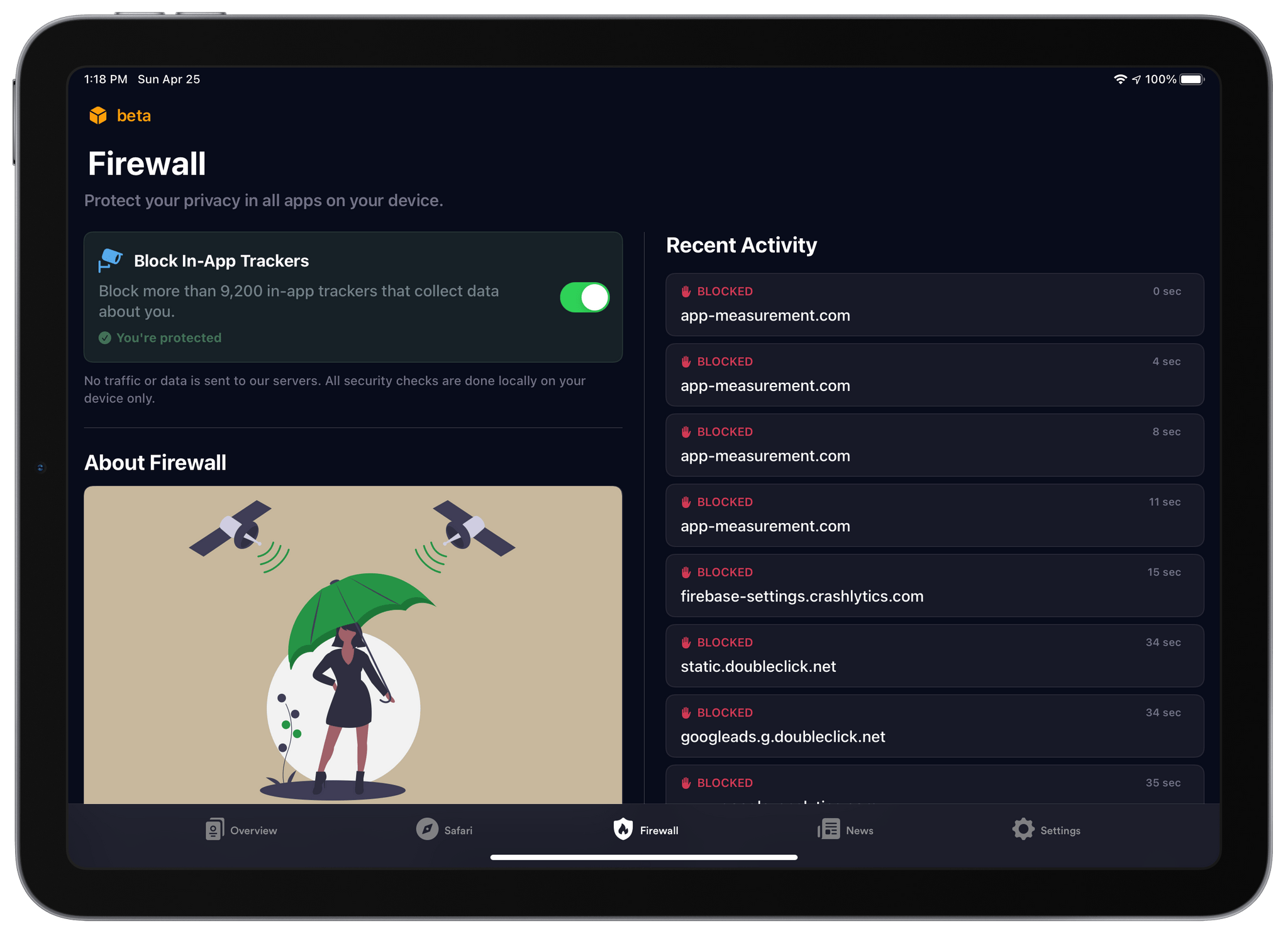
Today, 1Blocker has expanded its coverage even further with a feature called Firewall. If you’ve read Federico’s in-depth story about iOS and iPadOS 14.5, you’re familiar with App Tracking Transparency. That’s the OS feature that requires apps to request permission before tracking your activity across multiple apps and websites. Firewall takes that a step further by automatically blocking trackers and doing so even if the trackers are what are known as first-party trackers because they don’t correlate your data with data collected by other companies. It’s an extra layer of protection between you and data brokers.

Read more