

This week, Valve introduced a redesigned version of its Mac client, which greatly improves the user experience and adds Mac hardware acceleration as an added bonus. (Link) The Verge has an excellent interview with Christian Selig, the maker of Apollo for Reddit, about Reddit’s API changes and response to third-party developers like Selig. (Link)...
MacStories Unwind: A Chicken Truck, Ice Water, and boygenius






This week, John discovers chicken trucks, Federico has some thoughts on American cuisine, and John unwinds post-WWDC with a trip to Wilmington, North Carolina to see boygenius in concert.
Links and Show Notes
- Wilmington, North Carolina
- Why Federico knows Wilmington
- boygenius
MacStories Unwind+

We deliver MacStories Unwind+ to Club MacStories subscribers ad-free and early with high bitrate audio every week.
To learn more about the benefits of a Club MacStories subscription, visit our Plans page.
Apple’s Game Porting Toolkit’s Support for DirectX 12 is a Big Deal for Gaming on the Mac→
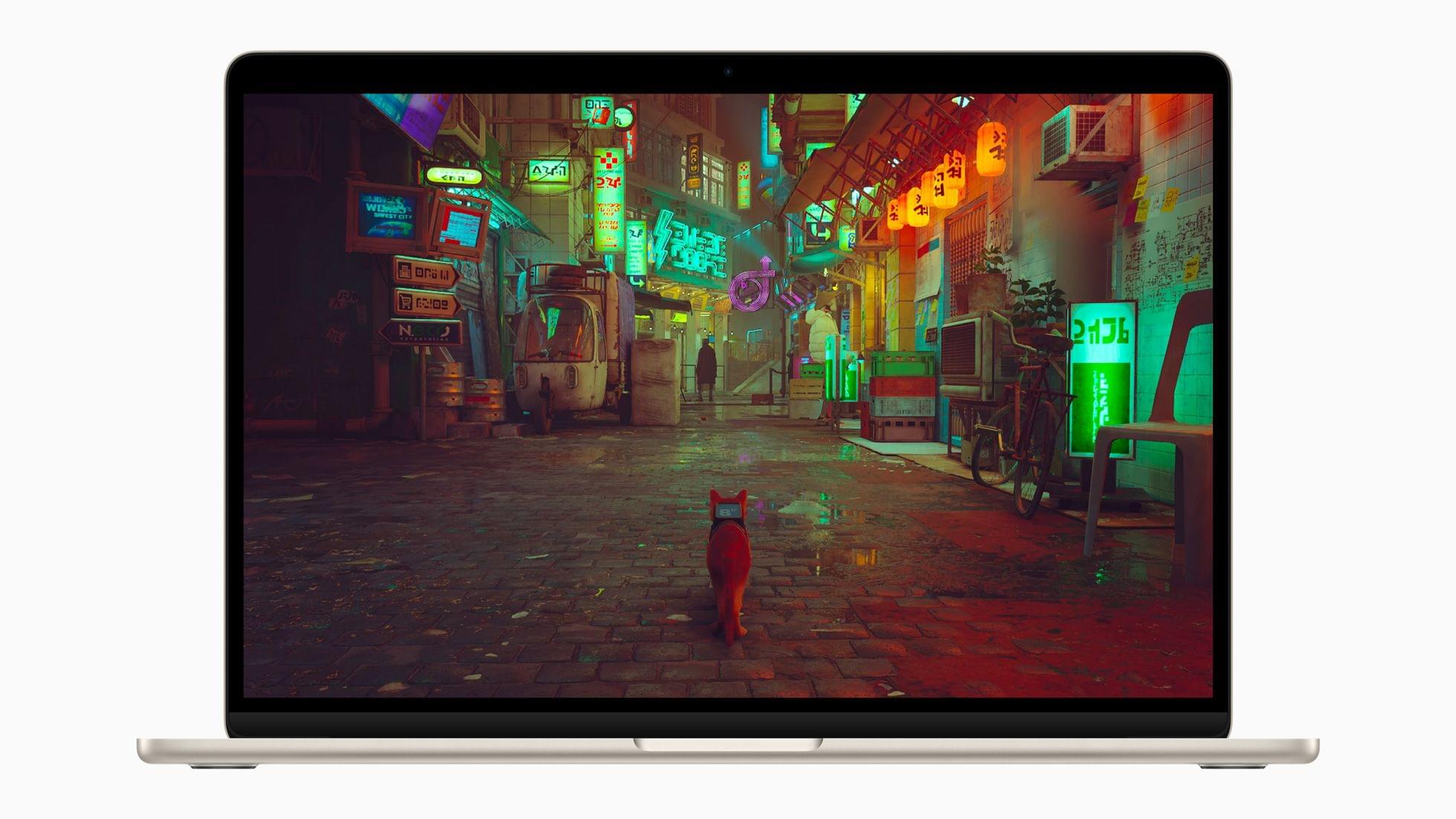
Earlier this week, I linked to Tom Warren’s story on The Verge about Apple’s Game Porting Toolkit and gamers’ early experiments with running Windows games on Apple silicon Macs running macOS Sonoma. Yesterday, Christina Warren, writing for Inverse, published an in-depth look at why Apple’s innocuously Game Porting Toolkit has the potential to be a big deal:
…buried in the keynote was a macOS feature that Apple should have called out with more fanfare: DirectX 12 support for macOS. As PC gamers already know, this software support means the floodgates are open for some real games — not that casual Apple Arcade stuff — on Mac. Maybe, just maybe, this is the beginning of the end to the old joke that Macs can’t play AAA games.
As Warren explains, Apple’s DirectX 12 support is thanks to a patch to Wine that the company developed:
That toolkit largely takes place as a 20,000 line of code patch to Wine, a compatibility layer designed to bring support for Windows games to platforms such as Linux, BSD, and macOS. Wine, which is primarily supported by the company CodeWeavers (which also makes a commercial version called CrossOver), works by converting system calls made to Windows APIs into calls that can be used by other operating systems. It isn’t emulation, but translation (an important semantic difference).
If this all sounds a lot like what Valve did with Proton and the Steam Deck, it’s because it is:
In some ways, the fate of Mac gaming mirrored another desktop platform: Linux. Like the Mac, and in spite of a very vocal contingent of users, Linux gaming largely remained largely elusive until Valve introduced Proton in 2018, a way to play Windows games on its Linux Steam client and on its Linux distribution SteamOS (which at the time, was primarily used for its failed Steam Machine devices). And notably, the open-source technology at the heart of Proton, is the same technology that Apple is using for its Game Porting Toolkit.
Does all of this mean that the Mac is on the cusp of becoming the AAA gaming platform that has eluded it for years? As Warren rightly notes, it’s too early to go that far, but it is cause for optimism and is a big deal even if it remains a niche way to play DirectX 12 games on a Mac.
Stephen Hackett Announces Kickstarter Campaign for His 2024 Apple History Calendar→
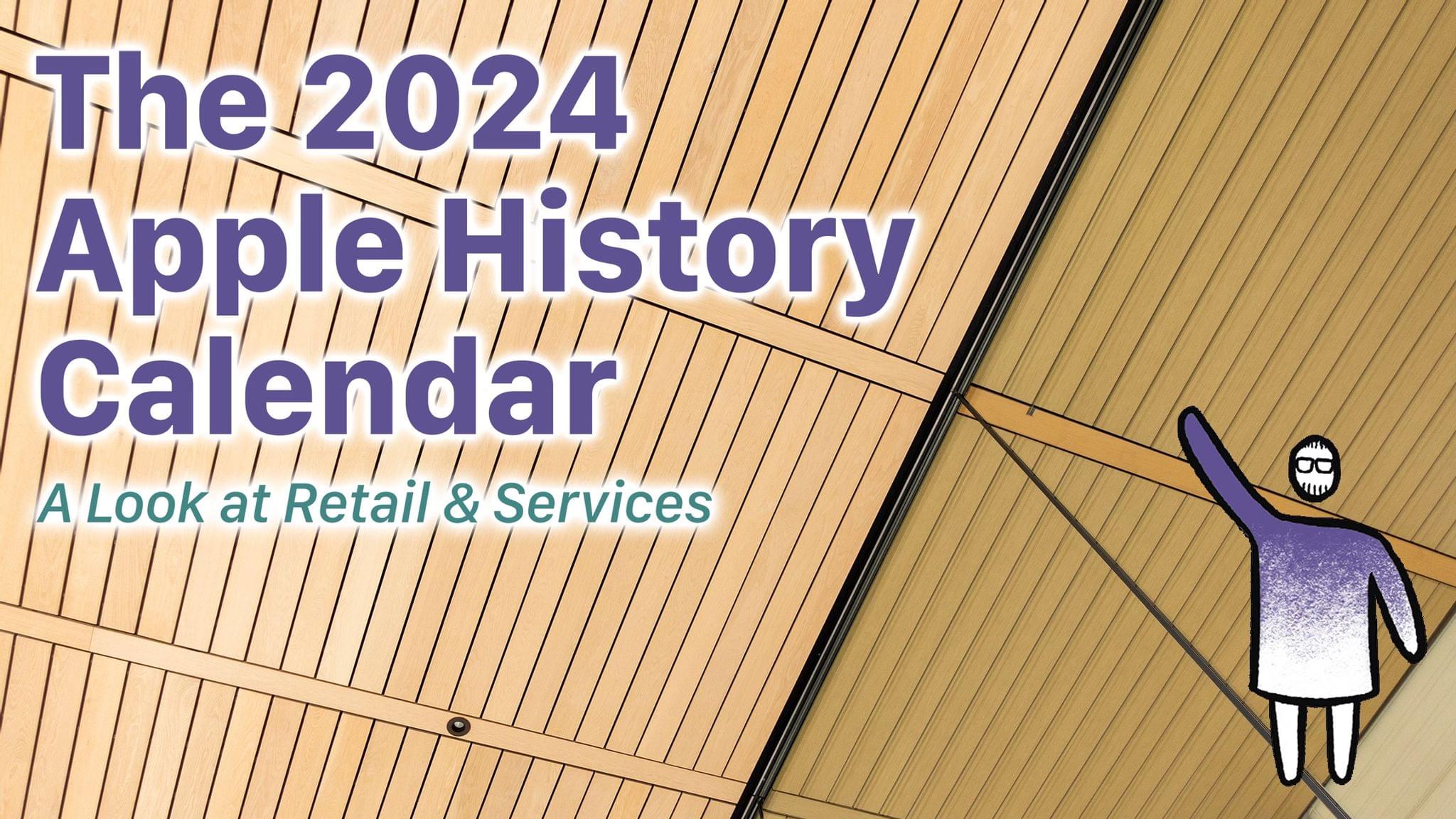
Today, our friend Stephen Hackett launched a follow-up to his successful series of Apple history calendars with a campaign on Kickstarter. This year’s calendar features more of Stephen’s excellent photography, along with notable dates in Apple’s services and retail history.
Here’s what Stephen has to say about this year’s calendar:
The calendar features my own product photography of Apple products, with each month highlighting some of Apple’s services and retail announcements over the years. Each calendar measures 20 inches by 13 inches (50.8 x 33.02 cm) when it’s hanging on your wall with a simple thumbtack or pin.
You can watch Stephen’s announcement video here:
You can also read more about the campaign, which has already reached its goal, on Stephen’s website, 512 Pixels.
In addition to the wall calendar, Stephen has created a digital wallpaper pack for backers who pledge $5 or more. If you pledge $10 or more, you get the wallpapers and a .ics file version of the calendar. Pledge $36, and you’ll add the physical calendar and pledge $40, and you’ll also add four stickers.
The hard work and care that have gone into each of the prior editions of the Apple History Calendar show and make this year’s version a great purchase for any Apple fan, whether that’s you or a friend. I can’t wait to see the images and events Stephen has collected for 2024’s calendar.
AppStories, Episode 338 – What’s Next for Notes, Reminders, and Macs→
This week on AppStories, I was joined by Alex Guyot to talk about the new features coming to Apple Notes and Reminders, as well as new Mac hardware announced at WWDC.
Sponsored by:
- DetailsPro – Design with SwiftUI, no coding required. 50% off throughout June.
- CleanMyMac X – Your Mac. As good as new. Get 5% off today.
- Daylite – Regain Control of Your Business With Daylite
](https://cdn.macstories.net/banneras-1629219199428.png)
On AppStories+, Alex shares his thoughts about WWDC after four years away and I explain what it was like to record in the Apple Podcasts studio at Apple Park.
We deliver AppStories+ to subscribers with bonus content, ad-free, and at a high bitrate early every week.
To learn more about the benefits included with an AppStories+ subscription, visit our Plans page, or read the AppStories+ FAQ.
Apollo To Shut Down June 30th, Leading Many of the Largest Subreddits to Stage a Blackout
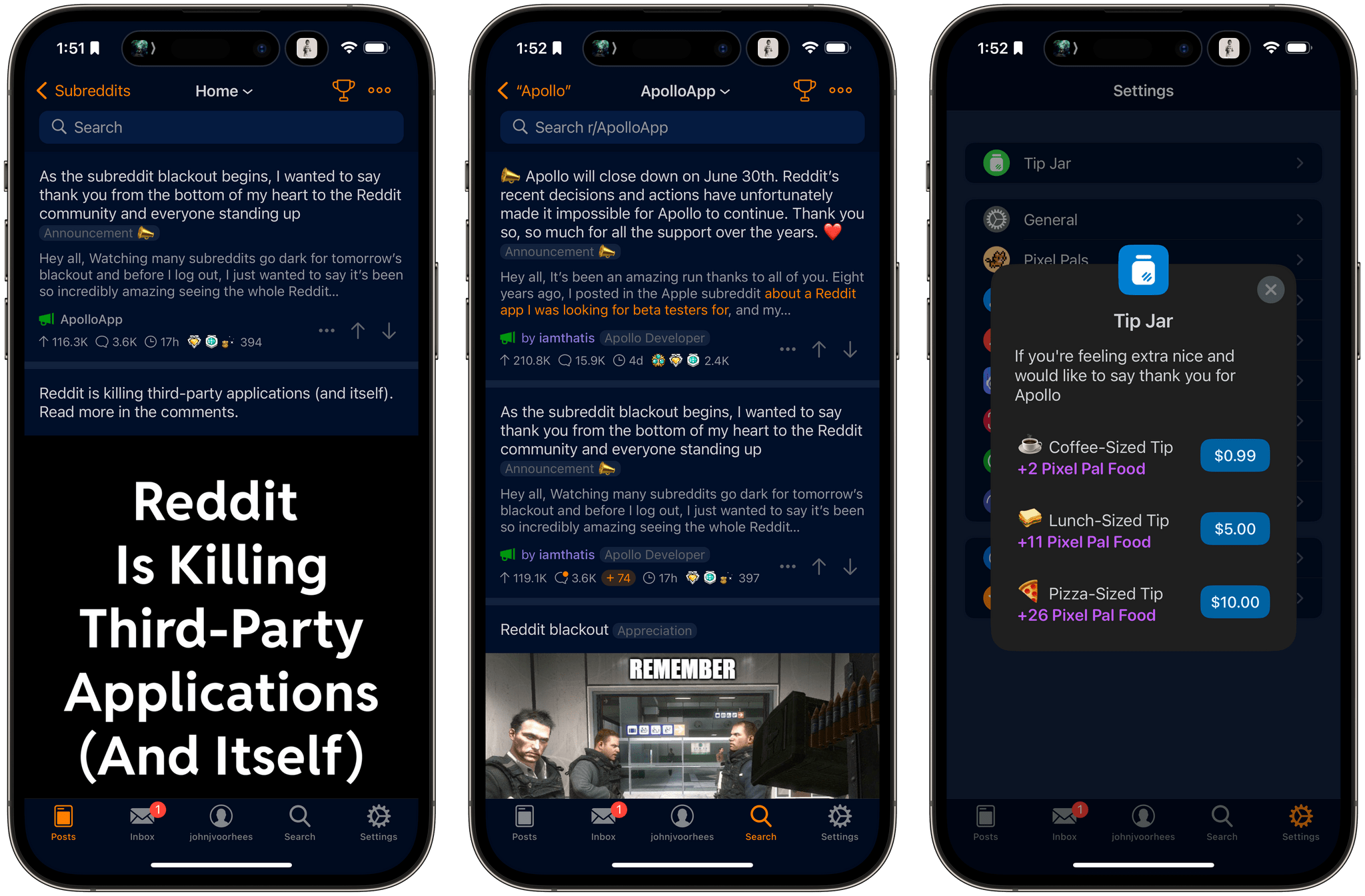
By now, most MacStories readers are probably familiar with the story surrounding Reddit’s decision charge exorbitantly high fees for access to its API after years of offering it for free to third-party developers like Christian Selig, the creator of Apollo. Since then, the situation has gone from bad to worse, with Reddit making unsubstantiated allegations of blackmail against Christian. With Reddit unwilling to budge and Apollo facing astronomical costs, Christian made the decision last week to remove Apollo from the App Store on June 30th, eight years after its debut.
If I were in Christian’s shoes, I’m sure I’d make the same hard decision, but that doesn’t make the app’s demise any easier for its users. Apollo is a fantastic app that’s been a favorite of ours and our readers for years. Christian is a genuinely wonderful person too, which makes this even harder to witness. Federico and I had the pleasure of interviewing him on one of the earliest episodes of AppStories, and it was great to finally get to meet him at WWDC in 2022.
But the thing that sets Apollo apart from other apps is the community around it, which is a testament to both Christian and his app. Apollo is a fantastic Reddit client, but it also became a tool for helping others by raising over $80,000 for Christian’s local animal shelter. Apollo has also been a showcase for some of the best icon designers around, helping spread the word about their work through the app’s enormous alternate icon catalog. The upshot of Reddit’s short-sighted business decisions is a loss that transcends the shutdown of a single app, which has been made all the more apparent by the widespread and ongoing Reddit blackout that has seen some of the largest subreddits go dark or read-only, crashing the site earlier today.
The other reality of shutting down an app like Apollo is that it’s expensive because subscribers will be entitled to a pro-rated refund for the remainder of their subscriptions. Christian is working on an Apollo update to allow users to forego their refund, similar to what Tweetbot and Twitterrific did after Twitter cut off their access to its API. Christian has also re-enabled Apollo’s tip jar. If you’d like to help defray the cost of Apollo’s shutdown, you’ll find tip options of $0.99, $5, and $10 in the app’s settings.
Apple Releases Developer Tools to Facilitate Porting Videogames to the Mac→

During the WWDC keynote, Apple showed off Game Mode for the Mac, which gives a game priority over a Mac’s CPU and GPU resources. Apple has also reduced the latency of AirPods used while gaming and doubled the sampling rate for connected Bluetooth controllers.
Game Mode promises to improve the overall experience of gaming on the Mac, but it’s not all that was announced at WWDC. Apple has also announced a series of developer tools designed to make it easier to port games to the Mac from other platforms.
Among those tools is a Game Porting Toolkit, which Tom Warren of The Verge says is:
similar to the work Valve has done with Proton and the Steam Deck. It’s powered by source code from CrossOver, a Wine-based solution for running Windows games on macOS. Apple’s tool will instantly translate Windows games to run on macOS, allowing developers to launch an unmodified version of a Windows game on a Mac and see how well it runs before fully porting a game.
The Game Porting Toolkit is meant as a way for developers to quickly see how much work needs to be done to port their games to the Mac, but that hasn’t stopped gamers with developer accounts from downloading the tool and taking everything from Cyberpunk 2077 to Diablo IV for a spin on the Mac according to Warren.
Along with a tool to convert shaders and graphics code to Apple’s Metal framework, The Game Porting Toolkit and other announcements at WWDC mark a concerted effort by Apple to expand the catalog of games available to Mac users. Whether game developers will take advantage of these tools and bring their games to the Mac remains to be seen, but recent announcements that Stray and Hideo Kojima’s Death Stranding, Director’s Cut are coming to the Mac are both good signs.
MacStadium: Enterprise-grade MacDevOps for Small and Midsize Teams [Sponsor]
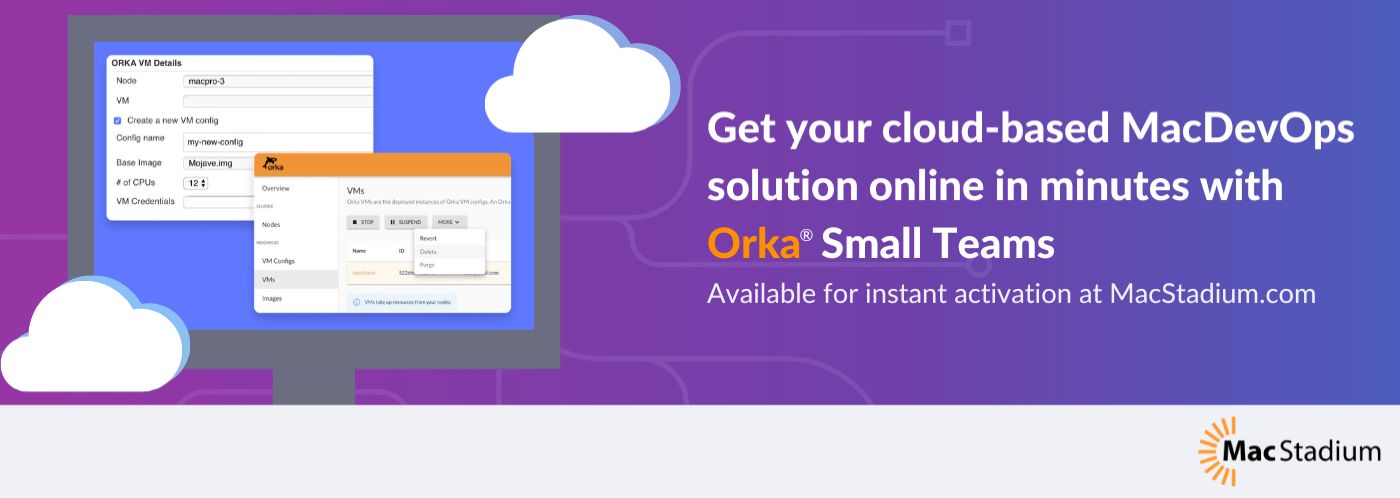
MacStadium, the industry-leading Mac cloud and MacDevOps provider, now offers a pre-packaged MacDevOps solution directly from the MacStadium website, enabling immediate use of their popular macOS CI/CD automation tool. With a simplified setup process and instant access, the Orka Small Teams edition was developed as an enterprise-level solution to meet the needs of small to midsize customers. With Orka Small Teams your organization can:
- Quickly and efficiently automate key MacDevOps development workflows
- Extend your CI/CD pipeline by connecting Orka platform to the most popular DevOps tools
- Easily orchestrate workloads using Orka platform’s RESTful API
MacDevOps teams of all sizes can now benefit from Orka’s pioneering macOS virtualization and orchestration software and MacStadium’s industry-leading Mac cloud infrastructure. Users can configure their new Orka platform environment independently with the help of MacStadium’s easy-to-follow startup guide. This affordable solution starts at $499/month and includes the key components necessary in MacDevOps automation. Watch the video to see how quick and easy it is to access Orka Small Teams.
To learn more about Orka Small Teams, please visit macstadium.com/orka-small-teams. For more information on Orka and its features, visit the MacStadium website.

 Federico