Wordle! Developer to Donate Game Proceeds to Charity

Wordle is the web-only daily word game that has taken the Internet by storm. The simple, free game by Josh Wardle struck a nerve, quickly spreading thanks to its social-media-friendly score sharing and a New York Times profile of the game’s backstory.

The game also spawned a legion of rip-off versions that appeared on the App Store and were ultimately taken down by Apple. However, one of the App Store apps that saw a spike in downloads last week wasn’t a Wordle clone. It was an entirely different game called Wordle! that was first published five years ago by Steven Cravotta.

Emma Roth, writing for The Verge reports that Cravotta has decided to donate the proceeds of Wordle! to charity at the end of January. According to Roth:

Cravotta says that downloads for Wordle! slowed to around one to two per day, but when the browser-based Wordle started taking off, so did his app. The app racked up 200,000 downloads in a single week, albeit from confused users who mistook it for the browser-based Wordle. Cravotta reached out to Wordle app developer, Josh Wardle, and let him know about his plans to donate the proceeds from his app to charity — Wardle sent out a tweet of his own to acknowledge the gesture.

Cravotta told The Verge that the earnings from Wordle!, which stand at just over $2,000 so far, will be donated to BoostOakland, a charity that supports tutoring and mentoring young people in Oakland, California. After the gleeful tweets by one Wordle clone developer, it’s refreshing to read about Cravotta’s plans for the windfall he received from the similarity between his game and Wardle’s.

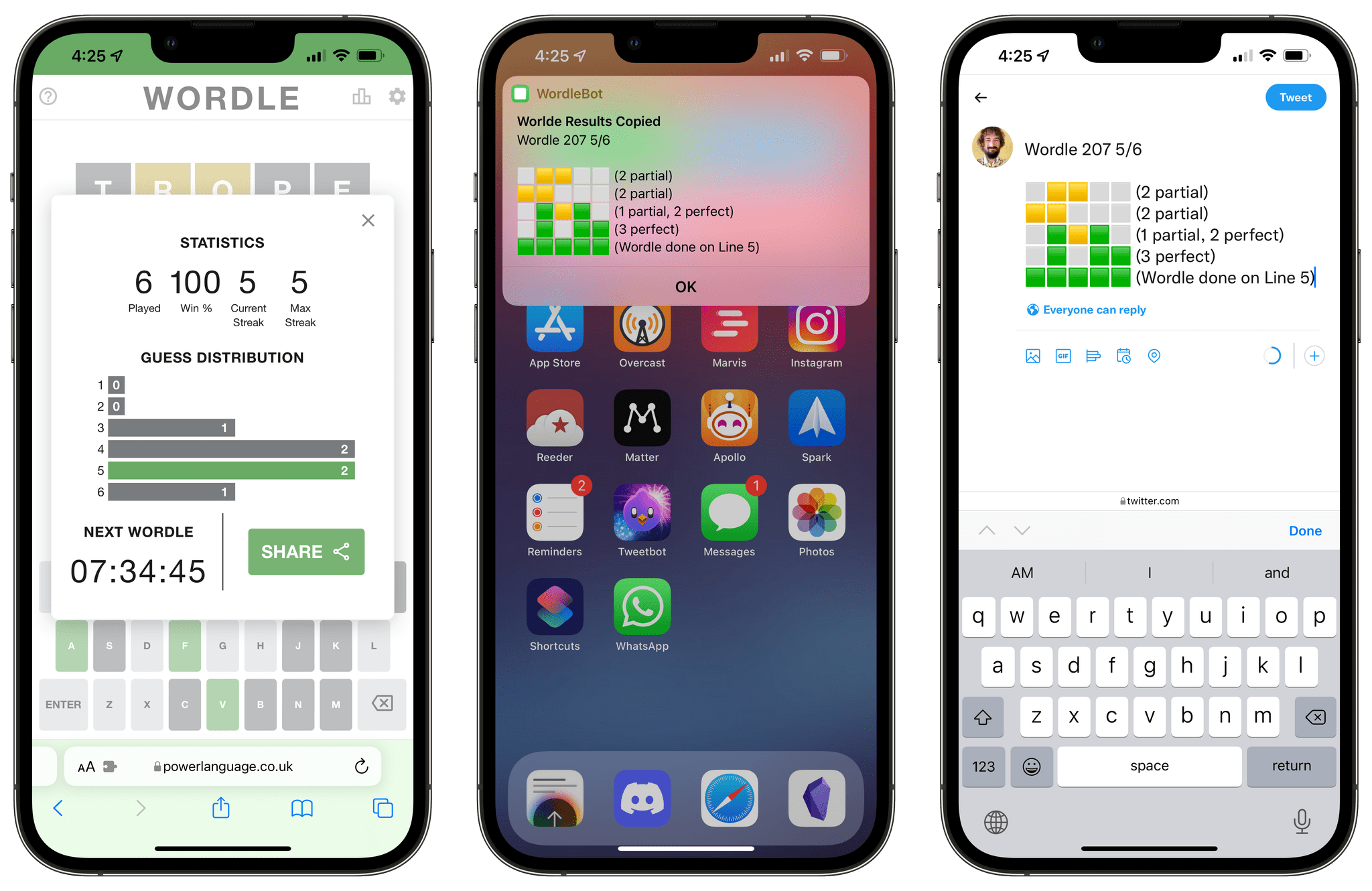
If you’re a Wordle fan, be sure to check out WordleBot, Federico’s shortcut inspired by Wordle’s score sharing feature. The shortcut preserves the game’s iconic score-sharing graphic but adds text labels to each row to improve the accessibility of scores on services like Twitter and provide additional context to the results.
Permalink


MacStories Unwind: Gossip Girl and Hawkeye

AppStories+ Deeper into the world of apps
0:00
26:59

AppStories+ Deeper into the world of apps


This week on MacStories Unwind, Federico watches the HBO Max reboot of Gossip Girl while John enjoys Hawkeye on Disney+, plus a recap of the past week on MacStories.

Federico’s Pick:

John’s Pick:

MacStories Rewind


Dropbox Releases Apple Silicon Version of Its App to Beta Testers

Last fall, Dropbox caused a stir when one of its employees suggested on a company forum that the cloud service’s Mac app wouldn’t be updated for Apple’s M1 architecture until customers demanded it. The response from customers was immediate and vocal, prompting Dropbox CEO Drew Houston to publicly state that an M1 version of the app would be released in 2022.

The existing Dropbox app uses Apple’s Rosetta translation layer, which is fast but can’t match a native Apple silicon app. The app also uses more power and other system resources than a native version would, and for an app that constantly runs in the background, that was a constant source of irritation for users.

The first sign of an Apple silicon version of Dropbox emerged late yesterday. As reported by 9to5Mac, Dropbox released a native M1-based version of its app to beta testers, which can be downloaded here. The new version of the app, which was noticed by a user in the Dropbox forums, was later confirmed by a Dropbox community manager, as reported by The Verge. Dropbox is very late in updating its app to offer native Apple silicon support, especially given that the service is so widely used, but it’s good to see the company following through with last fall’s promise.

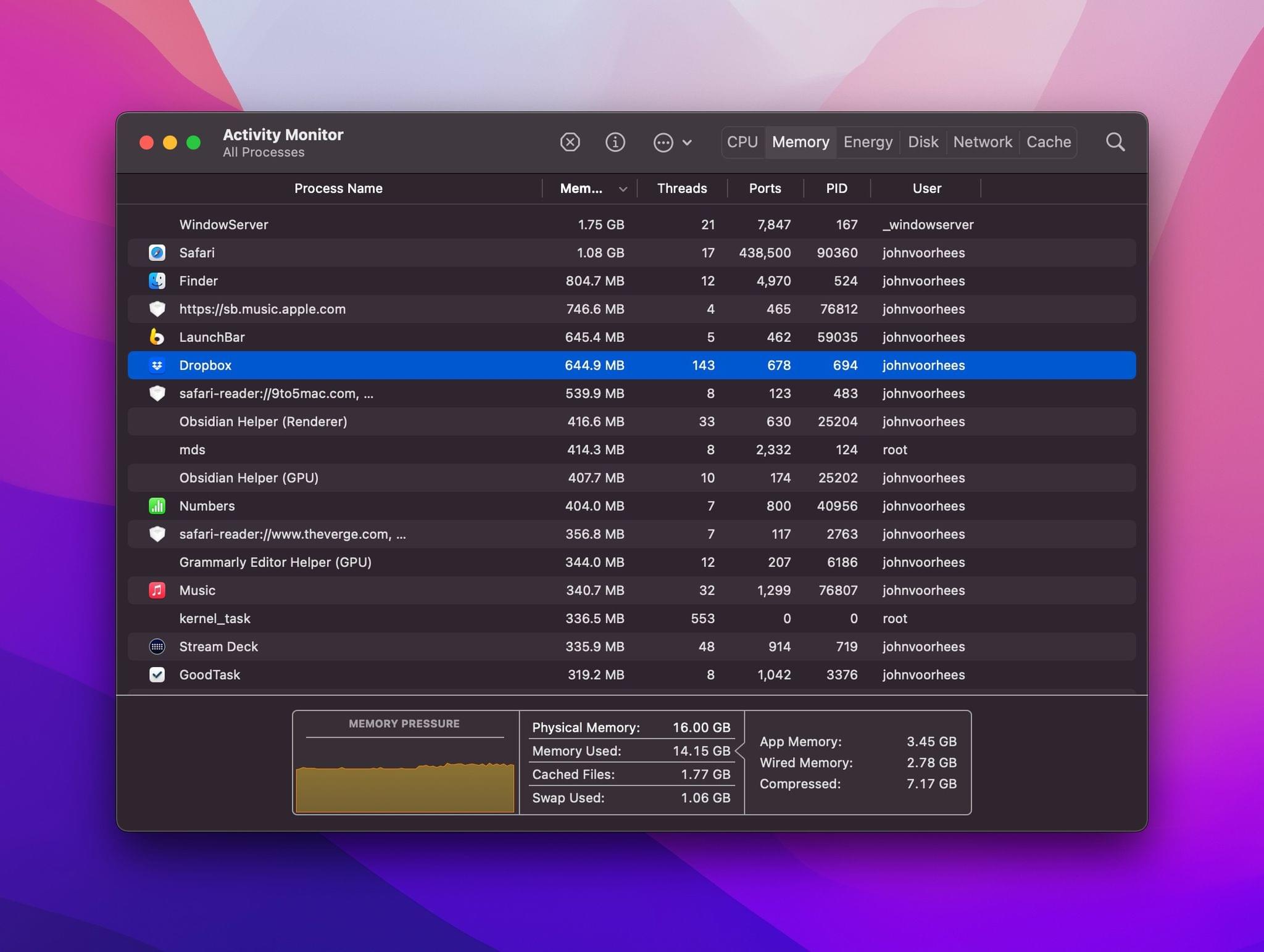
Betas that affect important cloud-based files should be approached with caution, but in my limited testing so far, the M1 version of Dropbox makes a noticeable difference in the app’s resource usage. Before installing the beta, I took a look at its memory usage, which stood at just above 4 GB, a substantial portion of the 16 GB available on my MacBook Air. Immediately after installing the Dropbox beta, memory usage dropped to a much more reasonable 645 MB. That’s a substantial improvement, which coupled with lower power usage and improved speed, should greatly improve the experience of using the cloud service, especially on Apple laptops.


WordleBot: A Shortcut to Annotate Your Wordle Results with Scores

WordleBot for iPhone.

WordleBot for iPhone.

Update, January 18: I have released version 1.1 of WordleBot with support for converting emoji results to a single image. You can read the article here and redownload the updated shortcut below.

I, like the rest of the Twitter over the past few weeks, have fallen in love with Wordle, Josh Wardle’s ingenious daily word game (if you somehow missed it, check out Wardle’s profile in The New York Times). It’s so refreshing to have something so disarmingly simple, yet challenging that isn’t out to scam us (although some have tried) or sell our data on the Internet these days. Wordle reminds me of Brain Age for Nintendo DS in its heyday: everyone I know does it and is talking about it, at least for now. For me, Wordle has become this nice, daily ritual that I try to complete with my girlfriend to improve our English skills.

Wordle is a web app, and it comes with a clever built-in sharing feature that lets you share your results with other people by visualizing them as emoji of different colors based on the letters you guessed in the daily puzzle. I’m sure you’ve seen those tweets featuring lots of green and yellow emoji pass by on your timeline. While I think Wordle’s default sharing mechanism is fun, on-brand, and already iconic, I don’t like how its output is not accessible or descriptive enough. Folks with visual impairments such as colorblindness may find the emoji-laden Wordle tweets nearly impossible to decipher; those blocks of emoji don’t play well with screen-reading technologies such as VoiceOver; and, I just thought it’d be useful to figure out a way to score each line of the puzzle to bring some additional context to your Wordle results.

So, I made WordleBot, a shortcut that takes Wordle’s default shareable text and reformats it with partial and perfect scores for each line. With WordleBot, you’ll be able to share results that keep the original Wordle aesthetic and format but also include scores for ???? and ???? letters on each line, like this tweet:

Read more


Apple Frames 2.1: Apple Watch Series 7 and 2021 MacBook Pro Support, New Update Flow, Plus Chinese and Czech Localization

Apple Frames, now with support for the latest MacBook Pros.

Apple Frames, now with support for the latest MacBook Pros.

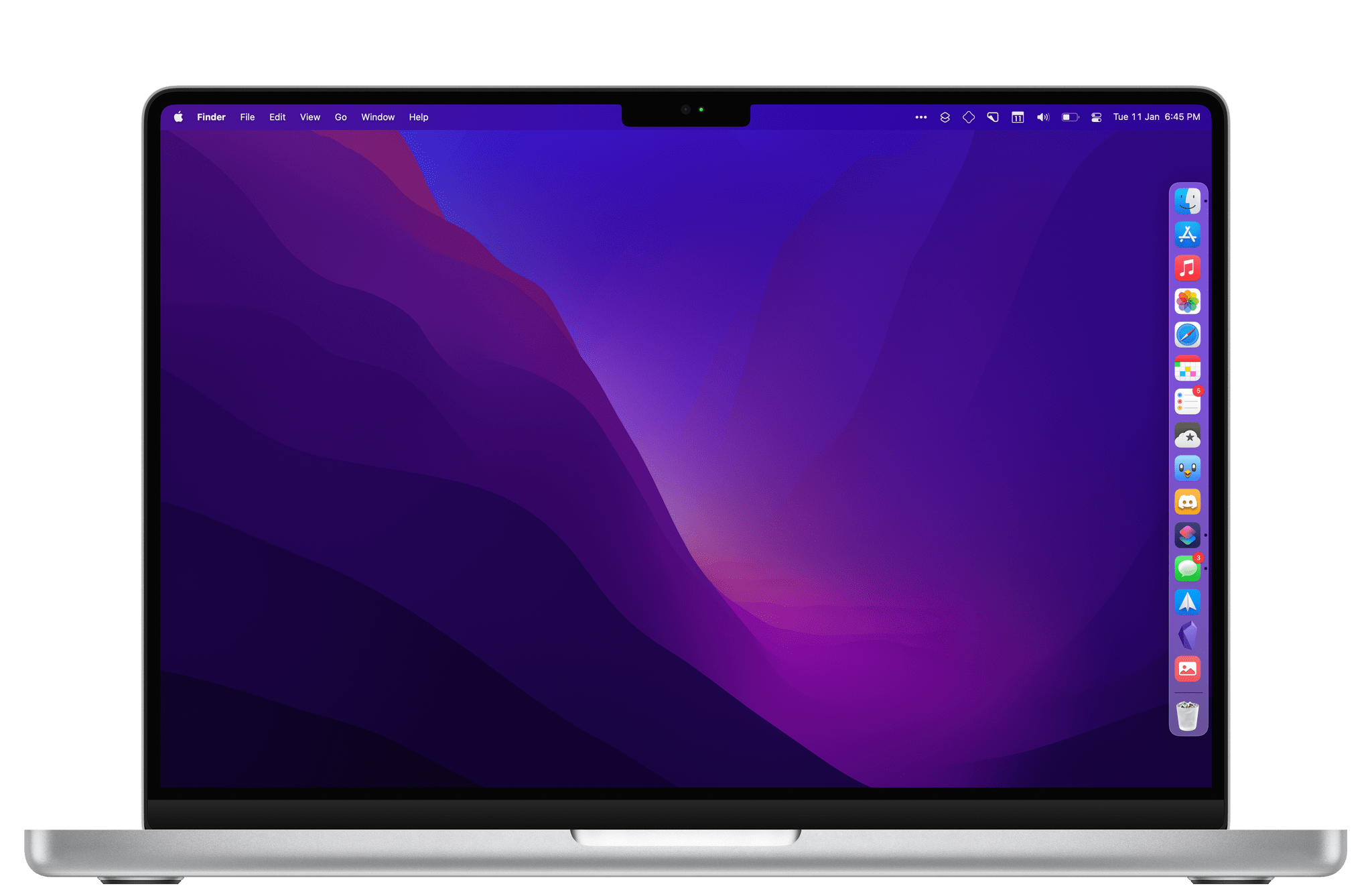
Today I’m pleased to announce the release of Apple Frames 2.1, the first major update to version 2.0 of my popular Apple Frames shortcut, which I launched last October. It took me longer than I hoped to put together this update, but I’m happy that I was able to add compatibility fo all the latest device frames supported by Apple, new languages, as well as a brand new update flow that will make it easier to download the latest templates powering Apple Frames in the future.

Let’s take a look.

Read more


Are AirTags Causing Stalking or Making Us More Aware of It?

The problem of AirTags being used to stalk people has been in the news ever since they were released last spring, but a recent story in The New York Times has brought the issue to the forefront again. AirTags are fantastic when used as intended to keep track of your keys, luggage, and other personal items, but stalking is a serious problem that Apple should do everything it can to prevent.

Apple is also in a unique position given the vast size of its Find Me network. That puts the company in a different league than competitors like Tile, which carries greater responsibility with it.

In a story on Peer Reviewed, Matt VanOrmer puts a finger on something I’ve been wondering for a while: Are AirTags contributing to the problem of stalking or merely making us more aware of it because of the unique stalking countermeasures built into the device? It’s a classic causation/correlation question that is worth reflecting on. As VanOrmer explains:

I think the increase in news stories about AirTag stalking situations are less indicative of AirTags causing more stalking, and more indicative of how frequently stalkings already occur — with AirTags’ anti-stalking features simply bringing more of these horrible situations to light. These stories may be a classic example of the Baader-Meinhof phenomenon (AKA the “Frequency Illusion”) — in which increased awareness of creeps using AirTags to stalk women creates the illusion that it is happening more often, or even that AirTags are responsible for this illusory increase in incidence.

As VanOrmer rightly points out, Apple should do everything it can to prevent AirTags from being used to track people, which includes improving the tools available to Android users for whom Apple has made an app that is generally viewed as insufficient. This is also a topic where some added transparency about what Apple is doing to address concerns about stalking would help observers decide whether it’s enough instead of having only anecdotal news reports to go on. However, given the wide-reaching impact of the Find My network, which affects people who aren’t even Apple customers, I think a third-party audit of how Apple is handling the security and privacy implications of AirTags is warranted.

Permalink

Apple Recaps Its 2021 Services

In a press release today, Apple shared an update on the success of its services. According to Eddy Cue, Apple’s senior vice president of Services:

Apple’s world-class portfolio of services proved essential in 2021, as people worldwide sought new ways to keep entertained, informed, connected, and inspired. With over 745 million paid subscriptions, Apple continues to connect the world’s developers, artists, and storytellers with users across more than a billion devices, delivering powerful tools, content, and experiences that enrich their lives in profound ways every day.

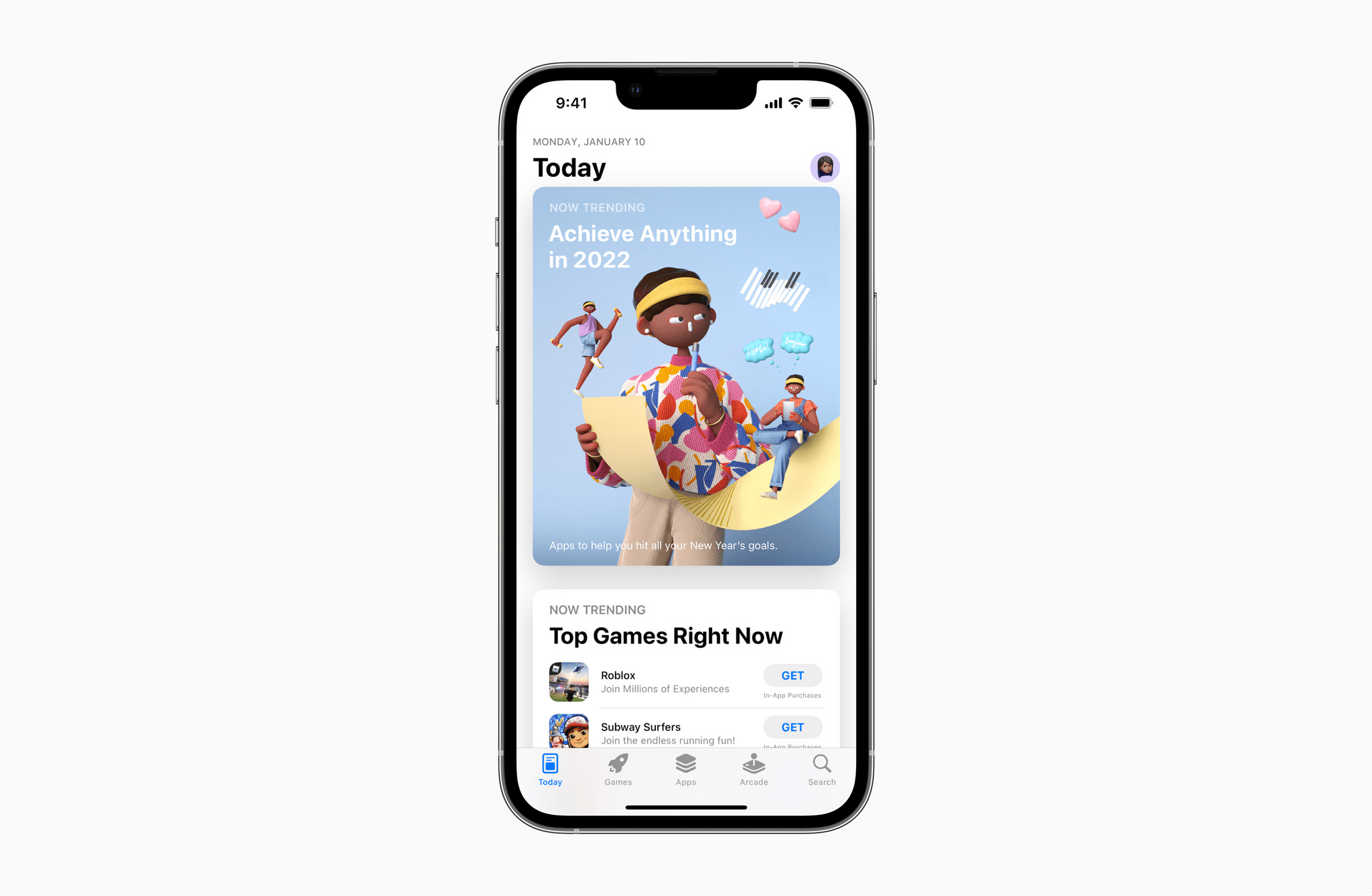
Apple says that developers have earned more than $260 billion on the apps and games sold through the App Store since its inception in 2008. That’s a $60 billion increase since last year’s services announcement. The company also reports that 2021 was another record year for sales, and the Christmas to New Years Day period saw double-digit sales growth. However, unlike past years, sales numbers weren’t shared for the week between Christmas and New Years Day or for New Years Day.

Apple has created lists of 2021’s most downloaded apps and games, if you are curious about which apps resonated with the most users last year.

Apple’s press release recaps a long list of achievements of its other services, too, recapping the highlights of 2021, including the nominations and awards won by Apple TV+, the expansion of Apple Pay, and the recent additions to Fitness+. Having followed this annual services press release since its earliest days, what’s most impressive is how long the list of services has grown. What was once primarily an App Store and Apple Music recap now covers a much broader range of services.