This Week's Sponsor:

Copilot Money

Copilot Money, The Best Money Tracker, Launches on the Web – Limited-Time: Get 26% Off + 2 Months Free


Posts tagged with "apple"

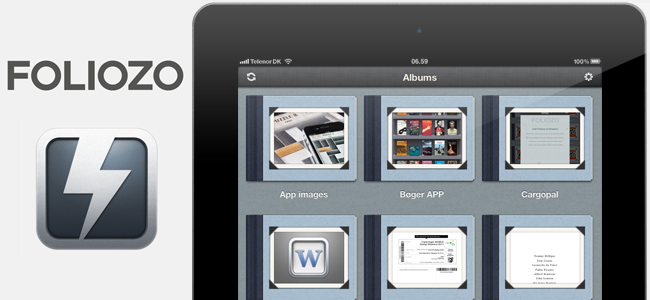
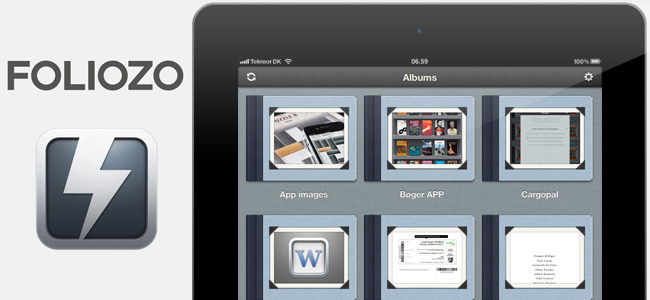
Use Your iPad As A Digital Portfolio With The Excellent Foliozo

One of the iPad’s biggest strengths is the ease to which you can show various pictures, videos or websites to the people around you - its sleek form factor and large display makes it feel much more natural and personal than a laptop or desktop would. It is that inherit trait of the iPad that Apple is taking further advantage of with iOS 5 and its Photo Stream feature that lets you take pictures with your friends and family at the beach on your iPhone and then show those pictures on your iPad after a family dinner because Photo Stream effortlessly syncs photos between the two devices. Our own Federico recently wrote about how it removed the effort of manually syncing photos after he used the feature extensively on a recent summer holiday.

So we know the iPad is great (and will get better with Photo Stream in iOS 5) for sharing pictures and videos with our families and friends, but surely this experience could also translate into the professional realm. The true fact is that it does, with many firms already using the iPad as a portfolio to show concepts, photos and designs to clients and there are already a number of apps in the App Store that make this process easier. Today, however, I’m reviewing Foliozo which is a new entrant to the ‘digital portfolio’ app market, and one I think that stands above the pack.

Jump the break for the full review, screenshots and their promo video.

Read more


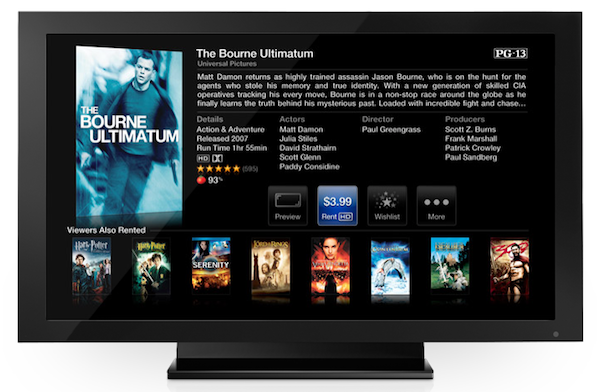
Apple “Discussing” TV Subscription Service with “New Technology To Deliver Video”

As reported by The Wall Street Journal in an article detailing some of the challenges Apple’s new CEO Tim Cook will have to face in the post-Jobs era and many of the achievements of the company’s former chief executive, Apple is allegedly working on a new technology to deliver video to televisions:

An immediate challenge for Mr. Cook will be to advance Apple’s plans in what is expected to be a key market for growth: digital video. Apple is working on new technology to deliver video to televisions, and has been discussing whether to try to launch a subscription TV service, according to people familiar with the matter. Unlike the iPod and music, where Apple has a commanding position, the battle to rule online video remains wide open and the company faces fierce competition.

No additional details are provided in the report, although speculation of new TV products from Apple has increasingly suggested in the past months that, just like with the iPod, iPhone and iPad before, the company is now aiming to disrupt another market that’s long been dominated by services, corporations and standards that don’t make it easy for consumers to have an optimal user experience. Specifically, rumors of an HDTV from Apple have been circulating for years, pinpointing what turned out to be incorrect release dates, tech specs, and prices. However, these rumors have a reason to exist, as they’ve been subtly backed by Steve Jobs’ public criticism towards the current TV business model and cable companies, described as clumsy, complicated, and ultimately bad for consumers. At the D8 conference last year, when asked about whether Apple could get into the television business, Jobs replied:

The television industry fundamentally has a subsidized business model that gives everybody a set-top box for free, or for $10 a month, and that pretty much squashes any opportunity for innovation, because nobody’s willing to buy a set-top box. Ask TiVo, ask ReplayTV, ask Roku, ask Vudu, ask Google in a few months. So all you can do is add a box onto the TV system. […] The only way that’s ever going to change is if you can really go back to square one and tear up the set-top box, and redesign it from scratch with a consistent UI, across all these different functions, and get it to the consumer in a way that they’re willing to pay for it. Right now there’s no way to do that. So that’s the problem with the TV market.

The Wall Street Journal’s report doesn’t mention any new hardware from Apple, focusing on subscription services and technologies to stream video to televisions. However, as Apple is known for driving innovation by integrating software with their own hardware, it’s likely that when the company will find it “viable” to get into the TV market, they’ll do so by releasing their own hardware tightly integrated with a “new technology” and “subscription TV service”. Apple currently sells the Apple TV 2nd-gen – described multiple times by Jobs and Cook as a “hobby” – that runs a modified version of iOS and comes with a native Netflix app for instant movie streaming; recently the company added the possibility to stream any previously purchased content from the iTunes Store to the Apple Tv through their new iCloud platform. It was reported back in April that Apple added 12 petabytes of storage to their server farms for serving iTunes Store video, and a separate report mentioned Apple could soon launch a service similar to Netflix to stream movies and TV shows for a monthly fee.


iPhone 5, iPhone 4S - A Rumor Roundup and Retrospective

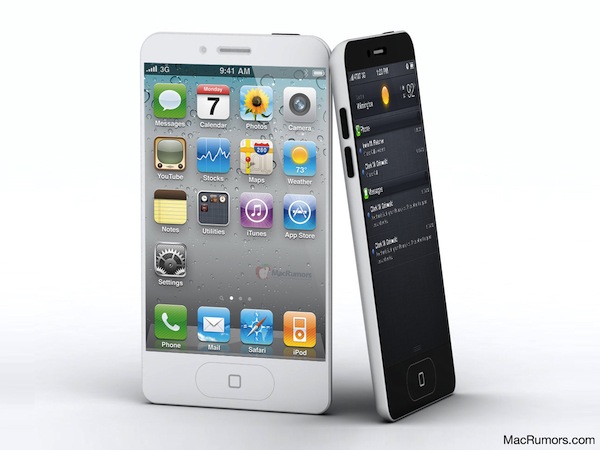
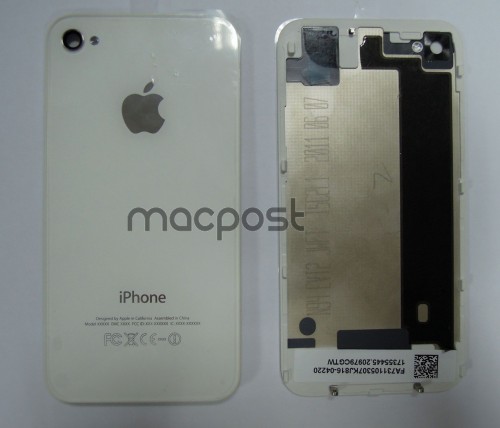
According to new shots showing alleged leaked parts for the upcoming iPhone 5, website MacPost.net (via MacRumors) shows a white back cover from an Apple internal prototype iPhone dated June 7, 2011, labeled N94 and EVT (Engineering Verification Test). In Apple’s prototype design cycle, the EVT monicker is one step ahead of DVT, which stands for Design Verification Test. As you can see from the purported leaked part, the design of the back cover is largely similar (if not the same) to the current-gen iPhone 4, adding more speculation to the rumors suggesting the next-generation iPhone, dubbed iPhone 5, will share the same design of the existing iPhone, only adding a new processor, better camera, and other minor speed bumps.

There’s been a bit of confusion in the past months regarding rumors floating around Apple’s next iPhone. Whereas the N94 and N93 codenames found in the iOS 5.0 SDK (actually, N94 showed up in iOS 4.3) clearly referred to a device running the same A5 processor of the iPad 2 (the iPhone 4 has an A4 processor), multiple sources couldn’t agree on whether Apple was on track to deliver one iPhone this Fall – the iPhone 5 – with a major redesign, a new iPhone with the same design but better specs, or two iPhones aimed at different markets and users.

For this reason, in the most recent weeks a differentiation in rumors has arisen to separate the iPhone 5 from an alleged “iPhone 4S”. The “4S” name, used as an unofficial monicker for the first time by 9to5mac in April, was initially used in regards to a prototype iPhone 4 with an A5 chip reportedly sent to developers for testing – thus not necessarily representing a final product – but has evolved with time into a widely-accepted rumor indicating a second product from Apple that could also refer to a cheaper iPhone the company is working on for pre-paid markets.

Again, there is a lot of confusion around the terms “iPhone 5”, “next-generation iPhone”, and “iPhone 4S”. However, sticking to SDK findings and reliable photographs of unreleased models – not just rumors without evidence – might be the best chance to guess what’s coming in October.

First off, N94 refers to an iPhone carrying the A5 processor, an obvious choice for Apple. With increased performances, low-power consumption and a huge leap forward in terms of graphics rendering, the A5 has been a success on the iPad and there’s no reason why Apple wouldn’t use it in a future iPhone. For reference, the current-gen iPhone 4 was codenamed N90 and N92 for its GSM and CDMA variations, respectively. N93 and N94 might be related to carrier variations of the same iPhone model or two new entirely different products – this can’t confirmed. However, N94 isn’t only present in the iOS 5 SDK: aside from today’s MacPost pictures, BGR showed photos of an unreleased iPhone model running on T-Mobile’s 3G bands back in April. The iPhone was white, like today’s back cover shots, and it was codenamed N94, running a test version of iOS with several Apple-only apps and utilities. Furthermore, MacRumors is now associating those photos from April to a new part leak that seems to depict a redesigned antenna for the iPhone 4-like new iPhone, whatever it may be. The iPhone 4 antenna design was behind the so-called Antennagate media debacle last year, so it would make sense for Apple to redesign it only to avoid further discussion.

Rounding up the evidence about N94 – again, one of the two unreleased iPhone models mentioned by the iOS SDK – it appears that this model will have an iPhone 4-like design, a slightly redesigned antenna, an A5 processor, and it’s been tested on T-Mobile.

However, it’s still not clear whether what we call “iPhone 5” is actually a tweaked iPhone 4 (thus N94), or an all-new model that hasn’t surfaced in the SDK and leaked parts just yet. For as much as new cables and connectors suggest Apple is tweaking the internal specs of an iPhone, they don’t offer confirmation of the device’s design and external look.

To bring some clarity to this whole iPhone 4S/iPhone 5/two iPhones debate we’ve collected the most notable rumors from the past months, in order to see, now that a possible release date is nearing, how speculation evolved and changed over time. Read more


From JailbreakMe To An Internship at Apple

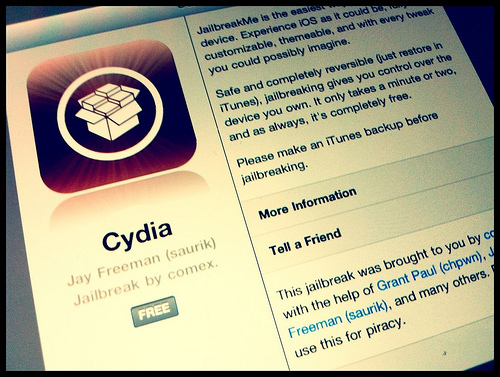
Through a series of tweets posted last night on his personal account, jailbreak hacker and developer comex, best known for his work on JailbreakMe, has announced that he will be joining Apple as an intern in two weeks. Whilst it’s common practice for Apple to hire interns for a limited period of time – this happens to both designers and developers all the time – this internship is worth noting as comex has been for years the brain behind various jailbreak tools that allowed users to install Cydia, the alternative App Store, on their devices, updating these tools multiple tools in a “cat & mouse” game against Apple’s patches and software updates.

Less than a month ago, Forbes profiled comex as 19-year old Nicholas Allegra on a leave from Brown University, who’s been interested in hacking and coding since the age of nine. Among comex’s most notable accomplishments in the jailbreak community, the latest version of JailbreakMe gained popularity thanks to a simple web-based interface to install Cydia on iOS 4.3 devices including the iPad 2. JailbreakMe 3.0 has been used over a million times, becoming the most successful jailbreak tool every released to the public. The hack used a vulnerability in Apple’s PDF library to run JailbreakMe’s code and install Cydia, a security hole that Apple fixed after 9 days.

In their article, Forbes concluded:

But at least in the case of JailbreakMe 3, Allegra also created a patch for the PDF vulnerability he exploited, allowing users to cover their tracks so that other hackers couldn’t exploit the same bug. In the period before Apple released an official patch, users who had jailbroken their iPads and iPhones were in some sense more secure than those who hadn’t.

A postscript to Apple: Perhaps your security team could use another intern.

It’s not clear whether the security team actually hired comex, but it sure looks like his jailbreak skills attracted Apple’s attention.


CEO Tim Cook to Employees: “Apple Is Not Going to Change”

CEO Tim Cook to Employees: “Apple Is Not Going to Change”

Following Steve Jobs’ resignation as Apple CEO, Ars Technica has obtained a copy of an internal email sent this morning by the company’s new CEO, Tim Cook, to all Apple employees. The full text of the letter is available here, however we’d like to highlight a section in which Cook explains and reassures how Apple is not going to change, and Steve’s inspiration and vision will live on under his “ongoing guidance”:

Steve has been an incredible leader and mentor to me, as well as to the entire executive team and our amazing employees. We are really looking forward to Steve’s ongoing guidance and inspiration as our Chairman.

I want you to be confident that Apple is not going to change. I cherish and celebrate Apple’s unique principles and values. Steve built a company and culture that is unlike any other in the world and we are going to stay true to that—it is in our DNA. We are going to continue to make the best products in the world that delight our customers and make our employees incredibly proud of what they do.

The letter echoes Steve Jobs’ sentiments on Apple and its future:

I believe Apple’s brightest and most innovative days are ahead of it. And I look forward to watching and contributing to its success in a new role.

Tim Cook will execute Apple’s vision and goal to make great products, in spite of the different kind of charisma that differentiates him from Steve Jobs. Titles change, but as Cook seems to confirm, ideals live on.

Permalink

Tim Cook, Apple CEO

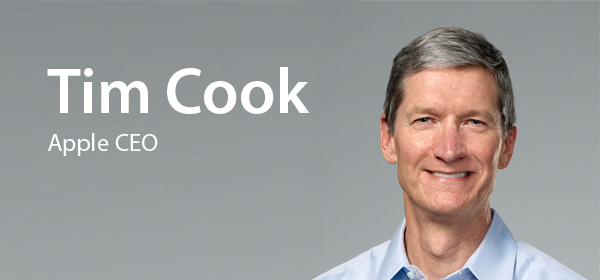
Yesterday afternoon brought the big news that Steve Jobs had resigned from the position of Apple CEO (he is now Chairman of Apple’s Board), along with that came the news that Tim Cook will now permanently take over as Apple CEO. Cook had been acting CEO since January this year when Jobs went on medical leave – Cook now has to step up and officially lead Apple, which recently became the most valuable company in the world.

But unlike Jobs who is known to a sizeable proportion of general society and has quite a reputation, Cook is fairly unknown. As Cook today begins his first official day as the CEO of Apple we’ve written this post to give you, our readers, a little bit of background of Tim Cook and what he is like. Be sure to jump the break to read our succinct biography of him along with some fascinating additional reading and videos.

Read more


Times and Titles

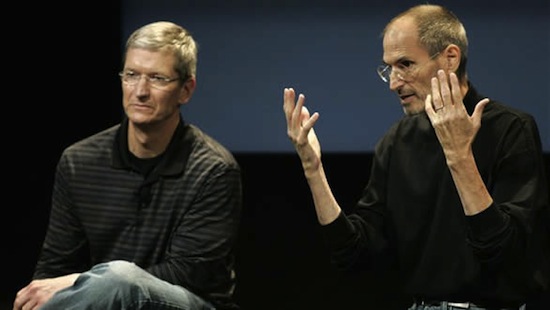
[image via]

We all knew today’s news of Steve Jobs resigning as CEO of Apple was coming. Sooner or later, we – geeks, Apple watchers, fans, journalists, the Apple community as a whole – knew that Apple would announce a change of roles that would see Jobs go, initiating the execution plan that has been carefully planned internally for a long time. And that day has come. But it shouldn’t be seen for what it’s not: a change within the company. It is a change, technically, with Steve Jobs becoming Chairman of the Board, director, and Apple employee, and Tim Cook elected as new CEO. But it’s not a change in perspective – the spirit that has driven Apple’s innovation, attention to detail and need for great products won’t disappear as Tim Cook takes the reins.

There’s no denying reading the initial Reuters Twitter headline about Jobs resigning brought my heart to a full stop. But as I quickly rationalized and processed the news, later confirmed by a series of press releases, I realized that was the turning point I was expecting all along. The change that we, the community, feared and filed away in the imaginary drawer of things that are too far away to even consider as a fact. Yet, in spite of many people’s best hopes, it is a fact. And I’ll say this again – it is sad to see a man slowly taking steps back from the company he built because he’s no longer capable of meeting others’ expectations.

So let’s look at history in the eyes. Steve Jobs won’t be replaced iconically, he will be replaced as a company executive. Steve Jobs’ vision, charisma, stubbornness, willingness to build products people love and engage with on a personal level – these things will live on within Apple no matter the title the Board gives him. Steve is not Apple, but Apple stems from Steve’s ideals. And ideals, history has taught us, don’t die. No matter the bureaucracy, the speculation, the market strategies, the corporate espionage – no matter from what angle you look at it, true ideals live on. They are symbols of evolution, but they survive change.

This is what we believe. Technology alone is not enough. And from my personal angle, this is the mantra that CEO Steve Jobs has best implanted since 1997 in Apple as a company, a team of executives and designers and engineers and employees – Apple as a vision and a statement. A hundred years from now, people will look back at Jobs’ career as CEO of Apple, and wonder how he did. In this very moment of time, we do know how he did. And we applaud Steve Jobs for his achievements in the past decade.

But at the same time, we also applaud his team and we look forward to more great products born under and developed with Steve Jobs’ taste as a Chairman, and Apple employee. Once again, let’s look at the facts – Jobs is still there, only taking a different role and executing the “succession plan” any respectable company that operates at Apple’s levels has. Those who predict the premature demise of Apple and speculate on the failures of future products due to Jobs’ change of title clearly don’t understand how Apple works. I don’t either, but at least I’m not looking into a crystal ball. It will be interesting to keep an eye on Apple’s operations in the next two years for sure, but saying the company without Jobs the CEO is now doomed is a long stretch.

A change of titles – a new Chairman here, a CEO there – won’t transform the way today’s Apple works and makes money. Yet we, the community, are inclined to taking this on a personal level, because let’s face it – a little part of the Apple fan in us died today. Not because of the sadness, the desperation, or the aforementioned predictions of Apple’s upcoming “problems”. Not even strictly because Steve Jobs is a geek’s favorite hero and it’s sad to see him “go”. It’s a much more subtle feeling running through the veins of the Apple community. It’s that feeling of times changing, of you and your friends growing older and perhaps with a better understanding of things – it’s watching what you took for granted be upgraded to something new you think will be fine eventually, but you’re still not completely used to.

Steve Jobs’ greatest accomplishment is not the iPad, the App Store, the iPhone 4 and the device coming out next year. It’s not even the company taken as a bunch of executives and employees around the world, for as much as that’s an impressive work of management and planning. Rather, Steve Jobs the CEO should be proud of the philosophy he’s instilled in Apple’s vision of a product maker for all kinds of people. Because, really, that’s what Steve Jobs the CEO set as a goal for Apple: making people happy using their products.

In these past 14 years, Apple’s former CEO turned around an industry, changed its face, and taught us that technology alone is not enough.

And we thank you for that, Steve.


Steve Jobs Resigns, Tim Cook Named New CEO of Apple

With a press release that just went out, Steve Jobs has announced he’s stepping down as CEO of Apple. Former COO Tim Cook will take the role of new CEO. Steve Jobs will stay involved as Chairman of the Board, and Tim Cook will obviously join the Board, too, effective immediately. In a letter to the Board and the Apple community, Steve Jobs explains he’s no longer capable of meeting his duties and expectations as Apple CEO, strongly recommending the Board to name Tim Cook as new CEO. Jobs also states “Apple’s brightest and most innovative days are ahead of it”.

On January 17, Apple’s Board granted Steve Jobs a medical leave of absence, and the former CEO said he would remain involved with major strategic decisions, with Tim Cook filling in for day-to-day operations at Apple. Since then, Steve Jobs made two appearances at a media event in March and the WWDC ‘11 keynote to announce the iPad 2, iOS 5 and new iCloud features. Speculation has surrounded Steve Jobs’ health conditions since January, although the company preferred to keep such conditions private and out of the community and press daily rumors.

Steve Jobs co-founded Apple in 1976 with Steve Wozniak and Ronald Wayne. He left the company in 1985, only to return from NeXT (another company he started) to Apple in 1997 and ignite the digital revolution by laying the groundwork of modern Mac OS X, iTunes and the iLife suite, and later the iPhone in 2007, and the iPad in 2010. From Apple’s official bio of the Steve Jobs (which hasn’t been updated to reflect the new Chairman role yet):

Steve Jobs is the CEO of Apple, which he co-founded in 1976. Apple is leading the consumer technology world with its revolutionary iPhone and App Store, its family of iPod media players and iTunes media store, and its Mac computers and iLife and iWork application suites. Apple recently introduced the iPad, a breakthrough Internet and digital media device, plus the iBookstore, alongside iTunes and the App Store.

Steve also co-founded and was the CEO of Pixar Animation Studios, which created some of the most successful and beloved animated films of all time including Toy Story, A Bug’s Life, Monsters, Inc., Finding Nemo, The Incredibles, Cars and Ratatouille. Pixar merged with The Walt Disney Company in 2006 and Steve now serves on Disney’s board of directors.

Steve grew up in the apricot orchards which later became known as Silicon Valley, and still lives there with his family.

Tim Cook, former COO of Apple, was responsible for the company’s worldwide sales and operations, reporting directly to Steve Jobs and managing Apple’s supply chain overseas. He’s regarded as the man who made possible building and shipping millions of iOS devices in four years thanks to exclusive supplier agreements and deals, including pre-payments to get stable access to important components such as the LCD displays used in Apple’s iPhone, iPad, and iPod touch.

Before joining Apple, Cook was vice president of Corporate Materials for Compaq and was responsible for procuring and managing all of Compaq’s product inventory. Previous to his work at Compaq, Cook was the chief operating officer of the Reseller Division at Intelligent Electronics.

Wikipedia provides a brief timeline of Cook’s roles at Apple:

  • He initially served as Senior Vice President for Worldwide Operations
  • In January 2007, Cook was promoted to COO.
  • Cook served as Apple CEO for two months in 2004, when Steve Jobs was recovering from pancreatic cancer surgery. Cook also serves on the Board of directors of Nike.
  • In 2009 Cook again served as Apple CEO for several months while Steve Jobs took a leave of absence for a liver transplant.
  • In January 2011, Apple’s Board of Directors approved a third medical leave of absence, requested by Steve Jobs. During that time, Tim Cook was responsible for most of Apple’s day-to-day operations while CEO Steve Jobs made most major decisions.

Steve Jobs is widely regarded as the “visionary genius” behind many of Apple’s best inventions and innovations such as the refined graphical user interface, the Mac’s attention to detail and beautiful typography, and iOS’ focus on multitouch and natural user experience. To get an idea of the man behind the company, check out this collection of Steve Jobs quotes we collected two years ago.

Below, you’ll find the press releases from Apple, Steve Jobs’ commencement address at Stanford University in 2005, and the video of the official “iCEO” announcement in 2000. As for our thoughts on Apple without Steve Jobs, we’ll take our time to elaborate on today’s (huge) news for the company, but overall, this article from January 2011 still holds true: During Steve’s Absence, Apple Will Be Just Fine. Read more


New Logitech Fold-Up Keyboard and Joystick For The iPad Coming Soon

Logitech currently offers two fairly basic iPad keyboard accessories, but come September they’re launching two more accessories that are a little bit more unique. The first is another keyboard but with a little bit of a twist (literally), offering an iPad stand in conjunction with a foldable keyboard. The second is an attachable joystick for playing games on the iPad - similar to the Fling which was released earlier this year.

The new keyboard accessory is a full-sized bluetooth keyboard that cleverly turns off automatically when it is folded away and turns on when snapped open. It also charges through USB so there is no need for replacing batteries every few weeks. TechCrunch (which got some hands on time with both devices) does however note that the accessory is fairly bulky which is disappointing given that it is coupled with the very sleek iPad 2.

The Logitech Joystick for iPad on the other hand doesn’t share the bulkiness of the Fold-Up Keyboard and is very light, simply attaching to the iPad’s screen via suction cups. TechCrunch writes that the “thumb pad always returns to the center position, finally offering some tactile feedback on the iPad”.

The Logitech Fold-Up Keyboard for iPad 2 will launch in the US and Europe next month for US$129.99 whilst the Logitech Joystick for iPad will also launch next month in the US and Europe for US$19.99.

[Via TechCrunch]