
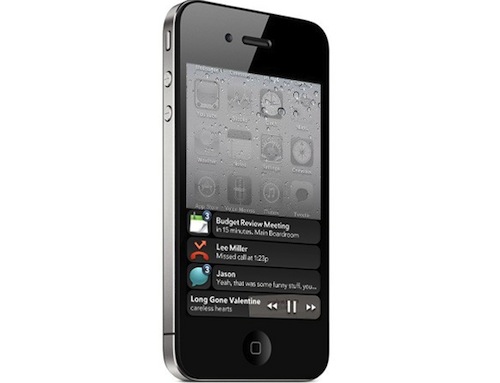
With today’s rumors about Apple considering the purchase of a third-party developer to improve the notification system of iOS, I thought I should explain why, in my opinion, Apple really needs to focus on this, developer buyout or not. The problem: iOS notifications get in the way, interrupt one’s workflow or media consumption and once they’re gone, they’re gone. In my usual setup, these are the apps that send me notifications: Twitter (replies from users I follow, DMs), Messages, Facebook, Calendar, Skype / IM, Appshopper. I think most of these apps are used by several iPhone and iPad owners. Read more
Posts tagged with "apple"
iOS Notifications: No More, No Less
Is Apple Buying A Third-Party App To Fix iOS Notifications?
Most iOS users agree that notifications on iPhones, iPod touches and iPads are nothing compared to what Google has implemented in Android, or what HP showed at the webOS event a few days ago. Personally, from what I’ve seen so far, I believe the notification system demoed on the HP TouchPad is the most intriguing one, with messages staying out of the way in the top menubar but still accessible with a single tap that opens a popup menu.
Last year, it was rumored that Apple might improve iOS notifications after hiring Rich Dellinger, creator of the webOS notification system. It didn’t happen with iOS 4 and 4.2 before that, but according to Cult of Mac Apple is now seeking to buy a “smaller” third-party developer to entirely rebuild iOS notifications. According to Cult of Mac, who cites a source that asked to remain anonymous, the smaller company already has an iPhone app in the Store.
Our source, who asked to remain anonymous, didn’t know the identity of the company, except it already has an iPhone app in the App Store.
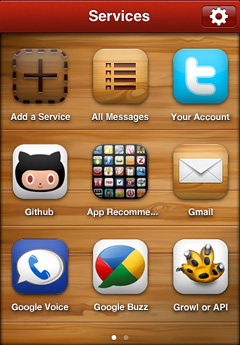
One candidate is Boxcar, a free app from Appremix that enables push notifications for Twitter, Facebook, and email. Boxcar’s system has been highly praised, especially the new iPad version.
There’s no doubt that Boxcar offers an advanced and easy way to stay on top of updates coming from social networks, email and websites; Boxcar currently has a universal app in the App Store but the service also works on the web. The app of course doesn’t deploy its own notification system on top of iOS, but it aggregates notifications inside a single UI that’s easy to navigate and manage. I can see Apple wanting to build something like this in iOS 5, although they would still need to find a way to get rid (and thus redesign) the annoying alert boxes and unread badges that come with iOS now. Apple might as well ditch popup alerts altogether and take an approach similar to HP, aggregating everything into a central notification app as well.
It will be interesting to see what iOS 5 will bring to the table with notifications and social connections; Boxcar can be a great fit for Apple.
Could Nokia - Microsoft Partnership Lead To A Patent Settlement with Apple?→
Could Nokia - Microsoft Partnership Lead To A Patent Settlement with Apple?

Earlier today, Microsoft and Nokia announced a partnership to bring Windows Phone 7 to Nokia’s smartphones. Intellectual property activist Florian Mueller speculates this could facilitate the settlement of patent disputes between Apple and Nokia.
I can’t imagine that Apple would assert any of its patents against Windows Phone 7. Nokia is now covered by Microsoft as far as Windows Phone-based devices are concerned, and it’s been a long time since Apple and Microsoft had (and settled) a patent dispute. They need each other.
In the past months, the two companies fired back at each other with a series of lawsuits. I don’t know how much Apple “needs” Microsoft at the end of the day, but I do agree that resources would be better spent going after Android rather than Nokia’s alleged patent infringements.
Read the whole story here.
Advertisers Not Happy About Apple’s iAds?
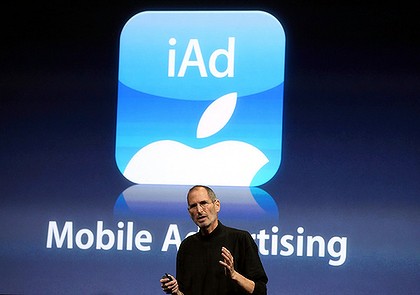
Months after the introduction of Apple’s iAd advertising platform, it looks like advertisers aren’t happy about the service at all. According to a report posted by TechCrunch, many developers have noticed a massive slowdown in iAd’s fill rates recently, especially after the New Year:
The fill rate—what percentage of the ad inventory is actually filled with an ad—for two separate developers plummeted from 18 percent to 6 percent. And in a few instances for some newer apps, none of the ad slots were getting filled, compared to nearly complete fill rates from other mobile ad networks.
Today Is The Verizon iPhone 4 Launch Day
A reminder that today is the day that the Verizon iPhone goes on sale across the US in Apple, Verizon, Walmart and Best Buy stores and Macworld is reporting of mixed queue lengths around the country. It seems that few stores had more than just a couple of people queuing before the shops opened.
If you are in the US and looking to walk in and grab a Verizon iPhone 4, Macworld is updating their post as they hear information about supplies so have a look over their for some updated information. Apple and Verizon are also selling the Verizon iPhone on their websites to everyone, no longer restricting purchases from non-Verizon customers.
[Via Macworld]
fring Update Brings fringOut, Allows Cheap Calls to Landlines and Mobiles

In its latest update, the iPhone app fring which allows instant messaging and VoIP calls between users has added the ability to call people on regular landline or mobile numbers. The new feature, fringOut isn’t free but the rates are fairly competitive starting at 1c a minute for users in the US and UK and users can still call other Fring users at no cost.
Rates vary from country to country so be sure to check out the full list of rates, but the service should work from any country, but be careful to note that calls are charged in one-minute increments. The service also currently does not send SMS messages and calls cannot be made to premium, toll-free or emergency numbers.
For more information visit the fringOut website.
iPhone Exploit Puts Passwords At Risk Within Minutes

German researchers have demonstrated the ability to reveal passwords stored in a locked iPhone in six minutes and without needing to crack the passcode. The attack targets Apple’s password management system known as keychain and is based on existing jailbreak exploits that gives the attacker wide access to the iPhone’s internal data.
Once jailbroken, the researchers installed an SSH server on the iPhone and install a keychain access script. This keychain access script utilizes functions that are built within the phone to access passwords and other data stored in keychain which is then outputted to the attacker. For a demo of the exploit, jump the break.
More Evidence of iOS Gaming on the Apple TV Unearthed, Online Multiplayer too?
Since the Apple TV was revised last year with an iOS backend there has been ample speculation that Apple would eventually allow users to run apps and games and Engadget has today reported that some code in iOS 4.3 beta 3 further backs up that speculation. More specifically, the uncovered code references “ATVGames” and “ATVThunder” which also point to leaderboards, a controller, a way to schedule games and a storefront.
Two other strings were particularly noteworthy; “com.apple.appletv.play.live.thunder” and “.play.archive.thunder”. No one is really sure what they fully mean but as Engadget points out, the AppleTV is limited to 8GB’s of storage which is admittedly fairly minimal possibly suggesting that “archive” or “live” could mean streaming games or multiplayer. Engadget’s source also comments that “OpenGL is mature and thoroughly implemented enough that streaming low bandwidth data and computing locally could happen”.
2011: The Year Of Two iPads?

The next-generation iPad, dubbed “iPad 2” so far, is likely to be released between March and April. According to recent speculation, it will include a faster processor, more RAM, a thinner and lighter design and a front-facing camera for FaceTime. At this point, with even the Wall Street Journal weighing in to confirm the iPad 2 existence and release in the next few months, it seems pretty much obvious that we’ll see an iPad 2 within 10 weeks from today.
Still, two posts published by Daring Fireball’s John Gruber today open up to a new possibility: that Apple will release two new iPads in 2011, with a second one – let’s call it iPad 3 – due for a September release. Read more