Posts tagged with "app store"

Raising the Gates Is Not the Way to Improve the App Store

Jeff Johnson has a knack for finding spam on the App Store. Yesterday it was review spam, and today it’s app submission spam. In a post where he called out an individual for releasing 41 apps, and presumably contributing to slow app review times, Johnson proposed a solution:

…bring back Apple Developer Program tiers and review app updates post-release for proven developers. Why should Marco Arment go into the same App Store review queue as AI slop? Does that make any sense for developers, for Apple users, or for Apple? Is there no way for developers to earn Apple’s trust, no matter how long they’ve been in the App Store, no matter how famous or beloved? Should professional software developers whose livelihood depends on the App Store go into the same review queue as hobbyists? Speaking for myself, I would be willing to pay a much higher developer program fee for improved service, including a separate review queue. I suspect that a much higher developer program fee might also deter scams and AI slop, typically looking for a fast, easy buck.

I’ve heard versions of this argument since before the App Store first opened its doors, and it’s never sat well with me. Maybe that’s because when I first heard someone argue that established developers or the ones who could afford it should get preferential treatment, I was an unknown hobbyist learning Objective-C and trying to build an app myself. It struck me as gatekeeping then, and it still does today.

There’s no doubt that there is spam on the App Store, but the way to remove it is to target the spammers, not new developers, students, and hobbyists looking to build their ideas. I know that being an indie developer isn’t an easy way to make a living, but erecting barriers to submitting apps is the surest way to starve Apple platforms of fresh, innovative ideas. That hurts everyone from users who would have fewer choices to the established developers who would find themselves writing apps for a stagnant platform.

Permalink

The Utility App Flood Won’t Last

The App Store is evolving at a breakneck pace not seen since its earliest days. We saw the first glimmers of what was to come early in 2025, but it wasn’t until late last year that the tsunami of apps developed with the help of AI agents really took hold.

Since then, veteran developers are releasing new apps and updating existing ones faster than ever, and new developers are releasing their first apps in droves. Today, supply is dramatically up, demand is flat, and quality is seemingly simultaneously up and down, depending on where you look.

How these forces play out long-term is anyone’s guess, but it’s worth examining because, just as Federico’s link to Bryan Irace’s post about agentic coding tools foreshadowed the rise of tools like Codex and Claude Code, today’s trends are sparks that have the potential to become tomorrow’s App Store wildfires or simply fizzle out.

Utility apps are on the front lines of this change. The TechCrunch story I linked in April picked up on this trend:

Another interesting tidbit from Appfigures is that the Utilities app category moved up the top five chart.

If anything, the trend has accelerated in the months since.

It’s not surprising at all that utility apps have taken off. They’ve been a staple of new developers since long before agents came along. That’s because many are UI wrappers around command line tools. That isn’t a knock against the developers of those apps; most users don’t want to open Terminal to convert a video or audio file to another format using ffmpeg, for example. By building a great UI around command line tools, developers have made them far easier to use.

However, the relative simplicity and narrow scope of many utility apps have made them a natural fit for AI agents, too. That’s why the App Store (and my inbox) is deluged with Mac menu bar and single-screen iPhone and iPad utility apps.

On the one hand, the abundance of utilities has been great for users. More choice means you’re more likely to find the app that perfectly fits your needs.

On the other hand, though, I don’t think what’s happening in the category is sustainable and expect to see it dramatically shift again in the coming months. As we’ve seen from reporting by The New York Times, app supply is outstripping demand by orders of magnitude, which will drive down prices. That alone is likely to cause the utility app market to shrink. But there’s more to it than that.

Remember, the demand shifts that The New York Times reported, based on Sensor Tower numbers, are for the entire App Store, where download numbers have grown 2-3% this year and last. I expect utility downloads to actually shrink in the coming months – again, because of agents. Utilities, especially simple ones, are exactly the sorts of apps that are becoming trivially easy for power users – the very users these utilities are made for – to create themselves. From frontier labs‘ model improvements to a growing number of app-building tools from those same labs and third parties, it’s never been easier to build a web or native app yourself.

And although I agree with people, like Nilay Patel, who say the notion that everyone will build their own software is overblown, the utility market is different. Your average person is not downloading apps to adjust the frame rate and file format of a video or downloading YouTube videos to watch later. But those are exactly the sort of things that people who are using agents are doing with them, whether they’re having an agent do those things directly via a command line tool in an app like Codex or Claude Code or building an app to do the same thing. That’s going to put even more pressure on the category.

That said, I think there will always be a cohort of users who would rather pay for an app than build it themselves, so I’m not predicting the demise of utilities in general – just the end of today’s frothy market. I also think there remains a place for simple utilities that solve hard problems with clever solutions. Not every utility is a UI wrapper for a terminal command. Plenty of apps feature original solutions or thoughtful and unconventional remixes of disparate tools.

Utilities aren’t going away, but just like other App Store deluges, the trend will recede. It’s just that this time, it’s likely to flip faster than usual.

Indie App Sales Event Begins Today with Over 200 Apps

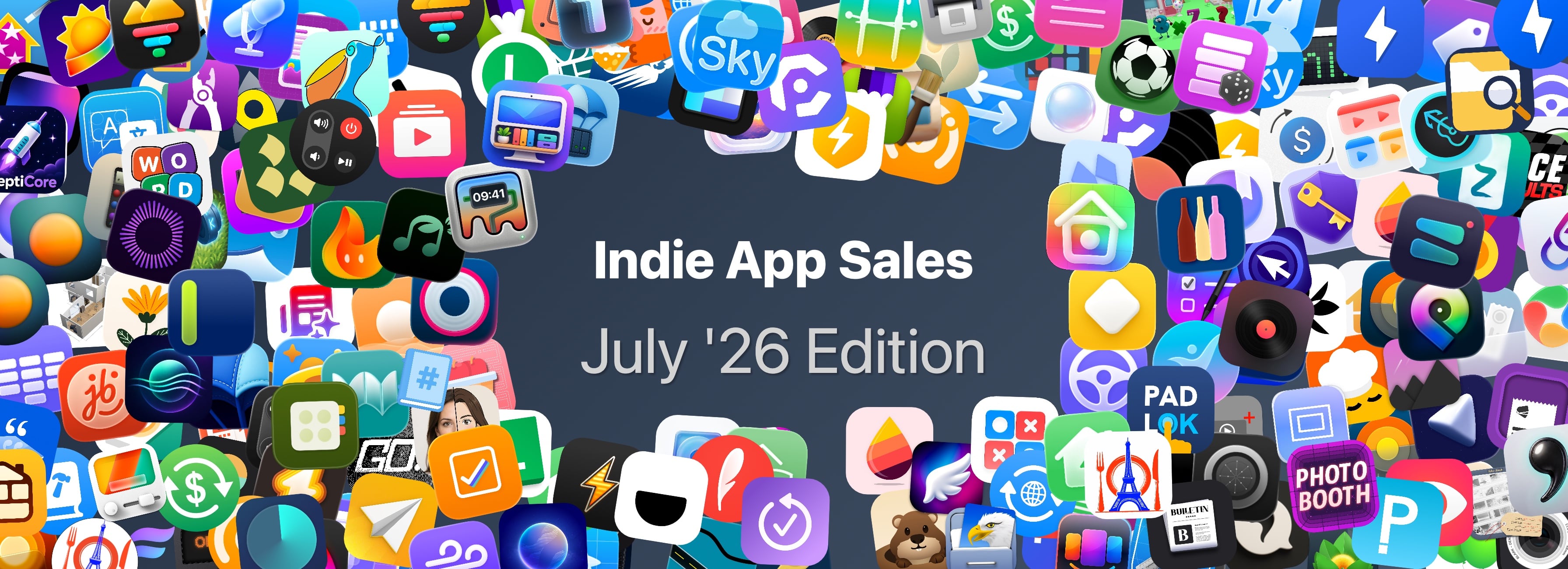
Matt Corey, the maker of Bills to Budget and Signals, has organized indie developers for a big sale that runs from July 28 - 30. The sale includes over 200 apps that will be offered at a discount through Thursday. The list is too long to publish here, but it includes many apps we’ve covered here on MacStories and on Club MacStories in the past, including:

There are a lot of great deals, with many apps discounted 50% or more. What’s listed above is a small fraction of the participating apps, so be sure to visit Indie App Salesand support these great indie apps.


App Store Chaos

Kalley Huang, writing for The New York Times about apps written with the help of AI agents that are flooding the App Store:

But as with many things A.I., just because something is easy to build doesn’t mean people will use it. It is not clear if vibecoding is breathing new life into the App Store or just cluttering it.

Last year, the number of new apps released in the App Store grew 30 percent to about 600,000, according to estimates by Sensor Tower, an app analytics firm. In the first half of this year, new apps doubled to about 560,000.

Now, Sensor Tower metrics should always be taken with a grain of salt. They don’t have direct access to Apple’s sales data, so they’re extrapolating from incomplete data that they collect themselves. That said, I think it’s fair to take their numbers as broadly representative of sales trends over time, and the story they tell, as reported by Huang, is interesting.

Based on Sensor Tower’s numbers, the total number of App Store releases peaked in 2016 at 890,000, hit a low of 420,000 in 2022, and this year, is on pace to pass 2016’s peak by a healthy margin. But app releases don’t equate to downloads, let alone sales. According to Huang’s reporting, downloads increased 3% in 2025 and 2% in the first half of 2026, far lower than the growth of new releases.

All of this tracks closely with what we’ve seen at MacStories. One subtle trend I’d add is that whereas for years most developers contacted us before they released an app, a lot of new developers are doing so after their apps are on the App Store. I suspect what I’m seeing is a new generation of developers learning the hard discoverability lessons of the App Store for the first time because when I check out these apps, they rarely have any App Store reviews.

The upshot of all these statistics and trends is App Store chaos of a magnitude that we haven’t seen in a long time. It’s a little like the App Store gold rush of the early days, but without the gold. Discoverability has gone from bad to worse, and the supply of apps is off the charts compared to the demand. With download numbers barely creeping up, the flood of new apps is making selling on the App Store harder for everyone.

Yet, it’s exactly this sort of chaotic disruption that leads to exciting new apps. And, it’s tools like Codex and Claude Code that empower and democratize app development, allowing people who would never have built an app to see their ideas become a reality. Those are things I love to see.

There’s no doubt that the App Store is out of whack thanks to agent-assisted coding, but like any market it will find its equilibrium again. In the meantime, it’s never been a better time to be a fan of apps because while a lot of those record numbers are comprised of mediocre apps, there are hidden gems, and we’re on the hunt for them.

Permalink

2026 Apple Design Awards Winners Announced

With WWDC right around the corner, Apple has revealed the winners of the annual Apple Design Awards. The Awards are given to an app and game from a pool of 36 finalists in the following categories:

  • Delight and Fun
  • Inclusivity
  • Innovation
  • Interaction
  • Social Impact
  • Visuals and Graphics

The pool of finalists was especially strong this year, but just one app and game is chosen for each category, and here’s what Apple picked:

Delight and Fun

Is This Seat Taken?

Is This Seat Taken?

Appgrug
Developer: Ocho (Netherlands)

grug is a playful way to discover and embrace daily wisdom. The affirmation app provides a delightful way to read daily neolithic grunts. With just a simple idea, each prompt is thoughtfully delivered to offer users a small but meaningful moment of reflection.

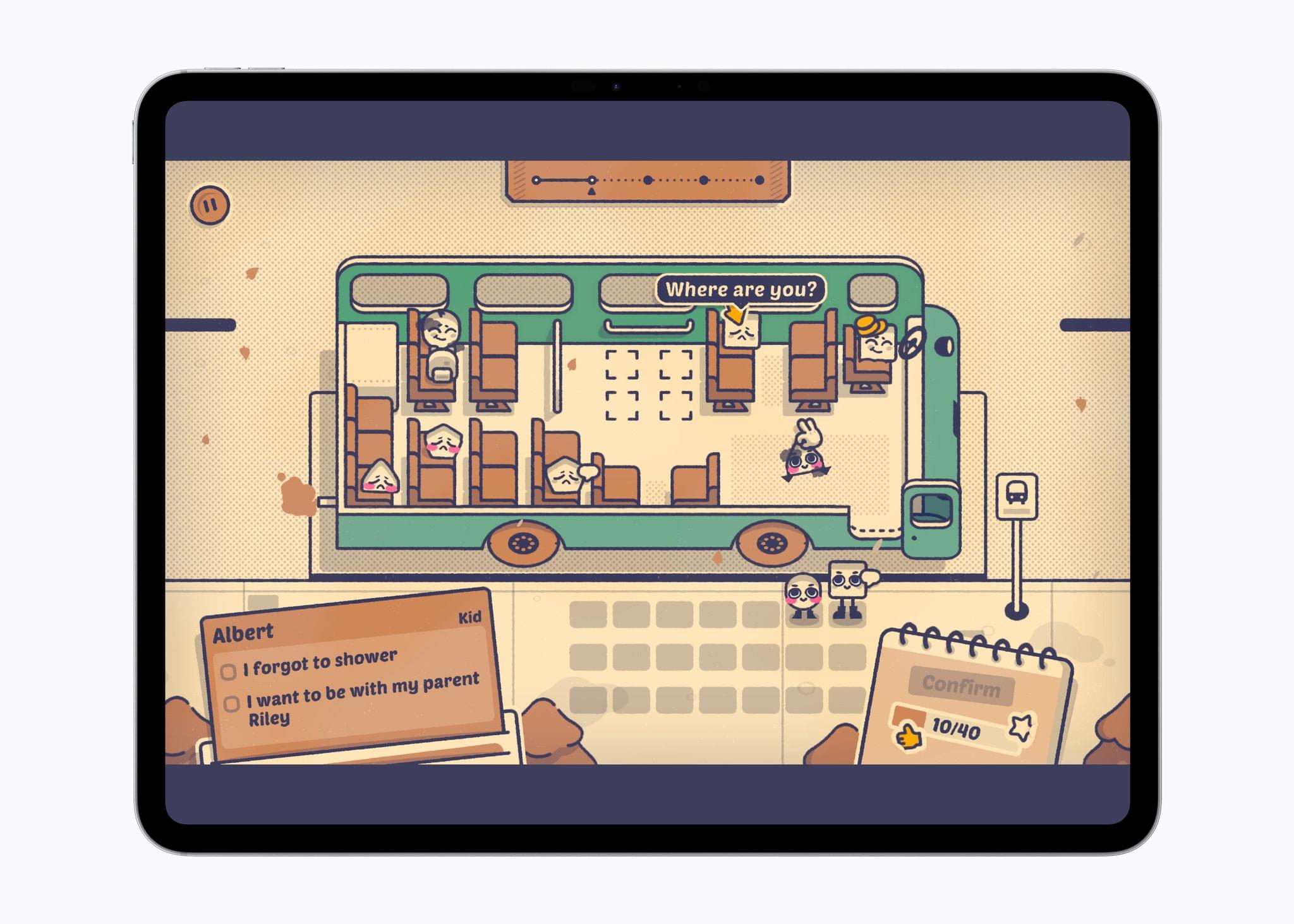
GameIs This Seat Taken?
Developer: Poti Poti Studio (Spain)

Is This Seat Taken? is a fun way to experience and solve tricky logic puzzles. The cartoon-style game provides entertaining scenarios, helping players navigate the quirkiness of public transit. Playful interactive elements within the game create a sense of charm to support users in enjoying an unhurried ride, one seat at a time.

Read more


Coding Agents Are Reshaping the App Store

While I think it’s fair to take reports from Appfigures and its cohorts with a large grain of salt, its latest report that the App Store is booming rings true to me. As Sarah Perez reports for TechCrunch, first quarter 2026 app releases were up 60% year-over-year. That’s in line with a surge that occurred at the end of last year and just so happened to coincide with the release of Claude Opus 4.5, the model that ignited a coding boom.

Another interesting tidbit from Appfigures is that the Utilities app category moved up the top five chart and Productivity apps, which were missing from the Q1 2024 and Q1 2025 top fives, made it into this past quarter’s top five.

As Perez reports:

The working hypothesis here is that AI-powered tools, like Claude Code or Replit, could be behind the surge of new launches. It also seems possible that we’re hitting some sort of tipping point in terms of AI usability, where it’s easy enough for people to leverage these tools to build their own desired mobile apps more quickly — or even build their first apps ever.

That hypothesis lines up well with the deluge of app pitches we’ve received at MacStories since the end of last year. At first, 2025 just seemed like an unusually busy fall. We always see lots of new apps when Apple refreshes its OSes after all. However, this year, the pace never let up. In fact, the pace accelerated into 2026.

From the view on the ground, this is absolutely the result of AI coding tools. Seasoned developers are releasing new apps more often and updating existing ones faster, and there are more new developers releasing their first apps than ever. Lower barriers to entry and tighter development cycles juiced by coding agents are clearly major factors.

What’s most interesting to me, though, is that the mix of quality apps hasn’t suffered meaningfully. We’ve always been sent a healthy portion of poor quality apps. But from where I sit today, the tidal wave we’ve seen so far isn’t slop. Maybe that will change, and perhaps we’re insulated from it to some degree, but I would have thought that at the pace App Store submissions have increased that there would have been a big difference in the pitches we receive. So far, not so much. Weird, right?

Permalink

How Can Everybody Hate Their Weather App When There Are So Many Great Choices?

Twitter clients may have been a design playground in the early days of the App Store, but it’s weather apps that have carried the torch. That’s because the developers of weather apps have to simultaneously contend with a vast amount of data and a wide variety of user preferences.

Last week, for The New Yorker, Kyle Chayka profiled Acme Weather, the new weather app from the team behind Dark Sky that I recently reviewed.

The problem with weather apps, as Brian Mueller, who was interviewed for the story, puts it is that:

“Everybody wants their own weather app,” Mueller told me. An Angeleno may care more about air quality, for instance, whereas a Bostonian wants to know the chance of snow. Carrot’s imperfect solution is to allow users to customize their own display, choosing which information to foreground, against a backdrop of chaotic animations and snarky jokes (“The temperature is low, but my disdain for you is even lower”). Hello Weather separates various stats—on UV or wind—into separate onscreen tiles. Acme’s answer, the most elegant of the three, is to show a minimum of information based on what matters most in a given moment.

Chayka clearly prefers Acme’s approach, which overlays weather predictions from multiple forecasters accompanied by a short narrative summary. I like Acme Weather’s, too, but Chayka was too quick to dismiss CARROT Weather and Hello Weather’s approaches. The fact that all three, plus other top tier weather apps like Mercury Weather can co-exist proves Mueller’s point that everyone wants their own weather app. I’d argue the real problem is that most users haven’t found the right weather app for them or aren’t willing to pay for a better one. Acme Weather is an excellent app, but it’s just one among many great choices, and as users, we’re fortunate that there’s room for all of them.

Permalink

Apple Overhauls App Store Connect

Source: Apple.

Source: Apple.

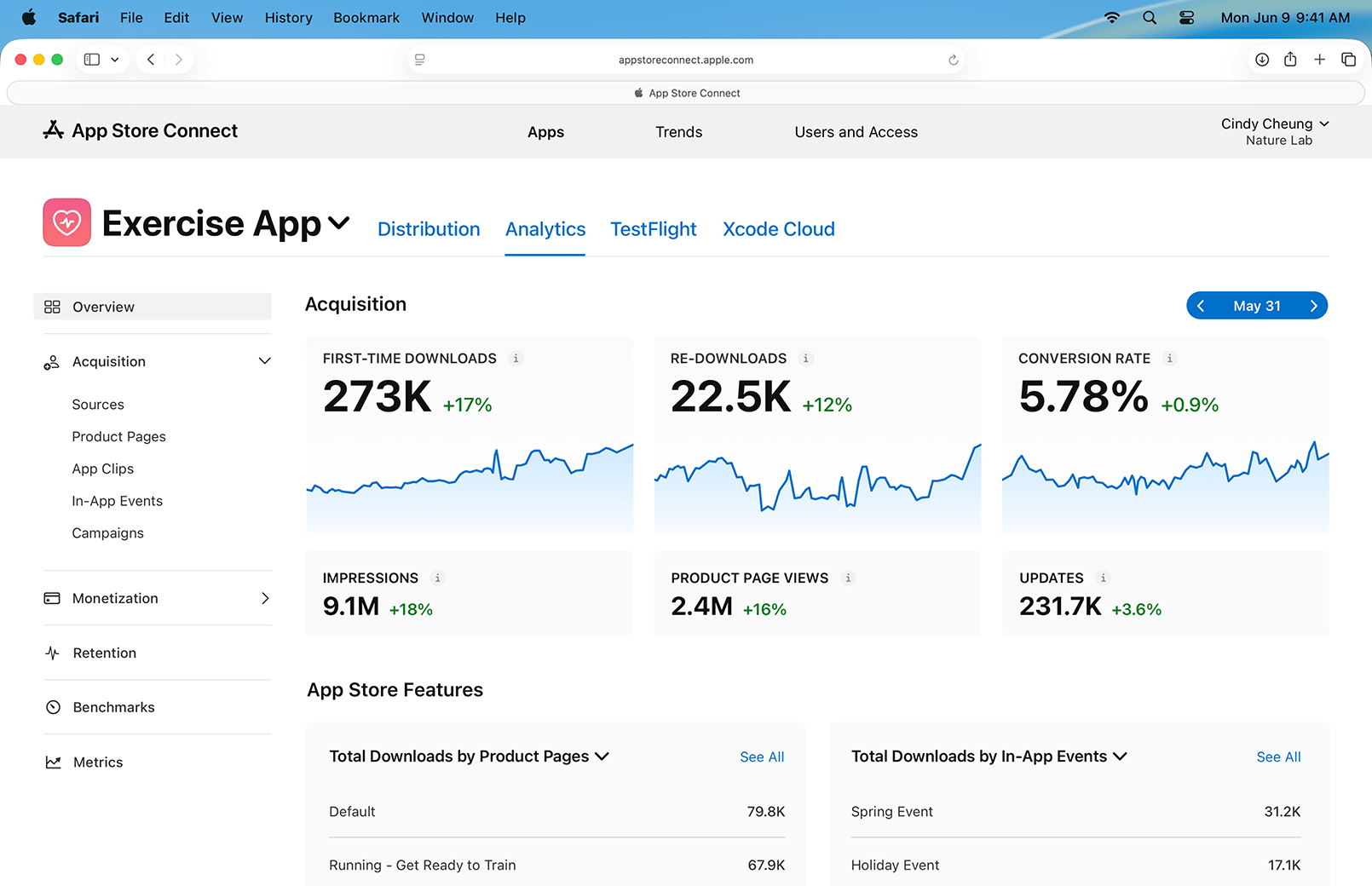
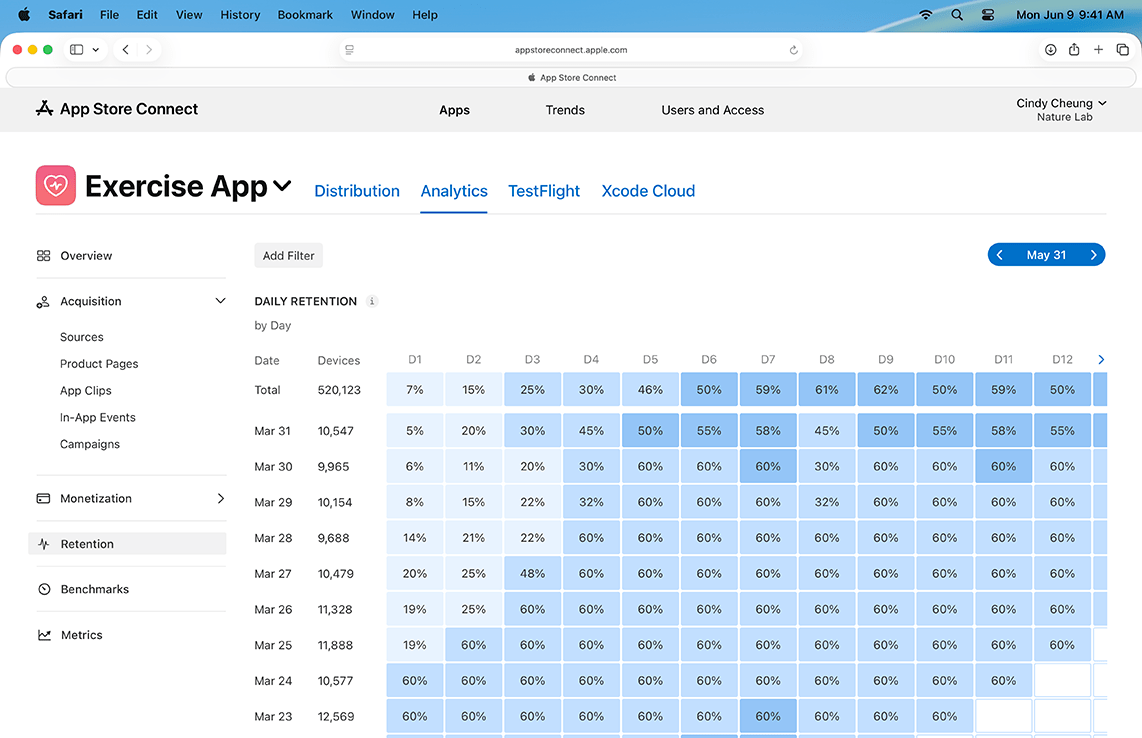
Overnight, Apple rolled out a big update to App Store Connect with new sales and analytics tools for developers. App Store Connect is the online portal that developers use to manage everything related to selling apps from TestFlight betas, to managing their App Store listings and tracking sales data and analytics.

It’s that last piece that was overhauled with this release. In fact, Apple’s post on its developer site says there are over 100 new metrics developers can use to measure the performance of their apps, all of which have been designed in a privacy-first way to protect users.

Source: Apple.

Source: Apple.

The granularity is impressive. For example, developers can track where their sales are coming from, including search, App Store browsing, web sources, and more. Conversion rates are a big part of the analytics, allowing developers to see how many people have seen their apps on the Store and downloaded them, breaking down first-time downloads and re-downloads. Analytics also tie into App Store features like In-App Events, custom product pages, and developer marketing efforts across a multitude of channels using campaign links. There’s a lot more, including metrics that track app pre-orders, user engagement and retention, and good old-fashioned sales data sliced and diced to allow developers to better understand the sources of their income.

And that’s really just the tip of the iceberg of what has changed in App Store Connect. So if you’re a developer, it’s worth spending some time with your app data and reading the new guide Apple published that covers it all.

Some data reported in App Store Connect is being deprecated later this year and next.

Some data reported in App Store Connect is being deprecated later this year and next.

Since the changes rolled out, a couple of concerns I’ve seen expressed online are that there will no longer be a single place to view the aggregate performance of multiple apps and that the new default reporting period is three months. Those concerns are well founded. The changes are organized on an app-by-app basis, and as Apple says in a banner on App Store Connect, the Dashboards in the Trends section of Connect and related reports where that data was available are being deprecated later this year and next. So, while the data Apple offers is deep for each app, the aggregate data falls short by not providing a birds-eye view of a developer’s entire app catalog.

For what it’s worth, Apple is aware of the feedback regarding cross-app reporting. Also, the shorter sales reporting periods, such as the past 24 hours and seven days, are still available, but they’re less visible because three months is the new default.

This is a big update to App Store Connect that will take developers time to get used to, but it’s also a welcome change that provides meaningful new insights into App Store performance. I expect that there will be more areas where the changes fall short of developers’ expectations. However, it’s also clear to me that Apple has heard the early feedback, so I wouldn’t be surprised if adjustments are made in the future. On balance, though, I think the changes give developers valuable new ways to think about and manage their businesses across the increasingly competitive app landscape, which is welcome.


App Marketing: My Extended Q&A for Paul Hudson’s Everything but the Code

Earlier this year, Paul Hudson asked me to answer a few questions about app marketing for a book he was writing called Everything But the Code.

The book is finished now, and it’s full of great advice from Paul and a long list of indie developers whose apps are some of MacStories’ favorites. Paul covers the entire process of making apps, from validating an idea to selling your app and beyond. The only thing he doesn’t cover, as the book’s title makes clear, is building apps, which is the subject of other books and courses he’s created.

Paul was kind enough to ask me to share some insights on marketing apps to the press. You’ll find my contributions in the Prelaunch and Publicity and Aftermath and Evolution chapters, and now that the book is final, I thought I’d share extended versions of my responses with readers. Although the focus is on apps, I expect there are a few lessons here for anyone pitching their creative work to the world. So, here you go.

Paul Hudson: What common mistakes do developers make when pitching their app to the press?

Me: Most developers do a great job thinking through what they’re pitching but don’t spend enough time thinking about who they’re pitching to. I’d love to be able to tell developers do these five things, and you’ll have a pitch you can send to anyone, but it doesn’t work that way. Developers need to think about things like who at a publication typically covers certain types of apps.

For example, if you know a publication has a musician on staff who has covered music apps before, that person should be at the top of your list if you’ve built a guitar tab app. However, that doesn’t mean you shouldn’t contact anyone else at the publication. People get busy, so don’t limit yourself. However, focus your efforts on the people who are most likely to be receptive to your app.

It also pays to make things easy for the person you’re pitching to. Keep your pitch short and to the point, link to a press kit, beta, and other materials, and follow up closer to launch.

A few other pitch pointers:

  • Don’t wait to send your pitches until the last minute. Personally, I prefer getting pitches at least a couple of weeks in advance of a launch, so I can make the time for testing and writing about them.
  • Don’t send pitches during WWDC, on Apple event days, or major holidays. Your pitch is much more likely to get lost in the shuffle on those days.
  • You don’t need to ask if it’s okay to send a TestFlight link. If the person you’re pitching to isn’t interested, they won’t use it.
  • It’s okay to copy multiple people at a publication if you’re unsure who to contact.
  • Try to understand where a writer likes to be contacted. Email is probably the safest bet, but social media DMs might be better for some people.
  • It’s okay to send follow-up reminders about your app launch. I personally appreciate them.
  • Don’t expect app feedback from most press contacts. I let developers know when I find the kind of bug I’d mention in a review, but unfortunately, I usually don’t have time for much more than that.
  • Don’t take it personally if you don’t get a response to a pitch. Remember, the people you contact are getting a lot of pitches.
  • Don’t close down your TestFlight beta immediately after you launch your app. If a publication can’t get a story out to coincide with your launch, closing down your beta immediately so it can no longer be downloaded makes it less likely they’ll cover it post-launch.
  • Don’t forget to include the name of your app in your pitch – yes, that happens.

Read more