MacStories Weekly: Issue 164
Is Apple Doing Enough in the Smart Home Market?→
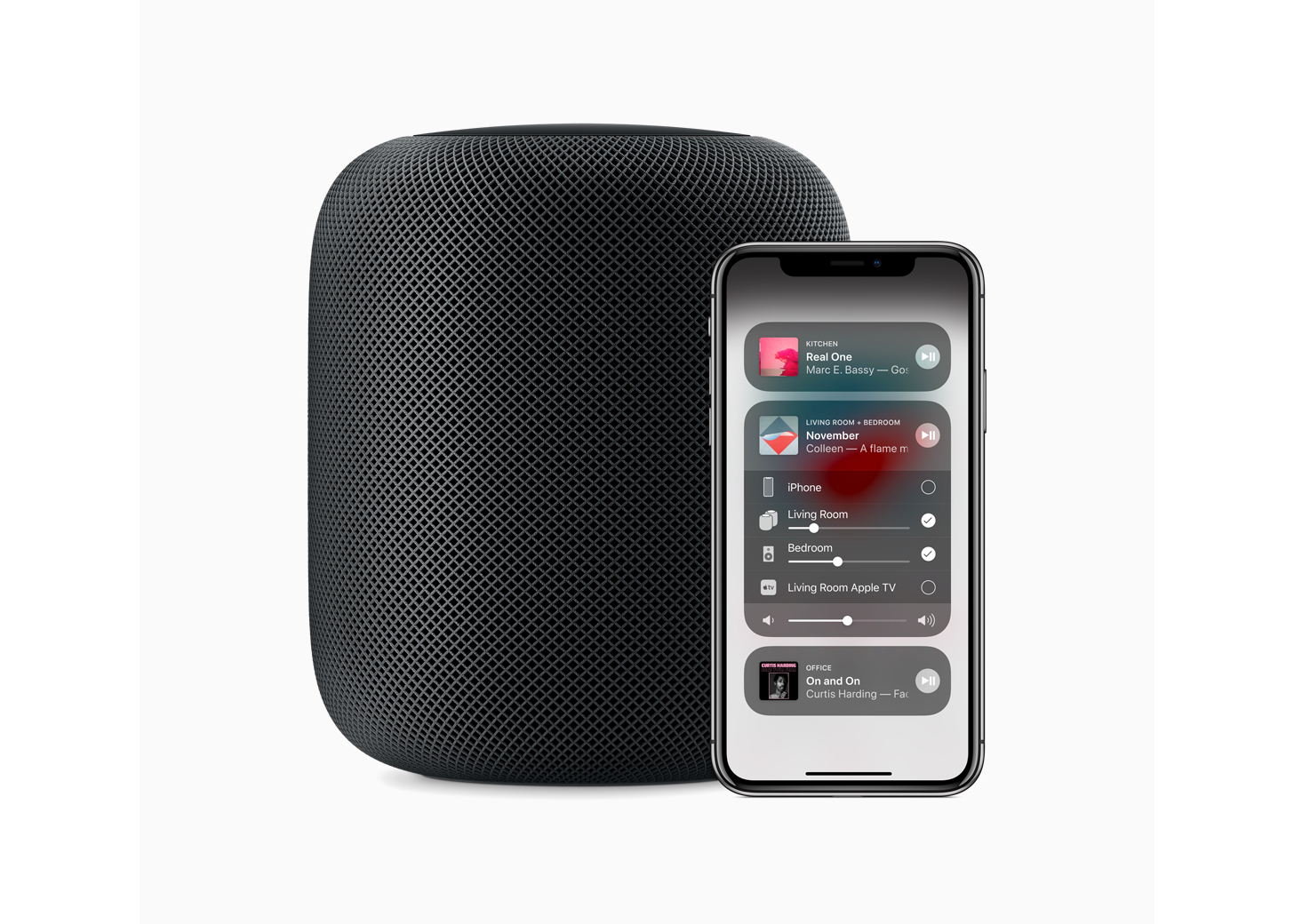
Jason Snell writing about a recent Apple hire for Macworld:
This past week we learned that the company has hired a new head of home products, which makes me ask the question: What exactly does Apple expect Sam Jadallah to do? Is his job to make deals with HomeKit partners and make the HomePod more successful? Or is this the sort of thing that happens when a company shifts gears because it realized that its old strategy wasn’t working?
That story got Snell thinking about how Apple could expand its current lineup of home products. He proposes two: a soundbar that integrates HomePod and Apple TV functionality and a wireless mesh networking system.
Both make a lot of sense. The technology for the soundbar has already been developed and it’s a device that sits in a unique position in a home entertainment system where it could both enhance the viewing experience with superior sound and facilitate the delivery of content from Apple’s services.
Why Apple abandoned the wireless home networking market remains a mystery. Although it may not have been as profitable as other product lines, networking sits at a strategic crossroads between all of Apple’s products. Whether it’s AirPlay, Handoff, the Universal Clipboard, other Continuity features, or something yet to come, controlling the network over which those experiences are delivered helps ensure that they work seamlessly.
Sam Jadallah, who previously worked at Microsoft and later ran a smart lock startup called Otto that was shuttered, certainly has the background to run Apple’s existing HomeKit programs, but like Snell, I hope his hiring is a sign that something bigger is on the horizon.
Eventail Widget Adds GoodTask Integration, New URL Buttons
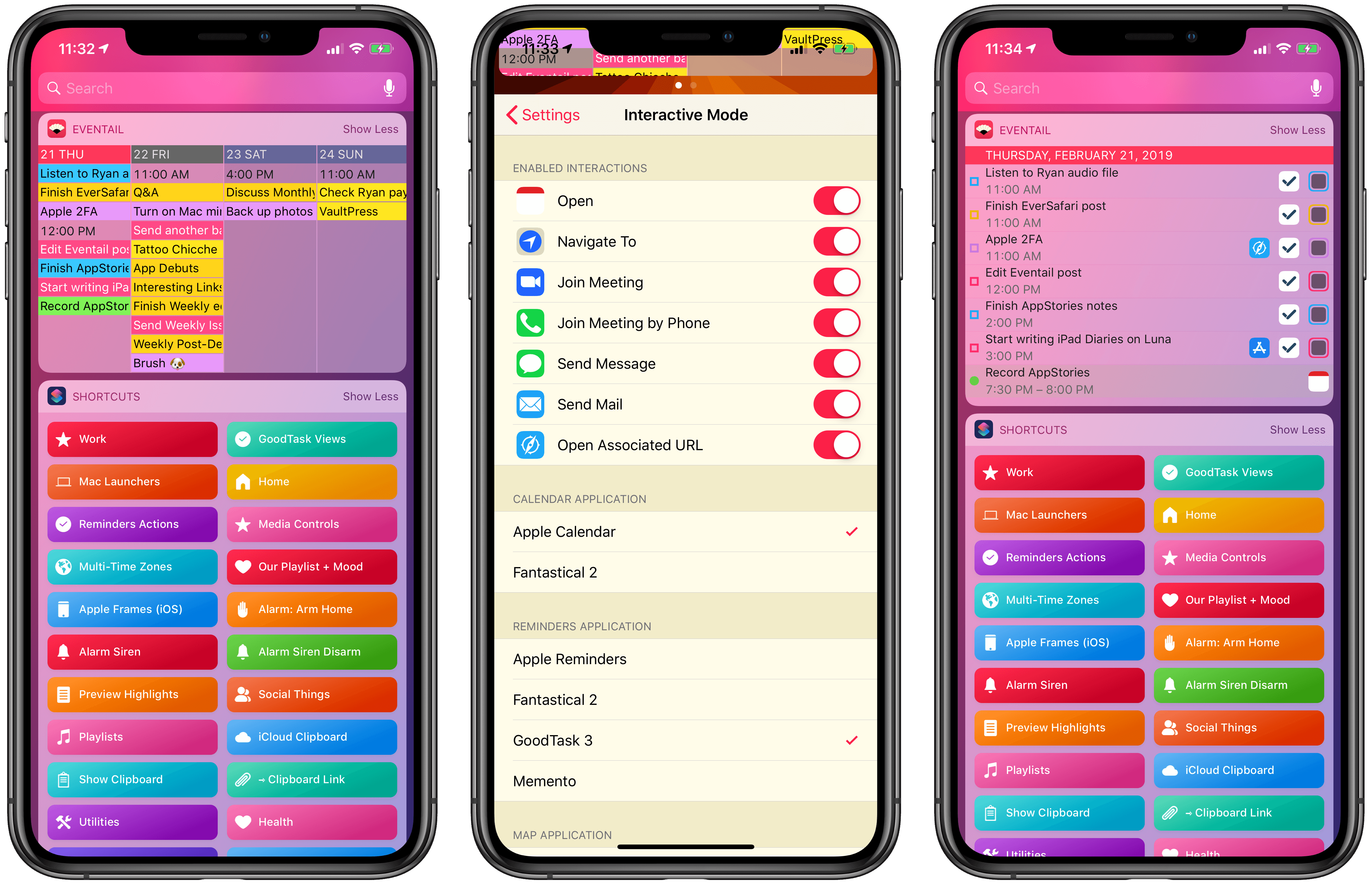
I last covered Eventail in April 2018, when its developer Jozef Legeny brought support for the iPhone X and new color schemes to his compact calendar widget for iPhone and iPad. With version 3.1 released today, Eventail (which over the past year also gained support for overdue reminders and interactive mode) is adding integrations for popular third-party apps and a convenient shortcut to reopen links contained in events and reminders.
Connected, Episode 231: Dozens of Invisible Footnotes→
The boys dive into a sea of rumors after Federico explores San Jose’s municipal websites, Myke gives everyone a gift and Stephen returns from a journey.
On this week’s episode of Connected, we discuss the latest Marzipan rumors and consider the implications of a 6K display made by Apple. You can listen here.
Sponsored by:
- Pingdom: Start monitoring your websites and servers today. Use offer code CONNECTED to get 30% off.
- Luna Display: The only hardware solution that turns your iPad into a wireless display for your Mac. Use promo code CONNECTED at checkout for 10% off.
- Care/Of: Personalized supplements delivered to your door.
Apple Answers Two-Factor Authentication Questions Raised by Developers
A week ago, Apple sent an email to developers announcing that it would require two-factor authentication for all developer accounts beginning February 27, 2019. The message linked to an Apple two-factor authentication support page that applies to all Apple IDs. The trouble was, the support page didn’t answer many of the developer-specific questions that were immediately raised.
The concern I’ve heard voiced most often by developers is whether someone who uses one Apple ID to log into their developer account would be able to do so using an Apple device that is logged in using a different Apple ID. Today, Apple published a new support page answering this and many other questions. Specifically with respect to the two-Apple ID scenario, Apple’s FAQ-style support page says:
Will I need a trusted device dedicated to my Apple Developer account if I enable two-factor authentication?
No. You’ll need to use a trusted device to enable two-factor authentication for the first time. However, you can use the same trusted device for multiple Apple IDs that are enabled for two-factor authentication. Additionally, if you do not have access to your trusted device, you can get your verification code via SMS or phone call. When possible, you should use a trusted device to increase security and streamline the process.
The document covers many other situations as well including:
- How to check if you have two-factor authentication enabled
- Configuring an iOS device or Mac to accept authentication codes for multiple Apple IDs
- Enabling multiple trusted phone numbers that can receive authentication codes
The support page concludes with a link to a contact form for Apple’s developer team to raise any other circumstances that prevent a developer from enabling two-factor authentication.
Although it would have been better if this level of detail was published when Apple’s initial email went out to developers last week, the company has clearly heard the concerns raised by the developer community and has put together a thorough explanation that should address most situations. By answering the most common questions, Apple Developer Relations will hopefully be freed up to deal with any outlier issues that aren’t addressed in its support documentation.
Jason Snell on Podcasting with Only an iPad Pro→
Jason Snell’s podcasting setup is similar to mine – he wants to hear his own voice, record his local audio track, and have a conversation with multiple people on Skype, who also need to hear his voice coming from an external microphone. And he wants to use one computer to do it all. Now he’s figured out how to podcast from an iPad Pro with the help of an additional USB interface:
In the past, I’ve done something similar using the Audio-Technica ATR2100-USB, a microphone that can output a digital signal using USB and an analog signal via an XLR cord simultaneously. The problem is that the last time I tried to use the ATR2100-USB with my iPad Pro, it didn’t return my own voice into my ears, making me unable to judge the sound quality of my own microphone. After years of having my own voice return to me, I strongly prefer not to record unable to hear my own voice. (I use in-ear headphones that largely shut out audio from the outside world, so the experience of speaking while not hearing yourself is even more profoundly weird than it would be with leaky earbuds.)
This time I wanted it all, or at least as close to all as I’m able to get with iOS in the mix: A pristine recording of my own voice, that same high-quality microphone audio also flowing across digitally to my podcast guests via Skype, and the ability to hear both my guests and myself at the same time.
The takeaway from the story isn’t that Snell wanted to prove a point to spite Mac users – it’s that he was able to travel with one computer instead of two (he would have used most of the same audio gear with a Mac too) and that he found an expensive, but real workaround to professional podcast recording on iPad Pro.
I don’t currently have a USB audio interface like Snell’s USBPre 2, but I may have to buy one before the summer so I can record podcasts from our beach house using only the iPad Pro. (That is, assuming the iOS 13 beta I’ll have installed at that point doesn’t have meaningful improvements for audio workflows.)
AutoSleep Adds Today Dashboard, Customizable Clocks, and More
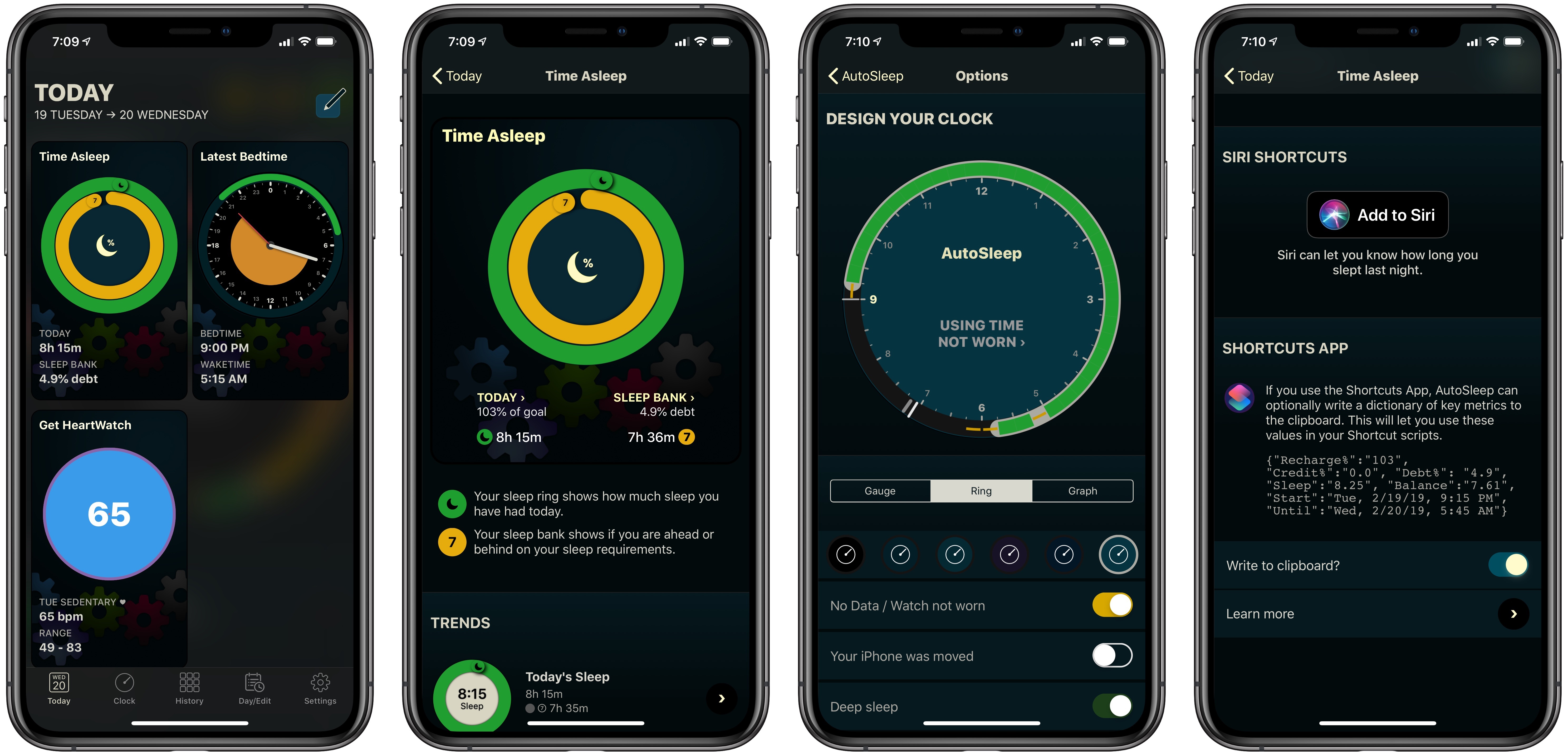
AutoSleep, the automatic sleep tracker for iPhone and Apple Watch, has followed up its big 6.0 release from late last year with a 6.1 update that adds a brand new Today screen, the ability to customize the design of the app’s sleep clock, and several other smaller improvements.
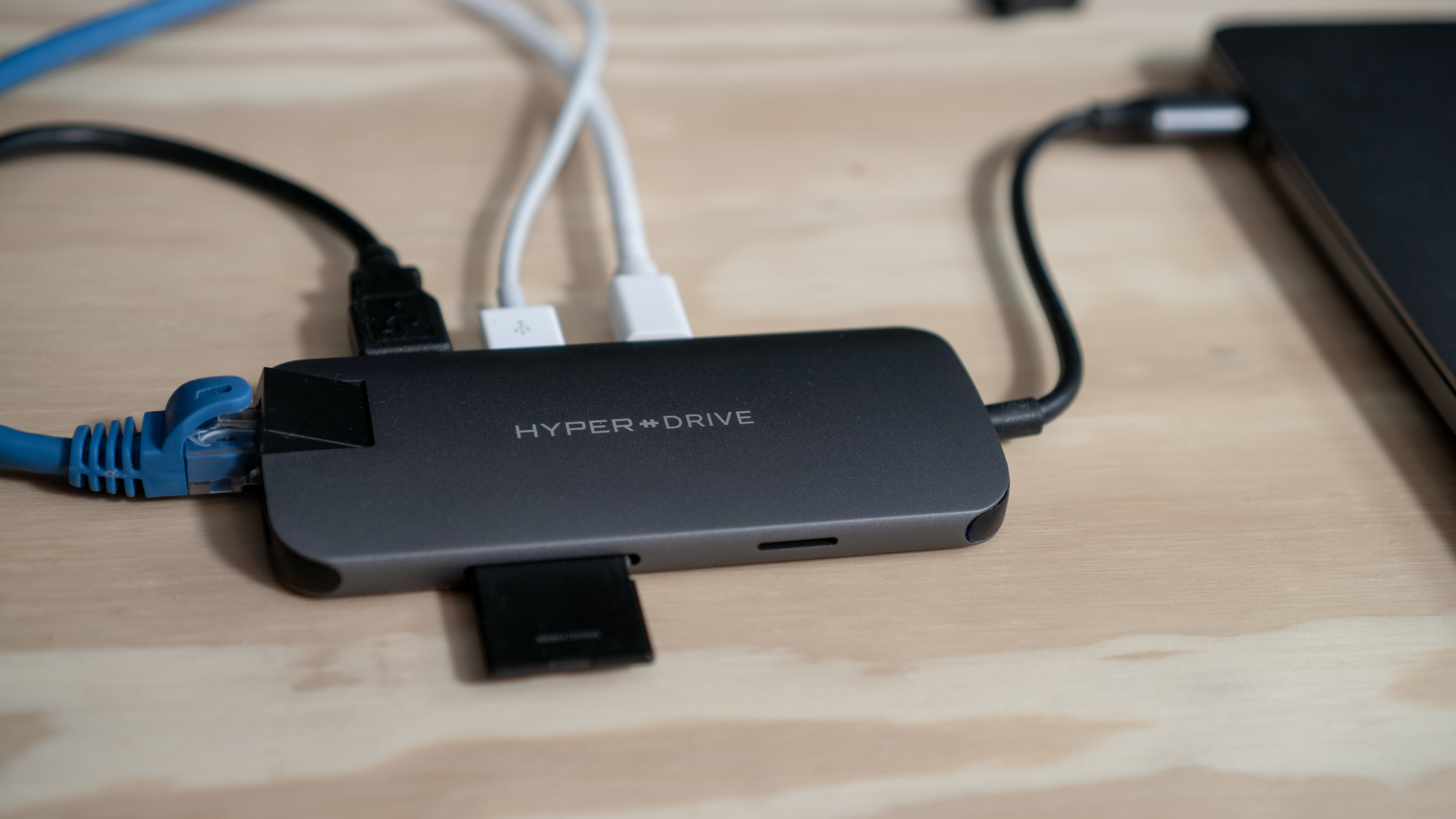
The HyperDrive Slim 8-in-1 USB-C Hub Balances Flexibility and Portability for Mac and iPad Pro Owners
My main Mac is a 2016 MacBook Pro, which isn’t ideal. The problem isn’t really the laptop itself, it’s that my needs have changed. You see, in 2016 I was commuting to downtown Chicago every day and I wanted a portable Mac for working in Xcode and other tasks on the go.
Now, I work from home and my MacBook Pro sits in clamshell mode most of the time. It’s handy to have the MacBook to take with me when I need it, but that’s far less frequent than it used to be. Instead, my Mac drives a 27” LG 4K display, is connected to Ethernet, speakers, a Luna Display dongle, my podcasting microphone, and various other peripherals I need from time to time.
The trouble with the setup is that I quickly ran out of USB-C ports even though my MacBook Pro has four. I’ve tried several different configurations to streamline my setup, but none were quite right. Now though, I’ve finally found a solution that comes closest to meeting my needs and has the added benefit of working well with my iPad Pro. With a couple of minor caveats, the HyperDrive Slim 8-in-1 USB-C Hub is the best solution I’ve tried.
AppStories, Episode 99 – Pick 2: Everyday Workflows→
On this week’s episode of AppStories, we each pick an aspect of our MacStories work and break down the apps, workflows, and processes we use to accomplish it.
Sponsored by:
- Yoink - Simplify and improve drag and drop on your Mac, iPad and iPhone, and speed up your daily workflow.
- Linode – High-performance SSD Linux servers for all of your infrastructure needs. Get a $20 credit.
AppStories Episode 99 - Pick 2: Everyday Workflows
0:00
31:00
31:00