It’s become a tradition for Apple to release a special holiday season video each year, and this year is no different. Today, the company revealed the 2019 version entitled ‘The Surprise.’
The storyline follows a family as they visit the mother’s father. The video chronicle’s the family’s journey and visit with their two young children. To appease the kids when they fight or get in the way, their parents hand them an iPad to watch movies and play games. However, the children’s use of the iPad evolves over the course of the video, which reveals they’ve used it to create an interactive story about their family and their grandfather’s wife who had passed away.
It’s a touching video packed with emotion that does an excellent job of showing off the kind of creative projects that are possible with an iPad and pulls it off without being overbearing. The video reminds me a lot of the Emmy award-winning video called ‘Misunderstood’ from the 2013 holiday season.
The new year approaches, and with it arrive dreams of being a more productive you – which of course involves choosing the perfect task management system for your needs.
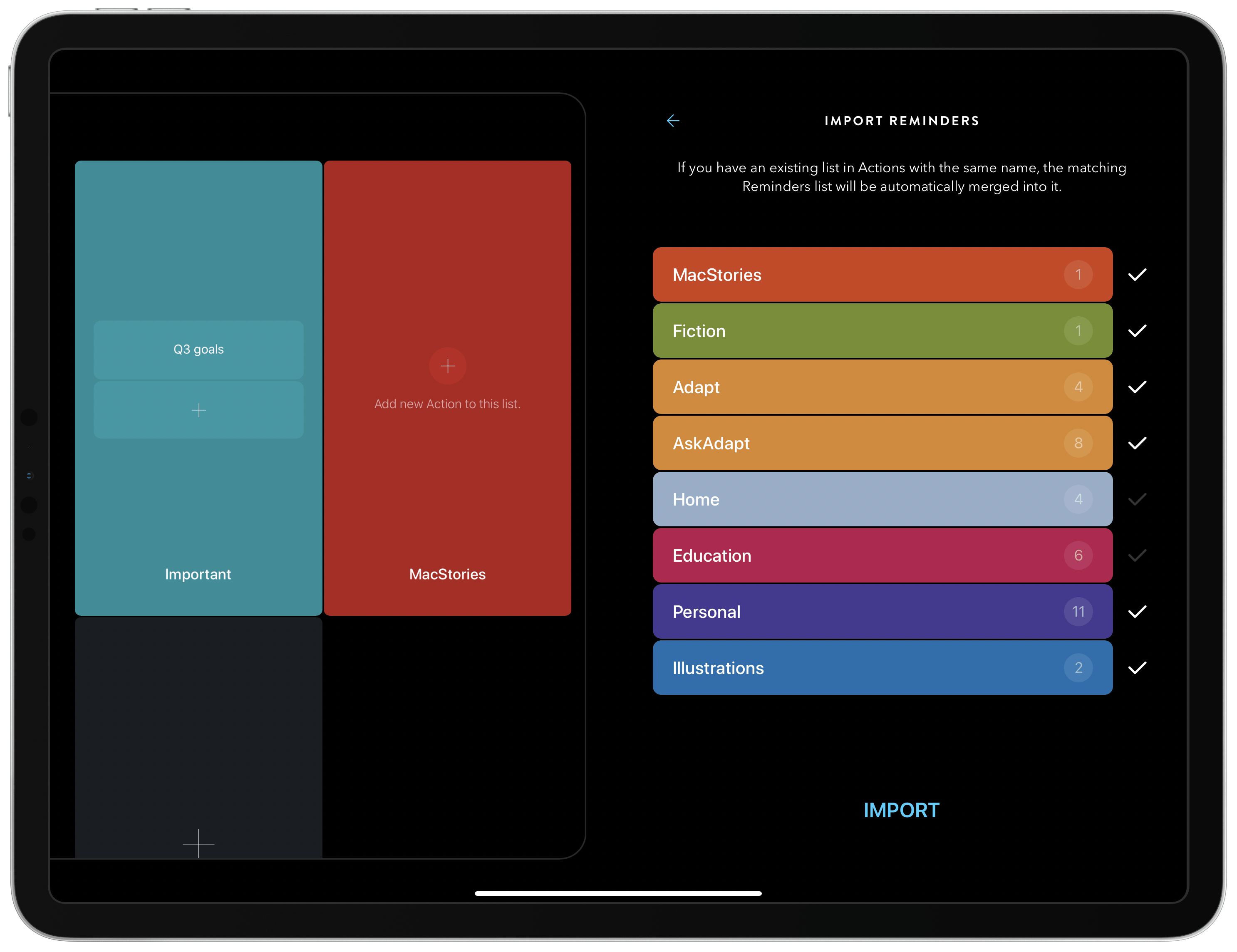
In a timely move, Moleskine’s elegant task manager, Actions, was updated today with a new Reminders import feature, so you can instantly migrate any or all of your Reminders lists and tasks into Actions. The update also supports two new iOS 13 features: shortcuts featuring parameters and context menus.
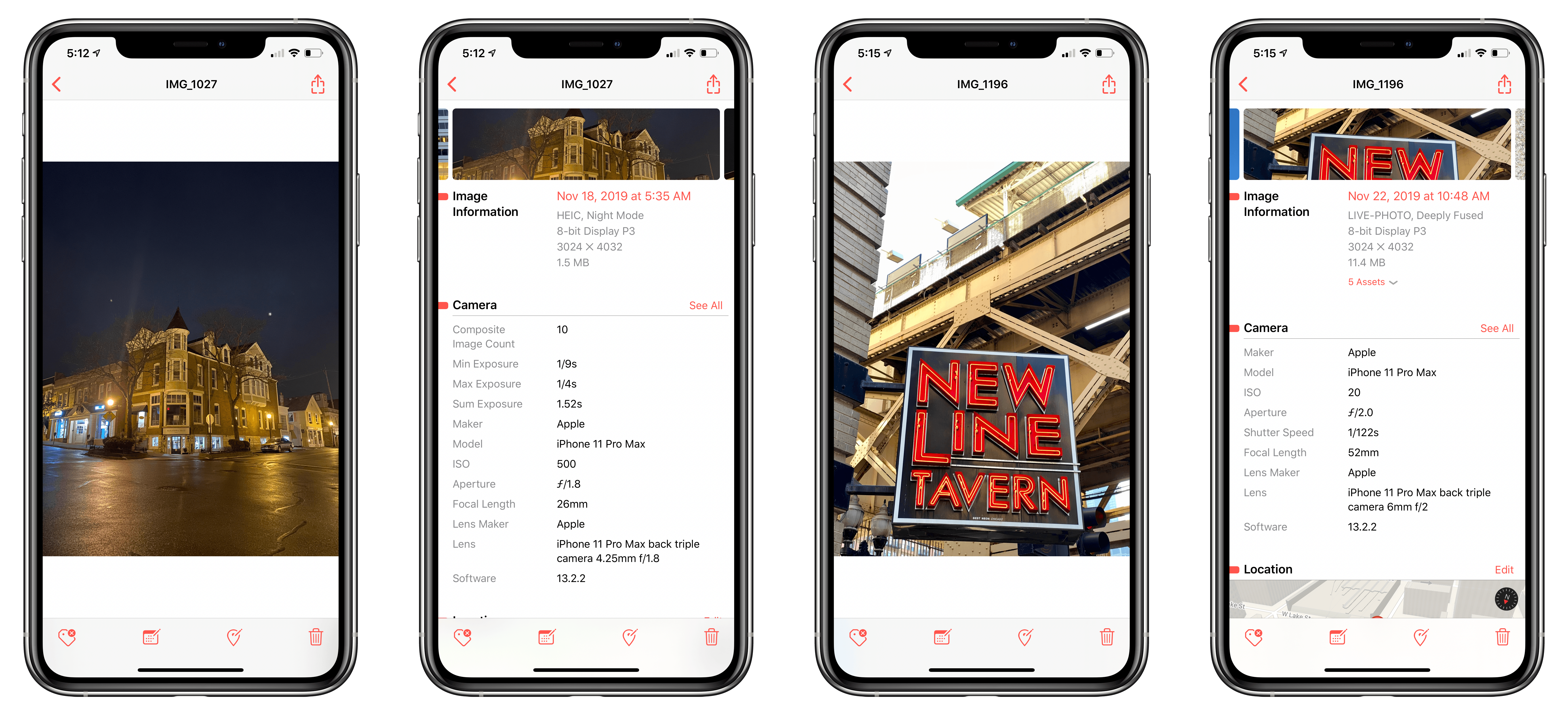
Metapho has been one of my favorite photo utilities on iOS for years. The marquee feature has always been its ability to strip metadata from images, which is handy when sharing photos online, for instance. Over time though, Metapho has grown to incorporate other functionality for inspecting and editing photo metadata that has made the app a must-have iOS utility. With its latest update, Metapho has added Deep Fusion and Night Mode photo detection, an intriguing addition that I haven’t seen any other app offer.
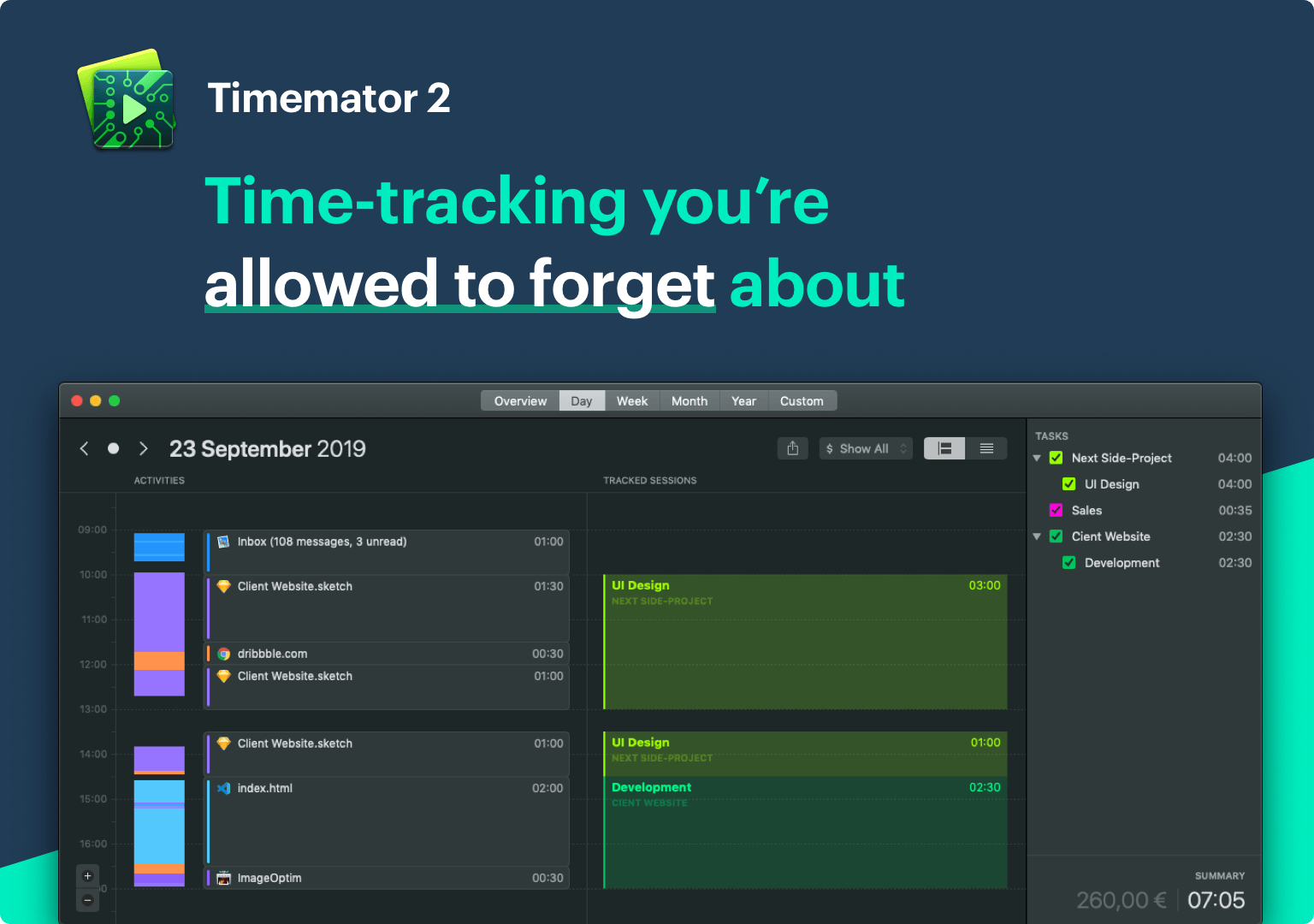
One of the biggest hurdles to consistently tracking your time is starting and stopping timers. It’s too easy to forget to do, leaving you with gaps in your tracking or timers left running overnight. What if you could free yourself from the burden of timers by automating the process? You can do precisely that with Timemator 2.
By letting Timemator track the apps you use, the files you open, and the web sites you visit on your Mac, you’ll never lose a billable minute because you forgot to start a timer. Nor will you fret about stopping a timer when you’re finished because Timemator shows you exactly when you stopped using an app, allowing you to focus on what’s most important: your work.
Time never slips through the cracks with Timemator because it approaches the problem of tracking three ways. First, Timemator automatically creates an activity timeline as you work on your Mac. Just go over your activities at the end of the day and assign them to projects and tasks. Second, you can set up Timemator rules to automatically record time to a project or task when you open a particular app or file. Third, there’s a manual timer available for those one-off tasks and times that it’s just easier to click start. It’s a three-pronged approach that’s proven useful to a wide variety of professionals, including contractors, freelancers, and small teams.
Timemator is a native Mac app that’s been thoughtfully designed to look as beautiful as it is functional. The app is also continually updated with the latest macOS technologies. Next up on Timemator’s roadmap is iCloud sync, an iOS app, integration with third-party tools like Jira and Asana, and team features.
Timemator is free to try for 30 days, and for a limited time, readers of MacStories can buy the app for 30% off by using the coupon code TM-MACSTORIES at checkout. Don’t wait until the new year to get serious about time tracking. Start today by downloading Timemator 2, so you can stop thinking about timers and focus on your tasks.
Our thanks to Timemator 2 for sponsoring MacStories this week.
But one of the nagging problems with HomePod is the way Siri, regardless of the current time of day, will respond loudly at whatever volume you’ve previously set.
Whether it’s the middle of the night or super early in the morning, it’s all too common to ask Siri something and the answer shouted backed at you, only because you listened to music loudly sometime yesterday. Hopefully nobody wakes up, you curse at how dumb your supposedly “smart” speaker can be, and frantically try to turn it down.
Thankfully, iOS 13.2 provides a route to a solution by adding HomePods and AppleTV to scenes and automations – the HomePod didn’t fix this on its own, but, with a Home Automation, you can make it “smart” enough yourself.
As I explained when iOS 13.2 came out, you can put together these automations by using the ‘Adjust Audio Only’ option after selecting a HomePod or compatible AirPlay 2 speaker in the Home app. I just set this up for my three HomePods and Sonos One, and, sure enough, at 11:20 PM, volume was set to 15% on all my speakers (it should be raised back up to 50% tomorrow at noon).
In theory, I would like to turn this automation into a shortcut and add a Pushcut notification to confirm the volume change (and optionally shuffle a playlist by choosing a HomeKit scene from the notification’s actions). There’s a bug that prevents me from doing this in the latest iOS 13.3 beta, but I’ll keep it in mind for the future.
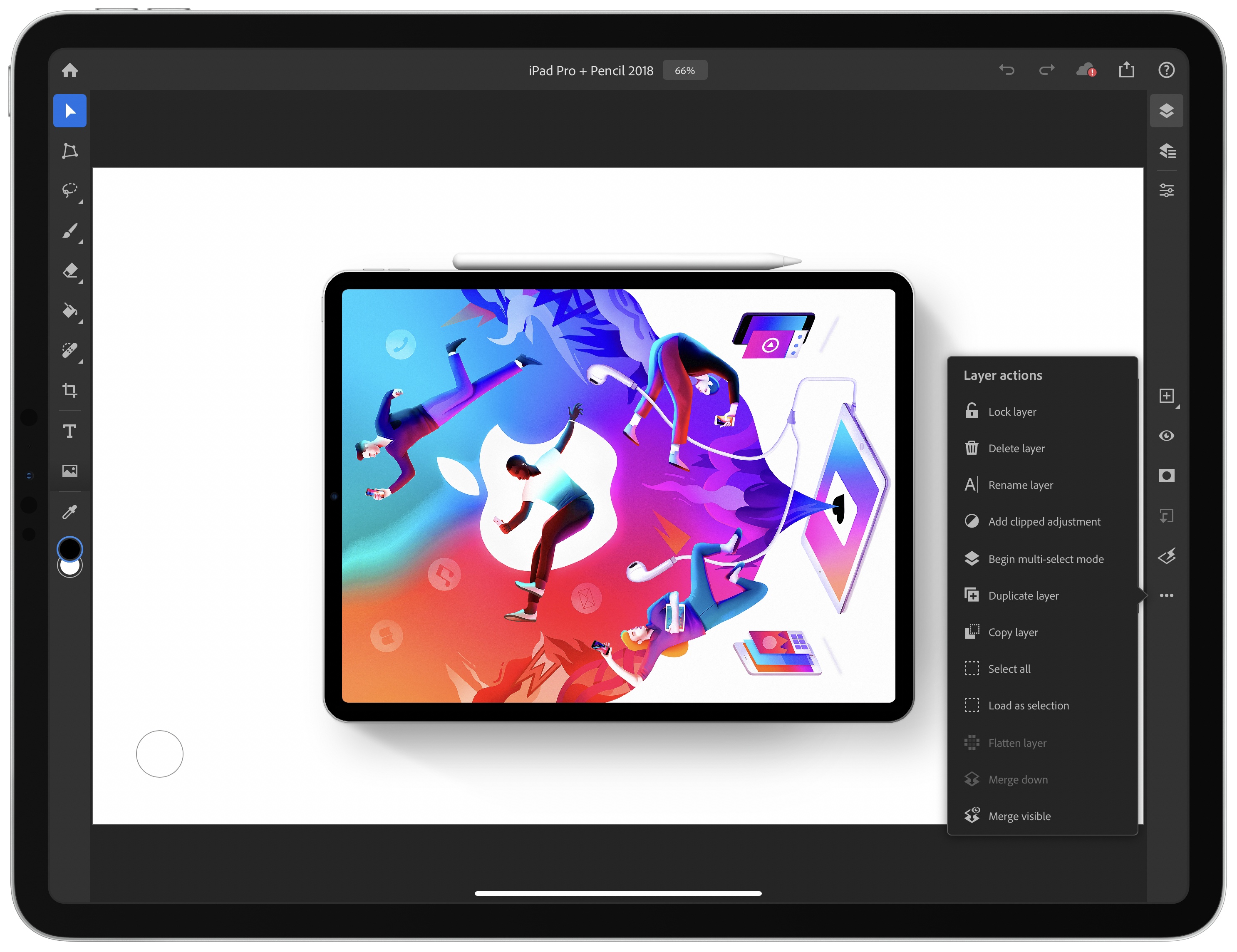
The long-anticipated release of Photoshop for iPad was met with disappointment by many users who felt that significant functionality was missing. Although Adobe explained at the time that version 1.0 was a foundation upon which it intended to build rapidly, the length of time it took to create that foundation left many people skeptical. Today, to try to dispel some of the doubts surrounding Photoshop for iPad, the company published a blog post previewing some of the features coming later this year and in the first half of 2020.
Before the end of 2019, Adobe says it will ship the ‘Select Subject’ feature that it showed off at the Adobe MAX Conference earlier this month. The feature takes advantage of the company’s Sensei AI machine learning technology to facilitate complex subject selection. Adobe also says that cloud PSD files will upload and download faster in December after it makes changes to its systems.
Selection tools will get another boost in the first half of 2020 with Refine Edge allowing for soft edge selections. Curves for tonal adjustments and new adjustment layer options will be available too. Adobe also plans to bring features over from apps like Fresco, including brush sensitivity and canvas rotation. Finally, Adobe says it will integrate Photoshop with Lightroom for iPad, so you can process RAW images in Lightroom and use them in compositing projects in Photoshop.
With the reaction at Photoshop for iPad’s launch, I’m glad Adobe chose to showcase these new features in advance. It makes competitive sense too, given that alternative iPad apps that compete with at least some aspects of Photoshop continue to move forward rapidly. It’s that sort of competition that I expect will make pro iPad apps interesting to watch in 2020.
Federico and Stephen each attempted to use HomeKit Secure Video, and it didn’t go well. Myke is excited about a new folding phone, and the whole crew orders iPhone 11 Pro battery cases before solving many mysteries presented in photos of Apple’s new Mac Pro factory.
You can listen below (and find the show notes here).
0:00 01:42:10
Connected, Episode 270
AppStories+ Deeper into the world of apps
Sponsored by:
Squarespace: Make your next move. Enter offer code CONNECTED at checkout to get 10% off your first purchase.