Enhance Your Mac’s Clipboard with CmdVees

When it comes to quickly jotting items into my Mac’s clipboard and being able to access them later in a neatly organized folder view, Clipmenu is my app of choice. I’ve been using the app for years, it’s free, and it provides a lightweight yet powerful way to copy anything into your OS X clipboard – text, images, URLs, you name it. Clipmenu, also thanks to snippets and keyboard shortcuts, makes it super-easy to retrieve at any time information you copied with the standard Cmd+C. The application, however, is limited in the way it enables you to paste multiple items at once: say you’ve copied three different URLs for the ultimate Rebecca Black rickrollin’ tweet, you’ll have to hit Clipmenu’s shortcut three time (and navigate with the arrow keys) to paste those items. Open, copy, open, copy – you get it. The app keeps track of your clipboard, but it’s not aimed at letting you paste all at once with ease. CmdVees, a $0.99 app available in the Mac App Store, wants to fix this.

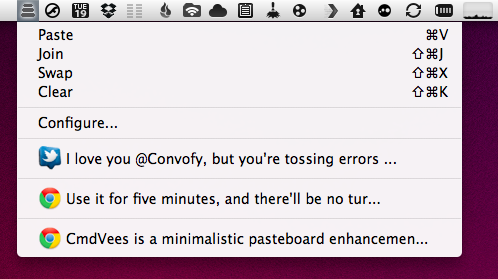
CmdVees’ concept is really simple: as you copy items into your clipboard, the app creates a stack. This stack lives in your menubar. Once you’re done copying and you want to paste all these items in a single location (say, a TextEdit window), you don’t need to invoke the application with a specific shortcut for every single item. No, you just keep hitting the default Cmd+V until you’ve pasted all the items. The cool thing is, as you hit Cmd+V the app will remove the most recent item from the stack and go to the next one – by default, hitting Cmd+V on OS X over and over simply pastes the most recent clipboard entry. CmdVees is meant for those users (like me) who copy a lot of material on a daily basis, and would like to be able to paste things all at once.

But there’s more: if you don’t feel like pressing the Cmd+V shortcut several times, you can “join” items with a single paste through a keyboard shortcut you can configure in CmdVees’ preferences. You can also swap items in the stack with a shortcut, or clear your queue entirely. Older items are accessible from a dropdown menu, plus you can specify how many items to keep in CmdVees’ history and set a time out for copied items.

At $0.99, CmdVees is a no-brainer if you’re looking for a utility that collects your clipboard items and is able to paste them all at once. I’ve noticed some compatibility issues with Clipmenu while using it, but I think customizing the settings a little bit should fix that – just in case, download a free trial here.
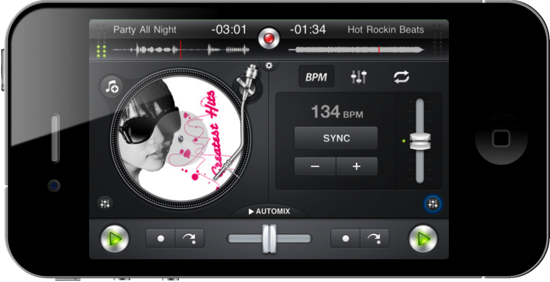

Giveaway: Remix the Beat with djay for iPhone & iPod touch!

Let’s cut to the chase: djay is polished, good-looking, and a downright handsome virtual mixer that’ll have you scratching virtual vinyls like it was made all tiny for your thumbs and stuff. You’d think djay’s miniature client for the iPhone & iPod touch would be too small to get a proper remix of your favorite rap attack and guitar jam, but that little iPhone can instantly become the party superhero when equipped with an amateur DJ such as yourself and some stereo output to the nearest boom box. Choose any two tracks from your iPod’s library, adjust the equalizer to your liking, pump the gain, and position the needles to start laying down Scratch n’ Sniff quality beats. It’ll take some practice to get good, but all of the tools are available with a quick tap to help you combine tracks, and there’s even an automixer if you want to let djay do some the hard stuff. I couldn’t resist buying my own copy of djay for $0.99 in the App Store, currently on sale from $4.99. That’s a steal, but you can risk it all on one of two copies we’re giving away past the break.

Read more


WWDC 2011 Student Scholarship Details Now Available

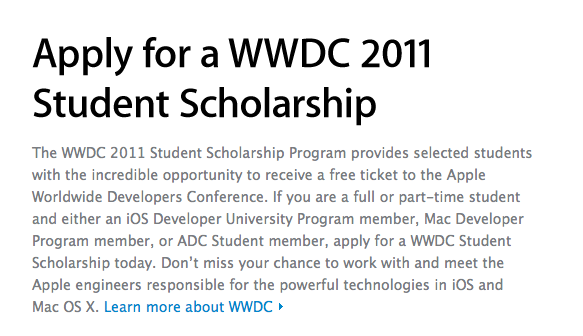
As promised a few weeks ago after the official WWDC announcement, Apple has updated its website to provide details about the WWDC Student Scholarship program. You can visit the Official Rules page to see all the requirements, deadlines and general terms, but Apple offers a quick roundup:

Is there a WWDC Student Scholarship ?

Yes, we award a limited number of scholarships to student developers. To apply for a WWDC Student Scholarship you must be at least 18 years of age, currently enrolled part-time or full-time at a college or university, and either an iOS Developer University Program member, Mac Developer Program member, or ADC Student member as of August 1, 2010 or later, and have identified yourself as a “Student” in your developer profile.

Scholarship applications are due by April 26, and winners will be notified via email by May 3. Each winners will receive an “e-ticket” to attend the WWDC ‘11, and Apple is planning on giving away a maximum of 150 prizes. Apple also specifies “applicants will be judged on technical ability, creativity of ideas expressed in products or projects, prior WWDC attendance, technical and work experience.” The WWDC 2011 will kick off in San Francisco on June, and this year’s edition will feature Apple Design Awards for both iOS and Mac apps. Considering WWDC 2011 “regular” tickets were sold out in less then 10 hours, it’s very likely that thousands of students who didn’t get the chance to buy a ticket will apply to the program.


Apple Cracking Down On “Pay-Per-Install” iOS Apps?

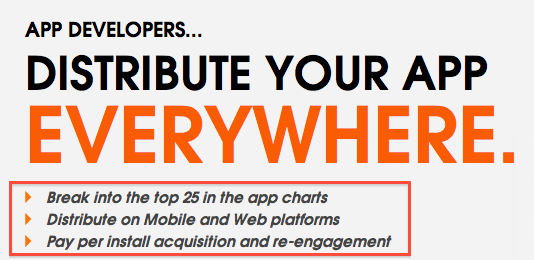
Following speculation about Apple using a new App Store ranking algorithm to better promote apps by ratings and “active usage” rather than raw download numbers, TUAW reports today Apple is also effectively banning from the App Store the so-called “pay-per-install” apps – basically, applications (usually games) that let users get access to virtual goods by downloading another app, instead of paying a fee or unlocking features with in-app purchases. This practice has apparently caught the attention of Apple and the App Review Team, and several developers are reporting they’re being notified of the rejection of their software from the Store.

According to Tapjoy, several developers within their network are receiving rejection notices from Apple because their applications feature a pay-per-install promotion.

It appears Apple is somehow enforcing section 3.10 of the App Store Review Guidelines, which states:

Developers who attempt to manipulate or cheat the user reviews or chart ranking in the App Store with fake or paid reviews, or any other inappropriate methods will be removed from the iOS Developer Program.

Clearly, Apple isn’t happy with this freemium model of apps granting virtual currency and goods in exchange for another application downloaded from the Store, and we guess it’s for two reasons: a) the system inevitably “cheats” the App Store charts by inflating downloads of an app not because of quality, but because of promised benefits; b) Apple would rather see developers implementing in-app purchases, which return the company a 30% off every purchase.

As usual, Apple has every right to change the rules in its “walled garden.” In the meantime, Tapjoy, the biggest network for pay-per-install apps, says “the system is misunderstood” and that the model is actually “is beneficial to users, advertisers, and developers.”


Full Analysis Of Apple’s Lawsuit Against Samsung

Full Analysis Of Apple’s Lawsuit Against Samsung

As we saw in the article about iPod touch, iPad and iPhone sales, Nilay Patel’s rundown of the Apple / Samsung lawsuit is an interesting read full of details. I’d like, however, to link back with a dedicated post – you really shouldn’t miss Patel’s detailed analysis of the lawsuit.

So now that Apple’s made its case, what does it want the court to do? Simple — it wants Samsung to pay up for the infringements in the past and stop infringing in the future. Specifically, Apple’s asking the court to permanently forbid Samsung and its various divisions and suppliers from ever infringing Apple’s claimed IP again, as well as triple damages for patent infringement, any wrongful profits Samsung might have gained from using Apple’s IP, some punitive damages, money for corrective advertising, and the cost of Apple’s attorney’s fees. That’s all pretty standard stuff, but it’s all very dependent on the claims themselves — and by the time a judge or jury is deciding on damages, the claims will have been argued into something very different. That’s years from now.

Much has been said about Samsung’s intention to “copy” the iOS style with is TouchWiz UI, and it’s pretty clear from the lawsuit that, even if Samsung is a key partner in Apple’s supply chain for iOS devices, Apple will do everything necessary to protect its intellectual properties and patents. The PDF of the document filed in the Northern District of California is available here.

Permalink

#MacStoriesDeals - Tuesday

We’ll tweet the daily deals at @MacStoriesDeals as well as exclusive weekend deals too, so please follow! Here are today’s deals on iOS, Mac, and Mac App Store apps that are on sale for a limited time, so get ‘em while they’re hot!

Read more


Apple: 60 Million iPod touches Sold Since 2007 - 19 Million iPads, 108 Million iPhones By March 2011

In taking a look at the lawsuit Apple filed against Samsung over the Galaxy series “look and feel”, Nilay Patel at ThisIsMyNext uncovered some interesting details and numbers behind Apple’s iPhone, iPad and iPd touch sales that weren’t previously revealed by the company.

First off, Apple says in the “background” section of the lawsuit that over 60 million iPod touches have been sold since the device originally went on sale in 2007. These numbers are noteworthy as the company never officially disclosed iPod touch sales to the public, leading to speculation amongst bloggers and analysts about the actual profit and numbers generated by the iPod touch line. It was rumored last year that roughly 45 million iPod touches had been sold, and this note from Apple seems to confirm previous rumors that suggested the iPod touch was selling around 15 million units per year with a huge popularity in 2008.

Also in 2007, Apple launched the iPod touch, a digital music player. The iPod touch incorporated the distinct style of the iPhone and also became an immediate success. By March 2011, Apple had sold over 60 million units

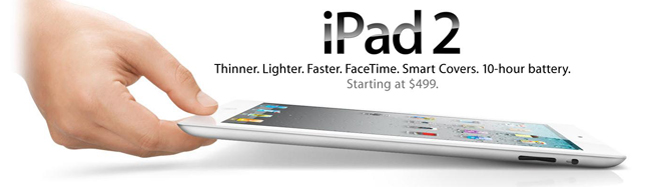
In the same section, Apple goes on to celebrate the success of the iPhone and iPad among average users and mainstream media, as well as detailing how the iPhone revolutionized the communication industry. Apple says 19 million iPads were sold “by March 2011” – if you consider Apple announced they sold 15 million iPads from April to December 2010, that implies the company should have sold between 4 and 5 million tablets in Q2 2011, and we’ll know more about this tomorrow. Similarly, Apple says 108 million iPhones were sold as of March 2011. Steve Jobs said on stage at the iPad 2 event on March 2 that the 100 millionth iPhone had been sold the week before. Many are already speculating Apple might have sold nearly 20 million iPhones in Q2 2011, also thanks to the release of the Verizon iPhone that could have boosted sales in the United States.

No computer product that preceded the iPad looked like the iPad, but its design did resemble other Apple products—namely, the iPhone and the iPod touch, thereby extending the unique and innovative Apple design and trade dress to a new product—tablet computers. In its first 80 days on the market, Apple sold 3 million iPad units. By March 2011, Apple sold over 19 million iPads.

One last interesting tidbit from the lawsuit: Apple spent more than $2 billion in advertising the iPhone, iPod touch and iPad during fiscal years 2007-2010. You can read the entire document here.

Apple’s advertising expenditures for these products for fiscal years 2007-2010 were in excess of $2 billion.


iMac Supplies Running Low, Refresh Imminent?

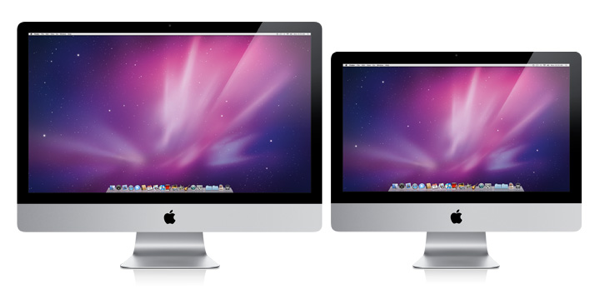
According to 9to5mac, several sources in the United States and Asia have indicated supplies for the current iMac line have become “constrained” in the past week, suggesting that a refresh from Apple is imminent. Tightening of supplies is usually a good indication that a refresh for a product line is coming, and previous rumors indeed pointed to the iMac being updated with new hardware features by late April.

Tipsters in the United States have informed us that their iMac shipments are also very constrained. That’s not the full story though. Although actual iMac shipments are lacking, our U.S. tipsters report that actual iMac components are very constrained. The most constrained pieces right now are the current iMac’s graphics processors and hard drives. A lack of replacement components is also a good indication of an upcoming refresh.

Three weeks ago, Cnet’s Brian Tong claimed an iMac refresh would occur with “no cosmetic” changes by the end of April or first week of May. This seems to follow the path Apple took with the 2011 MacBook Pro update, which showed supply constraints in the weeks leading to the announcement and eventually featured the same design of older models with the addition of Sandy Bridge processors and Thunderbolt technology.

The iMac line was last updated in July 2010 and also saw the release of the Magic Trackpad – which can be bundled with an iMac on the Apple online store.