Hide Apps and Folders in Launchpad with Launchpad-Control

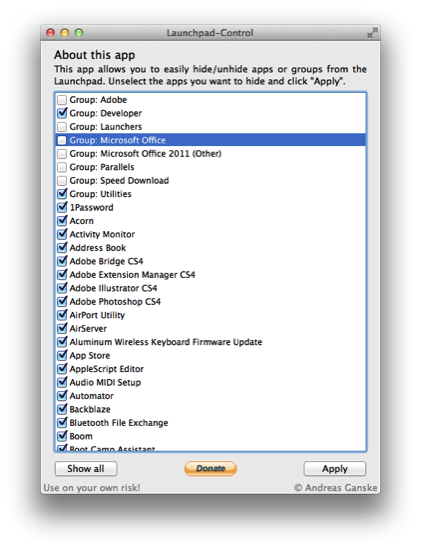
A problem I have with Launchpad (and the SpringBoard on iOS) is that while you can rearrange and group apps, sometimes you just want to hide apps or get rid of them completely. This is possible on iOS via a Jailbreak, but how can we hide unnecessary apps and folders in Launchpad on the Mac? Andreas Ganske’s Launchpad-Control is your ticket to greater control.

Launchpad-Control is super simple to use. Download it, unzip the archive, and drag the icon to your Applications folder in your Finder’s sidebar. When you open Launchpad-Control, you’re presented with a list of all the apps displayed in your Launchpad. Simply uncheck the folders or apps you don’t want to see, click Apply, then wait as your dock is killed and comes back into view. When you own open Launchpad, all of the apps you wanted to hide will no longer be active. It’s so simple to use, but fair warning: using this app comes at your own risk!

You can download Launchpad-Control from http://chaosspace.de/. Remember to donate if you find this free utility useful!

[via @ChaosCoder]


Reveal the Dock in fullscreen apps

Reveal the Dock in fullscreen apps

To get to the Dock from a fullscreen app, just move the pointer all the way to the edge where the Dock is pinned, then swipe or move the mouse in the same direction again, as if you were trying to move beyond the edge. The Dock pops right up, with no keyboard commands needed.

I saw question about this directed at @macstoriesnet yesterday, although I didn’t know the trick. This morning Macworld comes through with a simple solution, although their explanation is a little confusing. Here’s the gist: if your dock is on the bottom of the screen, swipe your mouse cursor down twice at the bottom edge of the display. If your dock is at the right of the screen, swipe your mouse cursor right twice. This works even when you automatically hide and show the dock. If you have an app that’s open in another desktop space, you can simply click on its application icon in the dock to jump to that space without initiating Mission Control or swiping between desktops.

Permalink

Leaked Photos of Supposed iPhone ‘Light’ Surface Online

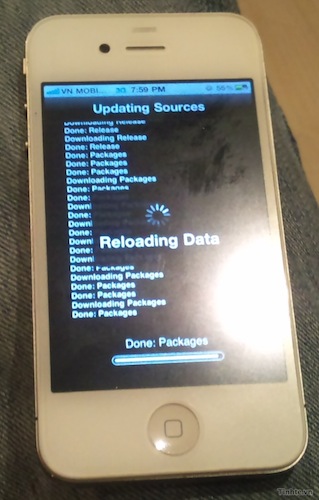
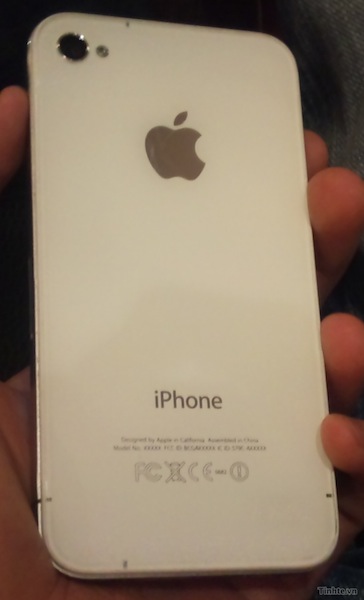
On Vietnamese forum Tinhte, a user has uploaded the above photo which he claims is a new “light” version of the iPhone 4 - potentially the rumored iPhone 4S that has been milling around in recent months. The photographs posted seem to show a nearly identical product to the iPhone 4, with the exception that there is no glass front and back panel. Instead the iPhone is plastered with a translucent plastic on either side with the familiar stainless steel banding around it.

According to information leakage, predictable from the English website, the more likely Apple will introduce the iPhone 4s (cheap version) and the iPhone 5 next month. And it looks like the iPhone that you see below is the iPhone 4s.

On the whole we’re fairly skeptical of this photo, except for the fact that in the past, Tinhte has been somewhat successful at leaking Apple prototypes, including this internal iOS 4 build and last year’s MacBook refresh. As for the possibility of a cheaper iPhone launching this year, not only has the rumor mill been churning out stories fairly frequently but Tim Cook conceded in this month’s earning call that Apple would be doing “clever things” to address the pre-paid mobile market and wouldn’t “cede any market”.

[Tinhte via TechCrunch]


BBC Rolls Out iPad iPlayer App To 11 Western Europe Countries, Coming To The US This Year

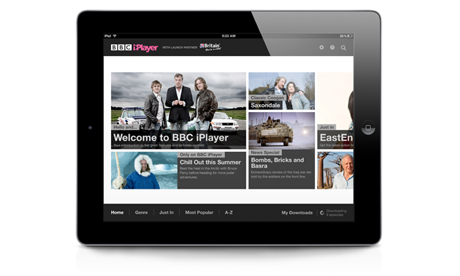
Last month we reported that the BBC was preparing to launch its iPad video-on-demand service iPlayer internationally for a fee under $10 by the end of the year. That day has come with the BBC today (Thursday, July 28) launching the iPlayer iPad app in Austria, Belgium, France, Germany, Italy, Luxembourg, Ireland, the Netherlands, Portugal, Spain and Switzerland.

Some iPlayer content will be available for free, but for full access users will need to pay either €6.99 a month or €49.99 a year. The program’s director spoke with The Guardian about the launch and reinforced previous statements by noting that the international version of iPlayer is a video-on-demand service, not a catch-up service as it is in the UK (primarily). The catalogue will include popular shows such as Top Gear and Doctor Who but will also offer a deep catalogue of shows that the BBC has aired over the past decades. At launch that catalogue is roughly contains roughly 1,500 hours of content – the BBC says it aims to add another 100 hours to that each week.

“What we’re trying to test in the pilot is the ability to drive exploration and discovery through a programming approach rather than an algorithm-based approach,” said Bradley-Jones. “We’re not trying to compete against a Netflix or a Hulu. This has to be tailored and hand-crafted, so we can create a tone of voice.”

Unlike the UK version of the app that was released earlier this year, the international version allows users to stream shows over 3G and even pre-download (cache) shows that they want to watch later, helpful for downloading a bunch of shows for a trip. For that feature they worked closely with Apple due to problems with iPad’s auto-sleep functionality interrupting downloads - ultimately Apple was happy with the app disabling the iPad’s ability to sleep whilst downloading shows.

If you don’t live in one of those 11 Western European countries that today got access, don’t stress because the BBC is going to continue to launch the iPlayer iPad app in further countries this year. In particular, Australia, Canada and the United States (the BBC notes it will probably charge around $7.99, roughly comparable with Hulu and Netflix) will see the iPlayer iPad app by the end of the year.

[The Guardian via The Next Web]


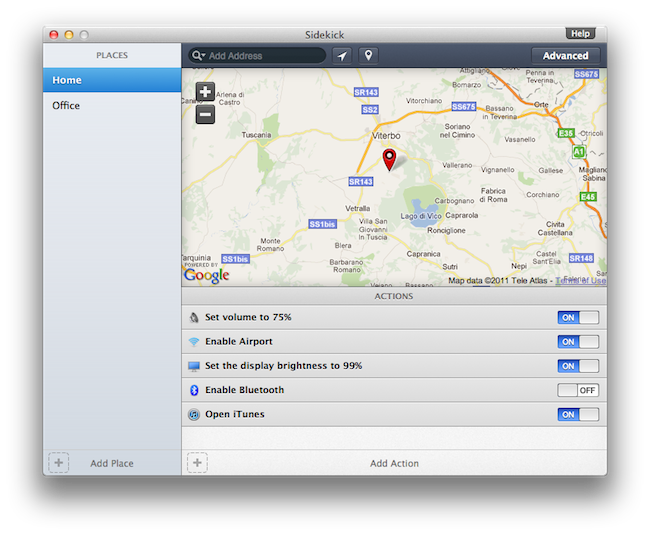
Sidekick Automates Your Mac’s Settings Based On Your Location

Last week, I ordered a new MacBook Air from Apple’s website. My MacBook Pro was getting old, so I decided it was time for an upgrade – and the new MacBook Airs looked like a worthy upgrade. As with the Apple online store’s tradition, the computer showed up at my doorstep in roughly three days. As soon as I got it, I opened it up, set up my personal information, and connected it to the Internet to start downloading my first apps. I was at my office, and in less than two hours I had my new MacBook Air up and running with my favorite applications, Dropbox, work documents, and so forth. A few hours later, when it was time to go home for dinner, I took my MacBook Air, got home, and placed it on the desk in my room. Thirty minutes later, I opened the MacBook’s lid again, fired up Spotify and Google Chrome, launched MacStories’ internal chat URL, and opened iTunes to check for app updates. Sure, the computer was new, but the pattern of actions that followed the opening of the lid wasn’t uncommon: this is what I do every day after dinner. I fire up some music, talk to my co-workers overseas, and browse iTunes. My laptop may be changing location travelling from my office to my house and everything in between (usually a coffee shop downtown), but the workflow is the same.

Sidekick, a new app by Oomph, aims at automating the tedious process of changing your Mac’s settings basing on the location of your computer. Read more


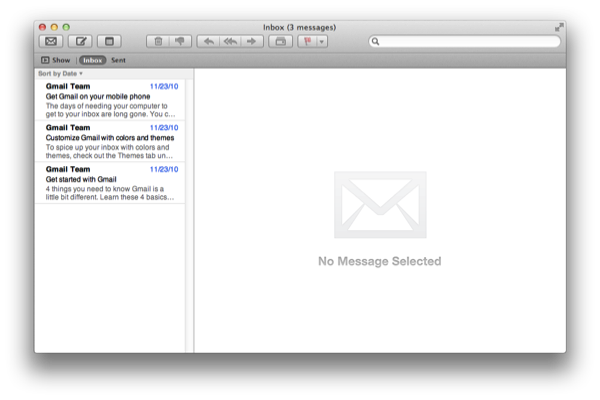
Getting Started with Mail in Lion

Maybe you’re new to Lion (welcome newly acquainted Mac users), or maybe you’re not much of a Mail user to begin with. Well, “Hello From Cupertino, CA”! Much of the hype around Lion has revolved around the iOS-inspired changes made to Mail, which aims to make reading messages, composing email, and navigating through conversations really easy. To do this, Mail likes to hide the Mailbox List, while getting you comfortable with the new Favorites Bar. Lion’s new vertical message list and message-preview pane better make use of wide-screen displays, especially while full-screen. If you’re not familiar with this terminology yet, don’t worry. Grab a cup of coffee, your favorite morning or afternoon pastry, and get ready to set up Lion with your account.

Read more


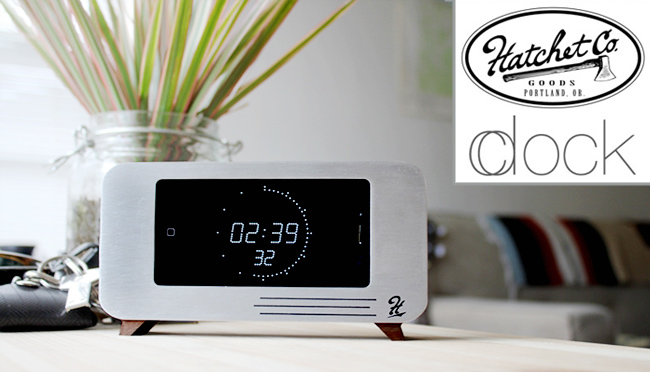
Kickstarter Project: c/dock - Retro Clock/Docking Station for iPhone 4

The c/dock by Hatchet Goods‘ James Aloysius is an iPhone charging station, media viewer and clock (compatible with any clock app) for your bed stand, desk, or wherever you want to charge your iPhone and keep it close. The c/dock was “born out of necessity, desire, many a prototype, and some late nights.”

Many of us keep our iOS devices close to us at all times, even when we sleep at night. Our devices double as alarm clocks, ambient music players and news broadcasters. Battery life can be an issue with running any nightly clock app, and if the battery happens to die it could mess up our whole schedule. The c/dock is a modern twist on a classic design that is different than most iPhone docking stations available.

The c/dock, with a patent pending design, is a thick piece of solid walnut with a brushed aluminum or glossy resin face plate with an attached-6 foot USB cable for charging. Once the iPhone is placed into the c/dock, fire up your favorite app (bedtime or not) and get some rest knowing your iPhone’s battery won’t die. The c/dock is also a great video viewer too - hands free and focused.

Video after the break.

Read more


Google Testing Clean New Google Search Design For Tablets

Multiple users are today reporting that Google is trialing a new tablet-optimized Google Search page that merges the recent design changes from the desktop version with a more touch-friendly design for tablets. Digital Inspiration managed to take a few screenshots of the new design running on their iPad which we’ve included above and below the break.

The new look uses just a single column layout, keeping the old sidebar options minimized below the search box instead. The new orange, dark gray and blue color theme is also present in this new design, which certainly feels cleaner with large amounts of white space. The one final design change that is of note is that the rather famous ‘Goooooooooogle’ at the bottom of the page that links to following search pages is gone – instead all that exists is the numbers one to ten.

This new design is currently being tested, and as is normal with Google product changes, is being randomly presented to a certain percentage of users. It may yet be a few weeks or possibly even months before this rolls out to everyone. Jump the break for some more screenshots.

[Digital Inspiration via The Next Web]

Read more