Posts in news

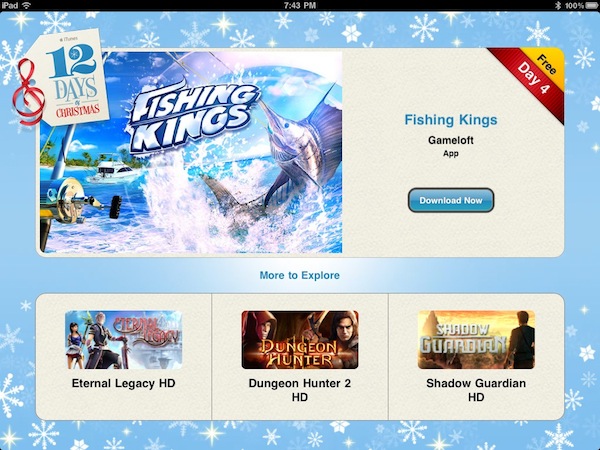
iTunes 12 Days of Christmas: Day 4

Thanks to the iTunes 12 Days of Christmas promotion, every day from December 26th to January 6th users will be able to download a “fantastic selection of songs, music videos, apps, books, TV episodes and a film” completely for free on iTunes.

The free app for iPhone and iPad that lets you receive push notifications for daily offers is available here. Today, you can download Gameloft’s Fishing Kings for free on the App Store. Apple is giving away the regular version of the game to iPhone users, and the HD one for the iPad.

Stay tuned for promotions coming every day until January 6.


Unity Turns Your Living Room Into A Giant IR Blaster

It’s not that I hate IR blasters, but most of the time they’re ridiculously annoying. I’m somewhat of an iHome fan, but I swear I’ve never been more frustrated with a remote than with the one for their now outdated mid-2000 iHr5 model. The unit itself is very nice, but that remote? My god, if the stars didn’t align you could not change the volume with that thing. When IR blasters go giant (like on television remotes), they’re usually okay because I stand in the kitchen and change the channel, aiming it at the ceiling if I want.

So of course Unity seems pretty bad ass right? It sits presumably on your coffee table, firing off a plasma cannon of infrared rays in hopes of triggering some benign sensor in your home theater equipment. And the best part is that it connects to your iPhone over WiFi so you can control all of your devices with a single touchscreen interface. If you’ve an iPhone this seems like a great idea, but I don’t know how many of you would settle for the $99 Unity over a good Logitech Harmony.

[Unity via Wired]


The iPad Hasn’t Saved Magazines, Magazines Haven’t Saved Themselves

Last year, when the “Apple tablet” rumors started to grow louder and become more persistent on the Internet, many speculated such a device would be the savior of the digital publishing industry. Magazines and newspapers could finally find a new home on the rumored Apple device that was meant for reading. The iPad came out, the big names dropped their guns and released not-so-great magazine apps, the iPad didn’t save them from low sales numbers at all. According to data from the Audit Bureau of Circulations, the iPad has failed at “saving” the digital publishing industry.

To make it simple, the numbers have been a disappointment: the Wired app sold 24,000 copies in its first 24 hours in the App Store, reached 100,000 downloads in June but then fell back to 31,000 monthly downloads between July and September and 23,000 in November. That’s a rapid decline indeed. Want more numbers? Vanity Fair sold 8,700 copies in November, Glamour went down to 2,775 downloads. GQ? Only 11,000 sales in November. Men’s Health has the worst performances with 2,000 copies sold in September and October.

Sure, the iPad hasn’t saved magazines if you look at the big picture. But let me tell you one thing: magazines haven’t done anything in their power to stand out on this new platform either. Developers of these magazine apps did, at best, optimize old PDF versions of a publication for the tablet’s screen, ignoring Apple’s user interface guidelines and people’s request for easier sharing options on Facebook and Twitter. Heck, they didn’t even make sure text was selectable in their apps. And it’s not that Apple has weird policies or “too much control” on apps: people, users, actually care about well-realized software. When they see something that’s been quickly converted or squeezed into a 10-inch screen, they don’t download. Or they stop buying. That’s what happened with the Wired app.

I understand big publications would rather have a single “tablet version” to use on a variety of devices such as the iPad or other Android tablets. I also understand that the lack of monthly subscriptions gets in the way with selling updates to App Store users. But a good app? That should always be the starting point.


iPod Nano Hacks: Custom Firmware Files, DFU Mode

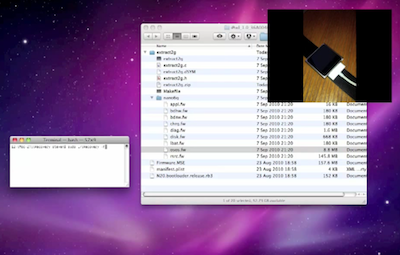
Following James Whelton’s discovery of the possibility to bypass the iPod Nano 6G cache comparison to install blank spaces on the device and remove apps from its Springboard, well-known developer Steven Troughton-Smith has figured out a way to put the Nano in DFU mode (which, in iTunes, will return the device to its default factory settings) and send custom firmware files to it. This is the same method of installing custom firmware on jailbroken iPhones and iPads and make those devices recognize the files as signed and valid, although the Nano method is still a concept and needs some more hacking and work before it becomes a real “jailbreak”.

Troughton-Smith, however, managed to get two encrypted files, send them to the device and have them executed on the unit’s reboot. Using a modified version of popular jailbreak utility iRecovery and the extract2g tool to get the files from Nano’s OS, he believes this will certainly inspire other devs to start tinkering with the Nano 6G and start creating proof-of-concept apps.

Check out the demo video below. I don’t know what kind of “apps” it’d be cool to have on the Nano, but a mini Instapaper would be great. I think. Or Angry Birds. [9to5 via Steven Troughton-Smith]
Read more


Is Rubyra1n Geohot’s Next Jailbreak Tool?

Soon, we may be able to jailbreak our devices with a new tool from hacker / developer all-star George Hotz (a.k.a. Geohot) called Rubyra1n. As noted by Redmond Pie, the domain rubyra1n.com seems to be registered by George Hotz with the same credentials of blackra1n.com, another jailbreak tool Hotz released last year. The new rubyra1n, however, doesn’t share the same data with limera1n.com – an app released in October to jailbreak iOS 4.1.

Of course there is no confirmation Geohot is planning to use this domain for an upcoming jailbreak tool, but we wouldn’t be surprised at all to see him coming out with his own iOS 4.2.1 untethered jailbreak for all devices. In the meantime, check out the domain records below and let the speculation begin. Read more


Angry Birds Maker: “Apple Will Be Number One For A Long Time”

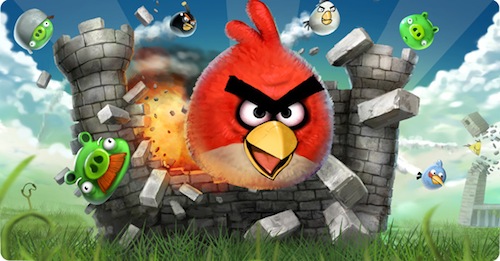
Peter Vesterbacka, the “mighty eagle” at Rovio, thinks Apple is going to sit at the number one spot of mobile platforms for a long time. Angry Birds is, quite possibly, the most successful game that has ever landed in the App Store: more than 50 millions of copies sold, an equally popular iPad version that has been recently updated, a rumored sequel already in the works which will feature a “pig point of view”, Angry Birds cases at Apple Store. If that’s not enough, Rovio is launching its own pig-based mobile payment system.

Yes, true story. Read more


Apple Launches “New Year, New You” App Store Section

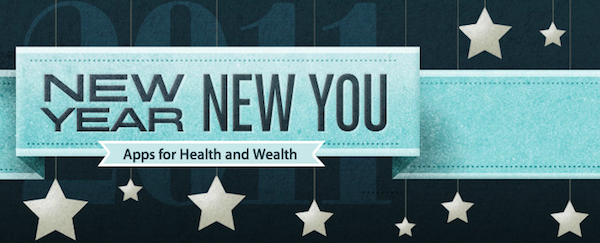
iTunes Connect went back online a few hours ago, and app updates started propagating again in iTunes. Together with the end of the “holiday shutdown” for iOS developers, Apple launched a new App Store section called “New Year, New You” to showcase apps “for health and wealth”.

The new section, though, isn’t limited at apps for fitness and health. Apple apparently has a broader view of new year’s resolutions, and decided to included productivity and entertainment apps in the list. For example, you can find apps such as OmniFocus and Things in there, Instapaper and Mortgage Pad, TED and Fitness for iPad. It’s a whole selection of great apps to start 2011 with a perfect app library on your iOS devices.

We think it’s a good idea. Check out the new section here.


Short URLS Suck, OS X & iOS Malware To Become More “Sophisticated” According To McAfee

McAfee Logo

McAfee Logo

When short URLs first arrived on the scene, I was rather excited at the prospect of simply using a good looking “designer” URL to vainly share links on Twitter. Short URLs provide brand reassurance: MacStories, Engadget, Gizmodo, TechCrunch, and other sites now sport custom short URLs that verify the links we share lead back to our site. However, links from Bit.ly, CloudApp cl.ly links, and Twitter’s t.co links have become nothing more than a nuisance. If I use a service like TinyGrab, I know their short URLs will most likely lead to a snapshot someone has taken of their material. With more anonymous (everything) URL shorteners, there’s no way to verify its trust without using software that allows you to preview the long URL before you click through. We’ve seen their validity ruined plenty of times on Twitter through various attacks such as the cross-site request forgery attack that amused us for a few hours earlier this year, but I’ve simply lost trust in these “brands.”

While I didn’t need McAfee to be skeptical of weird Twitter users asking me if I want a free iPad, they predict short URLs will continue to annoy the tech savvy as the computer-illiterate continue to click through short URLs to whatever tomfoolery exists on the other side. McAfee’s other big claim: OS X could be the next target for malware kiddies.

Read more


CNN: Antennagate Biggest Tech Fail of 2010 (Ping’s In There, Too)

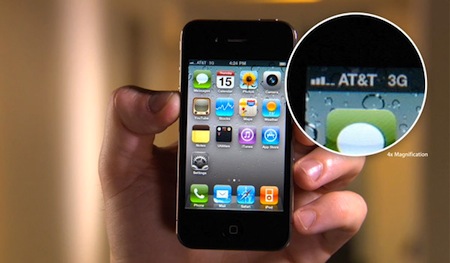
It was June, summer was about to start, we just bought our shiny new iPhone 4s…and the Internet went crazy about what eventually got the name of “Antennagate”. You remember this story. The “weak spot” of the iPhone 4 which, due to a new antenna design, can make the device lose signal when you’re holding it in a specific way. Again, this is not something we’re going to forget easily. Perhaps one day we’ll tell our grandkids “I was there”. Whatever.

Still, CNN thought it was time to bring the whole Antennagate thing to the surface again and name it the biggest tech fail of 2010. We tried to bury Cupertino’s most favorite scandal deep down in our minds; CNN makes it clear that 2010 in tech was all about Antennagate:

First Apple said the problem didn’t exist. Then they said it was a software issue. Then they kind-of admitted it existed and gave away free cases to help. Then, they said it doesn’t really exist anymore and stopped giving away the bumpers. Months later, the problem is all but forgotten and the phones show no sign of dipping in popularity. So “fail,” in this case, is a pretty relative term.

Antennagate is not alone in the chart, though. 3D TVs made the list as well (seriously, I haven’t seen one or heard of a single friend of mine who bought / considered buying one) together with the Nexus One, the Microsoft Kin, Facebook’s privacy issues and the Gawker media security breach. Looking back, it looks like we had a great 2010 full of interesting tech stories and theories.

There’s only one sad point: Ping is, again, listed as one of the fails of 2o10. I feel bad for Ping: no one likes it. It just needs…a little bit of everything.