

As part of my tour of other platforms and devices lately, I’ve been thinking about the cross-platform apps and services I was already using, and how they made it easy to move between iOS, iPadOS, Android, and Windows. During this process I also started using some new services to simplify my life, and I thought...
The Practicality of Art in Software
I’ve been following with great interest this series of articles by John Gruber (and Matt Birchler’s related story) about the chasm between iOS and Android apps. I have some thoughts since expanding my app knowledge beyond iOS and iPadOS is one of my goals for 2023.
About a month ago, during my holiday break, I purchased a Google Pixel 7 as a way to re-familiarize myself with Android.1 To say that I found the ecosystem worse than I remembered would be an understatement. It’s not just about the fact that – as Gruber and Birchler noted – most Android apps suck compared to their iOS counterparts; it’s that the entire OS lacks cohesiveness.
 Two Apps I’ve Been Trying Lately
For this first Monthly Log column of 2023, I thought I’d take readers on a quick behind-the-scenes tour of two apps I’ve been testing on my iPhone lately and how they’ve been working out so far for me. Pocket Casts This is, by far, the biggest app-related change I’ve brought to my everyday iPhone workflow...
 Mastodon Clients for iOS and iPadOS
 John
John
Unread 3.3→
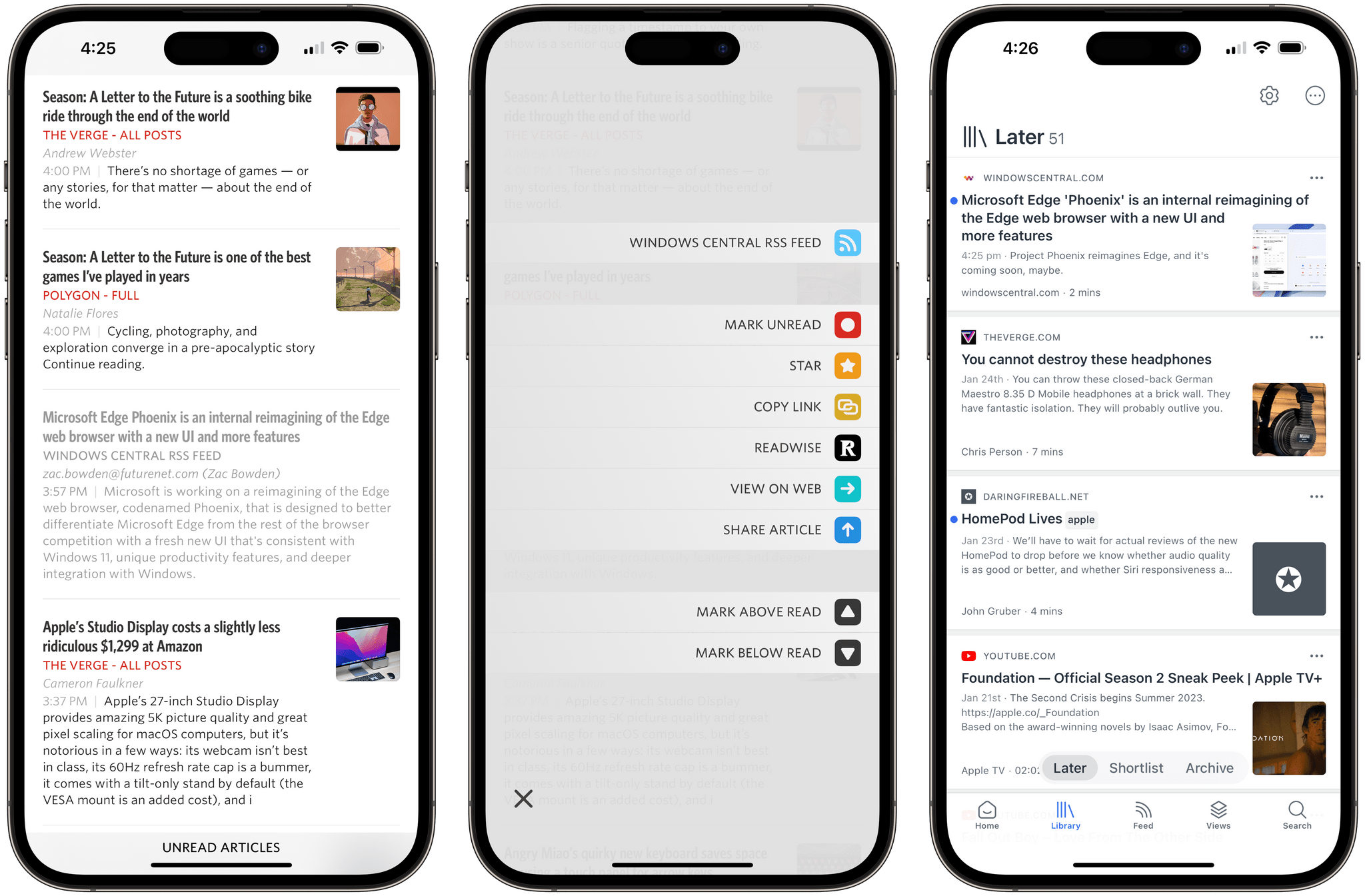
Unread, the elegant RSS reader by Golden Hill Software that we’ve covered before on MacStories, received its 3.3 update today, and it’s an interesting one I’ve been playing around with for the past week. There are two features I want to mention.
The first one is the ability to set up an article action to instantly send a headline from the article list in the app to Readwise Reader. As I explained on AppStories, I decided to go all-in with Reader as my read-later app (at least for now), and this Unread integration makes it incredibly easy to save articles for later. Sure, the Readwise Reader extension in the share sheet is one of the best ones I’ve seen for a read-later app (you can triage and tag articles directly from the share sheet), but if you’re in a hurry and checking out headlines on your phone, the one-tap custom action in Unread is phenomenal. To start using it, you need to be an Unread subscriber and paste in your Readwise API token.
The second feature is the ability to save any webpage from Safari as an article in Unread, even if you’re not subscribed to that website’s RSS feed. Essentially, this is a way to turn Unread into a quasi-read-later tool: the app’s parser will extract text and images from the webpage, which will be then be saved as a ‘Saved Article’ in Unread Cloud, Local feeds, or NewsBlur, or as a ‘Page’ in Feedbin.
If you’re a new Readwise Reader user, I recommend checking out Unread 3.3, which is available on the App Store for iPhone and iPad.
Ivory for Mastodon Review: Tapbots Reborn
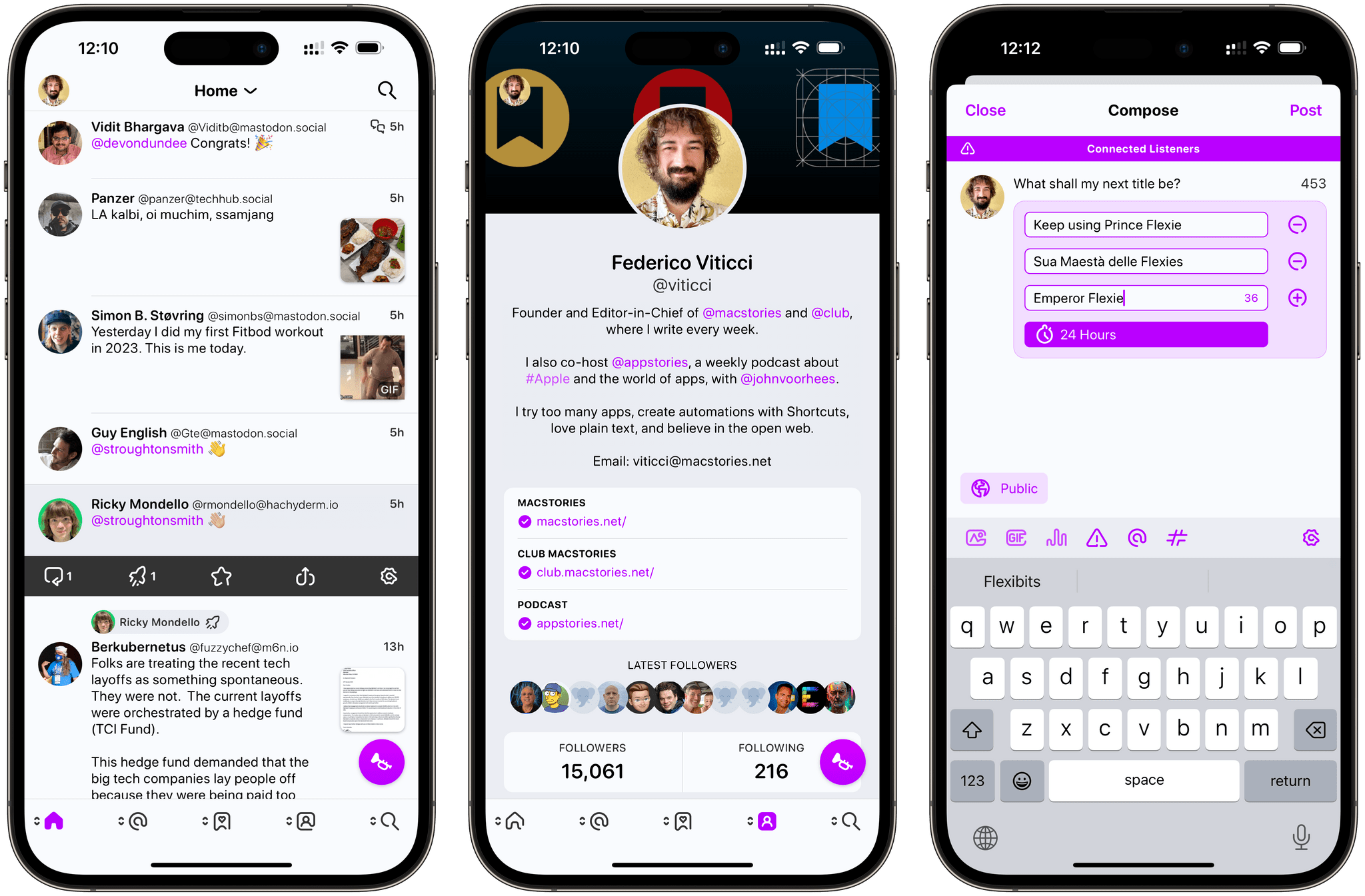
There’s an intangible, permeating quality about Tapbots apps that transcends features and specs: craftsmanship. With Ivory, launching today on the App Store for iPhone and iPad, you can instantly appreciate that level of care and refinement that the Texas-based duo is well known for after more than a decade on the App Store. But there’s something else, too: for the first time in a few years, it feels like Mark and Paul are having fun again.
Ivory is a Mastodon client, and it’s tricky to evaluate it right now because its version 1.0 is launching under extraordinary circumstances.
As we’ve documented on MacStories, Twitter’s idiotic new “leadership” recently decided to unceremoniously and crassly put an end to third-party clients such as Tweetbot with no warning, which forced Tapbots to scramble and figure out a solution on how to discontinue Tweetbot while dealing with subscription renewals while also accelerating the timeline for the launch of Ivory, which they’d been working on for months. I’ve been following the development of Ivory very closely (I’ve been using the app as my main Mastodon client since its first alpha in late November), and I know that the Ivory 1.0 launching today isn’t the debut version Mark and Paul were envisioning. By Tapbots’ own admission, there’s still a lot of work to do on Ivory, but given how the Twitter situation evolved, they had to ship something. There is already a roadmap on Tapbots’ website for Ivory, if you’re curious to know what the developers are planning for the foreseeable future.
As I was saying above, however, there’s something else about Ivory that, in many ways, makes today’s release an important milestone in our community worth documenting and celebrating. Ever since we at MacStories decided to abandon Twitter, we’ve gone all-in on Mastodon and, broadly speaking, we want to embrace the idea of decentralized and federated social media. Over the past few weeks, I’ve seen hundreds of other people I used to follow on Twitter do the same. I believe we’re witnessing the beginning of a new social networking era, and even though Mastodon has been around for a few years, many of us (myself included) are only realizing now that we should have paid attention to this kind of technology years ago.
For the second time since I started MacStories in 2009, I can observe developers imagining what interfaces for reading and posting status updates on the web should look like. New conventions are being created as we speak, and we are, once again, witnessing the rise of a vibrant ecosystem of third-party apps designed for different needs, platforms, and people. Only, this time, there is no single company that controls the fate of all this.
So that’s the something that makes the release of Ivory a special one in the Apple community. More than a reactionary “what if Tweetbot, but for Mastodon” move, Ivory marks a new beginning for Tapbots in a way that Netbot never was. (If you know, you know.) We’re living in new and exciting times for indie apps, and I think that you can feel it when the creator of an app feels the same way. Ivory exudes enthusiasm. Even though it’s not the most feature-rich client I’m testing right now, it’s the one I’m constantly drawn towards. Ivory is going to establish a baseline for quality and polish on iOS and iPadOS; it’s the app future Mastodon clients for iPhone and iPad (and, hopefully soon, Mac) will have to measure up against.
Ivory is the start of a new chapter for one of the most beloved indie studios in our community. So let’s take a look.
Imagining Apps for an Apple VR Headset
Scrobbling Apple Music to Last.fm from Windows with AirScrobble and Cider
Yesterday on MacStories, I wrote about Apple’s native Apple Music client for Windows, which debuted on the Microsoft Store alongside Apple TV and Apple Devices. In the story, I mentioned in a footnote (that’s always the best place for these things) how the official Last.fm desktop scrobbler doesn’t recognize songs playing in the Apple Music...
Hands-On with Apple Music for Windows
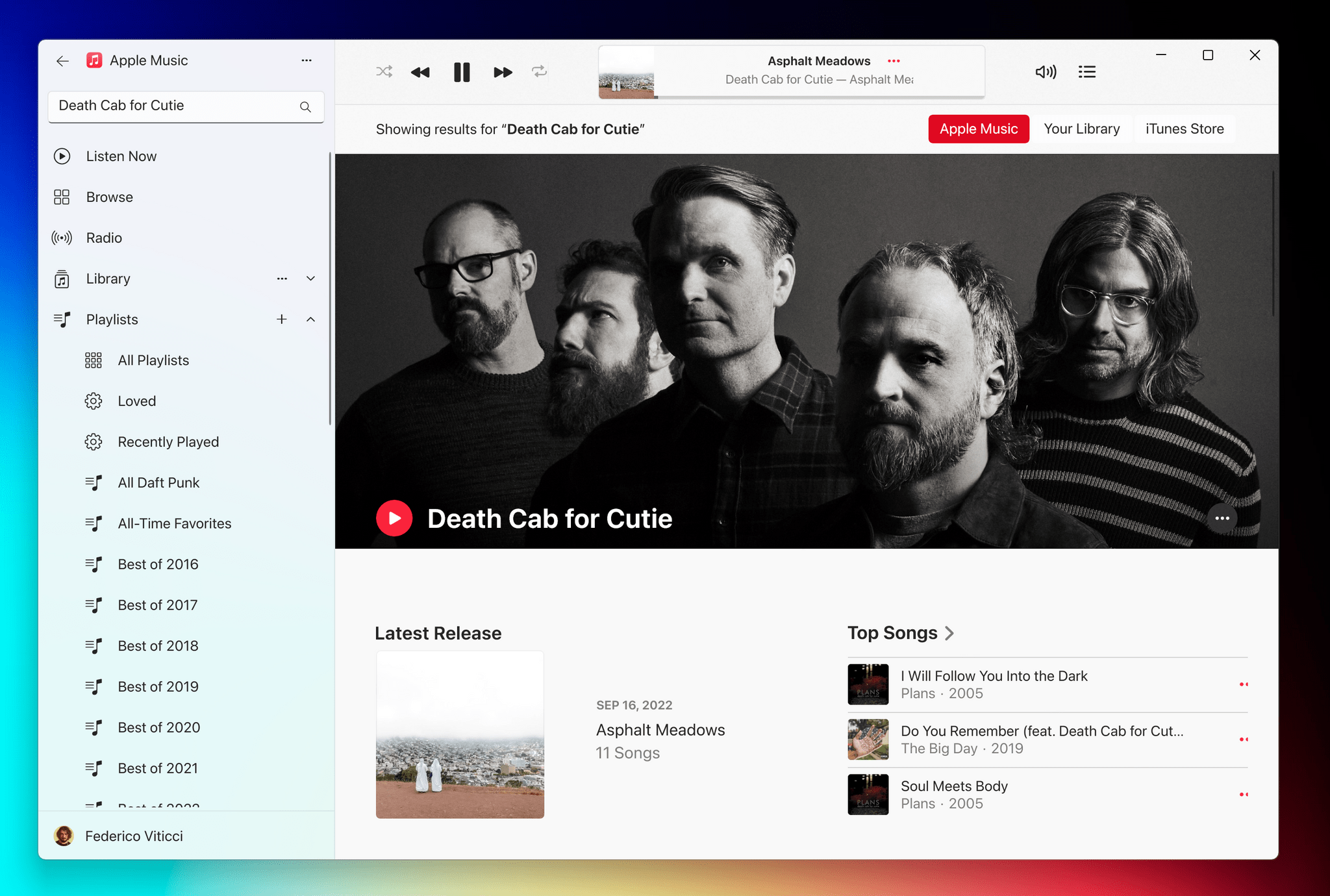
Last week, Apple released native versions of Apple Music, Apple TV, and Apple Devices for Windows. The apps, which are available on the Microsoft Store, are labeled as “previews”, and they’re meant to eventually serve as replacements for iTunes for Windows, which is the only flavor of iTunes Apple still distributes after they transitioned to standalone media apps a few years ago. I suppose the apps are also part of a broader strategy from Apple to establish a stronger presence of their services on Windows, as we saw last year with the launch of Apple Music on Xbox and iCloud Photos on Windows (which joined the existing iCloud configuration panel for Windows devices).
As an Apple Music subscriber and owner of a Windows gaming laptop, I thought it’d be fun to take Apple Music for a spin and see how it compares to Spotify on Windows as well as the existing Apple Music experience for Apple’s platforms, which I know very well and enjoy on a daily basis.