Federico Viticci

10763 posts on MacStories since April 2009

Federico is the founder and Editor-in-Chief of MacStories, where he writes about Apple with a focus on apps, developers, iPad, and iOS productivity. He founded MacStories in April 2009 and has been writing about Apple since. Federico is also the co-host of AppStories, a weekly podcast exploring the world of apps, Unwind, a fun exploration of media and more, and NPC: Next Portable Console, a show about portable gaming and the handheld revolution.

PowerUp 3.0

Created by Shai Goitein, PowerUp is a small Bluetooth Smart-powered accessory that can turn any paper airplane into a smartphone-controlled toy. I don’t typically link to a lot of Kickstarter campaigns, but this one’s too cool not to mention. The campaign is well over its original funding goal, and the first PowerUp 3.0 prototypes will be sent to backers in the first months of 2014.

The device is entirely based on Bluetooth Smart, which allows an iPhone/Android phone to control the PowerUp within a range of 60 yards through a custom app. The PowerUp can fly for 10 minutes on a single charge – at $30, this should make for a great gift next year.

Permalink

Acorn 4.2

Acorn is my favorite image editor for OS X (I liked the changes in version 4.0) because it’s powerful but easy to use. The way that Acorn organizes filters and layers and lets you interact with them in the tools palette just makes sense for the way I want my image editor to work. Version 4.2, released last week for website customers, brings some welcome additions – I’m especially a fan of the Share menu and tweaks to selections.

The technical changes are also worth noting:

Pixels get to the screen so much faster now that everything is drawn through OpenGL.  Not only that, but Acorn takes advantage of OpenCL by virtue of using Core Image. Acorn also uses custom OpenCL kernels I hand coded to speed up other operations.  Acorn incorporates some super fast algorithms combined with GCD to minimize the amount of drawing that happens. Less drawing means longer battery life and overall things go faster.

I had mentioned in a previous post that I was reworking the compositing engine.  I’m not done with that yet, but the progress I have made is promising.  So with a bit more work and time, things are going to get even faster for Acorn.

Permalink

PDFpen suite [Sponsor]

Our thanks to Smile for sponsoring MacStories this week with the PDFpen family of products for iOS and OS X.

PDFpen isn’t just an app – it’s a family of powerful apps for the Mac, iPhone, and iPad that let you edit, sign, scan, and OCR your documents anywhere. On iOS, PDFpen for iPad allows you to sign contracts, make changes, and fill forms when you’re out of the office or on the go; all these features are also available on the iPhone’s smaller screen with PDFpen for iPhone, which comes with all the functionalities of the iPad version.

On the Mac, PDFpen can perform OCR (Optical Character Recognition) so that pictures of text in your document will be turned into real text that you can use; with PDFpen Pro, the advanced version of PDFpen,  you have the ability to create a PDF form, build a table of contents, and convert HTML files to PDF. Recently, Smile added support for PDF stamps: you can browse a library of standard business stamps (e.g. Approved, Confidential, Sign Here) to quickly apply to your documents without complex editing required.

All versions of PDFpen for iOS and OS X can sync documents and changes using iCloud and Dropbox, and you can also exchange documents via Box, Evernote, Google, and other services. To easily get new documents into PDFpen for iOS, you can use the new PDFpen Scan+ app, a utility that lets you scan documents, articles, receipts, and more, using your iPhone or iPad camera with OCR and support for 16 languages.

PDFpen is a fantastic example of a suite of apps that work seamlessly across platforms and take advantage of each device’s unique features to augment the user experience. You can learn more about the PDFpen suite of apps here.

 

Permalink

Pinswift: A Powerful Pinboard Client for iOS 7

Pinswift for iPhone

Pinswift for iPhone

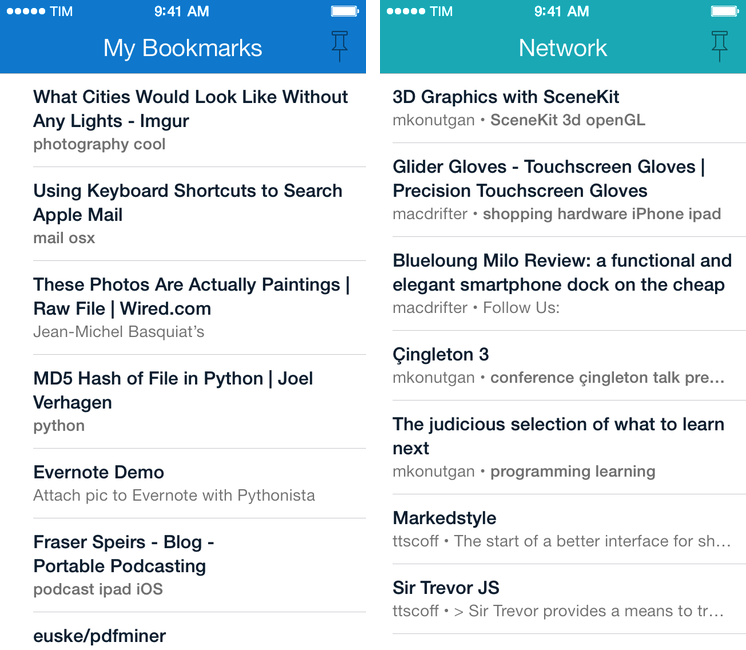
Developed by Joel Carranza, Pinswift is a new $4.99 Pinboard client for iPhone that packs powerful bookmark management, discovery, and search features in an interface specifically designed for iOS 7. Since trying one of the early betas a couple of months ago, I’ve been keeping Pinswift on my iPhone’s Home screen as it offers (almost all) of the Pinboard functionalities I need on a daily basis. Read more


Apple And Indie Publishers

David Sparks:

When I first started writing Paperless, the iBooks store did not exist. There were no snazzy tools for me to incorporate rich-media with text and I was facing up to the fact that I was going to have to Frankenstein ePub and PDF to get what a wanted, a book that not only told you how but also showed you how. I spent weeks researching and testing and still didn’t have it nailed down. Then Apple announced iBooks Author and the iBooks store and I immediately abandoned all prior efforts and jumped to the new platform. iBooks Author gives me exactly what I need to publish the books I want to make.

I didn’t stress this enough when I launched my first book on the iBooks Store: iBooks Author has its quirks, but the fact that a guy like me can put together an interactive book and sell it in over 50 countries with no additional fees is pretty amazing.

Permalink

Apps And The Auto Industry Model

Justin Williams on the new version of Elements for iOS 7 and the “Customization Pack” he introduced as an In-App Purchase:

I’m approaching this how you typically buy a car.

When you walk into a dealership, you may know that you want to buy a Ford Focus, but there’s not just a single Ford Focus. There’s the base model the lowest possible price, but you can enhance the car with additional add-ons and upgrades to make it the car you want. That’s how I am approaching traditional software for the forseeable future.

That’s an interesting way to put it, and I think that we’ll see several developers adopting (or switching to) this strategy in 2014.

Permalink


Plex Gets iOS 7 Update

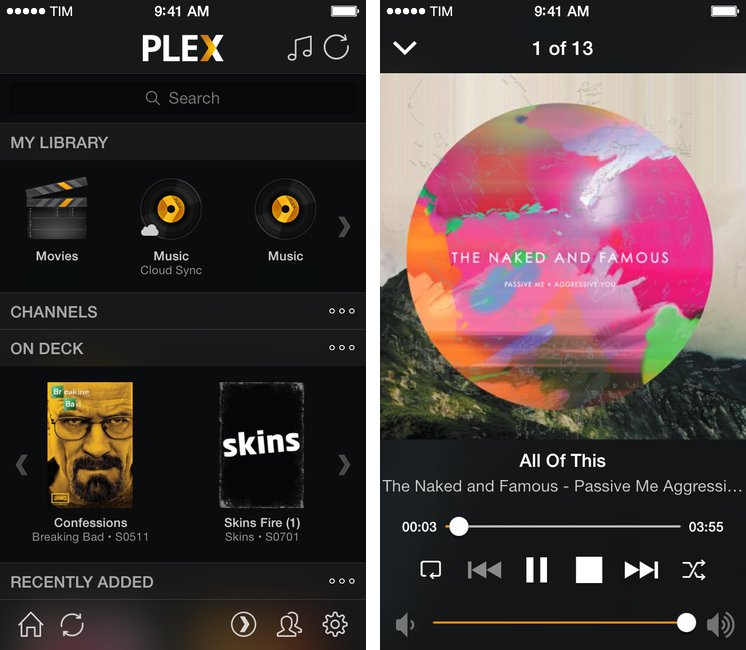
Plex for iOS, a native client for the company’s media manager, has been updated today with support for iOS 7. Version 3.3, available on the App Store, introduces a tweaked look to match Apple’s new OS, as well as bug fixes and changes to the media player.

The app hasn’t been revolutionized in its transition to iOS 7: the main screen has stayed the same, with sections to access your library, channels, and media that is either on deck or has been recently added to your Plex. There are no new options in the Settings, which still allow you to log into your myPlex account and configure playback preferences for synced and remote media.

There’s been, however, a general clean-up of the UI: gone are iOS 6 toolbars and buttons, leaving room for translucencies, redesigned icons, and simplified navigation bars. Translucencies are especially fitting as they make colorful media artwork show through the interface, but it still feels like Plex could use a major redesign (particularly on the iPad) as it has remained largely unchanged since 2011. According to the developers, “lots more user interface improvements” are coming.

The media player (pictured above) has been updated, and the app is now capable of recognizing URLs in the clipboard upon launch, so that you’ll have a shortcut to quickly put content from the web in your Plex queue.

You can get Plex 3.3 on the App Store. Last week, the company released (after a long beta period) version 1.0 of Plex Home Theater, a Mac app to access your Plex content without having to use Plex/Web.