John Voorhees

5804 posts on MacStories since November 2015

John is MacStories' Managing Editor, has been writing about Apple and apps since joining the team in 2015, and today, runs the site alongside Federico. John also co-hosts four MacStories podcasts: AppStories, which covers the world of apps, MacStories Unwind, which explores the fun differences between American and Italian culture and recommends media to listeners, Ruminate, a show about the weird web and unusual snacks, and NPC: Next Portable Console, a show about the games we take with us.

This Week's Sponsor:

GoodLinks

Save articles for later and enjoy them when you have time


WWDC 2019 Keynote: By the Numbers

Every time Apple holds a keynote event, the company shares a variety of numbers related to things like user counts for certain products, software performance improvements, and customer satisfaction. With the company announcing the future of key platforms like iOS, macOS, watchOS, tvOS, and the all-new iPadOS today, there was unsurprisingly a lot of data mentioned at today’s WWDC event.

We’ve collected some of the most interesting numbers shared on-stage during the keynote and on Apple’s product pages:

iOS, iPadOS, and macOS

  • iOS has a 97% customer satisfaction rating
  • 85% of iOS users have updated to iOS 12 compared to 10% of Android users on the latest version
  • iOS devices will unlock 30% faster with Face ID on iOS 13
  • iOS 13 downloads will be up to 50% smaller and updates 60% smaller than previously
  • Apps will launch up to twice as fast as before
  • Apple Pencil latency will be reduced to 9 milliseconds
  • Sidecar will work wirelessly within 10 meters
  • 100,000 radio stations will be available on HomePod
  • There are over 450,000 apps on the App Store built using Swift

Mac Pro

  • Up to 28 cores
  • 8 expansion slots
  • 64 PCI Express lanes
  • Can handle 3 streams of 8K ProRes RAW video and 12 streams of ProRes 4K video
  • 1.4 kilowatt power supply
  • Up to 56 teraflops of graphics performance
  • Up to 1.5TB of system memory on 12 DIMMs
  • Up to 4TB of internal storage
  • Up to 6.3 billion pixels processed per second
  • Users can connect up to 6 Pro Display XDRs, which would cost up to $42,000

Pro Display XDR

  • Maximum 1,600 nits
  • 1,000,000:1 contrast ratio
  • 20 million pixels
  • 40% more screen real estate than 5K Retina display
  • 10-bit color
  • Over 1 billion colors

You can also follow all of our WWDC coverage through our WWDC 2019 hub, or subscribe to the dedicated WWDC 2019 RSS feed
Apple Shows Off New Mac Pro and Pro Display XDR Coming in the Fall

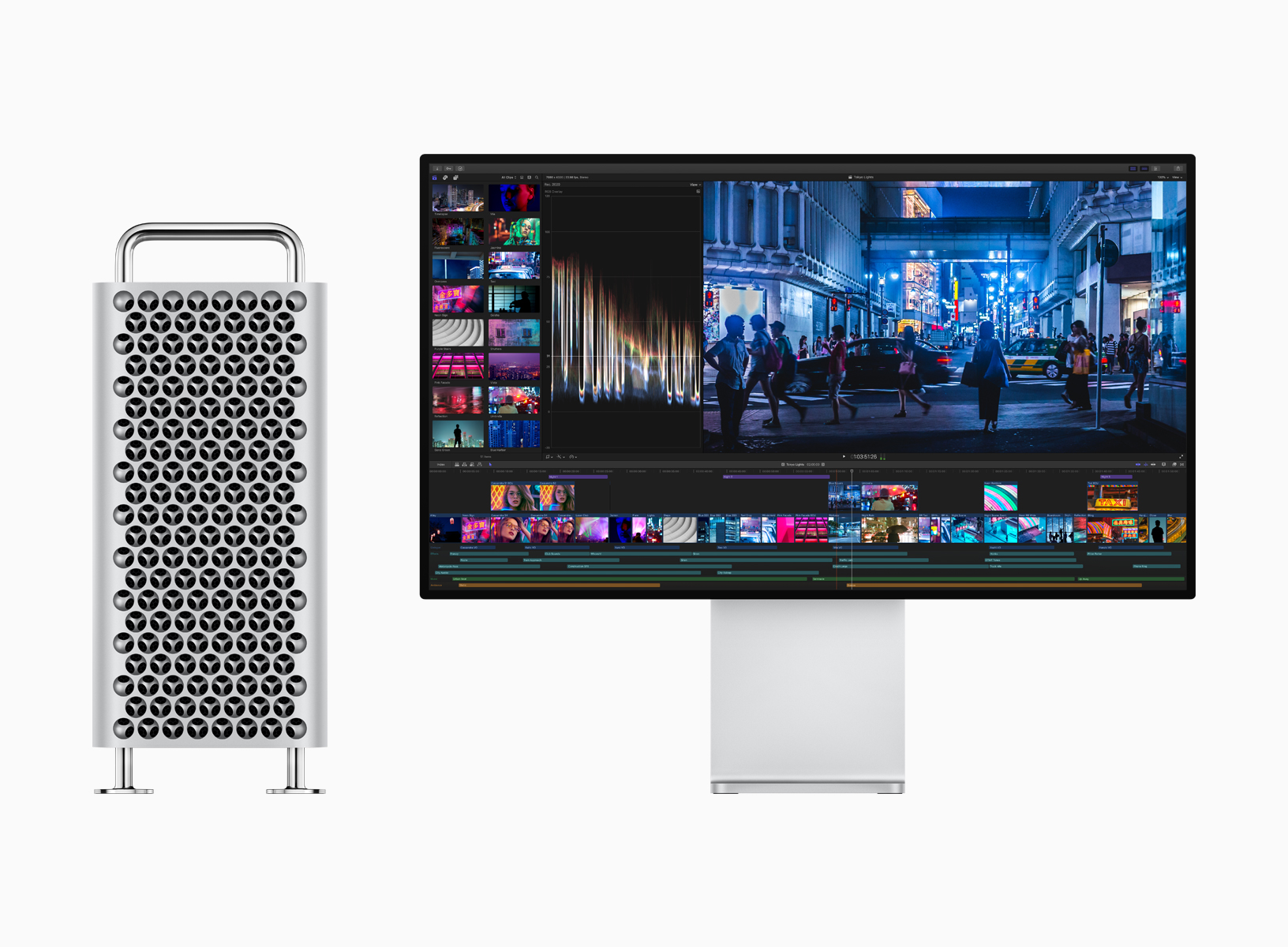
During the keynote presentation at WWDC today, Apple previewed the long-awaited Mac Pro alongside a new 32-inch pro display. Both hardware announcements are aimed at professionals in fields like video compositing, 3D rendering, photography, and audio engineering.

Mac Pro

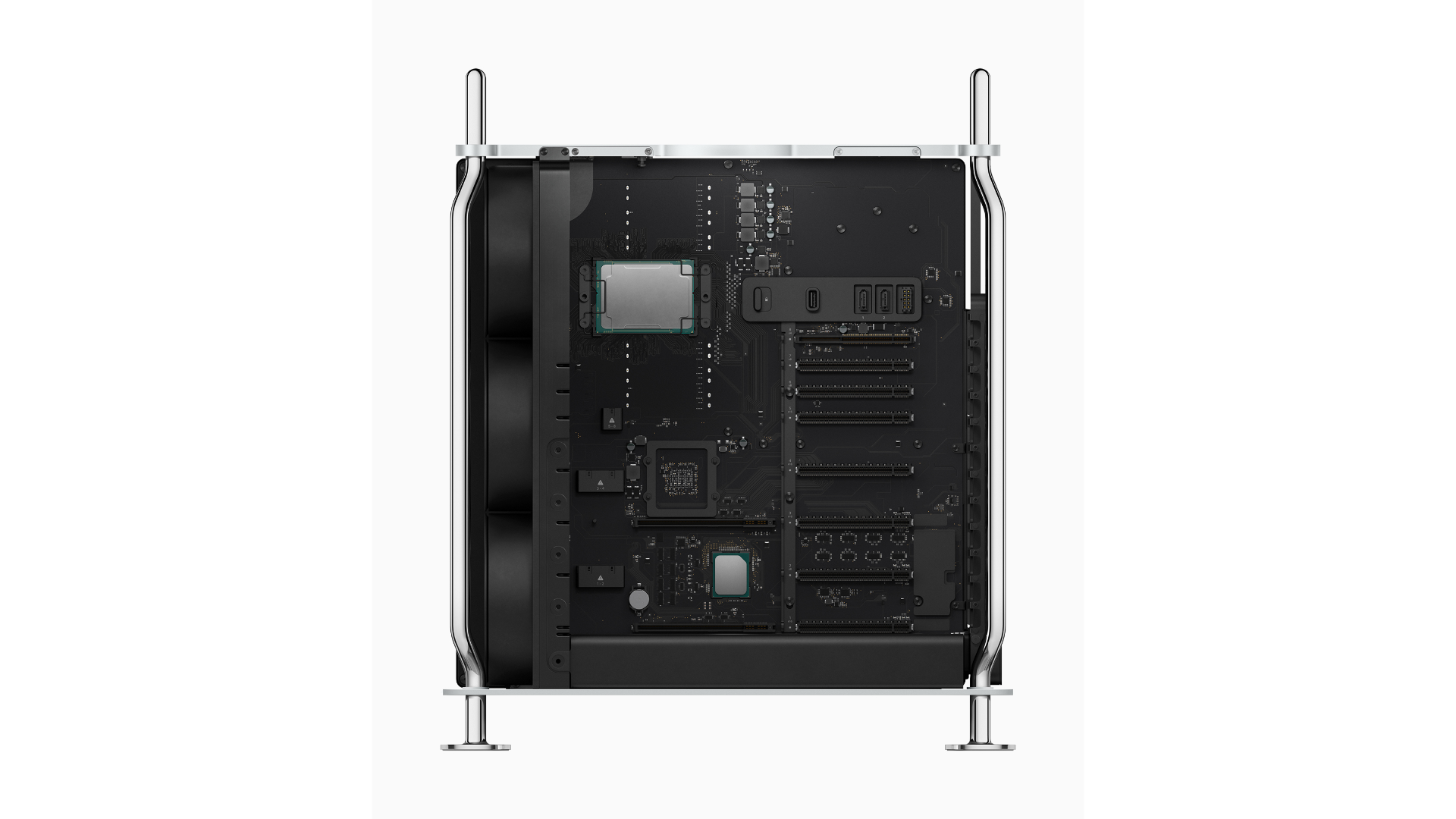
The Mac Pro is designed with performance and customization in mind. The computer’s design echoes the classic ‘cheese grater’ Mac’s shape, vent system, and handles. The frame of the Mac Pro is built from stainless steel, and the casing is aluminum. With a twist of a latch on the top of the computer, users can lift the case off using the two stainless steel handles to access internal components from all sides and install expansion cards.

The case also incorporates a lattice pattern to maximize airflow through the case. According to Apple, the three-dimensional interlocking hemisphere pattern simultaneously assists with airflow by maximizing surface area and makes the case rigid but lightweight. Optional wheels can be added to the case to make it easier to transport in a workspace.

Read more


Developing Dialog with Concepts and GoodNotes

I knew Dialog was a good idea when it started keeping me up at night. That was sometime in January, and the show had already been kicking around inside my head for months in one form or another. That’s how I knew the idea had potential; it didn’t fade into the background with the...


App Debuts

Kids Kids is a strange, sometimes vaguely creepy interactive game that’s a whole lot of fun. You manipulate legions of simple, faceless human figures that respond to touches on the screen. In some levels the characters swim to a goal by following your finger, and in others you have to swipe at the screen...


What’s in My WWDC Bag?

This year packing my bag for WWDC has been tough. I tend to overpack and always regret having to pull multiple items out of my backpack at security then lug a heavy bag around the airport. I told myself this year would be different. I’d bring my MacBook Pro or my iPad Pro, my...


Q&A

Question: I’ve been having trouble accessing the MacStories Unplugged podcast. Any suggestions? (Stuart)

Earlier this week, we updated //www.macstories.net/club with two links, which appear when you are signed into your Club account. The first will open in Apple Podcasts and prompt you to subscribe in that app. The second does the same thing but...


Marzipan: A Chance to Revitalize the Mac App Ecosystem

My annual practice of deciding which Mac apps qualify as ‘must-haves’ is always an interesting exercise. At the core of this reflection is a simple question: ‘Why?’ Why this app instead of another one? Sometimes it’s an app that stands out from its competitors, making the choice easy. Other times it’s a unique feature that fits well with the way I work. Most of the apps I include in my annual round-ups fit into one of those categories.

Last year though, too many apps fell into a couple of different, troubling categories. First, I tolerate a handful of underwhelming apps because they’re associated with services I like or which are essential to my work. Apps like Slack, Skype, and Trello fall into this category. Second, there are apps like Due and Reeder that I like, but either they don’t get much attention or have fallen behind compared to alternatives on iOS. Fortunately, these apps are still in the minority among the apps I use regularly. For every disappointment, there are apps like Things, Ulysses, MindNode, iA Writer, Screens, and Yoink that are not only a pleasure to use on macOS, but offer excellent iOS apps too.

Still, as I covered in the conclusion of my 2018 must-have Mac apps round-up, the exercise of going through the Mac apps I use left me with an uneasy feeling:

there’s an interesting contrast between what I consider must-haves on iOS and the Mac. On iOS, many of the apps I consider must-haves are compelling because of a single feature that sets one app apart from others or because it fits especially well with how I work. Too often that’s not the case on the Mac. I find myself explaining that I use a particular app because ‘it gets the job done.’ That’s because there are too few alternatives to some apps, which is a shame.

Mac apps are not in a state of crisis, but at the same time, the universe of Mac apps is not nearly as big or diverse as iOS. That’s not surprising given that the number of iOS devices in use is roughly 10x the number of Macs in use. As someone who works on and studies both platforms though, the trends are troubling.

Read more


Introducing a New MacStories Podcast: Dialog, Where Creativity Meets Technology

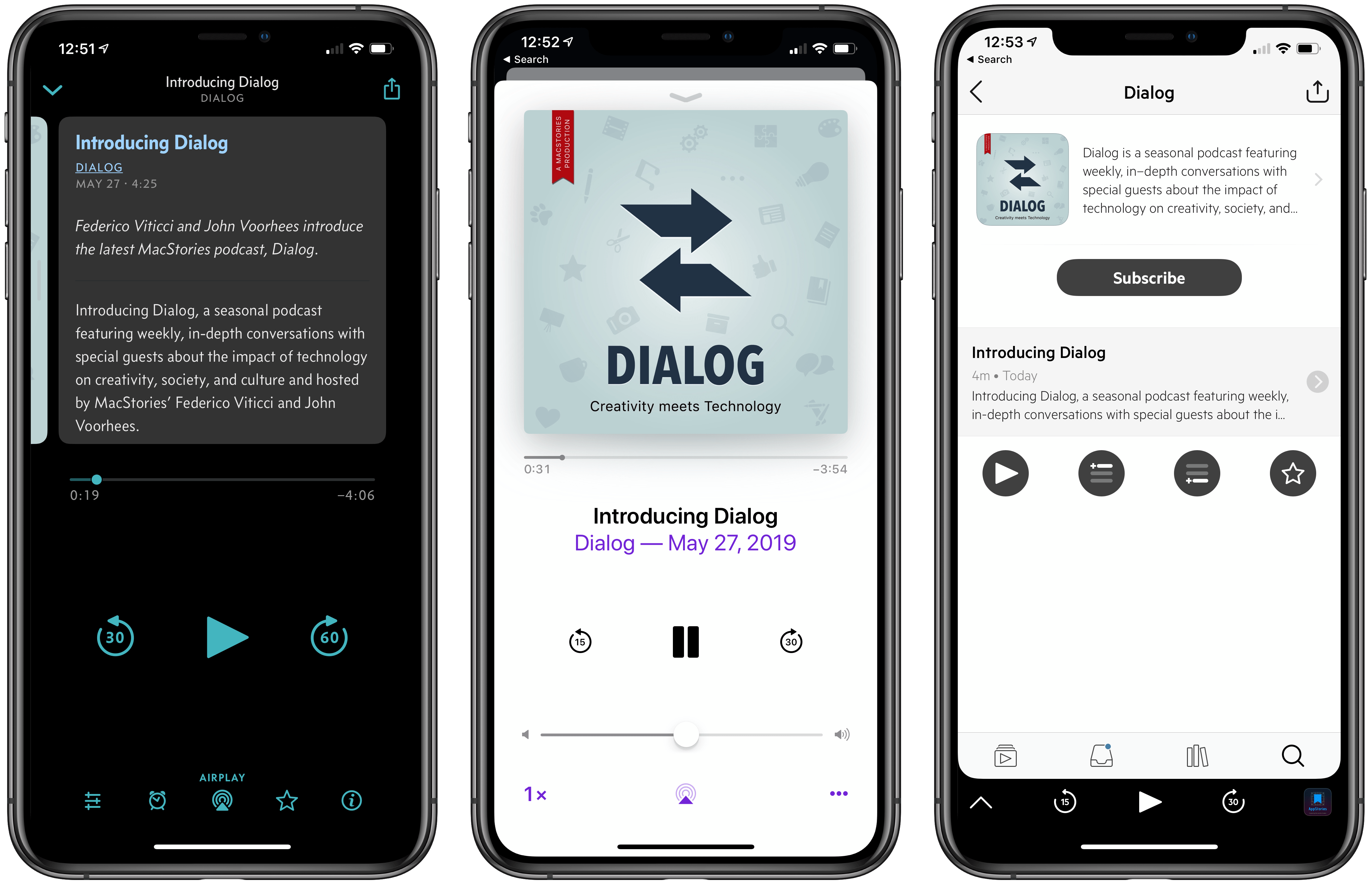
Federico and I are excited to announce a new MacStories podcast called Dialog. The show is a seasonal podcast featuring weekly, in-depth conversations with special guests about the impact of technology on creativity, society, and culture.

You can subscribe here and listen to the first episode on Apple Podcasts.

You can also listen to the first episode on the Dialog website here.

Each season will be organized around a central theme and include in-depth discussions with guests with expertise in the season’s topic. To kick things off, season 1 is all about writers and writing. You’ll hear from a combination of familiar and unfamiliar voices, all of whom are accomplished writers with backgrounds in journalism, songwriting, fiction, screenwriting, and more. Since we began recording episodes, it’s been fascinating to hear guests share their unique perspective on writing, the creative process, and the business of writing and discover areas of overlap between very different kinds of writing.

Seasonal Format and Future Guests

Dialog is a sort of spin-off of AppStories, our podcast about the world of apps. The interviews we’ve done on AppStories are some of the most popular episodes we’ve produced. However, over time, we realized that AppStories’ format is too constrained to do justice to many of the interviews we want to do. The self-imposed time limit of that show and its topical focus became a barrier.

That led me to sketch out the contours of what would become Dialog during our annual MacStories winter holiday break. To overcome AppStories’ constraints, I decided we needed to flip that show on its head both structurally and topically.

Structurally, Dialog’s conversations with guests are far more in-depth than we could accomplish in a 30-minute AppStories interview. Dialog’s interviews will run as long as two hours but will be split over two episodes to keep each episode to about one hour long. It’s a format that also provides headroom for Federico and me to participate more fully in each episode; less like a traditional interview and more of a conversation with our guests.

Topically, Dialog’s focus is also broader than any interview we’ve done on AppStories. Of course, you can expect Federico and me to come at each season from a tech angle, but that’s the lens through which each season will be viewed more than it is the subject matter of the seasons themselves.

Although Dialog is different than anything we’ve done before, its roots are also firmly grounded in MacStories’ character. We enjoy the apps and hardware we try every day, but what we love the most is telling the stories of the people who make those things, exploring how they empower creativity, and reflecting on their impact on the world around us. Dialog is a natural extension of our approach to technology.

The first episode of Dialog, which you can listen and subscribe to here, introduces the topics we will cover this season. Federico and I talk about our backgrounds in writing, how we got started, our approach to writing at MacStories, the business of writing online, and a lot more.

Next week, we’ll be joined for a two-part conversation by our first guest, John Gruber of Daring Fireball, who will be followed by singer-songwriter Frank Turner, and other guests throughout the summer. At the end of the season, Federico and I will wrap up what we’ve heard and learned from the writers we’ve talked to before taking a break to plan season 2.

Read more