John Voorhees

5783 posts on MacStories since November 2015

John is MacStories' Managing Editor, has been writing about Apple and apps since joining the team in 2015, and today, runs the site alongside Federico. John also co-hosts four MacStories podcasts: AppStories, which covers the world of apps, MacStories Unwind, which explores the fun differences between American and Italian culture and recommends media to listeners, Ruminate, a show about the weird web and unusual snacks, and NPC: Next Portable Console, a show about the games we take with us.

Twitter Intentionally Ends Third-Party App Developer Access to Its APIs

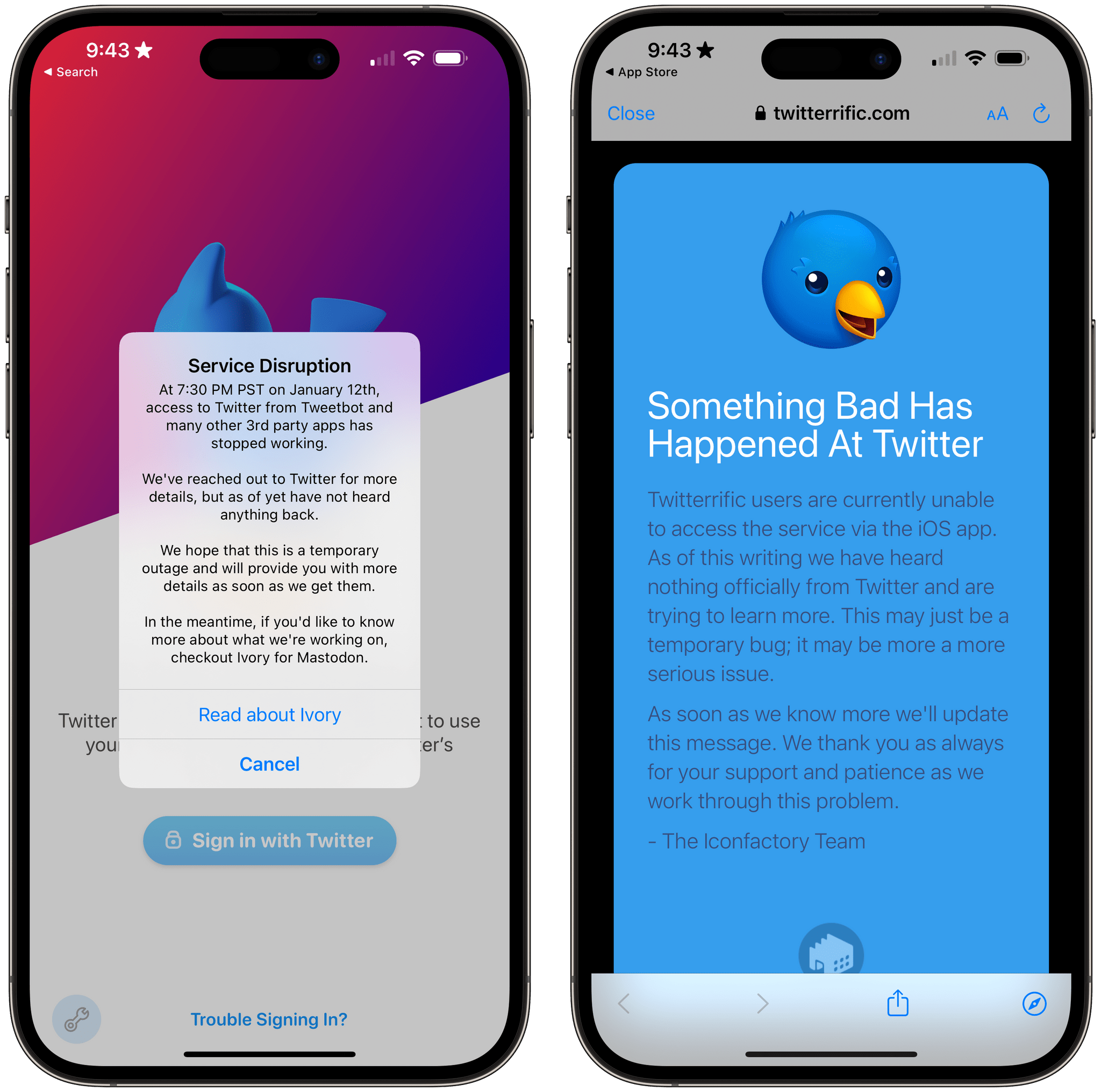
Late yesterday, The Information reported that it had seen internal Twitter Slack communications confirming that the company had intentionally cut off third-party Twitter app access to its APIs. The shut-down, which happened Thursday night US time, hasn’t affected all apps and services that use the API but instead appears targeted at the most popular third-party Twitter clients, including Tweetbot by Tapbots and Twitterrific by The Iconfactory. More than two days later, there’s still no official explanation from Twitter about why it chose to cut off access to its APIs with no warning whatsoever.

To say that Twitter’s actions are disgraceful is an understatement. Whether or not they comply with Twitter’s API terms of service, the lack of any advanced notice or explanation to developers is unprofessional and an unrecoverable breach of trust between it and its developers and users.

Twitter’s actions also show a total lack of respect for the role that third-party apps have played in the development and success of the service from its earliest days. Twitter was founded in 2006, but it wasn’t until the iPhone launched about a year later that it really took off, thanks to the developers who built the first mobile apps for the service.

Read more


App Debuts

Codepoint This new utility aims to be an all-in-one solution to search and find Unicode characters, SF Symbols, and emoji on your iPhone, iPad, and Mac. I love this idea: in a single app, I can search for all kinds of symbols I may want to use in my stories or posts on Mastodon...


Links Don’t Belong on a Bookshelf

A I wrote my review of Matter this week, I was struck by the different approaches taken by the developers of read-later apps and link organizers. There’s a lot of overlap between the two categories. Many people use apps like GoodLinks and Anybox as their read-later apps, although to me, those apps are first and...


Tricks with Things

I’ve been using Things as my task manager again to test upcoming updates to its Shortcuts actions. I’ll have more to sharewhen the update is released, but in revisiting Things over the past several weeks, I’ve been reminded of just how many cool little touches the app offers that make it a delight to use....


The Trouble with Mixing Realities→

Mark Gurman recently reported that Apple’s much-rumored headset will combine AR and VR technologies, which Brendon Bigley argues could be the wrong approach:

… I don’t think the road to mass adoption of virtual reality actually starts with virtual reality, it starts instead with augmented reality — a technology that can quickly prove its function if presented in a frictionless way. While even the best VR headsets demand isolation and escapism, a hypothetical product focused first and foremost on augmented reality would be all about enhancing the world around you rather than hiding from it.

Brendon’s story nails something that has been nagging me about recent headset rumors. The iPhone was a hit because it took things we already did at a desk with a computer and put them on a device we could take with us everywhere we go, expanding the contexts where those activities could be done. As Brendon observes, the Apple Watch did something similar with notifications. AR feels like something that fits in the same category – an enhancement of things we already do – while VR is inherently limiting, shutting you off from the physical world.

Like Brendon, it’s not that I’m not excited about the prospect of an Apple headset or the long-term prospects for virtual reality as a technology, but given where the technology is today, it does seem as though jumping into VR alongside AR could muddy the waters for both technologies. Of course, we’re all still working off of speculation and rumors. I have so many questions still and can’t wait to see what Apple has in store for us, hopefully later this year.

Permalink


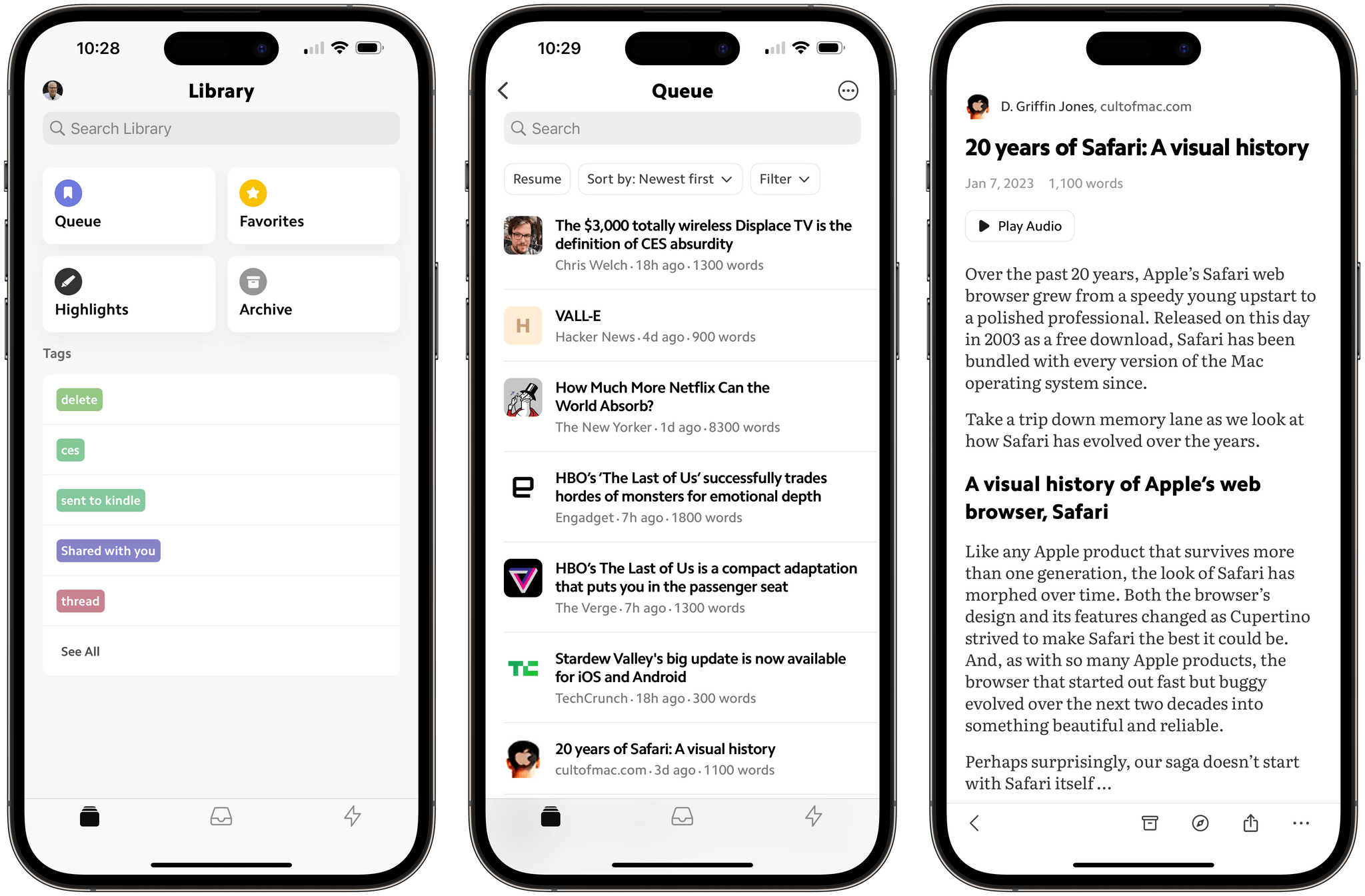
Matter: A Fresh Take on Read-Later Apps

Saving articles and links from the Internet for later isn’t new, but it’s something that has drawn renewed interest from developers over the past year or so, including the makers of Matter, who are reexamining the approaches of the past through a modern lens.

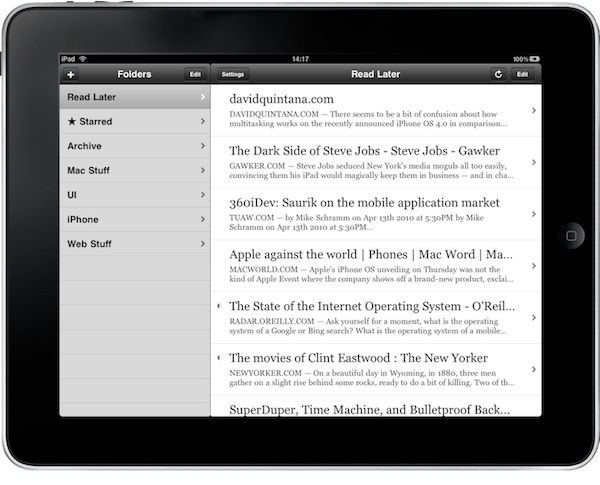
An early version of Instapaper on the iPad.

An early version of Instapaper on the iPad.

Apps like Instapaper and Read It Later, which became Pocket, pioneered saving web articles for later. The original iPhone ran on AT&T’s EDGE mobile network in the US and coverage was spotty. Read-later apps saved stripped-down versions of articles from the web that could be downloaded quickly and read offline when EDGE was unavailable. The need to save content offline because of slow and unreliable mobile networks is far less pressing today, but collecting links and time-shifting reading remains popular.

I do most of my Matter reading in the evening on my iPad mini using dark mode.

I do most of my Matter reading in the evening on my iPad mini using dark mode.

Today, classics like Instapaper and Pocket are joined by Matter, which I’m reviewing today, plus Readwise Reader, which is currently in public beta, and a long list of link organizer apps like GoodLinks, Anybox, and Cubox, all of which include their own reading modes and are the spiritual successors to web services like Delicious and Pinboard. The result is that users have more choices than ever. That’s fantastic because, as I’ve learned from MacStories readers, no two people take the same approach to what they save and how they read and process it.

Read more


Apple Launches a New Program Allowing Business Owners to Manage Their Place Cards in Maps and Other Apps

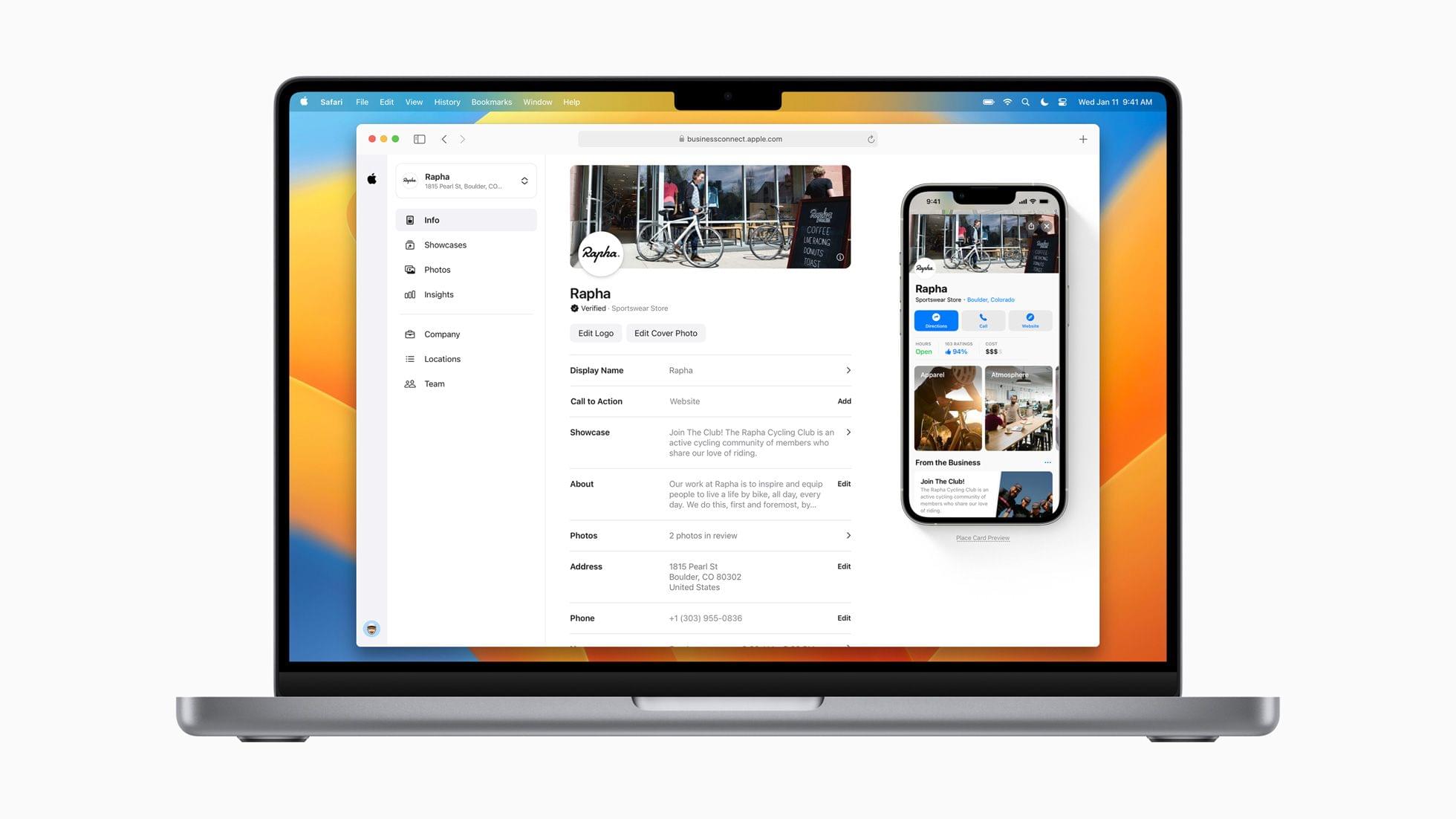
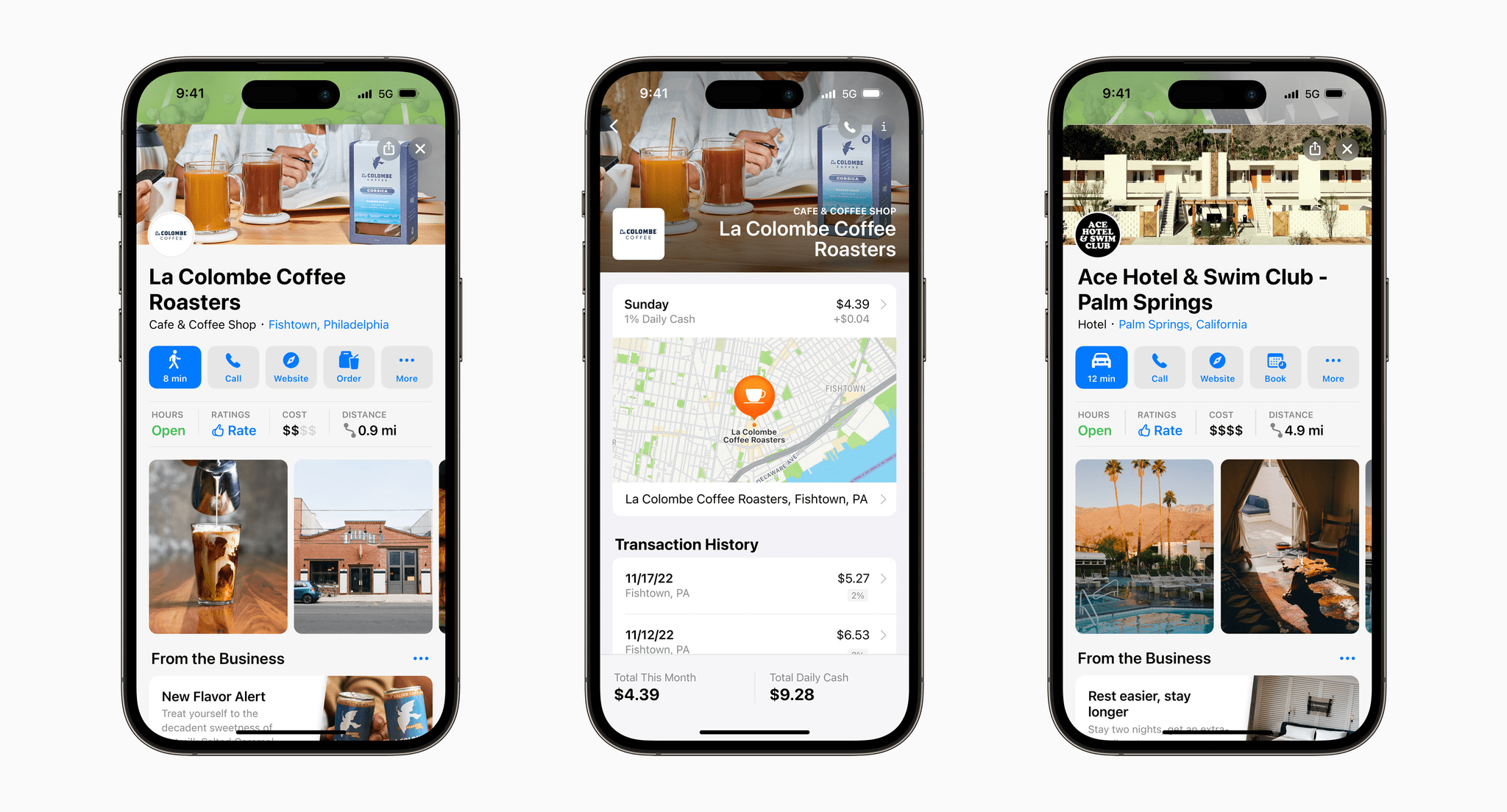
Today, Apple introduced a new online tool called Apple Business Connect that allows businesses to customize the information listed in Apple Maps Maps, Messages, Wallet, Siri, and other apps.

According to Eddy Cue, Apple’s senior vice president of Services:

We created Business Connect to provide Apple users around the world with the most accurate information for places to eat, shop, travel, and more. Apple Business Connect gives every business owner the tools they need to connect with customers more directly, and take more control over the way billions of people see and engage with their products and services every day.

There are a couple of components to Apple Business Connect:

  • A free online tool where businesses can claim their place cards, which include the details about their businesses in apps like Maps, and customize how it appears
  • An API for businesses with 25 or more locations that integrates with third parties that provide location listing services

In addition to providing a self-service path for business owners, Apple has expanded the features of place cards to include Showcases that provide a way for businesses to highlight promotions, seasonal menu items, discounts, and more. Showcases are available today in the US. Apple says Showcases will roll out globally in the coming months.

To register, business owners can visit the Apple Business Connect website, which requires a desktop or laptop computer and an Apple ID. Once logged in and verified by Apple, businesses can personalize their place cards.

Currently, the data in place cards is predominantly supplied by Yelp, although TripAdvisor, Wikipedia, and other sources like users’ photos are also used. Apple Business Connect puts business owners in control, which I expect will result in more accurate and timely updates to place cards, although hopefully, Apple has put some quality-control oversight in place too. The new program also has the added benefit to Apple of cutting the cost of sourcing data from Yelp and others. Having moved recently from Chicago, where place cards were reliably up-to-date, to North Carolina, where the quality of the cards is less reliable, I’m looking forward to seeing how quickly business owners sign up to claim their locations and whether they keep the cards up-to-date.


Gone but Not Forgotten: The Third-Party Apps (Part 2)

AppStories+ Deeper into the world of apps

AppStories Episode 311 - Gone but Not Forgotten: The Third-Party Apps (Part 2)

0:00
45:57

↓

AppStories+ Deeper into the world of apps

This week, Federico and John conclude their ‘Gone but Not Forgotten’ series with more third-party apps, including productivity, communications, and entertainment apps, plus games.

Read more