





This week on MacStories Unwind, John recommends Bullet Train, a Brad Pitt action movie, and Federico loves Hi-Fi Rush, an action, rhythm game for Xbox and PC.
Links and Show Notes
John’s Pick:
Federico’s Pick:


This week on MacStories Unwind, John recommends Bullet Train, a Brad Pitt action movie, and Federico loves Hi-Fi Rush, an action, rhythm game for Xbox and PC.
John’s Pick:
Federico’s Pick:
Today, 1Password announced that it’s moving to a passkey-based system for unlocking its password manager app. Using a password manager like 1Password already means not having to remember passwords for every site and service you use because it locks your passwords behind a single, hard-to-guess password. With passkeys, that single password approach will become a thing of the past, allowing users to access their passwords through biometric-based passkeys generated locally on their devices.
1Password’s new passkey feature is coming this summer. The company explains how passkeys differ from the way the app works today:
Now, unlocking 1Password without a password is nothing new. It’s something we do every day using biometrics. 1Password was the first third-party iOS app to offer Touch ID, all the way back in 2014, and since then we’ve added support for Face ID, Windows Hello, Android Fingerprint, and more.
But as convenient as biometrics are today, they don’t actually replace the password; they only mask it. That’s why 1Password asks you to type in your password periodically in order to ensure that you have it memorized.
Passkeys also use biometrics, but they allow us to go farther and eliminate the underlying password entirely.
By replacing passwords with passkeys, 1Password will be able to preserve the benefits of biometrics while eliminating the need to ever use a password to access the app’s data, no matter what platform you use.
Passkeys are a big deal for security. The apps, sites, and services you use may not adopt passkeys for a while, but with 1Password doing so, the passwords you still need to use will be protected better than before. I know I’ll be switching to this system as soon as it’s available.
This week on AppStories, we conclude our look at Mastodon apps with web and Mac clients, plus Mastodon utilities.
[Apple Podcasts iFrame]
Sponsored by:
On AppStories+, I have a complaint to lodge with Federico and explain why the second generation HomePod is so disappointing.
We deliver AppStories+ to subscribers with bonus content, ad-free, and at a high bitrate early every week.
To learn more about the benefits included with an AppStories+ subscription, visit our Plans page, or read the AppStories+ FAQ.
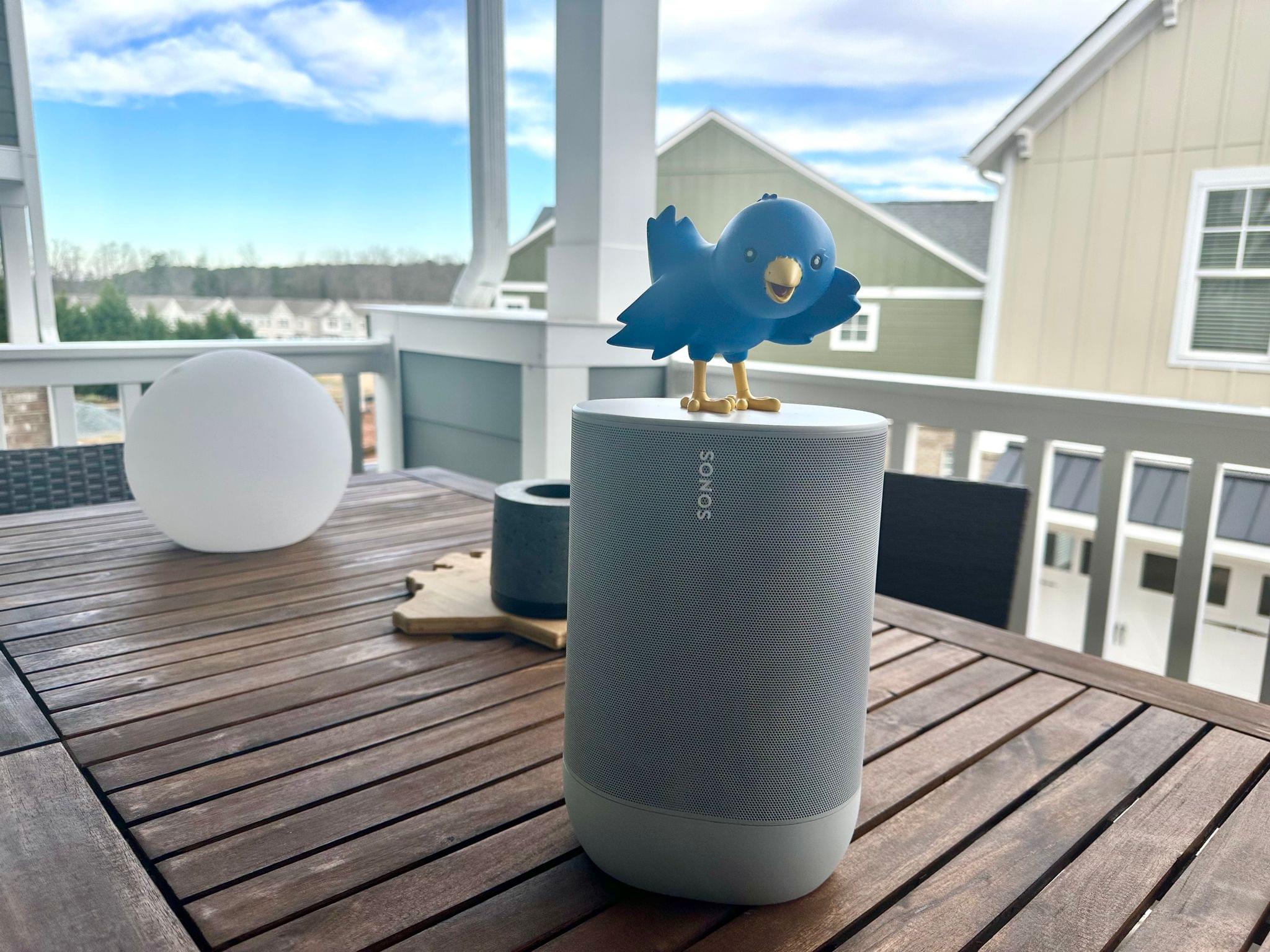
Last week, I wrote about the Sonos Move in MacStories Weekly. I love the Move’s portability and rich, warm sound, which make it perfect for use in multiple places around my house and outside. In fact, I’ve enjoyed the Move so much that I’d begun looking at Sonos soundbar and subwoofer options, anticipating that the original HomePods I use with my living room media setup would eventually need to be retired.
Then, Apple released the HomePod (2nd Generation), which iterates on the original version. I had hoped that Apple would make a soundbar of its own, so when all we got was a HomePod, I was disappointed. That pushed me further into the Sonos camp, but with my original HomePods going strong, my window shopping has been just that: window shopping.
However, after watching Stephen Roble’s latest video comparing the new HomePod to its predecessor and the Sonos Beam and Arc soundbars paired with subwoofers, my interest in soundbars has waned. Robles evaluates the HomePods from a bunch of different angles, from music and movies to smart home integration, making a compelling case for a pair of the new HomePods as the best value for someone who wants a multipurpose device.
When I think about it, that’s exactly my use case. My pair of original HomePods are the only speakers on the main floor of our house. I AirPlay podcasts and music to them, use them to control HomeKit devices, and for watching TV and playing games on my PS5 and Xbox.
I’m still disappointed Apple didn’t announce more than a new HomePod last month. I’d like to see the company explore new home-centric devices that address use cases beyond speakers. Still, for audio, it’s hard to argue against the HomePod.
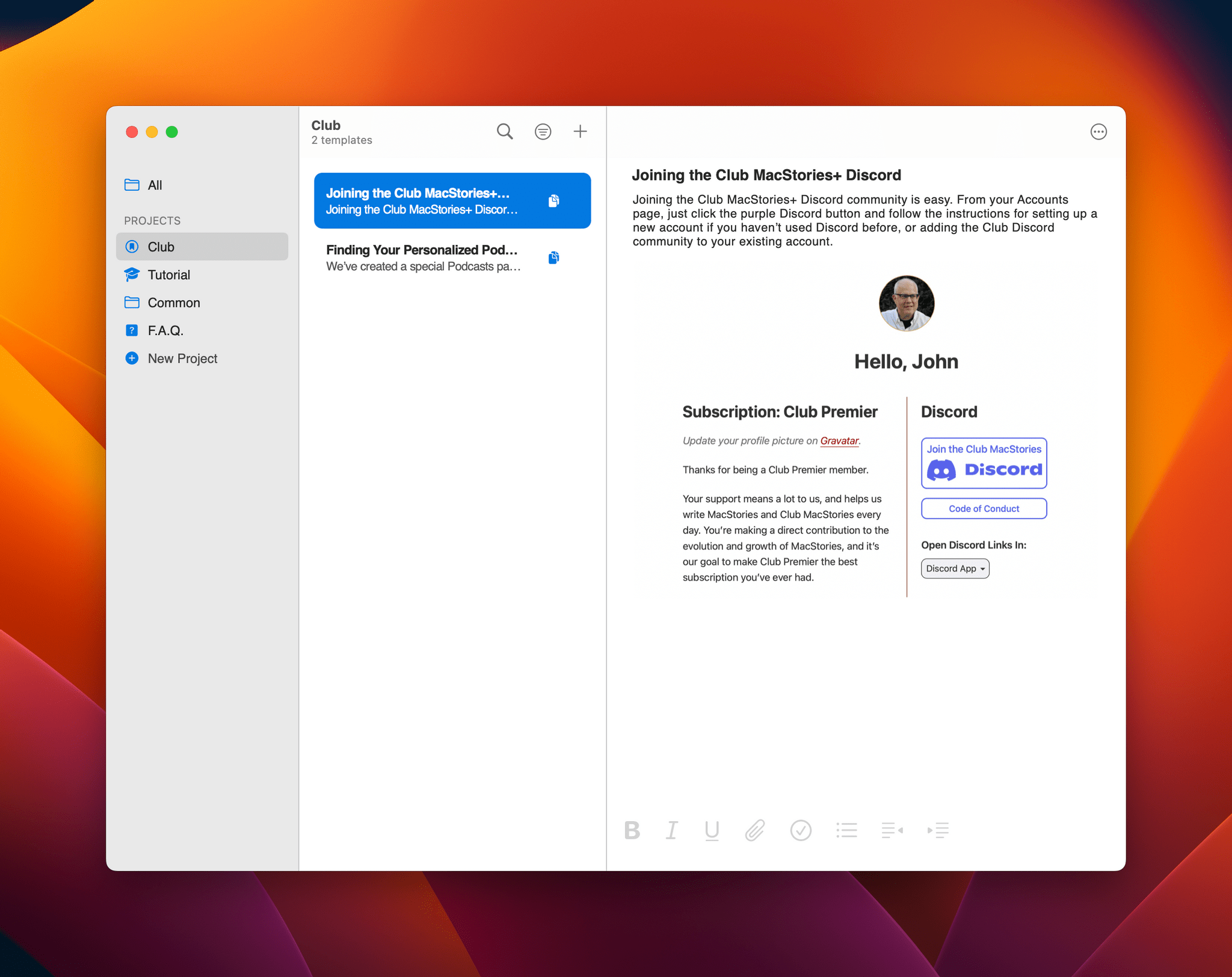
Because Club MacStories now encompasses more than just newsletters, we’ve created a guide to the past week’s happenings:
When Apple released macOS Monterey in 2021, it introduced a new extension point for its Mail app. At the time I wrote my Monterey review, there were no Mail extensions on the Mac App Store. Over a year later, there is still only a handful. That’s why I was intrigued when Kriss Smolka of Funn Media contacted me about ReplyCube, the company’s first Mail extension.
 Mastodon Web, Mac, and Utility Apps
  App Debuts
 Rewind Rewind is a new music app that takes you back to the music of a specific year. The app combines Billboard’s singles chart with album spotlights, music videos, artists, genres, and mixtapes in a nostalgia-filled package. I love this concept, but it has one big downside. Rewind only works with Tidal, which is...
Sonos Move: The Portable Speaker Apple Should Have Made At my old house, I had a pair of wired speakers outside, above our patio. It was a setup that pre-dated AirPlay by many years, so it was originally driven by a good, old-fashioned stereo receiver. Eventually, I disconnected the speakers from the receiver and rewired them to a Griffin 20 amp that connected...
](https://cdn.macstories.net/banneras-1629219199428.png)
 Federico