Graham Spencer

917 posts on MacStories since January 2011

Former MacStories contributor.


Apple Overtakes Google And Becomes World’s Most Valuable Brand

A new survey on the value of brands has placed Apple as the world’s most valuable brand, ending Google’s four-year reign at the top of the list. The ‘Brandz’ survey, done by global brands agency Millward Brown, found that the Apple brand is worth an estimated $153 billion, which was an 84% increase from last years survey.

Global brands director of Millward Brown, Peter Walshe, said that Apple’s pointed to a number of factors that has led to Apple’s rapid rise in brand valuation. He said that their meticulous attention detail and presence in corporate environment were two of the reasons that they have behaved differently to other consumer electronics manufacturers and went on to say:

Apple is breaking the rules in terms of its pricing model. It’s doing what luxury brands do, where the higher price the brand is, the more it seems to underpin and reinforce the desire. Obviously, it has to be allied to great products and a great experience, and Apple has nurtured that.

Technology and telecommunications companies generally dominated the list, with Apple (1), Google (2), IBM (3), Microsoft (5), AT&T (7) and China Mobile (9) holding six of the top 10 spots, sharing it with the old-heavyweight brands of Coca-Cola (6) and McDonalds (4). Meanwhile Facebook entered the top 100 at number 35 this year, with a valuation of $19.1 billion.

The survey is done by Millward Brown essentially observing the value that the companies put on their own brands in their earnings reports and analysing it in conjunction with the results of a survey of more than 2 million consumers.

[Via Reuters]


Apple Negotiating With Nuance Over Voice Recognition Technology?

A TechCrunch post from late yesterday suggests that Apple and voice recognition company Nuance have been negotiating a deal for months following Apple’s acquisition of Siri. Siri, which Apple acquired last April, developed an iPhone app that was marketed as a “virtual personal assistant” and would listen to audible questions from a user (such as “where can I find parking around here”), and would respond with an answer.

In a previous report, TechCrunch said that they believed the acquisition of Siri would lead to iOS 5 having “assistance technology [that] is said to be deeply integrated into the OS for all the different services offered.” However, Apple has had to renegotiate deals with all the partners of Siri since it acquired them and apparently the one hold out is Nuance. According to TechCrunch’s sources, the negotiations between Apple could be as big as an acquisition or just a partnership.

Apparently an acquisition is unlikely at this stage, likely for a number of reasons mainly surrounding the cost; Nuance is a public company valued at over $6 billion, furthermore much of that value is because of various licensing deals that would likely be stopped if Apple bought Nuance. The other alternative is that Apple partners Nuance and licenses the voice recognition technology; and at this stage it is the more likely option according to TechCrunch’s sources. The hold up is apparently because of Nuance CEO Paul Ricci being a “really hard bargainer”, going as hard as Steve Jobs would in the negotiations and resulting in a standoff between the two companies.

Apple does have alternatives to dealing with Nuance, it could build its own service but this would be fraught with legal issues (Nuance holds many patents) and would take time (that Apple may not want to spend) or it could go with Google, but given the current smartphone battle this seems unlikely. Consequently it seems unlikely that Apple has any good alternative here, particularly given how well the Nuance voice recognition technology works.

With with WWDC rapidly approaching, and iOS 5 fairly likely to make some kind of appearance, one would presume that Apple would be at this stage rushing to finalise a deal with Nuance, particularly if it is a major cornerstone of the iOS 5 experience. One final point made by MG Siegler in the article is that;

And the truth is that Nuance needs Apple too. Not only are they also threatened by Google, but Nuance technology is simply not very meaningful without apps that utilize it like Siri. And many of those apps are appearing guess where: iOS.

[Via TechCrunch]


YouKu To Replace Pre-Installed YouTube App On Chinese iPhones?

Over in China, iPhones and iPod Touches don’t come with the in-built YouTube app because of that infamous ‘Great Firewall of China’. Like various other websites and social networking sites, YouTube is blocked in the country. But reports today suggest that YouKu, effectively China’s version of YouTube, may soon have an app that comes pre-installed on Chinese iOS devices, just as YouTube currently does in the rest of the world.

TechNode claims, based on information gathered from a trusted source, that the YouKu founder, Victor Koo, met with Steve Jobs over the possibility of having a YouKu app pre-installed on Chinese iPhones and other iOS devices. YouKu, like YouTube is for the rest of the world, is a pretty dominant and popular videa sharing site, allowing users to upload videos of unlimited length and even has licenses with over 1,500 television stations, distributors and film production companies which are a large part of the site.

Apart from the TechNode report, information on this is scarce, but the fact that YouTube is banned in China does lend credence to the possibility that Apple would want to build in another online video streaming app directly on their devices.

[Via TheNextWeb]


redsn0w Untethered Jailbreak Now Available For iOS 4.3.3

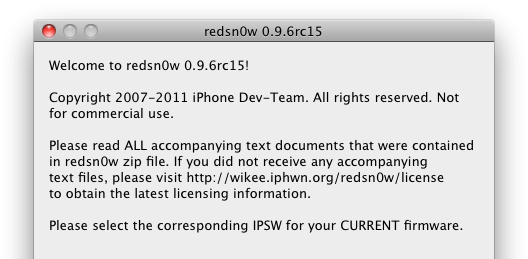
This week’s release of iOS 4.3.3 may have patched some of the location log concerns people had, but it did nothing in the way of patching the exploit used by the Dev-Team that allowed them to release PwnageTool and redsn0w, both of which can jailbreak nearly all iOS devices on 4.3.3. The key exploit, discovered by relative newcomer to the jailbreak scene, Stefan Esser (@ionic) was originally used to deliver an untethered jailbreak, but surprisingly still works despite two iOS updates.

The small work that is required to get the exploit to work on the new iOS version has been done and as a result there is a new PwnageTool and redsn0w available for download. Like the versions made available for the 4.3.1 jailbreak, it uses geohot’s limera1n bootrom in conjunction with Esser’s exploit. Unfortunately the iPad 2 has yet to be jailbroken by the team, but they do note on their blog that development is currently going ahead. However apart from that, every other device capable of running iOS 4.3.3 can use the 4.3.3 untethered jailbreak – this includes the iPhone 3GS and 4, iPod Touch 3G and 4G, iPad 1 and the Apple TV (2G).

For those curious, it is presumed that the first iOS update after the jailbreak was made available, 4.3.2, didn’t fix the exploit because it was compiled the day before the release of the jailbreak. Finally, a note of warning to those ultrasn0w unlockers to stay away from redsn0w and use a custom IPSW to update to 4.3.3.

redsn0w [OS X] [Windows]

PwnageTool (OS X Only) [Torrent] [Direct Download]

[Via Dev-Team Blog]


Rumor: Apple To Replace Intel Chips With ARM Processors On Laptops?

Could Apple transition from Intel processors to ARM processors within the next few years? A report by SemiAccurate yesterday suggests that, yes, Apple is planning to transition Intel processors off its laptop line in the not too distant future.

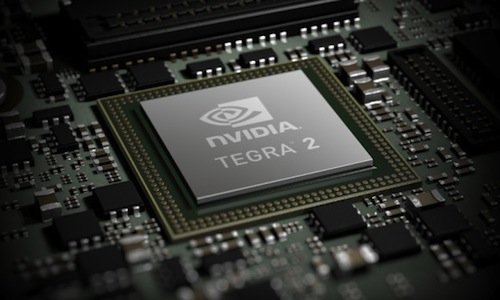
They suggest that the transition will take place once ARM has matured onto full 64-bit chips which is expected by mid-2013; likely using something akin to NVidia’s upcoming Denver chips. Furthermore they note:

At that point, Apple can move to ARM without worrying about obsoleting code with an [instruction set architecture] that is on the verge of changing, and no memory overhead worries either. Basically, it looks like the perfect time. Ironically, SemiAccurate’s moles tell us that the boys on infinite loop are planning to move laptops to ARM at about that time. Coincidence? Nope.

Apple isn’t a stranger to the ARM architecture; it has a heavy investment in it with its iOS platform of devices, strengthened recently by its acquisition of ARM designers P.A. Semi and Intrinsity. Whilst ARM has been known for their low power processors, in recent times there have been strong signs that ARM will move into high-performance computing as well – a suggestion strengthened by the announcement of 64-bit chips and NVidia’s “Project Denver”.

Despite the promise of ARM’s power, it still is, like yesterday’s 3D iPad rumor, a rumor that is at this point fairly far-fetched. Apple’s transition from PowerPC to Intel came with some serious amount of engineering and whilst that paid off, it also created compatibility issues. Similarly, if Apple made the transition to ARM processors they would not be able to run existing OS X applications without an emulation layer and it wouldn’t just be Apple that would have to do a lot of work to get everything working, developers too would feel the pain.

As MacRumors points out, SemiAccurate is not a frequent of source of Apple rumors, although the site does point out that they were correct in predicting Apple’s move away from NVidia GPUs in their computers. Meanwhile, earlier this year, at CES, Microsoft demoed an early build of Windows 8 running on ARM processors which does suggest that perhaps Apple and Microsoft have seen the potential in ARM and are willing to go through the hard yards and re-engineer their Operating Systems to run on the ARM architecture.

[Via MacRumors]


iPad Dominates The Competition In US Tablet Market

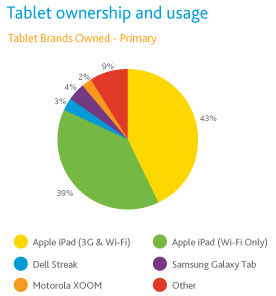
A Nielsen survey released today reveals the iPad has a commanding lead in the US tablet market, controlling a staggering 82%. This is despite the recent entrance to the market by Android tablets from Motorola, Samsung and others, which have comparatively trivial share of the tablet market.

In fact following Apple is Samsung with just 4% of the market despite its strong push late last year with the Galaxy Tab, and then there is Dell and Motorola with just 3% and 2% of the market. Yet all are overshadowed by the ‘Other’ category, this mishmash of various relatively unknown companies staggeringly has the same share of the market that Samsung, Dell and Motorola have combined.

The survey didn’t differentiate between the iPad 2 and original iPad but it did find that there is a fairly even split between WiFi-only models (43%) and WiFi+3G (39%) models. Also fascinating was that the survey found large proportions of tablet users would change their usage of other devices. In particular 35% of desktop computer and 32% of laptop users would use their computers less often or not at all after purchasing their tablet. E-readers and portable music players would also be used less or not at all following a tablet purchase by 27% of those surveyed.

Furthermore, the most frequently given reasons for using their computer less is mostly because the tablet is “easy to carry/take with you”, “ease of interface/OS” and the “fast start up/off” it provides to users. A final interesting note is that 43% of correspondents said that more than 1 person in their family/household is a user of the tablet device.

[Via Fortune]


3D Display Coming To The Next iPad?

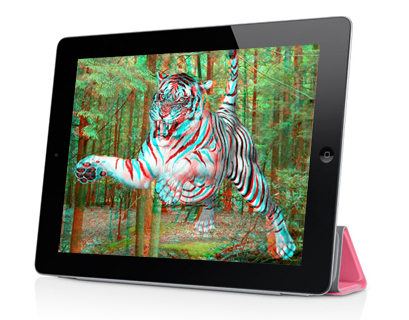
There are suggestions by RCR Wireless that the next-generation iPad will incorporate 3D technology in its display. Claiming to have multiple sources confirming the information, from a Hollywood insider to a Foxconn worker, they write:

The fact that the iPad 3 is 3D is a dead cert, one Hollywood insider close to the big movie studios told RCR, adding that the screen would be the real magic. She went on to say that the big film studios were currently running around like blue arsed flies trying to gear up to release plenty of 3D content in time for Apple’s next launch.

It certainly sounds a little bizarre that Apple would adopt the 3D technology, which at this stage seems little more than a fad. But then again, Apple has a number of patents covering 3D technology which range from dual-camera’s to develop 3D images, head-tracking to create 3D illusions (recently demoed) to glasses-free stereoscopic 3D displays.

In fact earlier this year there were reports of a glasses-free 3D display coming to the next-generation iPod Touch. That rumour would see the iPod Touch be similar to the recently released Nintendo 3DS which also makes use of a display which can create the 3D illusion without the necessary glasses. Current 3D displays have mostly been limited to TVs, with few if any mobile devices choosing to utilise the technology. The biggest problem so far has been trying to create a 3D image that is believable without glasses and the 3DS received mixed reception to its implementation.

[Via MacRumors]


iOS 5 To Feature Over The Air OS Updates?

According to 9to5 Mac, Apple is preparing to implement the capability for users to get over-the-air OS updates for the iPhone from iOS 5. Android and HP/Palm’s webOS users have long had the convenience of having OS updates pushed to their phone as soon as an update is available. Whereas users of iOS devices have had to resort to manually connecting the device to their computer with iTunes where it is downloaded and then installed.

9to5 Mac claims that multiple sources have said to them that the new feature will debut in iOS 5, allowing any subsequent updates to be pushed to the device. According to their sources, Apple has been discussing the feature with Verizon since early this year and are hoping to reach an agreement with them. Although it isn’t known whether other carriers internationally, or even AT&T in the US, have been approached by Apple over the feature.

Apple clearly has the fundamental technology for over-the-air updates working because the Apple TV (iOS version from late last year) is able to update itself without any computer connection. However there are two fundamental stumbling blocks before over-the-air updates could be seen to be feasible. Current updates are over 600MB, which is a substantial size to be downloading over any 3G connections. To get carriers to be happy with allowing the updates, let alone achieving an agreement with them to exclude them from any download caps, Apple would have to substantially trim that size down. The second issue is that of backups, currently before an update is installed, iTunes will create a back-up in case of a failed update. A cloud based back-up system is the obvious, but perhaps complex, solution to this issue.

Following the article, several people in the jailbreaking scene made some comments about the feasibility of over-the-air updates. In particular, @chronic and @chpwn make comments that a lot of the code required for over-the-air updates have already made their way into iOS4. For example, the MobileSoftwareUpdate.framework is in all iOS4 devices but has only been “fleshed out” on the Apple TV.

[Via 9to5 Mac]