Posts tagged with "siri"

Open Minis Is the iOS Agent I Wish Siri AI Could Be

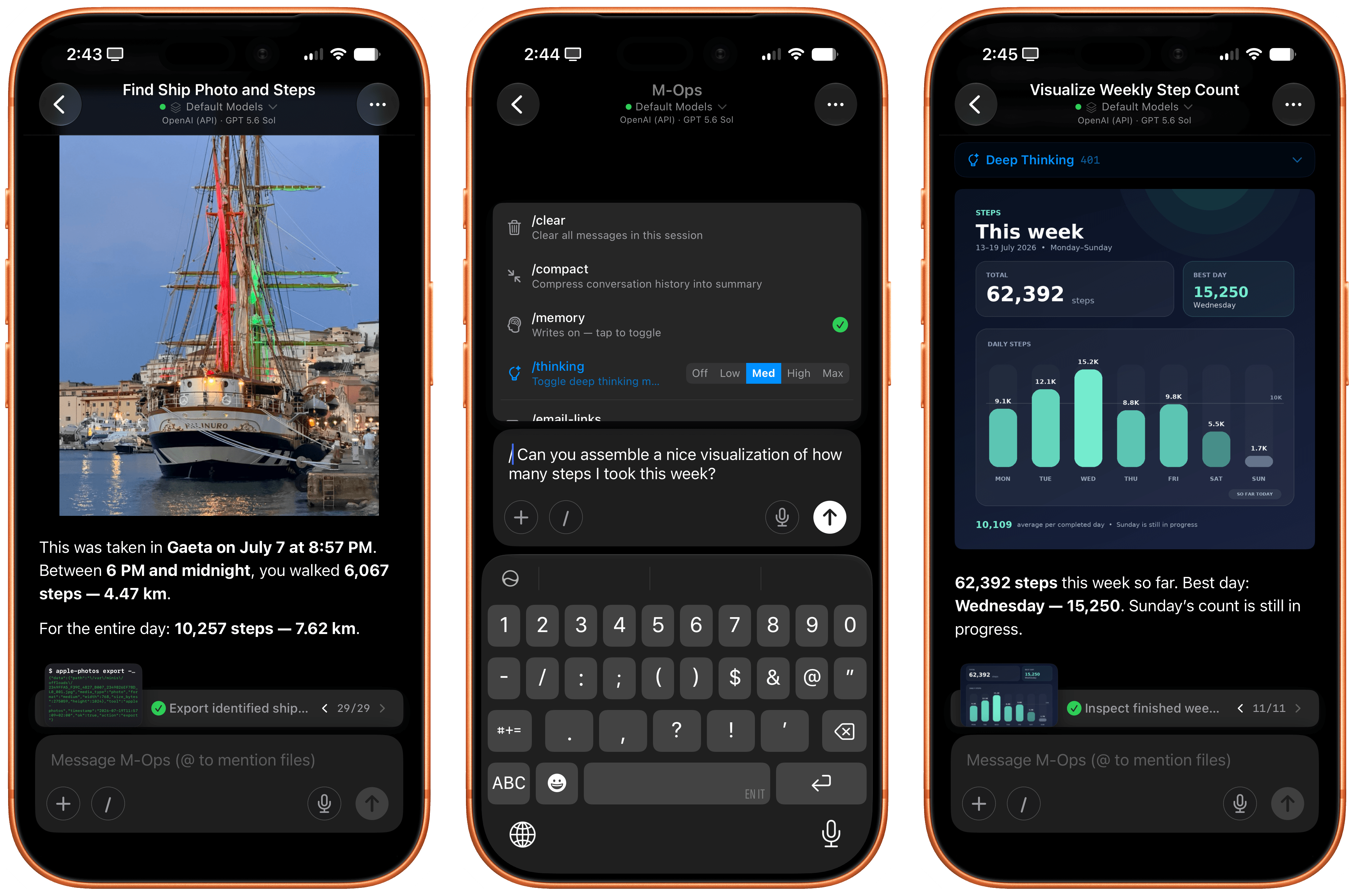
Open Minis for iOS.

Open Minis for iOS.

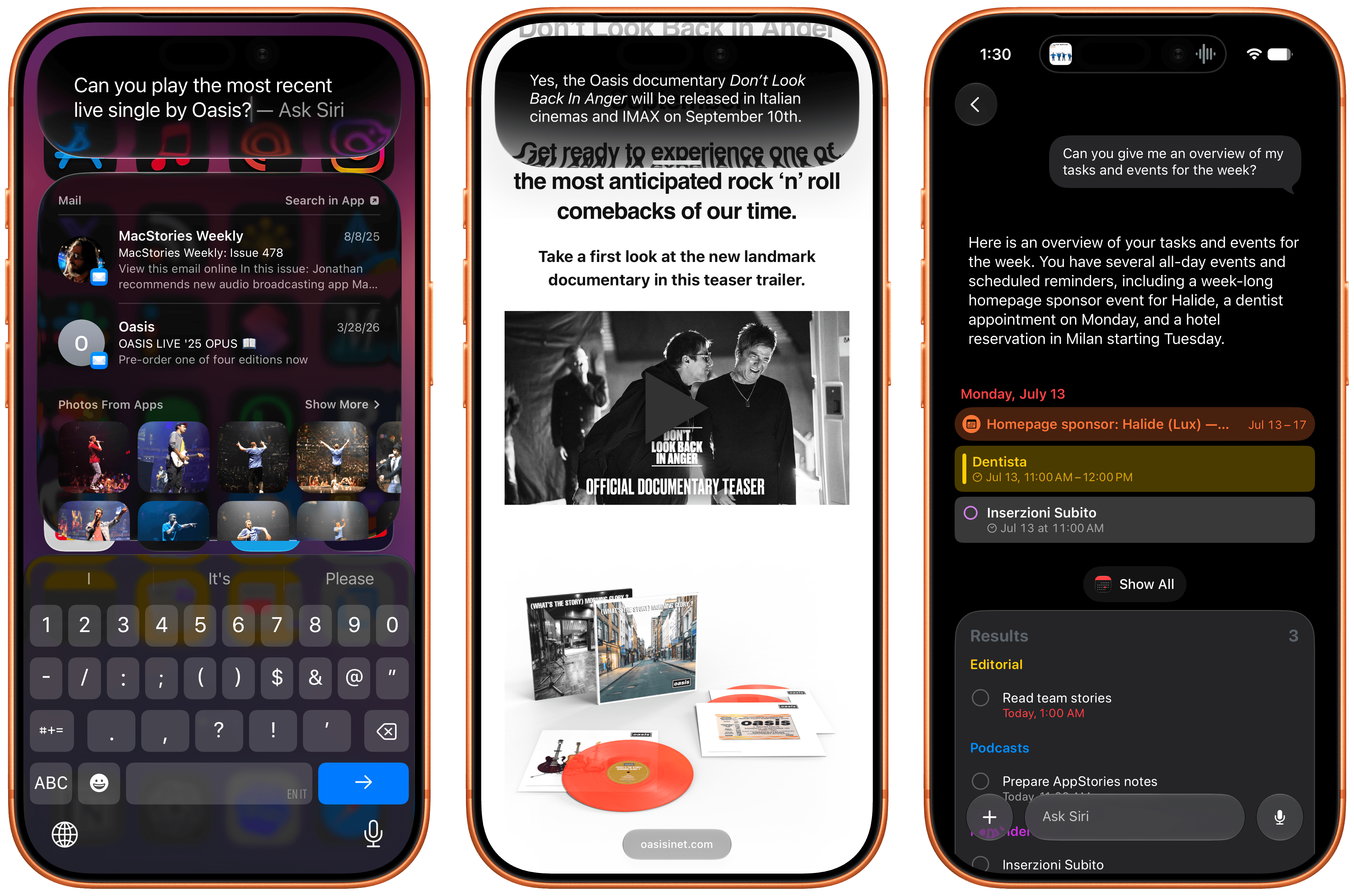
Every once in a while, I come across a third-party app that either resets my expectations for a particular niche of software on iOS or creates an entirely new category altogether. I’ve had quite a few of these moments in the 17 years I’ve been writing app reviews at MacStories: Editorial, Workflow, Obsidian, Sky, and, most recently, OpenClaw come to mind. Over the past few weeks, I’ve had another such moment with Open Minis, a new chatbot app for iPhone and iPad that I can best describe as getting a preview of Siri AI’s agentic future, today.

Open Minis is an on-device agent that lets you use any frontier model for conversations, with a twist: unlike other AI wrappers, this app deeply integrates with all sorts of native Apple system frameworks using official APIs available to third-party developers. Open Minis can control Reminders and Music, which we have seen before, but also Calendar, Maps, HomeKit, HealthKit, and Files; it can even work with frameworks such as Vision for OCR, Apple NLP for natural language processing, the iOS clipboard, speech recognition and dictation, NFC, and Bluetooth. Furthermore, Open Minis comes with its own configurable workspace in the Files app, has an on-device memory system, and features browser-use capabilities via a (once again, native for iOS developers) built-in WebKit web view.

Effectively, Open Minis is what would happen if you rolled Claude Code and OpenClaw into one intuitive agentic experience designed for Apple users, with a powerful tool-calling harness that can improve and tweak itself, and with integrations specifically designed for the Apple ecosystem. It is the most impressive indie app I’ve seen in a while. If you were disappointed by the lack of power-user capabilities in Siri AI, this is a real, currently shipping example of what Siri AI could be if only it were powered by a frontier model with truly agentic functionalities.

Read more


Siri AI and Apple’s Trickle-Up Strategy

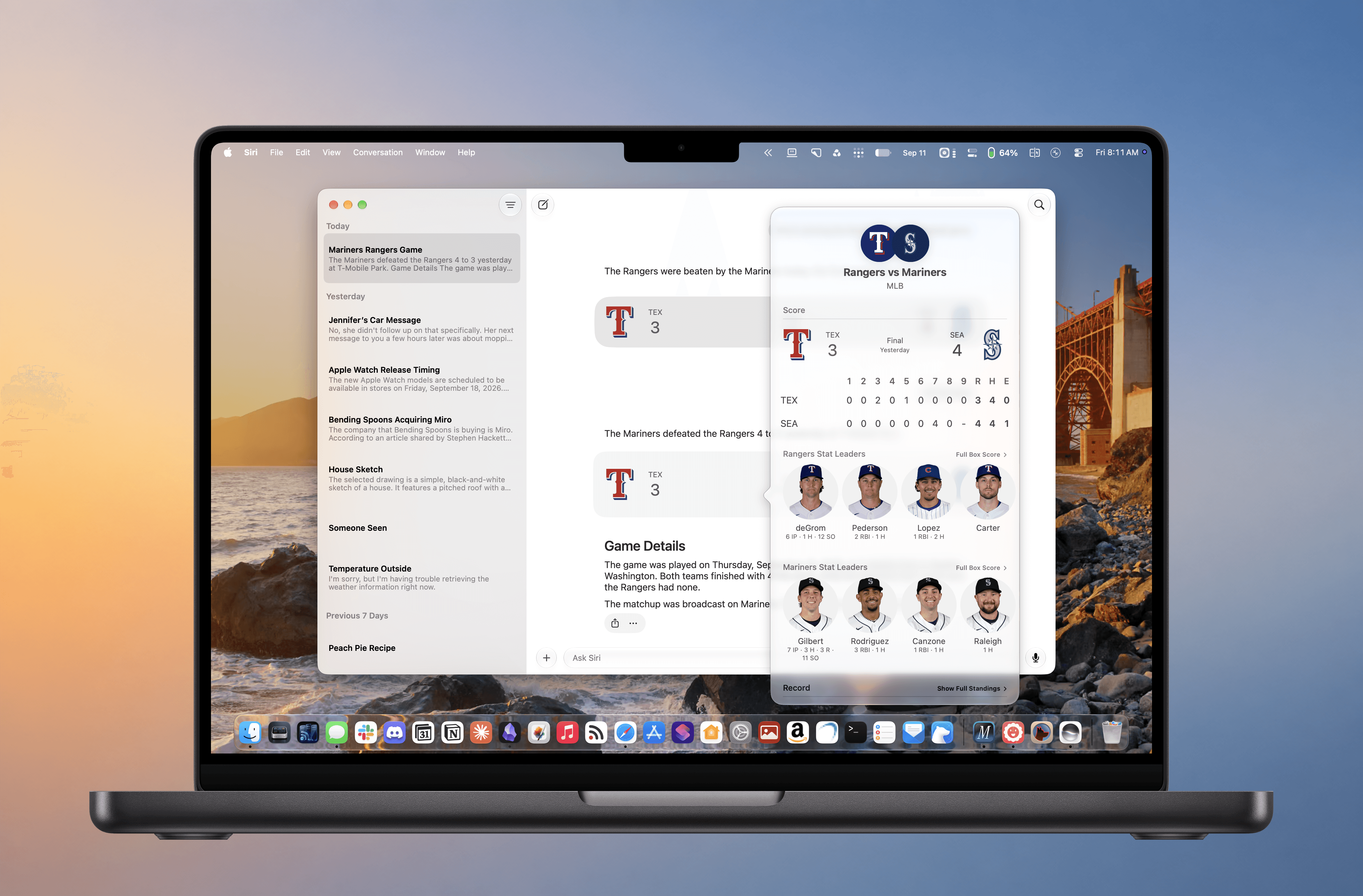
The new Siri AI in iOS 27.

The new Siri AI in iOS 27.

In the month that I’ve been using iOS 27 (launching in public beta today) and the new Siri AI, I’ve come to a few conclusions: Siri AI is a much better Siri and will (probably) be a massive success; the newfound chatbot capabilities of Siri will pose a serious threat to OpenAI and the vast majority of free ChatGPT users they have; and the new Siri is (again, probably) not for me at the moment. At the very least, it can’t be right now given its lack of support for third-party apps and technical issues I’ve encountered during beta testing.

It took me a while to accept the fact that Siri AI can’t be the kind of AI assistant I’d spend hours working with every day. But after testing iOS 27’s new Siri experience every day (and breaking it often in the process), I think that’s okay – and, arguably, what Apple is shooting for at the moment.

The new Siri AI is not designed for people who have grown accustomed to working with frontier models and agents such as Claude Code and Codex. The first version of Siri AI can’t be considered an “agent”, nor can it be compared to products from Anthropic, OpenAI, or Google that are targeting power users living at the bleeding edge of AI. If you go into Siri AI thinking that it’s Apple’s answer to ChatGPT Work or Claude Cowork for long-running tasks or deep research queries, you’re going to be disappointed – like I initially was.

Instead, Siri AI carries all the typical traits of a new Apple product: it’s a user-friendly experience designed for the masses, without any of the complexities that define a power-user tool, for better or worse. This is how Apple rolls: they don’t start from a high power-user ceiling and let products trickle down to consumers; they always start from the consumer level and refine, iterate, and extend until products trickle up to power users. This perspective isn’t meant to excuse the (many) current flaws of Siri AI. (More on them below.) It’s just the necessary lens for understanding how Apple is addressing their AI shortcomings in a way that doesn’t betray the company’s soul and design ethos.

There will be plenty more to say about iOS 27, the improved Shortcuts app, Liquid Glass tweaks, and other system enhancements later this year. After all, I have a review to write. Today’s column is merely an opportunity for me to reason through the obstacles I’ve faced with Siri AI and the way I’ve had to re-learn how to think about Siri.

Read more


Headless Macs and Hamstrung iPads

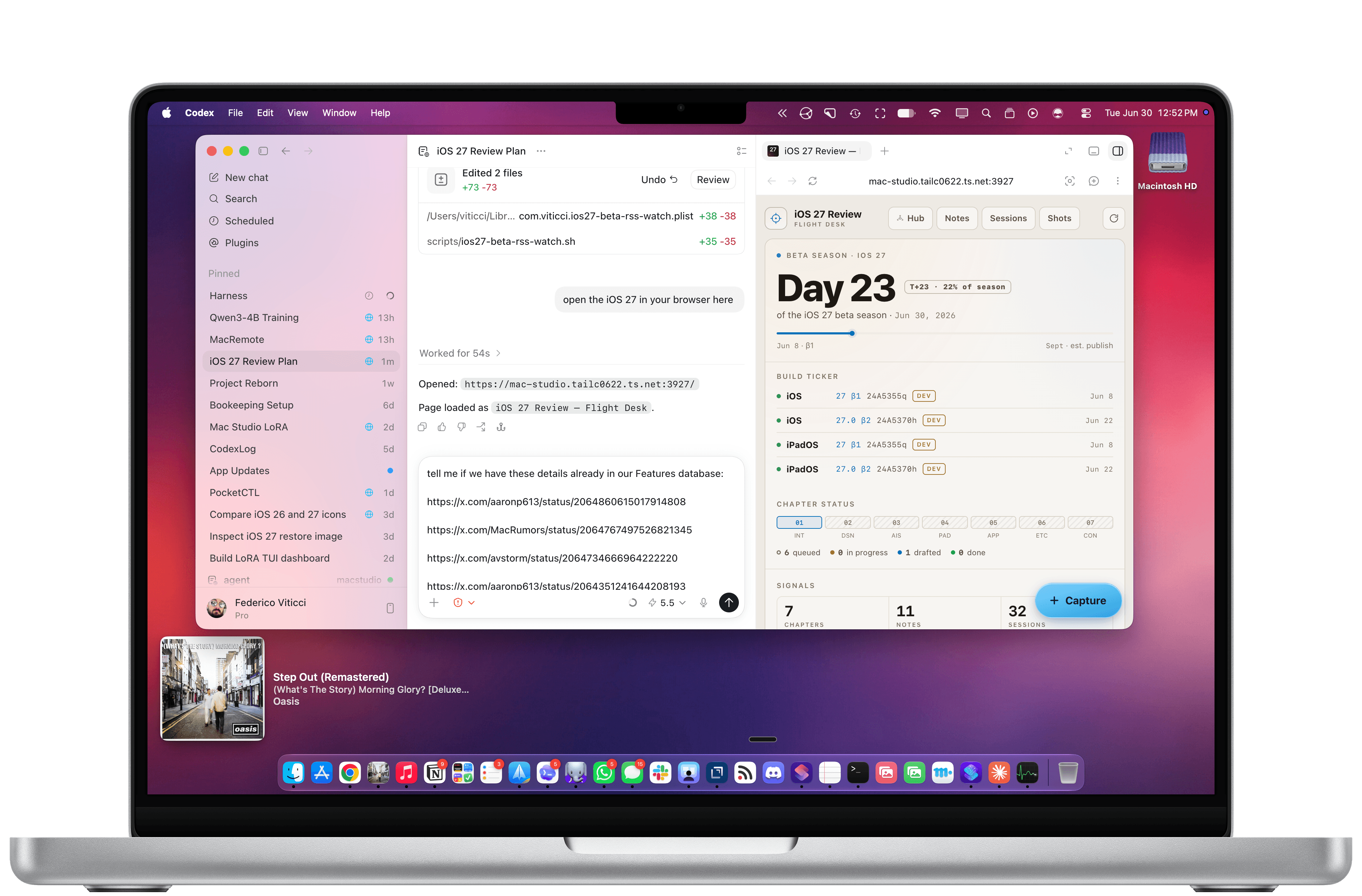
My Codex setup.

My Codex setup.

In the current era of coding agents becoming productivity assistants, iPadOS’ limitations are no longer defined by the lack of desktop-class multitasking or access to external peripherals. A new class of iPadOS shortcomings looms large on the horizon: the iPad’s app sandboxing and the absence of an open filesystem have relegated it to acting as a remote control for agents.

Read more


Siri AI and the Latest in Apple Intelligence: The MacStories Overview

Source: Apple.

Source: Apple.

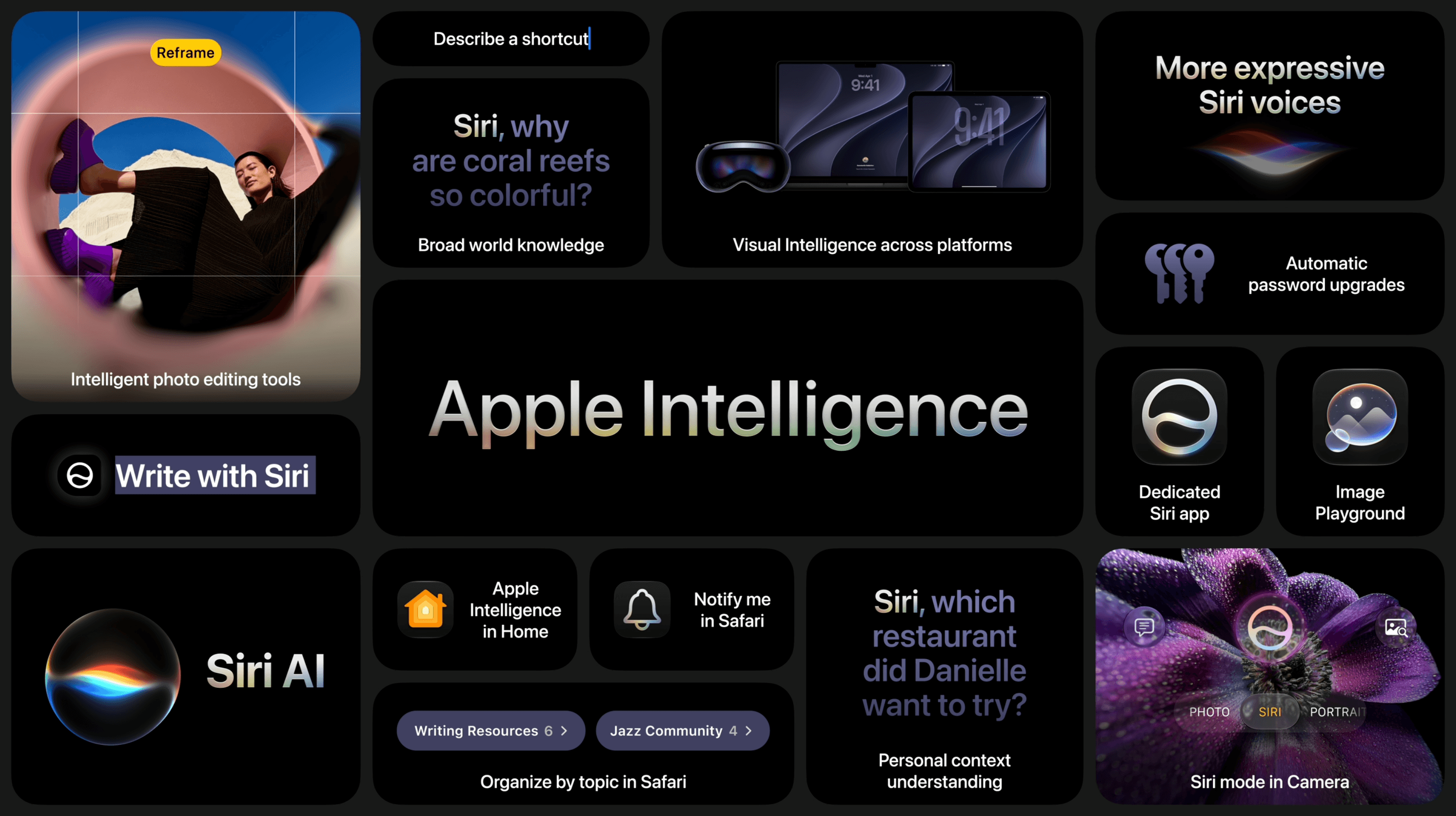
The big question coming into today’s WWDC keynote was what Apple would have to offer in terms of AI – or, as the company refers to it, Apple Intelligence. Given Apple’s behind-the-scenes struggles, delayed features, and partnership with Google to re-architect its Foundation Models based on Gemini, expectations were high, and the company delivered with the announcement of a whole new Siri and a slew of Apple Intelligence features baked into its upcoming operating systems.

Siri AI, the all-new version of Apple’s virtual assistant, was the star of the show and got plenty of time in the spotlight, including several real-time demos on the iPhone and Mac. But the company also announced updates to Visual Intelligence, new photo editing tools, a Shortcuts builder, and additional Apple Intelligence features.

Source: Apple.

Source: Apple.

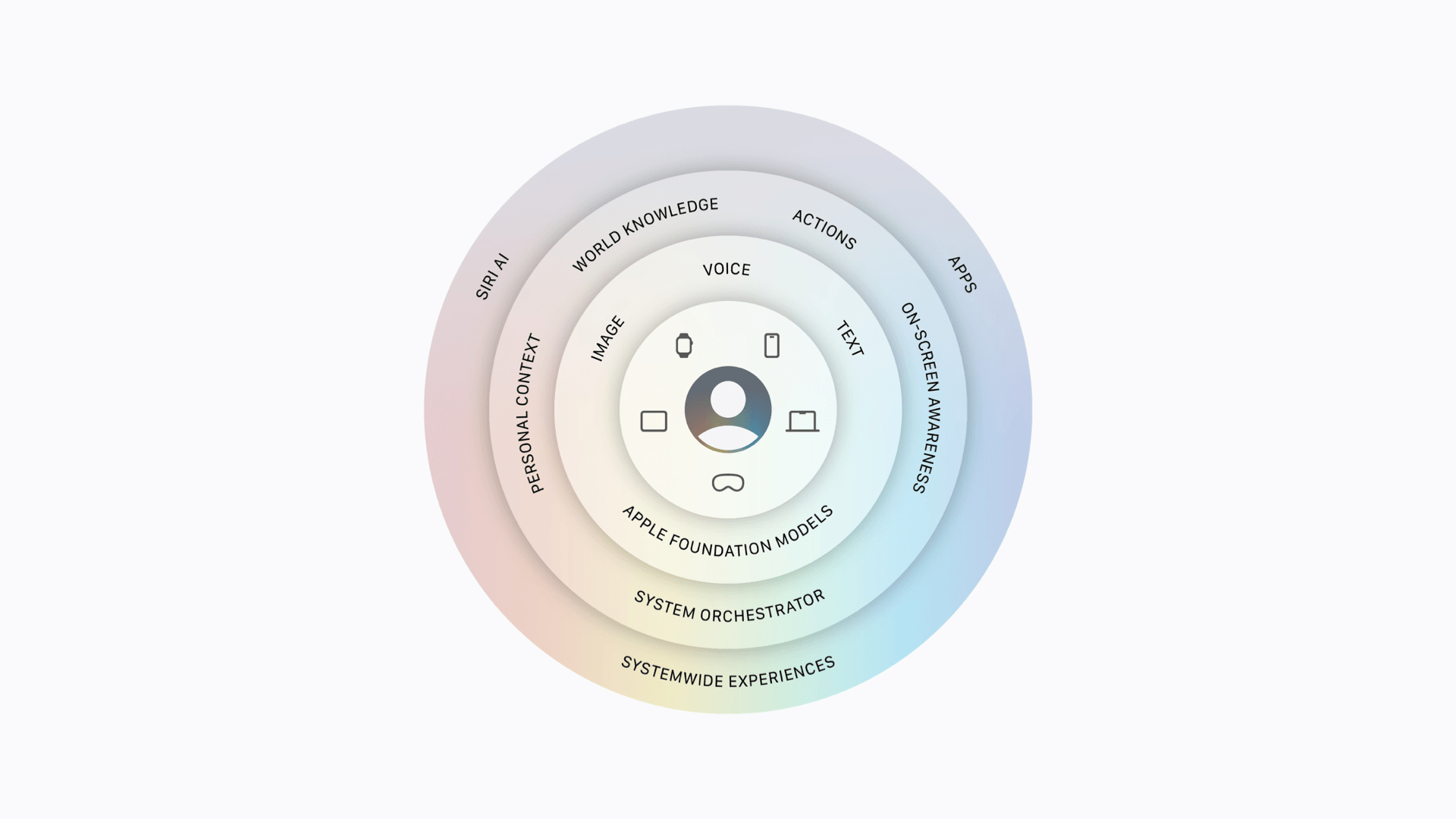
It all starts with the latest Foundation Models based on a new architecture developed by Apple in collaboration with Google’s Gemini models. Coming in both local and Private Cloud Compute variations, these models work across Apple devices using a combination of user input (via text, voice, or images), personal context, on-screen awareness, app actions, and world knowledge in conjunction with the new system orchestrator to power conversations and actions taken by Siri AI as well as Apple Intelligence features baked into each OS. Of course, Apple touts that these features are secure and protect user privacy whether they are run on-device or in Private Cloud Compute.

Read more


Apple Confirms AI Partnership with Google

Apple has confirmed to CNBC that it has entered into a multi-year partnership with Google to use the search giant’s models and cloud technology for its own AI efforts. According to an unnamed Apple spokesperson:

After careful evaluation, we determined that Google’s technology provides the most capable foundation for Apple Foundation Models and we’re excited about the innovative new experiences it will unlock for our users.

The report still leaves many questions unanswered, including how Gemini fits in with Apple’s own Foundation Models and whether and to what extent Apple will rely on Google hardware. However, after months of speculation and reports from Mark Gurman at Bloomberg that Apple and Google were negotiating, it looks like we’re on the cusp of Apple’s AI strategy coming into better focus.


UPDATE:

Subsequent to the statement made by Apple to CNBC, Apple and Google released a slightly more detailed joint statement that Google published on X:

Apple and Google have entered into a multi-year collaboration under which the next generation of Apple Foundation Models will be based on Google’s Gemini models and cloud technology. These models will help power future Apple Intelligence features, including a more personalized Siri coming this year.

After careful evaluation, Apple determined that Google’s Al technology provides the most capable foundation for Apple Foundation Models and is excited about the innovative new experiences it will unlock for Apple users. Apple Intelligence will continue to run on Apple devices and Private Cloud Compute, while maintaining Apple’s industry-leading privacy standards.

So, while the Apple Foundation Models that power Apple Intelligence will be based on Gemini and unspecified cloud technology, Apple Intelligence features themselves, including more personalized Siri, will continue to run locally on Apple devices and on Apple’s Private Cloud Compute to maintain user privacy.


John Giannandrea’s Retirement From Apple Announced

Today Apple announced the retirement of John Giannandrea, the company’s senior vice president for Machine Learning and AI Strategy. Giannandrea will remain at Apple as an advisor until next spring.

News of Giannandrea’s retirement was paired with an announcement that Apple has hired Amar Subramanya as vice president of AI. Subramanya, who worked at Microsoft since this past summer, previously worked at Google for 16 years on projects including the company’s Gemini Assistant. Subramanya will take the lead on Apple Foundation Models, ML research, and AI Safety and Evaluation, while other areas of Giannandrea’s work will be inherited by Sabih Khan and Eddy Cue.

Apple CEO Tim Cook thanked Giannandrea for his tenure at the company:

We are thankful for the role John played in building and advancing our AI work, helping Apple continue to innovate and enrich the lives of our users. AI has long been central to Apple’s strategy, and we are pleased to welcome Amar to Craig’s leadership team and to bring his extraordinary AI expertise to Apple. In addition to growing his leadership team and AI responsibilities with Amar’s joining, Craig has been instrumental in driving our AI efforts, including overseeing our work to bring a more personalized Siri to users next year.

Given the troubled history of Apple’s AI efforts, the retirement of Giannandrea isn’t surprising. It will be interesting to see if Subramanya settles into his new role given the frequency with which top AI talent tends to turn over in the tech industry.


Trying to Make Sense of the Rumored, Gemini-Powered Siri Overhaul

Quite the scoop from Mark Gurman yesterday on what Apple is planning for major Siri improvements in 2026:

Apple Inc. is planning to pay about $1 billion a year for an ultrapowerful 1.2 trillion parameter artificial intelligence model developed by Alphabet Inc.’s Google that would help run its long-promised overhaul of the Siri voice assistant, according to people with knowledge of the matter.

There is a lot to unpack here and I have a lot of questions.

Read more


Is Apple’s AI Predicament Fixable?

On Sunday, Bloomberg’s Mark Gurman published a comprehensive recap of Apple’s AI troubles. There wasn’t much new in Gurman’s story, except quotes from unnamed sources that added to the sense of conflict playing out inside the company. That said, it’s perfect if you haven’t been paying close attention since Apple Intelligence was first announced last June.

What’s troubling about Apple’s predicament isn’t that Apple’s super mom and other AI illustrations looks like they were generated in 2022, a lifetime ago in the world of AI. The trouble is what the company’s struggles mean for next-generation interactions with devices and productivity apps. The promise of natural language requests made to Siri that combine personal context with App Intents is exciting, but it’s mired in multiple layers of technical issues that need to be solved starting, as Gurman reported, with Siri.

The mess is so profound that it raises the question of whether Apple has the institutional capabilities to fix it. As M.G. Siegler wrote yesterday on Spyglass:

Apple, as an organization, simply doesn’t seem built correctly to operate in the age of AI. This technology, even more so than the web, moves insanely fast and is all about iteration. Apple likes to move slowly, measuring a million times and cutting once. Shipping polished jewels. That’s just not going to cut it with AI.

Having studied the fierce competition among AI companies for months, I agree with Siegler. This isn’t like hardware where Apple has successfully entered a category late and dominated it. Hardware plays to Apple’s design and supply chain strengths. In contrast, the rapid iteration of AI models and apps is the antithesis of Apple’s annual OS cycle. It’s a fundamentally different approach driven by intense competition and fueled by billions of dollars of cash.

I tend to agree with Siegler that given where things stand, Apple should replace a lot of Siri’s capabilities with a third-party chatbot and in the longer-term make an acquisition to shake up how it approaches AI. However, I also think the chances of either of those things happening are unlikely given Apple’s historical focus on internally developed solutions.

Permalink

Sundar Pichai Testifies That He Hopes Gemini Will Be Integrated into iPhones This Fall

Ever since Apple announced its deal to integrate ChatGPT into Siri, there have been hints that the company wanted to make deals with other AI providers, too. Alphabet CEO Sundar Pichai has added fuel to the rumors with testimony given today in the remedy phase of the search antitrust case brought against it by the U.S. Department of Justice.

In response to questions by a DOJ prosecutor, Pichai testified that he hoped Google Gemini would be added to iPhones this year. According to a Bloomberg story co-authored by Mark Gurman, Davey Alba, and Leah Nylen:

Pichai said he held a series of conversations with Apple Chief Executive Officer Tim Cook across 2024 and he hopes to have a deal done by the middle of this year.

This news isn’t surprising, but it is welcome. Despite Google’s early stumbles with Bard, its successor, Gemini, has improved by leaps and bounds in recent months and has the advantage of being integrated with many of Google’s other products that have a huge user base. What will be interesting to see is whether Gemini is integrated as an alternative fallback for Siri requests or whether Apple and Google ink a broader deal that integrates Gemini into other aspects of iOS.

Permalink