Posts tagged with "music"

Apple Music’s Archaic Album Categorization

Benjamin Mayo sums up one of the most annoying features of Apple Music: the way the service thinks everything is an “album”, making it extremely inconvenient to find what you’re looking for.

These artefacts of compact discs show up again when looking at an artist page. What a human would think of as an artist’s albums, and what Apple Music lists, are completely different. EPs, singles, specials, deluxe, originals are all shoehorned under one name ‘Albums’. There is no way to filter these out. This really makes finding what you want hard. When you know what you want to find, all this backwardly organised catalogue gets in your way.

There has to be a better method than packaging everything up with the same ‘album’ label. This is not a hard problem, I thought to myself. In fact, it’s already been solved … by Spotify. As you have probably noticed by now, I have included a graphical illustration of Apple Music’s biggest flaw alongside this article. If you can’t see it, your browser isn’t wide enough. If you are reading outside of a browser, like RSS, this probably won’t show up for you either. Use a browser. I encountered this exact scenario in my first day of using the service. I did not fabricate it.

Don’t miss the effective visualization of this problem on his post.

I like Apple Music, but this has been a problem since the service launched almost three years ago, and it’s time for a fix.

Here’s what makes this even more annoying: Beats Music – the very service Apple Music is largely based onvisualized albums, compilations, and different editions in separate tabs/views. Two of the worst Apple Music features (album categorization and the separation of playlists made by you vs. those made by others) had already been fixed by Beats Music, but Apple went for an inferior design that is still with us today.

Permalink

Shazam Updated with Synchronized Lyrics and a New Design

When Apple acquired Shazam, people wondered what would become of the popular song identification and music discovery app. It’s not unusual for an app acquired by a big company to be pulled from the App Store or for development to slow substantially. Questions were also raised about whether Shazam would continue to support Apple’s music streaming rival, Spotify.

As it turns out, Shazam has continued to be updated and support Spotify since Apple’s acquisition. In fact, there have been at least four updates to Shazam since the acquisition including one today that adds synchronized lyrics and a design refresh of the app’s results screen.

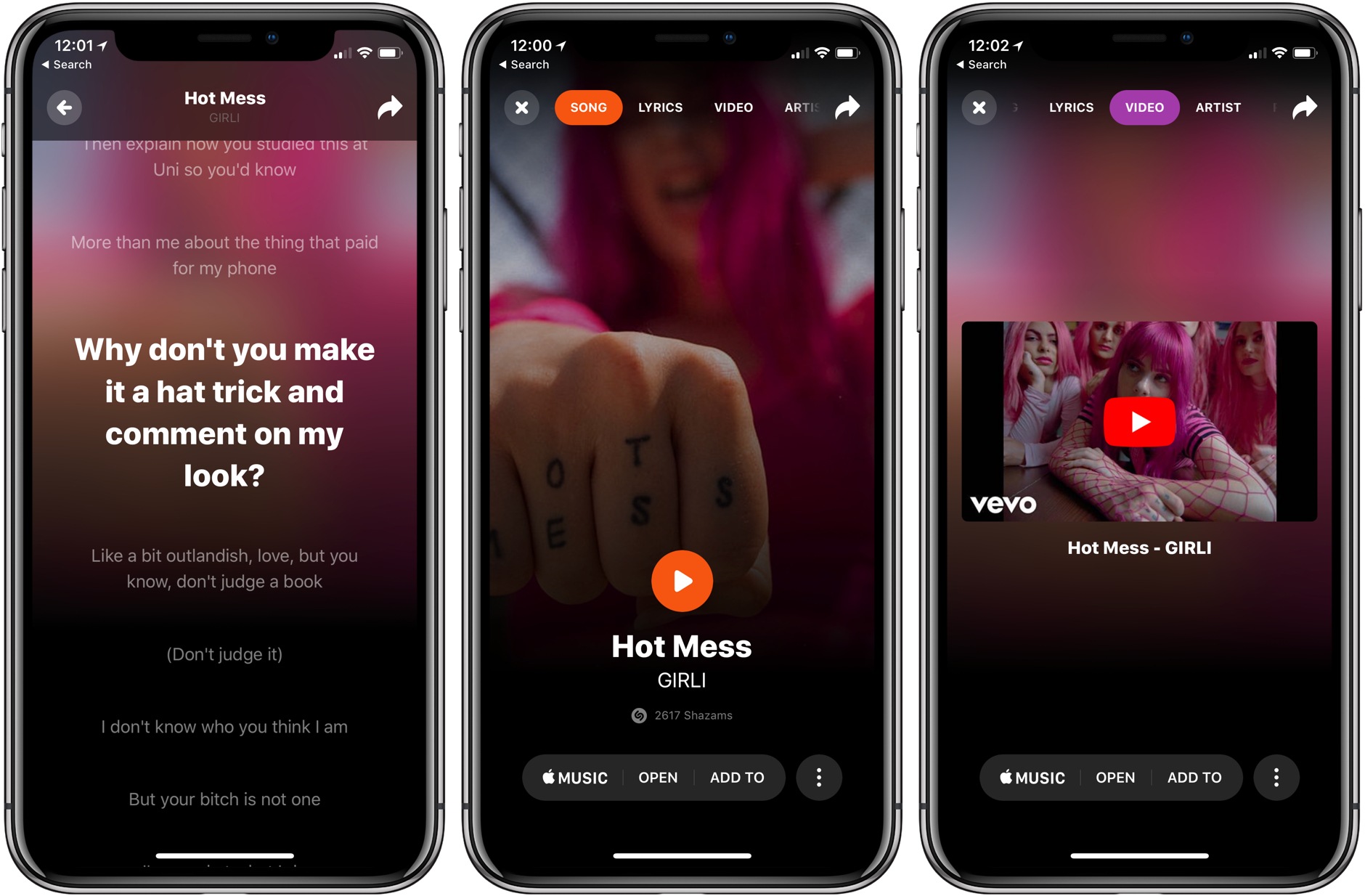
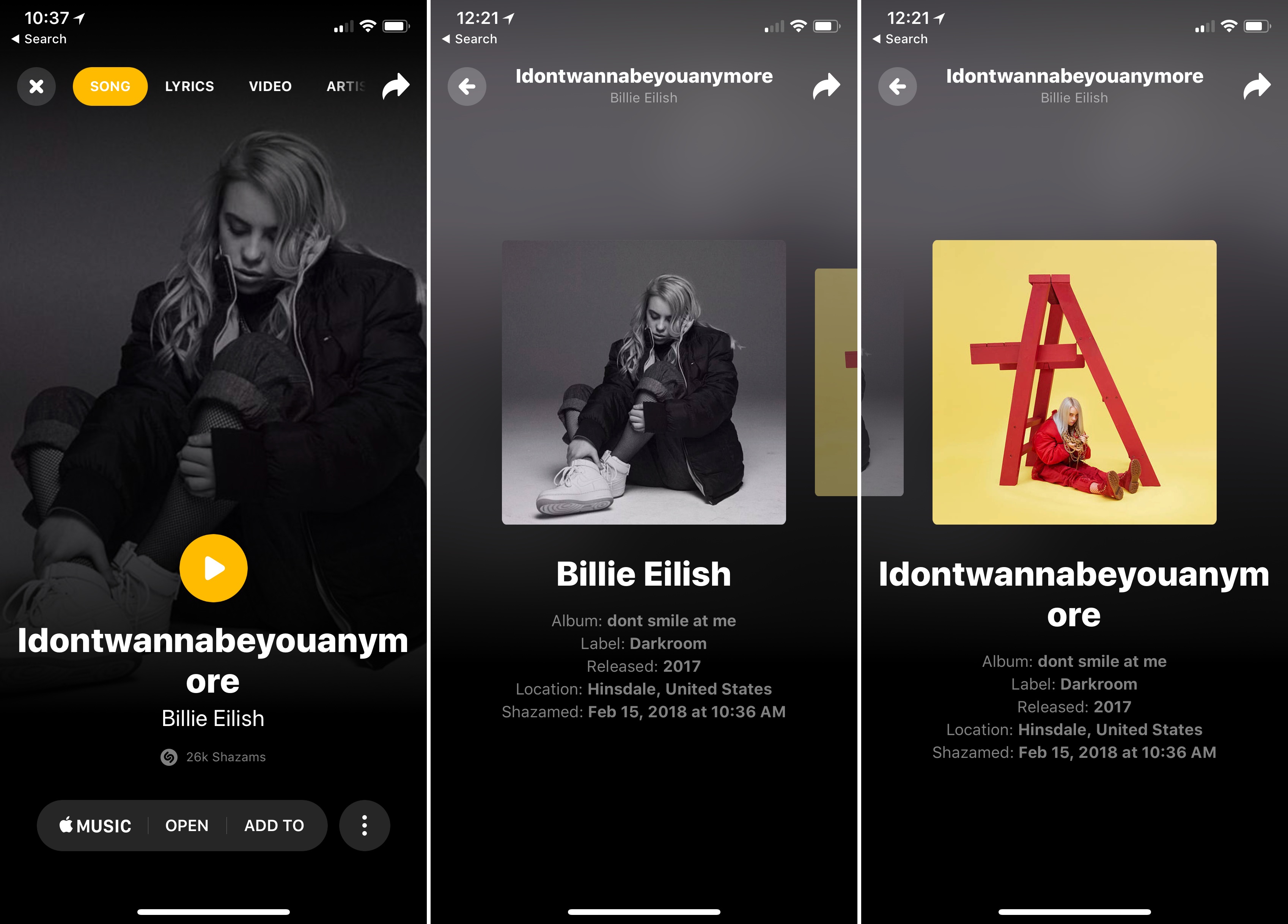
The new UI looks great. The results screen is dominated by a background image of the artist. In the foreground is a big play button, the name of the song the app recognized, and the name of the artist. If you tap on the artwork, you get an image of the artist and album in some cases, plus more details on the artist, album, song, and release date.

Along the top of the results screen is a menu you access by swiping horizontally that includes lyrics, videos, additional songs by the artist, and related artists. If you swipe over to the lyrics screen while a song is playing, they are displayed in perfect synchronization with the song that’s playing, which is perfect for impromptu karaoke moments. Adding songs to Apple Music and Spotify playlists has been streamlined too – it now takes one less tap to add a song to a playlist.

One thing to keep in mind though, is that if you’re using the iOS 11.3 beta, playback is broken throughout the app. Tapping on any play button freezes the entire UI and requires you to force quit the app. Playback works as expected if you’re not on the beta, however.

Shazam is available on the App Store.


Full Breakdown of Audio That HomePod Can and Can’t Play

We know the HomePod works great with Apple Music, but for those who aren’t Apple Music subscribers, what audio content can the HomePod still play for them – with Siri support, and without?

Serenity Caldwell has put together a comprehensive guide for iMore that answers that question in exacting detail, filling in the gaps left by Apple’s official marketing disclosures.

For iTunes Match subscribers, it’s good news.

Permalink

Apple Rolls Out Beta of ‘Apple Music For Artists’ Analytics Dashboard

Speaking of music services, Billboard’s Melinda Newman reports on today’s beta launch of Apple Music For Artists, a dashboard to provide artists with hundreds of data points about their fans’ listening habits.

The initial beta rollout involves a few thousand artists who will test the product and see what adjustments and expansions, if any, should be made before Apple Music for Artists opens in the Spring to the several million artists with content on the iTunes and Apple Music platforms. Later plans call for a mobile app.

The easily navigable dashboard’s home page provides artists with their current number of plays, spins, song purchases and album purchases. The user can specify the time period ranging from the past 24 hours to the 2015 launch of Apple Music.

Other services have offered similar analytics products for years, but Billboard notes that Apple’s take features more depth and a cleaner user interface for artists.

In addition to broad strokes, artists can drill down on a granular level in myriad ways. A global map allows musicians to click on any of the 115 countries in which Apple Music/iTunes is available and find out what’s happening with their music. They can select individual cities and see how many plays and sales they have in each market, as well as look at their top songs in every city. They may further examine the listener demographics per city, for example, calling up how many times females ages 16-24 in Los Angeles have listened to a particular song.
[…]
Additionally, artists can view all Apple-curated playlists on which they appear, see how many plays they receive and how they are trending over time.

If you’re an artist offering content on Apple Music, this sounds like a pretty cool addition to the service, especially because you can inspect data going back to Apple Music’s launch over two years ago.

Permalink

Spotify’s Playlists as Musical Events

Victor Luckerson, writing at The Ringer, makes a good point about how Spotify’s algorithmic playlists have turned into the cultural phenomenon that Apple wanted to build around Apple Music:

Spotify is in much the same position right now. With its regularly refreshing playlists, which rearrange artists’ music into a new kind of original content, Spotify has become a beloved musical destination rather than just a tool. It’s an iPod and a radio and a BuzzFeedWhich Drake Album Matches Your Personality?” quiz at the same time. Taylor Swift may have a legion of fans, but Discover Weekly does as well. Those always-updating playlists are now the must-attend musical events that Apple was trying to create around exclusive albums and radio shows.

As I wrote many times here on MacStories, I’d love for Apple to consider more smart playlist features akin to Spotify’s Discover Weekly and Daily Mixes.

This is also interesting:

Netflix used its power as an entertainment destination to nudge its users to watch its own original programming. Now instead of being indebted to Hollywood, the tech company seems to run it. Spotify isn’t there yet, and successfully making the Netflix pivot will be tougher because music isn’t as valuable to investors as video. Its attempts to diversify with original content have so far been nonstarters, and despite persistent rumors, the company hasn’t yet tried to establish its own record label.

Given Jimmy Iovine’s recent comments on music services and original content (“Guess how much original content streaming has: zero!”), I wonder if the future of music may indeed veer towards the current TV streaming model, with albums made exclusively for specific music streaming services (and as a heavy music listener, this possibility scares me).

Permalink

Apple Acquires Shazam Song Identification Service

On Friday, TechCrunch reported that Apple had agreed to acquire music discovery service and app-maker Shazam. Today, Apple made it official confirming the deal to BuzzFeed News. Shazam, which makes iOS, watchOS, and macOS apps that can detect songs, TV shows, and advertisements from their sound signatures, has been on Apple’s platforms since the early days of iOS and is the engine behind Siri’s ability to recognize songs.

The financial terms of the deal were not disclosed in the announcement, but according to TechCrunch, Shazam cost Apple somewhere in the neighborhood of $400 million. According to a report from The Wall Street Journal last year, Shazam accounts for about 1 million clicks per day and 10% of digital download sales. However, as streaming services have gained popularity over paid music downloads, Shazam’s affiliate link revenue from music sales has shrunken. To compensate, Shazam has turned increasingly to advertising. With today’s acquisition, Shazam should continue to drive traffic to Apple Music without the need to sustain itself as a standalone business.

In addition to Apple’s music services, Shazam sends significant traffic to Spotify. Shazam also has an Android app. It remains to be seen what will happen to the Spotify relationship or Android app now that Shazam is part of Apple or whether Apple plans to maintain Shazam as a separate iOS app. Deeper integration with Siri is one direction Apple may take Shazam’s technology implementing something like the Google Pixel 2’s automatic song identification feature called ‘Now Playing.’

Past MacStories coverage of Shazam is available here.


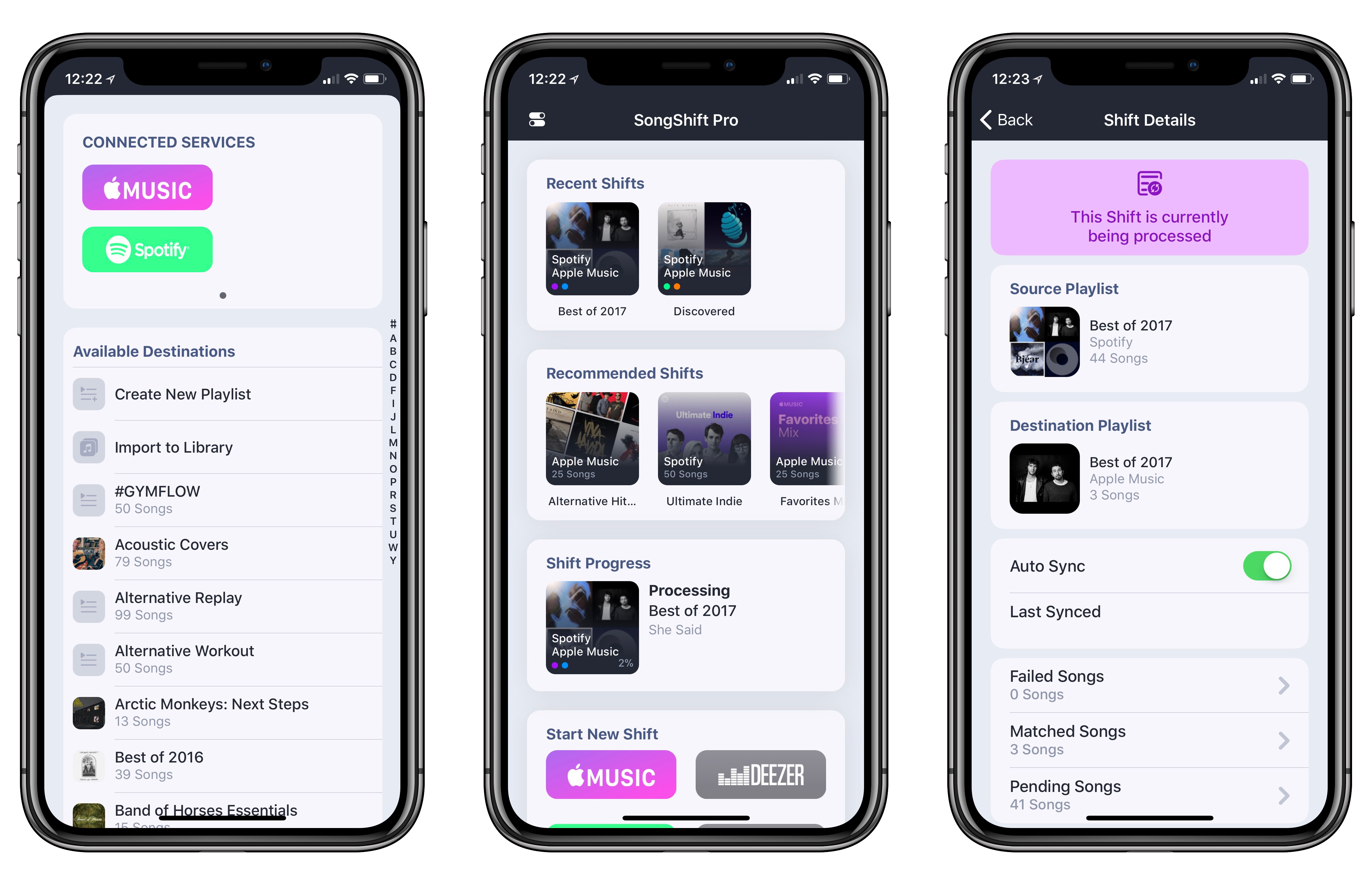
SongShift 3.0 and Switching Between Apple Music and Spotify

For the better part of this year, I’ve been using both Spotify and Apple Music. In my opinion, each service does a few things exceptionally well, but, unfortunately, I can’t have all of them in a single music app.

Spotify’s discovery tools for both old and new songs are simply unparalleled in the industry: Discover Weekly continues to surprise me on a weekly basis just like mixtapes used to do. Spotify is everywhere (including my Amazon Echo); I like how it organizes releases on artist pages; and, it’s got a richer selection of user-generated playlists. Apple Music, on the other hand, looks much better than Spotify (I love Apple’s focus on album artworks and large photography), features built-in lyrics, is deeply integrated with the Apple ecosystem, and I’m a fan of the social feed launched with iOS 11. In short: Spotify is superior when it comes to discovery for music aficionados and integration with third-party hardware, but Apple Music is nicer and easier to use for iOS users. I can’t choose because I happen to have a foot in both camps.

Read more


watchOS 4.1 Introduces Apple Music Streaming and New Radio App

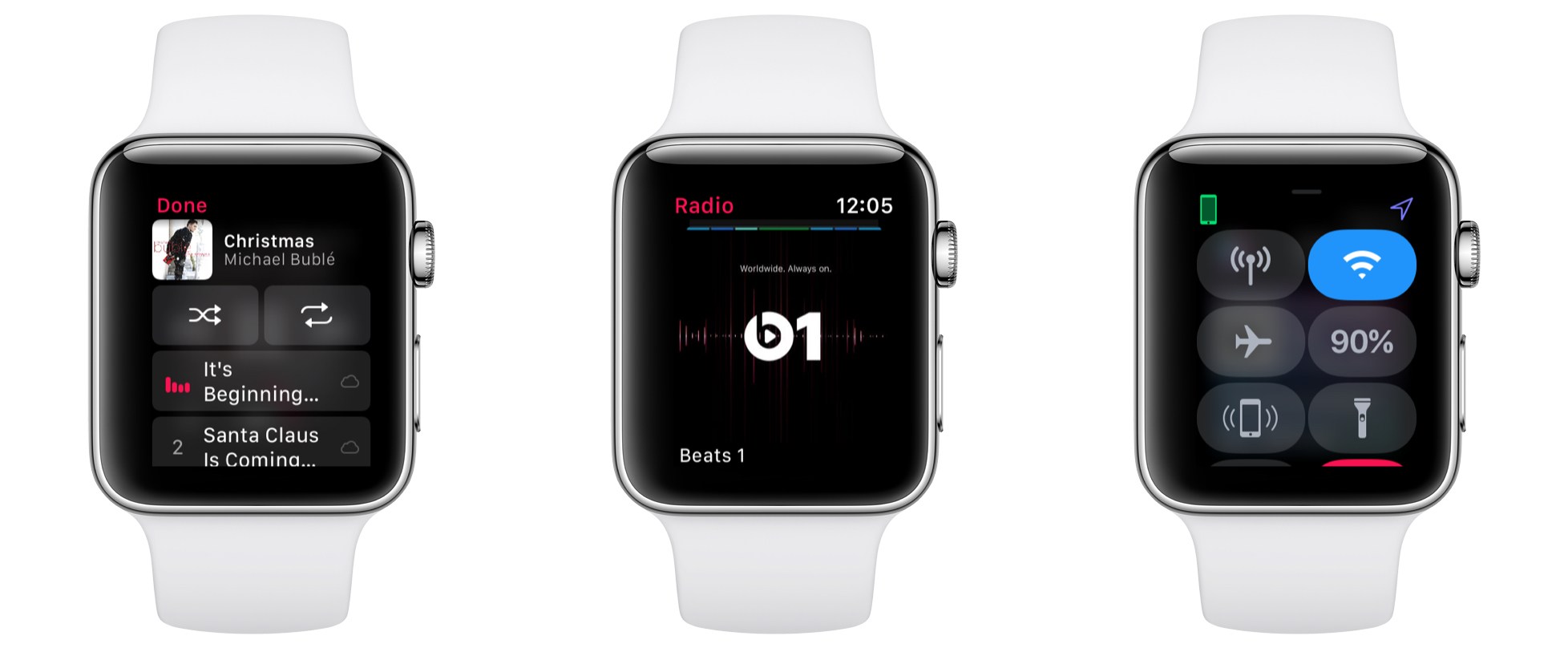
Today Apple released the latest software for Apple Watch: watchOS 4.1. This update includes the previously announced Apple Music streaming, including over cellular, plus the introduction of a brand new Radio app.

In past versions of watchOS, independent music playback was limited to the small assortment of songs and playlists that could be stored locally on Watch hardware. Due to how slow music syncing was, I always considered it too much of a hassle to keep my favorite music accessible on the Watch. Today’s update lifts those prior restrictions, though, in a big way. Now Watch owners who are also Apple Music subscribers can stream music, not just from their own library, but also from the service’s full catalog of over 40 million songs. This works over cellular on the latest Series 3 models, but it also can be done over Wi-Fi with non-cellular models. Even if you don’t plan to stream music sans-iPhone, watchOS 4.1 still includes the added benefit of restoring access to your full iCloud Music Library on Series 3 models: past versions of watchOS allowed this, but watchOS 4 limited your selection to synced music only.

Independent music streaming from the Apple Watch is made even better by the addition of a new built-in watchOS app: Radio. The Radio app enables streaming content from Beats 1 or select other radio stations, such as ESPN, NPR, and genre-based stations. While I would have been more excited by a Podcasts app, it’s great to see more of Apple Music’s features make their way to the Watch.

For owners of the Series 3 Watch with cellular, there’s one last notable update: a new toggle in Control Center for activating and deactivating Wi-Fi on the Watch. So if your Watch gets stuck on a slow or unreliable Wi-Fi connection, you can easily disconnect and fall back to LTE.


For most users watchOS 4.1 is a fairly minor update with little to get excited about – but for those sporting a Series 3 Watch with cellular, it’s simply transformative. Paired with AirPods, the Apple Watch can now serve as a powerful and worthy successor to the iPod line. There’s something downright liberating about going iPhone-free while staying connected and available, and bringing 40 million songs along with you.


Sonos Unveils New Sonos One Smart Speaker, Voice Assistant Integrations, Revamped App, and More

Sonos made several major announcements today, launching the company’s products further into their roles as platform-agnostic options in a market increasingly segmented by ecosystem. The last few years have seen an avalanche of new interest in the home speaker space from major players like Amazon, Google, and Apple, and without the accompanying ecosystems those players possess, Sonos stood at a crucial juncture: it could seek to further establish its own platform and compete directly with the tech titans, or it could aim to stand outside that main battleground and make products that tie together the benefits of all ecosystems. They clearly have chosen the latter, and today’s announcements demonstrate the fruits of that decision.

Read more