Posts tagged with "iOS"

In-App Purchase Revenue Growing as Developers Adopt “Freemium” Model

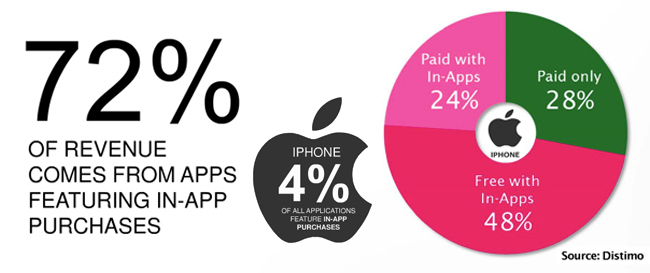
Many developers build iOS software hoping that their app will be the next Angry Birds, but they struggle at what price to sell it. A free app can bring downloads but your pockets are still empty. Maybe you should consider adding in-app purchases to your app, no matter the base price. Distimo has released a new report that suggests that in-app purchases are the way to go if you want to make money in the App Store. In-app purchases account for 72% of revenue, improving from 28% at this time last year. Here’s another stunning number, only 4% of apps in the App Store even offer in-app purchases.

Freemium apps (free to download, but require an in-app purchase to expand the app) are growing particularly faster in the in-app purchasing paradise. Free app downloads have increased by 34% since 2010 while paid downloads only grew 7% in the same time frame. Distimo’s research only covered the Top 200 in each category, but that’s a strong selection of the App Store’s money makers.

Freemium apps made up 48% of total App Store revenue while paid apps with in-app purchases accounted for 24%; the remaining 28% came from paid apps. If you look at the top grossing apps for the iPhone (iPod Touch) and iPad App Stores, freemium games take up several spots. Freemium apps also account for 65% of the Top 100 grossing games in the US App Store.

Besides games offering in-app purchases, comic apps are also making waves, especially in the iPad App Store. Magazines are one more category that is taking advantage of the freemium pricing model.

GigaOM didn’t envision this exactly back in February when Apple let in-app subscriptions into the stores. “Essentially, it looks like more and more developers are embracing the idea that making recurring payments an attractive option for App Store shoppers is the key to coming up with a sustainable business model. Apple’s isn’t the only store where developers are figuring that out, either. In-app purchases are already in use by 68 percent of the 25 top grossing Android apps, despite only being introduced in March of this year.”

Could we possibly see the day when there aren’t “regular” paid apps in the Top 300 grossing list? What do you prefer as a user – a one-time fee to buy the entire app, or having to keep putting quarters into your Apple arcade machine? [via GigaOM]


Report: Apple Enters Into An Agreement With TSMC For A6 And A7 Chip Production

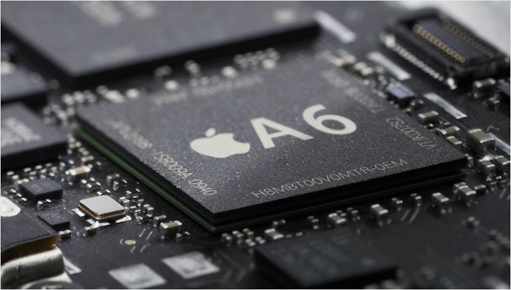
DigiTimes is today reporting on claims from industry sources who say that Apple has signed a partnership agreement with Taiwan Semiconductor Manufacturing Company (TSMC). The agreement will see TSMC produce the A6 chip as previously reported but also the A6’s successor, presumably dubbed the A7.

It now means that Samsung is no longer the exclusive manufacturer of chips for Apple’s iOS devices, which could be related to the current legal battles between the two companies. Sources have also told DigiTimes that TSMC has secured a favourable price, with little impact on TSMC’s profitability.

Apple and TSMC, however, have not yet talked about backend manufacturing, the sources said. It is likely that Apple will have TSMC and the other dedicated packaging and testing house split the orders due to TSMC’s limited available capacity for backend services, the sources speculated.

[Via DigiTimes]


An Ecosystem’s Uniqueness and Similarities

Over the past 24 hours I’ve seen a lot of words thrown around about Windows 8, ecosystems, operating systems, and what should Apple do in regards to Microsoft’s all-in-one attempt to deny the post-PC era altogether by unifying PCs and post-PC devices in a single OS.

There’s some great commentary about this already out there. What I’d like to briefly touch upon is this: does Microsoft’s approach with Windows 8 confirm a somewhat popular argument – that Apple is ultimately breaking, not unifying, the experience with the distinction between iOS and OS X?

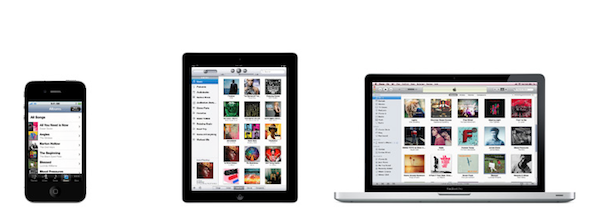
It’s easy to look at the issue from such a perspective. If Windows 8 runs on all devices – let’s pass on Windows Phone 7 for smartphones – then that’s most definitely a real ecosystem, not Apple’s. As iOS and OS X are two different operating systems (different distribution methods, installers, frameworks, GUIs, native apps, names) running on at least three different form factors (the phone, tablet, and laptop), Apple’s “lock-in” strategy comes out defeated in the confrontation against Windows 8.

I don’t want to argue on which OS is “better” (a definition that doesn’t even make sense, right now) or which one will sell more copies; rather, I believe there are a few key areas that several early commenters of the Windows 8 Developer Preview failed to highlight.

In Apple’s vision, separate operating systems can live inside the same ecosystem. The single defining aspect of this vision is the Apple ID, which on iOS devices, Macs, PCs, and web browsers gives you access to:

  • Songs, Movies, TV Shows, Books, Podcasts;
  • Apps;

  • The Apple Online Store;

  • Your iOS device’s location (still free with MobileMe);

  • Email, Calendar, Contact and data sync with MobileMe;

  • Your desktop operating system (with Lion’s Apple ID support).

For as much as it’s difficult to keep this all together with a single Apple ID, that’s what it does. Soon, Apple will introduce iCloud to overhaul MobileMe’s syncing capabilities and turn them into seamless pushing of documents, data, and media across devices.

In fact, you may remember Steve Jobs demoted the Mac to just a device back at WWDC. Why? Because the Mac isn’t more “important” than an iPhone or iPad anymore. The ecosystem (and iCloud is a big part of that) is what matters now. Yet this vision doesn’t imply multiple OSes mean separate ecosystems: iCloud is one, and it works on iOS, OS X, Windows PCs, and the web.

Sign of Apple’s appreciation of a single ecosystem can be found in the iWork suite, the Apple Online Store, and even Ping.

In this context, Apple’s strategy isn’t too dissimilar from Microsoft’s. After all, Redmond has got its own set of web platforms, too, and Windows 8 will feature an App Store and other kinds of tablet/PC integration. But there is a key difference that some people, when comparing Windows 8 to “Apple”, surprisingly omit: based on what we’ve seen (that is, the first, incomplete, buggy Developer Preview), Apple’s ecosystem strategy is nothing like Microsoft’s.

Apple wants to build a single ecosystem by keeping its OSes separate. They want to do so because they believe the similarities that keep the ecosystem together are equally important as the uniqueness of each operating system – its strengths and virtues and hardware features.

Today I asked on Twitter: Would Apple fans applaud an iPad that runs both iOS and OS X? By far, the response was “no”. The reason’s simple: iOS was built with multi-touch in mind, whereas touching a Mac’s screen is still awkward (and doesn’t work). In its very own nature, OS X works with clicks and drags, not taps and swipes. Lion epitomizes Apple’s intention to enable some kind of deeper touch interaction with Macs sometime in the future, but the fact still holds true: you can’t touch OS X. iOS and Lion look similar in order to carefully transition the users from a platform to another in the ecosystem stream, but they’re unique and true to their own interfaces, interaction schemes, and destination hardware.

You will be able, however, to touch Windows 8 on a tablet. Or to scroll Windows’ Metro with a mouse wheel on a desktop PC. And here’s where I believe Apple and Microsoft, ultimately, diverge: Apple is creating an ecosystem that works with multiple OSes, provided these OSes run on the devices they belong to. For Microsoft, on the other hand, Windows itself is the ecosystem, and that has to be integrated on every device. There is a subtle difference between ecosystems and OS uniqueness, and you’ll be the judge of which strategy will win over the other two years from now.

There are several ways to build an ecosystem. I don’t know if I’ll like Microsoft’s one, but I’m sure there will be both subtle and key differences to consider when comparing it to Apple’s future strategy.


Epson Unveils “MegaPlex” Projectors with iPhone, iPad Support

Earlier today Epson officially announced “MegaPlex”, a new line of projectors that are compatible with iOS devices, as well as computers, tablets and other smartphones thanks to standard HDMI, USB, and VGA ports. The MegaPlex MG-850HD and MegaPlex MG-50 come with a rear-facing dock for iPhones, iPods and iPads, enabling users to view their photos and videos and listen to music on a bigger screen. Epson says they want to make it easy for iOS users to browse and display content, charge a device, and share the experience with friends and family. Similarly, the MegaPlex projectors can accept media from a variety of non-Apple devices.

MegaPlex is the ideal big screen projector for the new digital lifestyle. Enabling consumers to share multimedia content from their iPod, iPhone, iPad and a wide assortment of other digital devices, MegaPlex is changing the way movies, gaming, slideshows, presentations, music, and more are viewed by eliminating the confinement of a smaller screen,” says Jason Palmer, product manager, Epson America. “With the high-quality, versatility and portability of Epson’s MegaPlex solutions, consumers can literally dock their iPad, iPhone or iPod, click and immediately share multimedia content on a big screen wherever they may be.

Both projectors are powered by 3LCD technology to deliver “vibrant colors”, though only the MG-850HD offers 720p video output at 2,800 lumens. The MegaPlex MG-50 will deliver 540p video and up to 2,200 lumens of color and white light output. Both systems feature two 10W stereo speakers, and a microphone.

The Epson MegaPlex MG-850HD and MegaPlex MG-50 will be available later this month through select retailers and Epson’s online store at $799 and $699, respectively.