Posts tagged with "game"

Game Day: Linia

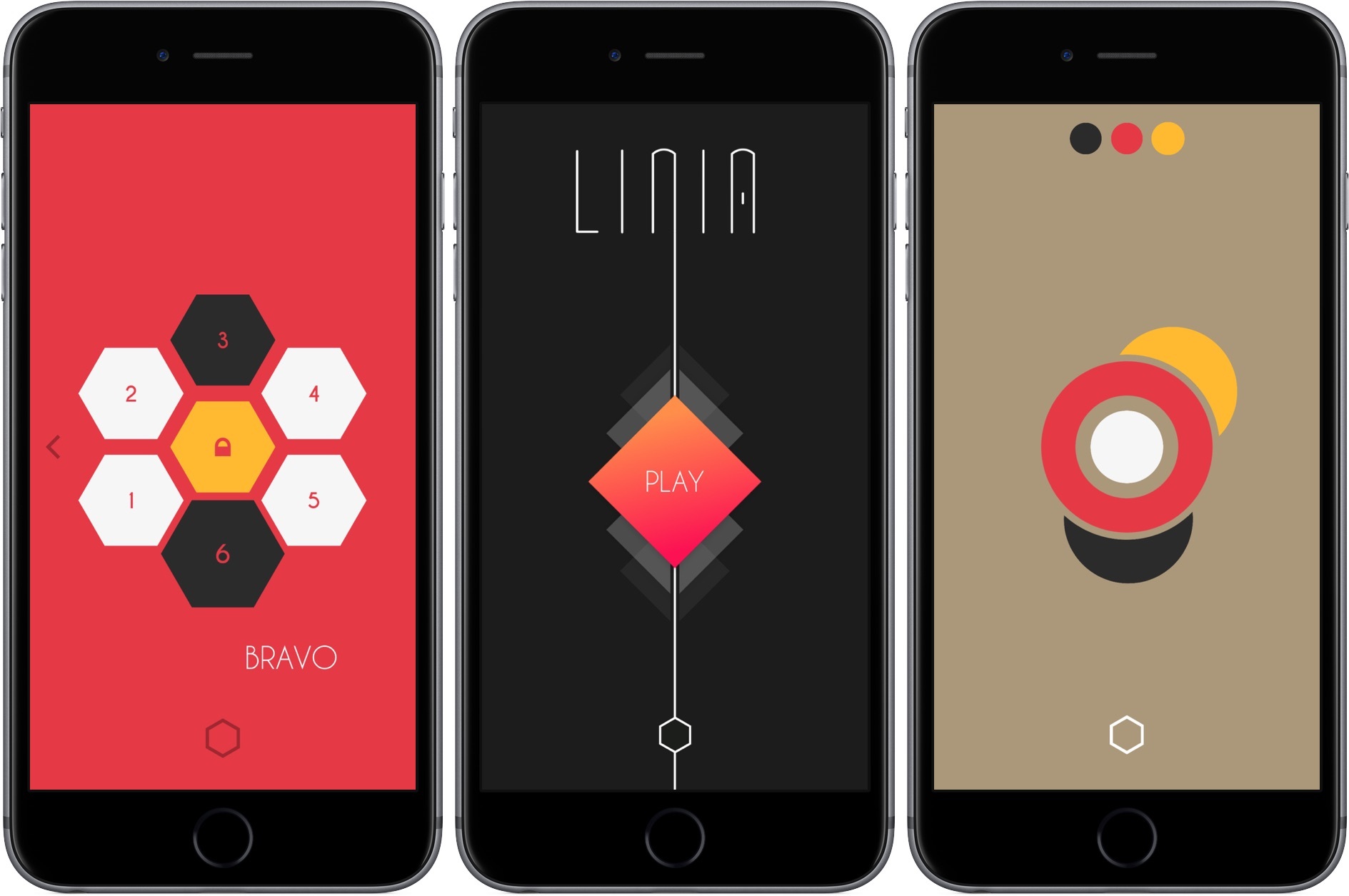
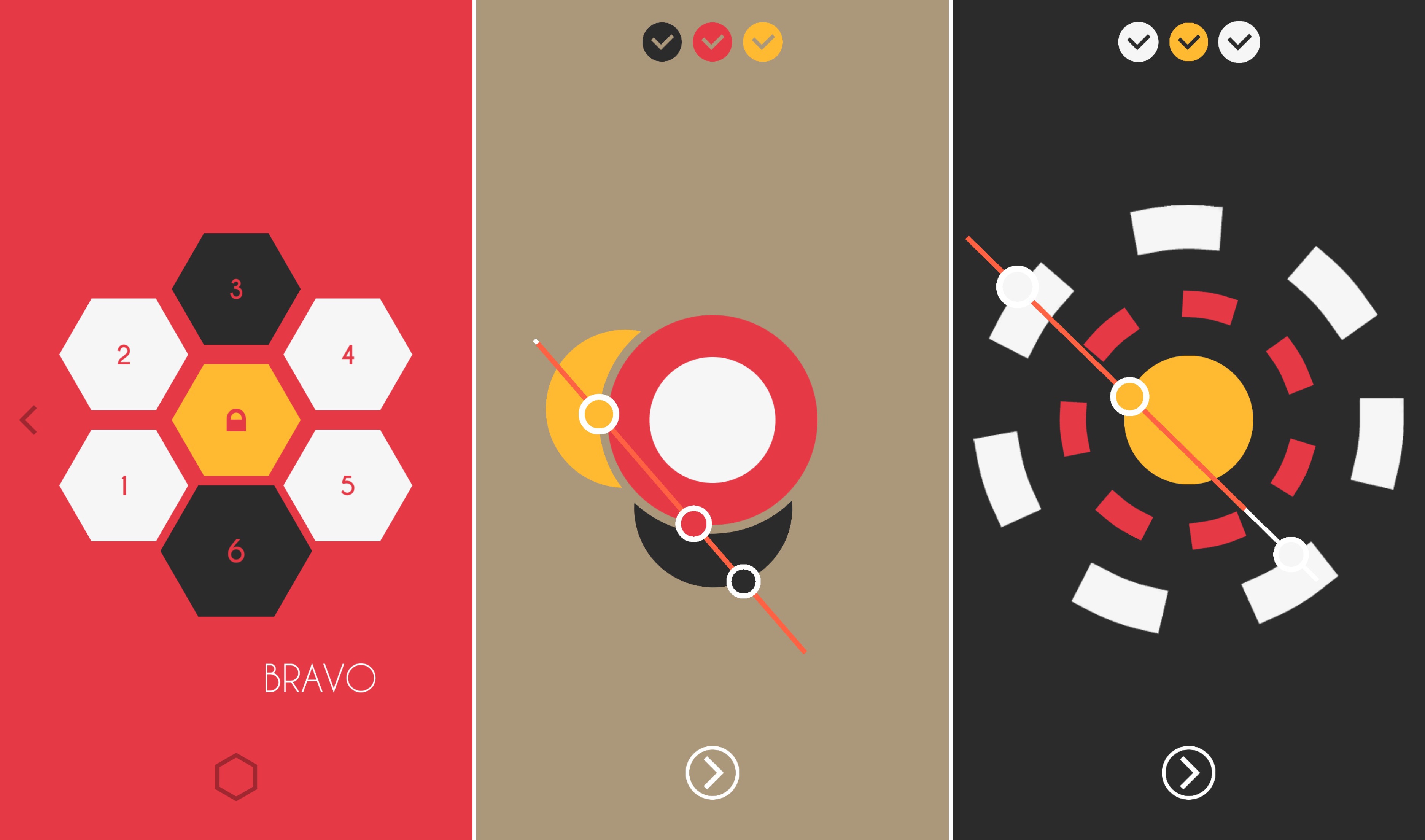
Linia from Black Robot Games is fiendishly difficult, but strangely relaxing in its complexity. The challenge is to draw a straight line through a series of colored shapes that intersects the shapes in the order of the color sequence at the top of the screen. Here’s the thing though, the shapes are moving, rotating, shrinking, growing, and changing color all at once. The movement follows a regular pattern, but it gets complicated fast.

Linia is a creature of the post-iOS 7 design aesthetic. Each of its 80 levels is composed of brightly-colored geometric flat shapes. What’s ingenious about Linia and makes it particularly difficult is that it requires pattern matching, careful timing, and quick reflexes simultaneously. As you draw a line it appears white but fills in behind where you started in red, which is part of the timing element. You have to lift your finger to commit to your line before it turns completely red. If you wait to long, you’ll have to start drawing your line all over, but if you release at the wrong time, you may be unable to hit the right color sequences.

I’ve played Linia on both my iPhone 6s Plus using my finger and on my 12.9 inch iPad Pro using the Apple Pencil. I give a slight edge to using the Pencil to play Linia on the iPad because you can draw such a precise line, but the difference between playing on the iPad and iPhone was much less than I expected.

The soundtrack that accompanies Linia plays a big role in minimizing the frustration of some of the harder puzzles. There’s something inviting about the electronic vibe of the soundtrack that feels like it’s encouraging you to stay a while to keep trying to beat even the hardest puzzles.

Black Robot has done a great job bringing something fresh and clever to the crowded puzzle genre on iOS. It’s especially impressive given that this is Black Robot’s first iOS game. With such a great start, I look forward to seeing what else Black Robot comes up with in the future.

Linia is available on the App Store for $1.99.


Enter the Studio Turning Deus Ex and Lara Croft Into Awesome Mobile Games

Andrew Webster, writing for The Verge:

With the Go series, Square Enix Montreal has carved out its own niche, creating something unique in the game development space. Studios often fall into one of two camps: on the one side you have the massive, 1,000-person teams that create blockbuster games, and on the other there are the tiny indie studios that build creatively ambitious games with few resources. Square Enix Montreal straddles the line between those two extremes. It has the resources of a big company, but the size and some of the creative freedom of an indie. It’s a studio that can make weird new games but attach them to hugely popular franchises.

It is great to see that Square Enix Montreal has found success in its series of Go games built on the larger franchises of Hitman, Tomb Raider and now Deus Ex. The first two Go mobile games, Hitman Go and Lara Croft Go, are genuinely great and feature a lot of creativity – so it is great to see they have continued to invest in this (critically-acclaimed) series with yesterday’s launch of Deus Ex Go. This is particularly the case when so many other large mobile game publishers are instead focusing on churning out what are largely uninspired free games with in-app purchases.

To that end, Webster notes in his story that Square Enix Montreal has made some indie hires that suggests it fully intends to stay the course on its current approach to mobile games:

Outside of Deus Ex Go, Square Enix Montreal isn’t saying what it’s working on right now. But the studio has made a few recent hires that hint at desire to keep the indie-like feeling it has carefully cultivated. Those pick-ups include Teddy Dief, an artist and designer best known for his work on the crowdfunded hit Hyper Light Drifter, and Renaud Bédard, the sole programmer on seminal puzzle-platformer Fez, who most recently worked at Below developer Capy Games in Toronto. Both were tempted to join by the idea of combining the creative freedom of an indie studio with the structure and resources of a big publisher.

Permalink

Game Day: Reigns

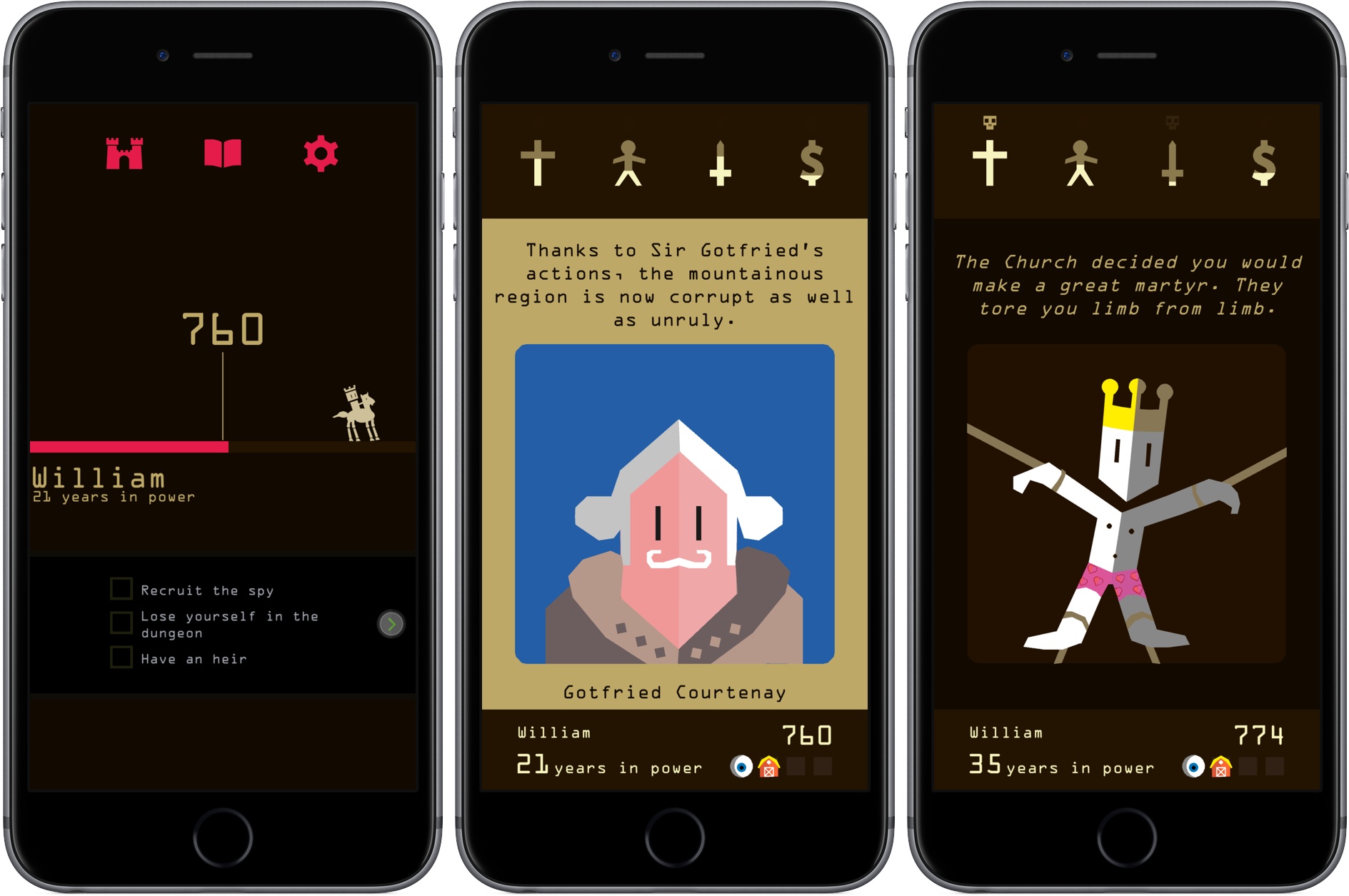
Have you ever wanted to rule your own kingdom? Of course you have. With Reigns you can do just that – while you stand in line to buy groceries. Reigns, an Apple Editor’s Choice, is a card-based adventure game with an clever interaction model. Touch Arcade and Pocket Gamer liken Reigns to Tinder, which I get, but it’s also a little unfair because it ignores the depth and personality of the game that underlies the Tinder-like mechanics.

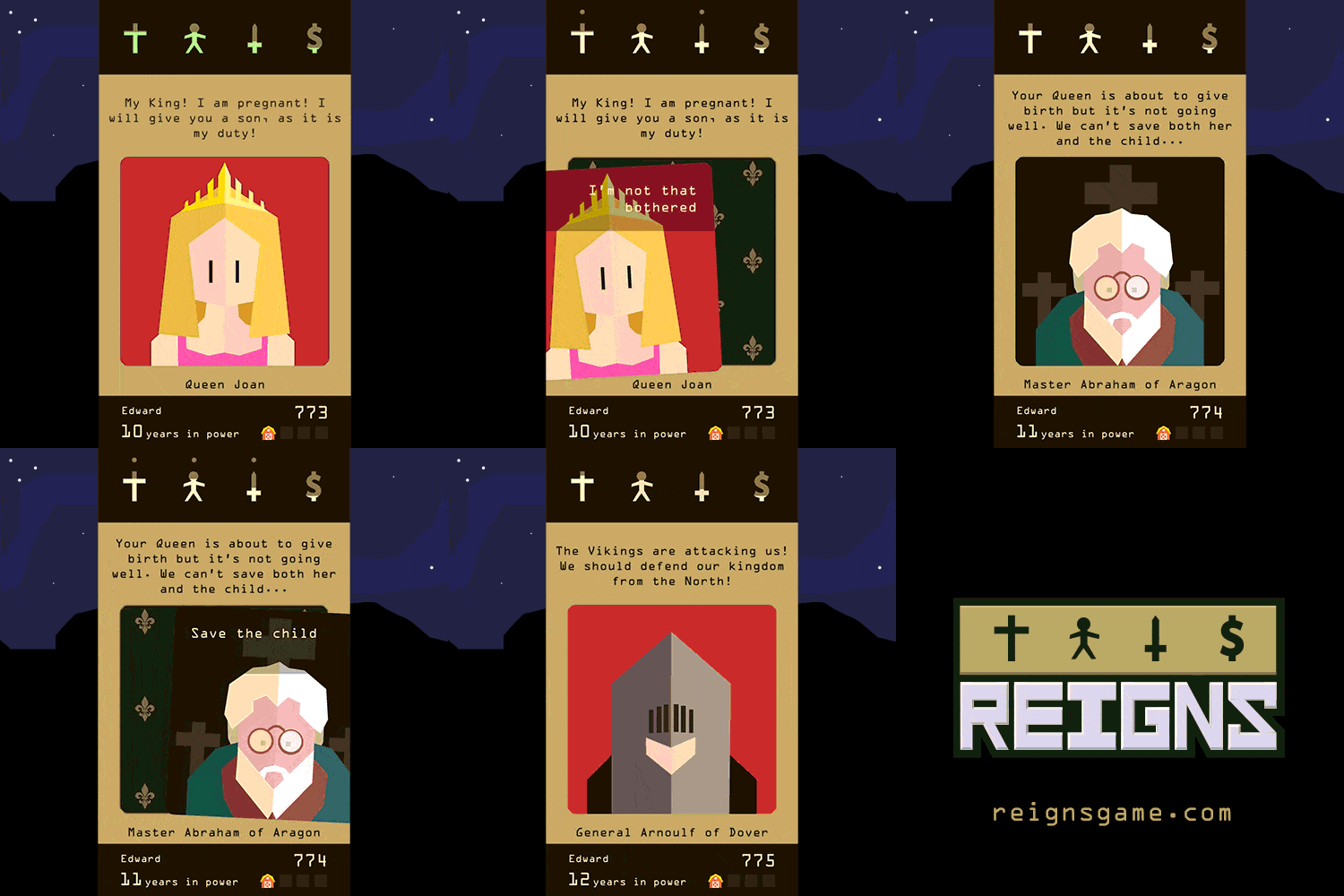
As king, you are presented with a series of decisions in the form of cards that are brought to you by advisors and other characters. Each decision has only two options that you choose between by swiping left or right – hence the comparison to Tinder. But there’s much more to Reigns than just flicking cards. Every choice you make has consequences, some of which affect future generations, and it’s not unusual for a decision to spin out of control quickly ending in your death.

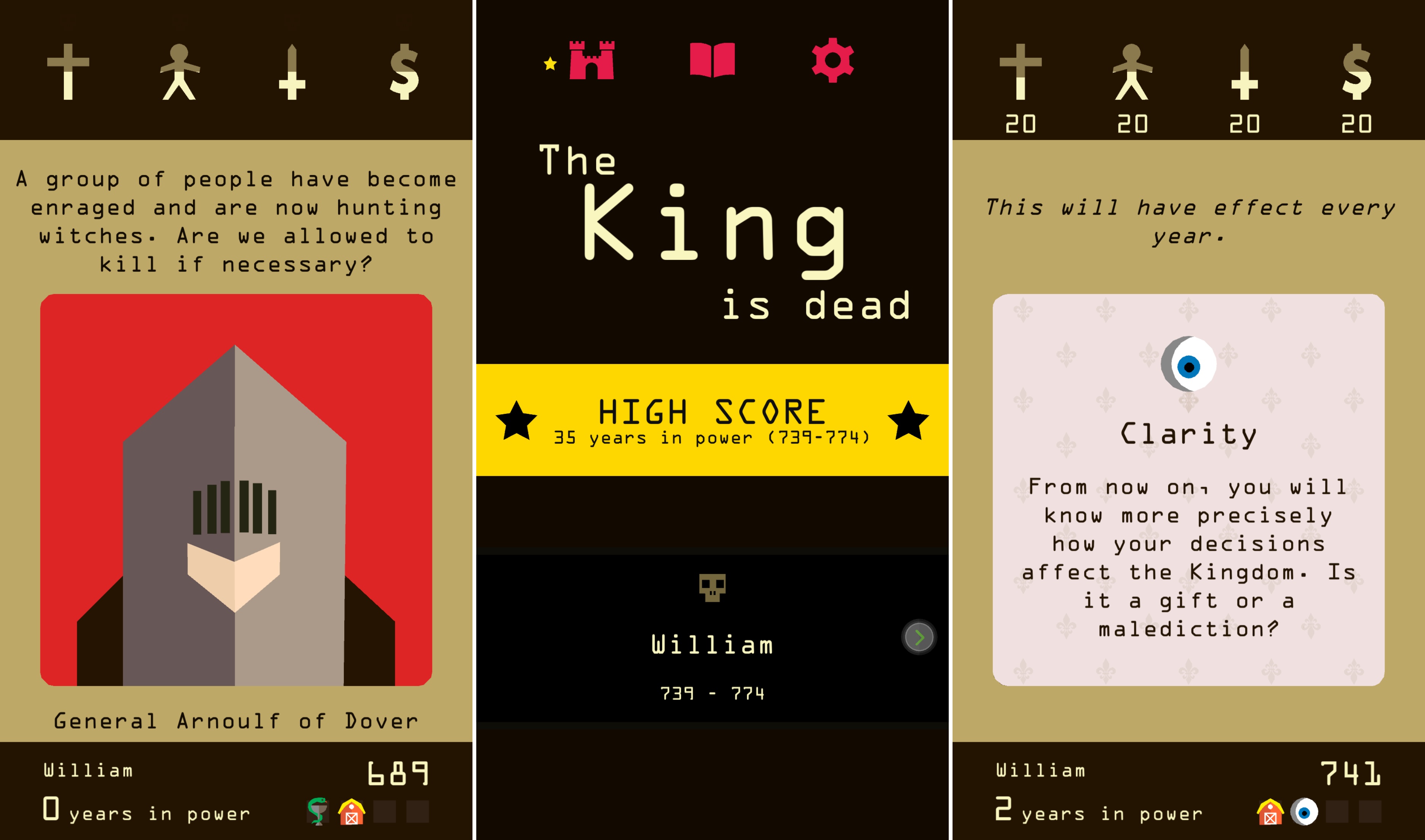
Each choice you make also has an impact on the strength of the church, your subjects, the army, and your finances, which are tracked at the top of the screen. As you play, you can swipe cards part way to the left or right to get a hint of which metrics will be affected by your choices. To survive, you must carefully balance each variable. Allow one category to get too high or too low and your reign will end badly.

All reigns end eventually, but each time one does, you are reborn as a new king and given a series of goals like “Lose yourself in the dungeon,’ ‘Meet the devil,’ or ‘Try the blue one.’ Meeting goals unlocks cards and new aspects of the game keeping it fresh. There are also mini-games like dice and dueling scattered throughout Reigns.

Reigns is perfect for mobile, though it is also available on the Mac via Steam. Swiping left and right to make decisions about your kingdom is quick and easy wherever you are. The combination of the number of cards, consequences that span generations, and need to balance multiple statistics adds an interesting level of strategy. But above all else, what has endeared Reigns to me most is that the artwork and questions are imbued with a sense of humor that gives Reigns a unique personality unlike any iOS game I have played recently.

Reigns is available on the App Store for $2.99.


Game Day: Severed

Severed is a dungeon adventure game for iOS from DrinkBox Studios that originally debuted on the PS Vita and will be available later this Summer on the Wii U and 3DS. The game tells the story of a one-armed warrior named Sasha in search of her family in a strange world populated by monstrous creatures.

The move to bring Severed to iOS is a new beginning for DrinkBox Studios, which published its prior mobile titles on PS Vita. But with the Vita in decline, DrinkBox has moved on. In an interview with Engadget, the Toronto-based company announced that it is finished with the Vita. That’s a shame because I love my PS Vita and DrinkBox’s Guacamelee! was one of my favorite Vita games, but Sony’s loss is Apple’s gain.

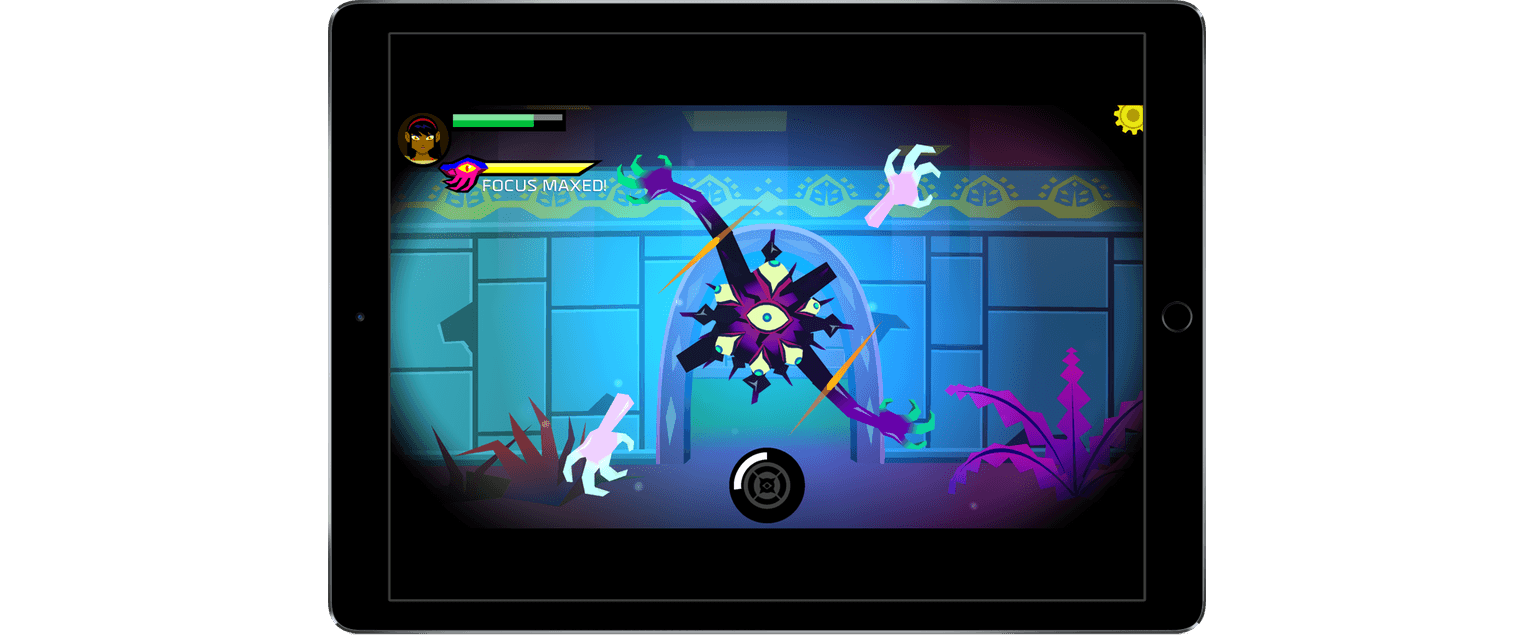
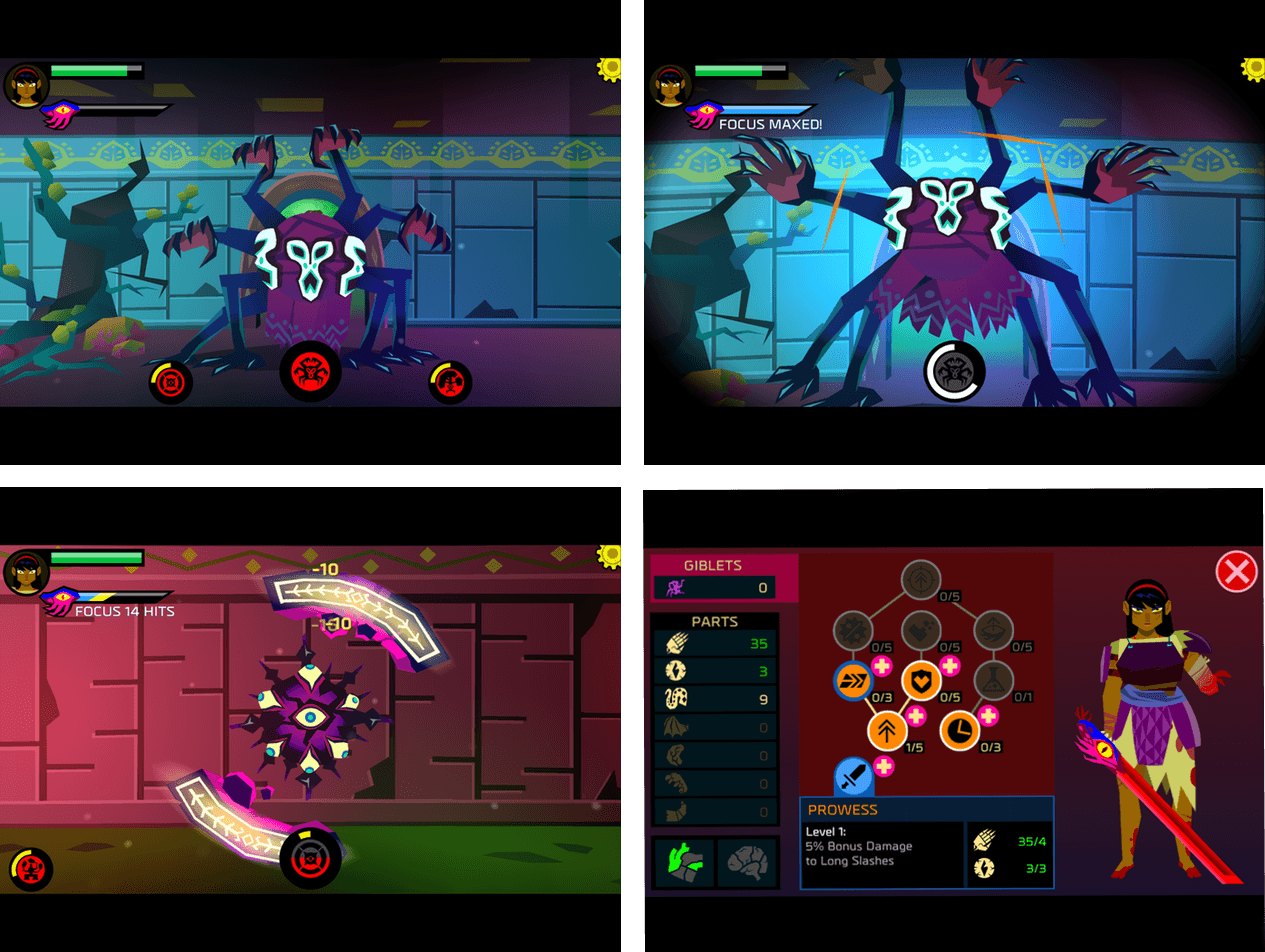
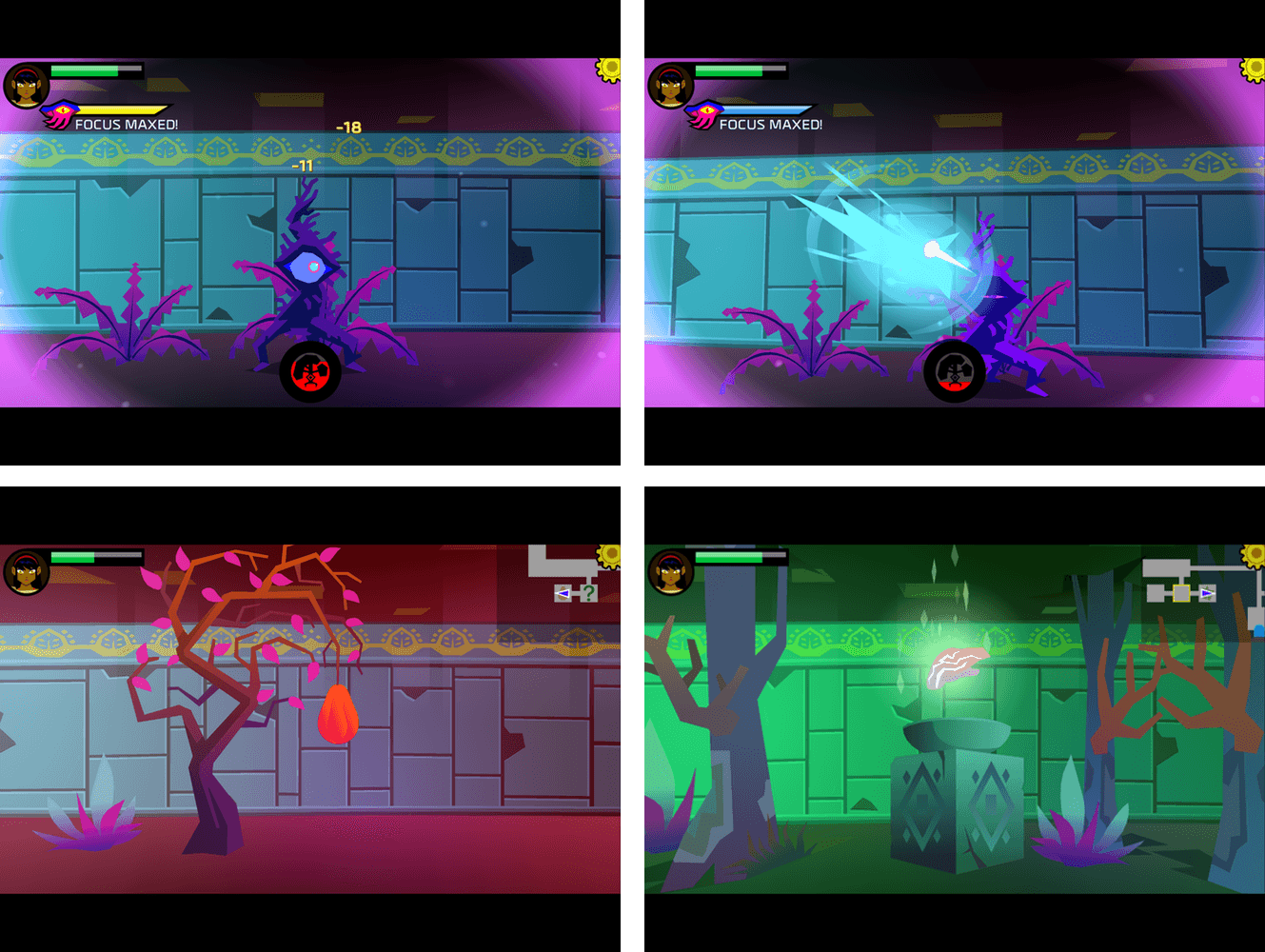
Severed, described by its creators as an RPG-light adventure, is a visually arresting journey through a bizzare landscape. The unique artwork style will be immediately recognizable to anyone who has played Guacamelee!, while still creating an atmosphere and look of its own. Sasha, the main character, has just one weapon, a sword given to her by a mysterious figure at the outset of her quest. As you encounter enemies, you attack with slashing touch gestures reminiscent of Fruit Ninja and block counterattacks by swiping along the course of incoming blows. Early in the game you are confronted by single enemies. Things get more complicated as you advance and have to defeat multiple foes that are better at defending themselves.

But there’s more to Severed than just frantic slashing. There’s a strategic element too. During the course of a battle, Sasha’s ‘focus bar’ slowly fills. Kill an opponent when Sasha’s focus bar is full and you can sever its limbs. It sounds more gruesome than it actually is. Collect enough limbs and you can trade them for armor, equipment, and other upgrades. As a result, it doesn’t pay to simply kill a monster as fast as possible, which adds depth to the battles.

There are two levels of play – ‘casual’ and ‘standard.’ Severed can be intense and absorbing in standard mode, which makes casual mode a nice option if you would rather play a more relaxed game, soaking in the visuals and soundtrack.

The touch-based gestures of Severed are outstanding on iOS. The game is a Universal app, so you can play it on an iPhone or iPad, but it really shines on the iPad, especially an iPad Pro with an Apple Pencil. Suddenly, that Apple Pencil that you may use to take notes or sketch becomes Sasha’s sword. Using the Apple Pencil this way adds immeasurably to the fun.

I’ll be playing Severed a lot more as I sit by the shore of Lake Michigan for a mini-vacation this weekend. Severed is expensive as iOS games go, but at less than half the price you’d pay for the PS Vita version, you get a game that fits with the iPhone and iPad hardware in a way that it can’t on the Vita. Sure, the Vita has a touch surface, but it’s still designed primarily for button-based games, while the large touch surfaces of iOS devices make it easier to get lost in Severed’s action and story.

Severed is available on the App Store for $6.99.


Game Day: Bulb Boy

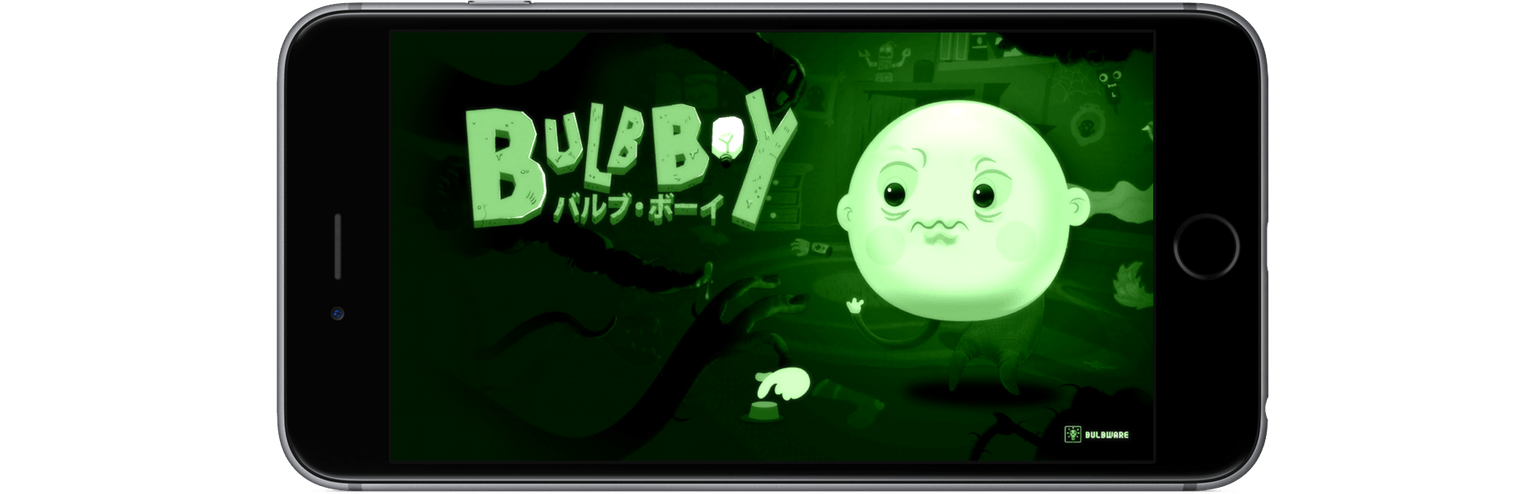
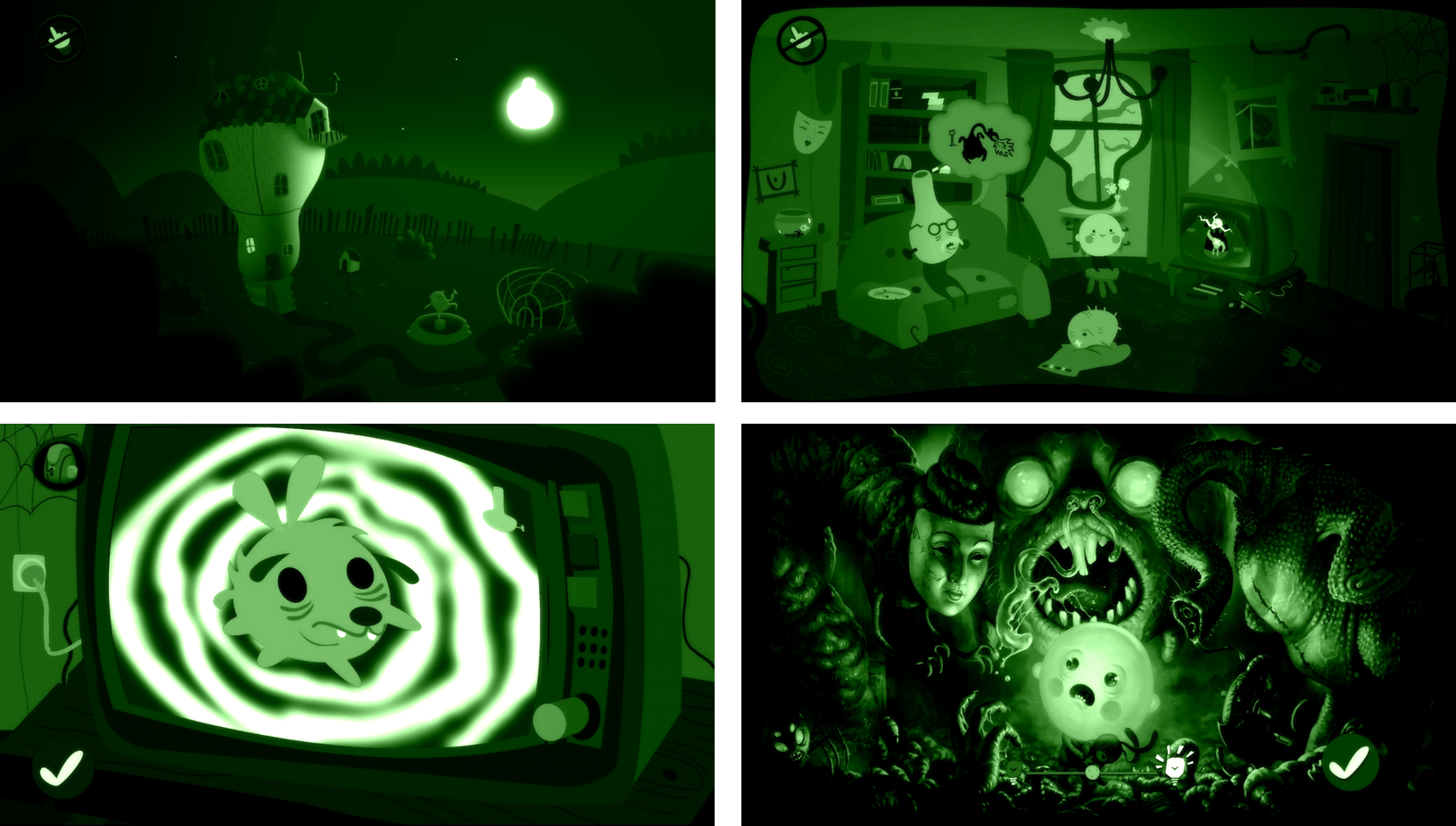
Bulb Boy is a bizarre point-and-tap puzzle adventure on iOS from Kraków, Poland-based Bulbware that draws inspiration from games like Machinarium. As the name suggests, the story centers around a boy who is a lightbulb. Bulb Boy appears to be going about his business, living a quiet life with his grandfather and bulb-dog in their bulb-house, until strange things suddenly start to happen. Bulb Boy’s world is beset with monsters and it’s up to you, as Bulb Boy, to defeat them by collecting a series of items that help you solve puzzles.

Everything in the game is black and green like an old CRT monitor. The animation has a distinctly retro feel too. When I started Bulb Boy I immediately felt like I had stepped into a demented version of an old cartoon from the 1930s.

The mechanics are straight-forward. You explore each scene by tapping the screen. Bulb Boy moves to where you tap and examines any items in the area. The items you collect help you solve the puzzles and move on to the next stage. In addition, Bulb Boy can take off his head to illuminate dark areas and help solve puzzles. As the game progresses it continually introduces new challenges that keep the game fresh.

Bulb Boy, which has won more awards than I can list here, is as creepy and weird as it sounds. Originally released for PCs on Steam, the game translates well to iOS’s touch interface. I played on my iPhone 6s Plus and iPad Pro and greatly preferred the experience on the iPad, where the artwork and soundtrack could really shine.

Bulb Boy is as much about exploring and enjoying its strange world as it is about the puzzles. The lead character is so charming that I very quickly found myself wanting to help him out of all the tight spots he finds himself in, which makes for an absorbing game. For the most part, the puzzles are challenging without being too hard, but if you do get stuck, Bulb Boy provides hints in the form of pictographic thought-bubbles that appear above Bulb Boy’s head. There are also walk-throughs online.

Bulb Boy is available on the App Store for $2.99 and, although I have not tried it, it’s worth noting that Bulb Boy is also available on the Mac for $9.99.


Game Day: Nanuleu

Nanuleu by Selva Interactive is an excellent new tower-defense strategy game reminiscent of Rymdkapsel. I’ve been a fan of tower-defense games since the original Fieldrunners game launched on iOS just a couple months after the App Store opened. Nanuleu is a less frenetic, more laid-back take on that classic style with many of its own distinctive elements.

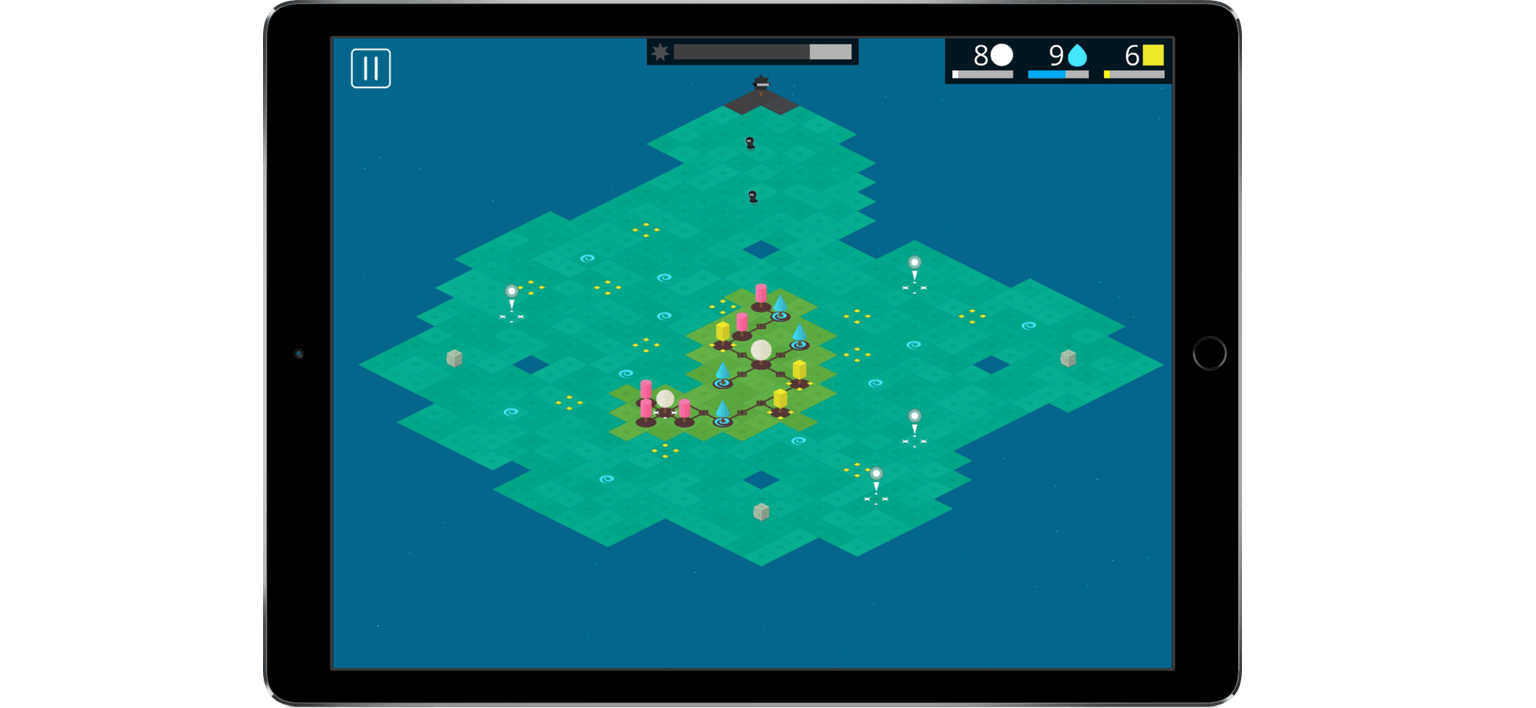
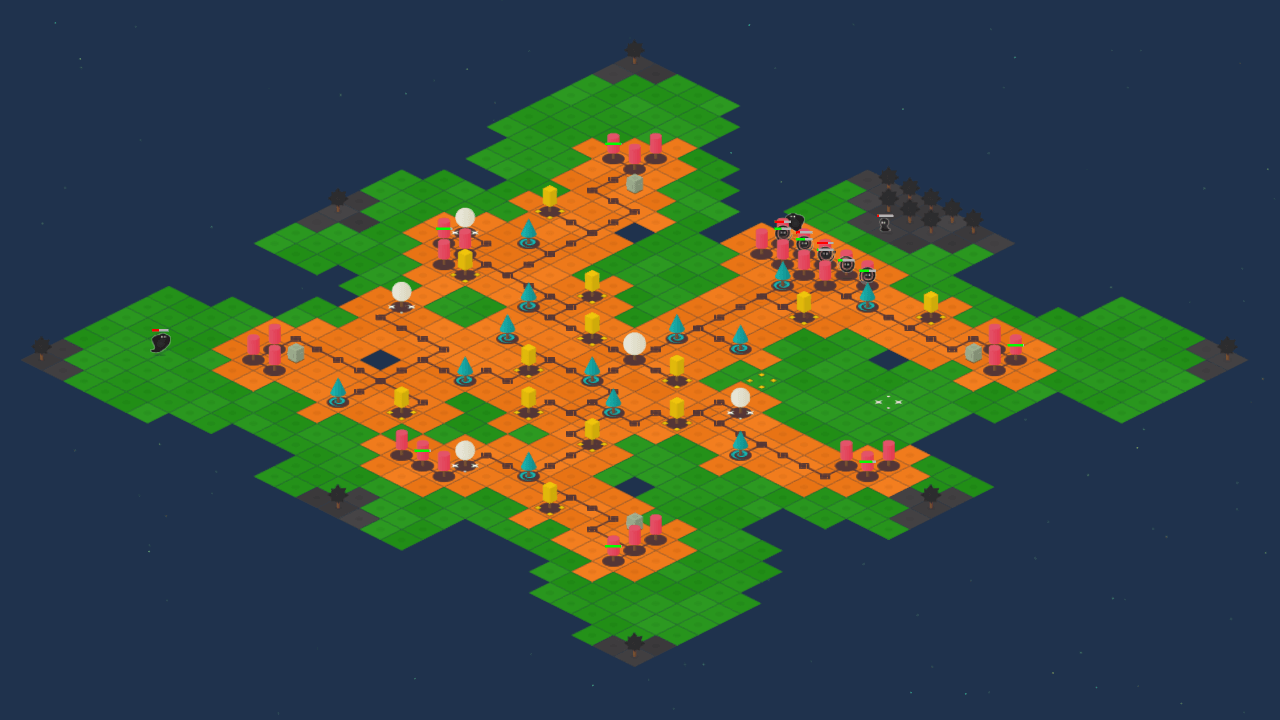
Nanuleu is played from an isometric perspective on a procedurally generated map that makes each game you play unique. There are three modes, Apprentice, Warrior, and Sage, each of which is progressively more difficult to complete.

Each Nanuleu map is procedurally generated.

Each Nanuleu map is procedurally generated.

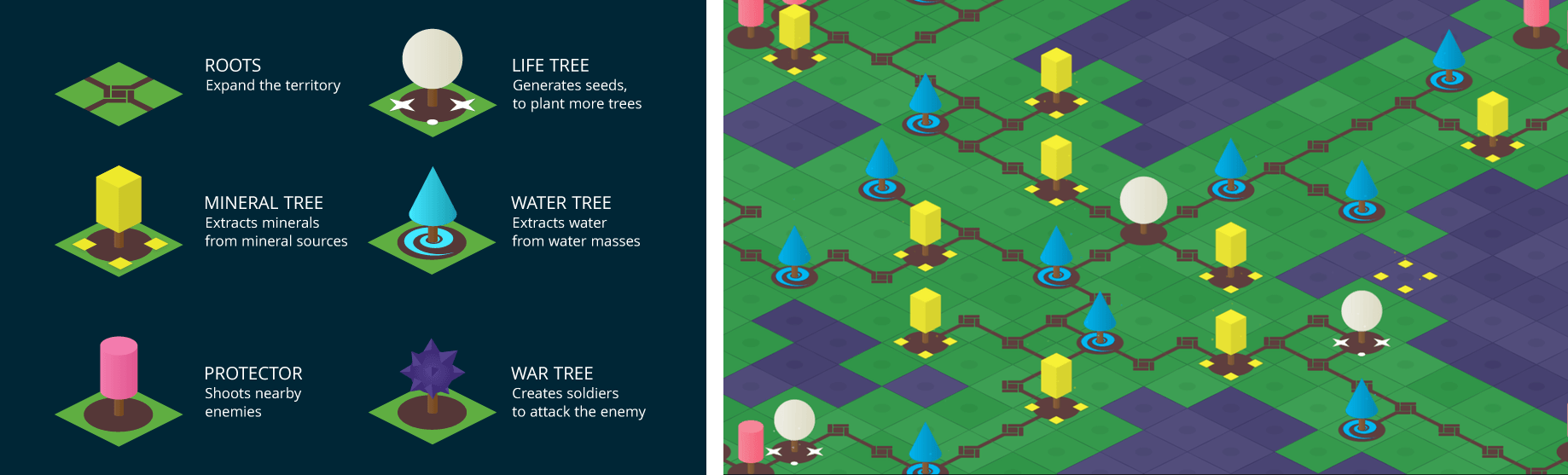
You start each game with a life tree at the center of the map and resources that you can spend to expand your territory across the map. Tapping on the squares on the map that are adjacent to territory you already control gives you the option to plant certain types of trees or simply expand your network of roots. Water, mineral, and life trees can only be planted on squares with corresponding colored symbols and require more resources than simply laying down roots.

Five types of trees are connected by a root system.

Five types of trees are connected by a root system.

After a while, enemies start attacking from different spots along the edges of the map. Planting protector, and later, war trees helps defend your trees against the enemy. As you expand your network of water, mineral, and life trees, resources accumulate faster, but you need to spend your resources carefully to defend your territory. If the enemies start taking out trees, especially those that produce resources, your territory begins to shrink. Vanquish all the enemies and you win the round. If the enemies get the upper hand and overtake your last life tree, you lose.

It’s easy to understand why Nanuleu won an award at the 2015 Indie Game Maker Contest and has already made a best of 2016 list just over a week since its release. The game combines great visuals and sound with simple, but challenging, gameplay. Nanuleu games are not short. Most of the games I’ve played have lasted 20-30 minutes, but time flies because it’s easy to get absorbed in the action. If you enjoy tower defense and real-time strategy games, Nanuleu is worth checking out.

Nanuleu is available on the App Store for $2.99.


Square Enix Working on Apple Watch-Only RPG

Siliconera reports that Square Enix, the maker of the Final Fantasy franchise and Chaos Rings, is developing an Apple Watch-exclusive role-playing game called Cosmos Rings. Square Enix has a bare bones teaser website up with virtually no information about the game, but Siliconera says that Cosmos Rings:

features the “Time Upstream System” that uses the Apple Watch’s Digital Crown. The game will send you various messages according to your daily step counts as part of an experience that Square Enix says can only be done through the Apple Watch.

Siliconera also says that Cosmos Rings is being produced by Takehiro Ando who worked on the Chaos Rings series of games that originally debuted on iOS in 2010. In addition, Yusuke Naora, who was the art director on several Final Fantasy games and designed characters for Chaos Rings will have a hand in the Cosmos Rings visuals.

Cosmos Rings is slated for release later this summer.

(Via Eurogamer.net)

Permalink

Game Day: klocki

After last weekend’s fast-paced, stress-inducing racing game, Neon Drive, I wanted to play something a little more laid back and mellow this week. I found the perfect game in klocki, a new iOS puzzle game that launched earlier this week.

klocki is from Maciej Targoni, the maker of Hook, a well-regarded puzzler that came out early last year. The tile-based puzzle game is singularly focused on revealing itself through its puzzle mechanics and designed to be relaxing. There are no tutorials, instructions, or text. You play klocki at your own pace, discovering the rules organically as you play.

The goal of klocki, at least in the early stages, is to complete lines by swapping pairs of tiles. When you complete a puzzle, you only advance to the next one after you tap the screen. You are completely in control of the pace of klocki, which is backed by a soothing soundtrack by Wojciech Wasiak.

As you progress through klocki, things get trickier. The 2D puzzles gain a third dimension, the puzzles become larger, and the mechanics become more complex, making it harder to work out the solutions. No worries though, there are no timers or score. It’s just you against each puzzle.

klocki, which was featured on the App Store this week, is the kind of distraction I look for more often than not in an iOS game. It’s challenging without being frustrating and as easy to pick up for short periods of time as it is for an hour.

klocki is available on the App Store for $0.99.


Game Day: Neon Drive

Neon Drive by Fraoula is a devilishly difficult 80s-themed driving game that immediately reminded me of the campy short film, Kung Fury. The unapologetic, over-the-top style of Neon Drive is a big part of its charm and adds to the fun of the game, which is available for OS X and iOS. The mechanics of Neon Drive are incredibly simple, but the mastering the game requires precise timing. Well-placed checkpoints provide just enough of a sense of progress though, to make Neon Drive more fun than frustrating.

Neon Drive is part endless runner, part rhythm game. The controls are about as basic as they could be – on iOS you steer your car across lanes by tapping the left side of the screen to move left and the right side to move right. On the Mac, you can accomplish the same thing with the left and right arrow keys or other preset key combinations. Each of Neon Drive’s levels is accompanied by an 80s synth soundtrack that adds to the game’s atmosphere as you dodge obstacles. The first time you hit an obstacle, your car is temporarily slowed down with the screeching sound effect of a needle scratching across a record that distorts the soundtrack. Hit a second obstacle and it’s game over. Fortunately, if you cross a checkpoint, you don’t have to restart from the beginning.

Neon Drive features seven very difficult levels. Getting past the first level felt like a major accomplishment even in normal mode. I’m not great at games that require perfect timing, so your mileage may vary, but despite the difficulty, I found Neon Drive fun and addicting in the same way a game like Canabalt is.

Neon Drive's look and soundtrack are a big part of its appeal.

Neon Drive’s look and soundtrack are a big part of its appeal.

I played Neon Drive on my iPhone 6s Plus, iPad Pro 12.9, and 2015 Retina MacBook Pro. The games are virtually identical on iOS and OS X, but I’d give the edge to the iOS version because there’s something about tapping the screen directly that makes Neon Drive a little more immediate and fun. On OS X, Neon Drive got my laptop’s fans roaring almost immediately, which detracts the game some. My one wish for Neon Drive is for Fraoula to bring it to the Apple TV, where I think its simple mechanics would work well with or without a controller.

Despite being frustratingly difficult to master, Neon Drive is a blast to play and does a fantastic job of making you feel like you are playing a real 80s arcade game.

Neon Drive is available for $3.99 on the App Store and $9.99 on the Mac App Store.