This Week's Sponsor:

HomeSnap

A Private, Read-Only Window Into Your HomeKit Home


Posts tagged with "apple"

Apple Rectifies Corrupted App Store Downloads, Advises Users to Delete and Reinstall Broken Apps

Late Tuesday evening, Instapaper developer Marco Arment was met with a nasty surprise when some users updating to Instapaper 4.2.3 found that their updated app instantly crashed after opening. Upon investigating and hearing similar reports from other developers, Marco found that the App Store itself was corrupting app updates, leaving users with broken apps and developers with one star reviews from confused and upset customers. Writing at Marco.org, Marco addressed the issue to his audience and began gathering a large list of apps that were also affected, calling on Apple to quickly resolve the problem as developers dealt with the consequences.

On Thursday evening, Apple acknowledged the problem to AllThingsD and Macworld, informing the publications that the issue had been resolved.

Lex Friedman from Macworld writes,

Around 6:00 p.m. PT, Apple acknowledged the problem to Macworld, describing it as “a temporary issue that began yesterday with a server that generated DRM code for some apps being downloaded.” Apple added: “The issue has been rectified and we don’t expect it to occur again.”

Customers with affected applications should be able to delete and reinstall a working application through the App Store.

Additionally from Macworld,

Sources told Macworld that Apple will be removing one-star app reviews developers earned unfairly because of the company’s server issue.

As Matthew Panzarino from The Next Web points out, both Apple customers and developers have little to no recourse when problems like this occur. Developers currently have no way of effectively communicating with customers outside of developer blogs.

When the one-star reviews started rolling in, there was very little that developers could do to notify users of their app that it was an issue with Apple’s packaging of their apps, not the apps themselves. The users just saw that the app was crashing on launch and rated it accordingly.

Reinstalling applications also leads to users possibly losing information — Glasshouse Apps’ is still dealing with the aftereffects as the company prepares an app update and advises users on the best course of action that will keep their news feeds and data intact. The developers of GoodReader have also written a step-by-step guide that helps customers back up, reinstall their app, and restore data onto their devices.

While Apple has acknowledged and fixed the issues disrupting application updates on the App Store, they have not yet issued an apology to developers, nor did they want to themselves acknowledge that they’d be removing one-star app reviews apps received because of the error. If Apple should do anything more, they certainly need to reach out and apologize to developers, who’ve unfortunately had to run damage control to prevent one-star reviews and angry customers.

[Sources: Macworld via AllThingsD]


Some App Updates Resulting In Instant Crashes Due To Presumed Apple CDN Issue

In the last 24 hours or so, a number of apps that have been updated by users have crashed on launch due to a problem presumed to be connected to the App Store’s content distribution network (CDN). A number of popular apps from Instapaper, Readdle Scanner Pro, Angry Birds Space HD Free and CommBank Kaching amongst others have been just some of the affected apps. The issue, not affecting every customer, occurs when a user updates their apps and goes to launch them but instead the app crashes before it can load.

Instapaper was one of the first to be affected by the issue with an update that went live late on July 3rd. Developer Marco Arment was instantly “deluged” by support requests complaining of instant crashes with the latest version. After a bit of digging and looking at his support requests, Marco believes it comes about due to a corrupt version of the updated app being distributed by the App Store CDN in some regions. For Instapaper the issue was resolved (a non-corrupt version propagated to all regions) within two hours but it isn’t known if it was due to Marco’s emails to the App Review team or just an issue resolved with time.

If you’re a developer, and you have a non-critical update pending release, I suggest waiting a few days for this to presumably get sorted out before releasing it. [Marco Arment]

Apple has yet to make any statement on the issue and Marco and the other developers affected by the issue have yet to receive responces from any of the developer relations groups at Apple either. You can view a tentative list of apps affected by the issue over at The Next Web and at Marco’s personal blog which also goes into detail about the issue.

It may be wise to hold off from updating any apps for the time being as well, with the issue affecting people across all regions and all different apps. If you’ve already been affected by the issue, the only real way to fix it is to delete the app and try re-installing the app - but this will only work if the app is no longer corrupted on Apple’s side.

[Sources: Marco.org and The Next Web]


Ars Technica Investigates The Future Of Thunderbolt Cables

Ars Technica Investigates The Future Of Thunderbolt Cables

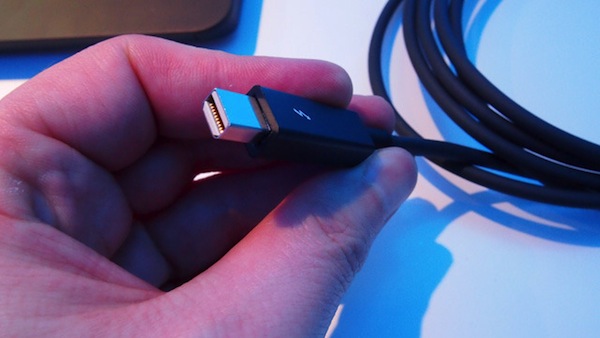
In an investigation for Ars Technica, Chris Foresman explores why Thunderbolt cables, more than a year after Thunderbolt debuted, remain at the expensive $50 and greater price range. Foresman dug into what the current situation was and discovered that apart from Apple, there is currently only one volume supplier of Thunderbolt cables that are likely rebranded by Belkin, Elgato, Kanex and others that offer Thunderbolt cables.

While other vendors are now offering their own Thunderbolt cables, prices have mostly stayed the same—in fact, some have gone up. We found this surprising; typically more vendors offering competing products leads to lower prices. And as the high cable price represents a fairly high barrier to entry for Thunderbolt devices, it relegates the standard to niche, early-adopter territory.

Foresman found that prices won’t really drop until early 2013 when a second generation design by Intersil will enter production. The current “first-gen cables” are based on a Genum transciever from Semtech that is built with silicon germanium which makes it much more expensive to produce.

It’s likely that Intel and Apple chose the Semtech part because it was either an already existing part that fit the requirements for Thunderbolt’s high 10Gbps bi-directional data rate, or Semtech had something similar that was easily adaptable.

The new design from Intersil does things differently by combining the cable’s microcontroller and transciever into a single processing chip and the power management and voltage regulators into another single chip - meaning the number of integrated circuits in the cable will go from 4 to 2. Intersil’s John Mitchell says to Ars that their solution is “half the chips, half the size, uses half the power, and cheaper conductors can be used. By the end of the year, cables will be less expensive.”

The chips are manufactured on a lower cost, 40nm CMOS process, improving yields and lowering costs significantly. The 40nm process also dissipates less heat, reducing the need for bulky heat sinking within the cable plug.

Permalink

Five

It’s easy to look back at five years of iPhone and say that it was just about technology.

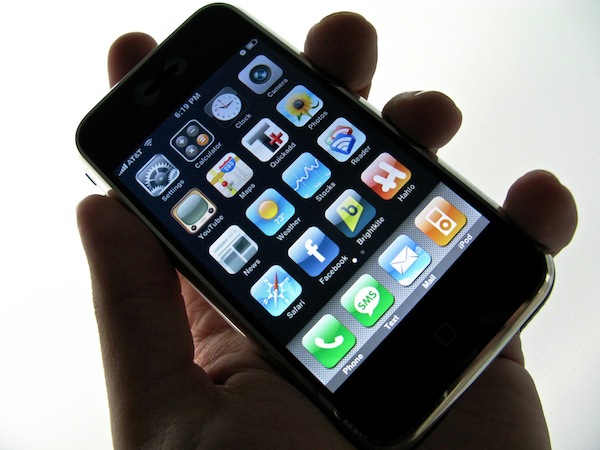
Five years ago, the original iPhone launched in the United States to much hype and a slightly different world. Apple was a much smaller company; Obama wasn’t President of the United States; R.E.M. were still together. The interface design behind the iPhone was, too, a little different than the bits we touch and swipe today. Both Ars Technica and Macworld have published solid retrospectives about the past five years.

The iPhone has created an economy that’s spurring the creation of jobs and new positions all over the globe. It reignited the mobile phone industry, and, in one fell swoop, turned competitors upside down as they struggled to keep their eyes open to the new wind blowing in their direction. The App Store didn’t launch until 2008, but its numbers are the very example of the software revolution spearheaded by the iPhone.

Unlike most inventions of modern history, though, the iPhone created a culture. And that’s because – unlike the ATM or the cordless telephone – the iPhone brought people together. By allowing developers to craft software for consumers willing to pay for it, the iPhone took down the wall between creation and consumption – the virtual barrier that normally separates an inventor from people using a product.

Both sides affected by this change – developers and users – ultimately became the starting point, the goal, and the focus.

The iPhone is about the people.

Like any other company looking for a profit, Apple has always needed to make money with the iPhone. But, after five years, I like to think that there can be a good cause behind profit and industry strategies – that there can be a purpose to “make great products”. And maybe I’m wrong, but I believe the iPhone has proved to be one of those major changes that have made people’s lives better. By combining breakthrough hardware design with the human touch, iPhone didn’t just change the way people communicate, work, and play: it saved lives, improved workplaces, told stories.

Sometimes there’s more to progress than just technology.

[image credit: Flickr]


June 2012 In Review: WWDC Edition

June was all about WWDC. The big draw cards of the event were undoubtedly iOS 6 and the new Retina MacBook Pro, but there was also the refreshed MacBook Air and MacBook Pro lines and Mountain Lion which will launch sometime in July. Beyond WWDC, Rovio had another big month, Google released two new iOS Apps (Chrome and Google Drive) and there were some rumors about the next version of iTunes from trusted publications.

On the apps front, it was a bit of a slower month with WWDC taking most of the attention, but there were still some highlights including the spectacular Reeder 3.0, vjay, and Launch Center Pro. Some noteworthy editorials from June was Cody’s look at the new Podcasts app, Federico’s musings on OS X in ‘Different and Familiar’, Gabe’s thoughts on why upgrade pricing isn’t coming to the App Store, and my look at In-App Purchases for games and the conflict between economics and good will to consumers.

You can view previous editions of “Month in Review” here.

WWDC ‘12

This year’s WWDC centred around three things: new and updated Mac hardware, Mountain Lion and iOS 6. So to kick off, Apple unveiled refreshed MacBook Air and MacBook Pro lines that saw nice spec bumps with the jump to Sandy Bridge processors and the inclusion of USB 3. But the real spotlight of this section of the keynote was the new 15” Retina MacBook Pro that features a gorgeous Retina display and new, thinner hardware profile - and as is standard with any new product, Apple swiftly debuted a new ad featuring it. There was also the silent Mac Pro update that wasn’t really an update and then the new iPad Smart Case, updated Airport Express and updated USB SuperDrive.

Jumping to the software announcements, Apple revealed that Mountain Lion would arrive sometime in July for just $19.99 ($10 less than Lion). It features a tighter integration of iCloud, in-built dictation, Facebook and Twitter integration and several iOS influences from Notification Center to Game Center, Notes and more now arriving in OS X.

Then there was iOS 6. The headline features here were the new Maps app, Facebook Integration, added Siri functionalities, Do Not Disturb, Passbook and more. If you want to learn more, go check out our complete overview of iOS 6, Federico went into great detail and covers everything you would want to know from the keynote and things you may have missed. iOS 6 arrives sometime this Fall.

Finally, we also have our tidbits and links article regarding this year’s WWDC keynote which features some interesting nuggets of information that didn’t quite deserve their own dedicated post. If you want to watch this year’s keynote, you can do so here. As part of every WWDC, there is the Apple Design Awards. This year the winners included, Limbo, Jetpack Joyride and Paper amongst other very worthy winners - you can check out the full list here.

Developers who missed out on tickets to this year’s WWDC didn’t have to wait long this year to watch the recorded videos of the developer sessions, with the full catalogue of videos going live just four days after the event concluded.

Conclusion to the “4G” iPad issue in Australia

When Apple this year unveiled the third generation iPad, it labelled one of the models “4G + WiFi” across the world - despite the 4G only being compatible with US and Canadian networks. In Australia, the ACCC intervened and pursued legal action against Apple for misleading Australian consumers of the iPad’s 4G capabilities (it didn’t work with the 4G network operating in Australia). This month saw the legal issue conclude with Apple agreeing it mislead consumers and paying an AU$2.25 million fine plus AU$300,000 in costs to the ACCC. I took some time to read the judgement and posted some interesting details in an article covering the court’s acceptance of the fine.

Rovio has yet another big month

It seems as though we can’t go a month without at least some big news from Rovio. This month it was because their latest game in the series, Angry Birds Space hit 100 million downloads in 76 days - and that was right at the start of June. Now, just in the last few days we’ve seen the trailer for Rovio’s next big game; Amazing Alex which is set to launch in July on iOS and Android.

Ping, Podcasts and the next iTunes

Soon after this year’s WWDC, AllThingsD’s John Paczkowski reported that Ping will be removed from the next version of iTunes. What followed in the last week of June was the launch of a new iOS app from Apple that was dedicated to playing and discovering podcasts. It had been somewhat expected after the developer preview of iOS 6 lacked a link to podcasts in the iTunes Store app. There was also the report from Bloomberg which suggests that the next major release of iTunes will see improved sharing functionality and deeper iCloud integration.

Google iOS Apps

June saw the launch of Google Chrome for iOS which features draggable tabs and sync for bookmarks and tabs as well as the launch of Google Drive for iOS. Google also pumped out a Gmail for iOS update that added notification support.

Everything Else

The Highlights

Everything Else

Inspiring UIs


Bloomberg: Apple Preparing To Overhaul iTunes With Deeper iCloud Support & Improved Sharing

In a report today, Bloomberg claims that Apple is set to overhaul iTunes by the end of the year by more closely integrating iCloud support and adding improved sharing features. Bloomberg is light on exactly what deeper iCloud support will entail, focusing instead on the fact that Apple wants to make it easier for users to manage and organise all their libraries of music, videos and applications. It’s also insinuated that Apple may yet carve more features out of iTunes and into separate apps, like the new Podcasts app that Apple released earlier this week.

The other half of this overhaul relates to how users find new content on the multitude of content stores that Apple runs. According to Bloomberg’s sources, this will entail making it easier to share songs and even allowing “users to listen to a song sent to them from a friend for free”. A big part of the improved sharing will no doubt be the baked in Twitter and Facebook sharing options that Apple showed off in their iOS 6 preview at WWDC. The new sharing features are also likely to replace Ping, which according to a report by John Paczkowski of AllThingsD earlier this month, is set to be removed from the next major version of iTunes.

Bloomberg refutes suggestions that Apple will offer a music subscription service like rdio or Spotify, but notes that music labels have been urging Apple to do so.

[via Bloomberg]


Apple Wins Preliminary Injunction Against Samsung’s Galaxy Tab 10.1 In The US

Apple has today won a preliminary injunction against Samsung’s Galaxy Tab 10.1 in the US, just a day before Google’s I/O conference begins. Issued by US Disctrict Judge Lucy Koh, it means that Samsung can no longer sell their tablet in the United States.

Although Samsung has a right to compete, it does not have a right to compete unfairly, by flooding the market with infringing products. While Samsung will certainly suffer lost sales from the issuance of an injunction, the hardship to Apple of having to directly compete with Samsung’s infringing products outweighs Samsung’s harm in light of the previous findings by the Court.

The judgment from Judge Koh also came before Friday’s hearing that was meant to cover the preliminary injunction. She said in her order that the strength of Apple’s case left her no choice but to grant the injunction, deciding she didn’t need to hear further arguments on the issue in Friday’s hearing. As noted by AllThingsD, she had previously denied a preliminary injunction request against the Galaxy Tab 10.1 by Apple back in December.

Once Apple fronts up with a $2.6 million bond (for Samsung if it is later ruled the injunction should not have been granted), the order will become effective. Speaking to an Apple representative, AllThingsD got a familiar statement on the matter:

“It’s no coincidence that Samsung’s latest products look a lot like the iPhone and iPad, from the shape of the hardware to the user interface and even the packaging

[via AllThingsD]


Brightcove Gives Developers A Tool To Create Dual Screen Apps With AirPlay

Brightcove today unveiled their ‘App Cloud Dual-Screen Solution for Apple TV’ which is effectively a development kit that allows developers and media publishers to easily create “dual-screen” apps that utilise AirPlay. It enables an Apple TV to effectively become a second screen in which different content can be showed, but synchronised to what is shown on the iPad or iPhone. As highlighted in the demonstration video below, this tool could be used to create interactive quiz games or perhaps an app that plays a video on a TV and display additional information on the iPad or iPhone.
Read more


Court Approves Fine Against Apple For Misleading Australian Consumers With “4G” Claim

Apple will pay the AU$2.25 million fine for misleading Australian consumers by marketing the new iPad as “WiFi + 4G” after the Federal Court this morning approved the settlement that Apple reached with the ACCC on June 7th. Although Apple and the ACCC came to the agreement (which also requires Apple to pay AU$300,000 in court costs for the ACCC), approval was required from the Federal Court. In coming to the decision, Justice Mordecai Bromberg requested various sales, refund and other information from Apple to assess whether the fine was appropriate.

Although the exact numbers remain confidential, in his judgement, Justice Bromberg notes that the “number of new iPad cellular model devices sold by Apple in the relevant period was very substantial”. As for the number of consumers who took up Apple’s offer for a refund, he notes that “only a very small percentage of them took up the opportunity of a refund” - although this is tempered by a preceding paragraph in his judgement:

“Cant tell with any certainty how many consumers were mislead, nor is it possible to discern the level of disappointment (as distinct from proven loss or damage) involved for those consumers who were misled… many purchasers will have felt decidedly short-changed…”

Apple Pty Ltd (Apple Australia) Dominated by Apple Inc (Parent Company)

In what is largely unsurprising for those who are observers of Apple, the Australian arm had little control over the marketing message of the iPad. All marketing materials were provided to Apple (Australia) by Apple Inc and then passed on by Apple (Australia) to the “some one hundred and fifty resellers”. Justice Bromberg says “the same campaign was used worldwide by the Apple group of companies”.

“The most concerning aspect of Apple’s contravention of s 33, is the deliberate nature of its conduct. Apple does not seek to deny the deliberateness of its conduct and there are no facts before me which seek to excuse or explain the conduct, other than that the conduct occurred at the behest of Apple’s parent company, the second respondent (“Apple Inc”).”

This control by Apple Inc is further exemplified by the fact that Apple (Australia) became aware of the cellular iPad’s incompatibility with Telstra’s LTE network as early as 8 March, (the first day of pre-orders). “The controlling hand of Apple Inc” can be seen in that Apple “did not desist in its use of “iPad with WiFi + 4G” until 12 May 2012, when the product designator was changed globally.”

“Those who design global campaigns, and those in Australia who adopt them, need to be attuned to the understandings and perceptions of Australian consumers and ensure that representations made by such campaigns will not serve to mislead.”

The Factors Assessing The Appropriateness of the Penalty

There were a number of factors that led Justice Bromberg to accept the AU$2.25 million fine, starting with the fact that Apple did later clarify the incompatibility with Telstra’s LTE network and the fact that the whole spectacle had quite significant media attention in Australia. These two factors are likely to have substantially diminished the potential for consumers to be mislead by the product designator of “WiFi + 4G”. However beyond that, there were also some other factors including:

  • Senior management was involved
  • Education programs and disciplinary measures taken by Apple
  • Apple has never before engaged in conduct similar to this (significant weight attatched)
  • Gave credit to Apple for their cooperation with the ACCC
  • Apple acknowledged its liability
  • Media attention
  • Absence of loss or damage

In conclusion, Justice Bromberg said that the “proposed penalty is neither manifestly inadequate nor manifestly excessive”.

“I harbour a concern that the size and financial strength of Apple diminishes the meaningfulness of the penalty proposed. However, I do not perceive any further transgressions by Apple to be likely. The fact of the litigation and the media attention which it has drawn, will no doubt be a somber reminder to Apple, and others who rely on their brand image that, as well as a penalty, there will likely be an intangible cost involved in a contravention of the ACL.”

A Refresher on What Exactly Apple Did Wrong

Below are some key quotes I’ve pulled from the judgment that help explain why the ACCC went after Apple and why Apple ultimately acknowledged and accepted liability:

“No Australian carrier uses the term “4G” to describe any network which operates on HSPA, HSPA+ or DC-HSDPA networks. Those networks have always been referred to by Australian carriers as “3G” networks. Apple has also referred to those networks as “3G”.


“During the relevant period, Apple used the product designator “iPad with WiFi + 4G”, in relation to a device which could not directly connect with the only commercially available LTE network understood by Australian consumers to be a “4G” network.”


“Apple admits that by its use of the product designator “iPad with WiFi + 4G” during the relevant period, in trade or commerce, it impliedly represented that the new iPad cellular model could connect directly to the Telstra LTE mobile data network in Australia. Apple admits that by doing so, its conduct was liable to mislead consumers in relation to a characteristic of the new iPad cellular model, namely, its ability to connect to the Telstra LTE mobile data network. It is that representation about that characteristic, which resulted in the admitted contraventions of s 33 of the ACL.”


“The most concerning aspect of Apple’s contravention of s 33, is the deliberate nature of its conduct. Apple does not seek to deny the deliberateness of its conduct and there are no facts before me which seek to excuse or explain the conduct, other than that the conduct occurred at the behest of Apple’s parent company, the second respondent (“Apple Inc”).”

A Timeline of Events

  • On March 27th the ACCC announced it would initiate legal action against Apple for making misleading 4G claims in its marketing of the new iPad in Australia. The issue arose because although the new iPad supports US and Canadian 4G networks, the hardware in the new iPad does not support any of the Australian 4G networks.
  • Across Europe a few countries began to keep an eye on the issue and consider investigations into the issue after fielding complaints from consumers.
  • On March 30th, Apple clarified its iPad marketing in Australia by explicitly noting that “it is not compatible with current Australian 4G LTE networks and WiMAX networks.
  • On April 5th, Apple gave Australian customers the ability to get a full refund of the new iPad if they purchased it under the assumption of it supporting Australian 4G networks up until the 25th of April. They also informed Australian resellers to update marketing to explicitly mention the incompatibility with Australian 4G networks.
  • On May 12th Apple decided to rename the WiFi + 4G model to WiFi + Cellular - across the whole world (including the US and Canada), eliminating the confusion over whether the iPad supported 4G in a particular country like Australia, where it did not.

[via itnews]

You can read the entire judgment here, uploaded by itnews.