“Throw Enough Mud at the Wall and Some of it Will Stick”

Brian X. Chen reporting on the state of wearable tech:

For one, most smartwatches and glasses look far less fashionable than the accessories they mimic. For another, they often have mediocre battery life, making them unsuitable for wearing all day. And in general, they can be costly, running into hundreds of dollars, even though their features are often limited or still a little buggy.

It’s telling when a CTO basically says, “We don’t really have a vision.”

“We’re still in the experimental stages of the wearable market,” said Henry Samueli, chief technical officer of Broadcom, which makes wireless chips for mobile devices. “But at some point one of them will stick and consumers are going to love them, and everyone else is going to copy it.”
Permalink

The iPad is as Simple as a Tablet Gets

John Brownlee of Co.Design makes the case for why Apple has reached the pinnacle of tablet design with the iPad.

But what now? Where do you go when you have created a device that is as powerful as most people’s laptops, weighs less than a paperback, gets all-day battery life, features ultra high-resolution displays, costs less than $500, and is, in fact, only distinguishable from the next iPad by price and size? There are incremental refinements to look forward to, sure–some clock cycles here, some dropped ounces there–but if Apple’s goal was to create a window, they have finally gotten to the point where they have stripped nearly everything away from that window’s design besides the glass.

This why it’s very difficult to imagine that an iPad five or 10 years from now will look, feel, or even function very differently from the ones we have right now. It’s also why all the tablets of Apple’s competitors at CES feel even more irrelevant than ever. Once you perfect the design of a window down to its essence, the only thing that matters about it anymore is the vista it overlooks.

Read more


Capturing The Now with Kennedy

Kennedy

Kennedy

Developed by Brendan Dawes, Kennedy is an interesting new take on mobile journaling focused on “capturing the now” with a $1.99 iPhone app.

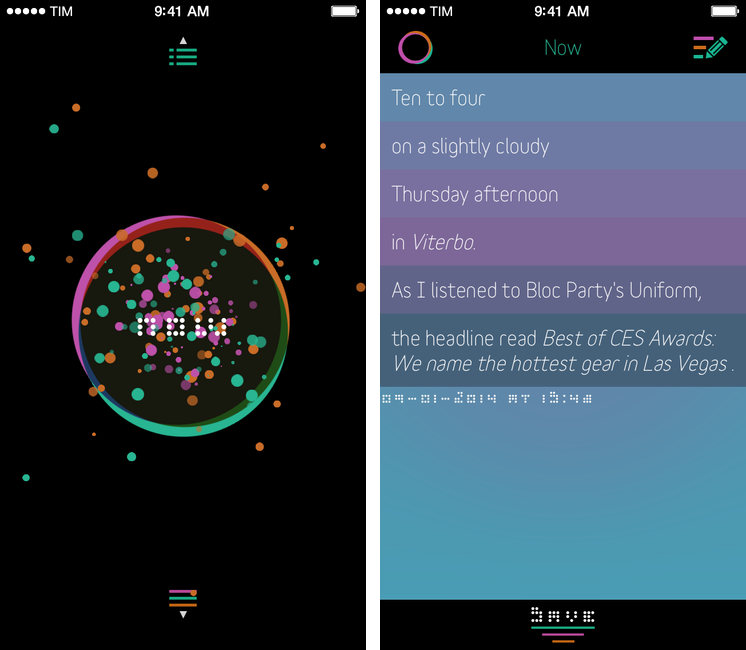
Kennedy is a data-oriented journaling app that can save your current location, date and time, weather conditions, what music you’re listening to, and even headlines from the news in individual collections of personal data points called Captures. When you open the app, you’re presented with a beautifully animated “Now” button that, once tapped, will start gathering data from built-in iOS services for location, time, and music; after a few seconds, the “Now” will become a list showing the data points that were captured by the app, such as “Ten past three, on a slighly cloudy Thursday afternoon in Viterbo”. When saved, Captures can be accessed by tapping a list button in the lower portion of the main screen; you can search for specific text in your Captures, as well as edit them at any time.

Read more


The Life Of A Porting House

They take a popular PC or console game - BioShock Infinite is the latest one - and develop and publish a Mac version, historically released months or years later (though that’s not often the case now), earning ridicule and celebration from a frustrated audience long condemned to second-class treatment.

Except these days they’re actually doing a pretty good job.

Eurogamer has a profile on Aspyr Media, the software house that’s well known for porting Windows games to the Mac (and recently iOS). I had no idea they’ve been around for more than 17 years. It would have been interesting to know more about Feral, too.

Permalink

Why Pull-To-Refresh Isn’t Such A Bad Guy

Nick Arnott:

Carr would like to see more developers experiment with new interactions for swipe down gestures, and I cautiously agree. Pull-to-refresh is one of those ideas that seems so obvious in hindsight, but took a talented engineer to think of it. The brilliance of pull-to-refresh is just how well it fit into the existing design. When users try scrolling past the top of a table cell view, they’re trying to view newer content. Pull-to-refresh intelligently extends that scrolling to have an app refresh the content to load any new data. A perfectly logical and intuitive extension of the existing functionality.

This, in response to an article by Austin Carr from December. I especially agree with Nick when he says that fast, reliable data connections that never fail aren’t a reality yet, though they have gotten better over the years.

Pull-to-refresh may seem simple and obvious today, but it was a great design challenge for its inventor back in 2010. Nick makes a lot of valid points about its existence and evolution.

Permalink


Sifttter: An IFTTT To Day One Logger

Sifttter takes the concept of Slogger and applies it to IFTTT by using Brett’s original TaskPaper script. Though it is essentially limited to current IFTTT channels, there is lots of flexibility through IFTTT itself, as well as the opportunity for individual input and customization. I’ve been using this for several months, and am happy to share it here for those who might be interested.

While I decided to avoid tools like Slogger for my Day One journal, I think that the solution Craig put together is fun and nerdy. Not for me, but a good weekend project.

Permalink

Shoots and Leaves Uploads Photos and Sends Links to Other Apps

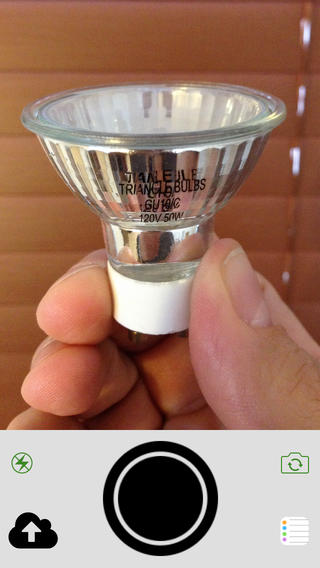
Shoots and Leaves, a snap and forget it photo app akin to something like QuickShot, uploads captured photos to services like Imgur, Dropbox, or CloudApp, and then sends the public links to an app like Mail, Reminders, or Safari. Given our focus on productivity apps, an app like this is useful for generating Markdown links that can be pasted into upcoming articles. Inspired by Shoots and Leaves’ Reminders integration, I’d love if Evernote was added as a service, with the ability to send a photo’s link to an Evernote reminder. It’s laser focused, does one thing well, and is $2.99 on the App Store.

Permalink

Mophie Announces the Space Pack: An iPhone Battery Case With Local Storage

At this year’s Consumer Electronics Show, Mophie has announced the Space Pack, a backup battery case that comes with 16 or 32 GBs of local storage. Like the Juice Pack Air, the Space Pack has a 1700mAh non-removable battery that Mophie claims will recharge the iPhone to a 100% charge. Through a companion app, the Space Pack can store and retrieve videos, photos, documents, and more from its own internal storage. The 16 GB Space Pack will cost $149.95, while the 32 GB model will cost $179.95, going on sale March 14th.

Update 1/8/14: pre-orders are open.

[via Engadget, Mophie]

Permalink