BitCam

The Iconfactory has launched BitCam, a new iPhone app inspired by old Macintosh apps. BitCam lets you take pictures and apply retro filters such as dithering. It’s fun and it makes people like Stephen Hackett happy.

Even if I can’t relate to it because I didn’t live in the Macintosh era, my favorite part of BitCam is the care The Iconfactory put into making everything feel retro and old. The icons in the app are intentionally low-res and menus don’t appear with a standard iOS animation. The app has credits that scroll and there’s throttling to simulate how old computers would react to more advanced settings, such as higher-res colors.

Even better, the entire website is styled to feel old: it’s an .html page, it has an animated “under construction” GIF, a “webmaster” email address, and multiple references to “application store” instead of App Store. I can’t think of a better way to celebrate The Iconfactory’s 20th anniversary.

Permalink

Workflow Adds IFTTT Integration

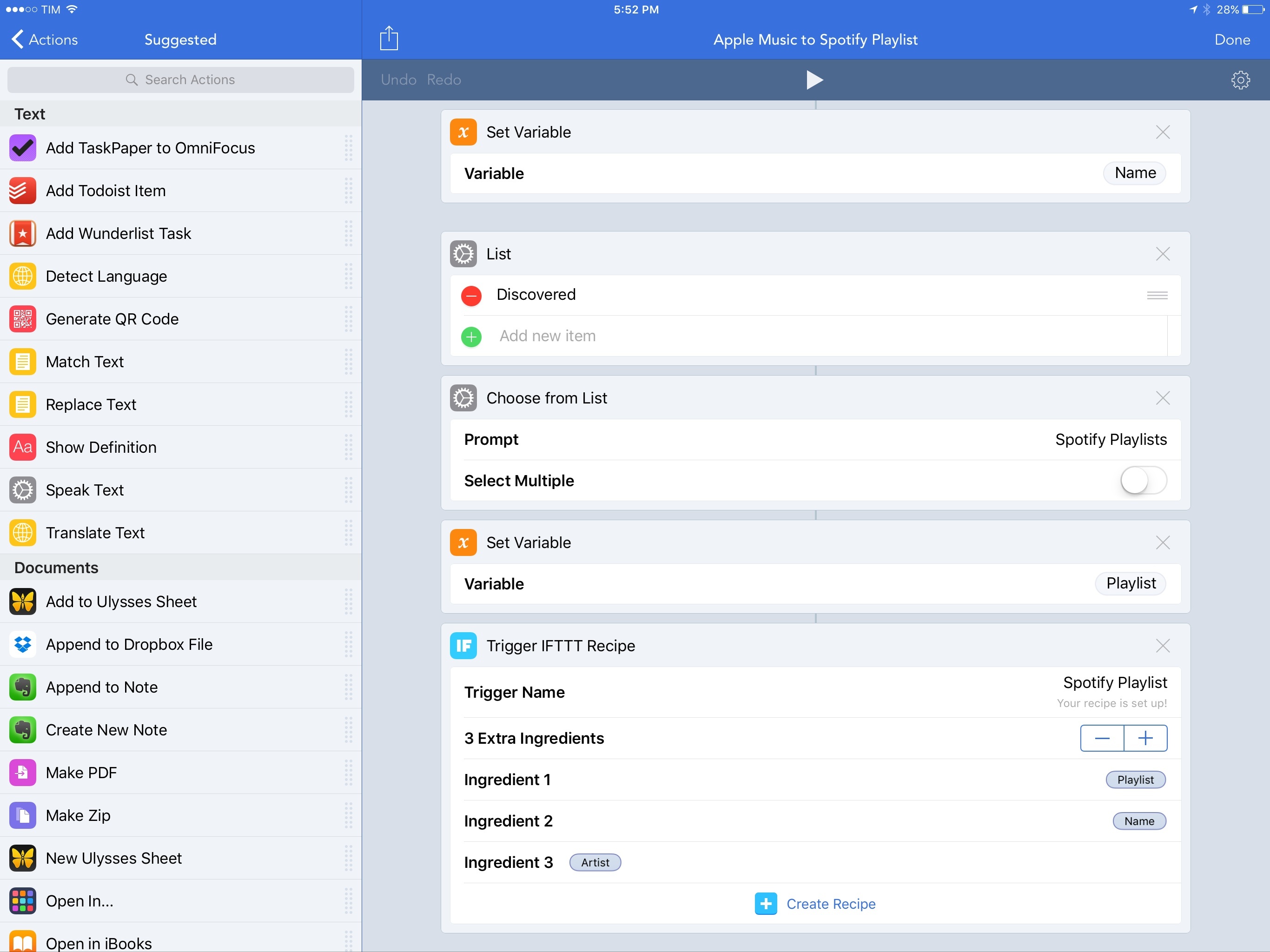
One of the unique traits of Workflow is its integration with native iPhone and iPad apps. By abstracting URL schemes from the process of building workflows that communicate with apps, the Workflow team has been able to offer actions to automate apps such as OmniFocus, Drafts, and Ulysses with support for text, images, and even documents.

Increasingly, however, iOS users who rely on their devices as their primary computers are leveraging web services for their daily tasks. And in the past few years, a different kind of automation – web automation – has complemented (if not replaced altogether) native automation to save time on the iPhone and iPad through web APIs.

The Workflow team knows this, and their latest integration is aimed at extending Workflow to any web service – even if it doesn’t offer an iOS app or a native web action in Workflow. Today, Workflow is launching a new IFTTT integration to trigger web recipes.

By fusing workflow actions with the power of IFTTT’s web API glue, IFTTT support in Workflow promises to take iOS automation further than it’s ever been, drastically altering the scope of Workflow’s capabilities.

Read more


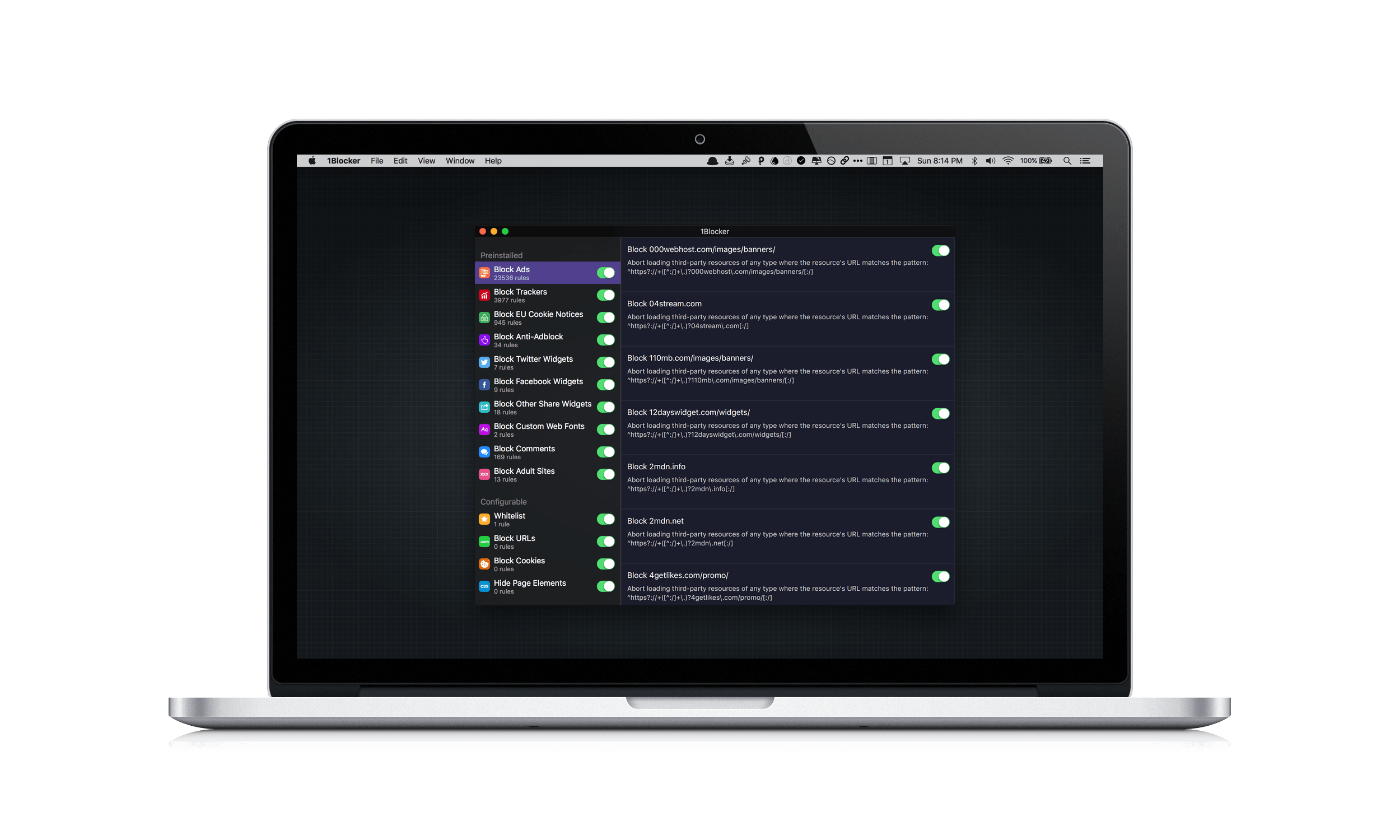
1Blocker Brings Content Blocking with iCloud Sync to the Mac

If you are familiar with 1Blocker for iOS, then you will have no trouble figuring out 1Blocker for Mac because the two are nearly identical. What Federico explained about 1Blocker for iOS in his iOS 9 review applies equally well to the Mac version:

1Blocker [is] an excellent all-in-one Content Blocker that can block ads, trackers, social widgets, Disqus comments, web fonts, adult sites, and that lets you create your own rules for URLs, cookies, and page elements to hide or block. 1Blocker is Universal and it comes with over 7000 built-in rules, which you can individually turn on and off.

Read more


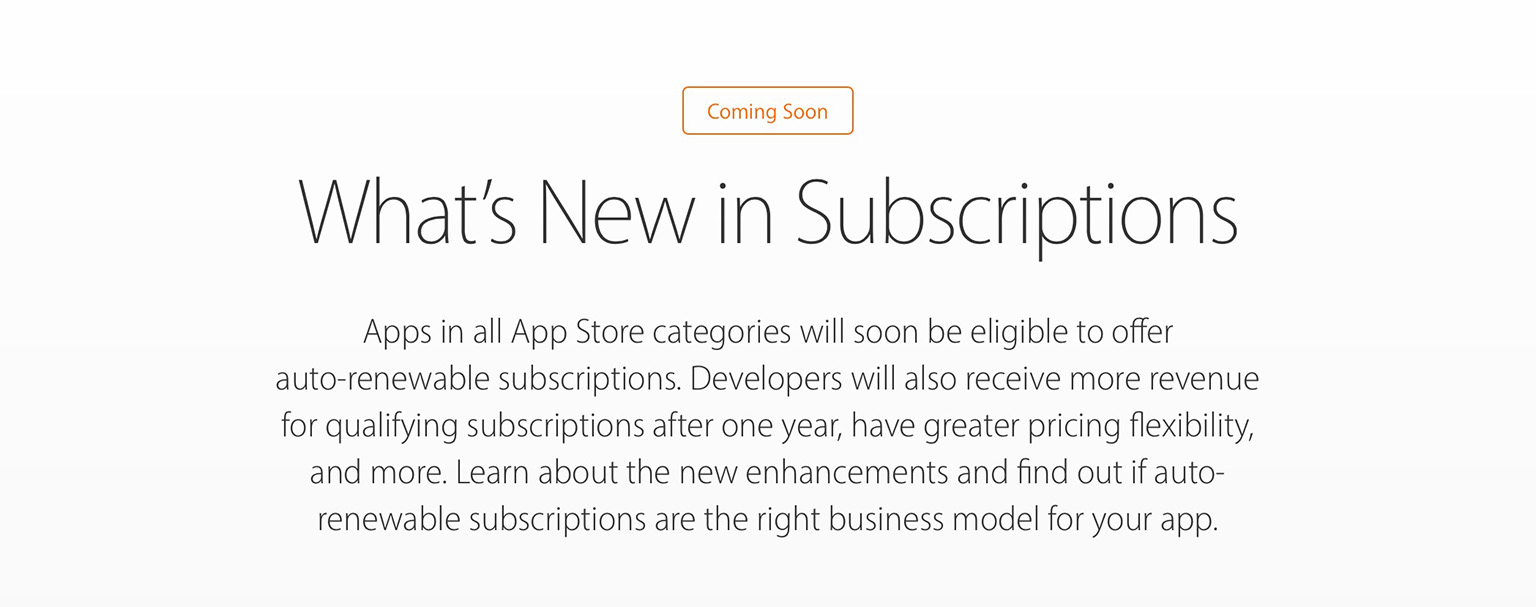
Understanding the New Territory Pricing and Expanded Subscription Price Tiers

Apple yesterday announced a slew of changes to the App Store including an overhaul of subscription pricing policies, paid search ads, faster App Store review times, and more. Amongst the changes to subscription prices was one particular change that I think is really significant, but hasn’t yet got much attention: territory pricing and more pricing tiers.

Apple is saying that starting this Fall, developers will be able to price their in-app subscriptions at different levels depending on the territory of the customer. Currently, apart from a minor exception, developers must set a price by selecting a single “tier” which results in a price that is effectively the same across the world. Here’s how Apple describes the change:

Starting this fall, apps with auto-renewable subscriptions will be able to offer territory-specific prices and will have access to 200 price points across all currencies. You will be able to set the prices you think are suitable for subscribers in different markets, and you will have the flexibility to price your subscriptions at parity if they’re available elsewhere. A new iTunes Connect pricing tool will help you manage pricing based on current exchange rates. If there is a tax increase or currency adjustment in a particular region, the price of subscriptions will generally not be affected unless you decide to pass the adjustment on to your users.

Read more


“A Lot of Maintenance”

Lauren Goode, writing for The Verge, on Phil Schiller’s subscription comments:

Schiller imagines scenarios where many kinds of apps that were previously single-time purchases could move to the model. Games that have an ongoing subscription-like program, ones that have a massive online playing world that require upgrades of game worlds, might make sense. He suggests many enterprise apps could move to subscription, and that professional apps that require “a lot of maintenance of new features and versions” would be a good fit.

Taking Schiller’s comment at face value, it does sound like developers of productivity apps will be able to experiment with subscriptions. “A lot of maintenance” applies to most of the apps I have on my devices, which use the classic paid-up-front model.

Also from the article, this semi-hidden note on a new subscription management UI coming to the App Store:

The App Store will also have a revamped interface to make it “even easier for users to manage subscriptions,” he adds.

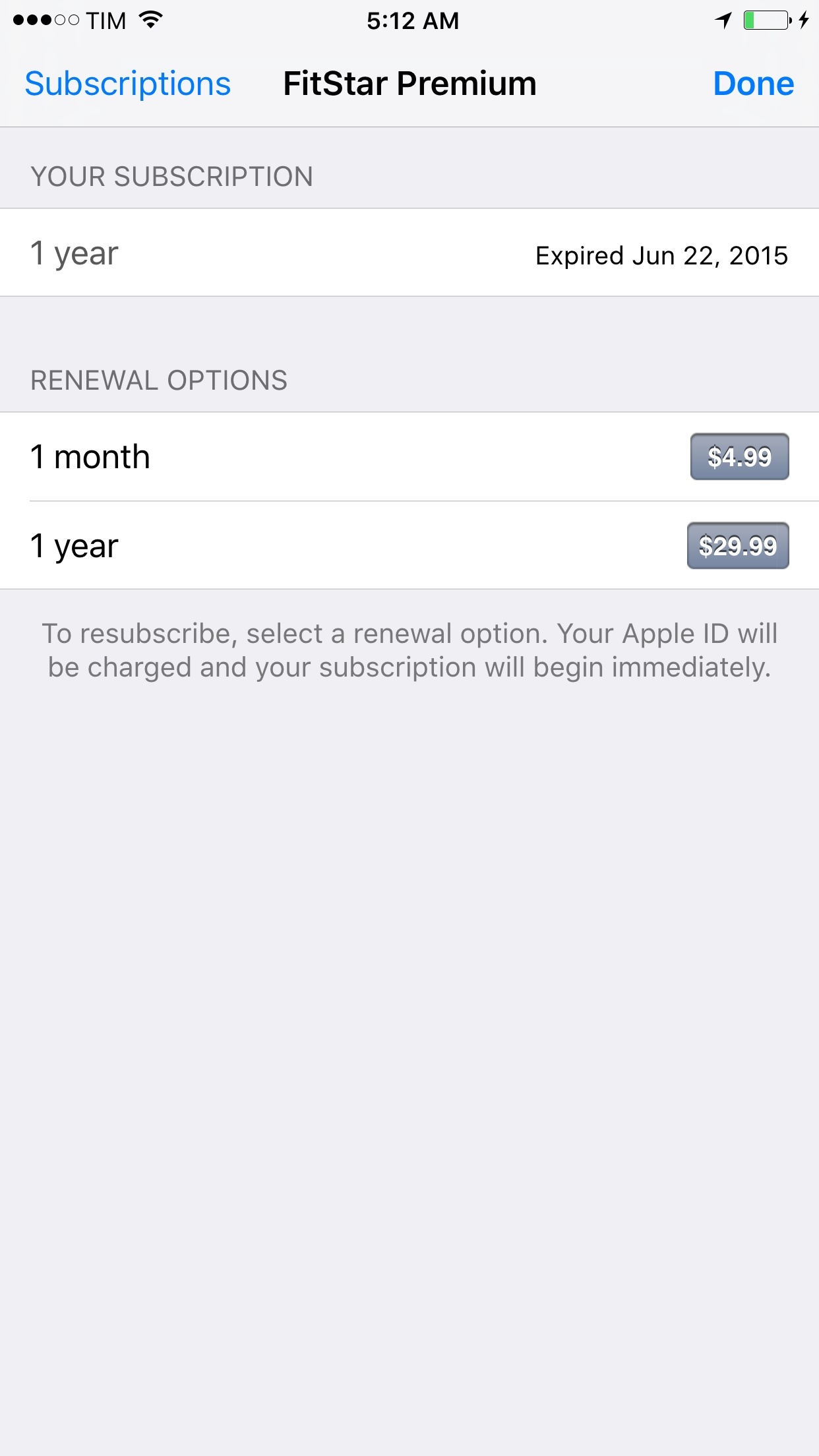
I’ve been saving a “finally” for these buttons that are still around in iOS 9.

Permalink

Sketch Changes Direction on Pricing

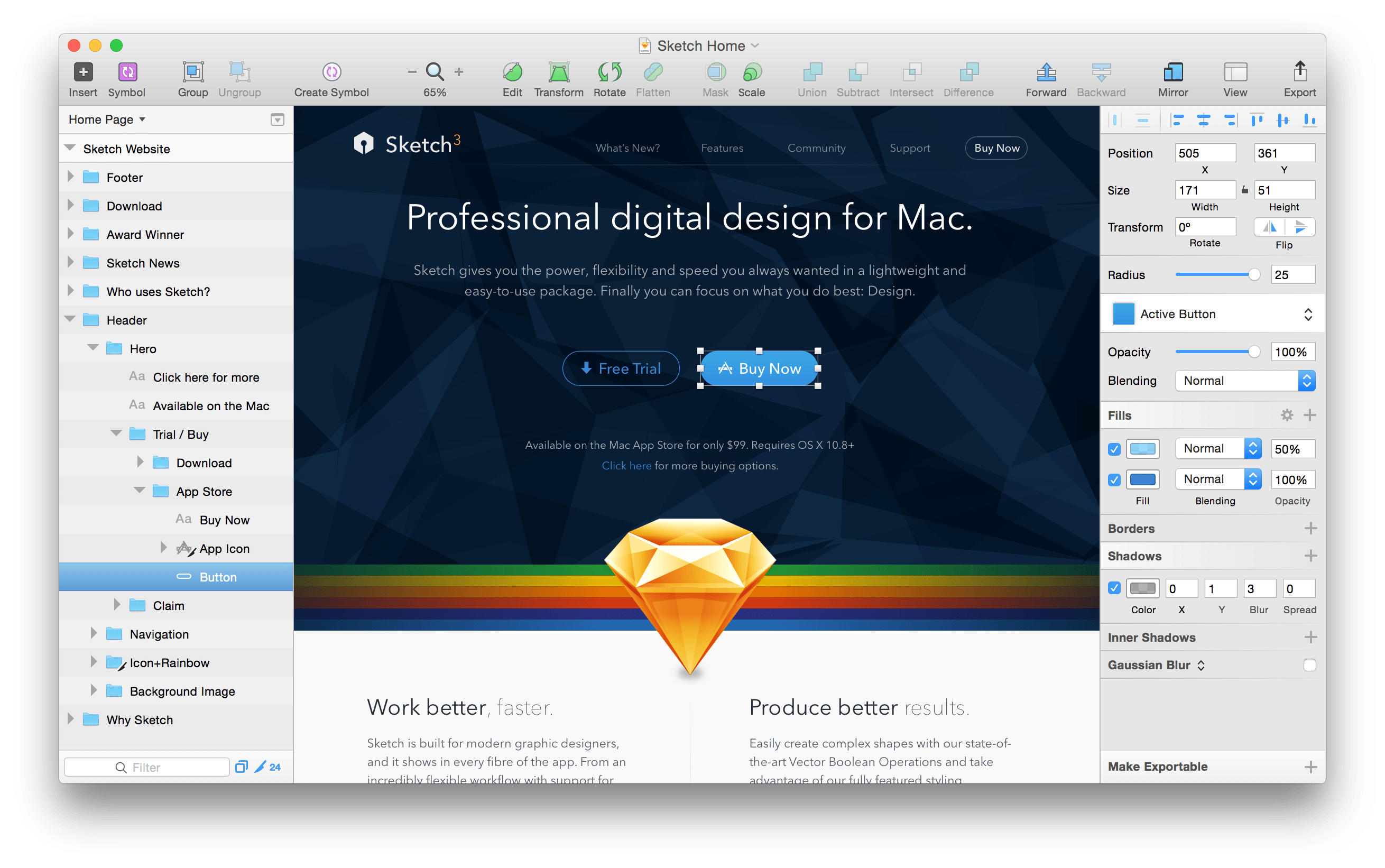
Today, Bohemian Coding, the maker of Sketch, a popular vector design program, announced a new licensing program that has some interesting parallels to the app subscription pricing announced several hours later by Apple. Instead of a paid-up-front model with paid upgrades limited to major releases, Sketch customers will pay an annual license fee to receive upgrades for a year, regardless of how big the updates are during that period.

Sketch’s business model has changed a lot since late last year when Bohemian Coding pulled it from the Mac App Store. Among the reasons cited at the time were:

App Review continues to take at least a week, there are technical limitations imposed by the Mac App Store guidelines (sandboxing and so on) that limit some of the features we want to bring to Sketch, and upgrade pricing remains unavailable.

Previously, Sketch was sold for an up-front fee of $99. Like many other developers, when Bohemian Coding launched a major update to Sketch, it was released as a paid upgrade for existing customers, but between major releases, updates and bug fixes were free.

Under the new licensing scheme, paying $99 annually will entitle customers to one year of all upgrades at no additional charge. Bohemian Coding carefully avoids using the term ‘subscription’ to describe its licensing, presumably to avoid confusion with products like Adobe’s Creative Suite, which can no longer be used if a customer cancels their subscription. In contrast, Sketch will continue to work if your do not pay the annual fee, but updates will not be available.

Looking back at the reasons that Sketch left the Mac App Store, I can’t help but wonder whether Sketch may come back to the store someday, which is exactly what Federico and Stephen Hackett speculated about during episode 94 of Connected. After all, review times are substantially improved and the new subscription model announced seems to be designed to achieve many of the same things that Sketch’s new pricing model is intended to accomplish.

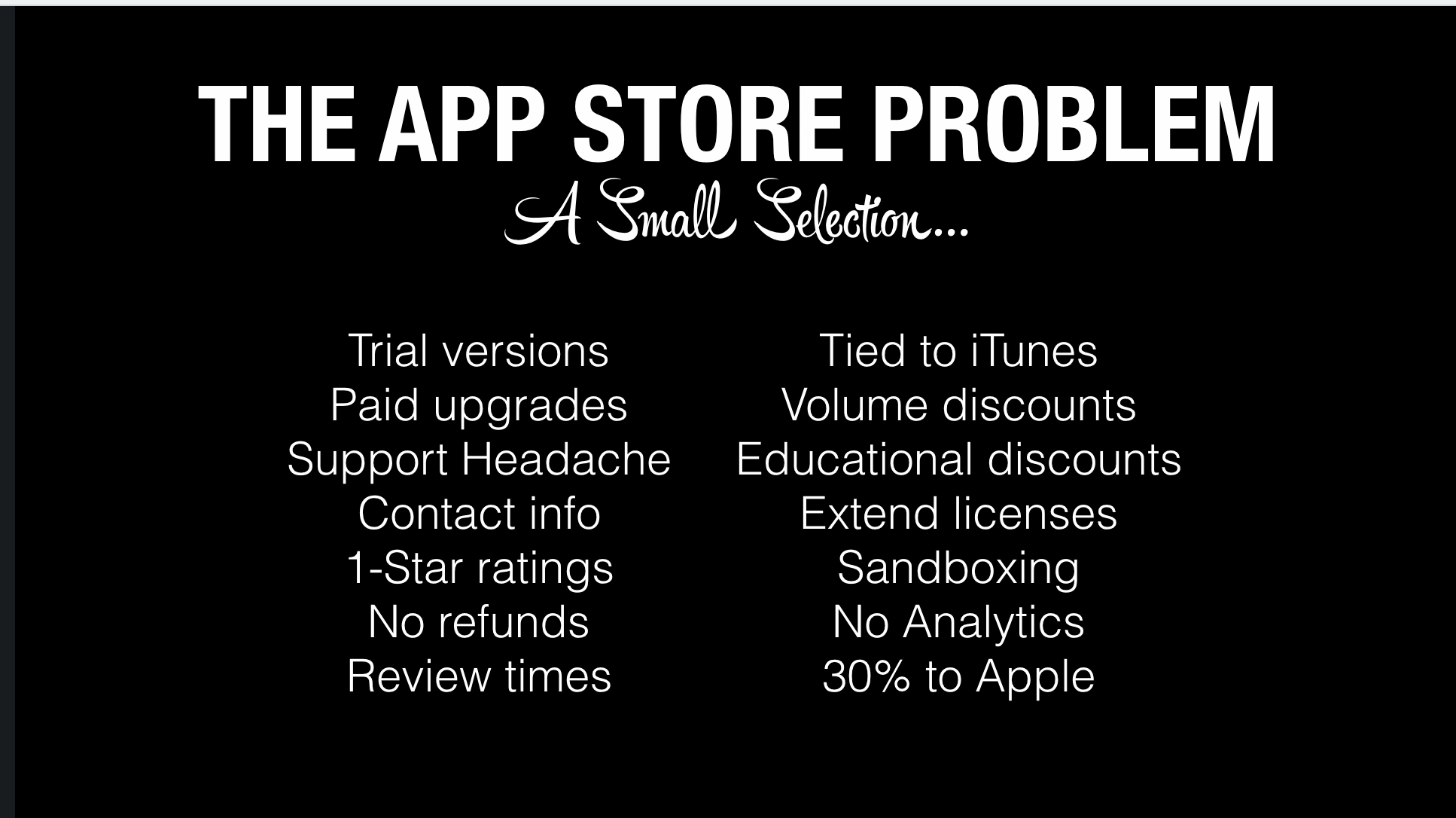
Slide listing App Store issues discussed by Pieter Omvlee at Release Notes.

Slide listing App Store issues discussed by Pieter Omvlee at Release Notes.

But having attended Pieter Omvlee’s talk1 at the Release Notes conference last Fall, I’m not sure the changes made so far are sufficient to bring Bohemian Coding back to the Mac App Store. Sandboxing and the lack of a direct connection with customers were among the many factors that resulted in Sketch being pulled from the Mac App Store. There are also major questions that remain unanswered by Apple, like which kinds apps will be able to implement subscriptions. Regardless of how Apple’s announcements today impact Sketch, it will be fascinating to watch Bohemian Coding and other app developers use subscriptions and other pricing tactics to adapt to the economics of the modern app economy.


  1. I highly recommend all the presentations from Release Notes


An App Store Subscription Success

Adrian Hon is the CEO of Six to Start, makers of the popular Zombies, Run! app for iPhone. They switched to a subscription model last year, and he has some words of advice for developers considering the option today:

So you need to do everything you can to reassure your users that you’re in this for the long haul. That means regular, consistent updates and bug fixes. You don’t need to release a new build every two weeks like Facebook, but you need to demonstrate commitment to _maintaining _a stable and reliable app — one that adopts useful new features (e.g. Healthkit, Apple Watch) in a reasonably timely manner.

This is the opposite of a big bang release once a year, laden with new features and new bugs. Frankly, it’s a much more sustainable, relaxed, and consdered mode of development. It means you can justify the time to achieve 99.9% crash-free sessions, as we’ve done.

With more subscription-based apps, faster review times are a necessity. Users expect continuous improvements to a service they’re subscribed to.

Permalink