This Week's Sponsor:

BetterTouchTool

Now with a Powerful Launcher for Your Mac


On Google’s iOS Apps

MacStories readers and listeners of Connected are no strangers to my criticism towards Google’s Docs suite on iOS. For months, the company has been unable to properly support the iPad Pro and new iOS 9 features, leaving iOS users with an inferior experience riddled with a host of other inconsistencies and bugs.

Earlier today, Google brought native iPad Pro resolution support to their Docs apps – meaning, you’ll no longer have to use stretched out apps with an iPad Air-size keyboard on your iPad Pro. While this is good news (no one likes to use iPad apps in compatibility mode with a stretched UI), the updates lack a fundamental feature of the post-iOS 9 world: multitasking with Slide Over and Split View. Unlike the recently updated Google Photos, Docs, Sheets, and Slides can’t be used alongside other apps on the iPad, which hinders the ability to work more efficiently with Google apps on iOS 9.

Today’s Google app updates highlight a major problem I’ve had with Google’s iOS software in the past year. One of the long-held beliefs in the tech industry is that Google excels at web services, while Apple makes superior native apps. In recent years, though, many have also noted that Google was getting better at making apps faster than Apple was improving at web services. Some have said that Google had built a great ecosystem of iOS apps, even.

Today, Google’s iOS apps are no longer great. They’re mostly okay, and they’re often disappointing in many ways – one of which1 is the unwillingness to recognize that adopting new iOS technologies is an essential step for building solid iOS experiences. The services are still amazing; the apps are too often a downright disappointment.2

No matter the technical reason behind the scenes, a company the size of Google shouldn’t need four months (nine if you count WWDC 2015) to ship a partial compatibility update for iOS 9 and the iPad Pro. Google have only themselves to blame for their lack of attention and failure to deliver modern iOS apps.


  1. I could mention the slowness to adopt iOS 9 across their other apps, or the lack of Picture in Picture and background audio in YouTube, or the many problems with rich text in Google Docs, or the lackluster iOS extension support across all their apps. 
  2. And for what it’s worth, Apple’s services still leave a lot to be desired, too – especially Siri. 

iTunes Connect Adds Weekly Analytics Reports

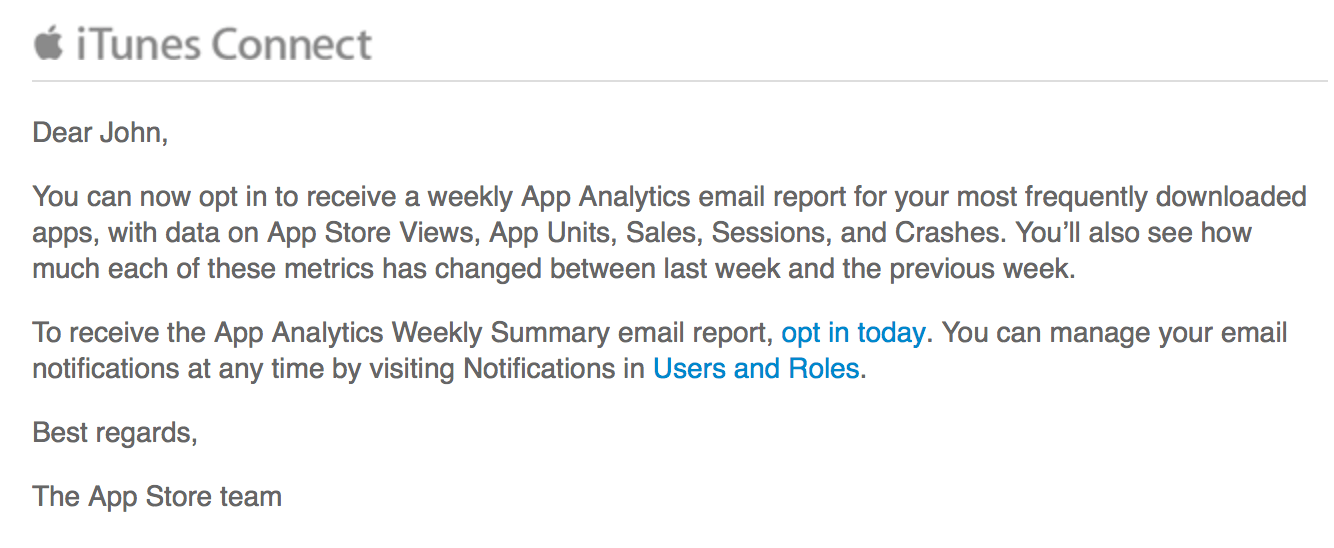
Last night emails were sent to develpers by the App Store team announcing a new iTunes Connect feature – weekly App Analytics email reports. This is a welcome addition to iTunes Connect. I check App Analytics occassionally, especially after a significant app release or marketing push, but getting analytics data on a regular schedule is a nice way to keep on top of analytics more regularly.

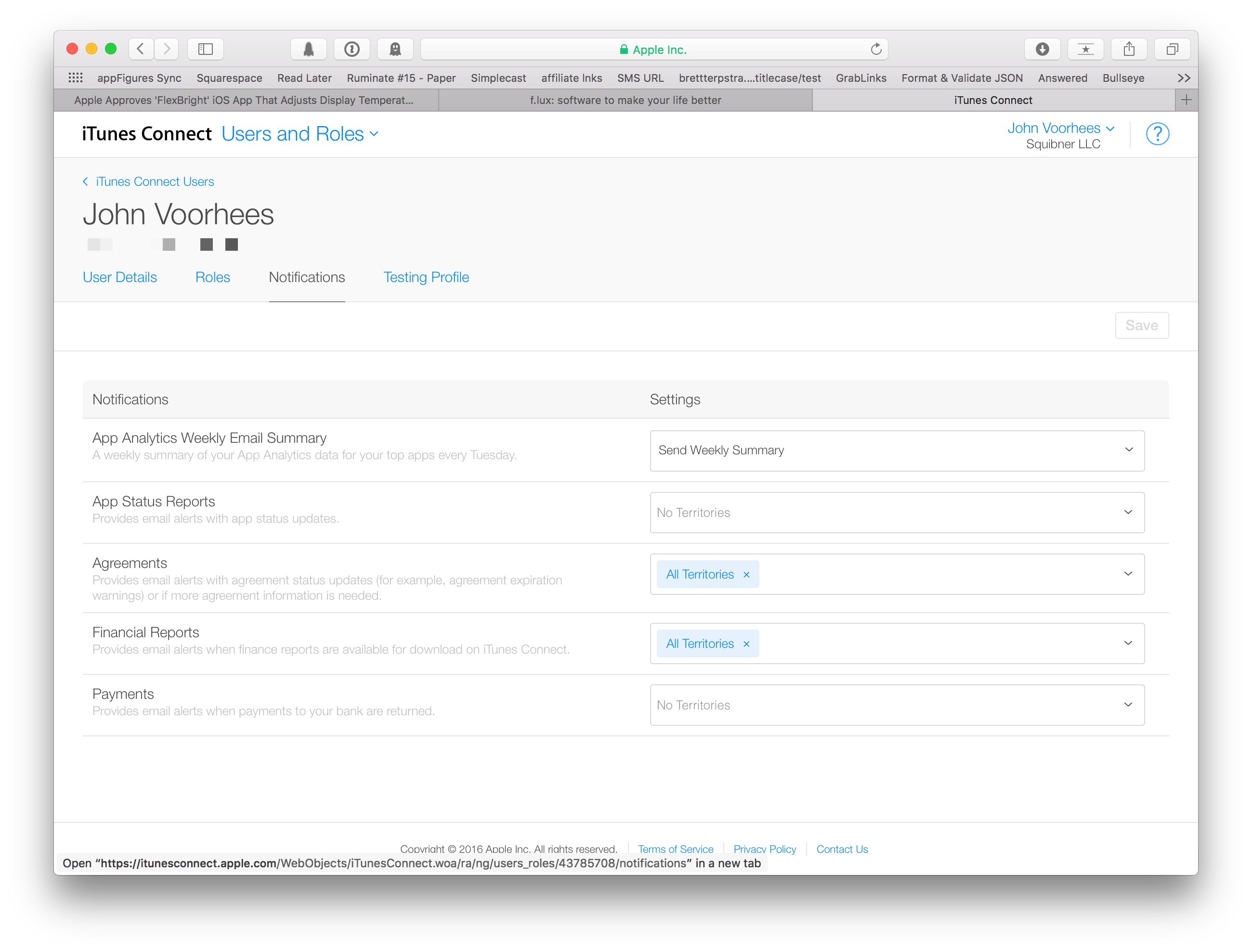
You can opt into emailed reports with the link provided in the email you receive from the App Store team, or go to iTunes Connect and opt in under the Users and Rolls section.

You can opt into App Analytics email reports under Users and Roles.

You can opt into App Analytics email reports under Users and Roles.


Canvas, Episode 5: Typing

On last week’s episode of Canvas, Fraser and I talked about typing on the iOS software keyboard. We covered some tips and tricks to become a better keyboard user on iOS, such as the ability to swipe on keys, tap & hold shortcuts, text replacements, custom keyboards, and more. It’s a good one. You can listen here.

Permalink


Workflow 1.4.4 Brings More Image Automation, HTML to Markdown Conversion

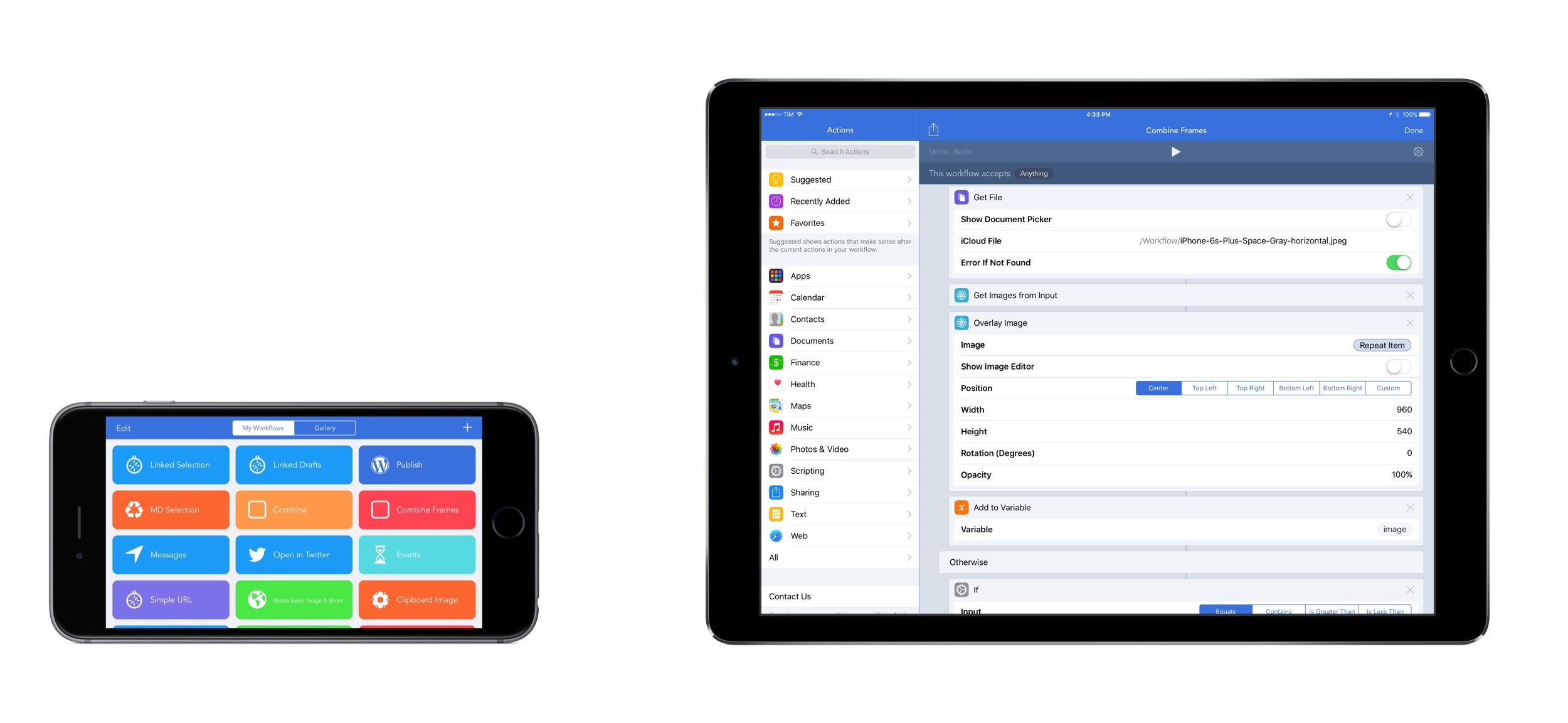
As much as I like to use Workflow for every task I don’t want to perform manually, until last week there were still some things I couldn’t automate with the app. Those tasks were utterly specific: converting HTML and rich text back to Markdown (with my beloved html2text in Python), or assembling iOS screenshots with pretty device frames (with LongScreen). With the release of Workflow 1.4.4 today, I can finally integrate these two key tasks into Workflow’s automation, and I’m in love with the results.

Read more


The Spaceship Rises

Apple’s new campus has received significant attention during its development phase, from design renderings to blueprints to aerial footage captured by drones. Apple has shared with Mashable exclusive details and photos of its new corporate offices, including the theater that will serve as the venue for future Apple product launches.

Some great new photos of Apple’s Campus 2 project at Mashable today. It’s hard to look at that carbon-fiber roof without thinking of a UFO, though.

Permalink

Offline Pages Pro Review

It’s a sight we never want to see: the disappearance of the WiFi indicator from the status bar. From here, our devices are stuck racking up our data usage or are completely incapable of accessing the Internet. Even when it’s expected, losing signal is frustrating.

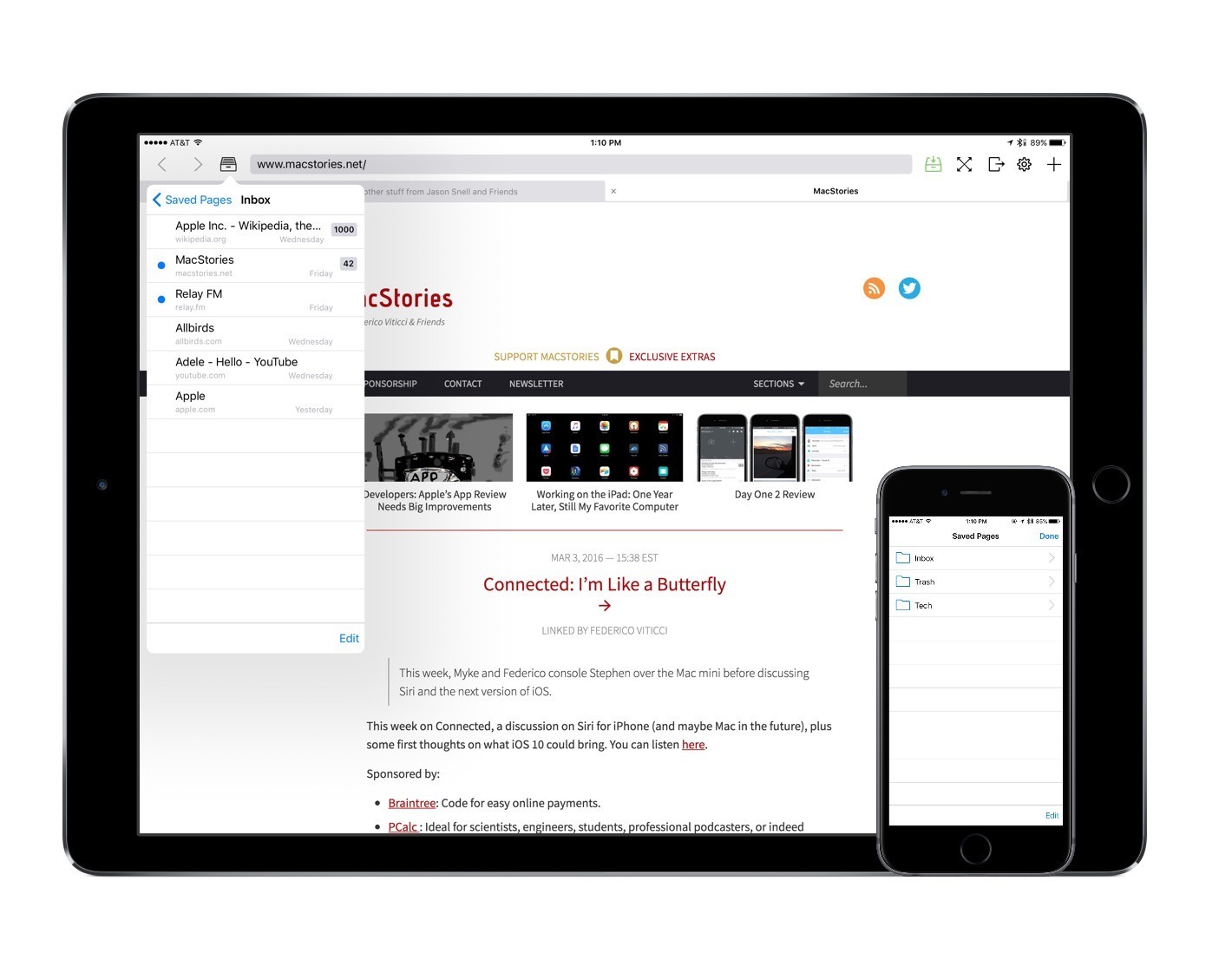
Offline Pages Pro is a browser and website-saver that strives to be your saving grace when you’re without WiFi. With a strong set of features and speed on its side, the app has a good chance to make its way into your workflow.

Read more


Craig Federighi on Encryption and the FBI’s Demands

Craig Federighi, Senior Vice President of Software Engineering at Apple, writing for The Washington Post:

That’s why it’s so disappointing that the FBI, Justice Department and others in law enforcement are pressing us to turn back the clock to a less-secure time and less-secure technologies. They have suggested that the safeguards of iOS 7 were good enough and that we should simply go back to the security standards of 2013. But the security of iOS 7, while cutting-edge at the time, has since been breached by hackers. What’s worse, some of their methods have been productized and are now available for sale to attackers who are less skilled but often more malicious.

A cogent argument from Federighi. It follows on from Tim Cook’s open letter and interview with ABC News, as well as Bruce Sewell’s testimony to a congressional committee.

Permalink

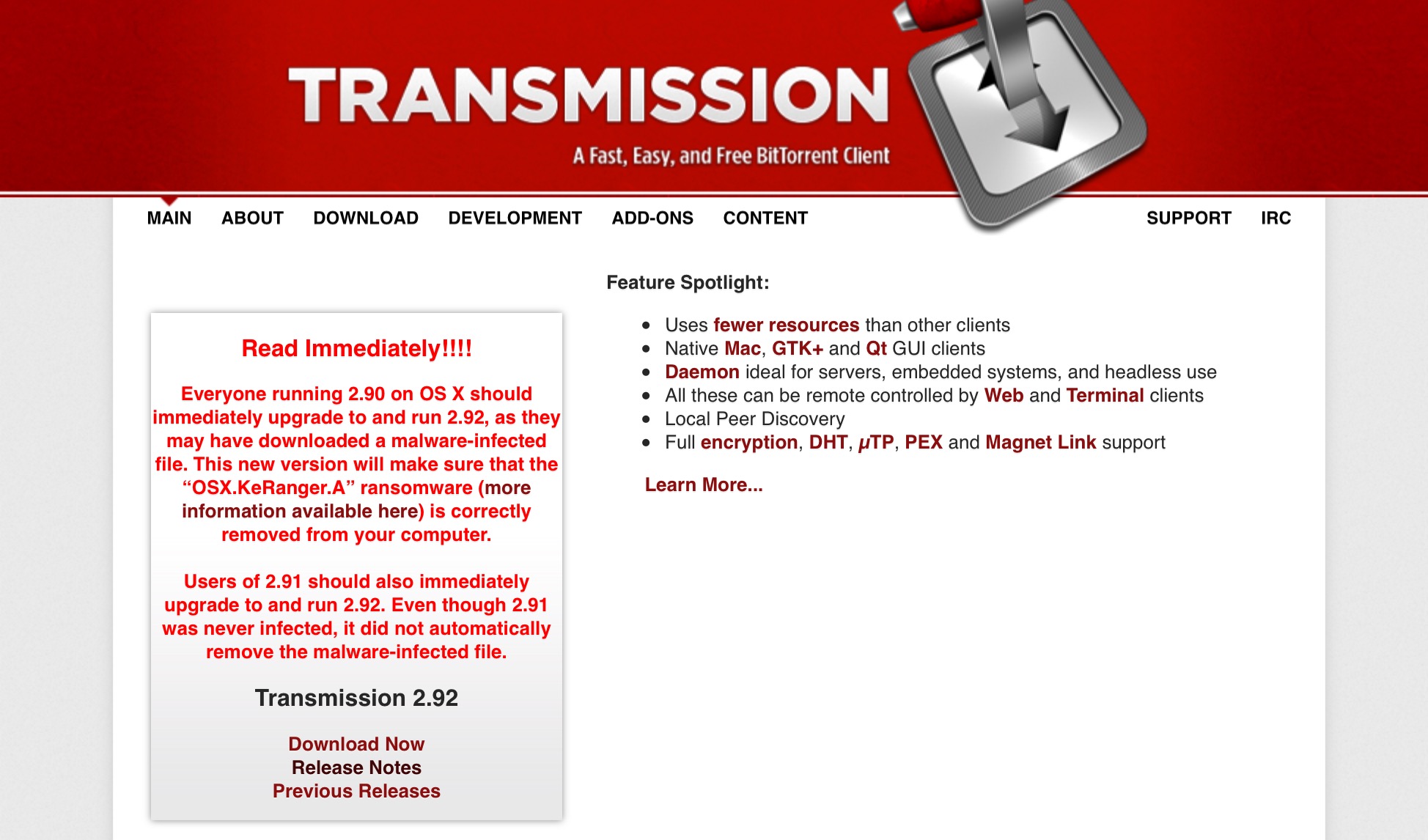
Transmission Infected with KeRanger Ransomware

It was discovered this weekend that popular BitTorrent client Transmission was infected with what is believed to be the first fully functional ransomware on OS X. Palo Alto Networks discovered the infection and report that attackers infected two installers of version 2.90 of Transmission’s Mac app with the ransomware, dubbed KeRanger, on March 4. The ransomware works by encrypting all files in the “/Users” and “/Volumes” directories and then demands payment of 1 Bitcoin (~US$400) from victims in order to decrypt and retrieve their files.

It is not yet known how the Transmission installers were infected. Palo Alto Networks promptly disclosed the ransomware to the Transmission Project and Apple, and both have taken swift action. Transmission has since been updated to 2.9.1 (removing the ransomware from the installer) and 2.9.2 (automatically removing KeRanger if it had been installed on a user’s system). Whilst Apple has revoked the certificate used to install KeRanger, updated Gatekeeper to block the malicious installer, and updated its XProtect (Apple’s built-in anti-malware software) signatures.

How to Protect Yourself

The following is excerpted from Palo Alto Networks’ report on KeRanger. We recommend you read their full report if you would like further, and more detailed, information.

Users who have directly downloaded Transmission installer from official website after 11:00am PST, March 4, 2016 and before 7:00pm PST, March 5, 2016, may be been infected by KeRanger. If the Transmission installer was downloaded earlier or downloaded from any third party websites, we also suggest users perform the following security checks. Users of older versions of Transmission do not appear to be affected as of now.

[via MacRumors, Palo Alto Networks]