This Week's Sponsor:

Copilot Money

Copilot Money, The Best Money Tracker, Launches on the Web – Limited-Time: Get 26% Off + 2 Months Free


Remaster: Passion in a Can

For their first episode, the guys discuss Shahid’s return to video game development, whilst taking a look at how team sizes, abundance of choice, and attitudes to shipping have changed over the last 20 years.

Episode 1 of Remaster, my new videogame podcast with Shahid Ahmad and Myke Hurley, came out last week. We decided to tackle a big topic: returning to indie game development and how that has changed over the past two decades. If you still haven’t listened, you can do so here.

Sponsored by:

  • Squarespace: Build it beautiful. Use code ‘INSERTCOIN’ for 10% off.
  • Igloo: An intranet you’ll actually like, free for up to 10 people.
Permalink

New Apps for 2016

Every year around this time, after compiling a list of my must-have apps and thinking about the goals I want to achieve in the next 12 months, I like to get started on the upcoming season of writing by reassessing some of the ways I get work done. Change never stops: rather than getting stuck in my own ways and refusing to embrace it, I feed my curiosity by entertaining the possibility of better tools for my trade.

Plus, it’s always fun to spend a couple of weeks trying a bunch of apps and new services, seeing what works and should be explored further.

While this has become a new-year tradition, I’ve only written about it once – four years ago, when I was just getting started on the “iPad as a computer” idea. With 2016 and the transition to primary computer finally complete, I thought it’d be appropriate to publish a similar article again – if anything, for future reference.1

The apps below aren’t my new must-haves. They are alternatives or additions to my current must-haves that I’m considering out of intellectual curiosity for now. I’m not ready to fully endorse them, but I like some aspects of them. Most of them aren’t new, but they’ve received redesigns or feature updates that piqued my interest again.

Read more


Interact: A Powerful Contact Group Manager

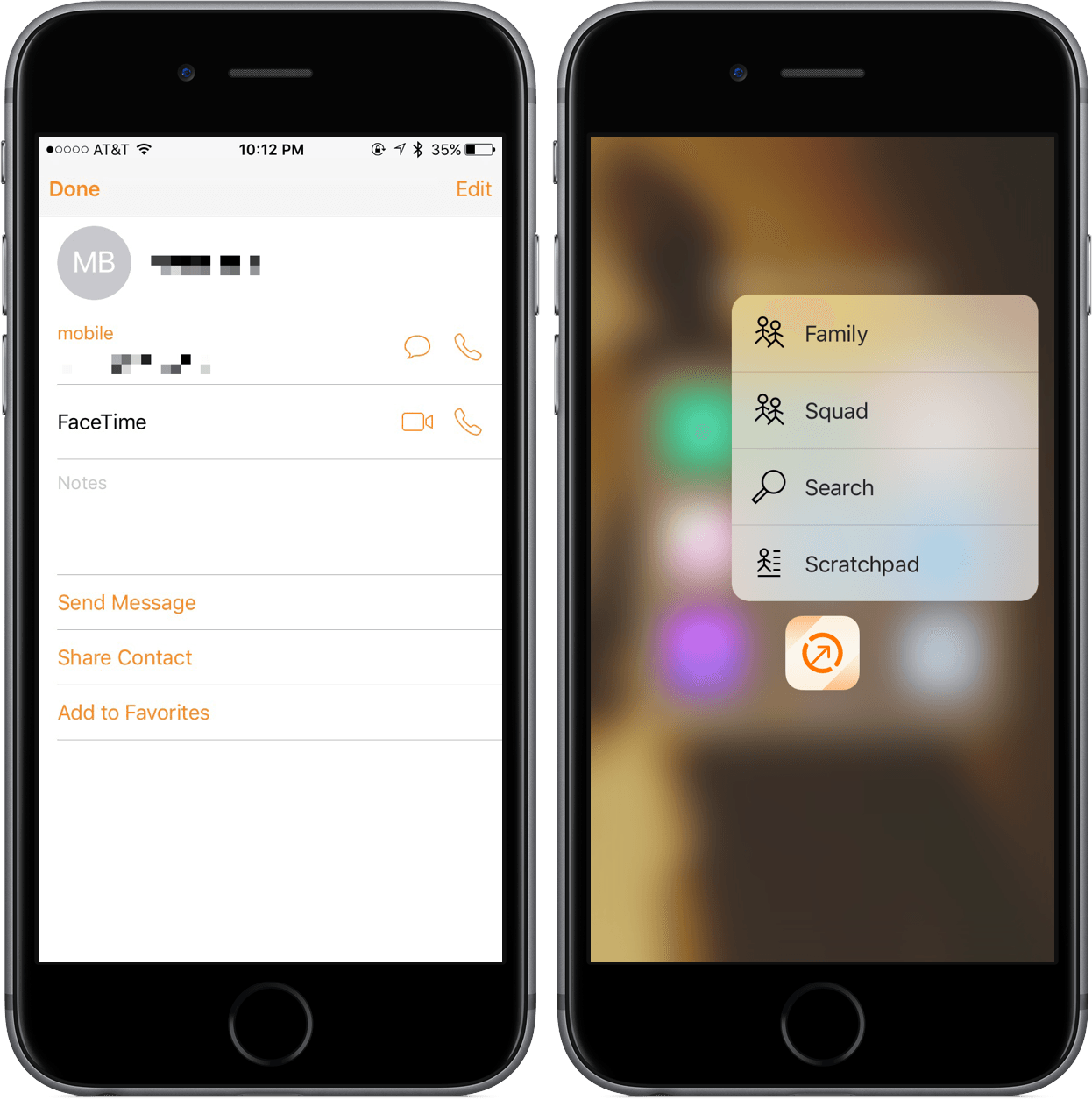
With the rise of iOS devices, there’s been an increase of on-the-go collaboration and the need for tools that can manage teams and contact information. iPhones and iPads can hold thousands of contacts, but when it comes to arranging those into groups, Apple’s Contacts app offers no help.

I’ve been testing Interact by Agile Tortoise for the past week, an app that offers a variety of features that allow you to create contacts and organize them. Interact also works with group texting and email, so you can do more meaningful work in groups. Although it has its hiccups, Interact’s capabilities far outweigh its negatives.

Read more


Drag & Drop Demo for iOS 9’s Split View

CoreDragon is a new open source library for iOS developers created by Nevyn Bengsston designed to bring multitouch drag & drop to iOS 9:

The eighties solved this with another piece of direct manipulation: drag and drop. Today, I bring the eighties right back into 2016 with my new open source library CoreDragon. CoreDragon lets you get rid of context menus, modal interactions and even copy paste, by allowing you to mark some areas of your application as things that can be dragged; and other areas as places where you can drop things.

The key feature of CoreDragon is support for dragging and dropping content between apps in Split View on iPad:

CoreDragon uses similar concepts as the drag’n’ drop APIs on MacOS, and modifies them to work better in a world with view controllers. It works within a single application, and on modern iPads, between applications that are running in split screen mode.

Take a look at the video Nevyn put together to demonstrate drag & drop in Split View. This isn’t the first time I’ve come across this idea, and it’s extremely close to what I imagine Apple will eventually add to the iPad platform.

As I mentioned in my iOS 9 review, drag & drop is an interaction paradigm ripe for being reimagined by multitouch. Using the clipboard and extensions to transfer content between two apps running simultaneously is feeling outdated at this point, and I want to believe something similar to CoreDragon is in the works for the future of iOS. Nevyn has some interesting ideas on how to augment traditional drag & drop with multitouch, too.

Permalink


Outlook for iOS Gets Skype Integration

Clever addition to Outlook for iOS just rolled out by Microsoft:

Innovation is happening in the calendar this week with our latest Skype integration. Make any meeting a Skype call simply by flicking a switch, then access the call when you need to with just a tap. Now when you say “I’m joining the call now”, you’ll actually mean it. To give it a try, simply turn on the “Skype Meeting” switch when creating or editing an event.

The integration generates a link to a Skype call that can be launched from the calendar event in Outlook. This works best for shared calendar events, so every participant can easily join the call and start talking.

I’m a big fan of Outlook for iOS, and this is exactly what Microsoft should be doing – leveraging their services to go beyond the traditional features of email and calendar. I like what they’ve been doing with Outlook.

Permalink

AgileCloudKit and 1Password 6 for Mac

Nice (and free) update to 1Password for Mac released today:

It’s a new year and we’re starting things off on a strong note with a great new update to 1Password for Mac: Version 6.0! This latest version of everyone’s favorite password manager is looking better than ever, and we couldn’t have done it without you. Your awesome feature requests, suggestions, bug reports, and usage scenarios really helped us decide what to include in this release.

If you use multiple vaults, you may want to check out the new functionalities in 1Password 6.0 (release notes here). I don’t, but I may reconsider this to set up vaults for my family and MacStories.

Also of note: AgileBits built a framework to use CloudKit JS for the version of the app sold outside of the Mac App Store. Apps that aren’t available on the App Store can’t implement iCloud support natively, but AgileBits figured out a way to use CloudKit technologies for web apps in their Mac client:

From our customers’ point of view, iCloud Sync in the AgileBits Store version of 1Password will look a little bit different during the initial setup. CloudKit JS does not use the iCloud settings from OS X, so to authenticate with Apple, 1Password will prompt you to log in to your iCloud account by displaying the iCloud login page in your default web browser. Once you have logged in to your iCloud account, CloudKit web services sends an authentication token back to 1Password, which it then stores (securely, of course). This enables 1Password to sync with iCloud without having to reauthenticate each time. Since the iCloud login for CloudKit JS is completely separate from the iCloud settings in OS X System Preferences, you can even use a completely different iCloud account if you like!

I don’t know whether I should be impressed that AgileBits created this workaround or sad about Apple’s decision to restrict iCloud to the semi-abandoned Mac App Store (maybe a bit of both). AgileBits plans to make AgileCloudKit open source, too.

Permalink

What Today’s Popular Websites Look Like on the Original iPhone

Fun experiment by Luc Luxton:

I received a 1st generation iPhone as birthday gift last year from a good friend of mine and I really haven’t done much with it. I started wondering if the phone could be used day to do if needed and if so, what the experience would be like today.

So, I thought it might be fun to have a look at what the most popular websites today look like on that incredibly revolutionary device.

If you think about it, the “winner” among websites that work well on an original iPhone today isn’t a surprise. I wish more websites adopted that strategy as well.

Permalink