Apple Updates GarageBand and Clips for iOS with School-Friendly Features

Just as Apple’s education event keynote concluded at Lane Tech College Prep High School in Chicago, Apple released updates to the company’s GarageBand and Clips iOS apps.

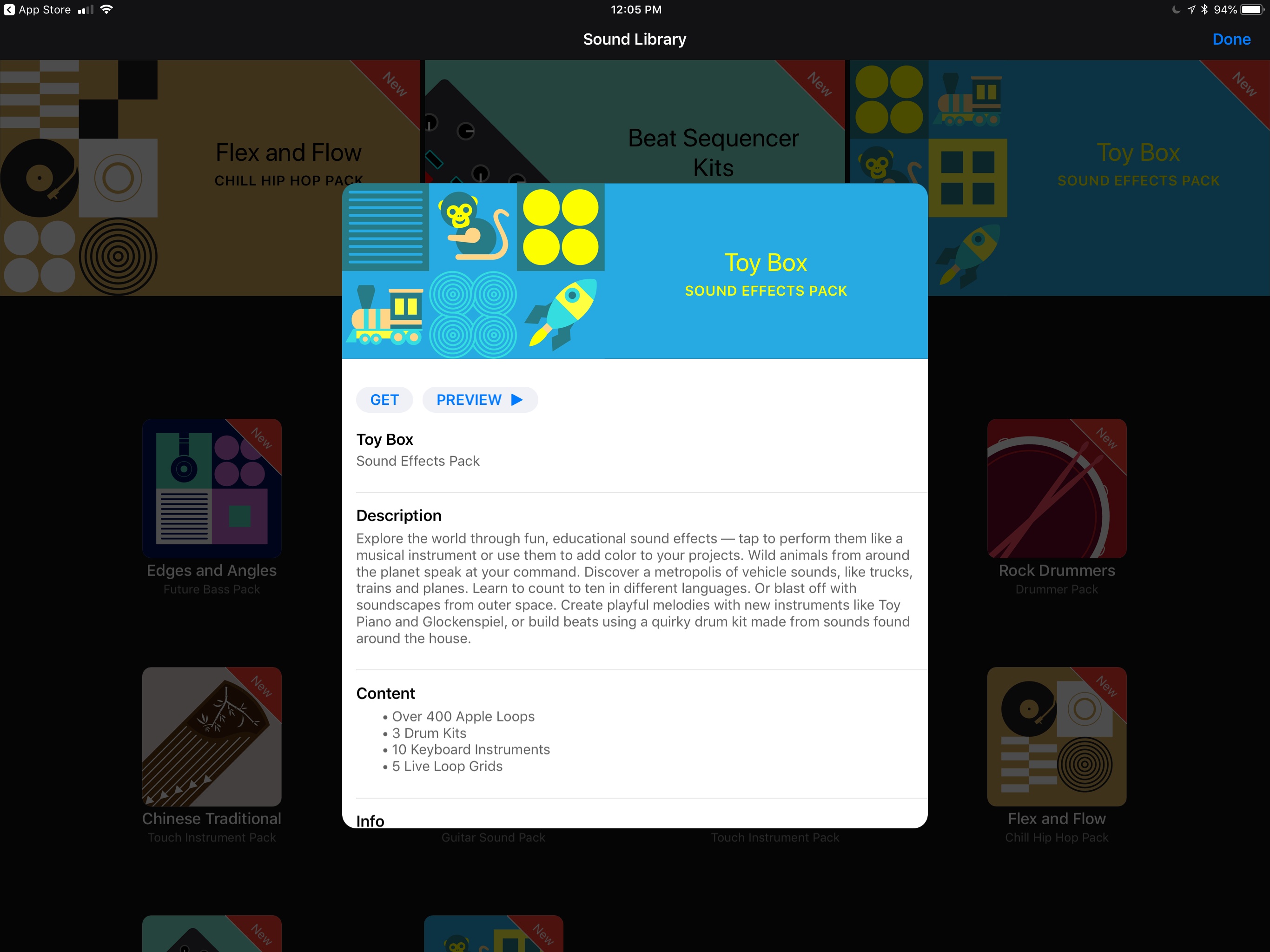
GarageBand has been updated with a downloadable ‘Toy Box’ sound pack that includes sound effects like animals, vehicles, and people counting to ten in different languages. There’s a ‘Modern Wah’ guitar stompbox effect too. If you’re an iPhone X user, the update uses ARKit and the TrueDepth camera to let you control effects like guitar wah and synth parameters hands-free using only facial expressions.
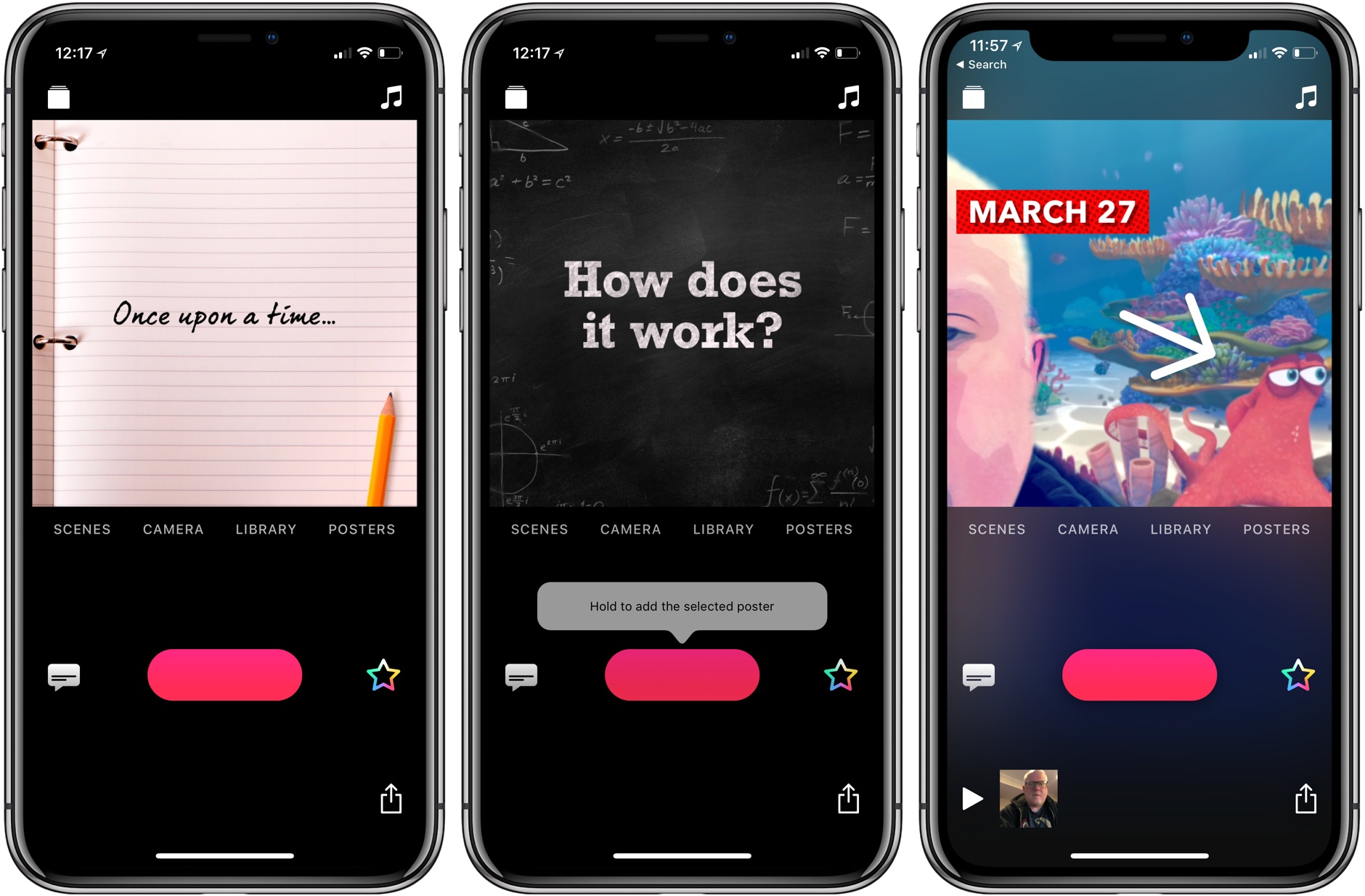
Clips was updated too. Version 2.0.3 adds new Live Title styles with new fonts, colors and layouts, animated labels (some with new drop shadows), stickers, and posters. Among the many new options are several that will work well in the classroom, including chalkboard and notebook posters, hand drawn arrows, circles, underlining, and more. There are two new Pixar movie selfie scenes too: one set on a reef from Finding Dory and the other on the Scare Floor from Monsters, Inc.


You can follow all of our Chicago education event coverage through our March 27th event hub, or subscribe to the dedicated March 27th event RSS feed.


Chicago Education Event Video Now Available

Apple has posted the video of its education event keynote held earlier today at Lane Tech College Prep High School in Chicago. The video can be streamed here, as discovered by Guilherme Rambo, and a higher quality version should be made available soon through iTunes (on the Apple Keynotes podcast).


You can follow all of our Chicago education event coverage through our March 27th event hub, or subscribe to the dedicated March 27th event RSS feed.


Apple Introduces New Schoolwork iPad App, Classroom for Mac, and ClassKit Framework for Developers

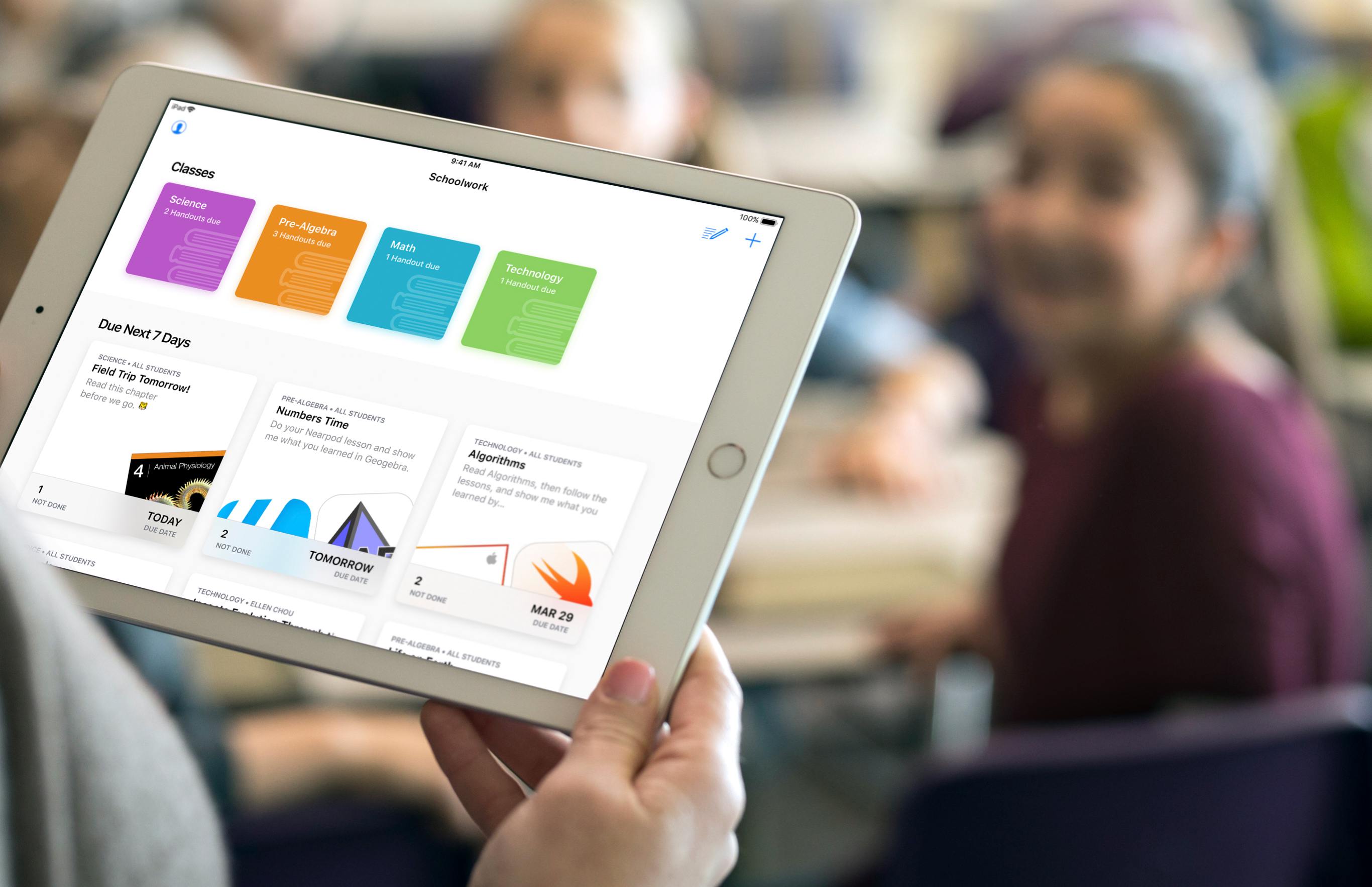
Education was the sole focus of today’s Apple event in Chicago, and a big part of that story was software: Apple introduced a brand new iPad app for teachers and students called Schoolwork, an upcoming Mac version of its existing iPad Classroom app, and it also launched a new ClassKit framework that enables third-party developers to integrate their educational apps with Apple’s own broader education system on iOS.

The new Schoolwork app, arriving in June, is meant to serve as a collaborative data-sharing environment for teachers and students. It enables teachers to make assignments in educational apps and track students’ progress on those assignments. In apps with collaboration features, teachers and students can work together on an assignment in real-time. Teachers can also use Schoolwork to send handouts to students. Because of its capabilities, Schoolwork is able to serve as a central schedule hub to keep students organized and on track.

The Mac version of Apple’s Classroom app will also launch in June, as a beta. It will serve the same functions as its existing iPad equivalent. Classroom differs from the new Schoolwork app in that it’s meant for instructors only, not students, and is used for general classroom management. The Classroom iPad app launched two years ago as a tool for school instructors to manage student devices and share files in bulk with the class, among other administrative functions, and it continues serving those purposes today.

With Schoolwork and Classroom, Apple now has a stronger student-teacher app ecosystem than before – but first-party apps weren’t the whole story Apple had to tell. To help further broaden the possibilities of Schoolwork and Classroom, third-party developers now have access to a new ClassKit framework, which will enable third-party educational apps to read and write information into the Schoolwork app, similar to how third-party health apps can use HealthKit to read and write data to Apple’s Health app. Apps can populate assignable content in the app, which teachers can then track the progress of. ClassKit is launching for developers as part of the forthcoming betas for Xcode 9.4 and iOS 11.4.


You can follow all of our Chicago education event coverage through our March 27th event hub, or subscribe to the dedicated March 27th event RSS feed.


AppStories, Episode 48 – Accessibility with Filmmaker James Rath

On this week’s episode of AppStories, we interview filmmaker and YouTuber James Rath, who is legally blind, about accessibility on Apple’s platforms.

Sponsored by:

  • Lookmark: A smart wishlist for apps and iTunes content.
    • Get a second month of Lookmark Plus for free when you sign up using this link.
AppStories+ Deeper into the world of apps

AppStories Episode 48 - Interview: Accessibility with Filmmaker James Rath

0:00
33:35

AppStories+ Deeper into the world of apps

Permalink

Connected , Episode 185: The Myke Hurley School of Excellence

Federico has taken over San Jose line watching, so Stephen gets to join Myke to talk about the long-rumored Beatles iPod, laptop cart repair and the eMac.

I wasn’t on last week’s episode of Connected, but I really enjoyed the discussion about old Apple rumors and the potential for a new education iPad. You can listen here.

Sponsored by:

  • Squarespace: Make your next move. Enter offer code WORLD at checkout to get 10% off your first purchase.
  • Anchor: The easiest way to make a podcast. Ever.
  • Ting: A smarter way to do mobile. Save $25 on selected devices or keep it as Ting credit.
Permalink

Heart Rate Variability in Apple’s Health App, Explained

One lesser known improvement to the Health app in iOS 11 was the addition of Heart Rate Variability data, which can be obtained in a variety of ways, including via the Apple Watch. According to Apple’s description in the Health app:

Heart Rate Variability (HRV) is a measure of the variation in the time interval between heart beats. Apple Watch calculates HRV by using the standard deviation of these beat-to-beat intervals measured by the heart rate sensor (also known as SDNN).

While that offers a basic explanation of this data type, Serenity Caldwell of iMore just completed a deep dive into exactly what HRV is, how tracking it can be beneficial, and Apple’s current methods of tracking it. She writes:

Apple currently records HRV averages in your iPhone’s Health app through Apple Watch readings (as well as any third-party apps that have chosen to write data to the repository). When you first put your Apple Watch on for the day, you’ll trigger an HRV morning reading; the wearable monitors your heartbeat steadily for one minute, then uses under-the-hood calculations* to come up with your HRV average, displayed as ms (milliseconds) in the Health app for iPhone.

Caldwell also shares recommendations for different apps that can be paired with additional tracking methods – such as third-party heart monitors or even just your iPhone’s camera – to obtain more extensive data than the Apple Watch provides with its daily readings.

If you’re interested at all in Heart Rate Variability, and what your iPhone or Apple Watch can do to track it, Caldwell’s write-up is a fantastic resource.

Permalink

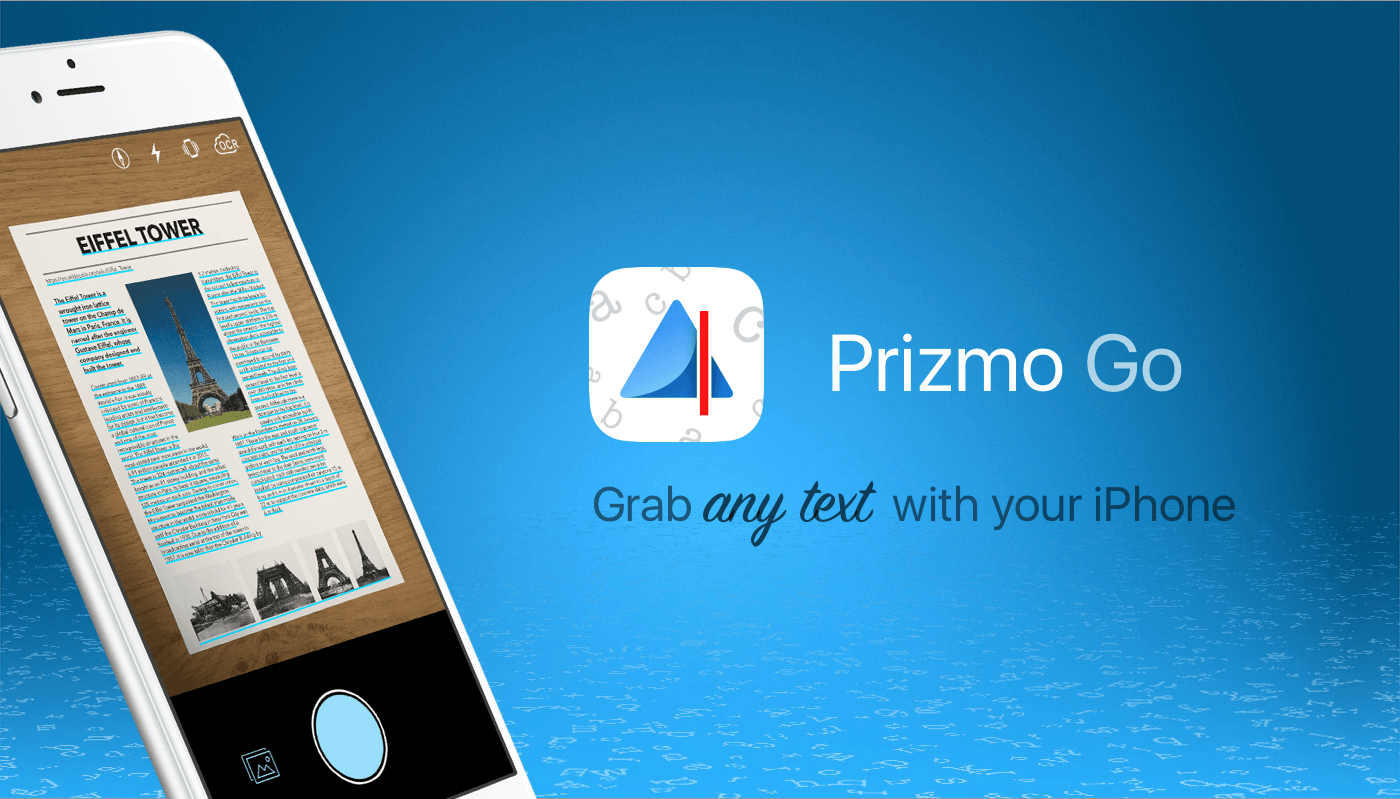
Prizmo Go: Quickly Grab Text with Your iPhone or iPad [Sponsor]

Aim at text. Shoot. It’s yours! Prizmo Go lets you quickly grab text with an iPhone or iPad’s camera. Text is recognized in a blink of an eye, after which you can interact with it in many useful ways in Prizmo Go or send it to another app. If you’ve got a Mac, you can copy/paste it there too. No more retyping. It feels like magic at your fingertips.

Prizmo Go provides rich interactions with captured text. After shooting, text from the original picture is revealed, and swiping through it allows fast and accurate text selection directly from the image. Selected text can be read aloud, or you can tap to go straight to any web URL, call phone numbers, trigger the Mail app from an email address, or reveal physical addresses in Apple Maps and initiate navigation.

Prizmo Go comes with enhancements specifically built for VoiceOver, in addition to spoken guidance prior to capturing text. That, combined with its text-to-speech capabilities, make the app a great companion if you need help reading printed documents.

Prizmo Go has just been updated to version 2.0, which brings handwriting recognition (English only), translation to/from 59 languages, and new, more powerful, built-in neural network-based OCR in more languages.

Prizmo Go 2.0 Export Pack is 20% off ($3.99 instead of $4.99) this week only, so download it on the App Store today. Hint: the discounted Export Pack also entitles you to an introductory subscription price.

Our thanks to Prizmo Go for sponsoring MacStories this week.