
 MacStories Weekly: Issue 123
Snapchat Debuts Exclusive iPhone X Lens Filters→

At last September’s iPhone event at Apple Park, Craig Federighi, Senior Vice President of software engineering, used Snapchat to show how the iPhone X’s True Depth camera and ARKit could create realistic camera filters. Today, those filters finally launched with an update to Snapchat’s iOS app, which is featured in the Today section of the App Store.
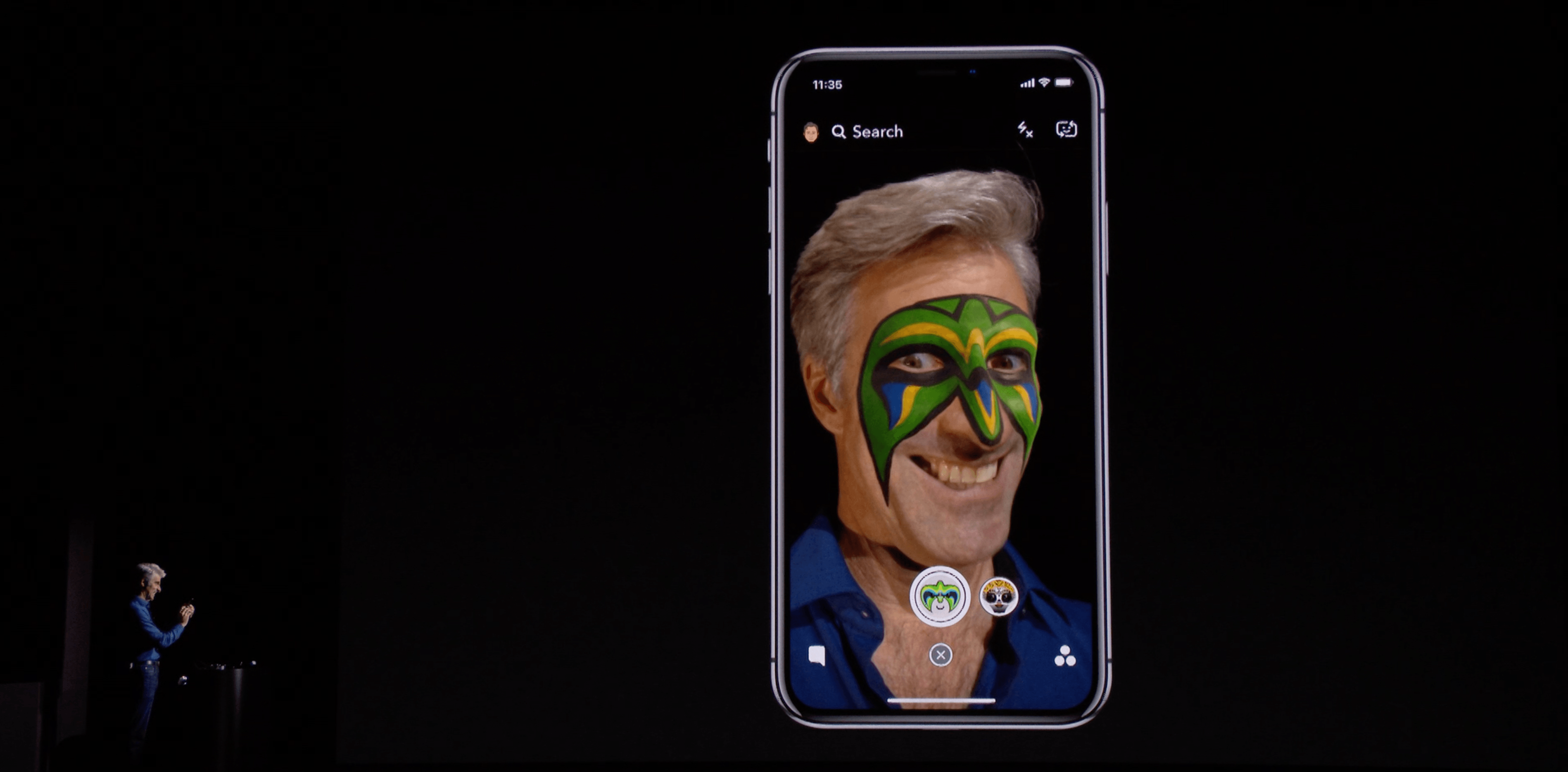
The update includes the two filters demoed by Federighi during the keynote, as well as a masquerade ball Lens. The advantage of using the True Depth camera and ARKit is that the filters can track your face better than other Snapchat Lenses and account for the lighting in the room, providing realistic highlights and shadows.
The new filters are available now without updating Snapchat’s app. If you long press the screen with the selfie camera enabled, the new lenses are currently the first three listed.
The Mac Pro Is Coming in 2019, Shaped by Apple’s New Pro Workflow Team→
In a follow up of sorts to last year’s Mac roundtable, Matthew Panazarino of TechCrunch was invited back to Apple HQ for an update on the long-awaited Mac Pro, which Apple shared will not launch until 2019:
“We want to be transparent and communicate openly with our pro community so we want them to know that the Mac Pro is a 2019 product. It’s not something for this year.”
Other than the 2019 date, the lone detail about the new Mac Pro was confirmation that it will be a modular system. Though what exactly that means, we still don’t know.
The other main interesting note from Panzarino’s report is that Apple has assembled a new internal Pro Workflow Team (not to be confused with the iOS app Workflow) which aims to guide and improve Apple’s pro-targeted products. The team is under the oversight of John Ternus, Apple’s VP of Hardware Engineering, and a great deal of its focus is learning the workflows of real pro users so it can optimize its hardware and software to make those workflows better. Panzarino writes:
To do that, Ternus says, they want their architects sitting with real customers to understand their actual flow and to see what they’re doing in real time. The challenge with that, unfortunately, is that though customers are typically very responsive when Apple comes calling, it’s not always easy to get what they want because they may be using proprietary content. John Powell, for instance, is a long-time logic user and he’s doing the new Star Wars Han Solo standalone flick. As you can imagine, taking those unreleased and highly secret compositions to Apple to play with them on their machines can be a sticking point.
So Apple decided to go a step further and just begin hiring these creatives directly into Apple. Some of them on a contract basis but many full time as well. These are award-winning artists and technicians that are brought in to shoot real projects (I saw a bunch of them walking by in Apple park toting kit for an outdoor shoot on premises while walking). They then put the hardware and software through their paces and point out sticking points that could cause frustration and friction among pro users.
This work has started in the specific areas of visual effects, video editing, 3D animation, and music production, and Apple plans to expand it out from there.
The efforts of the Pro Workflow Team serve to benefit all of Apple’s pro-related hardware and software, and even popular third-party software as well. It’s one way Apple is showing its commitment to serving professional users.
In the last year, Apple’s output for pro users seems to have made a complete turnaround. Back then we were wondering if the company had become content focusing on the average consumer and letting pros leave for other platforms. That’s certainly not the story anymore. With the iMac Pro, continued updates to Apple’s pro software, and now the forthcoming Mac Pro and the ongoing investment of the Pro Workflow Team, Apple is positioning itself again as a company committed to serving the pro market.
The Shrinking App Store→
Sarah Perez, reporting for TechCrunch:
The App Store shrank for the first time in 2017, according to a new report from Appfigures. The report found the App Store lost 5 percent of its total apps over the course of the year, dropping from 2.2 million published iOS apps in the beginning of the year to 2.1 million by year-end.
…
Appfigures speculated the changes had to do with a combination of factors, including stricter enforcement of Apple’s review guidelines, along with a technical change requiring app developers to update their apps to the 64-bit architecture.
With the previously announced App Store cleanup and iOS 11’s 32-bit purge, it’s no surprise at all that the App Store shrank during the year. To the average user though, a store with 2.1 million apps is no different than one with 2.2 million. Plus, in theory the apps that remain are of a higher overall quality than what was removed, so this should turn out to be a net gain for users.
Another way users benefit: the App Store’s search engine has long had a reputation for being ineffective, so a smaller App Store should mean it’s easier to find what you’re looking for.
Finances for iOS Adds Invoice Scanning Powered by iOS 11’s Vision Framework→
Matthias Hochgatterer, in a blog post detailing the invoice scanning feature he brought to Finances for iOS with an update released today:
I’ve just recently worked on invoice scanning for Finances. It lets you scan invoices on iPhone or iPad and add them as a PDF document to transactions. In this post I will show you how I’ve implemented that feature using the frameworks available on iOS.
Let’s start by looking at the final result. You can see the invoice scanning in the Finances trailer. The user interface looks very similar to the document scanning UI in Apple’s Notes app on iOS 11. That’s not a coincident. I’ve reimplemented the exact same user interface, because most iOS users are already familiar with it. Also I found it an interesting challenge to implement it myself.
I’ve been considering Finances (which is available both on Mac and iOS and is on sale for both platforms today) as a replacement for the system I built in Numbers last year, which isn’t scaling anymore (my accountant now wants me to upload PDF receipts to a Trello board, and traditional spreadsheets do not support inline file attachments). I’m intrigued by the cross-platform nature of Finances, its double-entry bookkeeping system, and this new Notes-like scanning mode built using Vision technologies in iOS 11. I haven’t seen other apps publicly advertise scanning functionalities built using Vision and the implementation in Finances looks extremely well done.
I will be playing around with Finances over the weekend (I know; usually, this isn’t what I do with my weekends but I also need to keep my accountant happy). You can take a look at Finances’ new trailer below.
Connected, Episode 187: On the Edge→
This week, the trio ponder the future of Apple’s Mac and iOS platforms and explore what merging them may look like before talking about a recent Apple hire.
This week’s episode of Connected is a good one: following rumors of Apple developing their own ARM chips to use in future Macs, we discuss the potential of a single unified Apple platform to supersede both iOS and macOS. You can listen here.
Sponsored by:
- Squarespace: Make your next move. Enter offer code CONNECTED at checkout to get 10% off your first purchase.
- Pingdom: Start monitoring your websites and servers today. Use offer code CONNECTED to get 30% off.
- Freshbooks: Online invoicing made easy.
Medical ID Record Provides an Extended, More Flexible Solution to Storing Medical Data
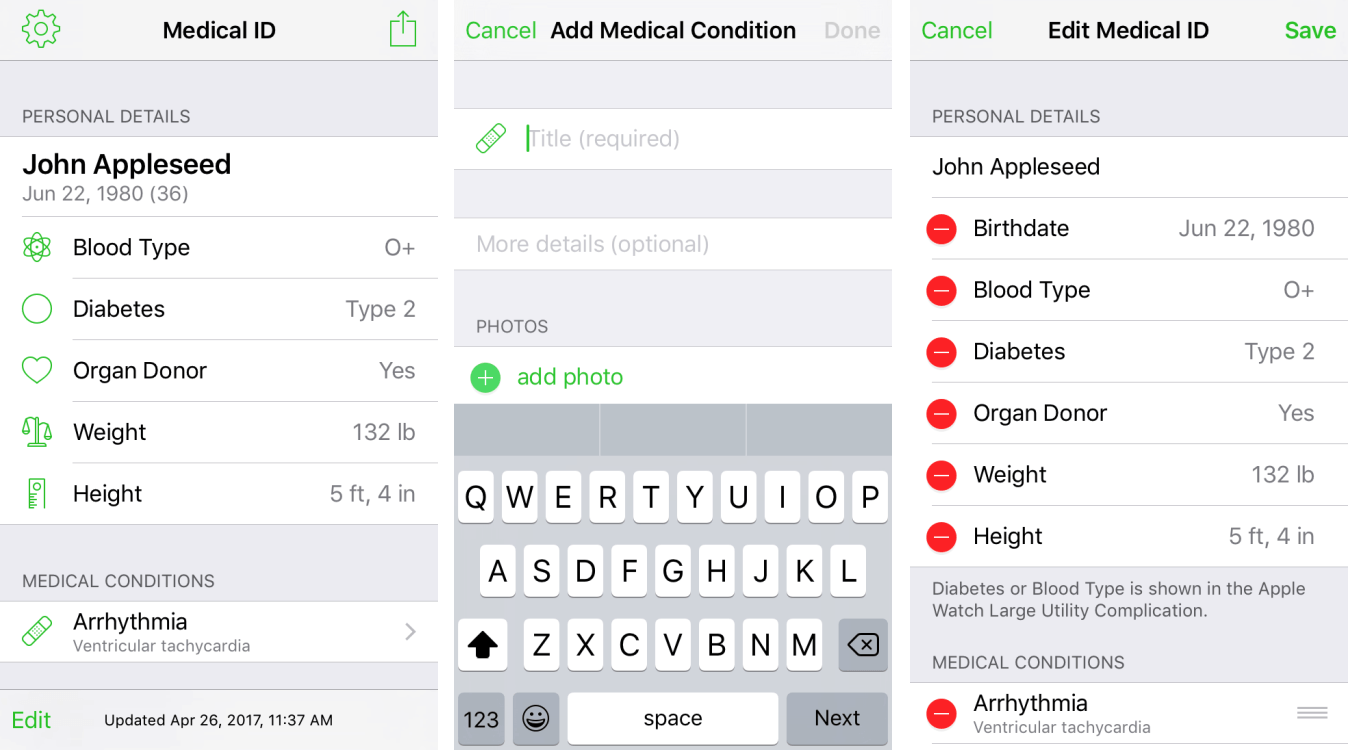
Many of the stock system apps installed with iOS are designed to meet the needs of most people, but they rarely satisfy everyone. Apple leaves it to third-party developers to fill in the gaps. That comes with the risk of being ‘Sherlocked’ in the future, but it’s also an opportunity for developers to attract users who want more than Apple provides.
Medical ID Record is a perfect example of such an app. It takes a feature of the Health app and extends it. The depth of functionality in Medical ID Record may not be needed by everyone, but it’s an excellent option for anyone who has felt constrained by the Health app’s Medical ID feature.
Scanbot 7 Adds Customizable Filters, Document Merging, Improved Search, and New Themes
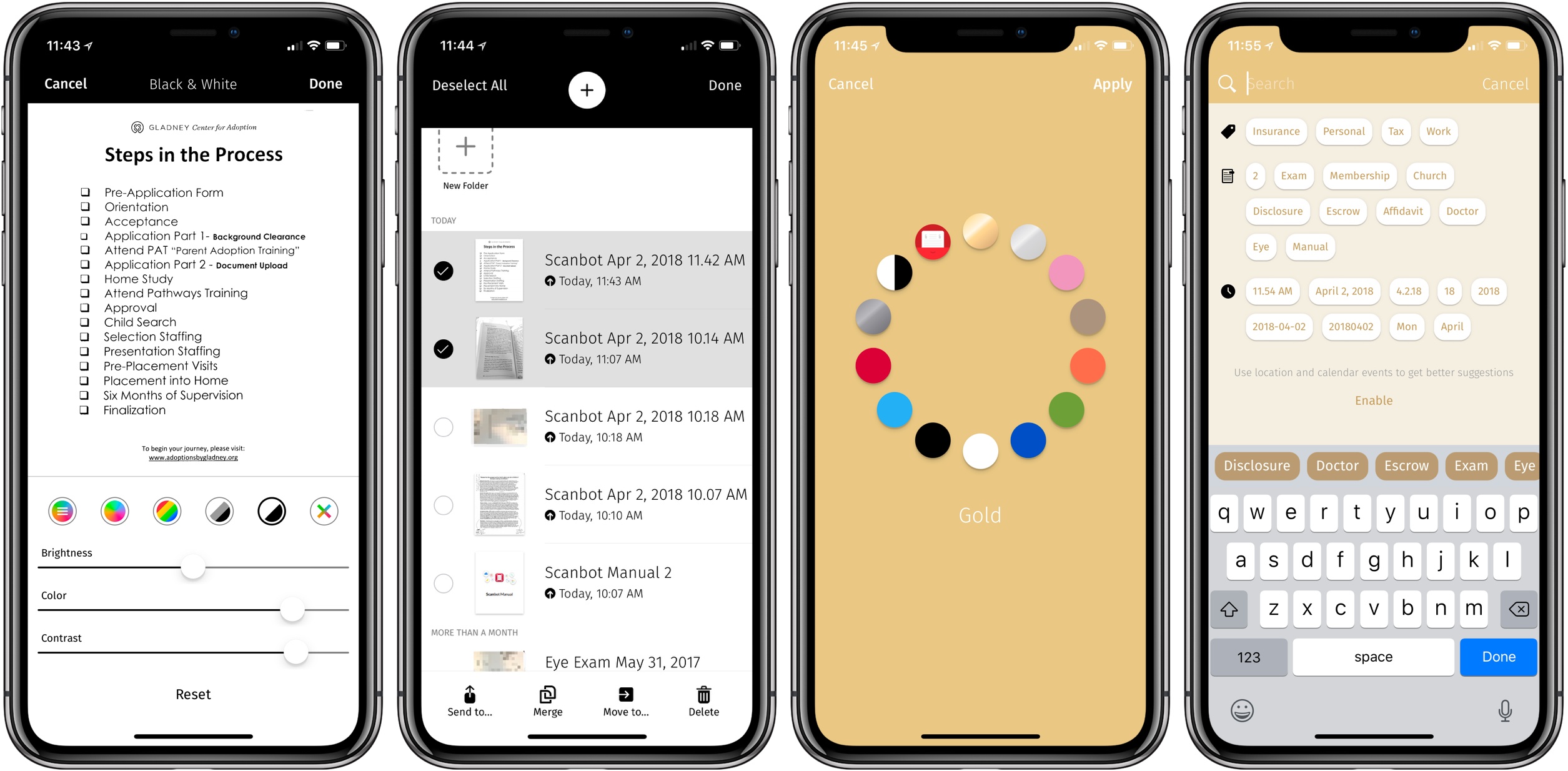
Scanbot 7 was released today, the latest update to the popular document scanning app for iOS. This is the first major version bump for Scanbot since Apple introduced its own scanning feature into the built-in Notes app, making it especially of interest. Every time Apple introduces a free app or feature that competes with existing third-party options, the impetus falls on those developers to prove their app’s continued value. Scanbot already offered a variety of features that Notes’ scanning doesn’t, but it adds to those in today’s update with a handful of thoughtful enhancements that make a great app even better.
In Scanbot 7, each of the app’s five color filters for scans can be tweaked to your exact preferences. There are sliders included to make three types of adjustments for each filter. On most filters, those options are Brightness, Color, and Contrast, and with the Gray filter they’re Brighter, Darker, and Color. Not every scan is the same; a good scan depends on the type of document being captured and your lighting conditions, so it’s great having more control over filters to make every scan look as good as possible.
A second new feature is the ability to merge multiple existing scans into a single PDF. This is done by hitting the checkmark in the top-right corner when browsing previous scans, then selecting multiple scans and hitting Merge. You’ll then be able to rearrange the page order of the soon-to-be-merged documents, and choose whether to replace the original documents altogether, or keep them intact post-merge. This kind of task can be accomplished in other apps, such as PDF Expert, but it’s nice to bring it in-app, especially in situations when you need to consolidate scans to send to someone else.
Search has been upgraded in Scanbot 7, with auto-complete suggestions that appear even before you’ve typed a single character. These make Scanbot’s search screen one of the best I’ve used in any app. Also added in today’s update are five new theme options, my favorite of which is High Contrast: it uses true black and white to provide beautiful contrast in the interface, especially on the iPhone X’s OLED display.
If you’re in the market for a scanning solution, and want more power and customizability that Apple Notes provides, Scanbot 7 makes the app a better option than ever. All its power features are easy to use, and the app is full of thoughtful design touches that make for a delightful experience.
Scanbot 7 is available on the App Store.
How to Adjust iOS’ Volume via Workflow When Streaming Audio to HomePod
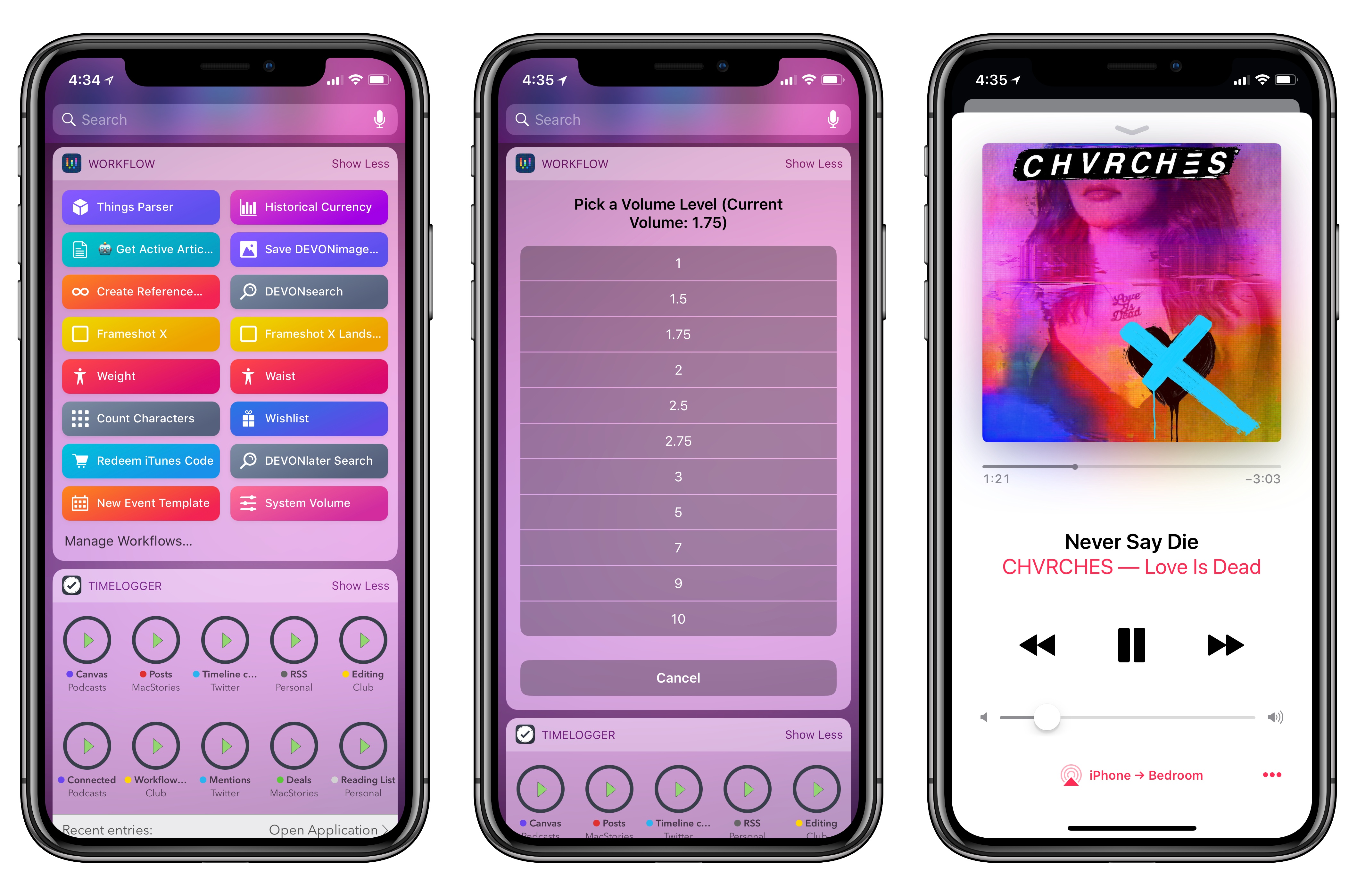
One of Workflow’s least known functionalities is its ability to get details about the hardware it’s running on and control some system features. Among these, Workflow can both retrieve an iOS device’s current volume level and set the volume. A few days ago, I realized I could make a workflow to quickly adjust my iPhone’s volume when streaming music to one of our HomePods. Unlike other automations I’ve crafted over the years, this workflow was quite a success in our household and I felt like it was worth sharing with the wider MacStories audience.