Existing Pixelmator Photo users won’t have to subscribe to continue using the app and should be able to add the Mac version at a discount when it’s released. New customers can subscribe for $4.99 per month or $23.99 per year after a 7-day free trial. There’s also a lifetime purchase option that costs $54.99. Pixelmator says that the subscription pricing will increase for new subscribers when the Mac app is released, so now is a good time to subscribe if you were hoping that the team would add a Mac version.
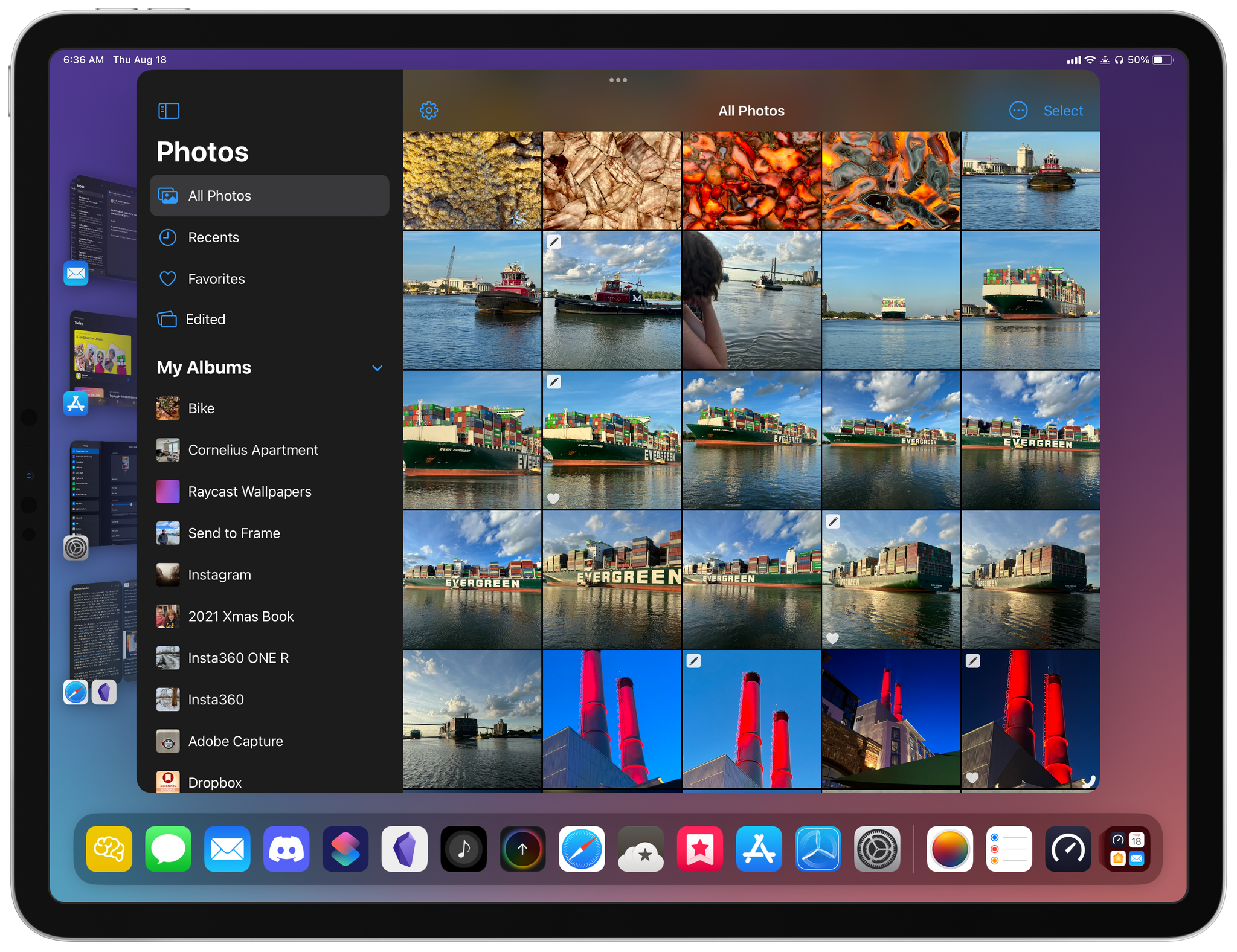
Pixelmator Photo for iPad.
There are a lot of reasons for Pixelmator Photo’s move to a subscription model, which are explained in detail in the team’s blog post. As with any move from paid-up-front to a subscription, some users will be left behind, which is a shame, but I’m not surprised by Pixelmator’s move. I’m more surprised that the switch didn’t occur earlier. Pixelmator Photo is a top-notch, high-quality app that is continuously developed to keep up with advances in Apple’s photo editing frameworks and hardware updates. That’s not the sort of app that can be offered for a set price indefinitely, as demonstrated by the manyothersophisticatedapps, including other photo editing apps, that have made the leap to a subscription model. Hopefully, the switch to subscriptions will allow the Pixelmator team to continue to develop Photo for a long time to come.
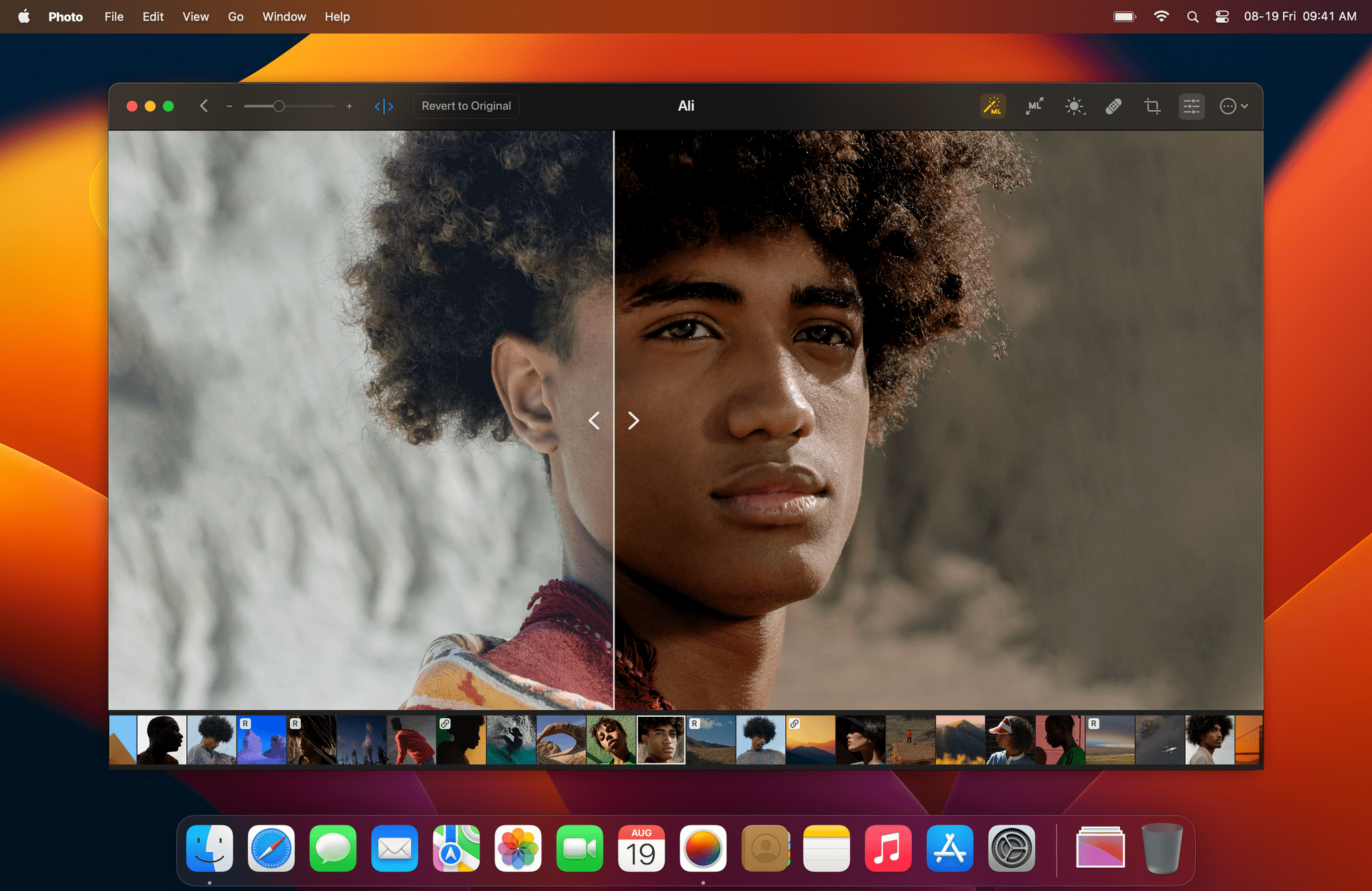
There aren’t many details about the Mac version of Pixelmator Photo to share except for the image at the top of this story, but I like what I see. If you’ve used the iPad version of Pixelmator Photo, the Mac app will be immediately familiar with its spare UI and focus on the image being edited. There’s no word yet on when the Mac version might be released, but when it is, we’ll have a complete review.
Club MacStories: Weekly and monthly newsletters via email and the web that are brimming with apps, tips, automation workflows, longform writing, early access to the MacStories Unwind podcast, periodic giveaways, and more;
Club MacStories+: Everything that Club MacStories offers, plus an active Discord community, advanced search and custom RSS features for exploring the Club’s entire back catalog, bonus columns, and dozens of app discounts;
Club Premier: All of the above and AppStories+, an extended version of our flagship podcast that’s delivered early, ad-free, and in high-bitrate audio.
This week on AppStories, I’m joined by Alex Guyot to talk about Alex’s MacStories origin story and walk through all of the changes coming to watchOS this fall as part of the MacStories Summer OS Preview series.
There’s something about the design of this machine that I can’t escape. The footprint is pretty similar between the two notebooks, but in my backpack, there’s a huge difference. Don’t get me wrong: I am thrilled that the MacBook Pro has beefed up to be a better computer, but I’m drawn to the clean, simple look of the Air. I know the Pro is a better match for my workflows, but the Air can do everything I need — if just a little bit slower. And I don’t care about that speed difference any time I pick up the Air to take it with me. Something about it just clicks with me in a way I didn’t anticipate.
I completely understand where Stephen is coming from on this. On paper, the MacBook Pro’s advantages are undeniable, but they’re also expected. It’s a bigger, heavier ‘pro’ computer with fans, after all.
In contrast, the M2 Air feels like magic, despite the M1 version that preceded it. The performance boost from the M2 SoC and features like a bigger, brighter screen and a higher memory option are part of it, but so, too, is the fact that the new Air even looks like a MacBook Pro. Yet, the M2 MacBook Air is still the svelte, silent laptop that it replaces, which feels improbable if not impossible. Like Stephen, the MacBook Air has captured my heart, and I don’t see myself switching to a different Mac laptop anytime soon.
It’s not unusual for Apple keynotes to feature gaming. Sometimes it’s about Apple Arcade, and other times it’s a demo of a third-party title coming to one of the company’s platforms. However, this year’s WWDC keynote was a little different, sprinkling developer-focused gaming announcements throughout the presentation and focusing on the upcoming release of No Man’s Sky and Resident Evil Village on the Mac. With Metal 3, controller functionality that continues to be extended, and an emphasis on titles with name recognition, many came away wondering if Apple is trying to position its latest Macs as legitimate challengers to high-end gaming PCs.
That’s the question Digital Foundry set out to answer in its latest YouTube video and companion story on Eurogamer by Oliver Mackenzie. When it comes to evaluating gaming hardware, few do it as well as Digital Foundry, which is why I was immediately curious to see what they thought of a fully loaded Mac Studio with an M1 Ultra SoC.
At just slightly larger than an Xbox Series S by volume and with ultra-low power consumption, the Mac Studio is unlike any high-performance PC. Digital Foundry came away impressed with the technical details of the M1 Ultra SoC, which held its own against high-end Intel CPUs and was in the ballpark in comparison to top GPUs:
The M1 Ultra is an extremely impressive processor. It delivers CPU and GPU performance in line with high-end PCs, packs a first-of-its-kind silicon interposer, consumes very little power, and fits into a truly tiny chassis. There’s simply nothing else like it. For users already in the Mac ecosystem, this is a great buy if you have demanding workflows.
These results are really just for evaluating raw performance though, as the Mac is not a good gaming platform. Very few games actually end up on Mac and the ports are often low quality. If there is a future for Mac gaming it will probably be defined by “borrowing” games from other platforms, either through wrappers like Wine or through running iOS titles natively, which M1-based Macs are capable of. In the past, Macs could run games by installing Windows through Apple’s Bootcamp solution, but M1-based chips can’t boot natively into any flavour of Windows, not even Windows for ARM.
Gaming on Mac has historically been quite problematic and that remains the case right now - native ports are thin on the ground and when older titles such as No Man’s Sky and Resident Evil Village are mooted for conversion, it’s much more of a big deal than it really should be. Perhaps it’s the expense of Apple hardware, perhaps it’s the size of the addressable audience or maybe gaming isn’t a primary use-case for these machines, but there’s still the sense that outside of the mobile space (where it is dominant), gaming isn’t where it should be - Steam Deck has shown that compatibility layers can work and ultimately, perhaps that’s the route forward. Still, M1 Max and especially M1 Ultra are certainly very capable hardware and it’ll be fascinating to see how gaming evolves on the Apple platform going forward.
Digital Foundry’s results highlight that tech specs are necessary but not sufficient for videogame industry success. The Mac hasn’t been in the same league as high-end gaming PCs for a long time, and tech specs historically were just one of the issues. Given Apple’s lackluster history in desktop gaming, it’s fair to be skeptical about whether the company can attract the developers of current-generation, top-tier games to the Mac. Still, for the optimists in the crowd, the power of the M1 Ultra has brought the Mac a long way from where it stood during the Intel-baed days as a gaming platform. Personally, I’m a skeptical optimist with one foot in each camp. The hardware is heading in the right direction, but the jury’s still out on the software and Apple’s business plan to attract game developers.
In 2021, Kolide went through the SOC 2 Type 1 audit, and they found out just how challenging it can be to prove compliance to a third-party auditor. They also learned firsthand something their customers had been telling them for a while: that they couldn’t have gotten their SOC certification without using their own product.
That product is Kolide, an endpoint security solution for Mac, Windows, and Linux devices. Kolide gives IT admins a single dashboard, through which you can prove that your fleet has the security measures that auditors care about.
With Kolide, you can instantly see whether:
Firewalls and screen lock are enabled
Operating systems are up-to-date
Password managers are installed
Kolide also provides visibility into nuanced issues that MDMs can’t address, like whether developers have unencrypted SSH keys or plaintext 2FA backup codes.
Moreover, Kolide balances this visibility with respect for user privacy and autonomy. Users can visit the Privacy Center to see what device data is being collected and why. And when Kolide detects a vulnerability on a user’s device, it reaches out via Slack to notify them of the problem and provides step-by-step instructions on how to solve it.
Kolide has helped hundreds of customers achieve compliance–for SOC 2, ISO27001, or their own internal security goals. And they’ve done so in ways that go beyond “checking the boxes” and actually increase transparency and collaboration between IT and end users.
If you want to know how you can get compliant without compromising your values, then we want to talk to you.
Club MacStories: Weekly and monthly newsletters via email and the web that are brimming with apps, tips, automation workflows, longform writing, early access to the MacStories Unwind podcast, periodic giveaways, and more;
Club MacStories+: Everything that Club MacStories offers, plus an active Discord community, advanced search and custom RSS features for exploring the Club’s entire back catalog, bonus columns, and dozens of app discounts;
Club Premier: All of the above and AppStories+, an extended version of our flagship podcast that’s delivered early, ad-free, and in high-bitrate audio.
This week on MacStories Unwind, John recommends a CNN documentary called Patagonia: Life on the Edge of the World and is joined by Alex Guyot who kicks back with Prey, the latest installment in the Predator movie series. Plus, John shares his current Game Boy Mario obsession: Super Mario Land 2: 6 Golden Coins.
Club MacStories: Weekly and monthly newsletters via email and the web that are brimming with apps, tips, automation workflows, longform writing, early access to the MacStories Unwind podcast, periodic giveaways, and more;
Club MacStories+: Everything that Club MacStories offers, plus an active Discord community, advanced search and custom RSS features for exploring the Club’s entire back catalog, bonus columns, and dozens of app discounts;
Club Premier: All of the above and AppStories+, an extended version of our flagship podcast that’s delivered early, ad-free, and in high-bitrate audio.
Photo editors are the perfect fit with automation tools because, so often, there’s a set of edits, filters, transformations, or file exports that you want to apply to multiple images. Many apps come with some sort of built-in batch processing tool, which is great, but supporting automation opens the door to integrating users’ photo editing processes with system features like Finder and other apps.
Earlier this year, Pixelmator Pro added deep Shortcuts integration, which opened up a long list of the app’s functionality via Shortcuts, enabling shortcuts like the machine learning-based super resolution one that Federico shared during Automation April. More recently, that app has been joined by Acorn, a Mac app with a long history of supporting automation with AppleScript and JavaScript support, as well as Automator actions.
With the release of version 7.2 at the end of July, Acorn added its own deep catalog of Shortcuts actions for users, including actions to:
Create images from the clipboard
Crop, rotate, flip, trim, and resize images
Apply individual filters and presets
Change the color profile of photos
Search for text in images
There’s some overlap with what can be done with other apps like Pixelmator Pro, but not as much as you might think. By combining Acorn’s actions with other system and third-party app actions, extremely sophisticated workflows that would take substantial time to complete one image at a time can be reduced to running a single shortcut, which, of course, is what Shortcuts and other automation schemes are all about.
Club MacStories: Weekly and monthly newsletters via email and the web that are brimming with apps, tips, automation workflows, longform writing, early access to the MacStories Unwind podcast, periodic giveaways, and more;
Club MacStories+: Everything that Club MacStories offers, plus an active Discord community, advanced search and custom RSS features for exploring the Club’s entire back catalog, bonus columns, and dozens of app discounts;
Club Premier: All of the above and AppStories+, an extended version of our flagship podcast that’s delivered early, ad-free, and in high-bitrate audio.
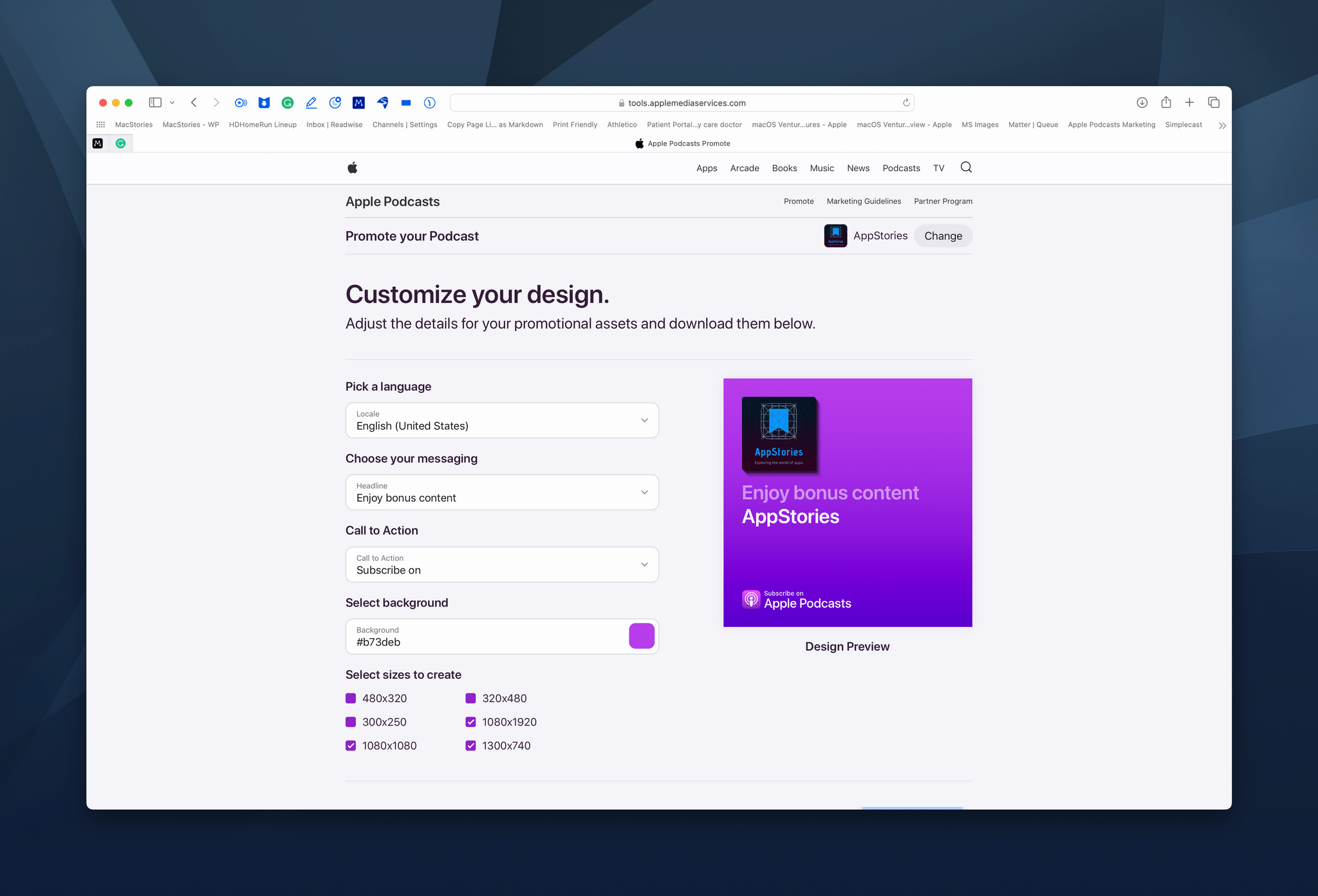
Apple has released a free web app that lets podcasters create artwork and links to promote their shows on Apple Podcasts. The app offers several customization options that should appeal to a wide variety of creators who want to market their shows on Apple’s service. Still, there are a couple of limitations worth keeping in mind.
Apple’s tool offers several options, but the marketing messages are limited to a predefined list.
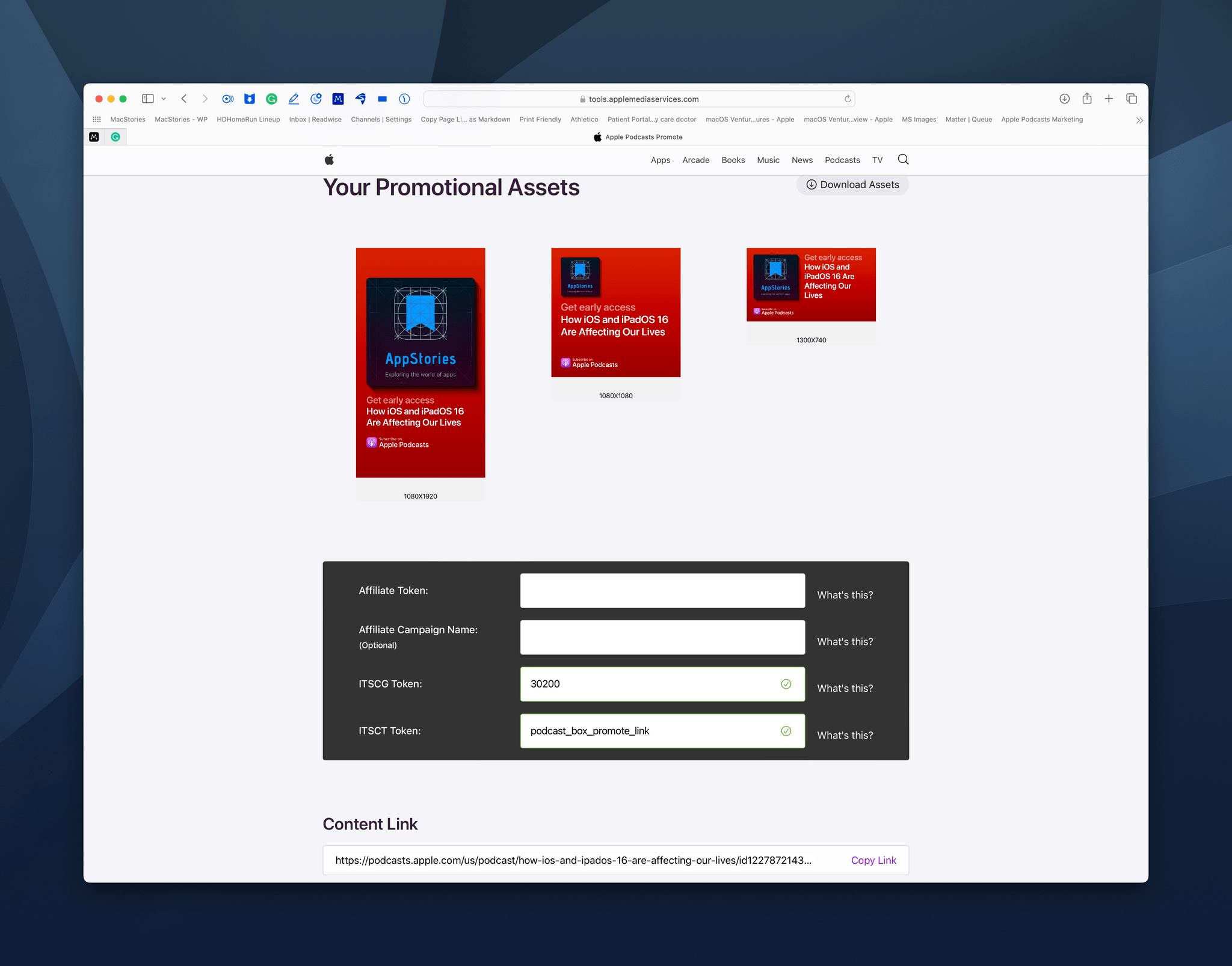
At its core, Apple’s tool makes it easy to generate promotional artwork in several predefined sizes along with links that can be posted to social media to promote a show, an episode, or an Apple Podcasts channel. Six size choices cover the standard artwork specifications for most social networking services. By default, the artwork is generated with a purple gradient that matches the Podcasts’ app color scheme, but you can change it to whatever you like.
Shows that offer Apple Podcasts subscriptions can promote bonus content and other perks to users.
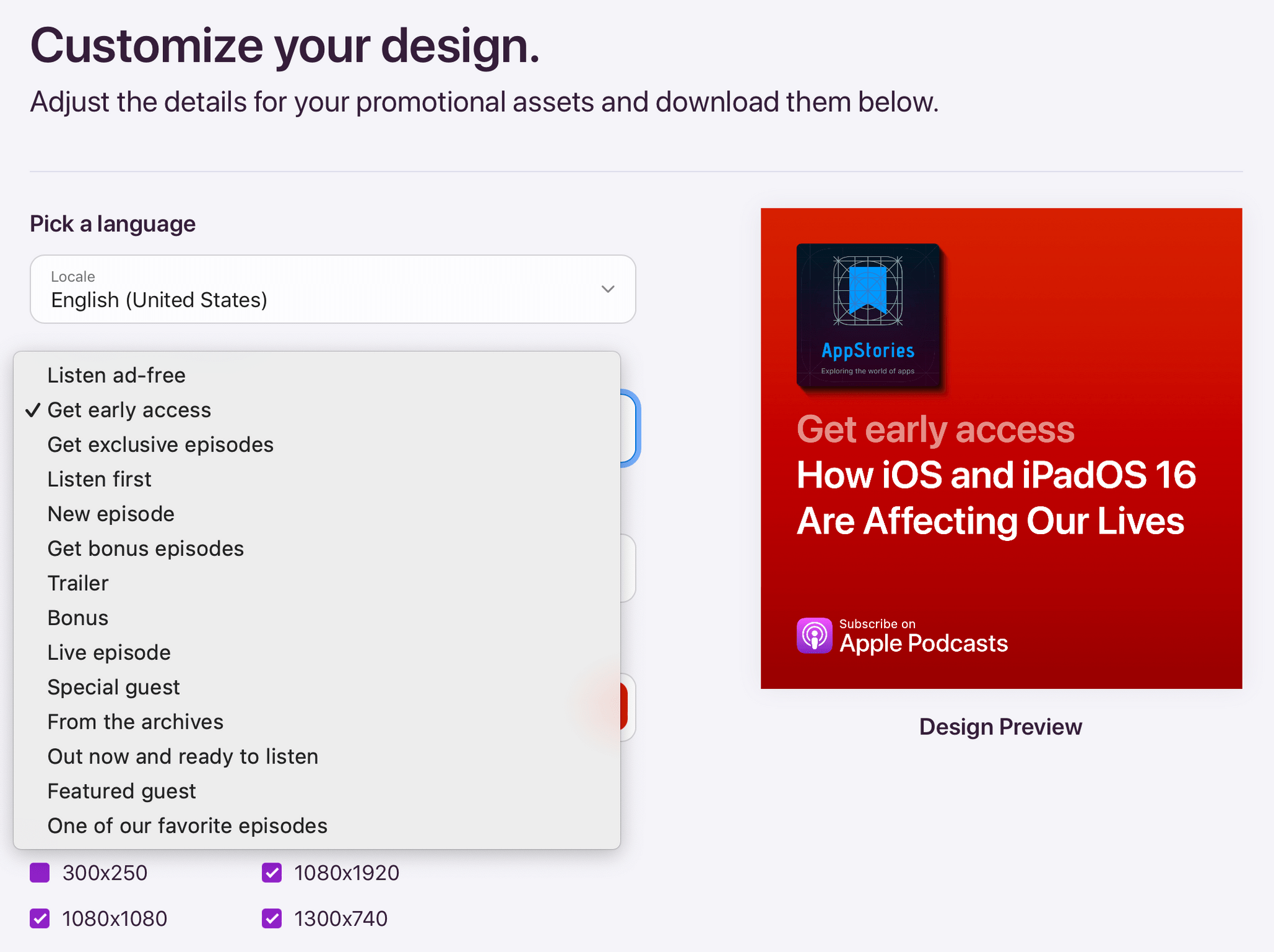
There are several messaging options tailored to whether a show is free or offers a subscription version.
The tool also provides several predefined messages that are applied to the artwork, the number of which depends on whether a show is free, paid, or free with a paid option. Shows that rank among Apple Podcasts’ Top Shows have the option of promoting their rankings too. However, there is no option to craft your own marketing message for the artwork, which is a little disappointing but not surprising.
Promotional art comes in multiple sizes for different social networks, and URLs can include affiliate parameters.
Apple’s new marketing tool for social channels works well and generates good-looking artwork with minimal effort, making it a nice option for anyone with limited time and resources. However, it’s worth keeping in mind that the tool is limited to Apple Podcasts. The messaging options are limited too. You’ll need a different solution if you’d rather promote your podcast’s own website, another podcast directory, or use a marketing message not offered by Apple. Still, because such a large percentage of many shows’ audiences listen using Apple Podcasts, the company’s new tool is an excellent way to reach those listeners and potentially grow that segment of your audience.
Club MacStories: Weekly and monthly newsletters via email and the web that are brimming with apps, tips, automation workflows, longform writing, early access to the MacStories Unwind podcast, periodic giveaways, and more;
Club MacStories+: Everything that Club MacStories offers, plus an active Discord community, advanced search and custom RSS features for exploring the Club’s entire back catalog, bonus columns, and dozens of app discounts;
Club Premier: All of the above and AppStories+, an extended version of our flagship podcast that’s delivered early, ad-free, and in high-bitrate audio.








](https://cdn.macstories.net/banneras-1629219199428.png)