


Here are today’s @MacStoriesDeals on iOS, Mac, and Mac App Store apps that are on sale for a limited time, so get them before they end!
#MacStoriesDeals - Wednesday
Google Chrome 11 Officially Released In Stable Channel
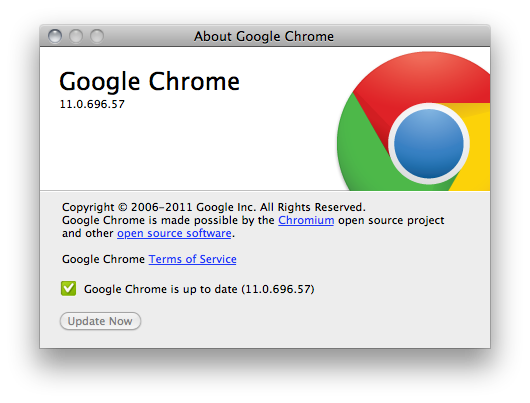
A few minutes ago, Google announced the release in the Stable Channel of Google Chrome 11 for Mac, Windows and Linux machines. The new version (labelled 11.0.696.57) has been in development for months in the beta and developer channels, hitting the “stable” status (meaning it’s ready for public consumption and download from Chrome’s official page) today. Google Chrome comes with several bug fixes and performance enhancement, and it contains “some really great improvements including speech input through HTML” – announced by the Google team here. With this feature, you’ll be able, for example, to literally “speak” some words to translate to another language in Google Translate, and have the results available as text in the browser.
You can check for updates in Chrome 10 to download the new Stable version, or start a direct download here.
The MacLegion 2011 Spring Bundle

A week or so ago, I discovered a new bundle/sign-up page on twitter. I added my email address and patiently awaited to hear more. They have been teasing followers with tweets but last night at midnight EST, MacLegion was revealed. I checked out the site and am very pleased with its offerings. MacLegion’s 2011 Spring Bundle is 10 quality Mac apps for $49.99 (a $552 value). We’ve seen many bundles similar to this price point, but this one really stands out.
The inaugural Spring bundle contains an arsenal of apps aiming at productivity and usefulness of your Mac. There are no games or social media apps, only rich and powerful tools to help you take on your project goals, and better enhance the way you use your Mac. Read more
White iPhone’s Proximity Sensor and Death Grip Demoed On Video
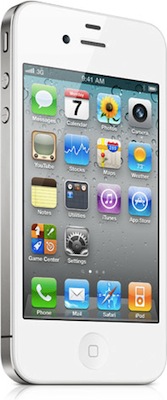
The saga is over. The white iPhone 4 is finally launching tomorrow in 28 countries after a 10-month delay, and Apple seems to be pretty happy about it so much that they’ve decided to dedicate a special spot to the device on the company’s homepage. Well then, what’s so different about the white iPhone - you may ask. Not much: it’s white, and it’s got a different proximity sensor design, quite possibly due to the use of white paint. But besides this minor design “feature”, it’s just an iPhone 4 running iOS 4.3.1 by default (you’ll have to upgrade to 4.3.2 if you buy one tomorrow) and coming with a fancy new retail box.
Italian website iSpazio, however, decided to test the white iPhone 4 [Google Translation] they managed to buy yesterday ahead of the official launch, to see whether or not the new proximity sensor works better than the one found in the black iPhone. Together with that, they ran the usual “death grip” test – with the obvious result that the iPhone seems to lose one bar, but signal isn’t compromised. Again, since the software updates Apple released last year the “death grip” hasn’t been much of a problem for anyone: though, it’s become part of the unboxing and testing tradition Apple fans rely on for each new product launch.
The demo videos are embedded below. In case you missed it, check out the first white iPhone unboxing video here.
Read more
Apple, Location Services & The “Improved Traffic Service”
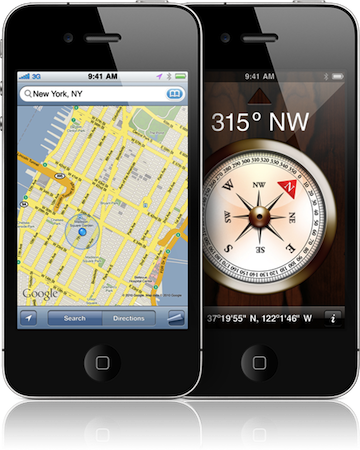
In Apple’s official response to the location tracking issue uncovered by security researchers last week, an interesting tidbit seems to confirm that the company is seriously committed to delivering improved mapping and navigation software to iPhone users by focusing on building a new “traffic service” to roll out publicly in the next couple of years. From the Q&A:
What other location data is Apple collecting from the iPhone besides crowd-sourced Wi-Fi hotspot and cell tower data?
Apple is now collecting anonymous traffic data to build a crowd-sourced traffic database with the goal of providing iPhone users an improved traffic service in the next couple of years.
The wording of the statement isn’t clear (some suggest “traffic” may be related to “internet traffic” according to specific locations), but let’s just play along and assume it’s linked to the turn-by-turn navigation software and new mapping features for iOS devices Apple has been rumored to be working on for a very long time. If “traffic” is related to navigation and mobile maps, there’s plenty room for speculation after today’s press release: in the past years, several job listings on Apple’s website hinted at open positions in the iOS team for map engineers and navigation experts, suggesting that Apple was working on its own proprietary solution to ditch Google Maps on the iPhone, iPod touch and iPad. The acquisitions of mapping companies Placebase and Poly9 in 2009 and 2010, respectively, gave some credence to the reports that pointed at Apple willing to become the next major player in the mobile mapping scene. Read more
OneNote For iPhone Receives Solid Update

Microsoft’s iPhone client of OneNote received a solid update yesterday, its first major update since launching in January, and it improves and fixes a number of key aspects to the app that have been heavily requested by users. For those that are unaware of what OneNote is, it is a note-taking application that comes bundled with some versions of the Microsoft Office Suite and many compare it to Evernote, which is very similar in purpose.
Central to the 1.1 update has been improving the navigation of the app so that its users can get to and from parts of the app easier and quicker. As a result there is now a simplified sign-in screen, a home button to quickly return to the notebook view and just generally faster syncing and app performance. Furthermore users can now email notes to themselves or others and deletion of notes has also been revised to be simpler.
Microsoft has certainly not been resting on its laurels in recent times and has been making a concerted effort to produce quality apps for the iOS ecosystem of apps. The recent Bing iPad app is one such example of Microsoft developing quality software for iOS, as is Photosynth and indeed this OneNote app, a strong companion app to the desktop client.
[Via Supersite for Windows]
iPad 2 Launching In Twelve More Countries This Week
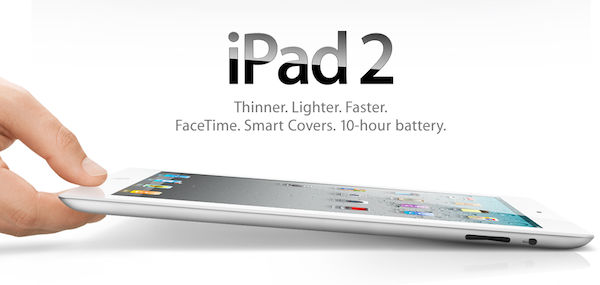
In what is a big morning for Apple Press Releases, Apple has additionally confirmed that the WiFi editions of the iPad 2 will be launching in 12 more countries this week including Japan, Hong Kong, Korea and Singapore. Japan will begin this next phase of the iPad 2 international launches, after being delayed for a month, launching the iPad 2 tomorrow on April 28.
The other eleven countries, including Hong Kong, India, Israel, Korea, Macau, Malaysia, Philippines, Singapore, South Africa, Turkey and UAE will begin selling the WiFi editions of the iPad 2 starting on April 29, this Friday. China will also get the WiFi iPad 2s next week starting May 6th. In all the countries it will be available, as always, in Apple Retail stores, Authorised resellers and online (starting at 1AM).
There is no word on why it is only the WiFi editions of the iPad 2 launching but one would suspect supply constraints, and Apple is promising further international launches of the iPad 2 in the future.
Apple Responds To Location Log Scrutiny With Extensive Q&A Response
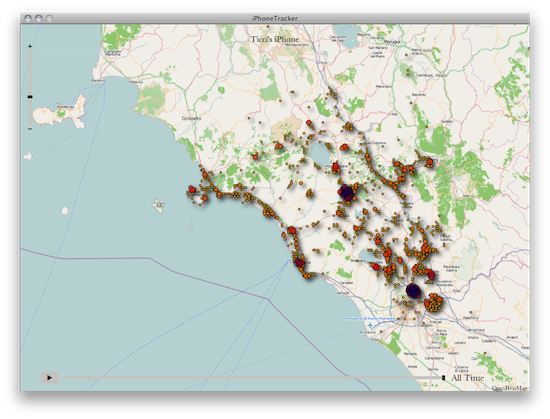
Apple has today responded to the intense media scrutiny over the iPhone and 3G iPad location log that researchers claimed logged extensive data, by posting a lengthy Q&A response. Jump the break for the full Q&A.
In its response Apple categorically states that “Apple is not tracking the location of your iPhone” and differentiates that the location log exists as a database to of Wi-Fi hotspots and cell towers around your current location so that when requested, current location data can be given quickly without waiting on the GPS which can take “up to several minutes” to calculate. By leveraging on Wi-Fi hotspots the iPhone can triangulate its location “within seconds”, these calculations are done with a crowd-sourced database of Wi-Fi hotspots and cell tower data that is “generated by tens of millions of iPhones sending geo-tagged locations of nearby Wi-Fi hotspots and cell towers in an anonymous and encrypted form to Apple.”
A portion of the crowd-sourced data (relevant to your location) is downloaded to the iPhone, and is left unencrypted - this is what the researchers discovered. “The location data that researchers are seeing on the iPhone is not the past or present location of the iPhone, but rather the locations of Wi-Fi hotspots and cell towers surrounding the iPhone’s location, which can be more than one hundred miles away from the iPhone”.
However Apple notes there are several issues that they plan to address in a coming software update in the coming weeks. These include ceasing the practice of syncing that location cache to a computer, reduce the size of the crowd-sourced Wi-Fi hotspot and cell tower data stored on the iPhone and delete the cache when Location services is turned off. The cache will also be encrypted on the iPhone in the software update.
Apple also addresses related privacy concerns, noting that “Apple will continue to be one of the leaders in strengthening personal information security and privacy.”. In particular it states that it does build a crowd-sourced traffic database but this is anonymised, as is everything else sent to Apple and as such can not be used to identify individual users. Furthermore third parties gain access to crash logs (which are anonymised) and the iAds system can use location to target specific ads, but this information is not sent to advertisers.
Jump the break for the full Q&A.
Apple Confirms: White iPhone Tomorrow
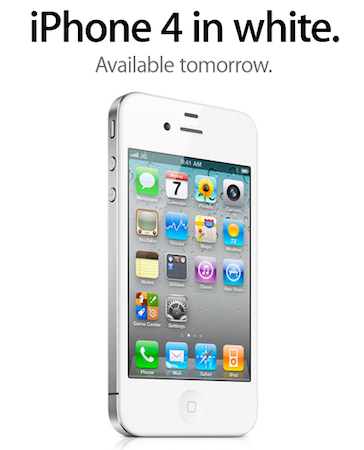
With a press release that just went out, Apple confirmed that the white iPhone is launching tomorrow. After much speculation and several units already sold in Belgium and Italy, Apple finally announced that the white iPhone will be available on Thursday, April 28, in 28 countries. In the United States, it will be available both on AT&T and Verizon Wireless. Price is the same of the black iPhone 4: $199 for the 16 GB model and $299 for the 32 GB, with a two-year contract.
The white iPhone 4 has finally arrived and it’s beautiful,” said Philip Schiller, Apple’s senior vice president of Worldwide Product Marketing. “We appreciate everyone who has waited patiently while we’ve worked to get every detail right.
The white iPhone will be available tomorrow in Austria, Australia, Belgium, Canada, China, Czech Republic, Denmark, Finland, France, Germany, Hong Kong, Ireland, Italy, Japan, Luxembourg, Macau, Netherlands, New Zealand, Norway, Singapore, South Korea, Spain, Switzerland, Sweden, Taiwan, Thailand, UK and the US.
Read more