Instaview Giveaway, Unique Mac Instagram Viewer

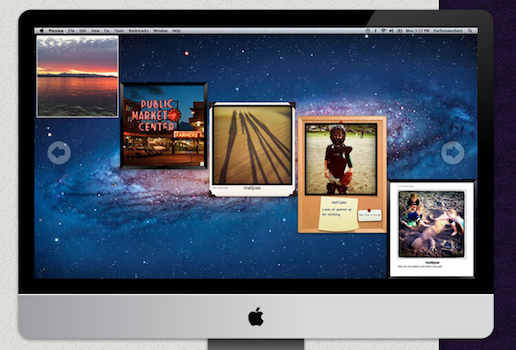
We’re currently running a giveaway of Saver (for iPhone) and Foliozo (for iPad) - now its time for a third giveaway this week, a Mac app! We’re giving away 5 copies of Instaview, which at its core is a unique Instagram viewer for your Mac desktop. With Instaview you can create multiple ‘windows’ that each contain an Instagram stream, each window can also be customised with different frames and borders.

The streams available include everything from the Popular and your following feeds to location and tag-based streams and more. Just like the Instagram iPhone app you can comment and like images as well as follow (or unfollow) people. All in all, Instaview is a very customisable Instagram app for the Mac that also adds a nice touch of decoration to your Mac’s desktop.

Be sure to check out the full feature list of Instaview, which you can purchase from the Mac App Store for $7.99. However if you are interested in winning one of the 5 copies of Instaview that we are giving away, be sure to jump the break for all the details.

Read more


Yoink: Enhanced Drag & Drop for Lion’s Full-Screen Apps

As I noted in my MacBook Air 13-inch review, the smaller the screen, the better full-screen apps get on Lion. For those still unaware of the new feature, OS X Lion comes with the possibility of enlarging applications to fill the entire screen – thus the name “full-screen mode” – so that, similarly to iOS, users can focus on one app at a time. Whereas some full-screen apps can look comically large on bigger displays such as a 21.5-inch iMac or Apple Thunderbolt Display, I found that smaller screens make more sense in regards to full-screen mode in that you don’t feel like you’re wasting available pixel space. Apple’s system applications have already been updated to take advantage of full-screen mode, and we’ve seen third party developers starting to play around with the new API as well, coming up with interesting solutions to modify the user interface accordingly to full-screen mode.

Personally, I have enjoyed using apps like Evernote, Sparrow and Reeder in full-screen mode on my MacBook Air. With a four-finger swipe, I can easily switch between these apps, and go back to my main desktop where all my other application windows reside. However, as full-screen apps live in their own separate graphical environment, I wished on a couple of occasions that Apple would implement an easier method to move files between spaces and full-screen apps in Lion. Rather than delving into the technical details of drag & drop and APIs, here’s a practical example: say I run Sparrow in full-screen mode, and I need to quickly drop an attachment onto a new message window. I could use the app’s “attach file” dialog, but drag & drop would be more intuitive. On Lion, there’s no simple way to drag files from Desktop 1, and drop them into a full-screen app. In fact, the “easiest” trick I’ve discovered to achieve such a functionality is to click & hold a file, hit the Mission Control key on my MacBook Air’s keyboard, select a a full-screen app and wait for it to “spring load” (e.g. the window flashes and after a few seconds comes in the foreground), then drop the file. Clumsy and slow.

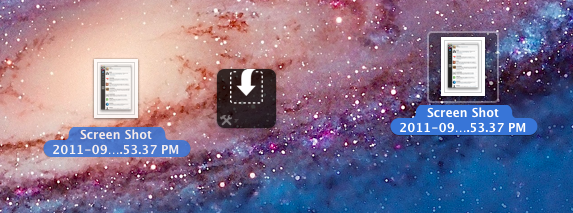
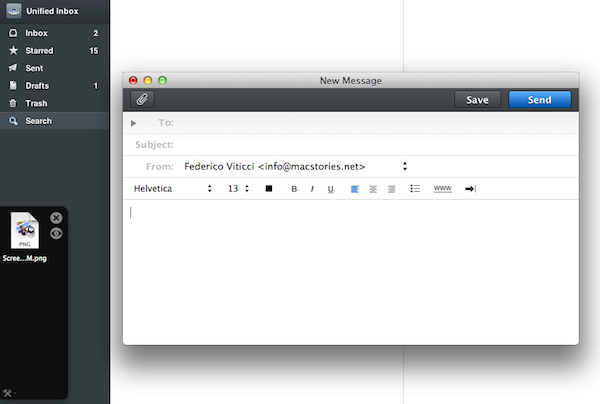
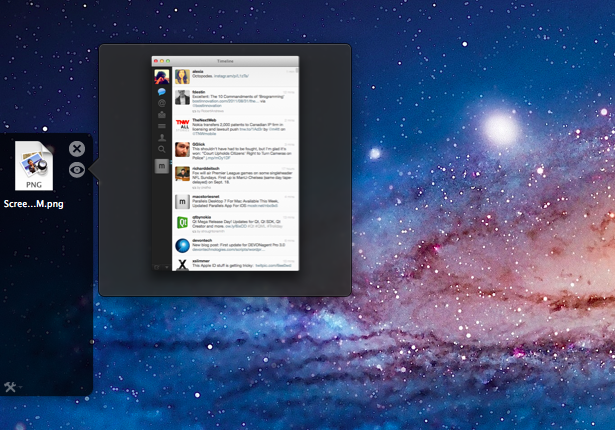
A new app by Eternal Storms – makers of Flickery and ScreenFloat, among others – called Yoink, aims at improving Lion’s behavior with drag & drop and full-screen apps. Built from the ground-up with Lion-only APIs, Yoink places an unobtrusive, translucent “shelf” at the side of your Mac’s screen every time you start dragging a file. Drop the file in there, switch to your full-screen app with a gesture, get the file out of the shelf. Done.

Yoink is a drag & drop assistant for Lion, in that it provides you with a virtual “safe zone” to temporarily store files – or rather, links to them – you want to move from one location (say your desktop) to another space or full-screen app.

Yoink doesn’t “copy” a file, or multiple ones, to its shelf: it only acts as a bridge between the original file, and the destination of the drop. So, back to my Sparrow example: I can select a bunch of files from my desktop, drop them into Yoink, switch back to Sparrow with a gesture, and get the files out of Yoink. Very simple. This works with any full-screen app, any space – Yoink works wherever you can drop a file. In fact, nothing stops you from using the app as a drag & drop utility for your Finder windows instead of full-screen apps, although the app is clearly focused on the latter.

In my tests, I’ve found Yoink to be very lightweight in memory footprint, and easy to use. The app only appears when you start dragging a file – you won’t see its window all the time – and you can customize it to sit on the left, or right of the screen. Alternatively, you can tell Yoink to quickly move next to your cursor as you drag a file, then go back to screen’s side. Yoink can store multiple files, Quick Look them, and let you scroll and select multiple items with CMD-click.

Yoink is available at $2.99 on the App Store, and you can head over the developer’s website to check out a demo video and get a better idea of the app in action. If you work with full-screen apps on a daily basis and you’d like to enhance Lion’s drag & drop support, Yoink is a must-have.


Mac Utility Cocktail Gets Updated To Support Lion

A few days ago the popular Mac utility, Cocktail, received an update to add Lion compatibility. The new version 5 of Cocktail also adds new Automator actions, fixes bugs and sees improved documentation. If you are unfamiliar with Cocktail, it’s a utility that gives users the tools to clean, optimise and repair their Macs. There is a mix of maintenance tools, tweaks and power user options for everything from adjusting disk options to clearing various caches to customizing the look of OS X.

Jump the break for some screenshots of the new Lion version of Cocktail. You can also download a free demo of Cocktail (limited to using it 10 times) with lifetime licenses start from $19 for a single-user.

Read more


Parallels Desktop 7 For Mac Available This Week, Updated Parallels App For iOS

Earlier today Parallels Desktop 7 for Mac was unveiled, bringing more features and substantial speed improvements to the popular desktop virtualisation software. Headline features of the new version include greater Lion support such as Full Screen Mode and Mission Control, iSight/FaceTime Camera support and those speed improvements which include up to 60% faster resuming and 45% faster 3D graphics.

Mac Developers will now be able to emulate a copy of Lion in Parallels whilst on a Lion installation as per the new Lion license agreement. Installing Windows has also been simplified with a “Windows on Demand” service offering users the ability to instantly purchase and download Windows - particularly helpful for those with new Macs that no longer include DVD drives. Walt Mossberg reviewed the new Parallels on his Late-2010 MacBook Air and said it “ran Windows quickly and smoothly, and integrated well with some of Lion’s new features”.

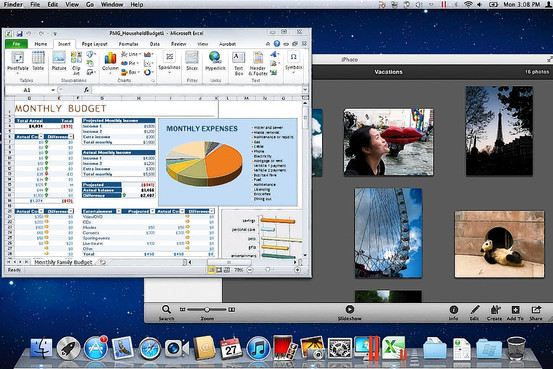
Windows, and Windows programs, can be displayed in Lion’s new Launchpad feature, which mimics the main screen of an iPad. They also show up and behave like Mac programs in Lion’s new Mission Control feature, which shows all the programs running on the Mac in miniature. Windows programs can also run in Lion’s new full-screen mode.

Also revealed today was that the Parallels Mobile App is receiving a substantial update so that it can completely control a users Mac rather than just the virtualised environment as had been the case prior to this update. The app, available for the iPad, iPhone and iPod Touch, is on sale at a special introductory offer of $4.99 but the update is free to existing users.

Parallels Desktop 7 for Mac is available from today for those upgrading from Parallels 5 or 6 at a cost of $49.99 whilst it will be available generally on September 6th for $79.99. There is also a Student edition available for $39.99, a ‘Switch to Mac’ edition available for $99.99 (which comes with a number of Mac video tutorials) and there are also Enterprise volume licences available.

Jump the break for some promo videos of the new Parallels products.

[Via AllThingsD]

Read more


Apple Posts New iPad 2 Advert: “Learn”

Apple has today uploaded a new iPad advert to their YouTube Channel. Like previous iPad adverts, it has a central theme - in this case it is “Learn”, which is also the title of the advert. The entire advert is dedicated to showcasing some standout apps that help people learn. As usual there is nothing related to price or specification, just clips of people experiencing the iPad and the apps that make it great.  Some of those apps shown include the TED talks app, Chinagram, iBooks and GarageBand, but in total there are 10 that are shown.

Are you curious about new ideas, do you want to learn a new language, or just a new word? Maybe you want to know more about anatomy, or astronomy. You could master something new, or uncover a hidden talent. There’s never been a better time to learn.

Jump the break to see the advert for yourself and jump over to the Apple YouTube Channel to see more of the iPad adverts.
Read more


Tunesque: iTunes Search Made Easy From The Menubar

Many people claim searching any of Apple’s iTunes Stores is tedious, inane work. You have to launch an app, navigate to the search box and type for your result - and that’s only for searching one of Apple’s services at a time. Now imagine a ‘mythical’ Mac app that lets you search the Mac App Store and iTunes App Stores at the same time.

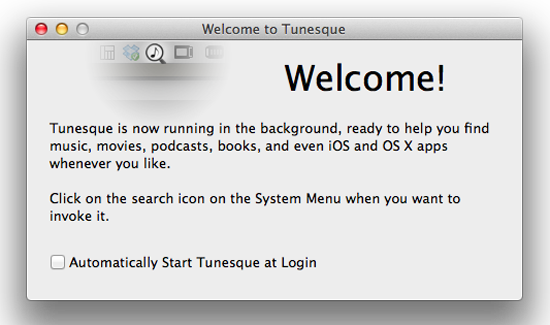
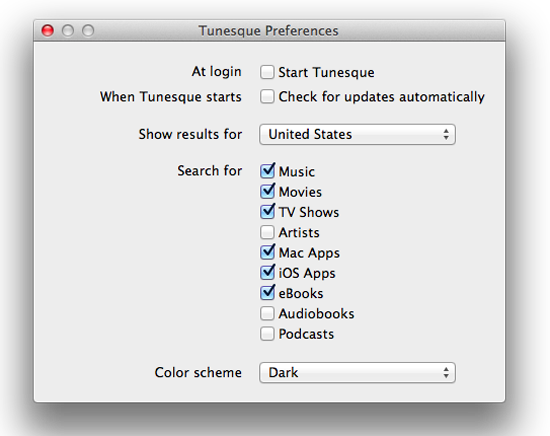
It’s no myth - enter Tunesque by AFK Studio. Tunesque lives in your Mac’s menubar: click the icon, and start typing to finds apps, music, movies, and books across all stores and “app stores” without having to manually launch them. If you feel Tunesque’s search is too broad, simply open the Preferences and define what categories you want to search for – you can check them all or just a few. Plus, the app works with your local iTunes Store, anywhere in the world, so you can select which international store you need and go.

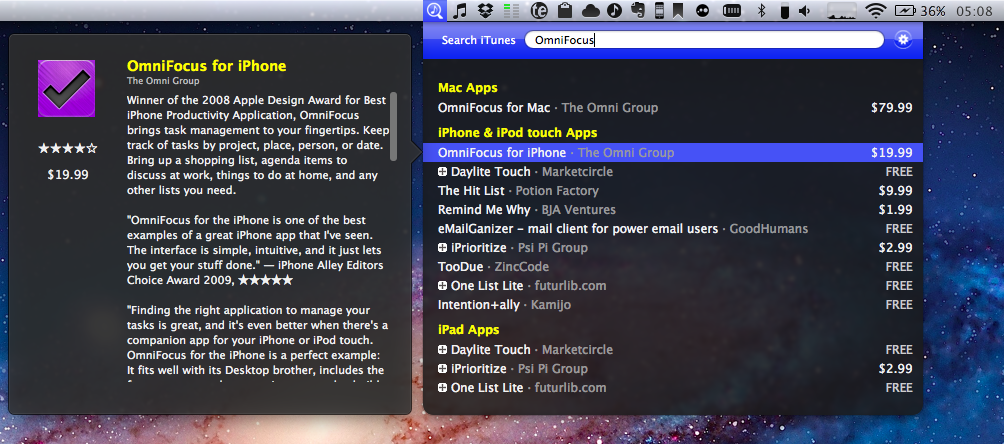
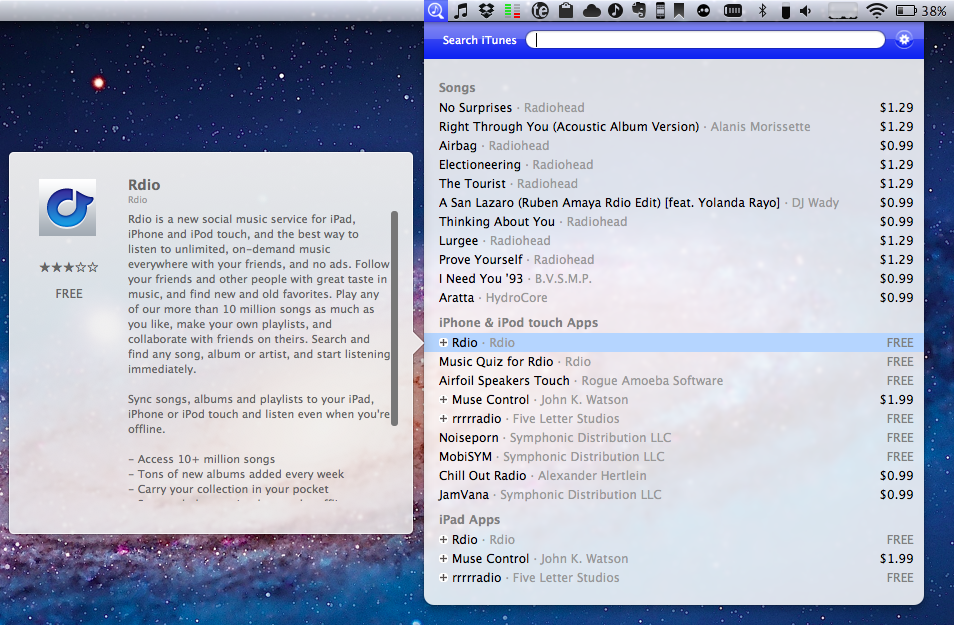
Tunesque has 2 color schemes, light and dark, so you can pick the mood you’re in that day while you search for that new Pantera single. I prefer the light scheme as it matches the OS better, but some people may like the dark tone for added contrast. The app could be improved with a global hotkey in the prefs, though clicking the menubar icon is still faster that a traditional search method.

Once you enter a search term, let’s say OmniFocus, you can arrow down through the results (it even lists prices) and a hovercard will pop out to the side giving you the app’s description - this is a nice feature.

Tunesque is available from the app’s website and is a small download - only 811kb, with a smaller price - free. Please note that when you use Tunesque to find apps, Apple pays the developers a small commission via iTunes’ affiliate service but this doesn’t affect the price to the customer. A direct download for the app can be found here.

If you search the App Store and iTunes more frequently than browsing, Tunesque will be a great time saver.


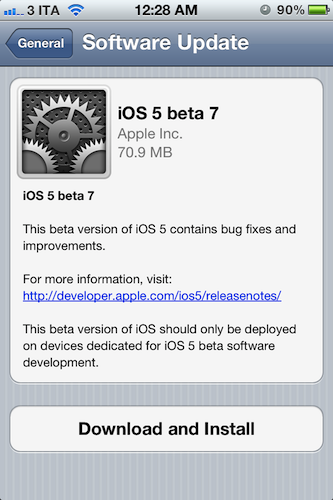
Apple Releases iOS 5 Beta 7

Apple has just pushed iOS 5 beta 7 to developers, releasing the new build through Software Update on iOS devices. At the moment of writing this, the iOS Dev Center still reports beta 6 as the latest version available. iOS 5 beta 6 was seeded on August 19, bringing several bug fixes and performances improvements to the next major version of iOS that’s expected to become publicly available this Fall.

iOS 5 comes with new features such as direct Twitter integration, PC-Free setup, iCloud support, and a new notification system. We will update this post with more information on the latest beta as it becomes available.

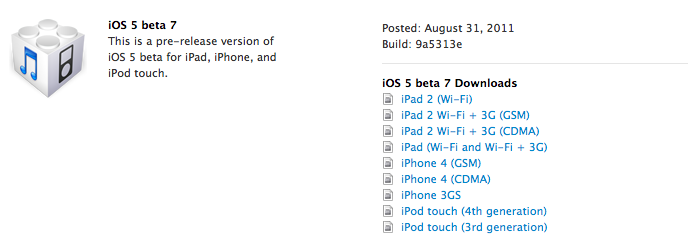
Update: iOS 5 beta 7 is now available on the Dev Center alongside a new Xcode Developer Preview, iTunes 10.5 beta, and Apple TV Software.


Another iPhone Prototype Lost In A Bar

As reported  by CNET, in a bizarre turn of events it appears Apple may have lost another unreleased iPhone model in a bar, this time at the Cava22 in San Francisco. According to the website, Apple never filed a police report based on such loss, likely from an employee field-testing the unit, although it ”sparked a scramble by Apple security” in an effort to recover it quickly. The device, CNET says, was lost in July. Rumors surrounding the next-generation iPhone date back to late 2010, although they have intensified lately as the company approaches the rumored October release date for the “iPhone 5”.

You may recall last year’s loss of an iPhone 4 prototype, which was lost by an Apple employee and sold to Gawker Media’s Gizmodo. Steve Jobs eventually joked on the incident, but Apple did intervene in a legal action against Gizmodo and the “seller” of the device, saying that unreleased prototypes are “priceless” in regards of the kind of information that gets out to competitors ahead of time.

This year’s lost iPhone. however, hasn’t showed up on the Internet yet, and it may have been sold on Craigslist for around $200.

Apple electronically traced the phone to a two-floor, single-family home in San Francisco’s Bernal Heights neighborhood, according to the source.

When San Francisco police and Apple’s investigators visited the house, they spoke with a man in his twenties who acknowledged being at Cava 22 on the night the device went missing. But he denied knowing anything about the phone. The man gave police permission to search the house, and they found nothing, the source said.

Apple usually goes to great lengths in order to protect its iPhone prototypes, using special cases to make these devices look like older models, as with last year’s lost iPhone 4 that was actually found inside a 3GS-like case. It’s not clear whether this year’s (allegedly) lost iPhone is the same version that will end up in consumers’ hands later this year, or if it’s an iPhone 4 prototype running a faster chip that was apparently sent to developers for testing months ago. CNET’s report doesn’t specify whether Apple ever got the phone back, and Craigslist didn’t respond to a request for comments, either.


Customize Your Mac’s “Paste and Match Style”

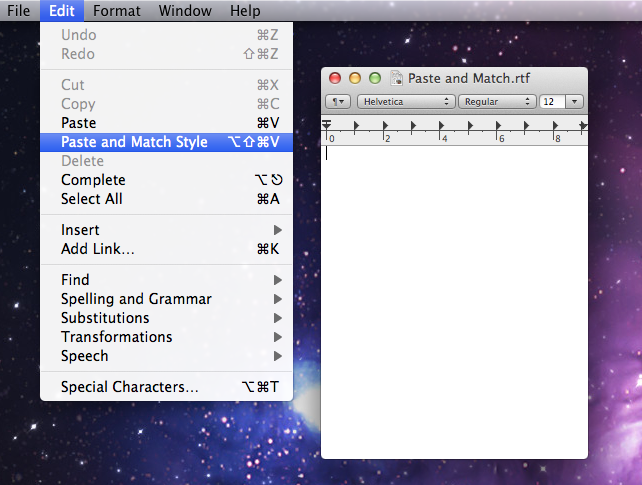
On the Mac, the paste function associated with the CMD + V keyboard shortcut has a well-known side effect: if you’re writing a document and you paste something from your clipboard, the document’s style won’t be automatically matched. Quite possibly a “feature” per Apple’s design choice, since I switched to the Mac I’ve always been annoyed by such “remember every style” behavior, and from the reaction I’ve seen on Twitter, it turns out quite a few people dislike when they end up with weird styles in their outlines or email messages as well.

But, you might argue, there is a way to paste and match style, and that’s represented by the ⌥⇧⌘V shortcut…which requires four fingers to execute, and it’s not always implemented in the same way in third party apps. Chrome, for instance, uses ⇧⌘V, and many other apps follow a similar trend to modify the default shortcut for Paste and Match Style.

In the past few days, I’ve come across some interesting solutions to unify Paste and Match Style with a simpler keyboard shortcut, and make it the default paste action on OS X if you never want to paste with “styles”. This can be particularly handy for writers, who often prefer a plain text environment or a styled one that’s, however, consistent throughout a document. Read more