It’s Time To Change iTunes

Jason Snell makes the case for a new, better iTunes over at Macworld:

If Apple’s going to embrace the cloud wherever possible, it needs to change iTunes too. The program should be simpler. It might be better off being split into separate apps, one devoted to device syncing, one devoted to media playback. (And perhaps the iTunes Store could be broken out separately too? When Apple introduced the Mac App Store, it didn’t roll it into iTunes, but gave it its own app.)

In March 2010, a few days ahead of the original iPad’s release, I wrote:

iTunes is obsolete,and so is the concept to use iTunes as a centralized hub for music, videos, photos, settings, backups, calendars – basically, everything. Think about it: all the stuff you have on your iPhone was either created on the iPhone itself or synced via iTunes. You can’t transfer information from your computer to the iPhone without iTunes. And thus I think Apple has been very lazy in these past years, not willing to update iTunes or finding another solution for our needs.

To which I followed-up in September 2010 after the introduction of Ping:

iTunes is a bloat. Slow. Unresponsive. Clunky. A huge piece of software with thousands of features in it, a couple of online Stores and now a social network, too. A few times in the past I wrote that Apple needed to move this stuff out of iTunes, or at least re-imagine the whole purpose of the app. Many said that would happen with the 10 version. Not so fast. Apple doesn’t want to change iTunes. Thus, the feature creep. Not only they left the Stores, apps, books and sync options in iTunes – they thought that adding a completely new layer of social networking would be a good idea. Again, I’m not criticizing Ping: I’m talking about iTunes as an outdated container of features.

I’ll tell you what’s wrong with iTunes: in the age of iCloud, iTunes is a weirdly old-fashioned desktop software to organize media and manage devices in the same way we did 10 years ago. Only with more features and content types. iTunes is the epitome of old interfaces and interactions trying to hold onto the present.

iTunes works, but it doesn’t work simply. It’s not just complex, it’s complicated and not intuitive: I can’t tell you how many times I was asked by less tech savvy friends about backups, syncing apps, music playlists, video conversions, iOS folders, Address Book contacts, and even software updates. Jason makes some great points in his article – it’s time to simplify. People don’t “get” iTunes anymore. Is it a music app or a media manager? Or is it a device management tool? A Store? A social network? A horse? A radio?

iTunes tries to do so much while doing so little to help users understand its features and differentiate between computer content, cloud content, and device content. Worse, because iTunes is so full of preferences and dialogs, sometimes it’s not clear what it is trying to do, and this often leads to deleted apps, corrupted music libraries, and ever-downloading podcasts. It’s not that Apple hasn’t educated users over the years; but there’s just so much help documents and subtle UI refreshes can do once hundreds of features have users confused and frustrated.

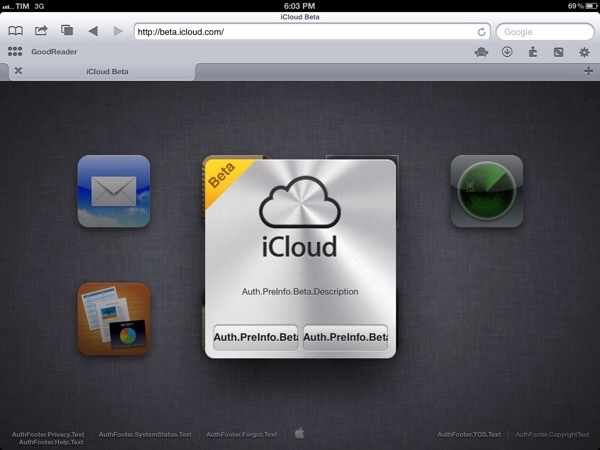
More importantly, iCloud has shown that a better way to manage media and apps for Apple’s devices is possible. And that is, no management: songs and movies downloaded from the iTunes Store are stored in the cloud and they don’t have to be converted; apps are stored in your Purchases and they are downloaded instantly on all your configured devices. Third-party podcast apps that have implemented iCloud sync are infinitely better than podcast support in Apple’s apps. iCloud keeps your bookmarks, notes, contacts, and emails in sync. iTunes Match even keeps your entire music library in the cloud, available at any time. iCloud is the future of Apple’s ecosystem.

So why are we still using iTunes? This is the question we should be asking. And admittedly, the majority of us are doing so for the extra convenience of media on our desktop computers. iOS devices aren’t always connected to a WiFi network, and they are limited in storage. It’s more convenient to keep large libraries of songs, movies, TV Shows, apps, and books on a computer. At least for now.

Is a world without iTunes possible? Maybe, but not today. People still need to be able to keep all their apps locally, alongside their music and movie files. In an ideal world, everyone is buying music and movies from iTunes, but in the real world people use web browsers to download media, and they want iTunes for that. Not to mention the features that iTunes sports on the desktop, which still haven’t been brought back to iOS. The way forward, however, clearly brings us to iCloud: with time, people will get used to iCloud even more, and Apple will improve its infrastructure in terms of reliability and functionalities. The fact that Apple is drifting away from a centralized desktop hub to a persistent hub in the cloud is also confirmed by the direction Apple is taking with Mountain Lion: aside from general iOS resemblances, the Notes app will be coming to the desktop, syncing its content with iCloud, no need for iTunes. And if the “iTunes in the cloud” initiative is of any indication, perhaps iCloud will really become the fundamental backbone of media management and syncing in the future – because, in theory, it needs no management.

But until that day, the stopgap solution to manage and sync content locally needs to be better than iTunes. Maybe it’s about splitting iTunes into multiple apps that execute their functions clearly, naturally, and reliably. Maybe it’s about offering a dedicated App Store app outside of iTunes that lets you easily switch between iPhone, iPad, and Mac apps. iBooks for Mac might help in getting the books out of iTunes. Perhaps separating media playback from device management, while making everything easier to use would come in handy, too.

I hope that iCloud, as the company’s next big insight for the next decade, will help Apple provide a better solution for its users, so that in 10 years today’s iTunes will be a distant memory.


Tim Cook To Speak at D10 Conference

Apple CEO Tim Cook will be the opening night speaker at the D10 Conference, AllThingsD confirmed today. Taking place at the end of May (May 29-31) in Rancho Palos Verdes, California, the D10 conference, which celebrates its 10th anniversary this year, includes names like Zynga’s Marcus Pincus, Sean Parker, and New York mayor Michael Bloomberg among the list of confirmed speakers.

Walt Mossberg and I could not be more thrilled to announce that Tim Cook, CEO of Apple, will be the opening-night speaker at our 10th D: All Things Digital conference.

It will be Cook’s first appearance at D, as well as his first time being onstage at an event not run by Apple or for investors since he was named CEO last August.

AllThingsD’s “D” conferences saw a number of important speakers sharing their views on the world of technology on stage. As AllThingsD describes it, one of D’s greatest strengths is the focus on unscripted conversations:

D is different from other conferences: no canned speeches, no marketing pitches, and no bull. Instead, creators and executive producers Walt Mossberg and Kara Swisher put the industry’s top players to the test during unscripted conversations about the impact digital technology will have on our lives now and in the future. The results are unprecedented glimpses into the ideas and strategies of the industry’s most creative thinkers.

In Apple’s case, Steve Jobs made a series of appearances at D over the years, including one at D8 two years ago, where he famously discussed Apple’s stance on Flash, the lost iPhone 4 prototype, Apple’s internal culture, and more. The D10 conference will certainly be a good opportunity for Tim Cook to calmly and publicly go on the record about recent controversies and debates such as the one about China workers at Foxconn, the dividend, or more simply, the direction where Apple is heading.

In February, Tim Cook also spoke at the Goldman Sachs Technology Conference.


Everyme Review

Oliver Cameron thinks there’s something special, intriguing, about the address book. As a personal list that smartphone users have curated over several years, one could wonder about the stories, the people, and the interactions that are part of the creation and curation of an address book. But what can software developers do to leverage the data of our address books to redefine the way we get in touch with our closest friends?

Over the years, digital address books have exponentially increased the amount of data associated with names and phone numbers. First came dedicated fields for email addresses and contact pictures; then, when smartphones gained decent networking and data connections, the address book turned into a richer solution to store people’s information, rather than just addresses, and keep it always accessible on multiple devices through the cloud. Either through Gmail, Exchange, iCloud, or something else, it’s very likely that your address book contains names and phone numbers, but also email addresses, Twitter and Facebook usernames, location data, birthdays, family relationships, and various notes. The address book is, in fact, a people database that’s exclusive to each person. There is no address book like each other.

While the composition of an address book differs from user to user, some interactions and relationships are reflected on multiple instances of the address book, and the cloud can sometimes access a portion of these interactions to create lists of people “you may already know”. If I have you in my address book as a “friend”, maybe I also have your email address, and perhaps you have my information on your address book as well. With the right privacy settings, services like Facebook, Twitter, and just about any app with a social component these days allow us to look up friends that are already signed up by simply matching email addresses. This is a way to leverage the information stored in our address books to facilitate the sign up process for new services. They make it easier for us, using the address book we have been curating over the years.

Sometimes, however, people don’t want social apps that force them to share with everyone. Services like Twitter and Google+ are the polar opposites when it comes to determining how users engage with each other: whereas Twitter’s model of following/unfollowing may result overly simplistic to some people, Google’s insistence on Circles has found users confused by the plethora of options Google+ comes with. And then there’s Facebook, which has been experimenting for years with the concept of private groups, albeit they never really took off, and so Facebook preferred implementing deeper privacy settings, rather than forcing people to manage groups and names and lists. But is there a sweet spot between Twitter’s simplicity, Google’s circle management, and Facebook’s wide adoption both on desktop and mobile? Something that can leverage the data from our address books and social networks we’re already using to build a new platform to bring us closer to the people we know “in real life”? That’s what Oliver Cameron and his team are trying to build with Everyme. Read more


“Facebook Gets More Data”

“Facebook Gets More Data”

Matthew Panzarino has a great take on today’s Instagram + Facebook news:

Facebook doesn’t need Instagram to make money. Instagram will probably never get ads.

I think it’s a win for everyone. Now Instagram doesn’t have to shoehorn a monetization model it would hate —and you would hate — into its service in order to survive. The users get a better experience. Facebook gets more data. Users that are quitting Instagram because the service may be ‘ruined’ are barking up the wrong tree. Facebook sees the value in the network as it is, a photo creation machine with a lot of user love.

While mobile ads could be a huge deal long-term speaking, it is true Facebook doesn’t “need” Instagram to make money right now. For a company as large as Facebook, this kind of acquisitions can be put on hold from a business perspective, to see how things evolve once users figure out they are effectively using a Facebook product. But you can’t put off the mobile explosion – it’s only going to get bigger – and can Facebook afford to miss out on “mobile advertisements done right”? What if someone else figures out a way to monetize millions – soon billions? – of users sharing photos from their smartphones?

It’s a good problem to have. And I agree that access to more data (patterns such as likes matched with photo captions, for instance, or location) is what matters for now. Let’s check back on ads and mobile monetization in six months.

More Instagram + Facebook coverage here.

Permalink

Facebook, Instagram, and Ads

Facebook, Instagram, and Ads

Oli Watts thinks Facebook’s recent statement on revenue from mobile users offers a clear indication of things to come soon in newly Facebook-owned Instagram: ads.

I think the real reason for the Instagram purchase, and the incredible price tag, is access to a potentially lucrative mobile advertising product.

Mobile advertisements are potentially more lucrative than standard “desktop” web advertisements, yet most companies have been doing them wrong for years. The majority of mobile advertisements have tried to replicate the web’s model with simple images users can click to be directed to a website. Others, including Apple with iAd, have tried to do things a little differently, yet the numbers are smaller, and incredibly so, than, say, Google’s revenue with ads on search and desktop websites. Mobile advertisements could keep users more “engaged” with promoted products by leveraging aspects like location, cameras, touch, apps – yet only a handful of companies seem to be betting on the future of ads as richer experiences built for mobile, not extrapolated from computers.

Facebook is a company that along the way found a business model and a culture that allows them to believe they are doing good things. That’s in their IPO filing. With the Instagram acquisition, one can only assume Facebook will want to start making some money with it eventually, and because Instagram is mobile, and photos are huge on mobile, Facebook will find a way to monetize both Instagram and Facebook’s mobile products.

Like Instagram’s photo sharing model applied to a company like Facebook, the potential for different mobile ads is largely untapped.

Permalink

Why Facebook Bought Instagram

Why Facebook Bought Instagram

Om Malik, writing at GigaOM:

Facebook and Instagram are two distinct companies with two distinct personalities. Instagram has what Facebook craves – passionate community. People like Facebook. People use Facebook. People love Instagram. It is my single most-used app. I spend an hour a day on Instagram. I have made friends based on photos they share. I know how they feel, and how they see the world. Facebook lacks soul. Instagram is all soul and emotion.

I am indeed interested to see how, on an emotional level, Instagram users will react to the Facebook acquisition. Will the “love” Om and others mention survive the migration to Facebook’s infrastructure? Or maybe Facebook will really keep Instagram as a truly separate product, perhaps only slightly more integrated with the social network – even if that doesn’t make much sense for a $1 billion acquisition? We’ll see.

In the meantime, it does appear the “social paradigm” Instagram reinvented (here’s my take from 2010) intrigued Facebook enough to give away 1% of its market cap.

Also worth keeping in mind: the photo sharing app Facebook was building, and the popular content on Instagram.

Permalink

“Sometime Down The Road”

“Sometime Down The Road”

Yours truly, writing about the improvements to Instagram’s API in March:

Instagram, on the other hand, is taking an interesting path (no pun intended) that, sometime down the road, might turn what was once an iPhone app into a de-facto option for all future social sharing implementations. A few months from now, would it be crazy to think Camera+ could integrate with Instagram to offer antive uploads? Or to imagine built-in support for Instagram photo uploads in, say, iOS, Twitter clients, and other photo apps? I don’t think so. Just as “taken with Hipstamatic” stands out in today’s Instagram feeds, “Upload to Instagram” doesn’t sound too absurd at this point.

It took 19 days, and “upload to Facebook” has a different ring to it.

Permalink

Facebook’s Brilliant Move

Facebook’s Brilliant Move

Smart take by Dan Frommer on Facebook acquiring Instagram:

The biggest threat to Facebook is a mobile-only or mobile-first social network that captures the increasing amount of time spent on smartphones in a way Facebook can’t or doesn’t.

In my experience, that’s exactly what Instagram does. I’m still addicted to Facebook on the old desktop-browser web, but when I’m on my phone, I gravitate to Twitter and Instagram. Path is another example, but Instagram is more developed — that’s the deal I’d make, too.

That’s exactly what Facebook should be doing: take the photos experience, and invest on a more intuitive way to share quickly and nicely from a mobile device. Instagram was the best choice.

Permalink