Posts in reviews

Enhance Your Mac’s Clipboard with CmdVees

When it comes to quickly jotting items into my Mac’s clipboard and being able to access them later in a neatly organized folder view, Clipmenu is my app of choice. I’ve been using the app for years, it’s free, and it provides a lightweight yet powerful way to copy anything into your OS X clipboard – text, images, URLs, you name it. Clipmenu, also thanks to snippets and keyboard shortcuts, makes it super-easy to retrieve at any time information you copied with the standard Cmd+C. The application, however, is limited in the way it enables you to paste multiple items at once: say you’ve copied three different URLs for the ultimate Rebecca Black rickrollin’ tweet, you’ll have to hit Clipmenu’s shortcut three time (and navigate with the arrow keys) to paste those items. Open, copy, open, copy – you get it. The app keeps track of your clipboard, but it’s not aimed at letting you paste all at once with ease. CmdVees, a $0.99 app available in the Mac App Store, wants to fix this.

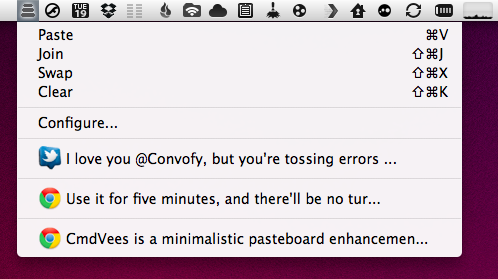
CmdVees’ concept is really simple: as you copy items into your clipboard, the app creates a stack. This stack lives in your menubar. Once you’re done copying and you want to paste all these items in a single location (say, a TextEdit window), you don’t need to invoke the application with a specific shortcut for every single item. No, you just keep hitting the default Cmd+V until you’ve pasted all the items. The cool thing is, as you hit Cmd+V the app will remove the most recent item from the stack and go to the next one – by default, hitting Cmd+V on OS X over and over simply pastes the most recent clipboard entry. CmdVees is meant for those users (like me) who copy a lot of material on a daily basis, and would like to be able to paste things all at once.

But there’s more: if you don’t feel like pressing the Cmd+V shortcut several times, you can “join” items with a single paste through a keyboard shortcut you can configure in CmdVees’ preferences. You can also swap items in the stack with a shortcut, or clear your queue entirely. Older items are accessible from a dropdown menu, plus you can specify how many items to keep in CmdVees’ history and set a time out for copied items.

At $0.99, CmdVees is a no-brainer if you’re looking for a utility that collects your clipboard items and is able to paste them all at once. I’ve noticed some compatibility issues with Clipmenu while using it, but I think customizing the settings a little bit should fix that – just in case, download a free trial here.

Doodle Over Your Desktop with Deskscribble

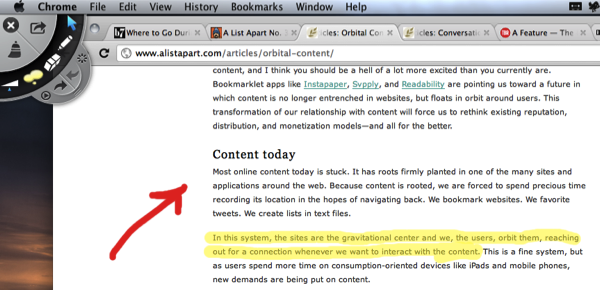
Deskscribble in use Example

Deskscribble in use Example

If you want to mark up, highlight, or simply doodle on your desktop and all of its open windows, Deskscribble for the Mac is a nifty onscreen utility for sketching over interface elements and sharing your drawings to Facebook, CloudApp, or Flickr. While I don’t find Deskscribble as useful with a trackpad or a mouse, those with a Wacom tablet in hand (the simple Bamboo would do) could have available a palette containing a highlighter, marker, and sizing tools to quickly sketch and note items on top of open windows. See a paragraph you want to emphasize? Circle it - highlight it - and upload it using a the quick shortcuts provided in the corner-positioned utility. Deskscribble offers a fullscreen implementation which hides the menubar and Object Dock, can be hidden when not in use, and allows you to doodle in any color you desire thanks to quick color shortcuts and the color wheel. While doodle’s don’t transfer between open spaces and resizing your pen size is tricky (large by default and the sizing tool is small), you can erase mistakes, undo & redo drawings, and upload a screenshot to Mac friendly online services. Deskscribble is fun to use, and lets you easily regain control of your pointer when finished so don’t have to quick the app to browse around. If you’re familiar with Cockpit and related Green & Slimy software, you’ll see how the developer’s stylings translates into new this new creation with futuristic & round design cues, and friendly icon highlights. The sketch anywhere app will set you back a cool $9.99 in the App Store.


Presence Puts Your Mac In The Cloud, Lets You Connect from iOS

Over the past few months, I have tried several iOS apps to access my Mac’s filesystem and screen while away from my home office. These apps, either standalone VNC clients like Screens or all-in-one solutions like Cloud Connect Pro, usually relied on a Mac’s built-in sharing and remote login capabilities to create a secure connection between the machine and iOS devices trying to access its contents. To work with these apps, I simply had to set up a global DynDns hostname or a VPN server so that I could log into my Mac, view files, and control its screen. The VPN method, for instance, was actually based on the same DynDns hostname I had already configured in Edovia’s Screens, Cloud Connect Pro, Plex, FileBrowser and many others. For as much as I loved being able to remotely connect to my OS  X machines with a standard web address (DynDns allows you to create a custom URL), now I can’t use it anymore. We have recently upgraded our Internet connection to a new ISP, and whilst the speed bump is noticeable and generally useful when it comes to downloading large files, the new router provided by the ISP doesn’t offer a public IP address (without entering all the details, it’s based on NAT), thus preventing me from using all those neat Mac and iOS apps that needed DynDns to be working correctly. I can access my Mac’s content locally, but as soon as I go out DynDns becomes useless thanks to the new router. This means Here, File File doesn’t work anymore in 3G, as well as Screens (through DynDns), Plex and Cloud Connect. I may have a faster Internet connection now, but the lack of DynDns support changed the way I can access my machines from outside my home network.

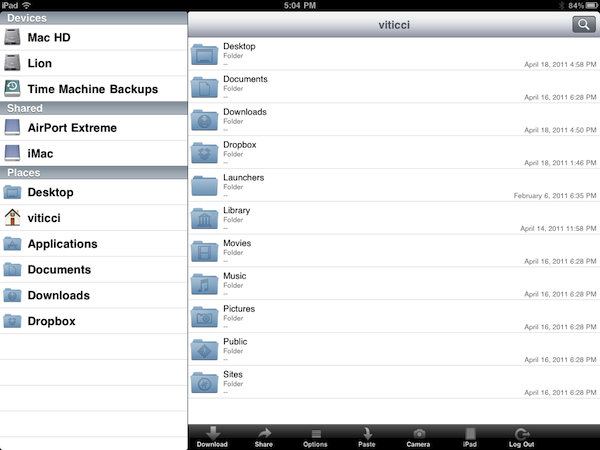
So I tried to come up with new solutions to work from anywhere in these past weeks. Screens comes with an optional Screens Connect option that lets you set up a hostname that works through Edovia’s servers (and it’s not blocked by my router) and LogMeIn comes with its own Mac application that handles connections independently. From what I’ve seen so far, apps that provide their own connections through a “server” Mac app and don’t require me to enter a global DynDns hostname are working just fine. But this also means that apps based on OS X sharing features and lacking proprietary remote access capabilities won’t work unless I change my ISP again. Presence, a new version of the popular FarFinder tool by FlyingMac, allows me to access my Mac – all its files, folders, and drives – through a web service that puts the computer in the cloud and makes it accessible from any web browser, iPhone, or iPad. Read more


Tickle Your Brain With Puzzle-Logic Game Woozzle

A good time-based brain teaser takes considerable skill and mental coordination to solve, and with Woozzle you’ll be shifting colored orbs around a series of mazes to complete the colored wheels and earn your right to a perfect 3-ball’d perfect score (the equivalent of earning three stars in Angry Birds). Woozzle spits out a series of colored orbs which fall into open slots on wheels that can be spun and aligned with maze-like ramps where you can swipe the orbs onwards to the appropriate destination. Becoming increasingly complicated as you progress, you’ll soon have to manage several paths that change direction thanks to levers, while managing incoming orbs and competing to solve the puzzles as quickly as possible. The puzzles aren’t terribly difficult to solve (you can take as long as you need to get through the sometimes grueling levels), but the faster you complete the objective, the higher score you’ll obtain. Excellent management skills are a must: you’ll have to control multiple wheels at once to prevent orbs from bouncing back and to compete for the best times.

Read more


Printopia 2.0: AirPrint From iOS To Your Mac Apps

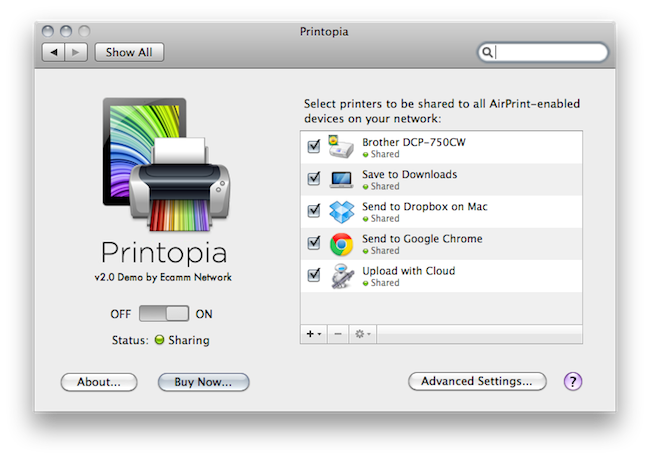
When I first reviewed Printopia by Ecamm back in November, I was impressed by how easily the app allowed me to send documents from an iOS device to a shared printer on OS X via AirPrint. The problem with AirPrint we discussed in November – which Apple hasn’t fixed yet – is that unlike the first betas of OS X 10.6.5 and iOS 4.2, the final versions of these OSes didn’t ship with AirPrint support for shared printers. AirPrint works out of the box with a bunch of HP printers, but Apple promised last year that it would also work with any printer previously configured and shared on a Mac. No need to install additional drivers on iOS: as long as a printer was shared on OS X, it would show up in AirPrint. With 10.6.5 final, that wasn’t the case. AirPrint support for shared printers was pulled at the last minute, and a series of unofficial hacks surfaced to re-enable it without reverting back to a beta of 10.6.5 (Mac OS X has reached version 10.6.7 since then). Among those hacks and apps, Printopia was without the doubt the most elegant one because it provided a GUI in System Preferences to manage shared printers, and allowed you to print a document to a virtual location on your Mac or Dropbox.

Version 2.0 of Printopia, released yesterday, builds on the great virtual printing functionality by adding support for unlimited printers in any location (could be your Downloads folder, the Desktop – you name it) and PDF workflows and applications as well. The feature is more exciting than it sounds on the changelog: with Printopia 2.0, you can send a document from your iOS device (through AirPrint) to any app on your Mac that can preview, say, PDFs. Example: I’m on my iPhone, and I find a PDF I want to read on my computer. Both devices are on the same local network (but it should work with this kind of VPN setup as well), and Printopia is running on my Mac. I take the PDF, and “print it” to Evernote. The document will automatically open in the Evernote app on my desktop. I tested this with Google Chrome, Preview, DEVONthink, Yojimbo, Numbers, Pages – it works really well. But there’s more. Not only you can print to applications, you can also print a document to an Automator workflow that supports the file type. Here’s another example: last night, I sent a PDF document to CloudApp’s own “Upload with Cloud” workflow, and AirPrint sent the document to CloudApp, automatically returning the file’s URL on my desktop.

Printopia 2.0 opens the door to a lot of possibilities for virtually printing documents anywhere on your computer, and of course support for physical shared printers is still there. Printopia 2.0 also introduces support for passwords you can assign to any virtual or real printer and settings for paper size / tray and colors.

If you want to get the most out of AirPrint and you have a Mac, Printopia is the utility to install. With support for real and virtual printers and system-wide integration with apps and Automator, Printopia is a full-featured solution to get any document from iOS on to the desktop. A demo version is available, and a full license can be purchased at $19.95. More screenshots below. Read more


Alarmify Wakes You Up With Spotify Tunes

I’ve never really been a huge fan of third-party alarm applications for the iPhone, mostly because many of them can’t run in the background and, at the end of the day, they don’t provide any additional feature that I’d miss from Apple’s simple, unobtrusive Clock app. Sporadic Daylight Savings bugs aside, the Clock app does exactly what I need: it lets me set up alarms and lock my iPhone at night. I don’t need to stare at a flip clock while I’m in bed, I don’t need weather integration, nor do I feel I’m missing out because the Clock app doesn’t have themes. It’s simple, and it works for me.

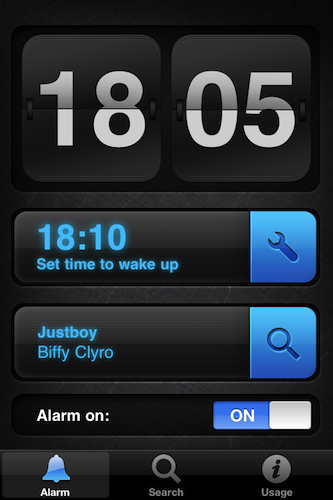
But Alarmify, a project by three students from Hyper Island, wants to bring something different to the iOS alarm scene by integrating music with the whole passive experience of scheduled alarms. Sure, picking songs from the iPod app isn’t new to unofficial alarm clocks for iOS: but how many of them integrated Spotify – the music streaming service – to let you choose a song you want to wake up? As far as I know, none of them did. And that’s exactly what Alarmify is doing, for free, with a beautiful interface.

As you fire up Alarmify, you’re presented a dashboard with a clock, a menu to set an alarm and another tab to find a song from Spotify. You’ll need to have the official Spotify iPhone app installed on your device – which unfortunately is only available to Premium users and it’s not on sale in the US App Store. The app basically acts as a bridge between the alarm you set and Spotify – when the alarm goes off, the app will launch Spotify and start playing a song. Which brings me to a major caveat of Alarmify: you’ll have to leave it running all night, as it can’t work in the background and forward a song to Spotify when the iPhone is locked. Not exactly “great”, but at least you can turn the device in landscape mode to get an elegant flip clock.

For Spotify users looking for an alarm app that can wake you up with songs, Alarmify is a no-brainer. Get it for free in the App Store.


Showyou: An Interactive Wall To Watch and Share Videos

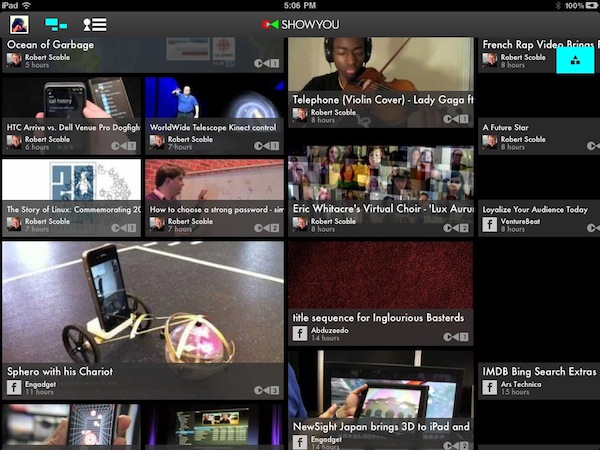
Released yesterday for free in the App Store, Showyou is a new universal app aimed at letting you discover videos shared by your friends on Twitter and Facebook, and share these findings yourself in your social graph. Unlike Squrl – which we reviewed yesterday as well – Showyou isn’t a service meant for curating videos in collections and grab them from a web browser through a bookmarklet: rather, it’s a very simple app that wants to offer a better way to browse videos found on Twitter and Facebook with the “Showyou Grid” – a 2D video wall that you can pan horizontally and vertically, very similar to what we’ve already seen in the Aweditorium iPad app.

Once logged in with Twitter or Facebook, Showyou will find friends that are already using the app and it gives you the option to “follow them”. The more people you follow, the more videos you get and the more populated the Grid becomes. By default it shows nearly 1,000 videos – many of those collected from Showyou’s system, so it really depends on how many people you start following and how much content they decide to share publicly. But there’s no doubt Showyou works best the moment you start following people and engaging with the service itself, as it also showcases “featured users” the developers recommend you follow to get interesting videos. The video wall was quite responsive yesterday when I first installed the app, but I’m noticing some slow loading times today – presumably a lot of people gave Showyou a try (again, it’s free) and the servers are getting hammered under heavy traffic. When videos load, however, not only you get a beautiful presentation with big thumbnails and an elegant Futura font – you can tap on each video to view it in a bigger popup window overlaying the main grid, share it or leave a comment. You can also tell a user you liked a video he shared by “thanking” him. If you don’t like the Grid view, you can switch to a cleaner list that shows you videos one after the other.

Overall, Showyou it’s a really simple app that gets one thing done extremely well: collecting videos shared by your friends. It’s not as full-featured as Squrl when it comes to exploring the Internet hunting for cool videos to curate (I mean, they’re two deeply different products), but if you’re looking for an easy way to see what your friends are watching you should take Showyou for a spin.


Squrl: Collect Videos From The Web, Watch Them Later on iOS

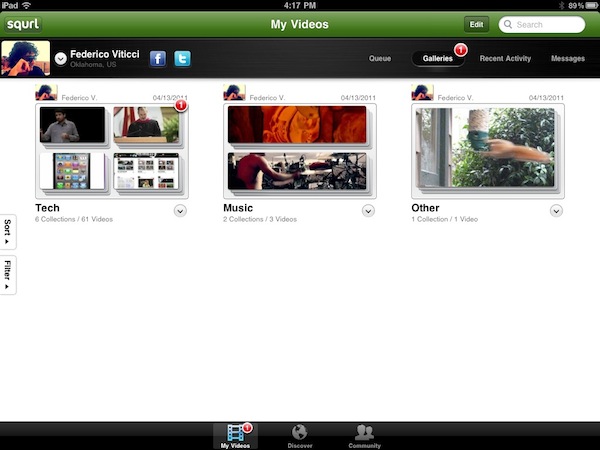
Released yesterday on the App Store and the web, Squrl is a new service powered by an HTML5 interface that allows you to save videos from several supported services, collect them on the iOS and web apps, and watch them later at any time. The concept behind the service is very simple and attractive: much like an Instapaper for video, Squrl enables you to save videos from Youtube, Vimeo, Hulu, Netflix and many other providers with the click of a bookmarklet (which you have to install from the website). Unlike Watchlater, though, Squrl doesn’t stop at collecting videos in a single place, it also packs social functionalities and organization features to let you create galleries and collections of videos, share them, or even subscribe to collections shared by other users in your social graph. Read more


The iPad 2 Dock Review

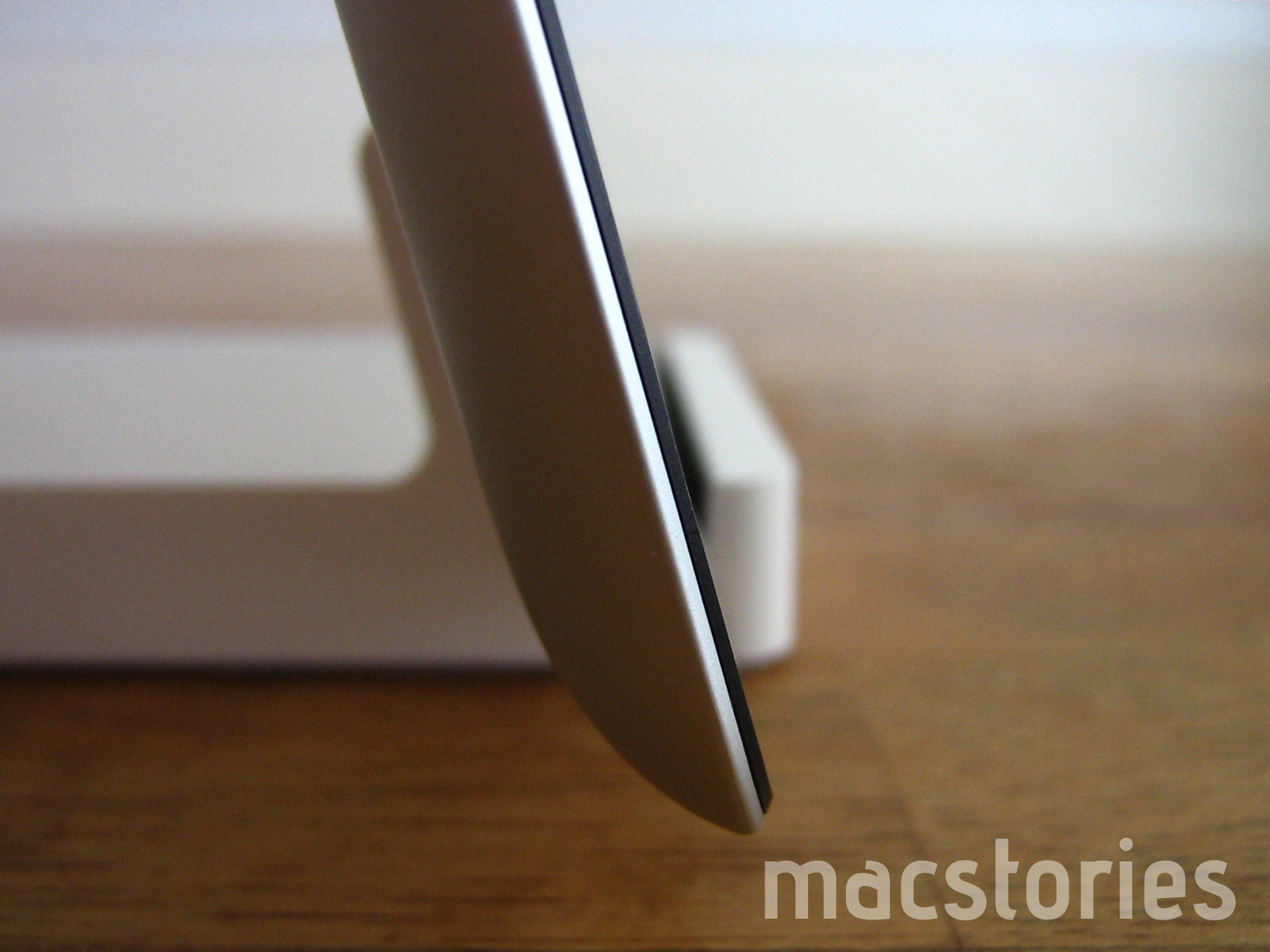
The iPad 2 Dock is by far the accessory people ask about when getting a new iPad 2. Apple’s iPad Camera Connection Kit and their Digital AV Adapter are clear in purpose; both products add utility to the iPad when used with a camera or television. The iPad 2 dock, however, is a questionable purchase. What utility or benefit will it provide me, and should I pay a pricey $29.00 for a plastic stand that comes with no cable and only provides audio out? The portrait only dock is an additional expense many owners are unsure about, and today we’re taking a look at whether one of these guys can be of benefit to you now that customers are receiving the first batch of shipments in the United States.

Read more