Posts in news

1080p HD+ Movies Could Hit iTunes Alongside Updated Apple TV

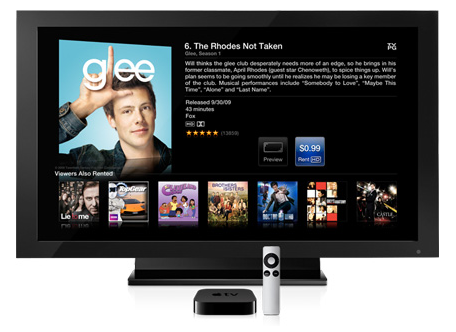
The iTunes Store and the current generation Apple TV can currently playback 720p video without issue. 1080p video, however, is the apple in every blu-ray owner’s mind. If Apple doesn’t want to provide customers with high-definition video, then why bother streaming video from Apple to the big screen? Movie-goers may want to hold onto the cash in their pocket before they spring for an alternative just a little while longer. AppleInsider was advised that 1080p video could become the norm beginning this fall with the availability of higher definition content and an updated Apple TV.

A higher resolution format for video, dubbed HD+ for 1080p content, is rumored to be an option alongside SD and HD video. 20th Century Fox as well as other large movie studios are said to be submitting films encoded with with an average bitrate of 10,000 kbps at 1920 x 1080p resolution. An updated Apple TV with an A5 processor would have no problems in playing back high definition content — the rumor would also coincide with an updated iPad 2.

If Apple is going to be attacking the media front with 1080p video this fall, a higher resolution iPad to play that 1080p content on makes some sense. While it’s not a confirmation, Apple could roll out an updated Apple TV alongside an iPad 2 HD to play back HD+ video. The iPad 2 HD would be rumored to have a resolution of 2048 x 1536, well beyond the requirement to playback 1080p at full resolution. With the A5 processor already in place, the iPad 2 HD would need nothing more than a display adjustment in coordination with a new content launch.

[via AppleInsider]


Male-to-Male Mini DisplayPort to HDMI Cables To Be Taken Off Shelves

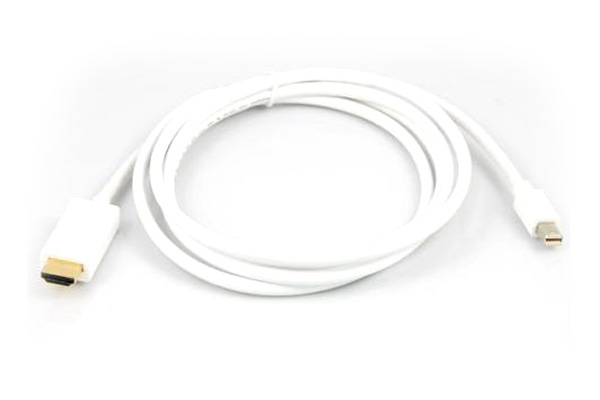
Manufacturers may have to recall their line of Mini DisplayPort to HDMI cables as this type of connection is unlicensed. TechRadar has confirmed with HDMI Org that straight through MiniDisplay Port to HDMI male-to-male connectors (which you can find on Monoprice for example) are affected.

“The HDMI specification defines an HDMI cable as having only HDMI connectors on the ends. Anything else is not a licensed use of the specification and therefore, not allowed.”

It also noted: “All HDMI products undergo compliance testing as defined by the Compliance Testing Specification. ”The CTS clearly defines necessary tests for all products defined in the HDMI Specification. Since this new cable product is undefined in the Specification, there are no tests associated with this product. It cannot be tested against the Specification.”

There is an exception, however, in that Mini DisplayPort to HDMI female adapters (such as Moshi’s cable that Apple recommends with the purchase of a MacBook) are acceptable. MacBook Pro and iMac owners who need to connect to the big screen have viable workaround — you’ll have to use two cables instead of one while the current batch of unlicensed cables are yanked off the shelves. Apple sells Moshi’s Mini DP to HDMI adapter for $34.95 and an Apple HDMI cable for $19.99 in their online store.

[via TechRadar]

Image via Cables.com


Fantastical Adds BusyCal Support

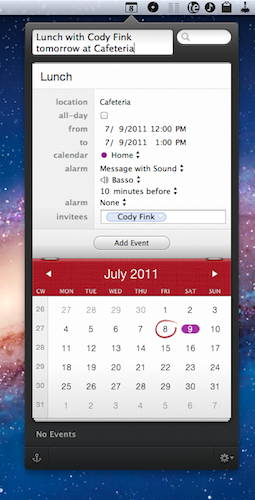
Fantastical is a calendar utility by Flexibits which we’ve reviewed back in May and have been using since then as a companion to Apple’s built-in calendar application for the Mac. Fantastical, in fact, isn’t a full-featured calendar app – rather, it’s a “calendar assistant” that enables users to quickly add a new entry to all kinds of supported calendar protocols (including Google Calendar and Entourage) with a natural language input system. Instead of interacting with menus and checkboxes to set up a new meeting at a specific location, Fantastical lets you write down things like “Lunch with Cody tomorrow at Cafeteria from 1 PM to 3 PM” and have a new event created in your default calendar. And because Fantastical has direct access to these calendars, you can forget about leaving iCal open and just use Fantastical’s (beautiful) window from the menubar.

A new version of Fantastical was released today and, alongside improvements to event creation, parsing engine and date handling, it sports brand new BusyCal integration to create events directly into the popular third-party calendar for OS X. BusyCal is a calendar and to-do list manager for Mac geared towards power users with features such as Bonjour and LAN sync, multi-user editing, list view and various security features. With Fantastical 1.0.2, events can do directly into BusyCal without going through iCal first (though the devs note calendars still must be added to iCal). Version 1.0.2 also brings a new shortcut to bring an invitee pop-up for contacts recognized in your Address Book, and arrow keys integration to switch between calendar weeks.

Fantastical is simple and powerful at the same time, with a gorgeous user interface design that makes it very intuitive to add events to your calendars (and calendar apps) with a few keystrokes. You can download Fantastical at $19.99 on the App Store.


Swype CEO Says Unofficial Cydia Port Is Buggy, Lacks Features

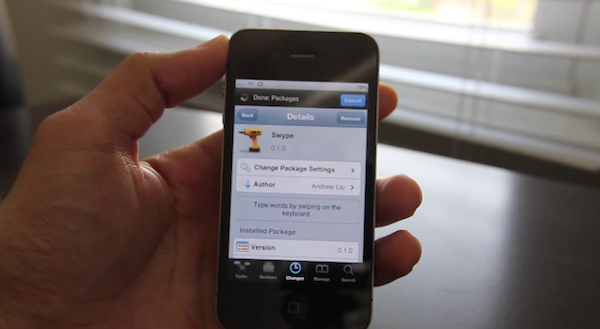
Swype, a popular alternative typing system that comes pre-installed on a variety of Android devices, was unofficially ported to the iPhone and released yesterday as a tweak for the iOS keyboard on Cydia. The peculiarity of Swype is that it allows users to write sentences by simply sliding their fingers on the keyboard, without ever lifting them, and manages to compose words thanks to a mix of predictive auto-correction, and proprietary technology that has allowed Swype to become a cult among Android users. The creators of Swype have been saying for years that they have a working version for iOS devices, which could be released on the App Store if only Apple let developers submit apps that enhance system functions like the default keyboard.

For this reason the official Swype for iOS may never see the light of day, but that hasn’t stopped Cydia developers from building their own version, which was released yesterday for free. Unlike what initial reports claimed, the Swype available on Cydia is an unofficial port, which doesn’t use Swype’s technology but uses Swype’s brand. According to Swype CEO Mike McSherry, interviewed by GeekWire, the port that’s been released on Cydia is more or less a “hack”, a re-imagination of the original Swype by developer Andrew Liu. The port, as also seen in the demo videos, is buggy and doesn’t come with Swype’s popular “blue tracer line” for the keyboard; moreover, Swype’s CEO is unsure whether Liu re-used some of Swype’s code, or simply rewrote his own version basing on the Swype experience for Android.

McSherry said that he saw Liu’s unofficial release of Swype, and he’s still trying to make sense of it.

“I don’t know but it appears he wrote some of his own code to emulate a Swype-like experience and is using our brand,” he said. ”I don’t know if this is a ‘hacked’ version of Swype or not….I’m thinking not.”

Nonetheless, McSherry notes that I am not the only one interested in learning about Swype for the iPhone. And perhaps Liu’s unofficial release simply indicates the desire to bring it to the iPhone and iPad.

You can find the instructions to install the unofficial Swype for iPhone here. Check out the demo video after the break.
Read more


Web Usage Data Reveals Different iPad Patterns

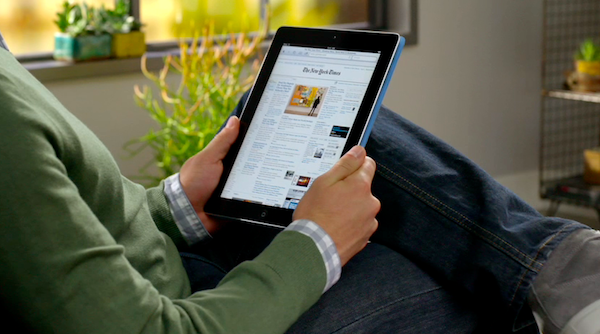
According to click data analyzed by URL shortening and analytics service bit.ly, the iPad ultimately differs from other platforms in the way it’s used throughout the day. The discovery is unsurprising as Apple has been heavily touting the iPad as a new category of device aimed at doing things better than regular smartphones and computers (which Apple also happens to sell), but it’s interesting to see these usage patterns confirmed and visualized by a service that’s undoubtedly the most used when it comes to shortening and sharing links on the web.

Bit.ly analyzed links clicked from Linux, Windows and OS X machines, as well as BlackBerry, iOS and Android phones, and the iPad. Then, they compared the click data against the time of the day, the day of the week and the country to build a graph that summarizes usage patterns for the most common devices that access bit.ly links every day. The results for computers and smartphones don’t surprise: people start using PCs and smartphones as they wake up, usage slightly increases through the workday, and slows down as the evening approaches and users are far more likely to consume other content. That kind of content consumed in the late hours of the day happens to be represented by the iPad which, unlike other platforms, sees a slower approach throughout the day but a higher peak in the evening as people come back from work. In weekend days, iPad usage in the morning and afternoon is slightly higher than the rest of the week.

The iPad’s usage pattern is drastically different. Usage dips after breakfast, remains low during traditional working hours and does not peak until much later in the evening. During the weekends iPad usage between 8 a.m. and 3 p.m. is higher than it is during the week at those same hours. No other device sees a heavy increase of use during the weekends, showing that the iPad is used as an entertainment device and differs from both smartphones and browsers.

Bit.ly also notes how Facebook and YouTube are still the most accessed websites from users, and that in spite of “official” availability in 39 countries, they registered iPad data from 203 countries. The iPad is different from other devices, and it’s being used by consumers in new different ways that are causing these unprecedented usage patterns. For instance, people are more likely to come back from work and relax on the couch with an iPad reading news or a book, rather than sitting at their desk using a PC again. Or, they might want to enjoy a game with their kids, or read a book to them before they go to sleep. Check out the full report at ReadWriteWeb for the complete stats.


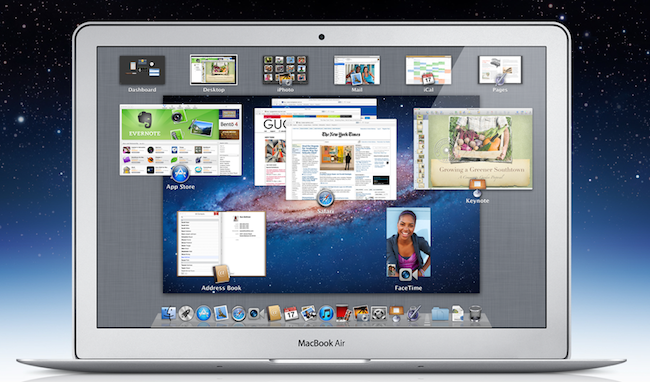
Apple Preparing OS X Lion and MacBook Air Launch Next Week

According to two separate reports coming today from 9to5mac and AppleInsider, some Apple retail employees and store managers have been notified to hold “overnights” in the next week to prepare for the launch of OS X Lion, set to become available sometime in July at $29.99 as a digital download from the Mac App Store. First off, 9to5mac says retail stores are planning overnights on July 13th, which would support their earlier claims of Lion launching on July 14th. Apple retail employees would need to be trained for the new software to showcase to customers and, according to the website, new MacBook Airs are also expected to launch in the same week. A previous rumor suggested that Apple had put new Mac models on hold until Lion’s launch so that new units could come with the new OS pre-installed.

AppleInsider also reports other stores have asked staff to upgrade RAM on certain Macs, presumably to make sure Lion can run smoothly in demo sessions to customers. AppleInsider, however, says new MacBook Airs could become available the following week, and not immediately alongside the launch of Lion.

This same person also mentioned hearing rumors from colleagues that Apple may formally invite some customers to its retail locations to download the new OS from within the store so that they can receive assistance in becoming familiar with some of Lion’s more prominent enhancements.

Meanwhile, people with ties to Apple’s other operating segments are supporting claims that Apple will make Mac OS X Lion available to the general public sometime next week. They add that long-awaited refreshes to the MacBook Air line will follow the launch closely, possibly the following week.

Last week, we separately confirmed with our sources that all Apple employees will be given a free redemption code for Lion, with the retail Information Systems & Technology department getting ready for an “imminent” launch, already installing a final build of the OS on some company machines. As for the new MacBook Airs, the new models have been long in the rumors, allegedly sporting new Thunderbolt and Sandy Bridge specifications and with most recent rumors claiming they could also get faster SSDs, a 3G component and a black version to go alongside the standard aluminum one.


Patent Details Possible “File Sharing Gestures” For Future iOS Devices

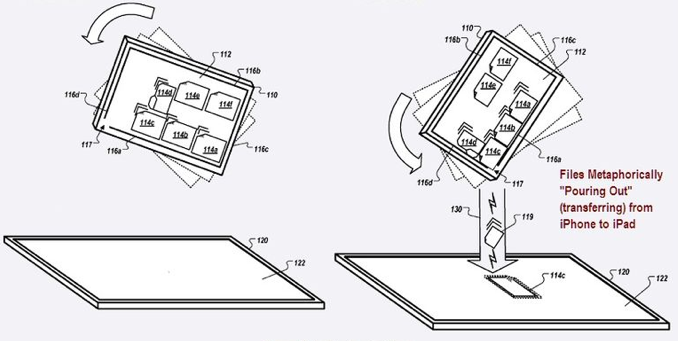
A new patent detailed by Patently Apple today illustrates how Apple may implement file sharing between iOS devices in future versions of the iPhone and iPad. Whilst patent filings are no indication of features and hardware design choices coming in the next versions of operating systems and devices, they provide some sort of insight into what Apple engineers and designers have been researching to improve the technology or user experience. This latest patent offers a (possible) interesting solution to a common problem that have always affected owners of multiple iOS devices: it’s not easy to share files between them wirelessly, without a cable, without a computer. Whereas iCloud and the PC-Free initiative will focus on fixing this by cutting the cable requirement and constantly syncing documents between apps both on iOS and OS X, there are still some use cases in which a user might want to share a file quickly without uploading to iCloud first. Or, then again, owners of different devices with different iCloud accounts might find difficult to share files in seconds without having to rely on classic email or social sharing.

The patent details a technology that is capable of beaming files back and forth between devices thanks to “file sharing gestures” such as the “pouring motion” or regular flicks and swipes that will give users the illusion of throwing files off a screen, and onto a second device. With sound effects (Patently Apple reports the “vacuum cleaner” one) and animations, this new system sounds like an evolution of webOS’ existing “Touch to Share” feature that allows smartphones and the TouchPad to share, for example, webpages by simply touching each other’s screen. Apple’s proposed solution takes this idea a step further with the concept of animations, user gestures and file selection in-app to give users more control and “personality” over what’s being shared, and how.

Apple’s solution begins by stating that a user could make an intuitive, physical gesture with a first device, which could then be detected by one or more onboard motion sensors. The detected motion triggers an animation having a “physics metaphor,” where the object appears to react to forces in a real world, physical environment.

Apple’s patent spends a lot of time describing various animated physics metaphors that would have the iOS device’s interface react differently depending on the metaphor. Apple describes that the appearance of the interface could react to gravity, friction or drag, momentum, torque, acceleration, centripetal forces or any other force found in the real-world physical environment. The rate at which each object moves on an interface could be based on the size or “mass” of the file represented by the object. Larger files that have more “mass” could have their object animated to move slower in the interface while smaller files that have less “mass” could have their object animated to move faster in the interface.

The patent also details scenarios such as having iOS devices at work or school, and having to share files with colleagues or friends. The proposed system could scan for available iOS devices, and let users to exchange files with simple gestures. The concept reminds us of AirDrop, a new feature of OS X Lion that enables Mac owners to share files with computers nearby, provided they’ve granted authorization for incoming documents.

Last, the filings detail how these new file sharing features and commands could also be used to send files to a network, rather than a device. It is unclear from the report whether this patent is based off Apple’s rumored interest in NFC technology (admittedly, this sounds a lot like it), so make sure to hit Patently Apple to check out all the details and illustrations.


Apple Reveals Over 15 Billion Apps Have Been Downloaded From The App Store

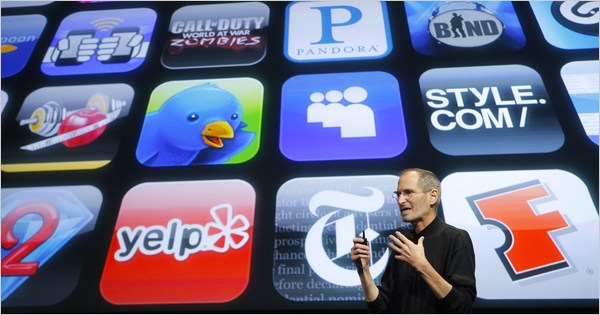
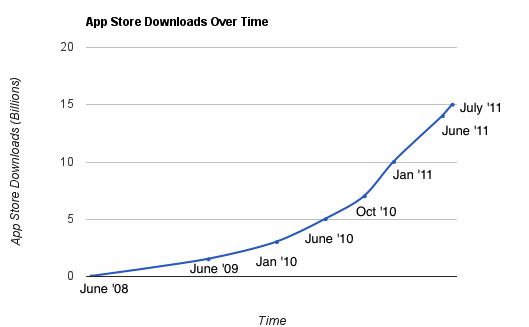
Apple just issued a press release that reveals over 15 billion apps have been downloaded from the App Store. Apple notes that it has more 425,000 apps, including 100,000 native iPad apps. It comes just six months after the App Store hit 10 billion downloads in January this year.

More than 15 billion apps have been downloaded from the revolutionary App Store and more than 425,000 apps are available, including more than 100,000 native iPad apps, to consumers in 90 countries. Users of the more than 200 million iOS devices around the world can choose from an incredible range of apps in 20 categories, including games, business, news, education, sports, health, reference and travel. Apple has paid developers over $2.5 billion to date.

In the press release, a few people who run some of the most popular apps are quoted singing the praises of the App Store and the opportunities it has allowed, including Ge Wang from Smule, Mark Rein of Epic Games and Nicholas Callaway of Callaway Digital Arts. Phil Schiller, Apple’s senior VP of Worldwide Product Marketing says in the press release:

In just three years, the revolutionary App Store has grown to become the most exciting and successful software marketplace the world has ever seen. Thank you to all of our amazing developers who have filled it with over 425,000 of the coolest apps and to our over 200 million iOS users for surpassing 15 billion downloads.

As Business Insider points out, these statistics reveal that, averaged out, each iOS device owner has download 75 apps - any way you cut it, that is an impressive figure. Similarly, AllThingsD notes that just last month at WWDC, Apple revealed that 14 billion apps had been downloaded, meaning roughly a billion apps have been download in just a month.

Read more


WSJ: iPhone 5 Is Thinner And Lighter, iPhone 6 May Have New Way Of Charging

Late yesterday night The Wall Street Journal published an article which included some rumors about the next two iPhones. Interestingly it noted that this years iPhone refresh would be thinner and lighter with an 8MP camera (up from 5 MP), whilst the company focuses on a more ambitious 2012 iPhone, even including experimenting on a “new way of charging” the iPhone.

These people said the new iPhone is expected to be similar to the current iPhone 4, but thinner and lighter with an improved eight-megapixel camera.

Whilst the WSJ doesn’t have any specific details on this new way of charging the device, one potential technological possibility is using induction charging. If it did use such a technology it would not be the first smartphone to use it, back in 2009 Palm revealed their Pre smartphone which came with an optional inductive charger accessory. Yet two years later, inductive charging has not been used on a widespread basis, if Apple adopted it in a future iPhone it could spur such widespread adoption. It would also achieve somewhat of a philosophical goal that Apple has had in removing cables wherever possible.

Curiously, the WSJ suggests that the release of the iPhone 5 was pushed to Fall instead of its usual June announcement because the device simply wasn’t ready yet. It also warns that if their manufacturer, Foxconn, cannot improve their production yield, the device may be further delayed. The WSJ’s source also noted that Apple had been working on an edge-to-edge screen that could possibly debut on a second, less-expensive, iPhone.

[Via The Wall Street Journal]