
Posts in news

MobileMe to iCloud Transition Goes Live for Developers

As first noted by 9to5mac, Apple is now allowing developers with access to the iOS 5 beta or OS X Lion 10.7.2 preview to migrate their existing MobileMe accounts to iCloud. A MobileMe account needs to be associated with a development device to be correctly transitioned to iCloud for now – once an account is eligible, the migration process can be initiated from OS X Lion (from the MobileMe control panel) or by directly visiting me.com/move.

As Apple previously detailed in its MobileMe to iCloud Transition Q&A, some functionalities of MobileMe won’t transfer over to iCloud. This includes MobileMe Gallery, iDisk and iWeb publishing, which, however, will still be accessible until June 30, 2012, even after moving to iCloud. Another feature that iCloud won’t include is the ability of syncing several Mac OS X items like Dashboard widgets, Preferences, and Mail Rules.

Apple’s web interface for the transition is very straightforward and guides you through the process of moving your MobileMe account to iCloud by detailing each step with an explanation, and links pointing to support articles.

Once upgraded, an already configured MobileMe account on iOS or OS X will need to manually “confirmed” before completely moving to iCloud. If the account isn’t already configured, you’ll just need to log in as a new iCloud account and choose which content you’d like to keep stored on Apple’s servers.

The process is now exclusive to developers and there’s the chance Apple will tweak the interface/steps required before the public release of iCloud. However, the information available today falls in line with what Apple revealed months ago about the transition. Furthermore, it appears MobileMe accounts will be automatically upgraded to a paid 20 GB plan for free until June 30, 2012, (with pricing depending on where you live, and the 20 GBs are in addition to the 5 GBs iCloud already gives you for free) although there are no subscription management options available yet to developers on iCloud.com. Read more
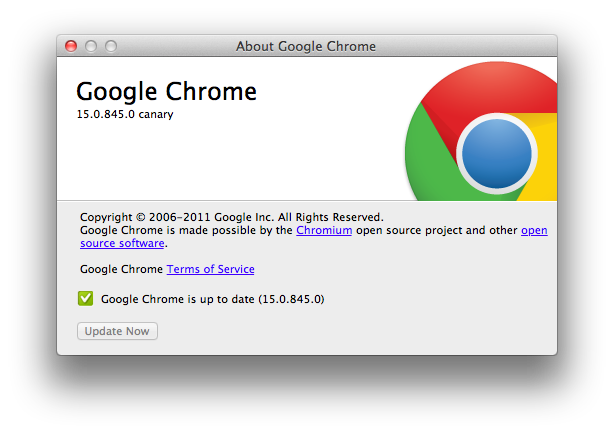

Latest Chrome Canary Build Has Fullscreen for Lion Built In

Want native Lion support in Google Chrome? The fast updating browser has an early Canary build out with native Lion support, including native fullscreen mode you’ve always wanted. Sure you can use fullscreen right now in Chrome, but it overtakes your current desktop and doesn’t show up as a fullscreen app in Mission Control. With native integration on its way, we’ve got plenty of screenshots past the break.

Read more


Apple Cracking Down on Developers Selling Device Slots for iOS 5

With plenty of free slots left after registering their own UDIDs, some “developers” whom pay the $99 fee for early access are selling off the additional spaces to make a quick profit from non-developers or users whom seek to get into the program at a discount, or to play with the iOS 5 betas early. With so many non-developers having early access, and Apple generally being quiet about NDA breakage, AppleInsider reports that Apple is specifically targeting these “crooks”, shutting down developers who sold their excess slots by closing their accounts (and sending devs a cease and desist via email). Apple is also going as far as flagging UDIDs associated with these accounts, and locking down the iOS devices to render them unusable.

“Once Apple locks your iOS device, the phone will enter the initial setup mode asking you to connect to a WiFi network,” the report said. “And nothing happens more than that.”

AppleInsider points out that websites have grown up around Apple’s developer program, allowing users to use PayPal to sign up for one of the empty slots to get their devices registered. Only developers are supposed to have access to the beta, with the public having access to iOS 5 with a final release this fall.

[KatharikK.net via AppleInsider]


Firm Behind MacDefender Malware Likely Busted in Russian Raid

If you run an organization that runs a rogue pharmacy business and provides malicious support for fake anti-virus programs, then it’s likely you’re going to get caught. Such is the case with ChronoPay, whose offices were raided by Russian authorities at the end of July after the co-founder was arressted for allegedly launching denial-of-service attacks against payment processing firms in an attempt to undercut his competitors. The firm under inspection, ChronoPay, has been found with “mountains of evidence” that show the company running illegal anti-virus scams including MacDefender, which plauged Mac users earlier this year with fake pop-ups that scared users into thinking they had viruses, and even tricked users into supplying their credit card information via registration through the fake virus-removal app. MacDefender was crticized by Ed Bott as the start of something big, although security and malware news has been quiet last month, and the MacDefender threat itself could be diminished after this recent raid.

MacRumors writes,

The last release of MacDefender occurred on June 18. ChronoPay’s offices are raided June 23. A coincidence perhaps, or Russian law enforcement saving Mac users from fake antivirus software.

Companies in the business of writing and supporting malware such as MacDefender can rake in a lot of money in a short period of time. It’s an incredibly profitable business, feeding off the fear of individuals whom become victims to the scare tactics malware and phishing scams employ. While the takedown of ChronoPay will have a significant negative impact in revenues against cyber criminals in the black market, these raids are only short-term wins.

Given fake AV’s status as a reliable cash cow, the industry is likely to bounce back rapidly. Fake AV is extremely profitable, in large part because it is easily franchised.

Individual affiliates can quickly make a lot of money. Fake AV distribution networks pay affiliates between $25 and $35 each time a victim provides a credit card to pay for the junk software.

To spread malware, companies like ChronoPay can hire affiliates who can deploy malware and get paid based on how many systems are infected (how many programs are installed). The end result is that business is profitable for all the parties involved: fake anti-virus programs can offer “malware-removal” at the same market prices as legitimate anti-malware programs (the victim doesn’t know the difference), the distributors of malware are also paid wealthy amounts based on how successful that malware is, and you can begin to see how and why these types of businesses function in black markets. MacDefender was efficient since it preyed on Windows-to-Mac converts who are unfamiliar with legitimate solutions available, and thus fell for its tricks. MacDefender, while it garnered a lot of attention, has seemingly died down and is hopefully squashed for good with ChronoPay out of the picture.

MacDefender wasn’t some malware written by a couple young adults in their basement as we’d expect — this was a rare case of serious malware backed by a company (with a lot of money and mal-intent) and its affiliates. Hopefully, if evidence against ChronoPay turns out to be the real-deal, it’ll lead to more arrests and a safer Internet. The battle is far from won when it comes ot malware, but its always comforting knowing that there’s one less threat to deal with.

[Krebs on Security via MacRumors, (Image via ZDNet)]


“Innovative, Category-Killer Experience” Key Requirement For A Cheaper iPhone

After meeting two Apple executives on Wednesday, RBC Capital Markets has revealed a set of “key takeaways” and have noted that Apple wouldn’t introduce a low-end iPhone unless the device is an “innovative, category-killer experience”. Analyst Mike Abramsky met with Apple COO Tim Cook and CFO Peter Oppenheimer and notes that the condition is Apple’s primary requirement for a low-end iPhone.

It certainly sounds like a fairly obvious statement when looking at Apple’s recent product releases but it is well worth noting after numerous reports of a ‘cheaper’ iPhone launching this year – most of which cite financial reasons and developing country markets for the introduction of such a device.

Some of the other takeaways from Abramsky’s meeting with the Apple executives includes the fact that iCloud will be ready for “significant scale” when launching this fall after Apple learnt lessons from MobileMe. He also says that despite Android’s success in recent years, Apple has maintained “sustained advantages” over their competitors and should be able to do fine despite an “expected explosion of low-priced Android smartphones”.

Concluding his notes from the meeting he agrees with Apple’s executives that the company has an “untapped global opportunity” and maintains a $500 price for Apple stock and ‘outperform’ rating for the company.

[Via AppleInsider]


OmniVision Reveals New 8 MP Image Sensor, Better And Smaller Than Ever

OmniVision today revealed details of a new 8 MP image sensor that is 20% thinner than modules available on the market today. The 8-megapixel OV8850, which they are marketing as “the first CameraChip™ sensor built on a 1.1-micron OmniBSI-2 pixel architecture” is just a quarter of an inch thick and designed for implementation and smartphones and tablets.

With our new OmniBSI-2 architecture, we have further miniaturized our pixels while delivering a 20 percent improvement in peak quantum efficiency in all color channels, a 35 percent improvement in low-light sensitivity and a 45 percent increase in full-well capacity in an extremely compact and power efficient package

The module has also made improvements in its power efficiency and image quality – further making it a good fit for next generation mobile devices. 1080p/30 video recording is also supported but more interesting is that it supports 720p/60 with electronic image stabilization.

This new image sensor is set to go into mass production early next year, so it probably won’t feature in this year’s iPhone refresh – but it gives you an idea of how these tiny cameras are constantly improving and shrinking in size. An OmniVision image sensor currently resides in the iPhone 4 and reports from earlier this year suggest the company (perhaps with Sony) will also contribute an image sensor to the iPhone 5.


150 Million Photos Uploaded on Instagram So Far

When you launch one of the world’s most popular photo service, how long does it take to reach 150 million uploads? Only nine months according to Instagram, whom launched their slam-dunk-app back in October of 2010. Instagram is celebrating this afternoon by showing off their favorite Instagram photos, and noting the success of their app thanks to the seven million users who’ve downloaded the app since its inception. That’s seven million people uploading at a rate of fifteen photos per second. Instagram’s success is well deserved: those guys got a top-notch formula down. From the Instagram team:

We’re constantly amazed by the range of photos shared on Instagram. People use Instagram to snap photos of everyday moments with friends and family and also to document significant personal moments, like weddings and honeymoons. There are Instagram photos from major events like the World Series and the Grammys, and some Instagram photos have even made the national news. Artists and celebrities have begun to give fans a unique look into their lives through photos, while brands like Burberry have started to realize the power of communicating with their followers through images.

Here’s to another 150 million.

For the post picture, we’ve re-posted the 150,000,000th photo according to Instagram from user @janefot. It’s a great pic too!

[Instagram blog via The Next Web]


Apple’s Training Site Back With Lion, FCP X Certifications

As noted by TUAW, Apple’s training website has come back online with new OS X Lion certifications and training courses – some of them “coming soon” and others starting “this fall”. The training website is available at training.apple.com and it’s also received a facelift with a cleaner design, and plenty of OS X Lion and Final Cut Pro X graphics.

Indeed, the New Releases section on the site points to new FCP X training and exams, OS X Lion training and exams, as well as new Mac Integration Basics. IT professionals willing to support and learn about new OS X technologies might want to look at the new Lion courses coming this fall to Apple Authorized Training Centers worldwide. Books and resources are already available online and others will soon be for pre-order, and the new 10.7 certifications coming this fall will include:

  • Apple Certified Associate: Mac Integration 10.7
  • Apple Certified Support Professional 10.7
  • Apple Certified Technical Coordinator 10.7

The Mac Integration Basics 10.7 exam “will be available soon” according to the Training website, but full documentation has already been posted online for download as PDF or iBookstore guide. On the other hand, those interested in Final Cut Pro X certification can watch Final Cut Pro X Apple Pro Video Training, with classes coming “soon” worldwide.

Snow Leopard certification and courses are still available and according to Apple will remain online until January 2012.