Still reeling from the Apple/Beats news, the boys sit down to talk about music, apps and WWDC.
For our 50th episode of The Prompt, topics that are dear to us: Beats and curation, iOS 8 and the upcoming WWDC, and a lot of apps. Get the episode here.


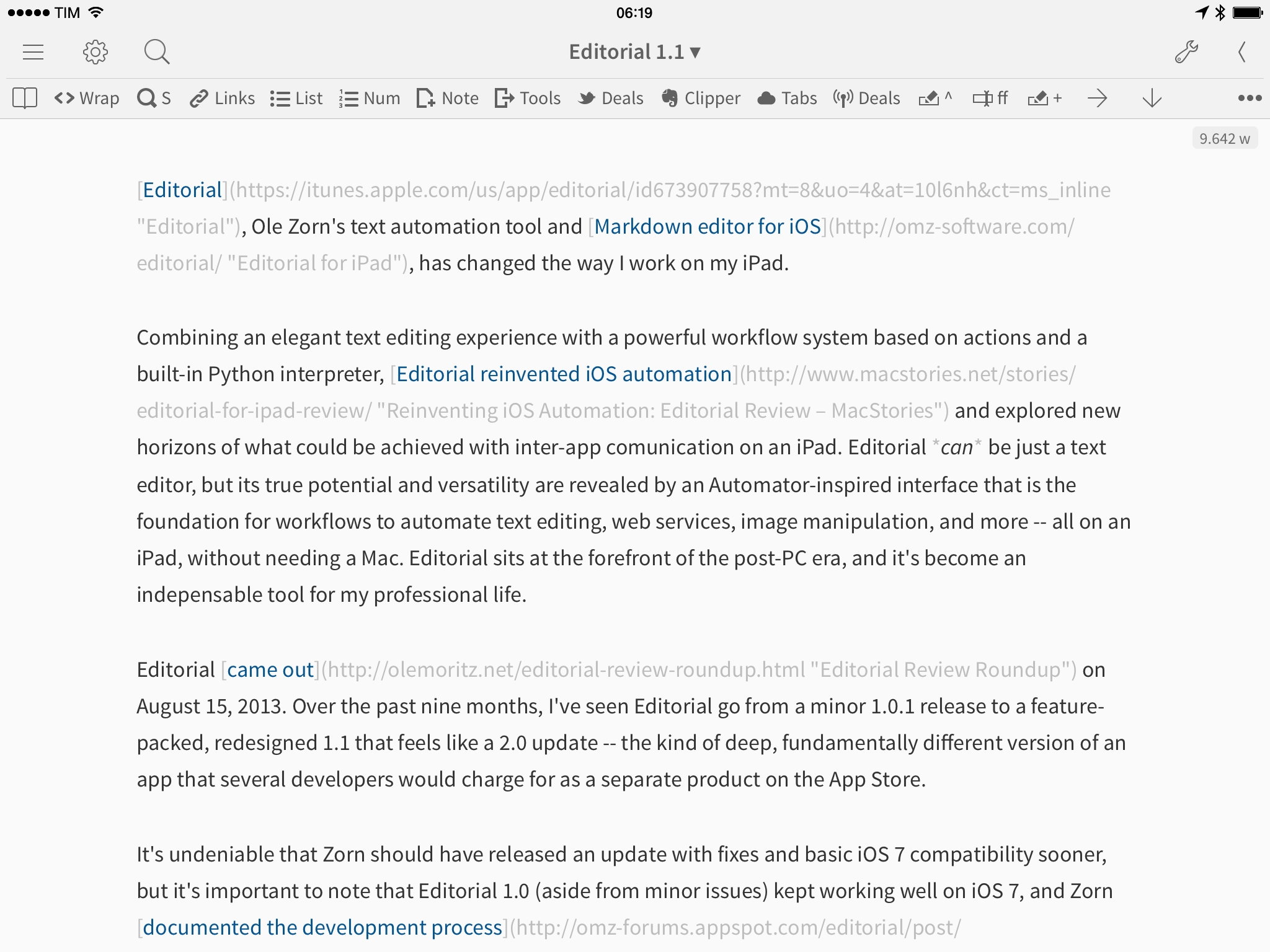
Editorial, Ole Zorn’s text automation tool and Markdown editor for iOS, has changed the way I work on my iPad.
Combining an elegant text editing experience with a powerful workflow system based on actions and a built-in Python interpreter, Editorial reinvented iOS automation and explored new horizons of what could be achieved with inter-app comunication on an iPad. Editorial can be just a text editor, but its true potential and versatility are revealed by an Automator-inspired interface that is the foundation for workflows to automate text editing, web services, image manipulation, and more – all on an iPad, without needing a Mac. Editorial sits at the forefront of the post-PC era, and it’s become an indispensable tool for my professional life.
Editorial came out on August 15, 2013. Over the past nine months, I’ve seen Editorial go from a minor 1.0.1 release to a feature-packed, redesigned 1.1 that feels like a 2.0 update – the kind of deep, fundamentally different version of an app that several developers would charge for as a separate product on the App Store.
It’s undeniable that Zorn should have released an update with fixes and basic iOS 7 compatibility sooner, but it’s important to note that Editorial 1.0 (aside from minor issues) kept working well on iOS 7, and Zorn documented the development process with notes and screenshots on the app’s forums. As an Editorial user and reviewer, it’s been a long journey from version 1.0 in August 2013 to today’s 1.1 release, but it’s been worth it.
Editorial 1.1 brings a plethora of design changes, Markdown improvements, and automation breakthroughs that, just ahead of iOS 8, represent a major milestone for Markdown text editors and iOS automation. Editorial 1.1 may be a text editor on the surface, but, in reality, it’s a small revolution for iOS power users.
Reeder 2 for Mac, available today on the Mac App Store at $9.99, isn’t the most full-featured RSS reader that ever graced the docks of OS X users. It doesn’t support all the services found in ReadKit, it doesn’t have any sort of smart folder functionality, and it doesn’t bring dozens of breakthrough features that are dramatically different from what Silvio Rizzi offered in version 1.0 of the app. But in spite of what it doesn’t do or what it doesn’t have, Reeder 2 is a superbly polished, fluid, and fast Mac app that lets me enjoy checking my RSS feeds, primarily because of its gesture controls.
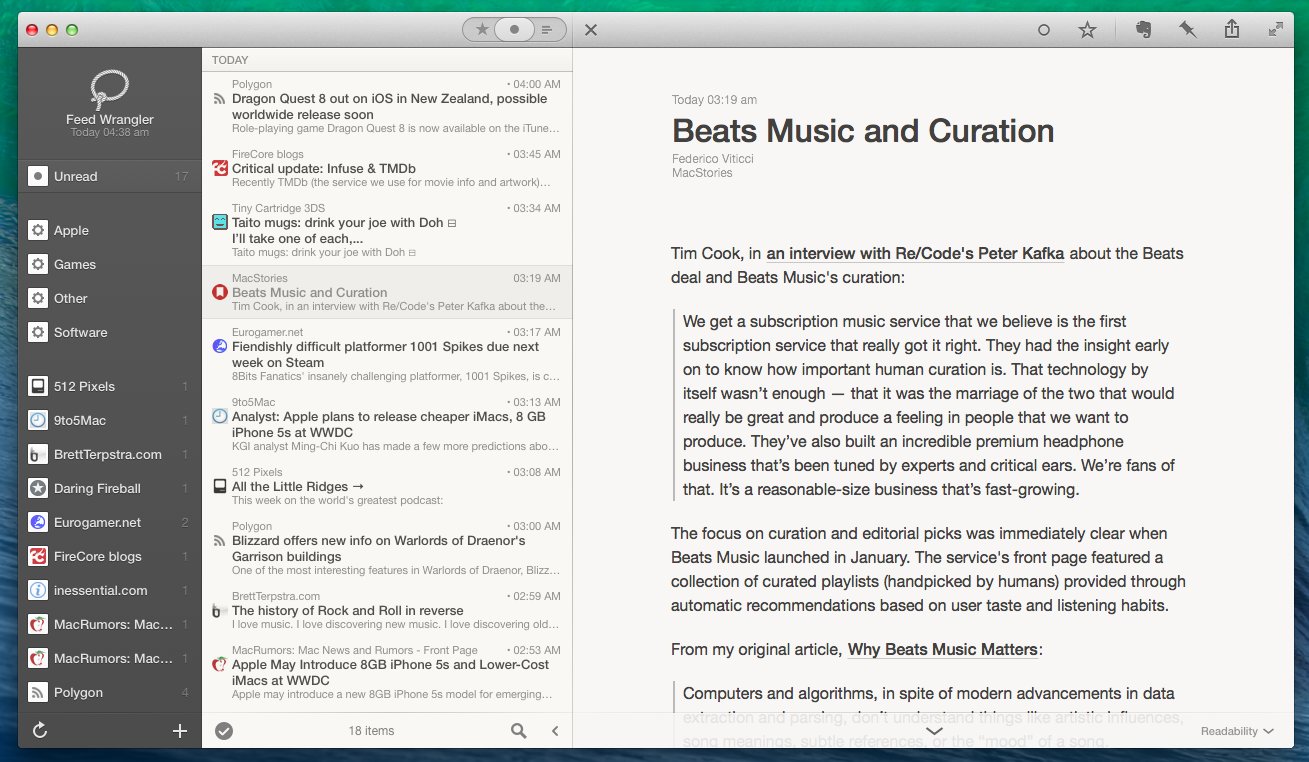
Tim Cook, in an interview with Re/Code’s Peter Kafka about the Beats deal and Beats Music’s curation:
We get a subscription music service that we believe is the first subscription service that really got it right. They had the insight early on to know how important human curation is. That technology by itself wasn’t enough — that it was the marriage of the two that would really be great and produce a feeling in people that we want to produce. They’ve also built an incredible premium headphone business that’s been tuned by experts and critical ears. We’re fans of that. It’s a reasonable-size business that’s fast-growing.
The focus on curation and editorial picks was immediately clear when Beats Music launched in January. The service’s front page featured a collection of curated playlists (handpicked by humans) provided through automatic recommendations based on user taste and listening habits.
From my original article, Why Beats Music Matters:
Computers and algorithms, in spite of modern advancements in data extraction and parsing, don’t understand things like artistic influences, song meanings, subtle references, or the “mood” of a song. Computers can’t compute emotion. They can’t understand what’s behind Dave Grohl’s “Best of You” at Wembley or why Death Cab For Cutie’s Transatlanticism is an album about long distance love. Computers don’t have the human touch, and I believe that they will never be able to fully, empathically replicate the ability to appreciate music as an artistic expression.
That’s why Beats Music hired people knowledgeable about music and uses algorithms as a tool, and not the medium: there’s more to music than data.
If the plan comes together, Beats Music has a serious chance at reinventing how music streaming services should work. I’m optimistic.
And here’s how Beats Music describes their editorial team’s efforts:
At Beats Music, our mission is to create playlists and make music recommendations based on songs that feel right together, at the right time, and for the right person… not just that sound alike.
That can’t be done with an algorithm. It requires a real human with a trained ear for blending genres and styles and a knowledge of what song comes next.
The Beats Music part of the Apple-Beats deal was highlighted in several sections of today’s press statements and interviews, suggesting that Apple (unlike what speculation implied over the past weeks) saw potential in the relatively young Beats Music service. Here’s Tim Cook in an interview with The New York Times:
“Could Eddy’s team have built a subscription service? Of course,” he said. “We could’ve built those 27 other things ourselves, too. You don’t build everything yourself. It’s not one thing that excites us here. It’s the people. It’s the service.”
Unlike subscriber numbers and country availability, music knowledge and culture can’t be quantified, but they’re extremely valuable. With Beats, Apple isn’t simply buying a popular brand of headphones and a music app – they’re investing in fashion sense, the interplay of technology and culture for music, and a team of people with a profound appreciation and understanding of music history and trends. And this drives analysts crazy because it can’t be visualized with a pie chart.
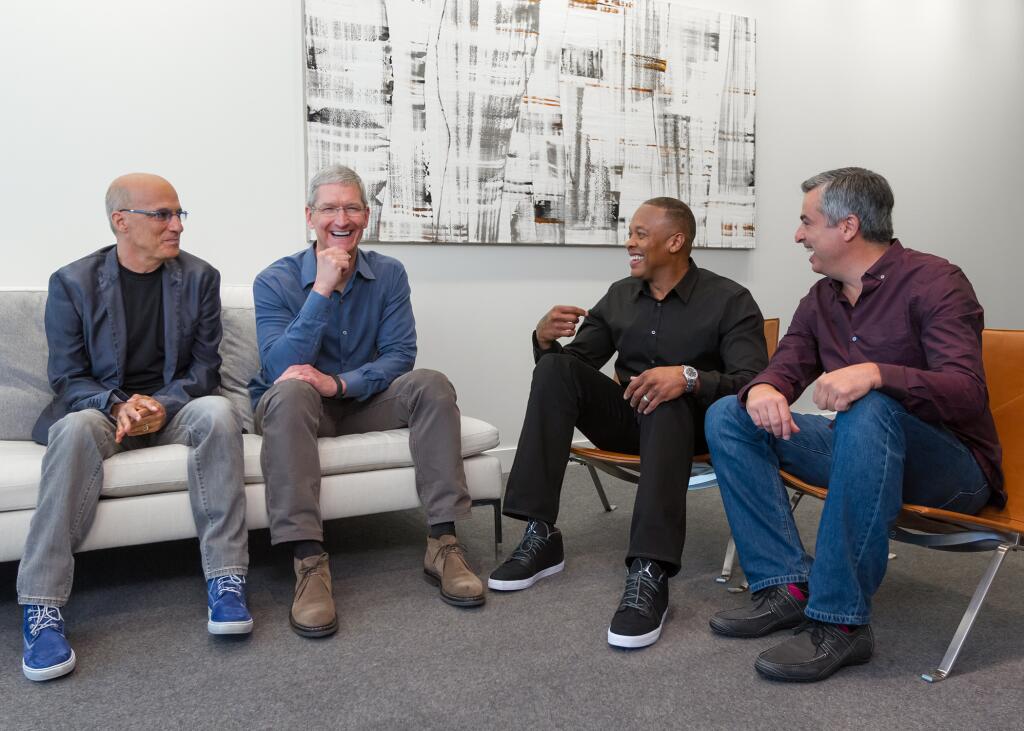
Following speculation surfaced over the past few weeks, Apple today confirmed the acquisition of Beats Music, a music streaming service that launched in January, and headphone-maker Beats Electronics, co-founded by music industry executive Jimmy Iovine and rapper Dr. Dre. Beats represents Apple’s biggest acquisition to date: Apple is spending a total of $3 billion to acquire Beats, which will continue to be a separate brand.
In a press release, CEO Tim Cook stressed the importance of music as a cultural tenet of Apple:
“Music is such an important part of all of our lives and holds a special place within our hearts at Apple,” said Tim Cook, Apple’s CEO. “That’s why we have kept investing in music and are bringing together these extraordinary teams so we can continue to create the most innovative music products and services in the world.”
In the same press release, Apple’s Eddy Cue remarked Beats’ focus on music products and noted how the Beats Music subscription service will be added to Apple’s music lineup, which consists of iTunes Radio, iTunes Match, and the iTunes Store. The Beats Music app for iOS was updated earlier today with a lower-priced annual subscription and an extended free trial; Apple has confirmed that they will keep developing Beats Music apps for other platforms, which at the moment include Android and Windows Phone.
The Beats Music team will be joining Apple and report to Senior Vice President of Internet Software and Services Eddy Cue.
Beats Music launched earlier this year featuring a selection of human-curated playlists handpicked by an editorial team of music experts, such as former Pitchfork editor-in-chief Scott Plagenhoef and top radio programmer Julie Pilat. In their press release, Apple included a mention of Beats Music’s unique offerings:
Beats Music is a subscription streaming music service that focuses on providing a personalized music experience for each user through a unique blend of digital innovation and musical passion. Programmed by a trusted team of well-respected music experts with over 300 years of experience across all genres, Beats Music delivers the right music for any situation, any time, and any preference, personalized to your tastes. The result is an artist-friendly digital music service that does more than simply offer access to music, but one that establishes an emotional connection to it as well.
The sentiment was echoed by Tim Cook, who wrote about how Beats Music, of all modern music streaming services, was the first one to “get it right” in a company memo published by 9to5Mac:
Beats Music was built with deep respect for both artists and fans. We think it’s the first subscription service to really get it right. Both Apple and Beats believe that a great music service requires a strong editorial and curation team, and we will continue to expand what we do in those areas. The addition of Beats will make our incredible iTunes lineup even better, extending the emotional connection our customers have with music.
In Apple’s current plans, the company will keep the Beats brand separate and sell its popular premium headphones (widely regarded as modern fashion accessories) and music streaming service. In Cook’s words, as reported by The New York Times, the Beats team is “really unique”; he added that the deal – which should close by the end of the fiscal year – was a “no-brainer”.
Beats’ deal with Apple will sever a partnership between the audio company and HP, which integrated Beats branding and software in some of their products. As reported by CNET:
A company spokesman said in an email that HP is allowed to continue developing products with new Beats Audio technologies through 2014. But it’s allowed to continue selling devices with the Beats Audio logo and technology through 2015. HP says it’s planning an aggressive lineup of new products that includes the Beats branding through 2014. These products will have the full Beats Audio experience, the company says. Currently, Beats technology is included in about 15 percent to 20 percent of devices sold by HP.
Another partnership that will terminate after Apple’s acquisition will be the one with Ammunition, the design firm behind popular Beats Electronics products such as Beats Pill and Beats Studio. In a blog post, Ammunition founder Robert Brunner writes:
Over the next few months, the design for Beats will transition away from Ammunition. It’s tough to step down as Chief Designer for a brand I take so much pride in, but it certainly makes it easier knowing we are handing the reigns over to one of the world’s most successful design teams.
Design and engineering of Beats hardware products (headphones and speakers) will fall under the leadership of Phil Schiller, Apple’s Senior Vice President Worldwide Marketing. According to The Wall Street Journal, Beats co-founders Jimmy Iovine and Dr. Dre won’t get any special title at Apple, simply going by “Jimmy and Dre”.
Apple’s Eddy Cue and Beats’ Jimmy Iovine will appear on stage at the Code Conference later today, set for 8 PM PT.
In fact, Esslinger goes so far as to say in his recent book, Keep it Simple, that he was the one who taught Steve Jobs to put design first. First published late last year, the book recounts Esslinger’s famous collaboration with Jobs, and it includes amazing photos of some of the many, many prototypes to come out of it. They’re incredibly wide ranging, from familiar-looking computers to bizarre tablets to an early phone and even a watch, of sorts.
The Verge has a collection of photos showing old Apple prototypes by Frog, the design company founded by Hartmut Esslinger and responsible for the Snow White design language. The Macintosh/tablet hybrid with a keyboard would have been interesting.
Myke and Federico follow up on last week’s special episode with some unique feedback before discussing integrated accessories and store curation.
In last week’s episode of Directional, we discussed the idea of integrating mobile devices as core aspects of console gaming experiences, and we also considered Sony’s latest approach to digital storefront curation.
This week, we’re taking questions for a Q&A episode we’re recording tonight. Have questions? Let us know on Twitter or through the Directional Contact link.
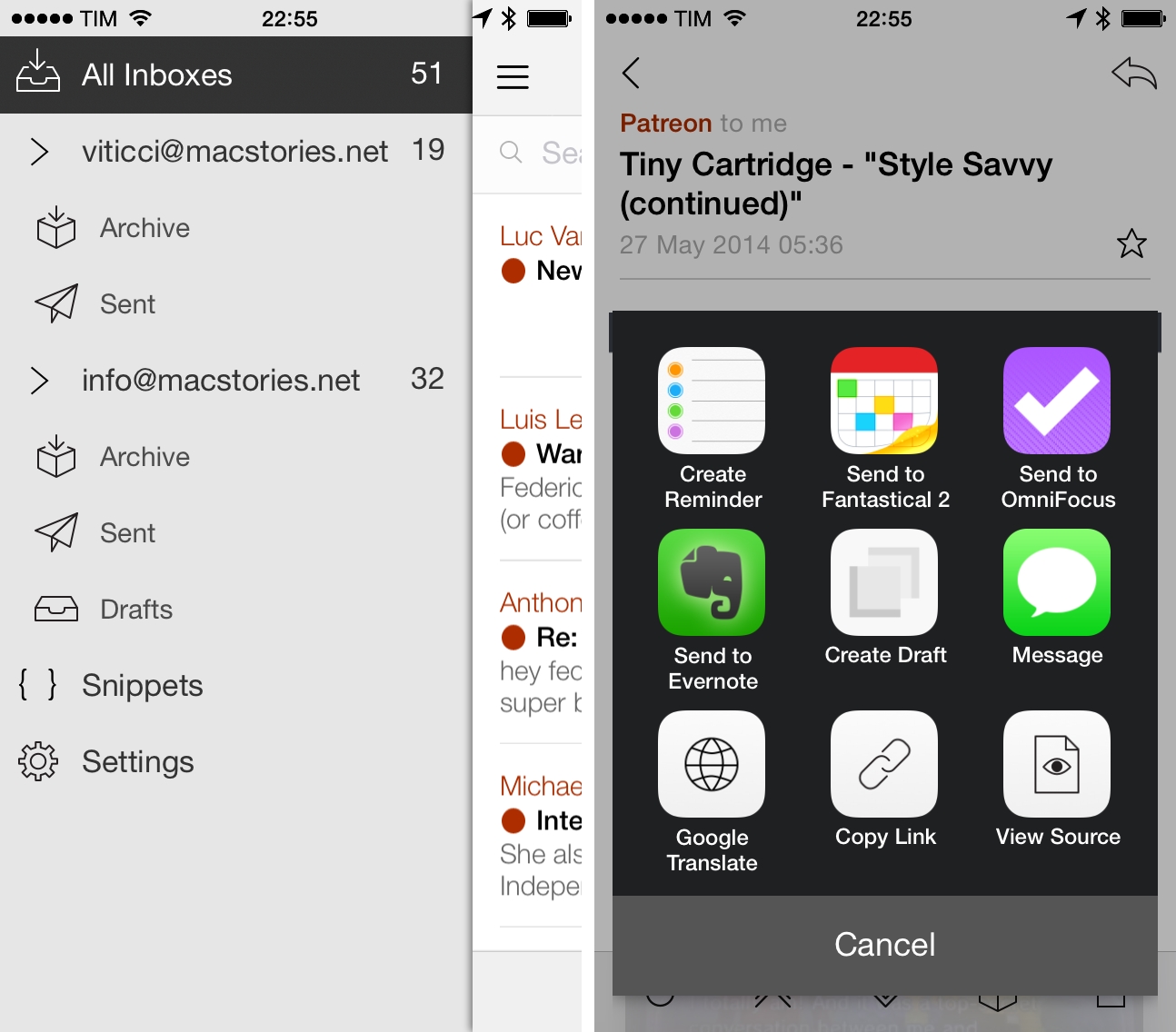
Dispatch, an email client with support for actions and snippets that I first reviewed in June 2013 and followed for the past year, has been updated today to version 2.0, which brings a refreshed interface and welcome improvements to navigation. I stopped using Dispatch (replacing it with Boxer) when I realized that I needed to be able to browse my folders and have fast search across my mailboxes, but I’m going to put version 2.0 back on my Home screen thanks to today’s changes.
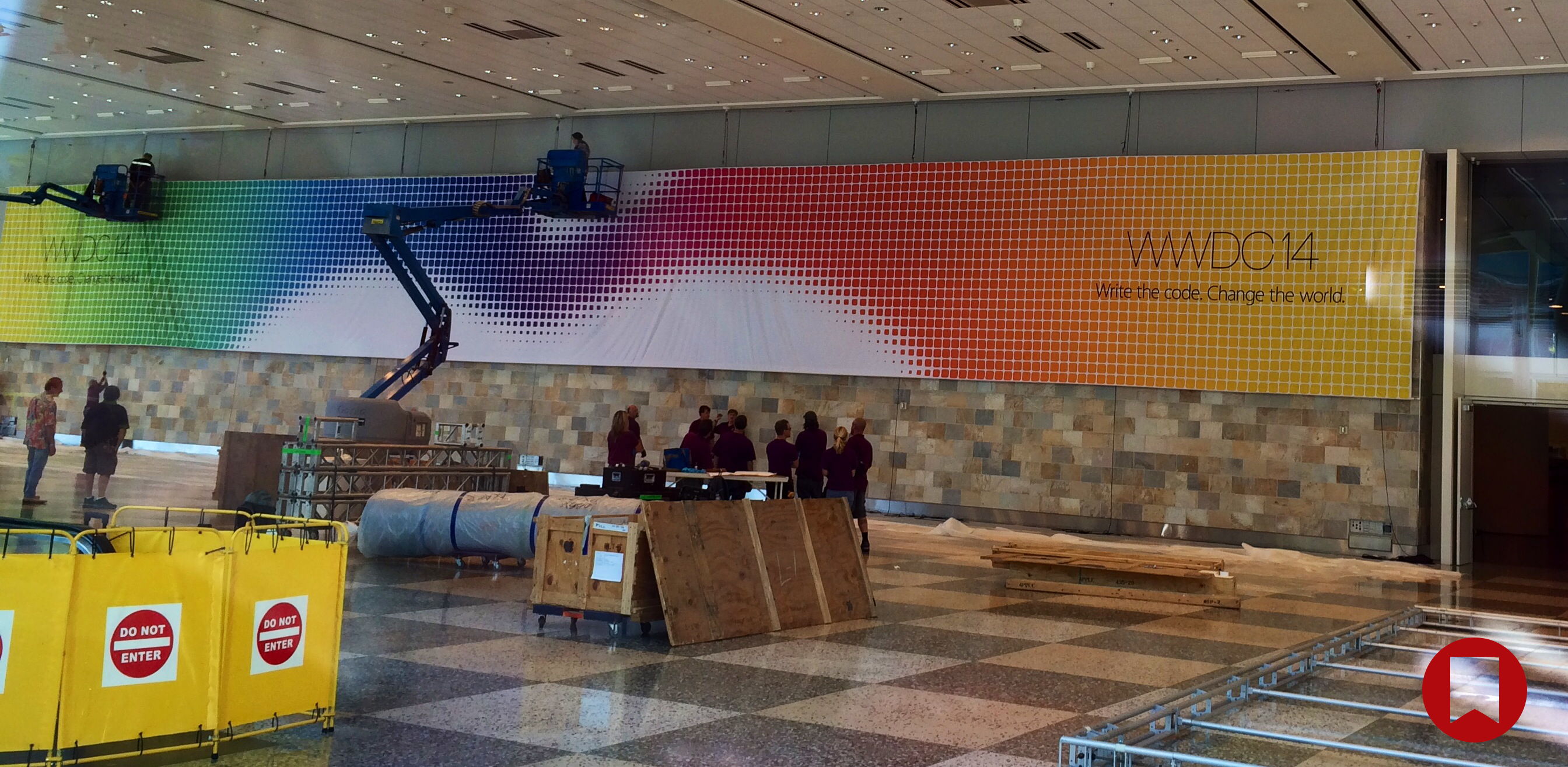
WWDC 2014 is kicking off on Monday, June 2, and Apple has started decorating Moscone West today with promotional banners for the event.
Every year, Apple decorates the convention center in San Francisco with two different sets of banners: the ones carrying the event’s graphics already available on the WWDC website, and others showing the names and logos of new versions of iOS and OS X for the first time. This year, Apple is expected to unveil iOS 8 (the successor to last year’s major redesign of iOS) and OS X 10.10, the latter rumored to introduce a dramatic redesign of the Aqua interface.
Today, we’ve received the first set of photos, showing WWDC 2014 banners going up inside Moscone West with the “Write the code. Change the world” tagline. With preparations now well underway, Apple will continue to decorate Moscone West with new banners in the next few days, possibly showing official logos for iOS 8 and OS X 10.10 later this week.
We will update this post with more photos throughout the week; you can follow @MacStoriesNet on Twitter or our WWDC 2014 hub for updates.
Our thanks goes to Alex Novosad (creator of Choosy) for providing the photos and helping us with coverage from San Francisco.