John Voorhees

5810 posts on MacStories since November 2015

John is MacStories' Managing Editor, has been writing about Apple and apps since joining the team in 2015, and today, runs the site alongside Federico. John also co-hosts four MacStories podcasts: AppStories, which covers the world of apps, MacStories Unwind, which explores the fun differences between American and Italian culture and recommends media to listeners, Ruminate, a show about the weird web and unusual snacks, and NPC: Next Portable Console, a show about the games we take with us.

This Week's Sponsor:

Crickets

The first alarm app for families.


Siri Struggles with Commands Handled by the Original 2010 App→

Nick Heer at Pixel Envy tested how well 2018 Siri performs commands given to the voice assistant in a 2010 demo video. The video takes Siri, which started as a stand-alone, third-party app, through a series of requests like ‘I’d like a romantic place for Italian food near my office.’ Just a couple of months after the video was published, Siri was acquired by Apple and the team behind it, including the video’s narrator, Tom Gruber, began integrating Siri into iOS.

That was eight years ago. Inspired by a tweet, Heer tested how well Siri performs when given the same commands today. As Heer acknowledges, the results will vary depending on your location, and the test is by no means comprehensive, but Siri’s performance is an eye-opener nonetheless.

What’s clear to me is that the Siri of eight years ago was, in some circumstances, more capable than the Siri of today. That could simply be because the demo video was created in Silicon Valley, and things tend to perform better there than almost anywhere else. But it’s been eight years since that was created, and over seven since Siri was integrated into the iPhone. One would think that it should be at least as capable as it was when Apple bought it.

Eight years is an eternity in the tech world. Siri has been fairly criticized recently for gaps in the domains it supports and their balkanization across different platforms, but Heer’s tests are a reminder that Siri still has plenty of room for improvement in how it handles existing domains too. Of course, Siri can do things in 2018 that it couldn’t in 2010, but it still struggles with requests that require an understanding of contexts like location or the user’s last command.

Voice controlled assistants have become a highly competitive space. Apple was one of the first to recognize their potential with its purchase of Siri, but the company has allowed competitors like Amazon and Google catch up and pass it in many respects. The issues with Siri aren’t new, but that’s the heart of the problem. Given the current competitive landscape, 2018 feels like a crucial year for Apple to sort out Siri’s long-standing limitations.

Permalink

Favorite Alfred Integrations

Alfred is much more than a macOS app launcher. The app, which just turned 8 last week, can do an extraordinary amount with files, system settings, and built-in macOS features, but one of my favorite features is Alfred’s extensibility. Workflows and File Actions are a way to extend Alfred’s functionality to third-party apps. There’s...


Album

Please be loving! 2 An overweight, dancing chicken-person with a head the shape of an egg is one thing, but add a bunch of silly dance moves and this animated sticker pack is one of my favorites. The hardest part of this pack is deciding which one to torment your friends with first. Skeleton...


App Debuts

Waze Waze, the popular navigation app for drivers who want to spend as little time stuck in traffic as possible, has been updated this week with a redesigned ETA screen that lets you see a traffic forecast for your destination before you even start driving. I don’t always like Waze’s approach when it comes...


Apple Leads First-Ever Swift Playgrounds Course for Blind and Low-Vision Students in Austin→

Earlier this week, Apple engineers visited the Texas School for the Blind and Visually Impaired where they led a programming course from the company’s Everyone Can Code curriculum. According to the Austin Statesman’s technology blog, Open Source, the class was the first such session led by Apple for blind and low-vision students.

With the assistance of VoiceOver, the students completed assignments in Apple’s Swift Playgrounds iPad app. The students also got a chance to go outside and fly Parrot drones using Swift Playgrounds. Viki Davidson, a technology teacher at the school, told Open Source:

“We see this as a way to get them interested in coding and realize this could open job opportunities,” said Vicki Davidson, a technology teacher at the Texas School for the Blind and Visually Impaired. “Apple has opened up a whole new world for kids by giving them instant access to information and research, and now coding.” 

Apple’s director of accessibility, Sarah Herrlinger, who will participate in a session on Innovations in Accessibility at South By Southwest on March 15th, said:

“When we said everyone should be able to code, we really meant everyone,” said Sarah Herrlinger, Apple’s director of accessibility. “Hopefully these kids will leave this session and continue coding for a long time. Maybe it can inspire where their careers can go.”

Swift Playgrounds and Apple’s Everyone Can Code curriculum have grown at a remarkable rate and are fantastic resources for students, teachers, and parents. However, it’s Apple’s long-standing commitment to accessibility across all of its products that helps ensure that those resources are available to as many students as possible.

Permalink


Apple Confirms It Will No Longer Accept New iTunes LP Content After March 2018

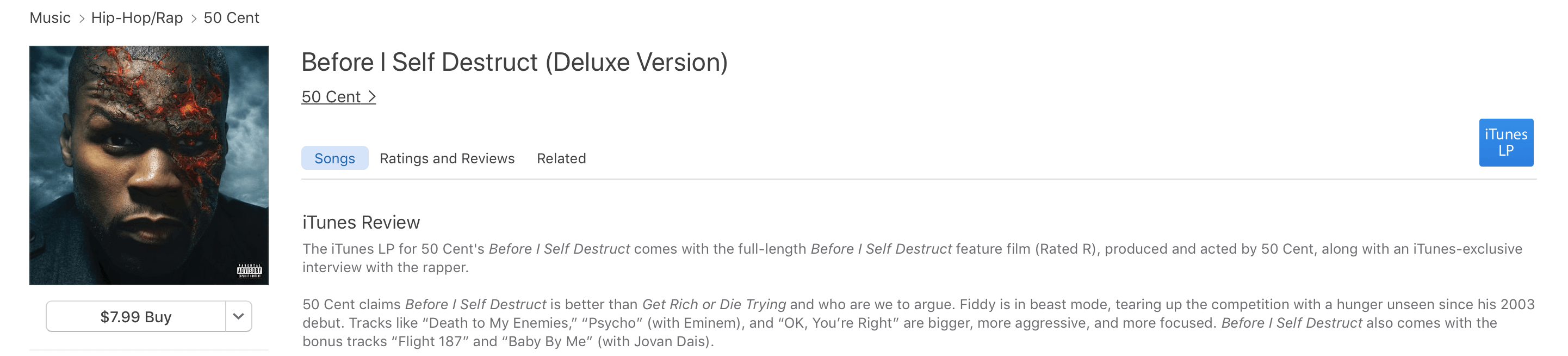
In 2009, Apple introduced iTunes LP content as an enticement for music fans to purchase full albums. The format bundled an album with additional material like bonus tracks, liner notes, videos, and other extras. Earlier today, the UK-based website Metro reported that it had seen an email message from Apple to music industry professionals announcing that it will not accept iTunes LP content after March 2018, which Apple subsequently confirmed to The Verge.

The format, built from a bundle of JavaScript controller files, CSS, HTML, XML, an iTunesMetadata.plist file, images, and videos, never took off.1 Contrary to Metro’s initial report that Apple is deprecating iTunes LPs entirely though, Apple told The Verge that:

While iTunes LP submissions will end this month, existing iTunes LPs will not be depreciated. Not only will these iTunes LPs continue to be available, but users will still be able to download any previous or new purchases of iTunes LPs at any time via iTunes.

The decision to no longer offer new iTunes LP content is not surprising in light of the decline of music sales industry-wide and the rise of streaming services like Apple Music.


  1. If you’re curious which albums are available as iTunes LPs, there’s a list on Wikipedia. ↩

AppStories, Episode 45 – An Interview with Harry Nesbitt and Ryan Cash About Alto’s Odyssey→

On this week’s episode of AppStories, we interview two members of Team Alto, Harry Nesbitt and Ryan Cash, about Alto’s Adventure, the challenges they faced in following it up with Alto’s Odyssey, the creative process of making games, and the mobile game industry.

Sponsored by:

  • Ulysses – The ultimate writing app for Mac, iPad, and iPhone.
AppStories+ Deeper into the world of apps

AppStories Episode 45 - An Interview with Harry Nesbitt and Ryan Cash About Alto’s Odyssey

0:00
37:17

↓

AppStories+ Deeper into the world of apps

Permalink

Apple Releases ‘Welcome Home’ Video by Spike Jonze and Featuring FKA twigs to Promote the HomePod

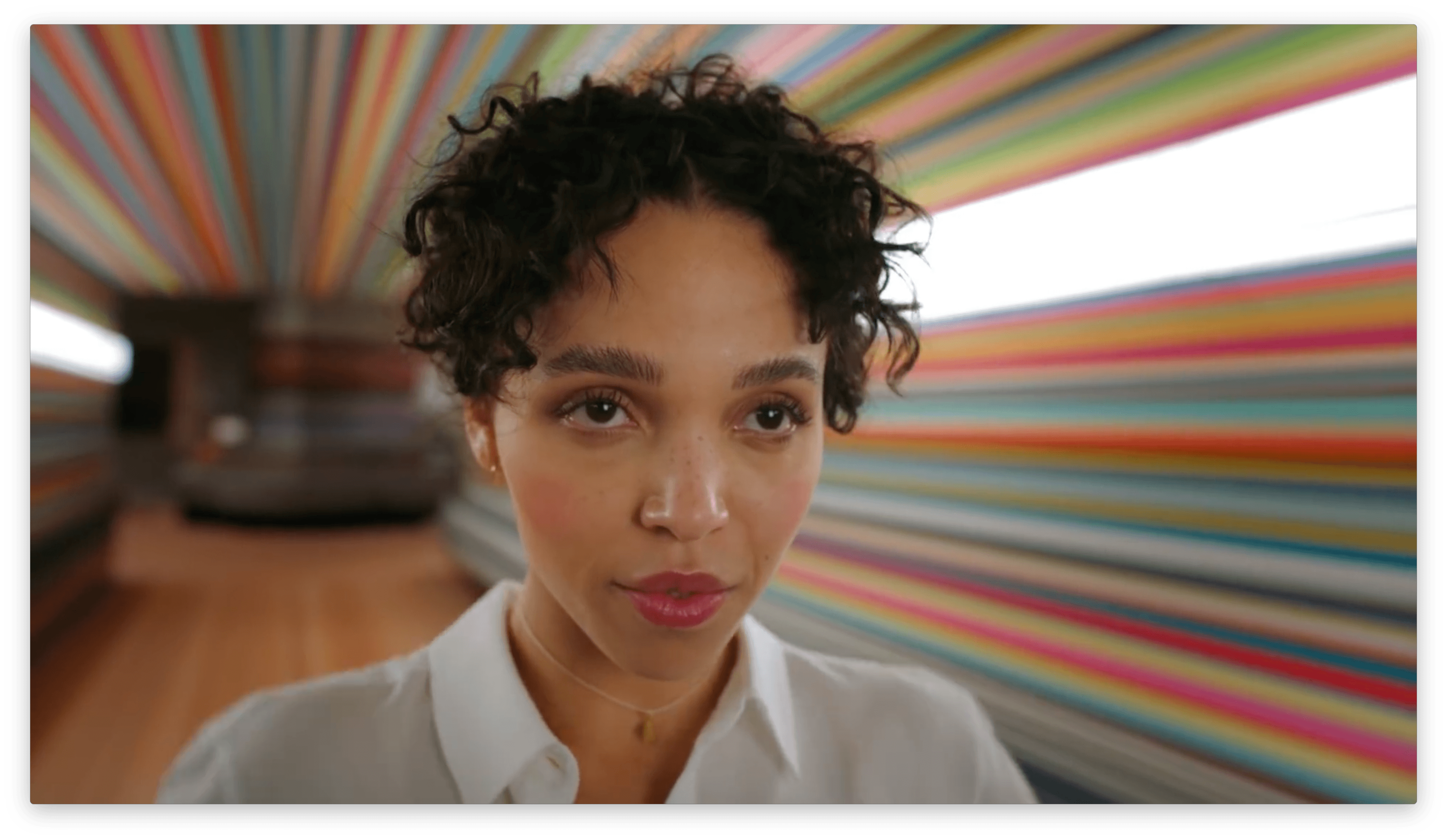
Apple posted a short film on its YouTube channel called ‘Welcome Home’ directed by Spike Jonze, starring singer/dancer FKA twigs, and featuring the song ‘’Til It’s Over’ by Anderson .Paak. The video, which promotes the HomePod, is the first since the device was released to spotlight Siri. The spot begins with a young woman’s long, crowded commute home in the rain. She arrives home wet and exhausted barely able to muster “Hey Siri, play me something I’d like.’

She sits down on the couch in a small apartment as the HomePod begins to play ’Til It’s Over.’ As she starts to relax and sway to the music, she discovers she can extend her apartment with simple hand gestures. The remainder of the video is an energetic and colorful dance routine that shows off FKA twigs’ talent as she moves around the apartment extending the walls. The spot ends with FKA twigs opening her eyes as she lies on the couch apparently waking from a dream.

Video can’t capture the sound quality of the HomePod that Apple points to as one of the device’s main selling features. Instead, Jonze captures the convenience of asking Siri to play something you’d like. Siri has serious limitations on the HomePod, but controlling Apple Music works well and is a strength that I’m not surprised to see Apple highlight.