Federico
AppStories Episode 83 - Frequently-Used Shortcuts, Part 1
0:00
35:05
35:05
This week, Federico and John discuss some of their most frequently-used shortcuts for work and their personal lives.

The first alarm app for families.
 Frequently-Used Shortcuts, Part 1
  Q&A
Q&A Question: I’ve used Copied for a long time but find that its iCloud sync is unreliable and I use Gladys for text snippets. Can you recommend a good alternative with iCloud sync that works on iOS and the Mac? (Teddy, @tedsvo)
If you’re already using Gladys for text snippets, I would consider using it...
MarginNote MarginNote is a feature-rich research and study tool for iOS and the Mac that is a little overwhelming at first, but pays dividends if you spend some time with it. The versions sync via iCloud and include many of the same features, so I’m going to focus on the iPad app, with which I’m...
App Debuts Gmail We may have seen a couple of email apps shut down or getting sold recently, but there’s still plenty going on in the category on iOS. This week, Gmail added support for the iPhone XS and XS Max as well as iOS 12’s grouped notification feature. In the ‘better late than never’ category,...
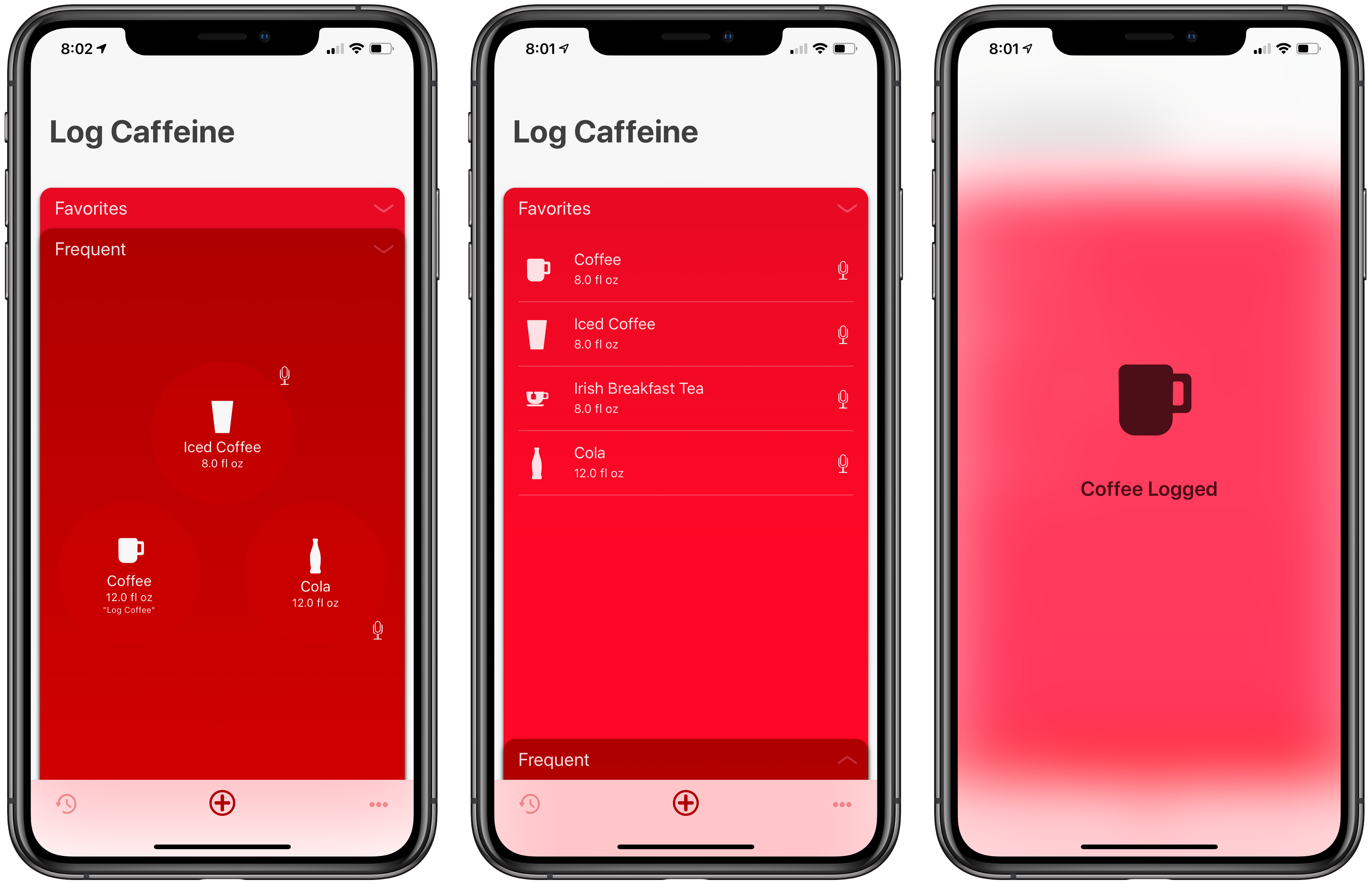
RECaf is a brand-new caffeine-tracking app by Joe Cieplinski. The app does a remarkable job wringing the friction out of tracking caffeine, making it an excellent example of the benefits of using a narrowly-focused utility to get the best possible user experience.
Tracking anything is hard. It’s easy to forget to do and an interruption of the thing you’re trying to track. As a result, entering data is often sporadic or abandoned entirely. Cieplinski gets this and has built an app that is unusually sticky.
In a post on Marco.org, Overcast developer Marco Arment critiques the design of many of the current Apple Watch faces. Using a variety of analog watches as references, Arment highlights the design elements that make them legible, few of which are followed by Apple’s faces:
Across a wide variety of brands, styles, and price points, a few key design principles are clear:
- The hour markers for 12 (and often 3/6/9) are more prominent.
- The hour indices are much larger than the minute markings.
- The hour hands nearly touch the hour indices.
These all improve legibility by making it as fast and easy as possible to know which hour is being indicated (and minimize the chance of an off-by-one error), first by orienting your eyes to the current rotation with the 12 marker, then by minimizing the distance between the hour hand and the indices it’s between.
Arment is especially critical of the Infograph face, which is so hard to read that many people have resorted to using a digital time complication with it. He concludes that it’s time for Apple to allow third parties to create watch faces.
We covered our Apple Watch faces on AppStories this week, and both Federico and I noted that we use a digital time complication with the Infograph watch face because the hands are so hard to read. As Arment’s piece points out, that isn’t uncommon, but it shouldn’t be necessary and is a pretty clear indication that the design is flawed. I’ve been happy with the Series 4 Watch’s support for more complications, but I also want more face options and flexibility across watch faces. It’s time for Apple to re-evaluate its current watch faces and reconsider letting developers create faces of their own.
On this week’s episode of AppStories, we talk about how we’ve set up our new Series 4 Apple Watches including the complications we use, new apps we are trying, and what’s in our Watch docks.
Sponsored by:






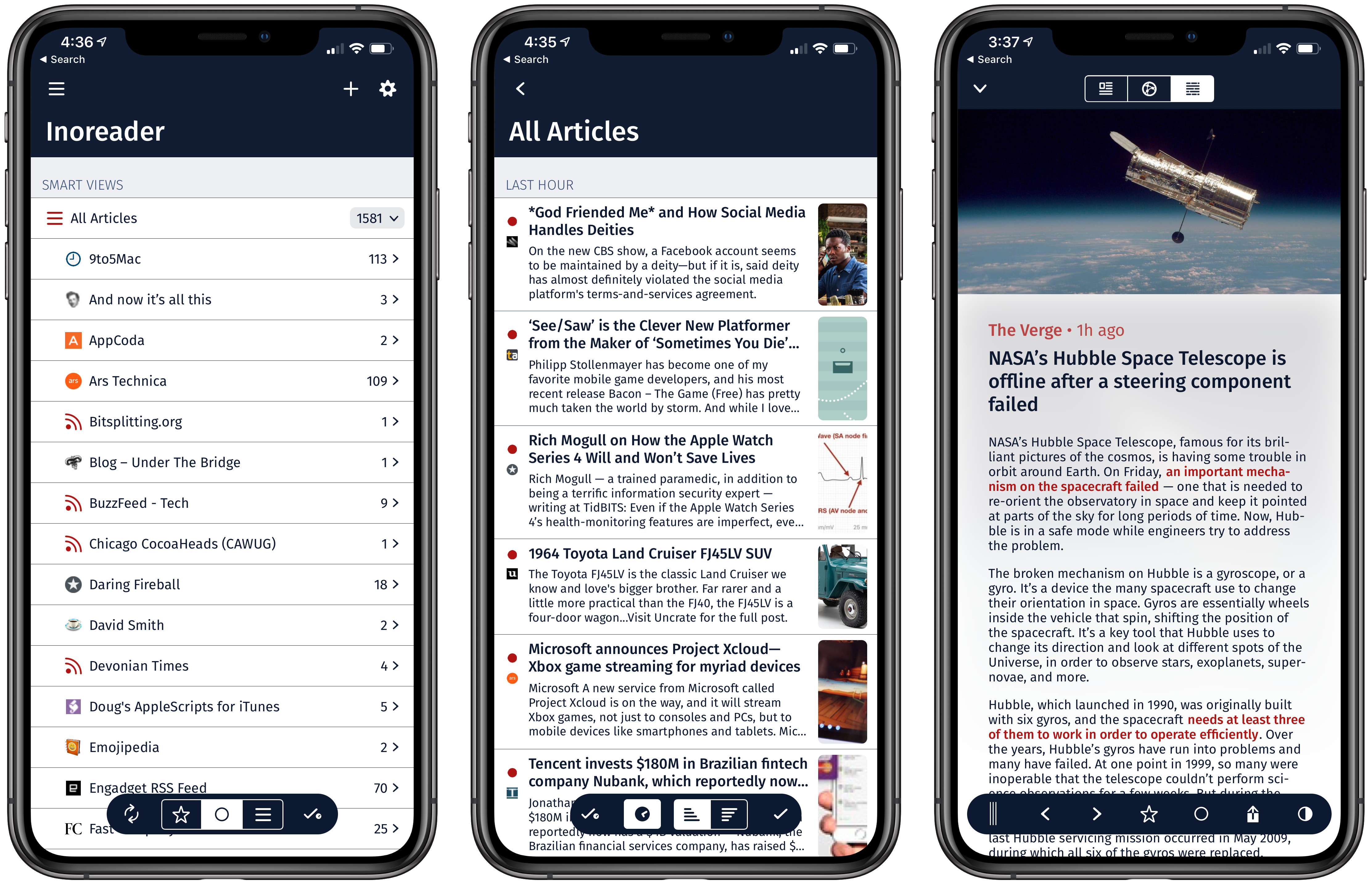
There are a lot of good RSS readers on iOS that are continually being updated with new features and other improvements. It’s a competitive category, and Fiery Feeds, which is one of my favorites, was just updated with a focus on design and new ways to filter the feeds you follow.
Apple has released iOS 12.0.1, which fixes several bugs that affected users after upgrading to iOS 12.
One of the highest profile issues affected the iPhone XS, which sometimes failed to begin charging when connected to a Lightning cable. Other users reported that after the iOS 12 update, their iPhones would connect to WiFi networks at 2.4 GHz instead of 5.0 GHz even when both were available. Apple’s release notes say both issues have been fixed. The update also addresses a Bluetooth connectivity issue and a problem where subtitles sometimes didn’t appear in video apps.
iOS 12.0.1 includes a small design change on the iPad too. With the iOS 12 update, the ‘.?123’ key was moved. With version 12.0.1, that key has been restored to its previous position on the software keyboard.