Graham Spencer

917 posts on MacStories since January 2011

Former MacStories contributor.


Apple Posts New iPad Advert: “All On iPad”

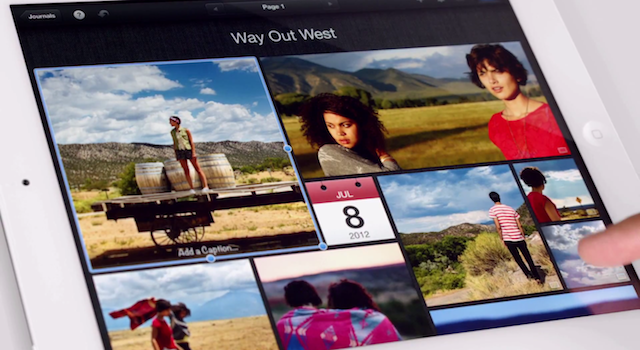
Apple has today released a new advert for the 3rd generation iPad called “All On iPad”. It runs though a bunch of tasks that you can do, ‘all on iPad’ - highlighting apps such as iBooks, FaceTime, Keynote, Square, Real Racing 2 and iPhoto.

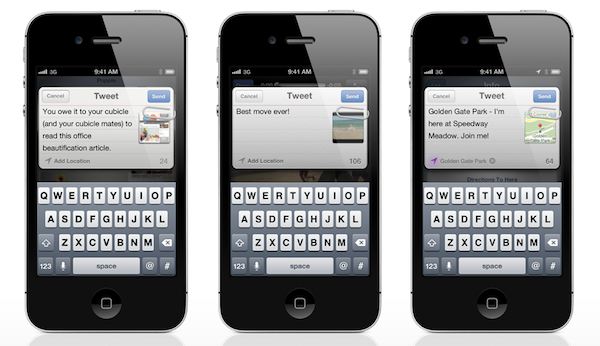
Read it. Tweet it. Be surprised, be productive. Make a sale, make some lunch. Make a movie night. Play a game or an old favourite.
Do it all more beautifully with the retina display on iPad.

Apple previously released “This Good” and “Do It All” adverts for the 3rd generation iPad.


Mat Honan: How Apple and Amazon Security Flaws Led to My Epic Hacking

Mat Honan: How Apple and Amazon Security Flaws Led to My Epic Hacking

You may have heard about Mat Honan (Wired writer) being hacked last week, with his Twitter account being compromised and the hackers using iCloud to remote wipe his iPhone, iPad and Mac. Today he’s written up a detailed article on Wired that goes through how exactly the hackers got access to it all. The scary thing is that it wasn’t done by brute force, but rather by using social engineering to trick Apple and Amazon support staff.

But what happened to me exposes vital security flaws in several customer service systems, most notably Apple’s and Amazon’s. Apple tech support gave the hackers access to my iCloud account. Amazon tech support gave them the ability to see a piece of information — a partial credit card number — that Apple used to release information. In short, the very four digits that Amazon considers unimportant enough to display in the clear on the web are precisely the same ones that Apple considers secure enough to perform identity verification. The disconnect exposes flaws in data management policies endemic to the entire technology industry, and points to a looming nightmare as we enter the era of cloud computing and connected devices.

It’s undoubtedly a scary story about the perils of putting our entire lives in the hands of a cloud service - because more so than ever, physical access isn’t needed to wreak havoc. It’s also a friendly reminder to ensure you’re using strong passwords, isolating critical accounts and creating local backups wherever feasible as a last resort if indeed this or something similar does happen to you.

My experience leads me to believe that cloud-based systems need fundamentally different security measures. Password-based security mechanisms — which can be cracked, reset, and socially engineered — no longer suffice in the era of cloud computing.

Permalink

Angry Birds Update Adds New “Power-Ups”, 15 New Levels

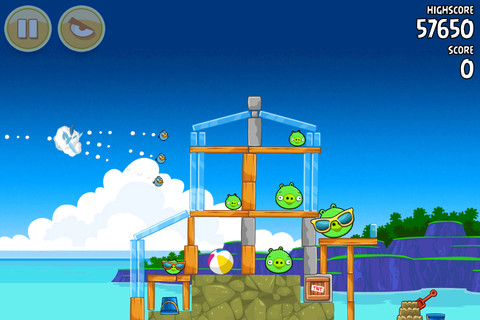
Rovio may have just released Amazing Alex a few weeks ago, but it’s committed to bringing more levels to its Angry Birds franchise that continues to be popular. In an update released today, the original Angry Birds game for iOS got 15 new tropical levels that sees the “piggies continue their beach vacation”, that is, until the birds show up.

Today’s update also sees the addition of four power-ups; King Sling, Birdquake, Super Seeds, and Sling Scope.

  • King Sling upgrades your slingshot for “maximum power and velocity”
  • Birdquake will bring the pigs’ defenses “crashing to the ground”
  • Super Seeds will turn your bird into a “pig-popping giant”
  • Sling Scope lets you use laser targetting for “pinpoint precision”

Upon launching the update you’ll get 20 free uses of a power-up and each day you get one additional use. But of course, if you can’t wait that long there’s a bunch of in-app purchase bundles to give you more uses of those power-ups, ranging from a 5-pack of any power-up for $1.99, 10 uses of a single power-up for $0.99 or you could go all in for 125 power-ups for $20.99.

A little side-note, Rovio has now (finally) brought full retina support for the iPad 3 so you can enjoy the game on the wonderful Retina display.


July 2012 In Review

July was an interesting month for MacStories as we covered the launch of the latest version of OS X, Mountain Lion, and launched our first eBook. Containing all our Mountain Lion coverage from the site in addition to exclusive articles, the book was a challenging but immensely rewarding project. With the exception of some advice from a few trusted people, we handled the book’s creation entirely by ourselves and are very proud of the end result. If you haven’t grabbed a copy yet, it’s not too late to change that — and remember that 30% of all proceeds will go directly to the very worthy cause that is the American Cancer Society.

Besides Mountain Lion, the other notable pieces of news were Google’s acquisition of Sparrow, and the all-but-confirmed rumour that the next iPhone and iPad mini will be announced on September 12th. Apps-wise, July was a quiet month as developers readied theirs for Mountain Lion, but we did see the release of the Tweetbot for Mac alpha along with Rovio’s new franchise, Amazing Alex. For stories, we had two great interviews, an excellent piece on discovering and making music on the iPad, talked about the apps and tools we use to write more efficiently, and created some hands-on examples of what the rumoured 7.85” iPad would look and feel like.

Jump the break for the full month in review, and feel free to read previous ‘Month in Review’ editions from 2012.

Read more


Apple v. Samsung, The Story So Far

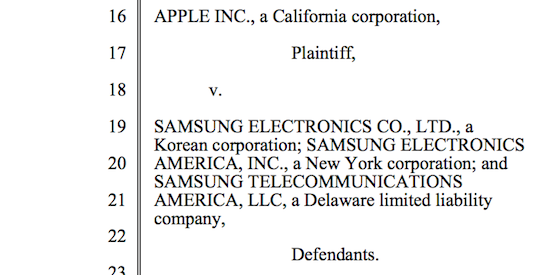
This week marks the beginning of the actual Apple v Samsung trial in the United States, with jury selection and opening statements scheduled to happen today. But in the past week or so, as the parties have been filing the various documents in preparation, troves of interesting information have been dug up by journalists from around the web. To get you up to speed, we’ve collated some of the best nuggets of information that have been dug up in the pre-trial filings and put them together below. As the trial gets underway, we’ll endeavour to update this post with any other interesting pieces of information.

If you’re interested in paying closer attention to the trial, I highly recommend following along over at The Verge and AllThingsD which have already done a terrific job at covering the trial.


Prototype iPhone & iPad Images


Some Notable Witnesses

  • Scott Forstall (Apple’s Senior VP of iOS Software)
  • Phil Schiller (Apple’s Senior VP of Worldwide Marketing)
  • Tony Blevins (Apple’s VP of Operations)
  • Boris Teksler (Apple’s Director of Patent Licensing & Strategy)
  • Susan Kare (Designer & Early Apple Employee)
  • Justin Denison (Samsung America’s Chief Strategy Officer)
  • Peter Bressler (University of Pennsylvania, Adjunct Professor of Integrated Product Design)
  • Edward Knightly (Rice University Professor of Electrical and Computer Engineering)
  • Janusz Ordover (New York University Professor of Economics)
  • Russell Winer (Stern School of Business Professor of Marketing)

[AllThingsD]


Jury to receive adverse inference instruction against Samsung after Magistrate Judge Paul Grewal ordered on Wednesday July 25th that Samsung didn’t take reasonable steps to preserve emails after it was “reasonably foreseeable” that litigation with Apple was going to occur.

The jury will be told that they may presume that evidence that would have been beneficial to Apple was destroyed - but they don’t have to. The main issue regarding the spoliation was because Samsung’s email system automatically deleted mail messages after two weeks unless “saved” or downloaded locally using software such as Outlook. When litigation was “reasonably foreseeable” they did not take appropriate steps to tell relevant employees to save email or to turn off the automatic two-week deletion.

For an adverse inference jury instruction, this is relatively soft. The court could also have told the jury that it “must” presume that relevant evidence in Apple’s favor was lost, or in a worst-case scenario for Samsung, that certain of Apple’s claims must be deemed proven. But the fact that the outcome could have been worse, or even much worse, for Samsung doesn’t mean that the above isn’t pretty useful to Apple.

You can review the full order, uploaded by FOSS Patents.

[FOSS Patents]


Google warned Samsung that their prototype devices were “too similar” to the iPad in February of 2010. Google was referring to the “P1” and “P3” devices that later became the Galaxy Tab and Galaxy Tab 10.1. They demanded Samsung to make a “distinguishable design vis-à-vis the iPad for the P3”.

[AllThingsD]


Apple will use Samsung’s own words in regards to iPhone similarity in the trial. First is the reference by Samsung’s Product Design Group that noted it was “regrettable” that the Galaxy S “looks similar” to older iPhone models.

Secondly, as part of a Samsung sponsored evaluation, designers warned that the Galaxy S “looked like it copied the iPhone too much”, that “innovation is needed”, that it so “closely resembles the iPhone shape so as as to have no distinguishable elements” and that “all you have to do is cover up the Samsung logo and it’s difficult to find anything different from the iPhone.

[AllThingsD]


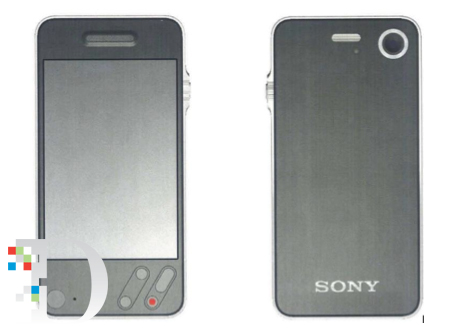
Samsung: Apple copied Sony when designing the iPhone and is also a “copyist”. According to their claims, a 2006 Businessweek interview with Sony product designers was passed around internally, including by Apple executives Tony Faddell, Jony Ive and Steve Jobs. Apple industrial designer, Shin Nishibori was directed to “prepare “a Sony-like” design for an Apple phone and then had CAD drawings and a three-dimensional model prepared.”

Apple responded to the theory in a following brief submitted to the court, arguing that it should be inadmissible. AllThingsD summed up their objections neatly:

  • The theory, which implies Apple’s patents are obvious in light of Sony prior art, has already been excluded from the case by another judge.
  • Samsung didn’t disclose this new theory until after the close of the discovery period of the case. It shouldn’t be allowed to ambush Apple with it now.
  • The BusinessWeek article on which Samsung’s theory is based has no picture of any Sony product, making it impossible for the jury to assess from the article whether Apple in fact “derived” its designs from Sony products.
  • The Sony Walkman that Samsung claims inspired the design of the iPhone looks absolutely nothing like it (see picture above, right).
  • The testimony of former Apple designer Shin Nishibori who claims his Sony-style mock-ups influenced the design of the iPhone is inadmissible because his deposition wasn’t authorized by the court and Apple never stipulated to it.
  • “It is unfair in a timed trial to require Apple to take the time to rebut such evidence.”

The Apple designer at the center of this Sony-style iPhone mockup, Shin Nishibori, has told the court through his lawyer that he has no plans to appear at the trial. In the letter to the court, his lawyer notes that Mr. Nishibori no longer works at Apple, is in Hawaii and is “trying to recover from several health issues”. AllThingsD has the full letter.

[AllThingsD]


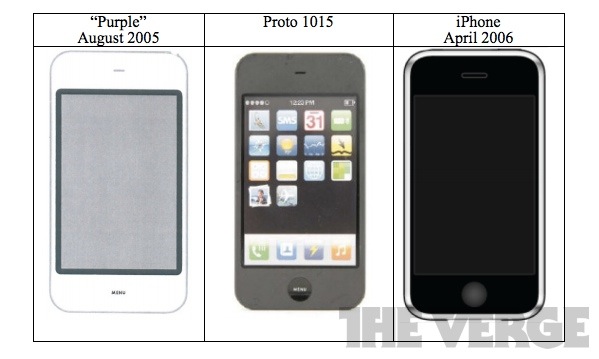
Another Filing Reveals Apple’s Prototype ‘Purple’ from August 2005. The filing aims to refute Samsung’s Sony-style theory by demonstrating an earlier prototype that looks very similar to the first iPhone. The filing states that the Sony-style designs were just “an ‘enjoyable’ side project”.

[The Verge]


Filings reveal Samsung’s “Beat Apple” goal for 2012. Whilst there are references from mid-2011, one memo from September of 2011 specifically states “Goal of next year - BEAT APPLE”. The documents dive-in deeper, saying that the goal should be to go “head-to-head” with Apple in many regions and in many price segments. A February 2012 memo noted that “three horse race [is] becoming a two horse race between Apple and Samsung”.

[The Verge]


Best Buy surveys reveal a common reason for Galaxy Tab returns is confusion with the iPad 2. Samsung had surveyed 30 Best Buy stores in August 2011 and found that of 30 stores, 7 cited “lack of product knowledge” as the primary reason for returns. Within that category it was noted:

The most common pattern is that a customer returns the product which was purchased because the customer thought it was an Apple iPad 2

[The Verge]


Apple is asking for damages of $2.5 billion of Samsung, mostly representing the total profit that Samsung made from selling products that it says infringed their designs and patents.

Samsung has reaped billions of dollars in profits and caused Apple to lose hundreds of millions of dollars through its violation of Apple’s intellectual property.

[WSJ]


Steve Jobs’ “thermonuclear” comment will not be used in the trial after Judge Lucy Koh denied Samsung’s request to include the statement. Judge Koh agreed with Apple’s argument that “Out-of-court statements by Mr. Isaacson about what Mr. Jobs allegedly said to his biographer are inadmissible hearsay irrelevant to any issue in this case”.

I’m going to destroy Android, because it’s a stolen product. I’m willing to go thermonuclear on this.

[CNet]


NYT: Apple Considering Stake In Twitter

NYT: Apple Considering Stake In Twitter

The New York Times’ Nick Bilton and Evelyn Rusli are tonight reporting that Apple is considering an investment in Twitter to the tune of hundreds of millions of dollars. Whilst the companies are not currently in negotiations and there is no guarantee that the two would come to an agreement, earlier talks do suggest “they may form a stronger partnership”.

As the New York Times report explains, the deal would be one of Tim Cook’s “most important strategic decisions as chief executive” because of intensifying competition from Google and Facebook and the fact that Apple has struggled in the past with social. It would be a unique move for Apple, which typically buys a small start-up and absorbs it into the company rather than investing in a company.

The turf wars have fortified alliances and pushed companies to choose sides. Apple’s dealings with Twitter, for instance, began after its relationship with Facebook soured. In 2010, the company was eager to integrate its Ping service with Facebook, but discussions broke down. Mr. Jobs, the Apple chief executive who died last year, told the technology news site AllThingsD that Facebook had demanded “onerous terms that we could not agree to.”

Apple, which had spent months preparing to hook Facebook into iOS, its mobile operating system, swiftly reworked it for Twitter. One former Twitter employee, who described Twitter as the “lucky mistress” in this chain of events, said the partnership was essentially “handed to Twitter on a silver platter.” Ping, in the end, never caught on with users.

One big question to be resolved is whether Twitter would want a large investment from Apple. Earlier this year, chief executive Dick Costolo said Twitter had “truckloads of money in the bank”. At the same time though, Costolo also recently said in an interview that “[Apple] is a great partner, we think of them as a company that our company looks up to”.

The relationship with Apple is so prized at Twitter that the company assigned a vice president, Kevin Thau, to work with Apple full time, according to an Apple employee who asked not to be named.

[via The New York Times]

Permalink

iWork Suite Updated With iCloud & Retina MacBook Pro Support

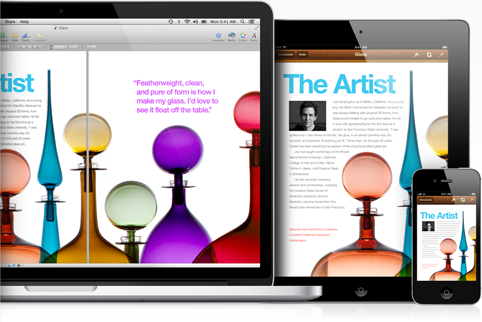
Apple has today updated the Mac versions of iWork (Pages, Keynote, Numbers) to include support for the new display on the Retina MacBook Pro as well as integration of iCloud. Support for iCloud now allows users of the iWork apps to create documents on their iPhone, iPad or Mac and then continue working on them on any of their other devices, no matter where they are. The highlight of it all is that changes are synced across automatically and instantly. iCloud support for the Mac apps has been a long time coming, with the iOS versions updated to include support late last year, but comes today on the release of Mountain Lion which touts iCloud support as one of the key improvements.

Users of the new Retina MacBook Pro and iWork suite will also be happy with today’s update that now natively supports the new display. As Apple says, “everything you create in iWork is stunning on the new MacBook Pro with Retina display”.

For those wanting a complete overhaul of the iWork suite, well today just isn’t that day. Whilst Apple nearly always just calls it “iWork”, there are a few reminders on Apple’s own website, that these are apps that last received a major update in 2009.

You can download or purchase the latest version of iWork from the Mac App Store: PagesKeynoteNumbers.


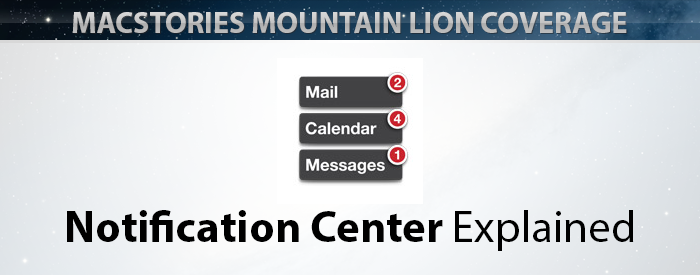
Mountain Lion: Notification Center Explained


Notifications have been a part of iOS from day one, and last year’s iOS 5 update improved them greatly with Notification Center and the new banner style (the one that rolls down from the top of the screen without disrupting your current activity). They are an integral part of our interactions with our iPhones and iPads — we get them from missed calls, text messages, emails, reminders, social network interactions, apps, games, and so on. But on the Mac, notifications have been more of a hack than a system-level feature: something that developers have implemented themselves, and mostly just when they felt it was absolutely necessary to do so. As a result, they haven’t been nearly as much a part of the OS X experience as they have on iOS.

The most widely-used system for notifications on OS X until now has been Growl: a third-party app that allowed developers to easily implement their own notifications. It was widely adopted by the OS X developer community, and over the years it became an essential install for many Mac users. But Growl isn’t the best solution for notifications because it is still a third party app that the user must go out of their way to install.[1] Whilst this isn’t a problem for an experienced computer user, it is for those that don’t want or need to worry about finding a download link for a third-party notification solution or keeping it up to date (though admittedly this has become less of a problem with Growl’s release on the Mac App Store). And of course Apple itself would never use Growl for notifications for their own apps, some of which could benefit most from notifications (e.g. Mail, Messages, and FaceTime).

Fortunately, in OS X Mountain Lion Apple has now implemented native notifications and Notification Center. If you’ve ever used iOS 5 you’ll instantly be familiar with how they work because Apple has effectively recreated them for the Mac, only making a few changes to suit the different platform. All of Apple’s built-in OS X applications support the new notifications (Messages, Mail, Reminders, Mac App Store, FaceTime, etc) and there is an API for developers to add support for them to their own as well.

Read more


Apple Pulls Lion From The Mac App Store With The Release Of Mountain Lion

Apple today released OS X 10.8 Mountain Lion on the Mac App Store and has now also removed OS X 10.7 Lion from the Mac App Store. You can no longer go to the Lion page via its direct link, by searching or by finding it on the top grossing list as it was earlier this morning.

Apple presumably pulled Lion because users wanting to upgrade to Mountain Lion can also do so from Snow Leopard. Keeping both Lion and Mountain Lion on the Mac App Store would have presumably caused confusion for some users - particularly given Lion cost $29.99 and Mountain Lion costs just $19.99 - seemingly suggesting that Lion was the latest OS.

Update 4:05 PM: Customers who purchased Lion should still be available to download Lion from the Mac App Store when you option click the Purchased tab.

You can read the MacStories review of Mountain Lion here.