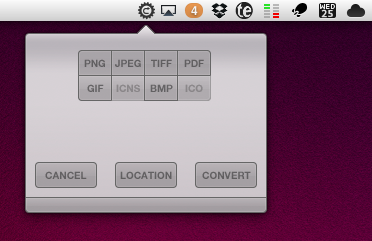
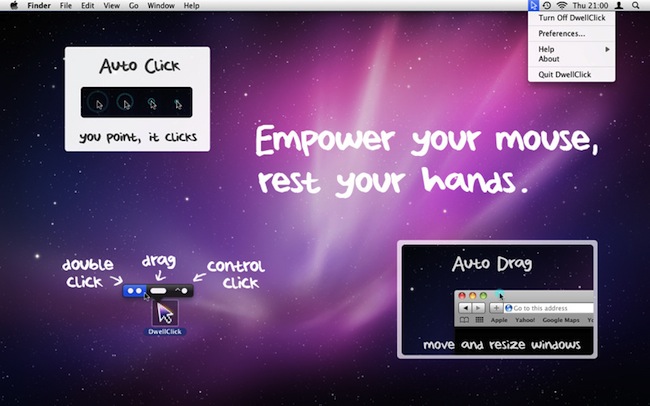
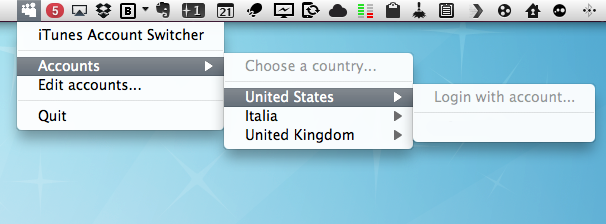
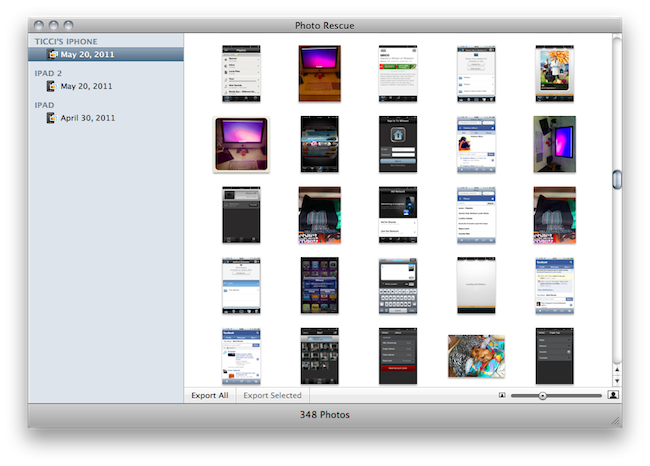
Here are today’s @MacStoriesDeals on iOS, Mac, and Mac App Store apps that are on sale for a limited time, so get them before they end!
Posts tagged with "mac"
#MacStoriesDeals - Thursday Night!
Ars Investigates Recent Mac Malware→
Ars Investigates Recent Mac Malware
MAC Defender has changed everything,” one Apple Store Genius, who requested to remain anonymous (we’ll call him Lenny) told Ars. “We probably get 3 or 4 people with this per day. Most of them only got as far as installing the program and haven’t entered their credit card details.”
Lenny went on. “This always sparks a debate at the bar on whether antivirus software is necessary on the Mac. This is difficult, as the store sells several antivirus products implying that Apple supports the idea, but as many customers point out, the sales guys aren’t shy in making the claims for Mac OS X’s security. Internally, Apple’s [IT] department mandates the use of Norton Antivirus on company machines.
Following the controversy that sparkled after the large diffusion of MAC Defender (covered here) that rose (again) the inevitable question as to whether being scared of malware on a Mac is nothing but crying wolf, Ars Technica takes a step back and tries to analyze the situation interviewing Apple employees, Geniuses, and various representatives of antivirus / security companies. Whilst it’s kind of obvious that antivirus makers will always recommend their products because you have to keep your machine secure, the takeaway from support specialists is interesting: there’s no need to panic, but people are undoubtedly coming over asking for help with this recent malware.
Of course, the peculiar nature of Mac Defender (it’s a “scanning software” that asks for your credit card details, and it’s downloaded through a malicious script from certain websites and Google Image Search) raises another issue: users are installing the software by manually going through an installer and giving it their passwords – this shouldn’t happen. Anyone who’s a little skilled in computing should know that stuff you didn’t want to download shouldn’t be granted permission to run in the first place. And MAC Defender comes as a whole installer. On the other hand, I don’t think it’s really about crying wolf (though some people like to run overly sensationalistic headlines), as much as it’s about the fact that this malware ultimately exists. Fact.
Ars has an interesting read, and our friends at TUAW have a pretty handy guide detailing the removal of MAC Defender. The best tip, however, is still the same: don’t execute programs and documents you don’t know.
Internal AppleCare Document Directs Employees Not To Help With Malware Removal
An internal AppleCare document posted earlier this week reveals that Apple is investigating ‘Mac Defender’ – a recently unleashed malicious application that pretends to be an anti-virus application when users download it. The document, which Apple clearly notes is for internal use only, tells its employees not to confirm or deny whether the application has been installed on a users computer, not to attempt to remove it or escalate the issue.
The bizarre document, which is posted in full after the break, seems to be instructing Apple employees to take no part in resolving malware issues on a users computer.
AppleCare does not provide support for removal of the malware. You should not confirm or deny whether the customer’s Mac is infected or not.
However, the document does tell employees to instruct customers that if the Mac Defender installer pops up on their screen, to cancel the installer and delete the installer immediately. Whilst if the application is already installed they are told to tell the customer to make sure all security updates have been installed with Software Update and then direct them to the “What is Malware?” document. But the document is clear in saying that Apple doesn’t deal with malware – even recommending anti-virus software in the Mac App Store.
Explain that Apple does not make recommendations for specific software to assist in removing malware. The customer can be directed to the Apple Online Store and the Mac App Store for antivirus software options.
[Via ZDNet]
DropIn Enhances Dropbox with Menubar Drag & Drop, Filters, Previews
I rely on Dropbox on a daily basis to sync files between computers, my iTunes music library and have access to folders shared with the MacStories team or my friends. In fact, Dropbox is the first app I install on every new Mac or fresh installation of OS X, being the service that stores my most important data, app libraries, and more. But for as much as I love Dropbox and couldn’t work without it anymore, I loathe the desktop Mac app. Not the syncing service that displays a badge next to my files or folders, or the preference panel that (in the latest version) allows me to set up selective sync: I can’t stand the menubar utility, which is an icon that does nothing but displaying my available space on Dropbox and changing its looks depending on whether Dropbox is syncing or not. It doesn’t do anything else, and more importantly it sits in the menubar but it doesn’t let me drag files onto it for quick uploading.
Meet DropIn, a $1.99 utility from the Mac App Store that enhances your local Dropbox installation by letting you drag files in the menubar, browse recent files, set up notifications and filters. Sure, it’s another icon in the menubar, but at least it lets me do a bunch of things the official app can’t. DropIn has two main functionalities: it displays a preview of recently changed files and enables you to create filters for the files you want to see in there; it comes with a Droplet feature that allows you to move files to Dropbox by dragging them onto the menubar, avoiding the Finder altogether. In DropIn’s preferences I told the app to simply copy files into my Dropbox main directory, but you can choose sub-folders as well or enter your account ID to upload files to the public folder and get a link in your clipboard automatically. This one’s a feature I’ve been looking forward to have on my Mac because I dislike stacks in my dock, and I’d rather have an icon in my menubar instead of having to open a new Finder window every time. And it works great in DropIn.
As for recently changed files and notifications, this is something you can do with the official Dropbox app and Growl, but DropIn lets you set up the number of updated files to display in the dropdown menu and it’s also got inline previews and a button to reveal a file in the Finder. Furthermore, you can set up advanced rules in the Filters section to show / hide specific files and make sure you’re only being notified about things you care about, and not those info.plist files from iTunes.
At $1.99, DropIn is a great addition to Dropbox, if only for the drag & drop functionality that makes it incredibly easy to move anything to your personal cloud. You can get the app from the Mac App Store here. Check out more screenshots below. Read more
OS X 10.6.7 Changes Finder Sidebar Behavior→
OS X 10.6.7 Changes Finder Sidebar Behavior
Adam C. Engst at TidBITS:
With Mac OS X 10.6.7, Apple not only messed up (and then fixed) font handling (see “OpenType PostScript Fonts Troublesome in 10.6.7,” 27 March 2011, and “Apple Releases Snow Leopard Font Update,” 26 April 2011), they also changed the way you remove items from the sidebar. Now, instead of just dragging items out, you must either Command-drag them out or Control-click them and choose Remove from Sidebar.
I’ve noticed the change too: I was trying to drag a folder out of the “Places” tab, but it wasn’t working. At first I thought I had to restart my Finder for some reason, but that didn’t work either. So I realized maybe something had changed since the 10.6.7 software update, and tried to CMD-drag like I would for items in the menubar. Items in the Finder’s sidebar now share the same behavior of draggable items in the top menubar; Engst believes the change was made after some complaints about accidental removals happening too often, but, frankly, I never removed an item from the Places tab by accident.
#MacStoriesDeals - Wednesday
Here are today’s @MacStoriesDeals on iOS, Mac, and Mac App Store apps that are on sale for a limited time, so get them before they end!
Parallels Transporter Makes PC to Mac Migration Dead Simple
Parallels, probably best known for its popular virtualization software, has today released a new product that lets you make migration from Windows to OS X dead simple. The product, Parallels Transporter is being offered at a special introductory price of $0.99 on the Mac App Store (it’s regular price will be a rather expensive $39.99) and allows users to automatically transfer music, pictures, documents and more from a Windows computer to a Mac.
Using an external hard drive, wireless network or a Parallels USB transfer cable, Transporter will automatically transfer the data to the appropriate locations the Mac. Whether it is documents in the home directory or bookmarks for browsers, Transporter will do all the work in correctly transferring the users files.
We created Parallels Transporter to be the simplest, most efficient way to transfer everything you need from your old PC to your Mac in just a few easy steps. Now you can move to a Mac without the time-consuming chore of manually moving files and without the expense of hiring somebody to do it for you.
Transporter will even transfer over Windows applications and other files into a virtual machine on the Mac so that if you end up using Parallels Desktop, everything will be set up and ready to go for you – although note that this does require the purchase of Parallels Desktop which isn’t included in Transporter.
Screenstagram: An Instagram Screensaver On Your Mac
After the release of an official API months ago, Instagram has become a ubiquitous service that already has a plethora of third-party tools for Mac, Windows and iOS devices in spite of the lack of a website to browse photos and the fact that it still is ”just an iPhone app.” The ecosystem built by Instagram is amazing, especially considering the kind of growth the developers had to face and the number of devs that suddenly signed up for the API to start creating external tools and toys like Postagram, an iPhone app that sends you real postcards based off Instagram photos. Like I said multiple times in the past, Instagram’s success on the iPhone has no equal. And we have seen there are some pretty good clients on the Mac, too.
If you feel like there’s never enough Instagram around, perhaps you should check out this new utility called screenstagram, a Mac screensaver based on, you guessed it, Instagram pictures. That’s it: just photos rotating on a grid once your Mac is in screensaver mode. The cool thing the developers added? You can log in with your account and have the screensaver serve photos found in your feed. Otherwise, screenstagram will simply use Instagram’s popular feed to deliver its magic to a sleeping OS X. The developers write on their blog:
It took us a while to figure out what to build with the new web service. We’re no strangers to leveraging that kind of resource, but it’s generally for data-driven services, like Twitter or Foursquare. It’s not too often that a visually rich system like Instagram comes along and releases an API. We wanted to do something that took advantage of the eye candy, something beyond a web-based photo browser – something to really showcase our friends’ grainy, bar room photography. A way we could sit with the photos and soak them in longer than usually allowed by the ephemeral, wham-bam-thank-you-ma’am approach taken by the feed in the Instagram iPhone app. Once those photos are out of your friends’ feed, they’re sort of gone, never to be seen again without some digging on your part. So we decided on an old fashioned screen saver, a medium that doesn’t get much love these days.
The idea is very neat and well-implemented. We recommend you check it out here, as it’s a free and lightweight download. Read more
#MacStoriesDeals - Tuesday
Here are today’s @MacStoriesDeals on iOS, Mac, and Mac App Store apps that are on sale for a limited time, so get them before they end!