Posts tagged with "mac"

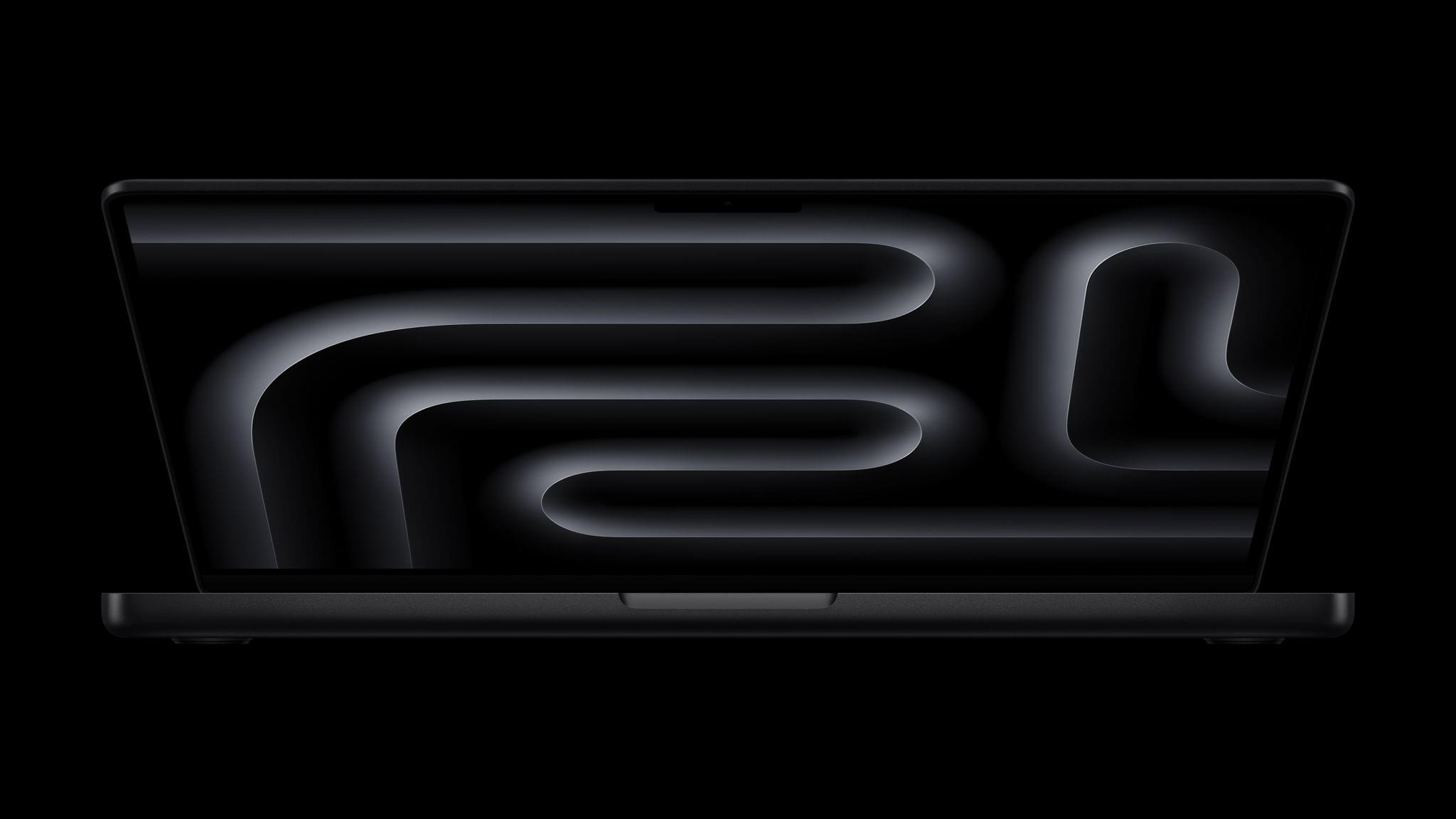
Apple Debuts New 14” MacBook Pro with the M5 Chip

Source: Apple.

Source: Apple.

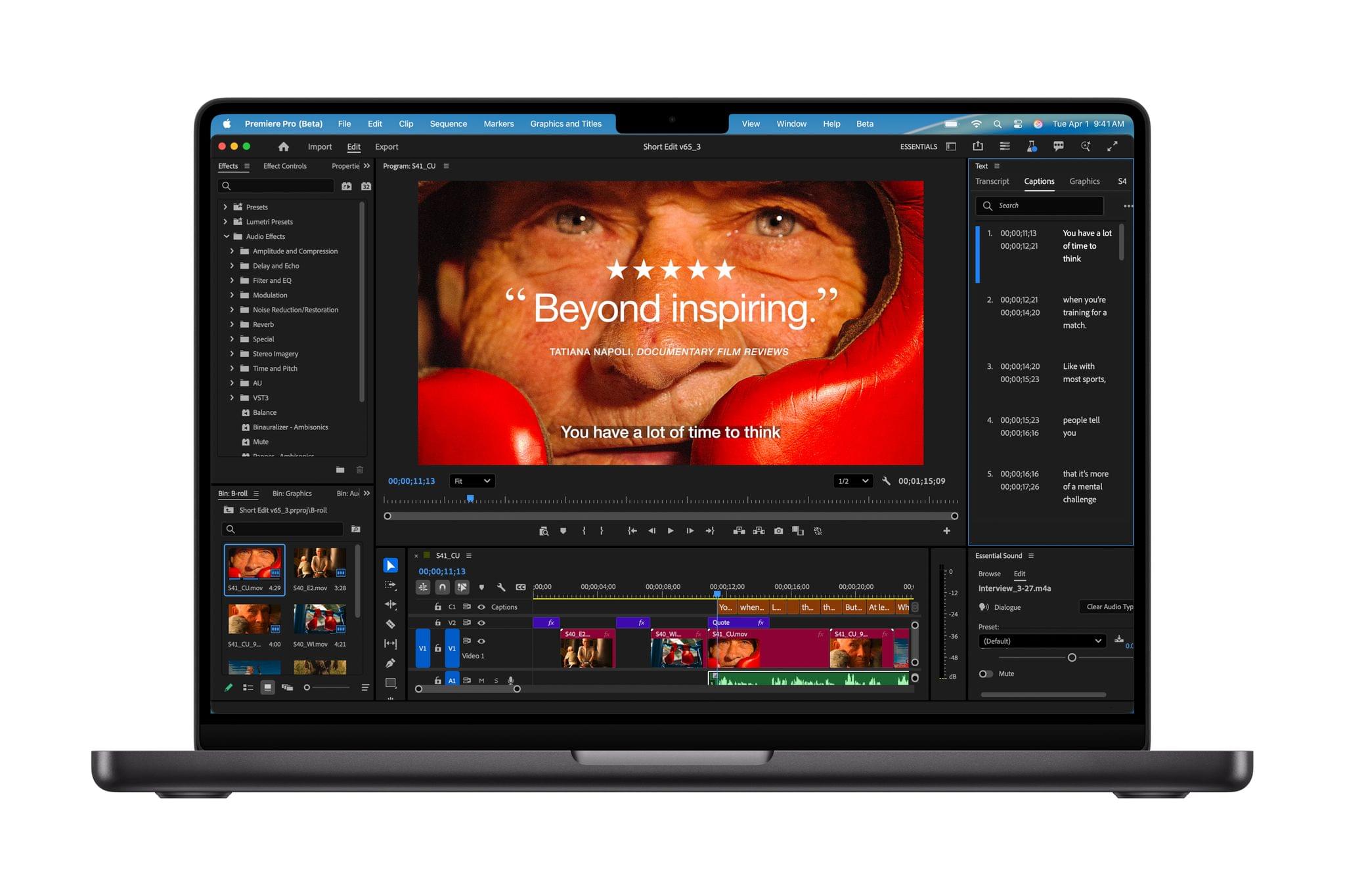
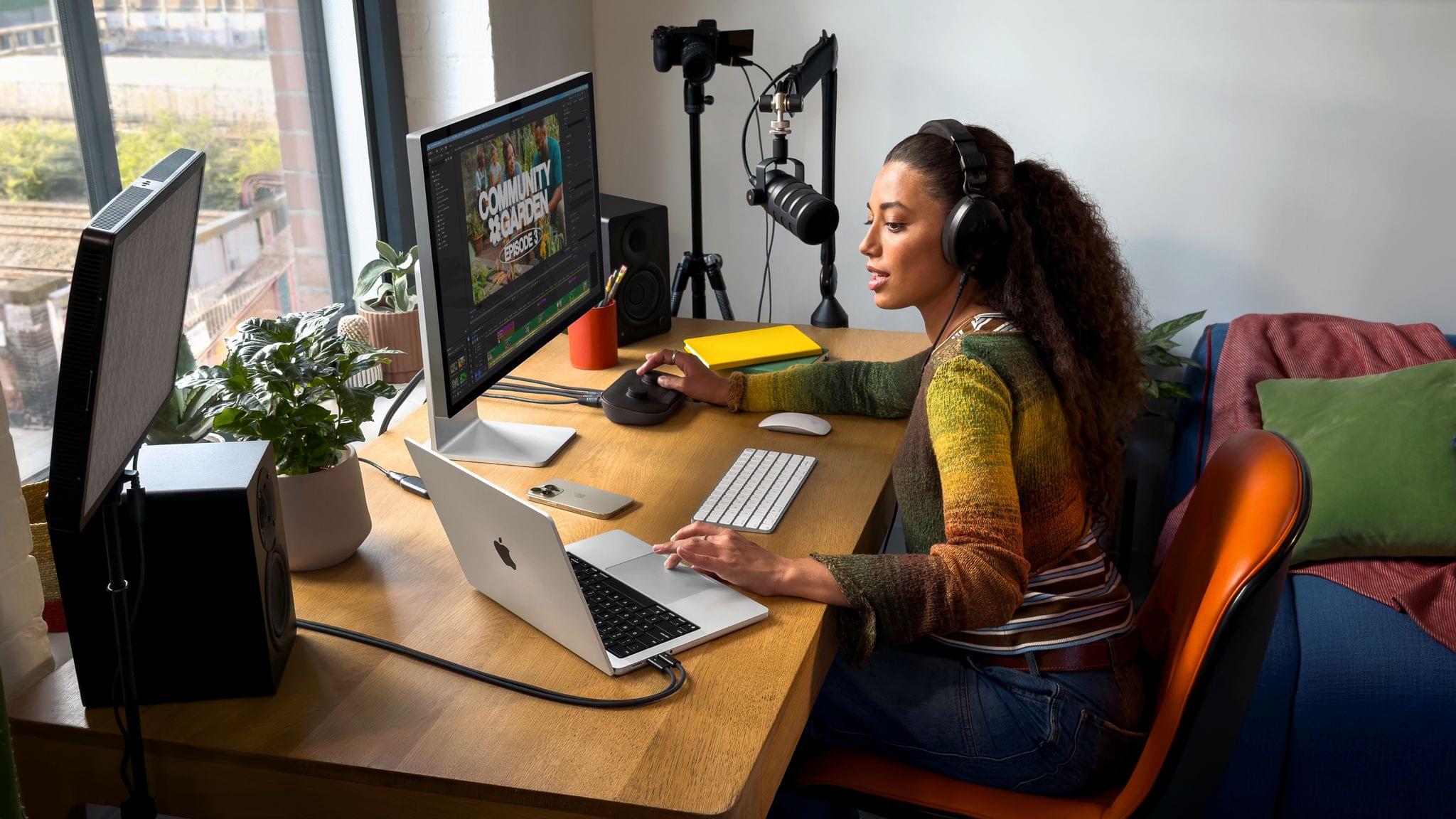
Today, Apple debuted the new 14” MacBook Pro with its latest M5 chip, which is available for purchase now alongside the existing M4 Pro and M4 Max MacBook Pro models.

According to John Ternus, Apple’s senior vice president of Hardware Engineering:

MacBook Pro continues to be the world’s best pro laptop, and today, the 14-inch MacBook Pro gets even better with the arrival of the M5 chip. M5 marks the next big leap in AI for the Mac, and delivers a huge boost in graphics performance accelerating demanding workflows for everyone from students to creatives, developers to business professionals, and more. With its amazing performance, extraordinary battery life, and unrivaled display, M5 takes the new 14-inch MacBook Pro to another level.

Source: Apple.

Source: Apple.

Apple’s new M5 processor is the star of today’s MacBook Pro update. Apple says that the chip, which is only available in the 14” MacBook Pro configuration, is faster at AI workflows and file transfers and can last 24 hours on a single charge. The M5 chip includes an all-new GPU with a Neural Accelerator in each GPU core, which Apple claims speeds up AI workflows up to 3.5× compared to the M4 chip and 6× compared to the M1 chip. The new MacBook Pro’s performance is also enhanced by a new 16-core Neural Engine and SSDs that are up to 2× faster and can be configured up to 4TB, which will make managing large files easier.

Although Apple makes a big deal of the 14” MacBook Pro’s AI performance, the new M5 chip will enhance all kinds of resource-heavy tasks, including these spotlighted by Apple in its press release:

  • Up to 7.7x faster AI video-enhancing performance in Topaz Video when compared to the 13‑inch MacBook Pro with M1, and up to 1.8x faster than the 14-inch MacBook Pro with M4.
  • Up to 6.8x faster 3D rendering in Blender when compared to the 13‑inch MacBook Pro with M1, and up to 1.7x faster than the 14-inch MacBook Pro with M4.
  • Up to 3.2x higher frame rates in games when compared to the 13-inch MacBook Pro with M1, and up to 1.6x faster than the 14-inch MacBook Pro with M4.
  • Up to 2.1x faster build performance when compiling code in Xcode when compared to the 13‑inch MacBook Pro with M1, and up to 1.2x faster than the 14-inch MacBook Pro with M4.

(See the press release for footnotes regarding testing details).

Source: Apple.

Source: Apple.

Although I’m impatient to see what an M5 Pro and M5 Max MacBook Pro are capable of, and I’m dying to see a Mac Studio configured with the M5 generation of chips, I’m glad Apple didn’t wait to release the M5 in the 14” MacBook Pro. If the chip is ready, why not? Pro workloads, including running AI models locally, are only becoming more demanding, so getting the M5 into more hands as early as possible makes sense. Plus, for anyone coming from an Intel-based setup or an early-generation Apple silicon Mac, this update should be significant.

The new 14” MacBook Pro comes in Space Black and Silver and starts at $1,599 but can be configured to over $3,330. Pre-orders can be placed now, with deliveries and in-store availability beginning October 22.


A Fresh Spin on Apple Music: Exploring Daft Music’s Liquid Glass Design

Daft Music asks a question that’s been on my mind for a long while: what if Apple Music started over with a new Mac app? As a service, I love Apple Music. I’ve been a subscriber since day one. But I’m less enamored with the Music app, especially on the Mac.

Music on the Mac has a long history dating back nearly 25 years to Apple’s acquisition of SoundJam MP, which became iTunes, an app for organizing your music collection, syncing it to your iPod, and, later, buying music. Over the years, iTunes expanded to encompass TV, movies, books, apps, and even courses, which was too much for one app. So Apple began dismantling iTunes, with the final blow coming in 2019 with the release of macOS Catalina. The update retired iTunes, replacing it with Apple Music and dedicated apps for other types of media.

Music was a significant break from the design of iTunes, but as a long-time user of both iTunes and Music, what didn’t seem to change as much was the app’s underlying code. That’s consistent with reporting at the time that Music was an AppKit app built on the bones of iTunes. The choice to build Music for macOS on top of the iTunes foundation had the advantage of allowing Apple to preserve iTunes features that the Music app lacked on other platforms. However, the decision had a big downside, too. Built on what was already a nearly 20-year-old code base, Music inherited iTunes’ bugs, which have hung around unfixed for years.

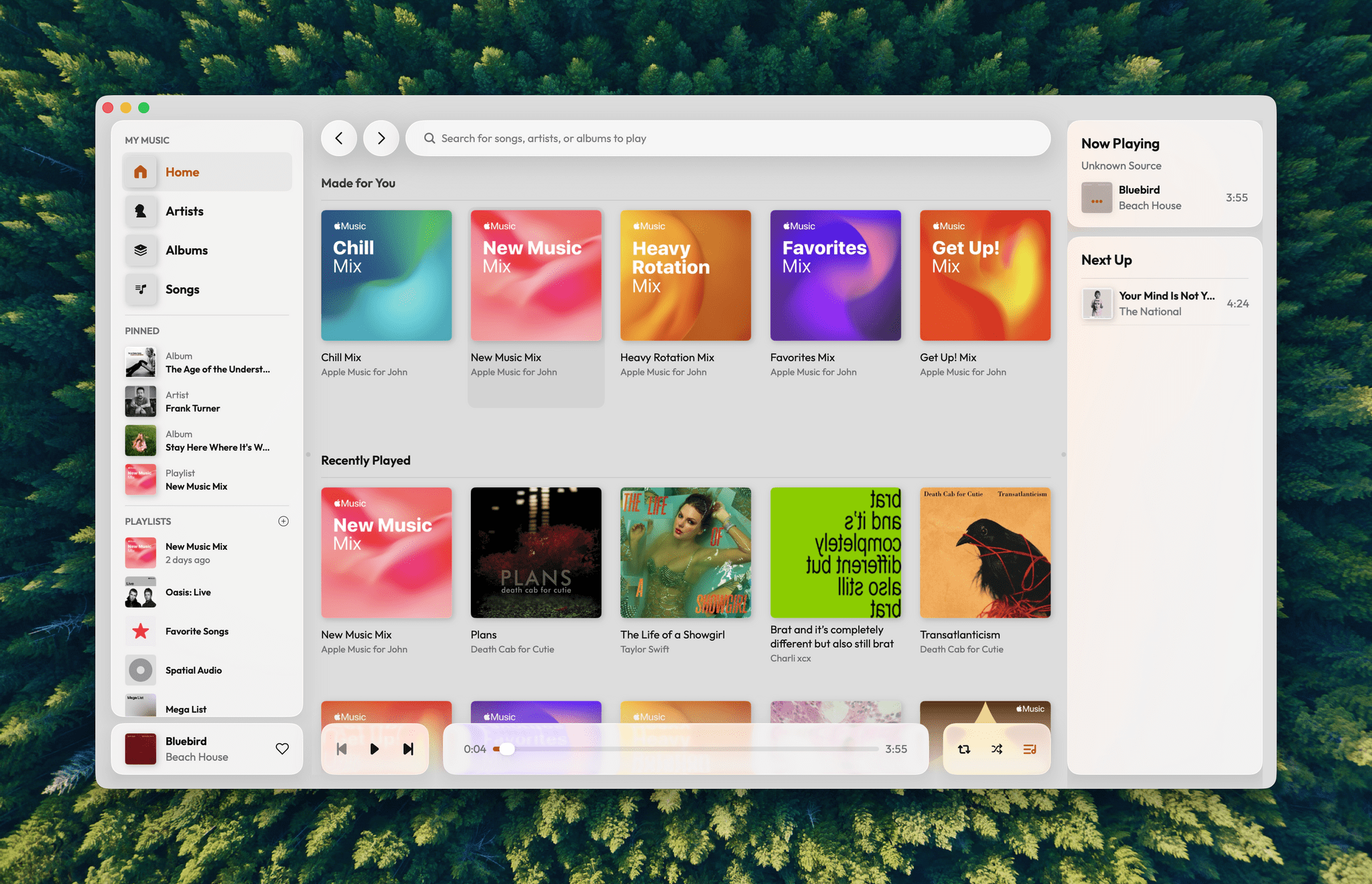
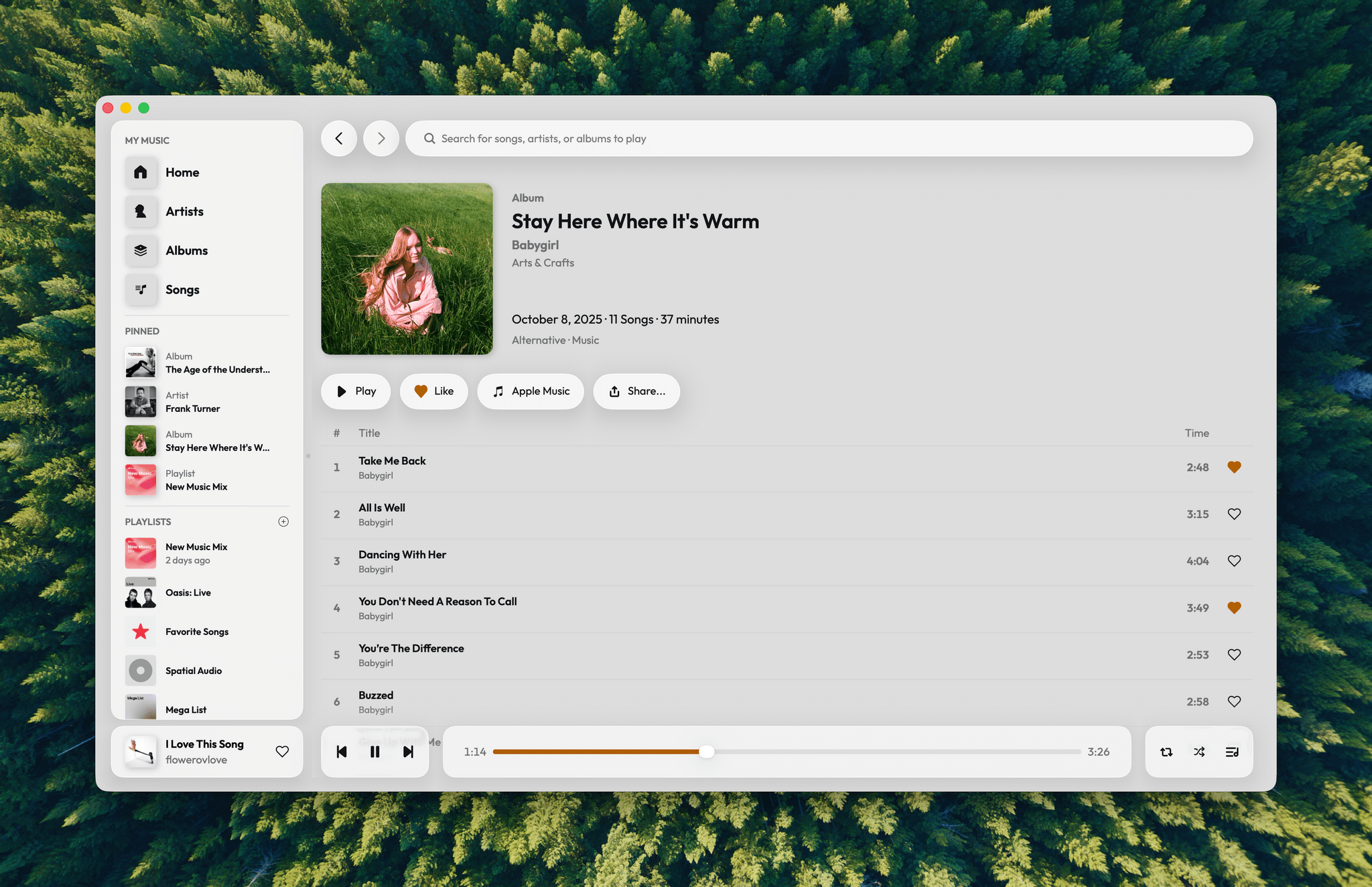
I love the simple elegance of Daft Music’s interface.

I love the simple elegance of Daft Music’s interface.

That’s where Daft Music by Dennis Oberhoff comes in. It’s a simple, elegant Apple Music “do-over” that also happens to be the first Mac app I’ve tried that was built from the ground up for Liquid Glass. There’s a lot to cover, so let’s dig in.

Read more


Synology Drops Branded Drive Requirement

Brad Linder, writing for Liliputing:

Earlier this year Synology announced that you’d need to use Synology-branded hard drives in its 2025 line of “Plus” branded network-attached storage devices if you wanted full functionality. While you could theoretically use a non-Synology drive with the Synology DiskStation DS225+, DS425+, DS925+ and other models, you’d be unable to create data storage pools, or use volume deduplication.

As Linder reports, six months later, Synology has reversed course on what was a widely unpopular decision among Mac and PC users that was viewed by many as a way to lock them into overpriced drives unnecessarily. The change of direction was revealed in a Synology press release announcing DiskStation Manager 7.3, the OS that runs the company’s Plus line of NAS hardware.

This is great news for Mac users who felt betrayed by Synology’s previous announcement. However, as Linder also points out it does not change the fact that the same “Plus” series of 2025 NAS hardware does not include hardware-accelerated transcoding of H.264 and HEVC video, which previous models supported.

Permalink

First Look: Logitech’s MX Master 4 Adds Haptics, Actions Ring, and a USB-C Bolt Receiver

Source: Logitech.

Source: Logitech.

Today, Logitech introduced an updated version of its MX Master series mouse dubbed the MX Master 4. It’s a good upgrade, but the changes are largely incremental; while I like it a lot, the MX Master 4 won’t be for everyone. Logitech sent me the MX Master 4 to try, and I’ve been using it for the past couple of weeks, so I thought I would share what the experience has been like so far.

Read more


Tot 2.0: A Thoughtful Extension of an Already Elegant Note-Taking App

Late yesterday, The Iconfactory released 2.0 updates to Tot for macOS, Tot Pocket for iOS and iPadOS, and Tot Mini for watchOS. The apps, which The Iconfactory describes as tiny text companions, include a handful of big new features that span all three versions, along with other updates and fixes that are unique to each platform.

What hasn’t changed is Tot’s incredible design and reliable performance across all platforms. The app showcases some of The Iconfactory’s best app design work, which Federico described in his review of version 1.0:

Tot’s colored dots serve the dual purpose of being spatial navigation tool and context indicators. You can navigate across documents in the app with a quick swipe, and in doing so on modern iPhones you’ll feel a delightful haptic tap; alternatively, you can tap the dots to switch documents. As I mentioned above, each dot carries a color, which becomes the background color of the selected document (vibrancy is also used to let the color shine through the software keyboard – a nice touch). The palette chosen by The Iconfactory for Tot’s seven documents is some of the finest selection of colors I’ve seen in a modern iOS app: it looks great in light mode, and it looks amazing in dark mode thanks to its combination of high contrast and translucency.

The combination of that elegant design with reliable sync across multiple OSes and thoughtful Shortcuts integration has understandably made the Tot family of apps integral to a lot of MacStories readers’ workflows. However, if you haven’t tried any of the Tot apps before, it’s worth checking out Federico’s review of version 1.0 for the fundamentals because they haven’t changed, and I’ll be focusing on what’s new.

My favorite 2.0 feature is that Tot now supports automatic indenting. If you indent a line using the Tab key, the next line will begin at the same indentation level when you hit Return. That makes creating hierarchical lists a lot faster than before. My only quibble with the feature is that if you’re making a bulleted list, to indent a line, you can’t indent using just the Tab key if the cursor appears anywhere in your line of text. However, you can use ⌘ + ] and ⌘ + ] to do the same thing. Regardless of how indenting is invoked, it’s an excellent addition to Tot that I was glad to see included in the update.

Tot allows you to define pairs of smart bullets.

Tot allows you to define pairs of smart bullets.

Speaking of bullets, Tot 2.0 also supports customizable smart bullets. From the app’s settings, you can choose from different pairs of symbols and emoji, like empty and filled circles or empty and filled stars. To toggle between the symbols in each pair, all you need to do is click or tap on them. If the eight default pairs aren’t to your taste, there are a bunch of alternatives you can use instead, such as the snowflake and flame emoji. It’s a clever twist on standard checkboxes and radio buttons that I’ve enjoyed because it adds some character and color to the app.

Tot adds eight new text dividers, too. From the classic three dashes used in Markdown to asterisks and more, there’s a nice variety of options. Plus, you can easily insert a divider with the keyboard shortcut Control + Minus.

The Iconfactory has made other platform-specific changes, too:

  • Settings have been redesigned in the Mac version and include new options, such as floating the Tot window over other windows.
  • The iOS and iPadOS versions include a menu button that offers access to the app’s settings along with a couple of bulk operations like saving, sharing, and exporting notes.
  • The watch app’s design has been refreshed with simplified controls and colorful backgrounds.

It’s great to see the Tot apps reach version 2.0. The three tentpole features – automatic indenting, custom smart bullets, and text dividers – are all meaningful improvements that don’t compromise the apps’ simplicity. Those features, along with several quality of life improvements and other bug fixes that you can read about in Tot’s version history, add up to an excellent update that should serve users well for a long time.

Tot is available on the Mac App Store, and Tot Pocket is available on the iOS and iPadOS App Store. Each costs $19.99, though existing users can update to Tot Pocket at no extra cost. Tot Mini, the Apple Watch app, is available as a separate $1.99 purchase.


CD PROJEKT RED Publishes Mac System Requirements for Cyberpunk 2077

Yesterday, I wrote about the upcoming release of Cyberpunk 2077: Ultimate Edition on the Mac. Today, CD PROJEKT RED published a support document, listing the game’s Mac system requirements. As I wrote yesterday, the company says the game will work on all Apple silicon Macs; however, the beefier your CPU and memory, the better.

As reported by Tom Warren at The Verge today, the support document summarizes the game’s system requirements in four categories: Minimum, Recommended, High Fidelity, and Very High Fidelity. It’s worth checking out the support document and Warren’s coverage before buying Cyberpunk 2077, which still hasn’t shown up on the Mac App Store for pre-order, because if you want the Very High Fidelity experience, you’ll need at least an M3 Ultra or M4 Max with at least 36 GB of memory.

Permalink

Longplay for Mac Launches with Powerful AI and Shortcuts Integration

Longplay by Adrian Schönig is an excellent album-oriented music app that integrates with Apple Music. The app started on iOS and iPadOS, then later added support for visionOS. With today’s update, Longplay is available on macOS, too, where it adds unique automation features.

If you aren’t familiar with Longplay, be sure to check out my reviews of version 2.0 for iOS and iPadOS and the app’s debut on the Vision Pro. I love the app’s album art-forward design, collection and queuing systems for navigating and organizing large music libraries, and many other ways to sort, filter, and rediscover your favorite albums. Here’s how Adrian describes Longplay in a post introducing the Mac version:

It filters out the albums where you only have a handful of tracks, and focusses on those complete or nearly complete albums in your library instead. It analyses your album stats to help you rediscover forgotten favourites and explore your library in different ways. You can organise your albums into collections, including smart ones. And you can go deep with automation support.

With the introduction of Longplay for Mac, the app is now available everywhere, with feature parity across all versions. Plus, Longplay syncs across all devices, so your Collections and Smart Collections are available on every platform.

Read more


Cyberpunk 2077 for Mac Arrives Thursday

Source: CD PROJEKT RED.

Source: CD PROJEKT RED.

Last fall, alongside the announcement of the M4 MacBook Pro, Apple and CD PROJEKT RED said that Cyberpunk 2077 was coming to the Mac in early 2025. But when WWDC rolled around last month with no more news about when the game would come to the Mac, I thought it might slip to the fall when macOS Tahoe is expected to be released with Metal 4 and other game-friendly features.

So it was a pleasant surprise to find out that Cyberpunk 2077: Ultimate Edition, which includes the Phantom Liberty DLC, will be out this Thursday on the Mac App Store, as well as on GOG.com, Steam, and the Epic Games Store. Cyberpunk, a notoriously demanding game when it comes to system resources, will run on any Apple silicon Mac with 16GB of memory that is running macOS Sequoia (or the Tahoe developer beta).

Source: CD PROJEKT RED.

Source: CD PROJEKT RED.

To support every 16GB Apple silicon Mac since the M1 MacBook Air, Cyberpunk relies on the latest Metal technologies, including Tile-Based Deferred Rendering and tools like Metal’s C++ interface and the Metal Shader Converter, to optimize for Apple GPUs. The game also takes advantage of Apple’s MetalFX Upscaling.

CD PROJEKT RED has gone all out with other compatibility features to make its game feel at home on the Mac, too, including:

  • “For This Mac” graphics presets that are optimized for the Apple silicon hardware running the game, which promises to take the guess work out of configuring graphics settings;
  • AMD FSR upscaling and frame generation optimized for Apple silicon Macs;
  • Support for Spatial Audio and head tracking for those playing with AirPods;
  • HDR support that is dynamically optimized for Apple’s XDR displays and HDR output for calibrated external displays;
  • Magic Mouse, Magic Trackpad, and controller support; and
  • Cross-progression across all platforms.

In the fall, Apple says Cyberpunk will get a boost from the videogame technologies announced at WWDC 2025. Those include MetalFX Frame Interpolation to increase and stabilize frame rates, which Apple says will allow the game to hit 120 fps using the game’s Ultra settings when combined with MetalFX Upscaling. Cyberpunk will utilize MetalFX Frame Denoising to clean up the noise produced by its path-tracing renderer, too.

Source: CD PROJEKT RED.

Source: CD PROJEKT RED.

I’m looking forward to trying Cyberpunk on the Mac. I already own it on Steam and have played it on the Steam Deck and the Nintendo Switch 2, both of which should be excellent points of comparison to the wide range of Macs that Apple says will run Cyberpunk 2077.

The Mac version of Cyberpunk 2077 will debut this Thursday, July 17. There is no additional charge for the Mac version if you already purchased the game from one of the stores that offers it. Alternatively, you can purchase the game from the Mac App Store, where Cyberpunk 2077 is making its debut.


My Latest Mac Automation Tool is a Tiny Game Controller

Source: 8BitDo.

Source: 8BitDo.

I never expected my game controller obsession to pay automation dividends, but it did last week in the form of the tiny 16-button 8BitDo Micro. For the past week, I’ve used the Micro to dictate on my Mac, interact with AI chatbots, and record and edit podcasts. While the setup won’t replace a Stream Deck or Logitech Creative Console for every use case, it excels in areas where those devices don’t because it fits comfortably in the palm of your hand and costs a fraction of those other devices.

My experiments started when I read a story on Endless Mode by Nicole Carpenter, who explained how medical students turned to two tiny 8BitDo game controllers to help with their studies. The students were using an open-source flashcard app called Anki and ran into an issue while spending long hours with their flashcards:

The only problem is that using Anki from a computer isn’t too ergonomic. You’re hunched over a laptop, and your hands start cramping from hitting all the different buttons on your keyboard. If you’re studying thousands of cards a day, it becomes a real problem—and no one needs to make studying even more intense than it already is.

To relieve the strain on their hands, the med students turned to 8BitDo’s tiny Micro and Zero 2 controllers, using them as remote controls for the Anki app. The story didn’t explain how 8BitDo’s controllers worked with Anki, but as I read it, I thought to myself, “Surely this isn’t something that was built into the app,” which immediately drew me deeper into the world of 8BitDo controllers as study aides.

8BitDo markets the Micro's other uses, but for some reason, it hasn't spread much beyond the world of medical school students. Source: 8BitDo.

8BitDo markets the Micro’s other uses, but for some reason, it hasn’t spread much beyond the world of medical school students. Source: 8BitDo.

As I suspected, the 8BitDo Micro works just as well with any app that supports keyboard shortcuts as it does with Anki. What’s curious, though, is that even though medical students have been using the Micro and Zero 2 with Anki for several years and 8BitDo’s website includes a marketing image of someone using the Micro with Clip Studio Paint on an iPad, word of the Micro’s automation capabilities hasn’t spread much. That’s something I’d like to help change.

Read more