Posts tagged with "ipad mini"

Apple Frames and Frames CLI Updated with iPad mini (A20 Pro), Apple Watch Ultra 4 Support→

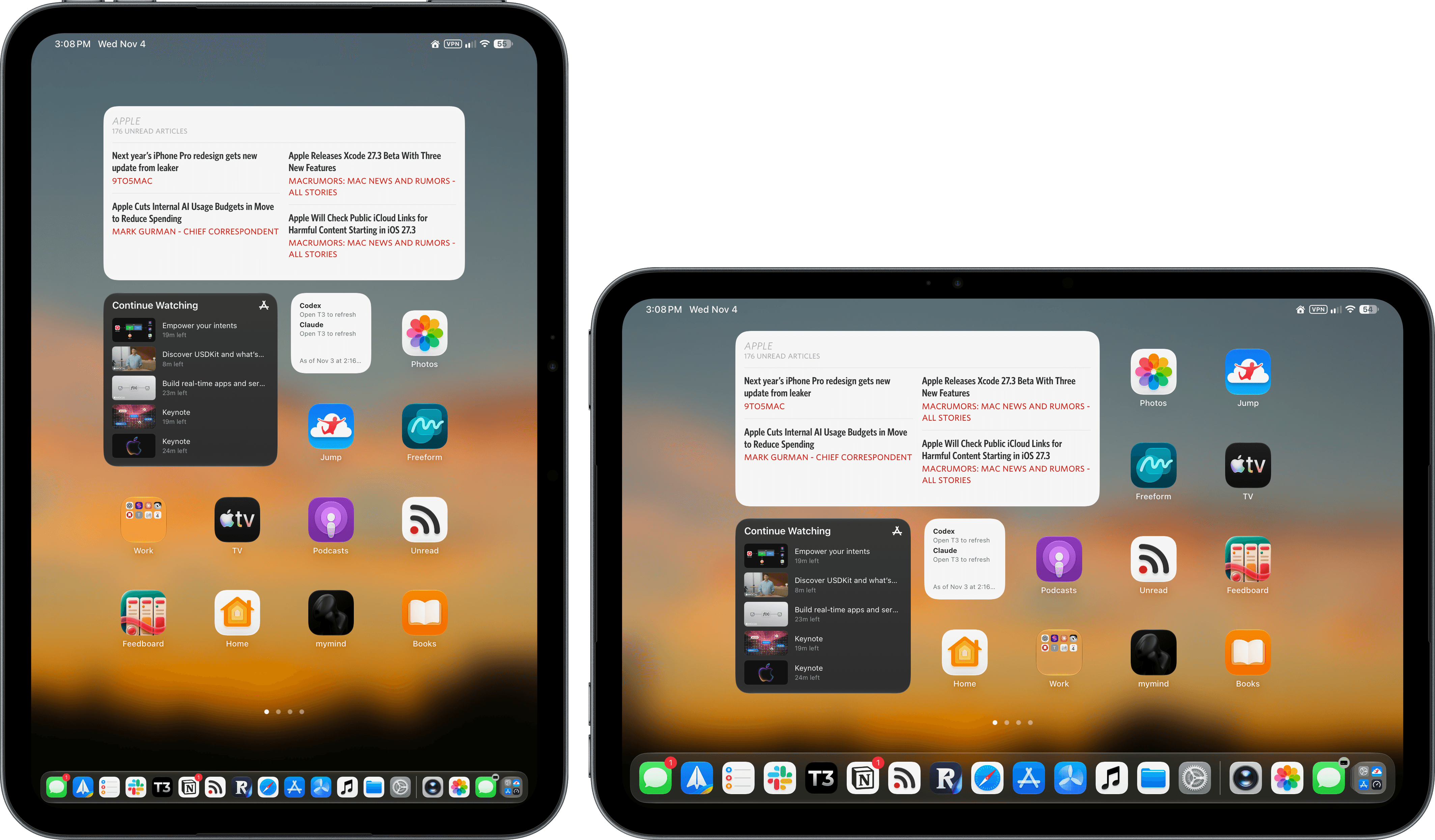
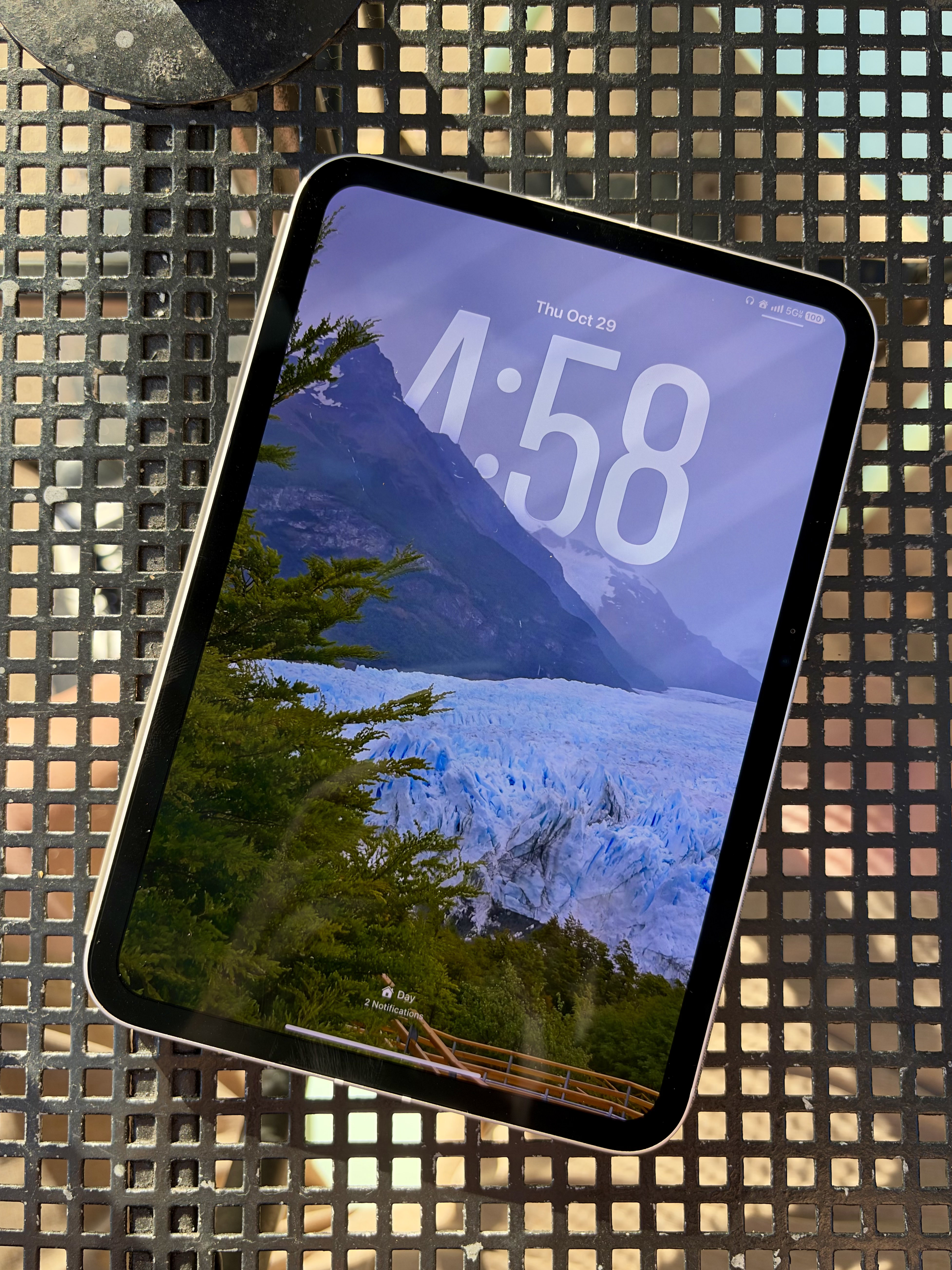
Following this week’s update to my Apple Frames shortcut and Frames CLI with support for the iPhone Duo and 18 Pro, I’ve prepared another small update for more device bezels Apple released a couple of days ago: the Apple Watch Ultra 4 and the new iPad mini (which John reviewed earlier this week on MacStories).

If you’re using the Frames CLI, you can update to version 1.7.0 from the GitHub repo or ask your agent to do it for you. If you’re a Shortcuts user, you can get the latest version of Apple Frames (4.2.0) below or from the MacStories Shortcuts Archive. In either case, you’ll have to download an updated asset pack with the new bezels, which will automatically replace the older one.

As a general recommendation for Shortcuts users, before trying to run the shortcut from the Home Screen or Siri, you’ll want to run it manually at least once so you can grant the initial set of permissions.

Apple Frames

Add device frames to screenshots for iPhones (8/SE, 12-13, 15, 16, and 17 generations in mini/standard/Plus/Pro/Pro Max sizes, plus iPhone 18 Pro and iPhone 18 Pro Max), iPhone Air, iPhone Duo (inner and outer displays), iPad Pro (11” and 12.9”/13”, 2018-2025 models), iPad Air, iPad mini (including A20 Pro), iPad, Apple Watch Series 7/10/11 (Series 12 screenshots use the Series 11 frames), Apple Watch Ultra 2, Ultra 3, and Ultra 4, iMac M4, Studio Display, Studio Display XDR, MacBook Air (2020/M5 13”/M5 15”), MacBook Pro (13”/M5 14”/M5 16”), MacBook Pro with PROLED XDR Display (14” and 16”), and MacBook Neo. Apple Frames 4 supports colored device frames for iPhones 16 and 17, iPhone 18 Pro, iPhone Air, iPhone Duo, iPad mini (A20 Pro), MacBook Pro M5, MacBook Pro with PROLED XDR Display, MacBook Air M5, MacBook Neo, iMac M4, Studio Display, Studio Display XDR, Apple Watch Ultra, and Apple Watch Series 11.

Get the shortcut here.

Permalink

iPad mini (2026) Review: Pushing the Boundaries with Apple’s Smallest iPad

The new iPad mini arrives Friday with a new design, gorgeous OLED display, and an innovative new speaker system. It’s an interesting update that I expect will broaden the mini’s appeal, especially at the high end, which is the Starlight model Apple sent me last week for testing. There’s a lot going on in this smallest of the iPad lineup, so let’s take a look at what’s new and how it changes the iPad mini’s story.

Read more


The New iPad mini Adds OLED with a Larger 8.5-Inch Display

Source: Apple.

Source: Apple.

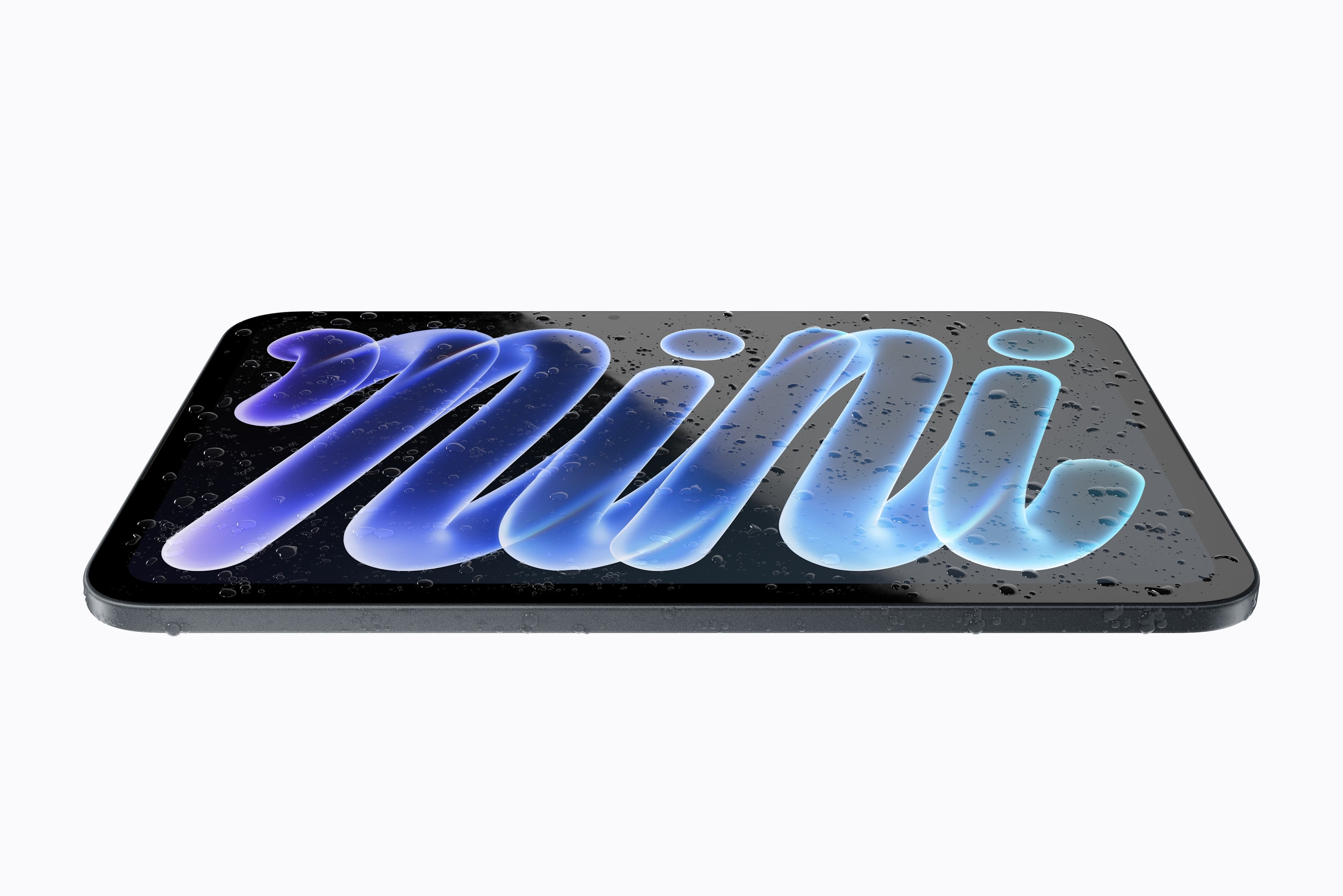
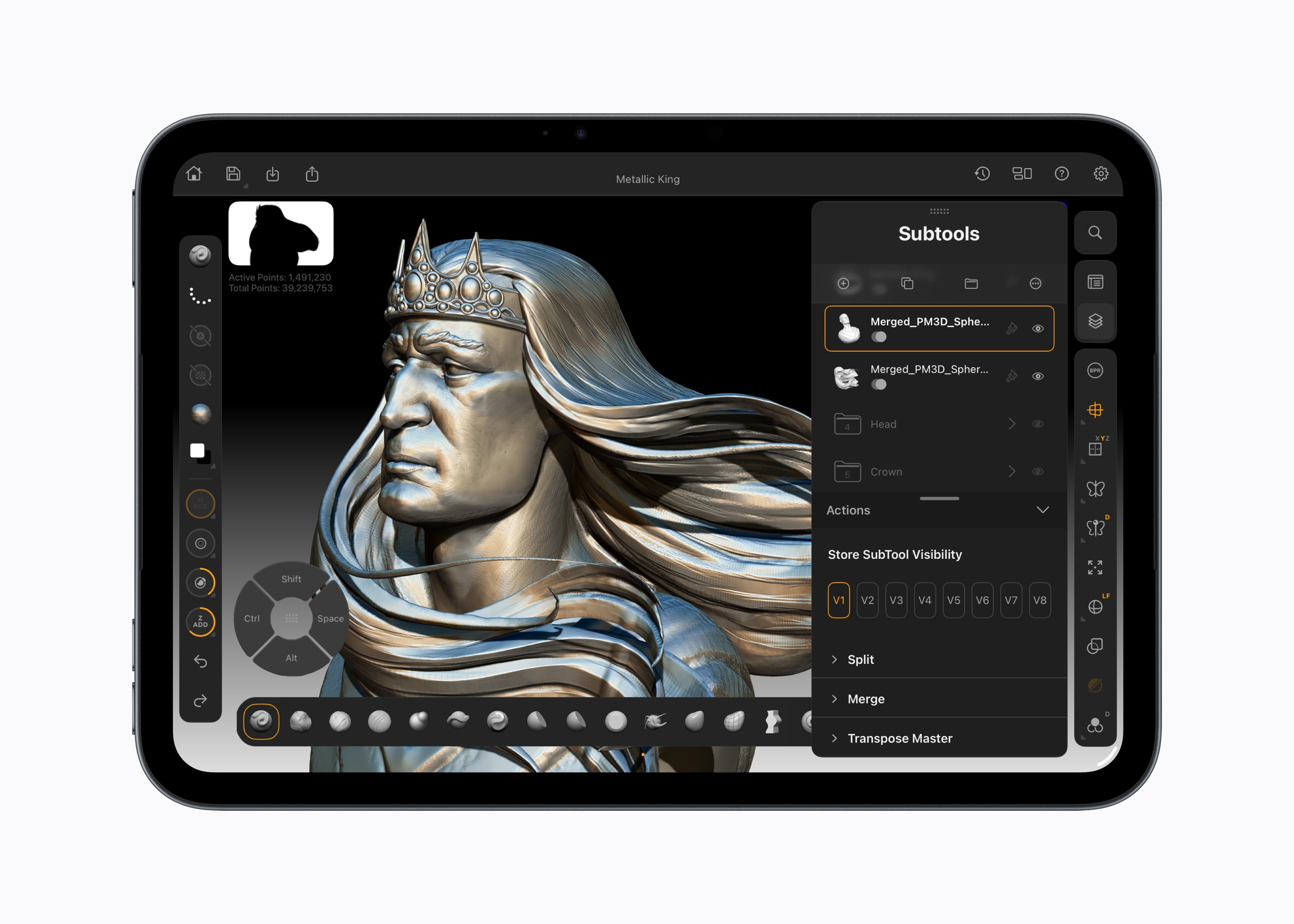
Apple today announced an update to the iPad mini, one of my favorite iPads. The new mini features an 8.5-inch OLED display, a landscape Center Stage camera, and many other updates throughout. This is a big update, so let’s dig into the details.

The revised iPad mini has a similar, but slightly smaller, overall footprint at 5.4mm thin, but the bezels around the screen are 24% thinner, allowing for the larger 8.5-inch Super Retina XDR screen. That enables a peak brightness of 1200 nits with 600 nits full-screen brightness, which is brigher than the model it replaces. The display is also capable of as little as 1 nit of brightness, supports P3 wide color, and can be ordered with an optional nano-texture finish on the 256GB and 512GB models. However, the new mini’s display is not a 120Hz ProMotion display.

Source: Apple.

Source: Apple.

The chip that drives the new mini is from the A20 Pro line, which is the same chip family that powers the iPhone 18 Pro. The mini also has an N1 networking chip that supports Wi-Fi 7 and a C2 modem chip for users who order the cellular model. The mini also features up to six CPU cores, a 7-core GPU with Neural Accelerators for each core, and a Dual 16-core Neural Engine in the 512GB model.

The 12MP Center Stage front-facing camera is on the long edge of the iPad mini. The rear camera is a 12MP Wide camera that includes Smart HDR 4 and Adaptive True Tone flash and can shoot 4K video at up to 60 fps.

Other details include IP67 water and dust resistance, a new TechWoven Smart Folio case, and continued support for both the Apple Pencil Pro and Apple Pencil (USB-C).

Among Apple’s speed claims are:

  • up to 4.5x faster AI performance,
  • up to 2.7x faster graphics performance,
  • up to 60% faster multithreaded CPU performance,
  • 2x Neural Engine processing power on the 512GB model,
  • more than a 2x increase in unified memory bandwidth,
  • up to 50% faster cellular data speeds, and
  • more than 2x higher peak brightness.

The new iPad mini comes in Midnight and Starlight colors (fewer than before) and starts at $699, which is less than some rumors suggested, and can be configured up to $1,249 before accessories. Apple also packs a polishing cloth in the box for the polishing fans out there.


This looks like an excellent update. I’m a huge fan of the iPad mini for writing, other lightweight productivity tasks, reading, watching videos, and playing games. Based on the specs, the new mini should be more capable than ever. I’m looking forward to trying it myself.


Thoughts on iPadOS 26: Hello, It’s Good to Be Back

iPadOS 26.

iPadOS 26.

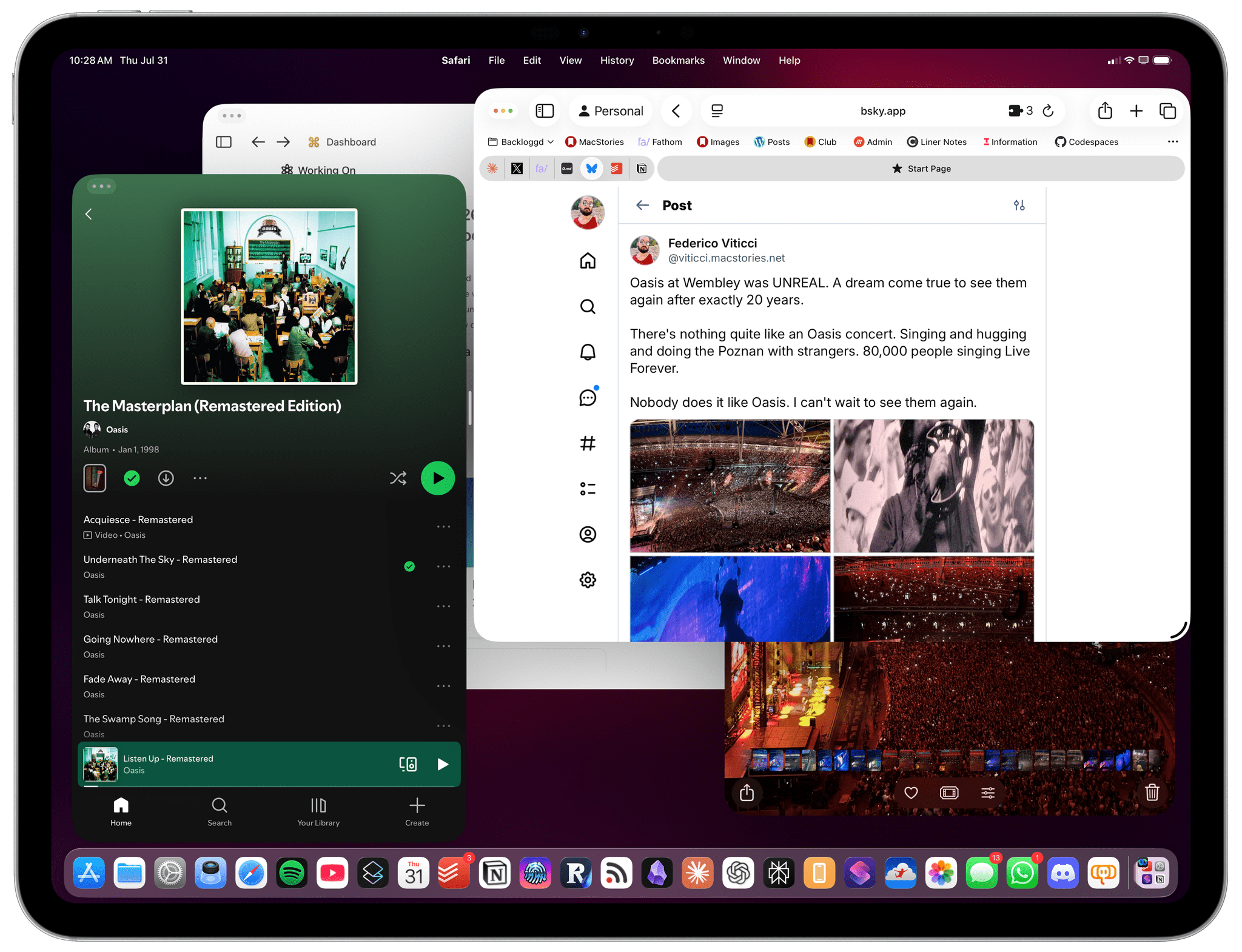
Apple released the first public betas of iOS and iPadOS 26 last week, and I’m going to cut to the chase with this story: although I’m still wrapping my head around Liquid Glass and trying to understand where this new design language will land, iPadOS 26 has fundamentally revolutionized my workflow in just a little over a month. While talking to Craig Federighi at WWDC, I did get the sense that Apple was approaching the iPad platform from a different – perhaps more humble – perspective, with a newfound willingness to listen to power users and find a better balance between the simplicity of the iPad and its flexibility. Actually using iPadOS 26, however, has far exceeded my expectations – which pushed me to completely rethink my desk setup (again) and the apps I use around the iPad Pro and iPadOS 26.

Conversely, I’ve been struggling to understand iOS 26 and the role of Liquid Glass. I’ve documented my issues with Apple’s new design with a variety of examples recently, but the truth is that at this point in the beta cycle, I don’t know what to write about Liquid Glass yet. For this reason, despite my many attempts to write this story over the past few weeks, I’ve decided to take a different approach.

Today, I only feel comfortable sharing my opinion about iPadOS 26, and I’ve chosen to delay my analysis of iOS 26 until later this year. I’ve found it incredibly challenging to form an opinion on Liquid Glass and iOS 26 when everything is still so in flux and being adjusted on a beta-by-beta basis. I feel like sharing what I think about Liquid Glass right now would be a fruitless exercise, or shortsighted perhaps, one way or another. Instead, since I find iPadOS 26 to be more of a known entity at the moment, I’ve decided to focus on that and how this software update is changing the way I work. The time will come for me to write about Liquid Glass and Apple’s vision for the future of its software design. Today, though, I’m all about the iPad.

It’s been an interesting month since WWDC. This year more than ever, I have a feeling that Apple isn’t done tweaking its OSes and much will continue to change between now and September. But for now, as always, let’s dive in.

Read more


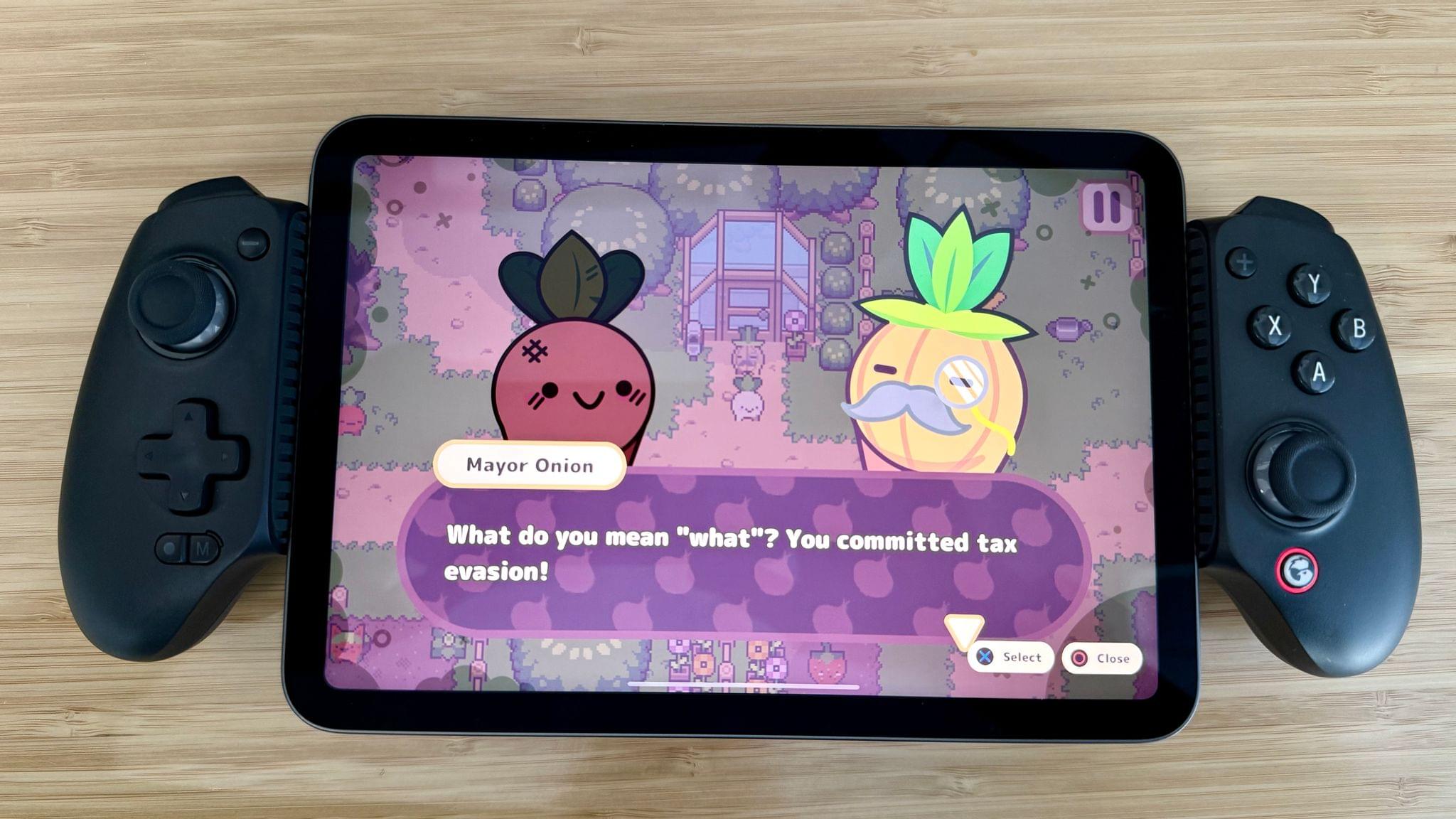
GameSir G8+ iPad mini and iPhone Controller Walkthrough→

The new iPad mini is the first model with Wi-Fi 6E support, which makes it the best mini for game streaming yet. Of course, it’s a great size for playing App Store and Apple Arcade games too.

Last weekend, I did an in-depth review of the GameSir G8+ for Club MacStories Weekly, which included an early look at the controller and a video walkthrough on the MacStories YouTube channel as a new perk for Club members. The video is now available for everyone to watch here:

For early access to future hardware walkthroughs and the full review, you can join Club MacStories now through November 1st for 20% off all annual plans by using the code CLUB2024 at checkout, as detailed here.

Permalink

iPad mini (2024) Review: The Third Place

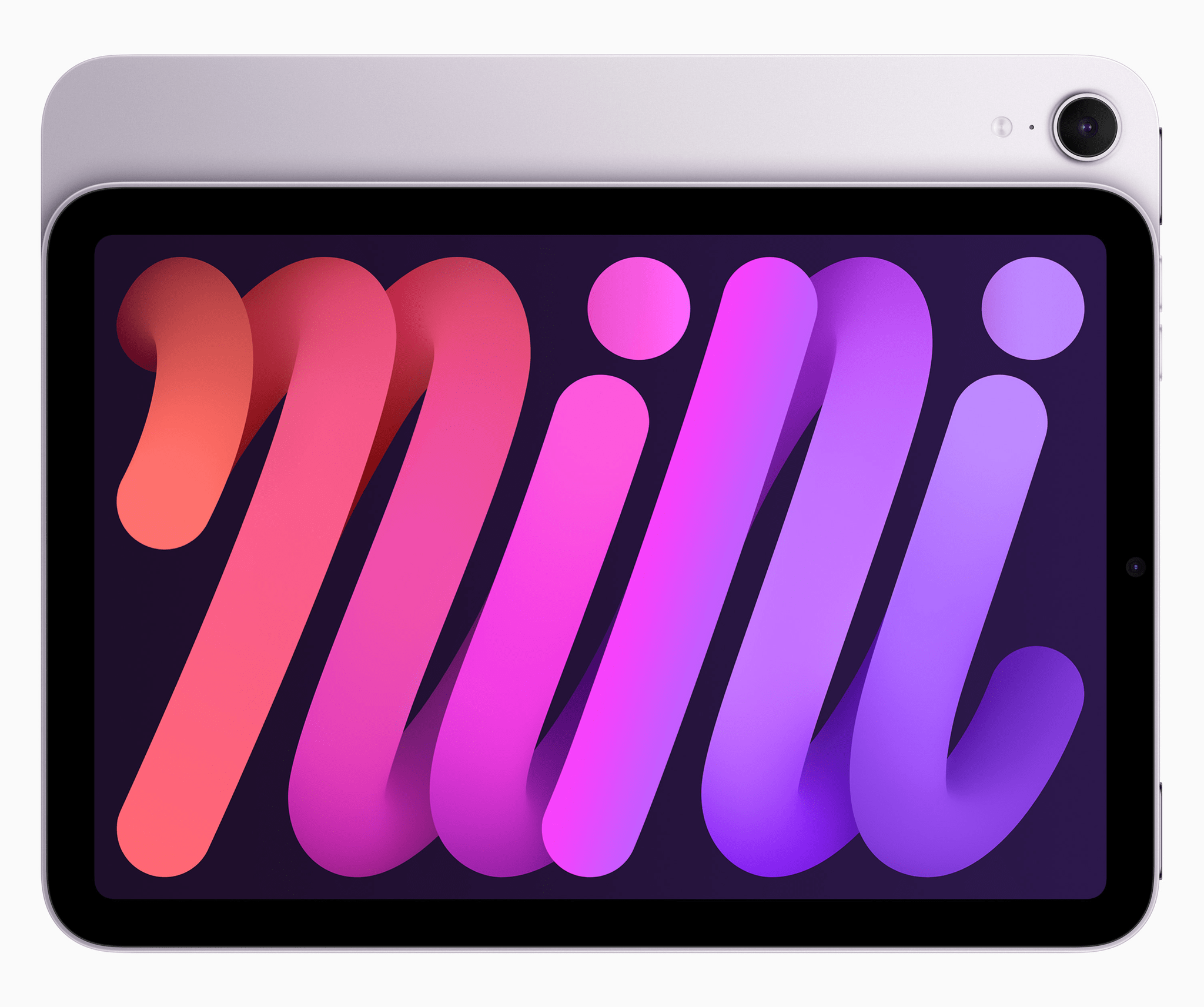
The new iPad mini.

The new iPad mini.

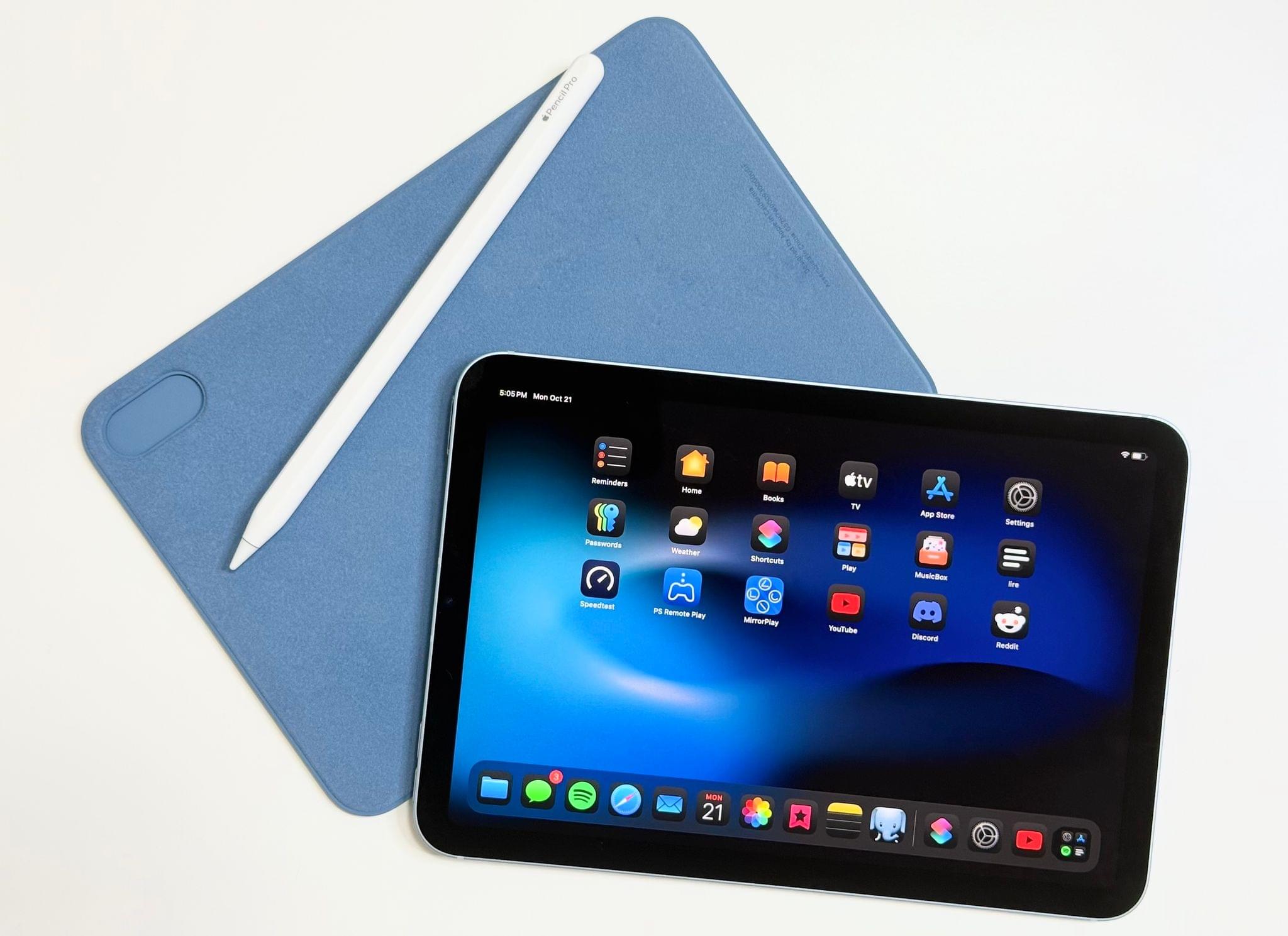
My first reaction when I picked up the new iPad mini last Thursday morning was that it felt heavier than my 11” iPad Pro. Obviously, that was not the case – it’s nearly 150 grams lighter, in fact. But after several months of intense usage of the new, incredibly thin iPad Pro, the different weight distribution and the thicker form factor of the iPad mini got me for a second. Despite being “new”, compared to the latest-generation iPad Pro, the iPad mini felt old.

The second thing I noticed is that, color aside, the new iPad mini looks and feels exactly like the sixth-generation model I reviewed here on MacStories three years ago. The size is the same, down to the millimeter. The weight is the same. The display technology is the same. Three minor visual details give the “new” iPad mini away: it says “iPad mini” on the back, it’s called “iPad mini (A17 Pro)” on the box, and it’s even called “iPad mini (A17 Pro)” (and not “iPad mini (7th generation)”) in Settings ⇾ General ⇾ About.

I’m spending time on these minor, largely inconsequential details because I don’t know how else to put it: this iPad mini is pretty much the same iPad I already reviewed in 2021. The iPadOS experience is unchanged. You still cannot use Stage Manager on any iPad mini (not even when docked), and the classic Split View/Slide Over environment is passable, but more constrained than on an iPad Air or Pro. I covered all these aspects of the mini experience in 2021; everything still holds true today.

What matters today, however, is what’s inside. The iPad mini with A17 Pro is an iPad mini that supports Apple Intelligence, the Apple Pencil Pro, and faster Wi-Fi. And while the display technology is unchanged – it’s an IPS display that refreshes at 60 Hz – the so-called jelly scrolling issue has been fixed thanks to an optimized display controller.

As someone who lives in Italy and cannot access Apple Intelligence, that leaves me with an iPad mini that is only marginally different from the previous one, with software features coming soon that I won’t be able to use for a while. It leaves me with a device that comes in a blue color that isn’t nearly as fun as the one on my iPhone 16 Plus and feels chunkier than my iPad Pro while offering fewer options in terms of accessories (no Magic Keyboard) and software modularity (no Stage Manager on an external display).

And yet, despite the strange nature of this beast and its shortcomings, I’ve found myself in a similar spot to three years ago: I don’t need this iPad mini in my life, but I want to use it under very specific circumstances.

Only this time, I’ve realized why.

Read more


Apple Announces a Minor Update to the iPad mini

Source: Apple.

Source: Apple.

Apple has updated the iPad mini, with a revision that is sure to leave some fans of the device disappointed. That’s because there have been virtually no changes to the device’s screen, cameras, or authentication systems.

The new iPad mini features an A17 Pro chip that was added to allow the device to work better with the upcoming Apple Intelligence features. According to Apple’s press release:

A17 Pro delivers a huge performance boost for even the most demanding tasks, with a faster CPU and GPU, a 2x faster Neural Engine than the previous-generation iPad mini,1 and support for Apple Intelligence.

In addition, the new mini features:

  • New storage options: 128GB, 256GB, and 512GB, eliminating the 64GB option altogether
  • Support for the Apple Pencil Pro
  • Wi-Fi 6E, up from from Wi-Fi 6
  • Bluetooth 5.3, an upgrade from 5.0
  • New blue and purple options

Those are all worthwhile upgrades, but I expect what will really define the new iPad mini for a lot of users is what hasn’t changed:

  • The underlying screen technology remains the same Liquid Retina display that does not support ProMotion
  • Both cameras remain the same, but they now support Smart HDR 4 instead of Smart HDR 3
  • The front-facing camera remains on the short side of the device
  • The Touch ID sensor found on the top button has not been replaced with Face ID

I’m a fan of the iPad mini. I had a 5th generation model and I still use my 6th generation mini, but it’s seen better days. The mini needs a better display, camera, and Face ID. I don’t expect Apple to build a ‘pro’ version of the mini, but if history is any indication, what was released today won’t be updated until around 2027, and that makes me a little sad.

The new iPad mini starts at $499 with 128GB of storage. Pre-orders begin today and deliveries start October 23rd.


Making a Macintosh Studio→

I’ve lost track of how many MacStories readers have sent me this over the past few days (thank you; you know me well), and, unsurprisingly, the latest project by Scott Yu-Jan is extremely my kind of thing. Scott 3D-printed a Macintosh-like shell to host a Mac Studio with an iPad mini used as its display thanks to wired Sidecar. It’s magnificent:

Obviously, as someone who relies on Sidecar on a daily basis now, I find this project a masterpiece in creativity and taking advantage of Apple’s ecosystem. I would pay serious money to have a version of this for my Mac mini and 11” iPad Pro.

Permalink

The Mighty Mini Returns: Productivity Powerhouse at 34,000 feet

I’m sitting on an American Airlines flight, crammed in a window seat in economy class. I brought my iPad mini to catch up on some reading while I’m away, but at the last minute, I threw my Logitech K380 Bluetooth keyboard and a Twelve South Compass Pro. I cleared my task list for this trip, but it’s also been a while since I used the iPad mini for any productivity tasks, so I thought I’d bring it and the accessories along in case I had some downtime to do things like catch up on email.

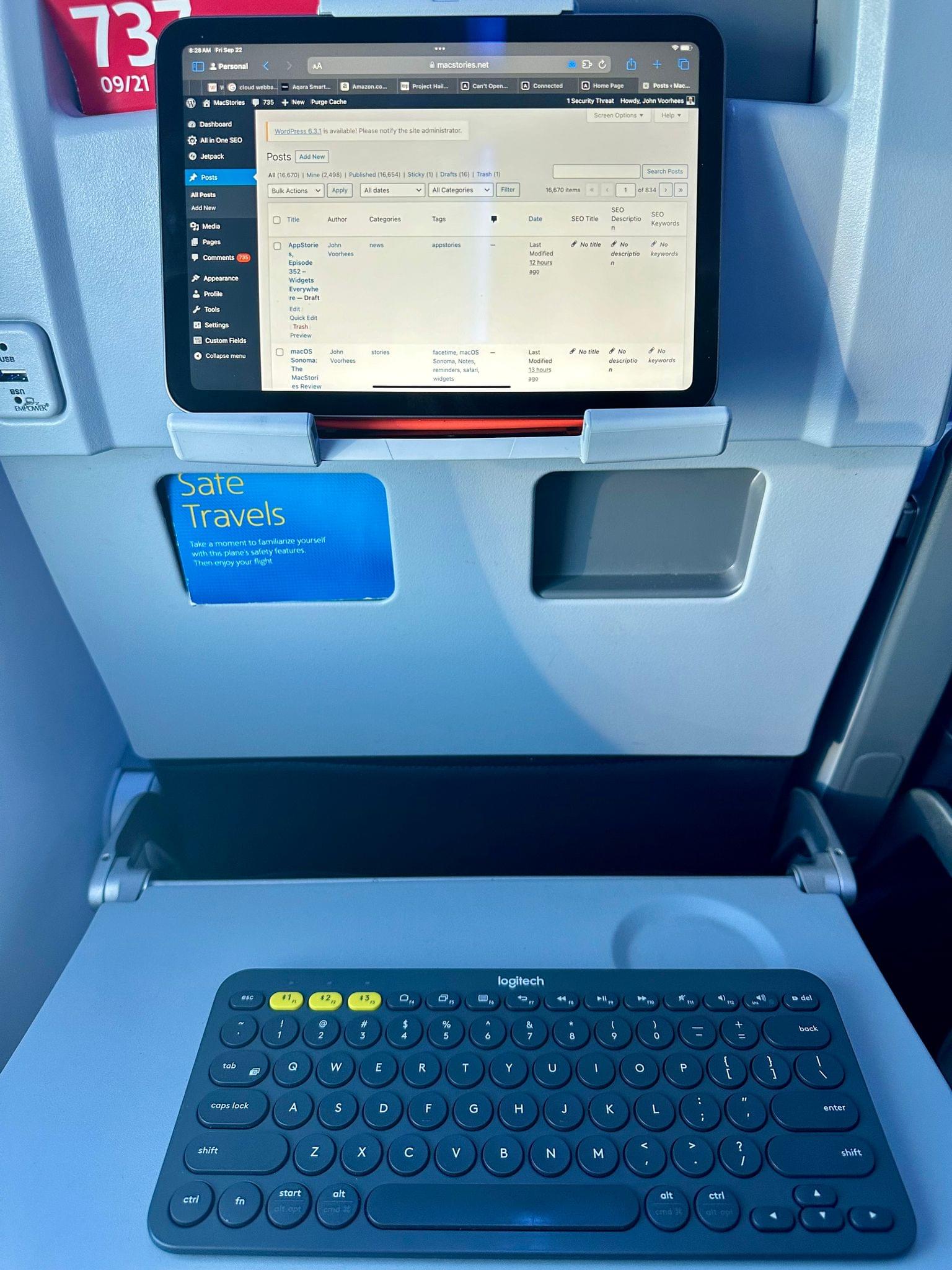
I didn’t expect to do anything on the flight, especially writing. Tray tables are too shallow these days for even my M1 MacBook Air, let alone a mini in a stand with a separate keyboard. But when I settled into my seat, Jennifer pointed out the phone holder in the seatback in front of me. They’re meant for entertainment, replacing the in-seat screens airplanes used to have.

However, I discovered something arguably better that was also a fun opportunity to publish a story from 34,000 feet in the sky. When I pulled the little phone shelf out from the seatback, I saw the top bracket extended high enough that I could use it with my iPad mini. I signed up for in-flight Wi-Fi, paired the Logitech keyboard, and I was good to go.

The ergonomics are surprisingly good. The iPad is at eye level, and with nothing but the keyboard on the tray table, I can shove it closer to the seat in front of me, so my arms can extend to a comfortable position. The only downside is that without a pointing device, I have to reach up to log into websites and interact with some parts of apps, but it’s been far better than trying to type on a laptop or an iPad Pro in a Magic Keyboard. I highly recommend trying this the next time you need to work on an American Airlines flight.