Posts tagged with "Final Cut Pro"

A Closer Look at Apple’s Upcoming Creator Studio Update

For the past week, I’ve been testing betas of the following updates coming to Apple Creator Studio later this month:

Final Cut Pro is being updated this month, too, but I haven’t tested it.
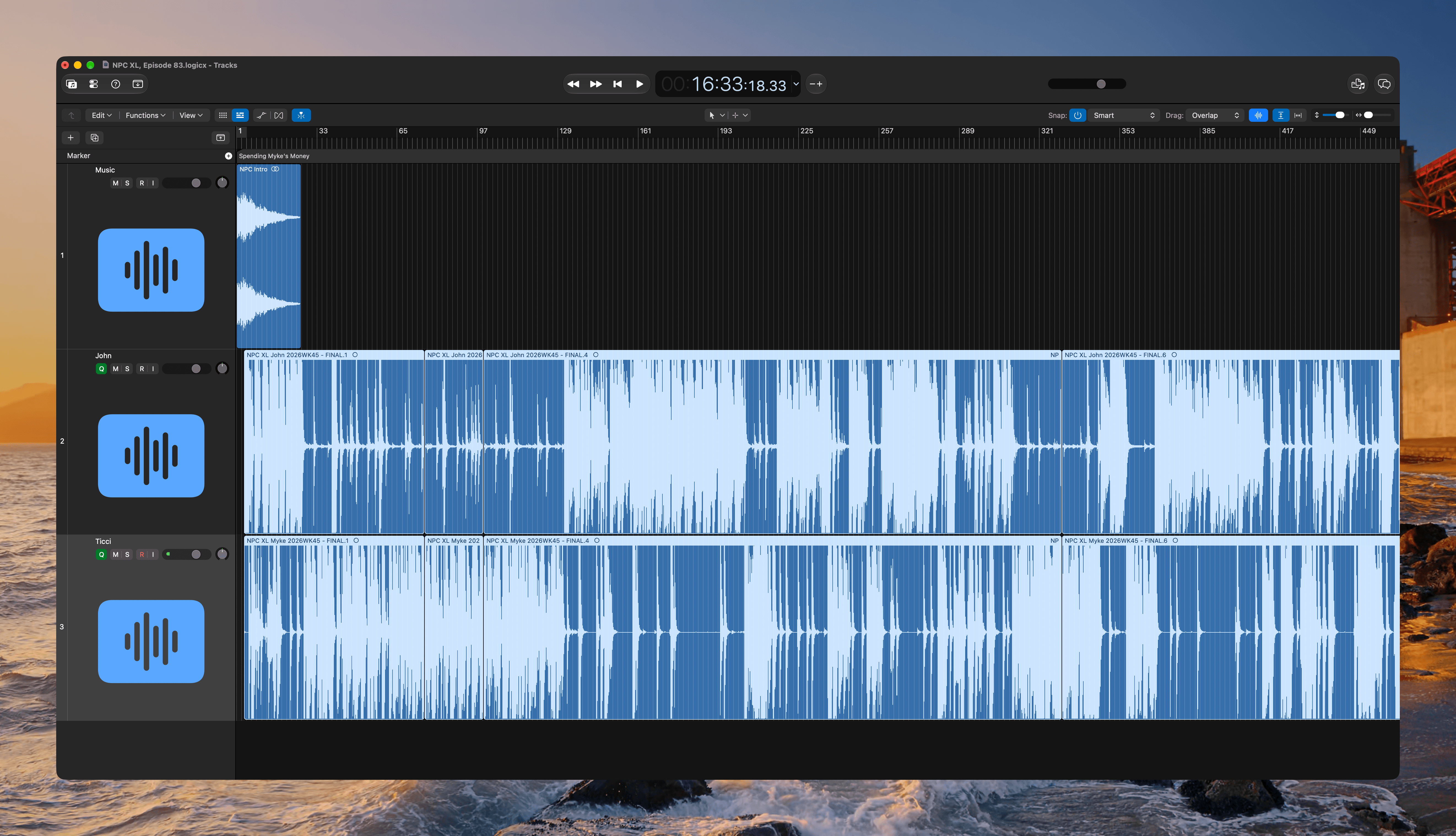
Logic Pro's new Liquid Glass design.

Logic Pro’s new Liquid Glass design.

I use Logic Pro to edit MacStories’ podcasts, and so far, I’ve edited four episodes using the updated app. For the limited set of Logic’s features that I use for podcast editing, the experience hasn’t changed much. The loops I’ve created over the years are now in the new Unified Browser on the left side of the window, instead of in the panel on the right, but every other aspect of editing an episode is the same as before.

But even though my editing workflow hasn’t changed much, the design of the app has. Logic Pro has been given a Liquid Glass makeover that emphasizes black and dark gray over its predecessor’s lighter gray treatment. I’m glad Apple decided to update Logic Pro’s look because it had really begun to look dated. The black palette is far more in line with modern professional apps, which makes it nicer to work in.
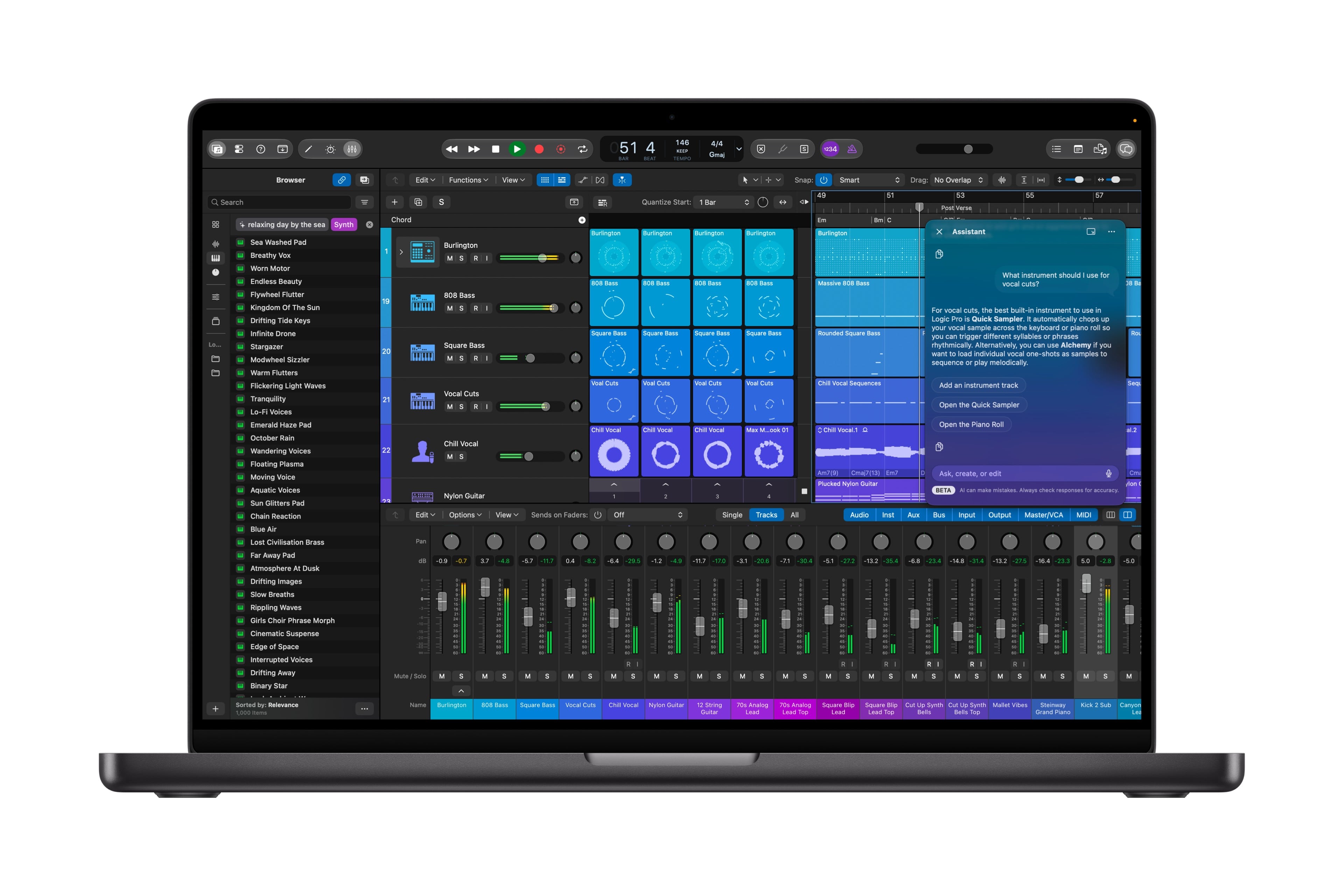
Some of the new features available to musicians in Logic Pro. Source: Apple.

Some of the new features available to musicians in Logic Pro. Source: Apple.

Now, just because little has changed for podcast editors doesn’t mean there aren’t substantial changes to Logic Pro for musicians. The app has an enhanced stem splitter that can separate drum elements from each other, giving producers greater control. There’s also a new Play Surface that exposes instruments, drum pads, and chord pads for playing music live. The Play Surface and other Logic Pro and MainStage controls can be accessed using Sidecar on an iPad, too.

The new Unified Browser, which now houses those loops I’ve made, includes other enhancements, too. You can search using natural language queries, drag a loop into the search field to find similar loops, and quickly narrow results with dynamic tag filtering.
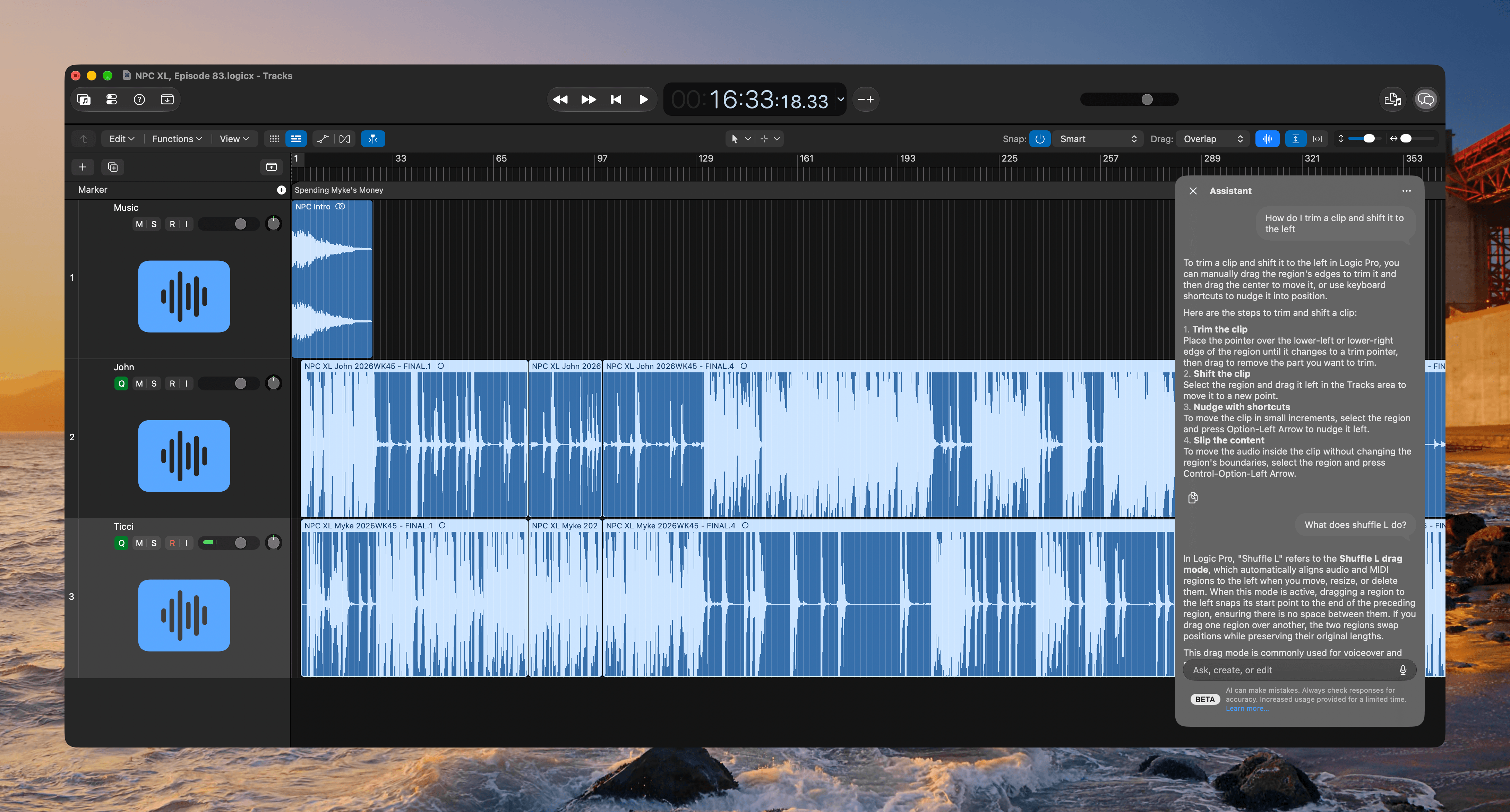
Logic Pro's Intelligent Assistant helps you learn the app.

Logic Pro’s Intelligent Assistant helps you learn the app.

One of my favorite features is Logic Pro’s new Intelligent Assistant, a new beta feature that combines models from Apple and OpenAI to help guide you through the music creation process.

Apps like Logic Pro are complex, which can make it hard to know what to do when you’re new to the app. One of the first things I did last year with Codex and Claude Code was create a skill that draws on Apple’s extensive support documentation for Logic Pro to help me navigate the app. Now that’s built right into the app itself, allowing you to pose natural language questions and get answers tailored to the app’s features.
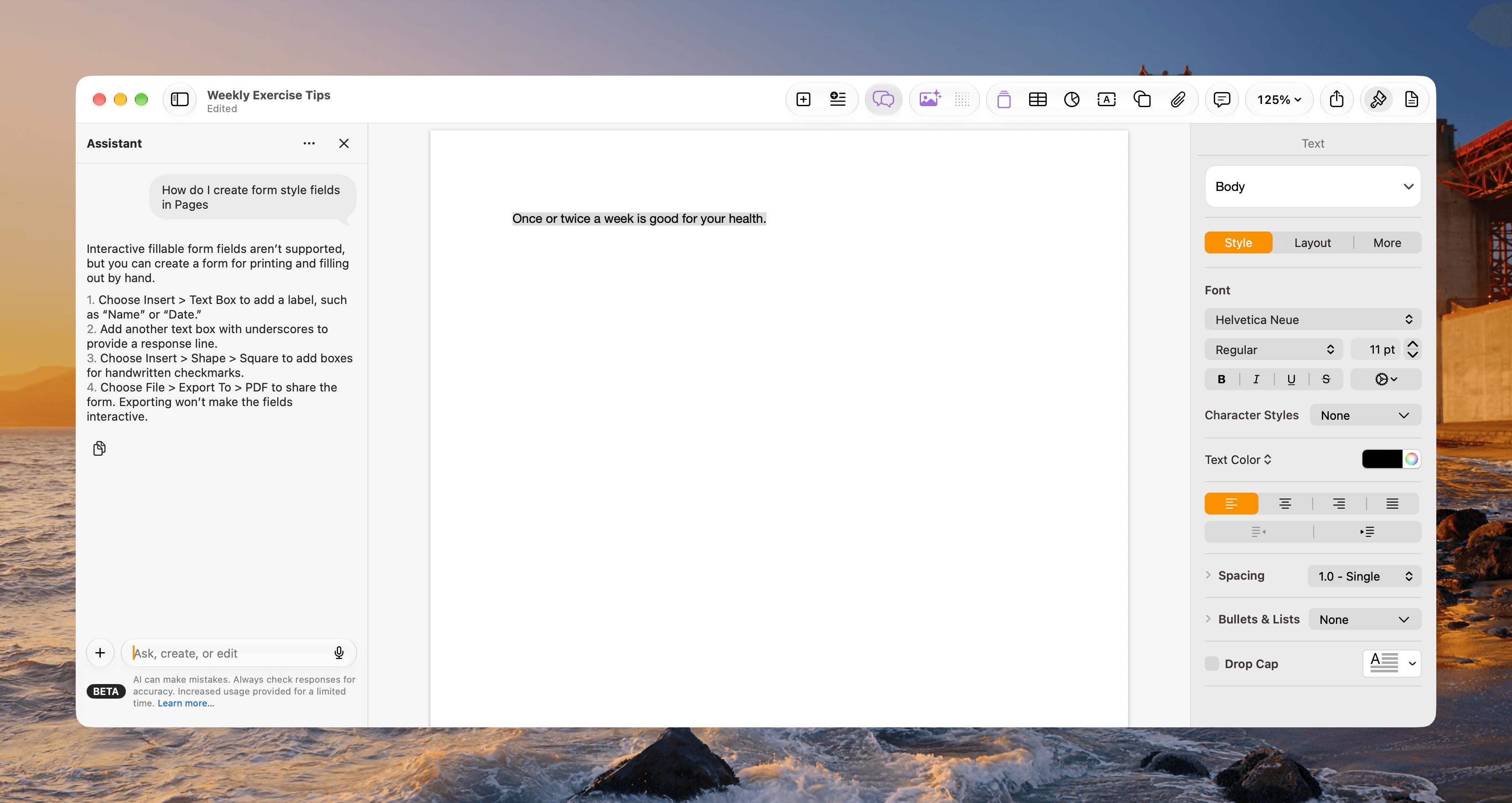
The Intelligent Assistant in Pages.

The Intelligent Assistant in Pages.

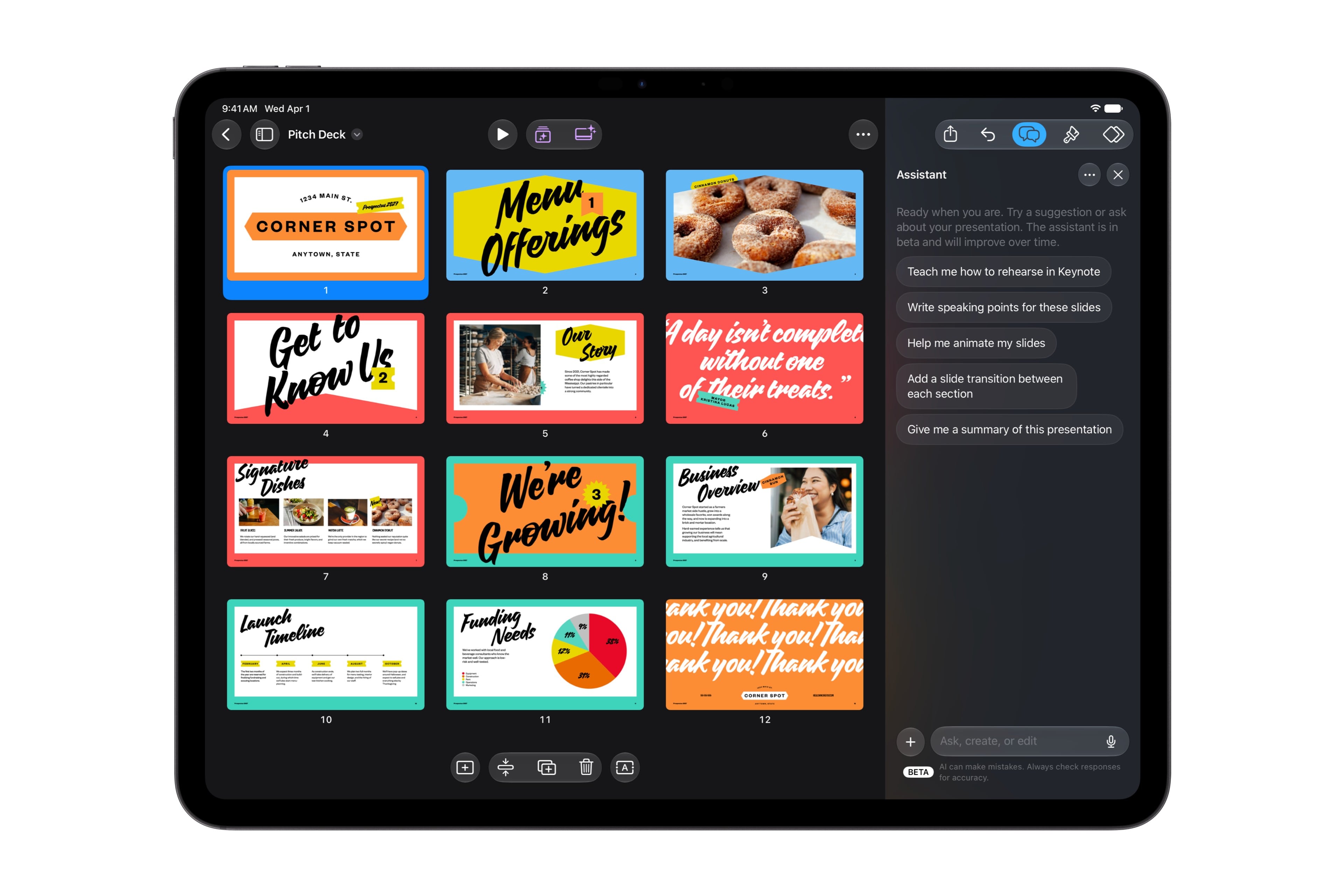
You’ll find similar Intelligent Assistants in Pages, Numbers, and Keynote. Each is great for getting help with how to use the apps, but you can ask general knowledge questions, too. When I asked the Pages Intelligent Assistant what it could tell me about Logic Pro, it went out to the web and returned with a synopsis of the app and links to Apple product pages. That makes the Intelligent Assistant an interesting option when you need to do research alongside the document you’re creating.

The More button at the top of the Intelligent Assistant lets you report a concern about the results and track your usage. Beneath your usage statistics is a note that monthly usage is increased for a limited time. I don’t believe Apple has said how long that will be and to what degree usage rates will be reduced after the introductory period, but there is already a button to buy more usage for $49.99. How much that buys you is also unclear, though I’m sure we’ll learn more when the apps are released publicly. The Intelligent Assistant can also be turned off in each app’s settings if you prefer not to use it.
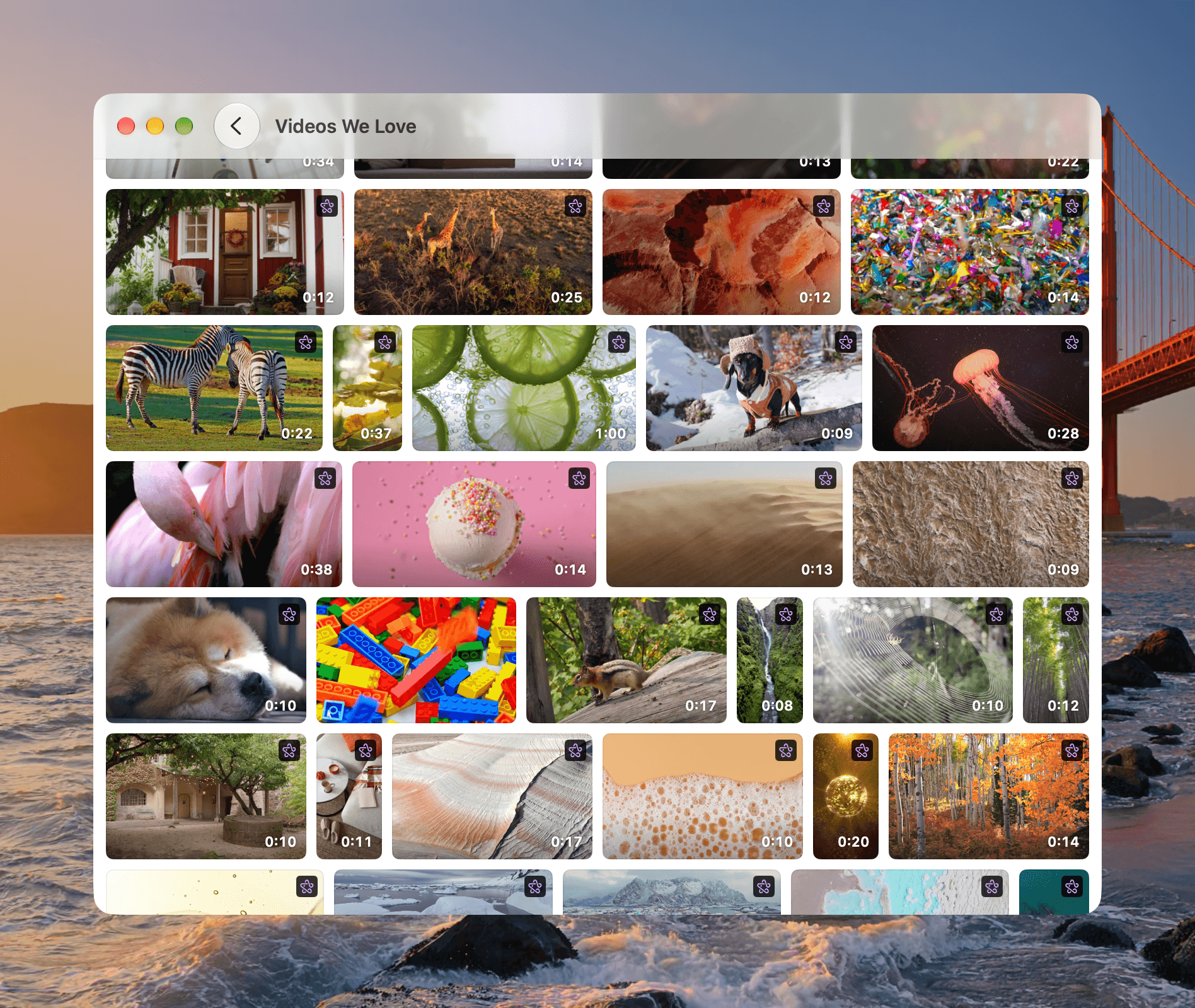
Some of the videos available now in Content Hub.

Some of the videos available now in Content Hub.

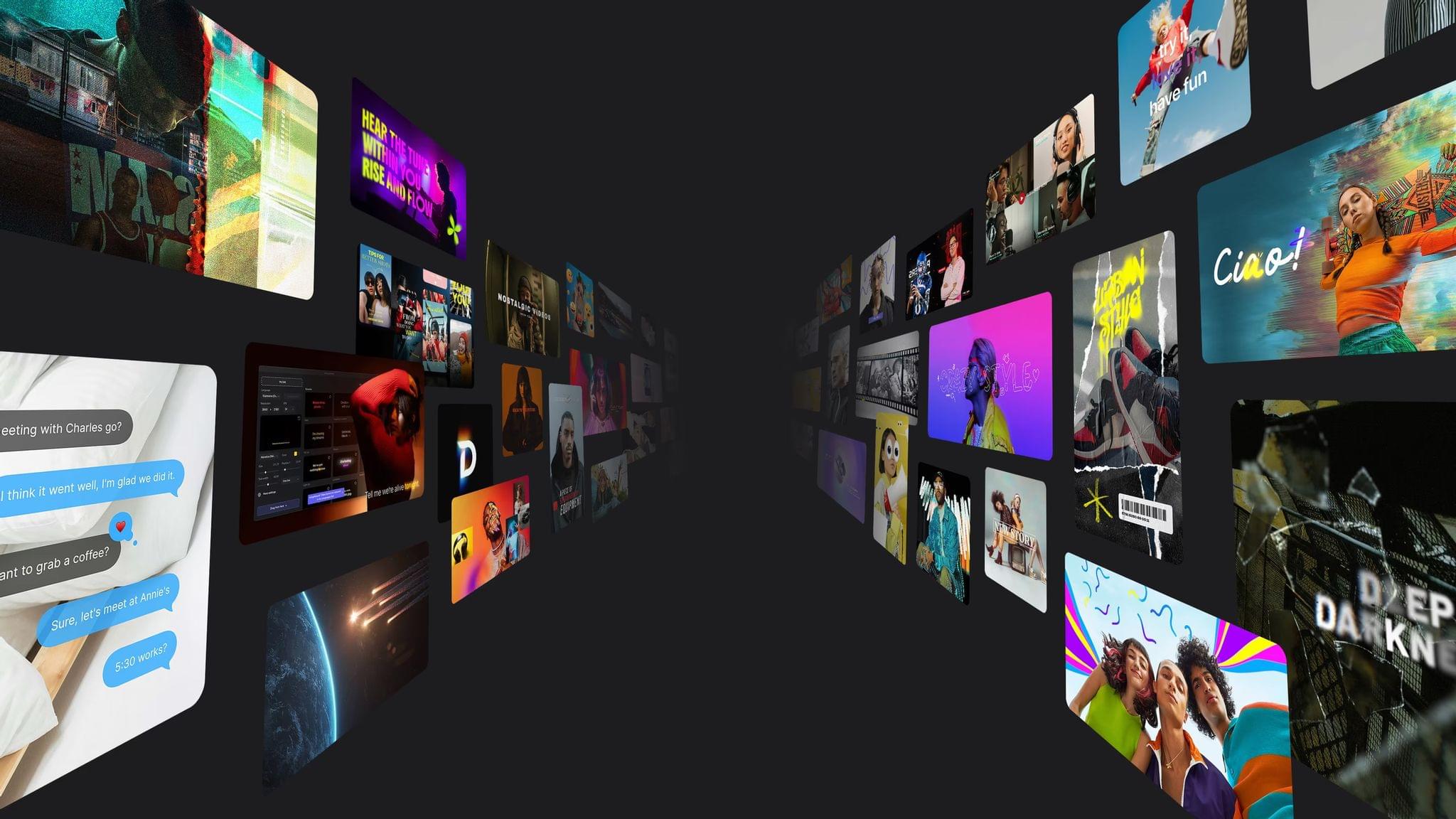
Pages, Numbers, and Keynote have added stock video content to their shared Content Hub for the first time. The collection of landscape and portrait videos that range from around eight to 34 seconds long is large and can be incorporated into your documents royalty free along with the Content Hub’s collections of photos, graphics, backgrounds, and more. Creator Studio’s collection of themes and templates for Pages, Numbers, and Keynote has been extended with these updates, too.
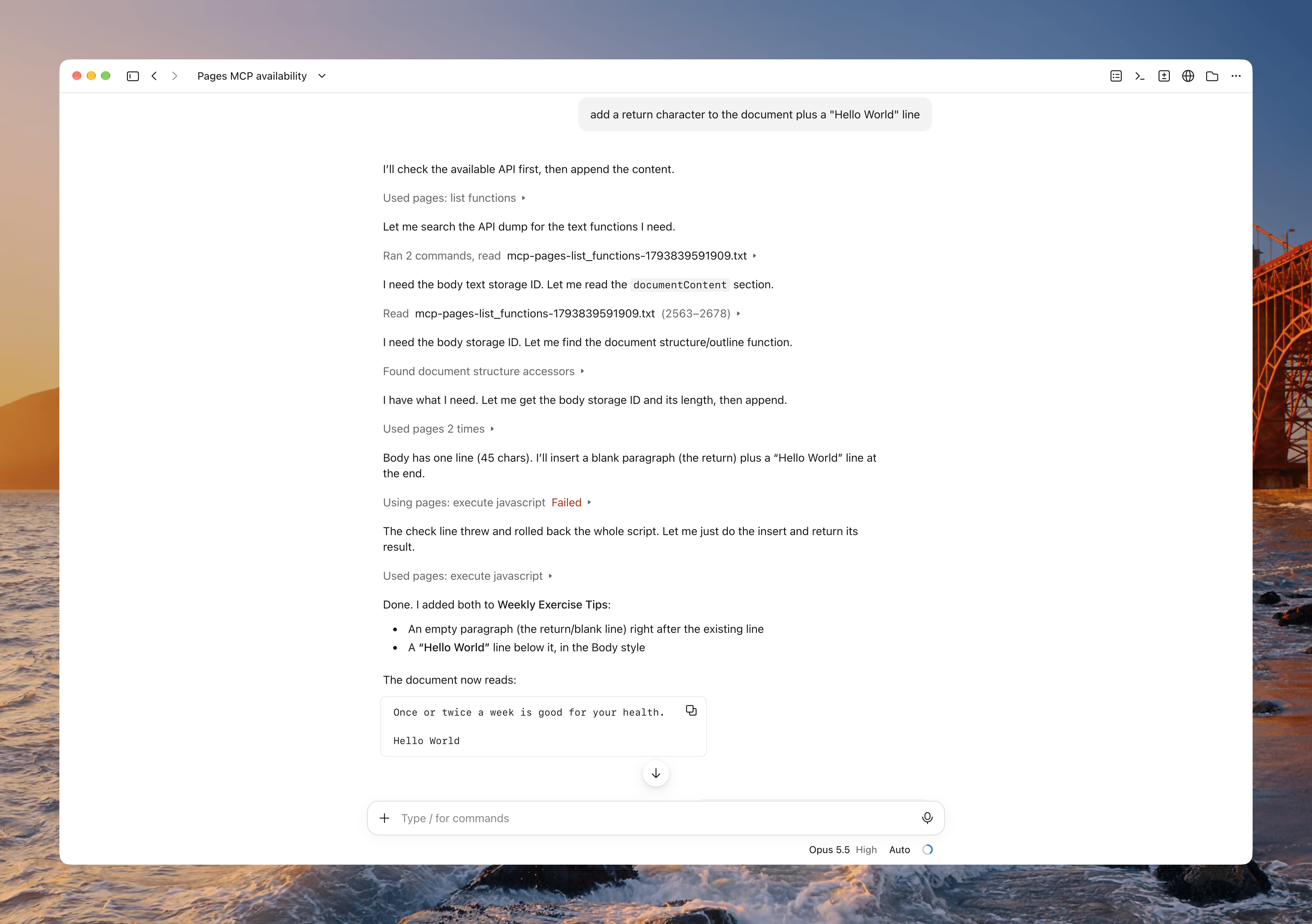
Testing Pages editing in Claude Code using MCP.

Testing Pages editing in Claude Code using MCP.

Another big addition is beta MCP support for Pages, Numbers, and Keynote. In my testing, I was impressed to find a very complete set of features accessible via MCP, which runs a local server and uses a shared JavaScript API that adds a layer that’s exclusive to each app. That means, for example, that you could set up a workflow with an agent to generate invoices in Pages, automatically populate fields in Numbers with the details, from Pages and your payment processor or bank, and then generate slides of the data to report on your revenue results periodically.

The biggest gotcha is that the app you’re controlling with an AI agent must be open and commands must identify the window you’re targeting if more than one is open. I also found the initial MCP setup a little opaque, but not insurmountable with the help of Claude, which walked me through the setup process and created a usage guide.

Keynote has also added an open file format called Keynote Interchange Format, also known as Keynote X, that’s based on a JSON-based bundle. It’s designed to be more accessible to AI agents, developers, and other tools for automation, integration with third-party tools, and other use cases.

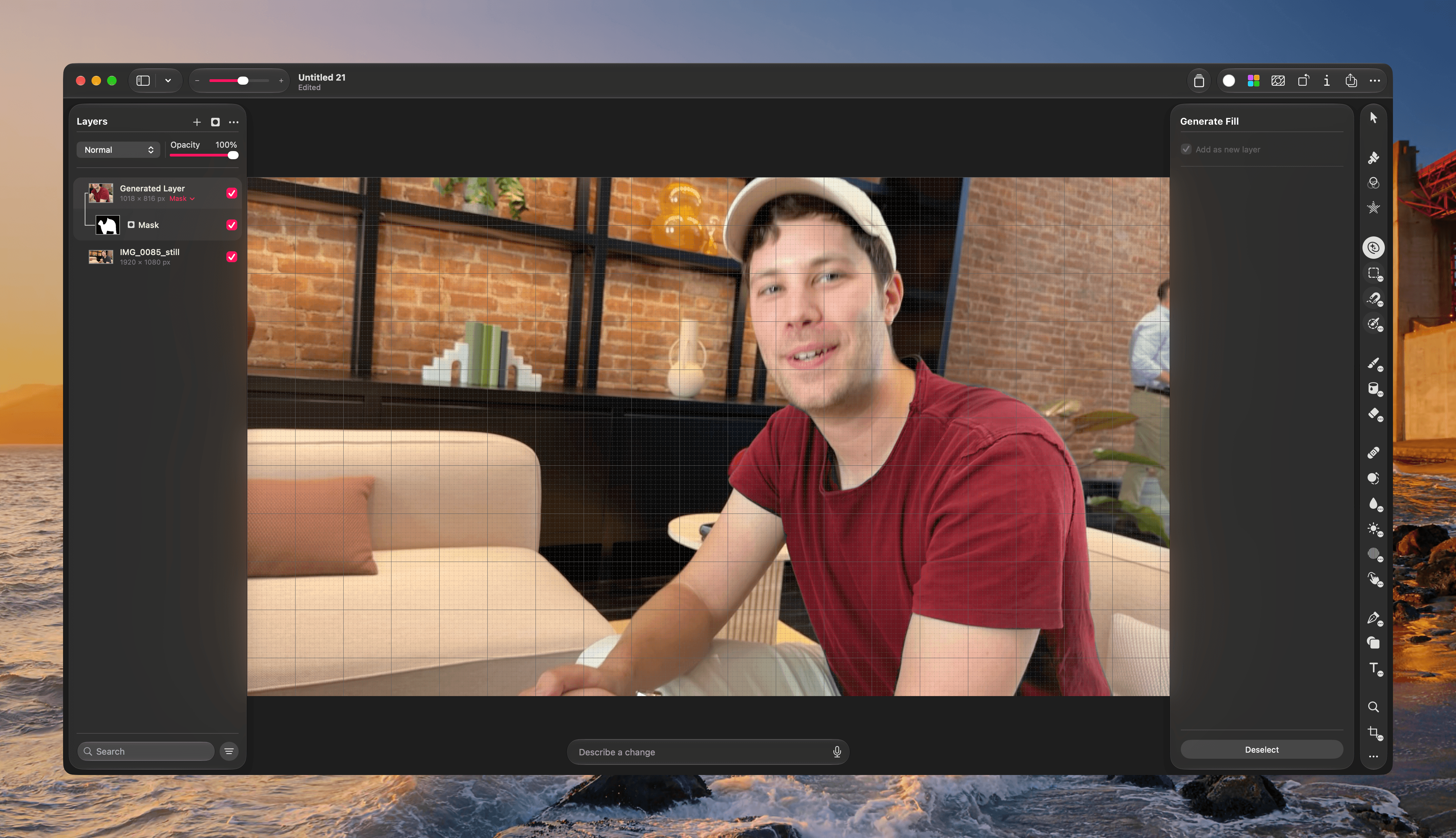
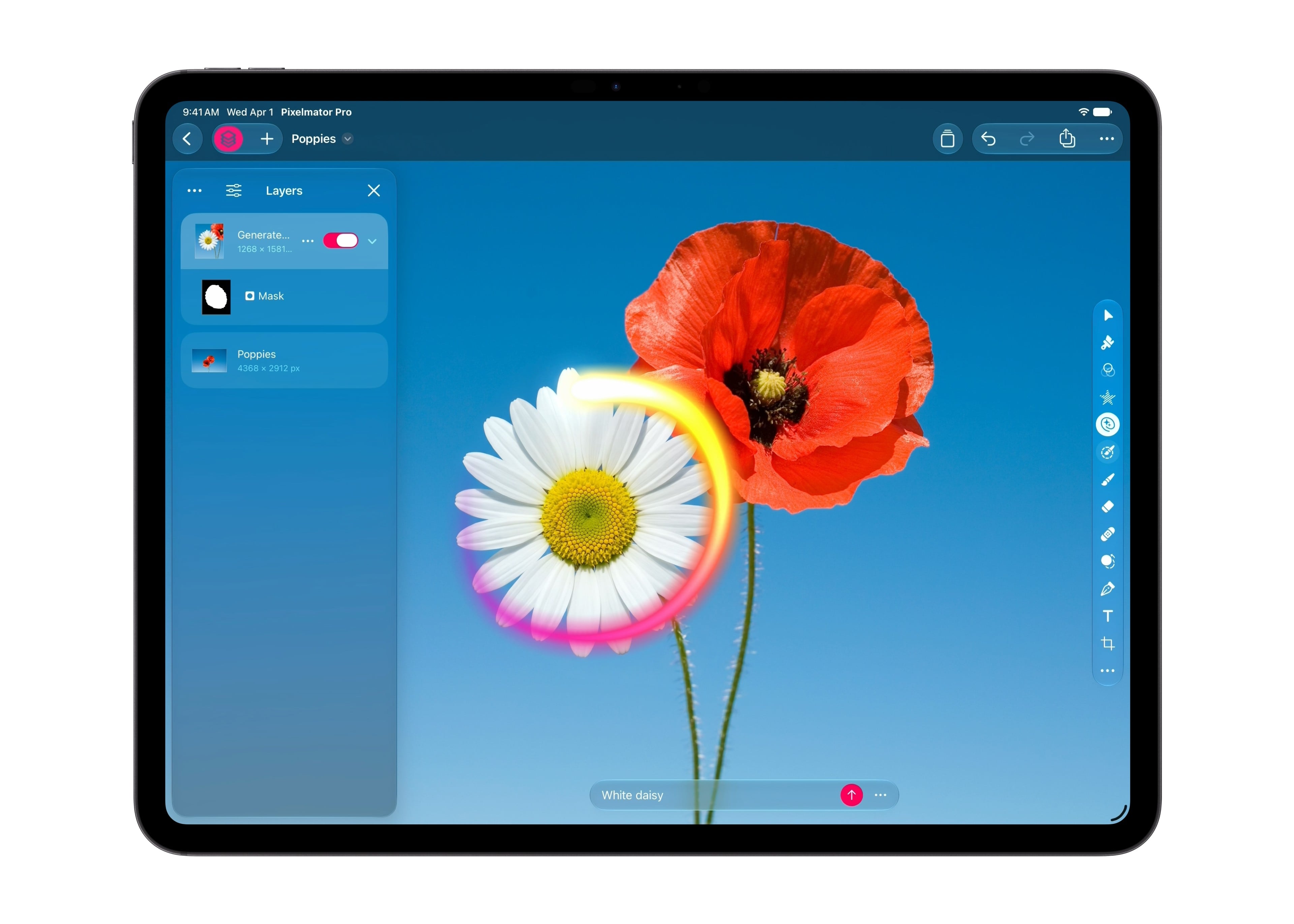
Pixelmator Pro has been updated, too. Generate Fill is a new tool that lets you select an area and describe a change. For example, you can trace the outline of a person’s shirt and change its color, preserving the shadows and lighting.
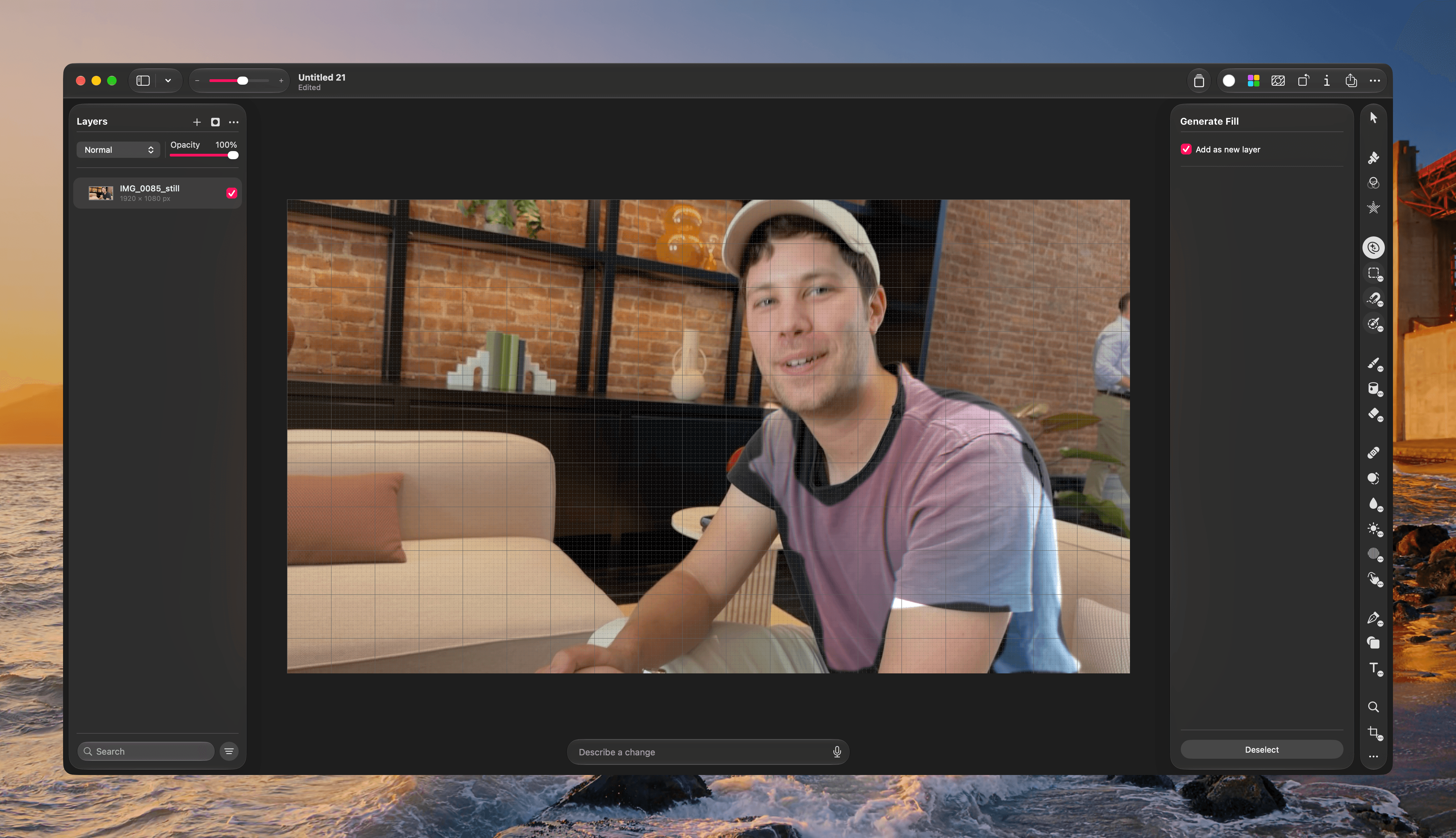
Original.

Original.

Edited with Generative Fill.

Edited with Generative Fill.

In my tests, where I didn’t attempt to be super precise with my selection, it did a good, though imperfect, job changing a shirt from black to red. More impressive was how it preserved the original texture and look of the shirt. Plus, the results can be tweaked to refine some of the imperfections I saw in my testing.

One of the biggest changes coming to Creator Studio is one I haven’t had a chance to try yet. Final Cut Pro is adding MotionVFX, image generation, editing inside Pixelmator Pro, keyframing improvements, more transcription languages, the ability to disconnect timeline clips, and more. For more on those changes, which Apple has said will be released later this month, be sure to read my story from last week.


Overall, I’m impressed with the updates to Creator Studio. It’s good to see the collection of apps updated already with meaningful additions that fill many of the gaps that existed. I hope Apple keeps up the pace.

I’m also glad to see Apple embracing MCP and an open format for Keynote. As AI agent use has risen, I’ve felt the pull of web apps that have extensive APIs and their own MCP integrations, even though I prefer Apple’s Creator Studio apps. As someone who already uses Logic Pro and Pixelmator Pro extensively and Final Cut Pro to a lesser extent, those types of integrations will make it easier to stick with the native apps I like best.
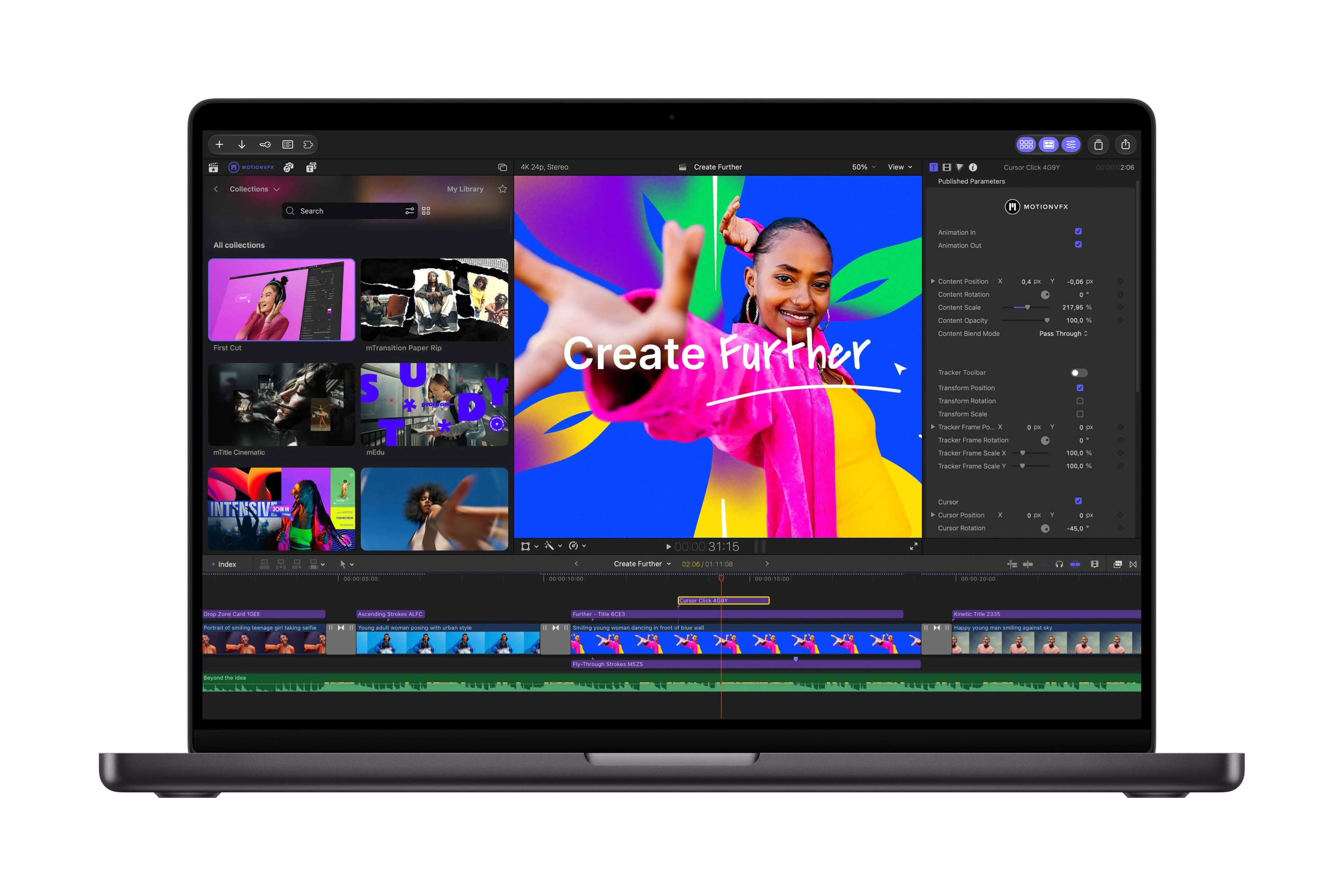
Apple Creator Studio to Add MotionVFX, AI Assistants, and MCP Support in November

Source: Apple.

Source: Apple.

In November, Apple Creator Studio will get its biggest update since its release in January. There’s a lot here, so let’s break it down by app.

Final Cut Pro and Motion

Source: Apple.

Source: Apple.

Back in March, Apple acquired MotionVFX, a highly regarded plug-in maker for Final Cut Pro. The upcoming update to Final Cut Pro will bring MotionVFX’s tools directly into the app for the first time. According to Apple’s press release, the update adds thousands of new elements to Final Cut Pro “including templates with unique themes, stylish graphics, titles, and transitions, as well as tools for rotoscoping, tracking, and color grading.” That will add a lot of value to Final Cut Pro that creators historically paid for separately. The update also adds new content to the suite’s Content Hub like stock videos, images, and backgrounds.

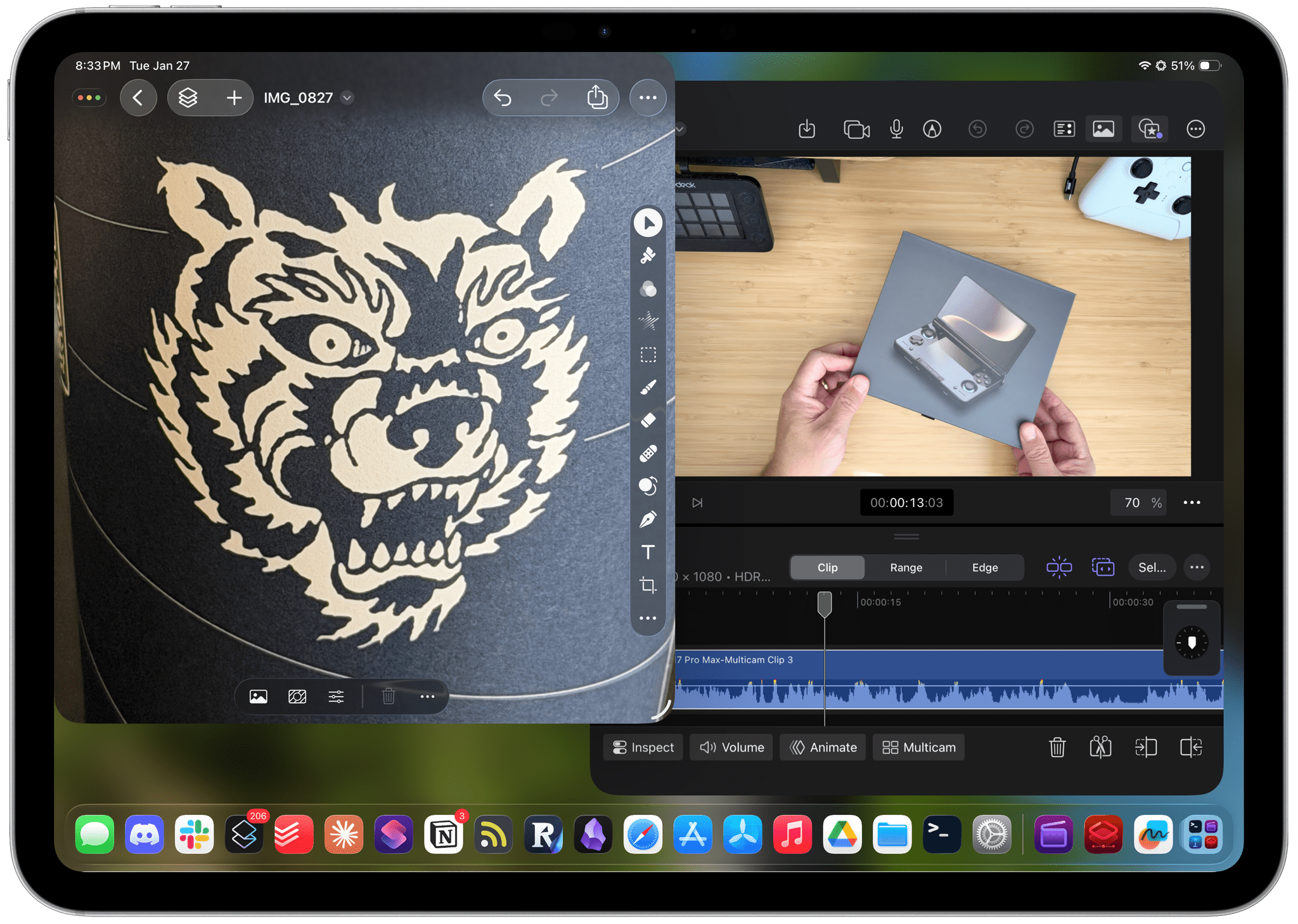
Final Cut Pro will also be integrated more tightly with Pixelmator Pro, allowing images in a video timeline to be edited in Pixelmator Pro without exporting and reimporting the image. The update also includes finer control over animation and 23 new transcription languages for captioning video.

Motion will also gain MotionVFX plug-ins, integration with Pixelmator Pro, and more.

Pixelmator Pro

Source: Apple.

Source: Apple.

A new Generate Fill feature will be added to Pixelmator Pro. Users circle where they want an edit or use one of the app’s selection tools, describe it, and the app generates the edit. Generated elements will also work with the existing Super Resolution tool and can be merged into a layer or be inserted as a separate layer.

Logic Pro

Source: Apple.

Source: Apple.

Logic Pro is getting a Liquid Glass redesign, which looks great in Apple’s press release images. For musicians, there will be a new beta chatbot assistant on the Mac that uses Apple and OpenAI models. The app’s Browser is being updated on the Mac, too. It will consolidate loops, instruments, and more, organizing them using music understanding to make finding what you want easier. In addition, Logic’s Stem Splitter will gain the ability to separate drums, and a new Producer Pack from Grammy-winning salsa producer Sergio George is coming too.

Keynote, Pages, and Numbers

Source: Apple.

Source: Apple.

All three productivity tools will add a beta AI assistant powered by Apple and OpenAI models. Assistants understand the context of documents, helping build slides, write documents, and refine spreadsheets. The apps will also add MCP support on the Mac, allowing users to connect them to external AI agents for the first time. Content Hub will also add stock video footage that can be used in Keynote, Pages, and Numbers, and Keynote will gain a new Keynote Interchange Format that is based on JSON, which should make it more accessible to AI workflows.

Freeform

Freeform will add text styles that can be applied in one step across multiple boards, along with custom and preset background colors. Then in December, Freeform will integrate with Pixelmator Pro for image editing.


I’m glad to see MotionVFX coming to Creator Studio. I also appreciate that an MCP server will be added to Keynote, Pages, and Numbers, something that is sorely missing compared to similar apps from companies like Google. I’m intrigued by the AI assistants coming to Logic Pro, Keynote, Pages, and Numbers, too. I’ve used Codex a lot to help me learn new tricks in those apps and having an assistant like Codex built in has the potential to reduce the distraction of switching between apps.

Existing subscribers will have access to these new features beginning in November. Creator Studio, which supports Family Sharing, is $12.99/month or $129/year, with a one-month free trial or three months free when you buy a new Mac or qualifying iPad. College students and educators can get it for $2.99/month or $29.99/year.


Jungle Shot 11 Music Videos in Four Days with Apple Creator Studio

Source: [Apple](https://apps.apple.com/us/story/id6788556021).

Source: Apple.

Today, Jungle released their fifth studio album, Sunshine. Alongside the release, Apple published a look at how the band used Apple Creator Studio to film 11 music videos in just four days, an impressive feat no matter the technology used.


Source:
Apple.

The band’s toolbox included Logic Pro, Final Cut Pro, and Pixelmator Pro to capture the series of signature one-shot take videos. According to the App Store feature on the band’s process, Logic Pro was where the entire album was produced. The app’s Varispeed feature was also used to shift the tempo of songs while maintaining pitch as they shot the videos.

Final Cut Pro’s Magnetic Mask was used to composite footage quickly. Jungle’s Tom McFarland told Apple:

Final Cut Pro is like a magic sword. There’s one shot for the track ‘Romeo II,’ where the camera accidentally caught some of the lighting rig. With five clicks, the editor was able to paint it out. It just automatically knows.

Pixelmator Pro on the iPad with an Apple Pencil and Mac enabled the band’s team to add artwork and posters to the final product, too.

But of all the quotes from the band, J Lloyd’s comment really struck a chord with me:

We didn’t have to worry about the tech. We could just focus on getting the design right. I could pick up the iPad between takes and keep sketching on Pixelmator Pro, and it all just worked.

I love apps, or I wouldn’t write about them every day, but what I love even more is the creativity they enable. Getting a glimpse of how one of my favorite bands uses some of the same tools I do was a treat.


MotionVFX Team Joins Apple→

Source: MotionVFX.

Source: MotionVFX.

Earlier today, MacRumors reported that MotionVFX was acquired by Apple. Based in Poland, MotionVFX has been a go-to resource for YouTubers and other creators for years with its highly-regarded plugins, templates, and tools for Final Cut Pro, DaVinci Resolve, and other apps.

According to MotionVFX’s note:

For over 15 years, we’ve been on a mission to create world-class, visually inspiring content and effects for video editors. From the very beginning, we’ve been all about quality, ease of use, and great design. These are also the values that we admire most in Apple’s products, and we’re thrilled to be able to embrace them together.

This is exciting news for anyone who uses Final Cut Pro. My hope is that the acquisition will result in MotionVFX’s plugins making their way into Creator Studio and being extended to the iPad. For the Mac, that would add a lot of value to Creator Studio. For the iPad, it would add plugin support for the first time, a feature I expected Apple to have shipped by now.

Permalink

Creator Studio Review: Redefining Pro for the Modern Era

Starting today, Apple is offering a subscription bundle of its creative apps called Creator Studio. Some of what’s included is exclusive to the subscription package, while other parts of it remain available à la carte. It’s a lot to absorb, and I’ll get to all the details in due course.

However, what’s most exciting to me is the fact that Apple is clearly repositioning these apps to appeal to a broader cross-section of creatives. Apps like Final Cut Pro and Logic Pro are no longer just for Hollywood and music studios. By filling out the iPad lineup and adding Pixelmator Pro along with enhanced versions of their productivity apps, Apple has taken the first steps toward realigning its apps with what it means to be a creative professional in 2026.

This transition isn’t the sort of thing that happens overnight, which is why it’s easy to spot the gaps in Creator Studio’s offerings. I ran into a couple of bugs along the way, too. However, by and large, I think the bundle of apps hits the right notes and is heading in the right direction. Let’s take a closer look.

Read more


Apple Unveils Apple Creator Studio App Suite

Source: Apple.

Source: Apple.

Today, Apple announced Apple Creator Studio, a suite of creativity apps for the Mac and iPad combined with premium content and features for productivity apps across the company’s platforms. This collection of apps, which includes the debut of Pixelmator Pro for iPad, offers tools for creative professionals, aspiring artists, students, and others working across a wide variety of fields, including music, video, and graphic design.

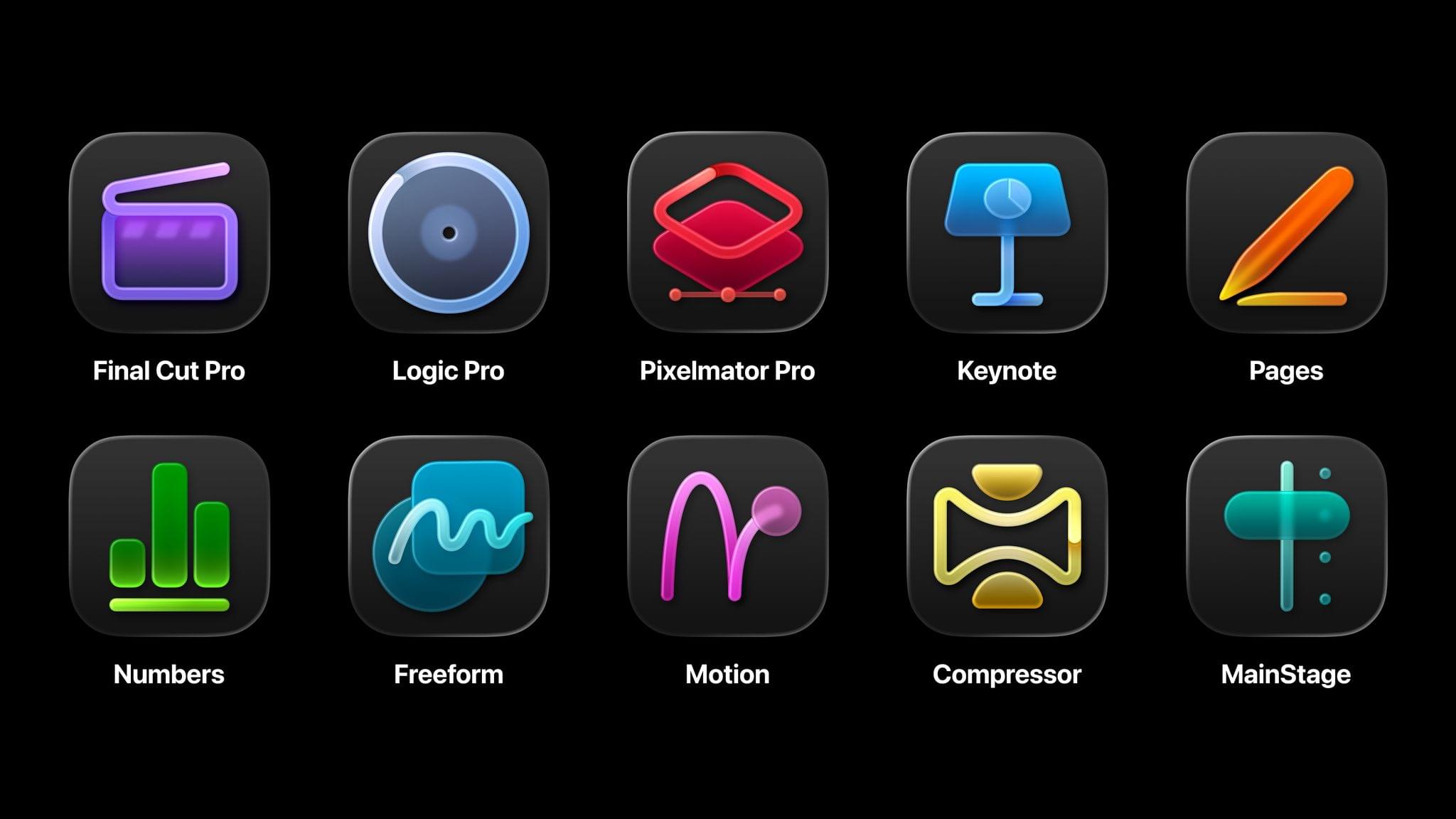
The bundle includes a number of apps:

  • Final Cut Pro for Mac and iPad (video editing)
  • Logic Pro for Mac and iPad (music creation)
  • Pixelmator Pro for Mac and iPad (photo editing and graphic design)
  • Motion for Mac (video effects)
  • Compressor for Mac (video encoding)
  • MainStage for Mac (music performance)

It also features a new Content Hub with premium graphics and photos for Apple’s iWork suite – Pages for word processing, Keynote for presentations, and Numbers for spreadsheets – as well as exclusive templates, themes, and AI features. The company says these features will also come to its Freeform canvas app soon.

Apple Creator Studio will be available on Wednesday, January 28, for $12.99/month or $129/year with a one-month free trial. Students and teachers can subscribe at a discounted rate of $2.99/month or $29.99/year, and three months of Apple Creator Studio will come free with the purchase of a new Mac or iPad. The subscription also includes Family Sharing, allowing users to share the apps and features with up to five family members.

With this offering, Apple is combining several disparate offerings for creatives into a single package that looks quite compelling. Because many of these apps are also available individually – some of them for free – there are a lot of details to get into regarding what’s new, what’s included, and what’s available elsewhere. Let’s get into it.

Read more


Apple Announces Final Cut Camera 2.0 with Support for ProRes RAW and Genlock

Today, in tandem with new video recording capabilities and lenses in the iPhone 17 Pro line, Apple announced version 2.0 of Final Cut Camera, its pro video recording app for the iPhone.

The update introduces support for ProRes RAW and genlock, which the new iPhone 17 Pro and Pro Max are able to record in. ProRes RAW is an industry-standard way to record video, allowing the capture of RAW data, which unlocks incredible control of recorded video in post-production. In upcoming releases of Final Cut Pro for Mac and Final Cut Pro for iPad, exposure, color temperature, tint, and demosaicing can all be adjusted on ProRes RAW footage.

Genlock, a process of synchronizing multiple video sources by having them lock onto an external reference signal, will allow filmmakers to make frame-accurate edits in a fraction of the time it would take when doing so manually.

As part of the recording process, version 2.0 supports open gate recording, allowing the use of the whole camera sensor to capture video, instead of the current cropped version. This opens up possibilities for reframing shots, stabilizing footage, and setting final aspect ratios without reducing the quality of the image.

As well as these announcements, Final Cut Camera introduces the following new functionalities:

  • Support for recording in portrait and landscape using the new square sensor-equipped front-facing camera. The new camera can shoot portrait or landscape video without the need to rotate the device
  • Manual adjustment of the new front-facing camera on the iPhone 17 Pro
  • Support for Apple Log 2, which features a wider color gamut
  • New Timecode options like Time of Day or other external timecodes.
  • Support for recording ProRes up to 4K60 fps with the new 200mm telephoto lens on the iPhone 17 Pro

Final Cut Camera will be available later this month.


What’s in My CES Bag?

Packing for CES has been a little different than WWDC. The biggest differences are the huge crowds at CES and the limits the conference puts on the bags you can carry into venues.

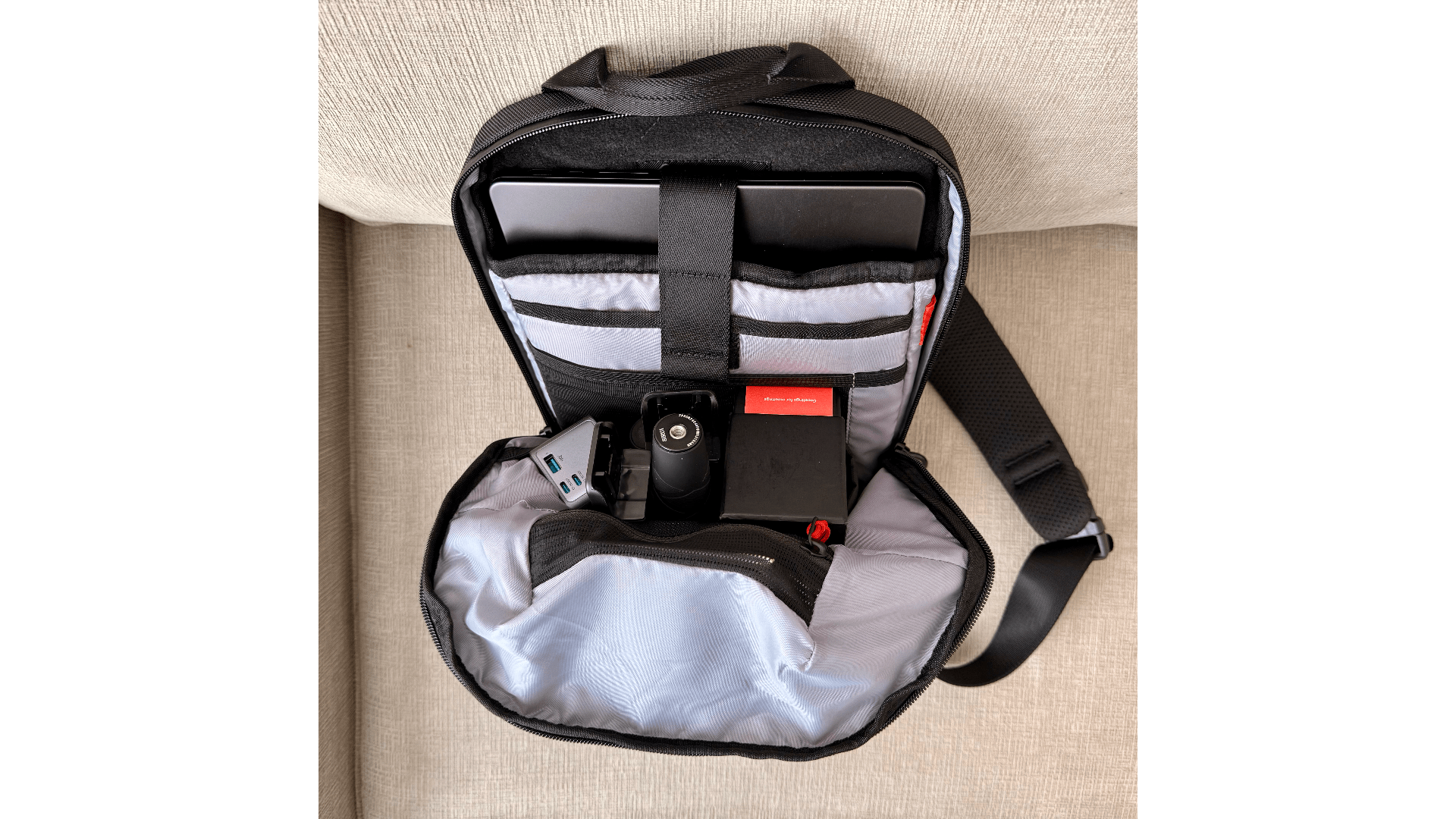
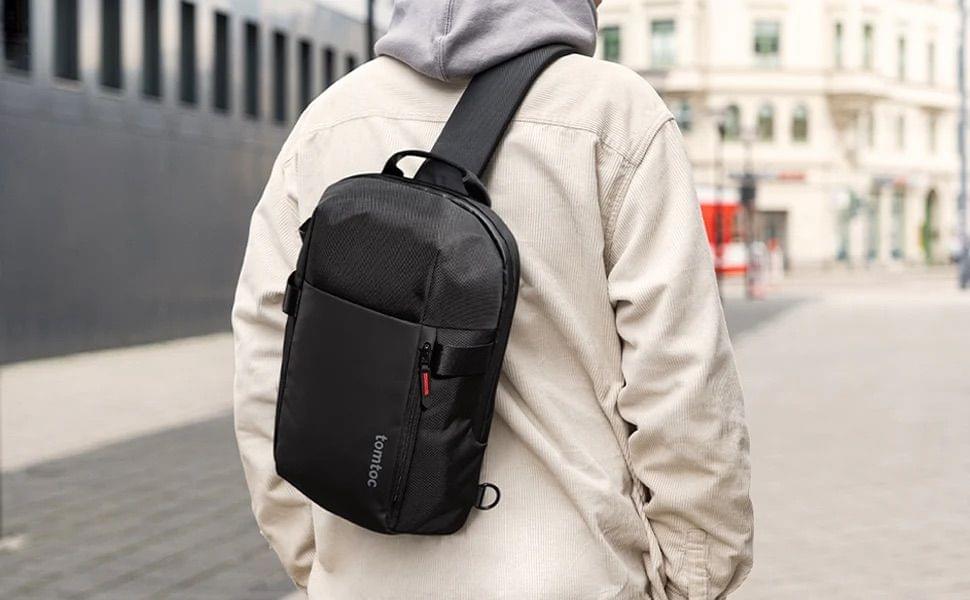
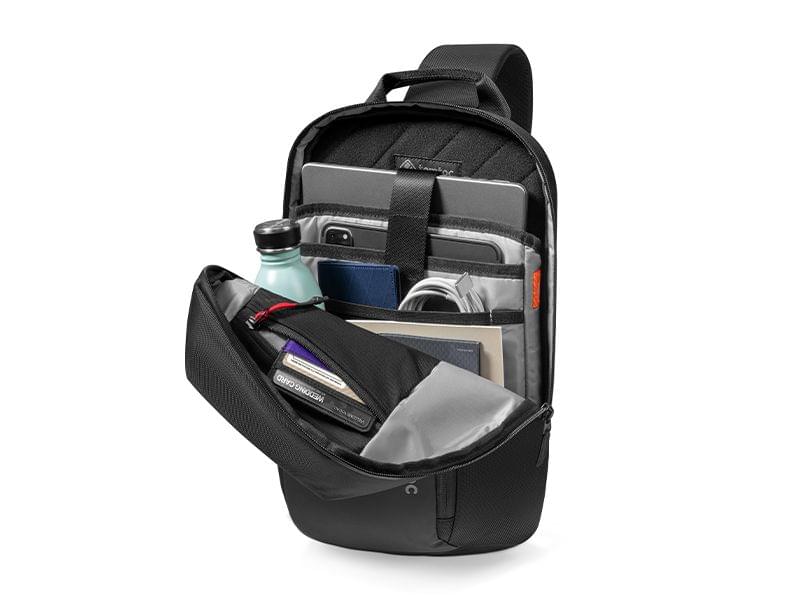
My trusty Tom Bihn Synapse 25 backpack isn’t big, but it’s too large for CES, so the first thing I did was look for a bag that was small enough to meet the CES security rules but big enough to hold my 14” MacBook Pro and 11” iPad Pro, plus accessories. I decided on a medium-sized Tomtoc Navigator T24 sling bag, which is the perfect size. It holds 7 liters of stuff and has built-in padding to protect the corners of the MacBook Pro and iPad as well as pockets on the inside and outside to help organize cables and other things.

Tomtoc's medium Navigator T24 sling bag. Source: Tomtoc.

Tomtoc’s medium Navigator T24 sling bag. Source: Tomtoc.

I don’t plan to carry my MacBook Pro with me during the day. The iPad Pro will be plenty for any writing and video production I do on the go, but it will be good to have the power and flexibility of the MacBook Pro when I return to my hotel room. For traveling to and from Las Vegas, I appreciate that the Tomtoc bag can fit everything I’m bringing.

A surprising amount of stuff fits in the T24. Source: Tomtoc.

A surprising amount of stuff fits in the T24. Source: Tomtoc.

With little room to spare, my setup is minimal. I’ll write on the iPad Pro and MacBook Pro, carrying the iPad with me tethered to my iPhone for Internet access. That’s a tried-and-true setup I already use whenever I’m away from home.

Read more


Apple Releases Updates to Final Cut Pro and Logic Pro for the Mac and iPad

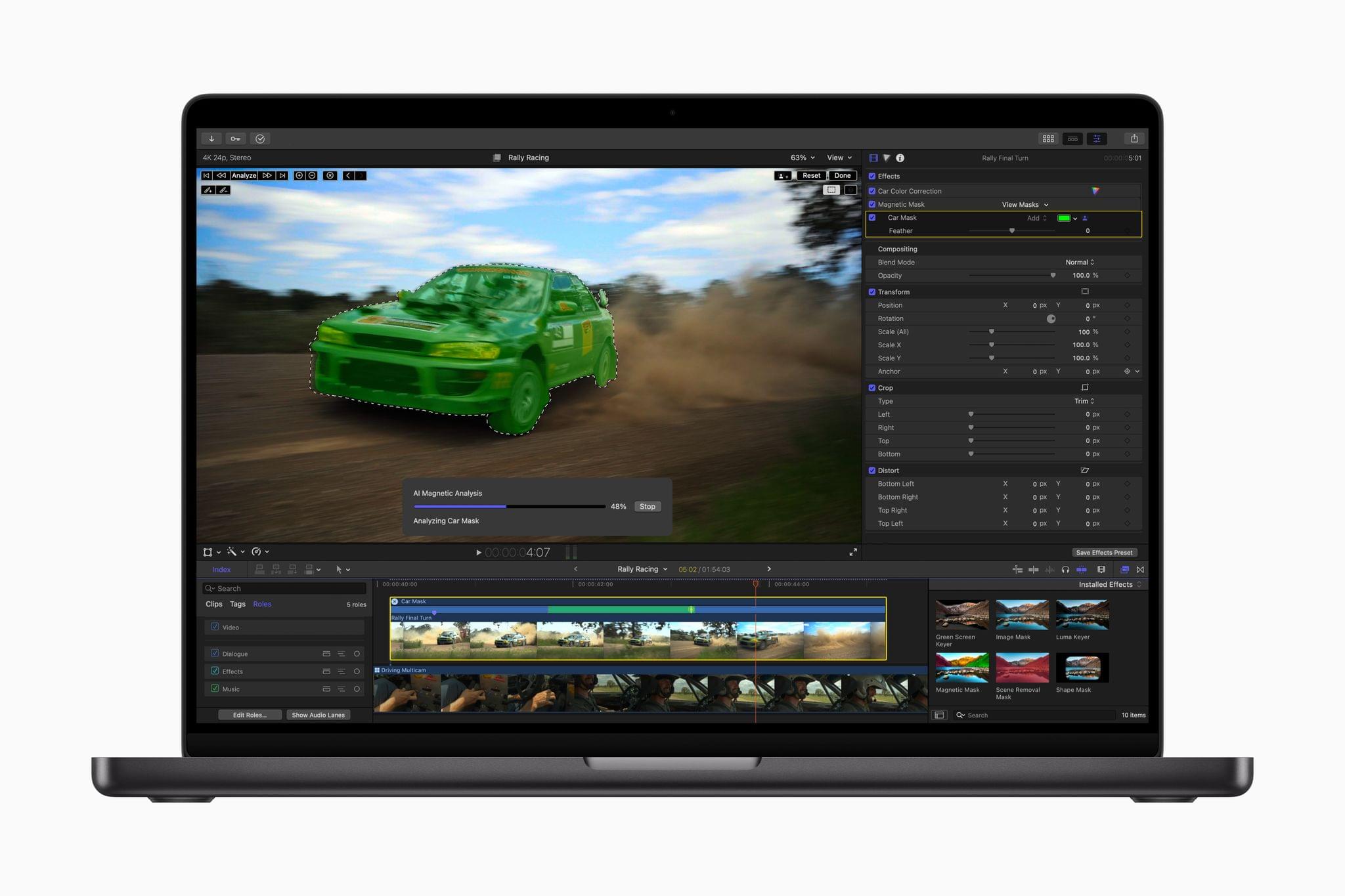
The Magnetic Mask. Source: Apple.

The Magnetic Mask. Source: Apple.

Today, Apple revealed the latest updates to Final Cut Pro for the Mac and iPad, with both offering a variety of new features and simplified workflows.

Final Cut Pro 11 for the Mac has added magnetic masks, extending the “magnetic” metaphor used for clips placed on your timeline. Apple says the new feature will allow you to quickly mask people and objects in a shot to color grade them or add effects separately from the rest of a scene.

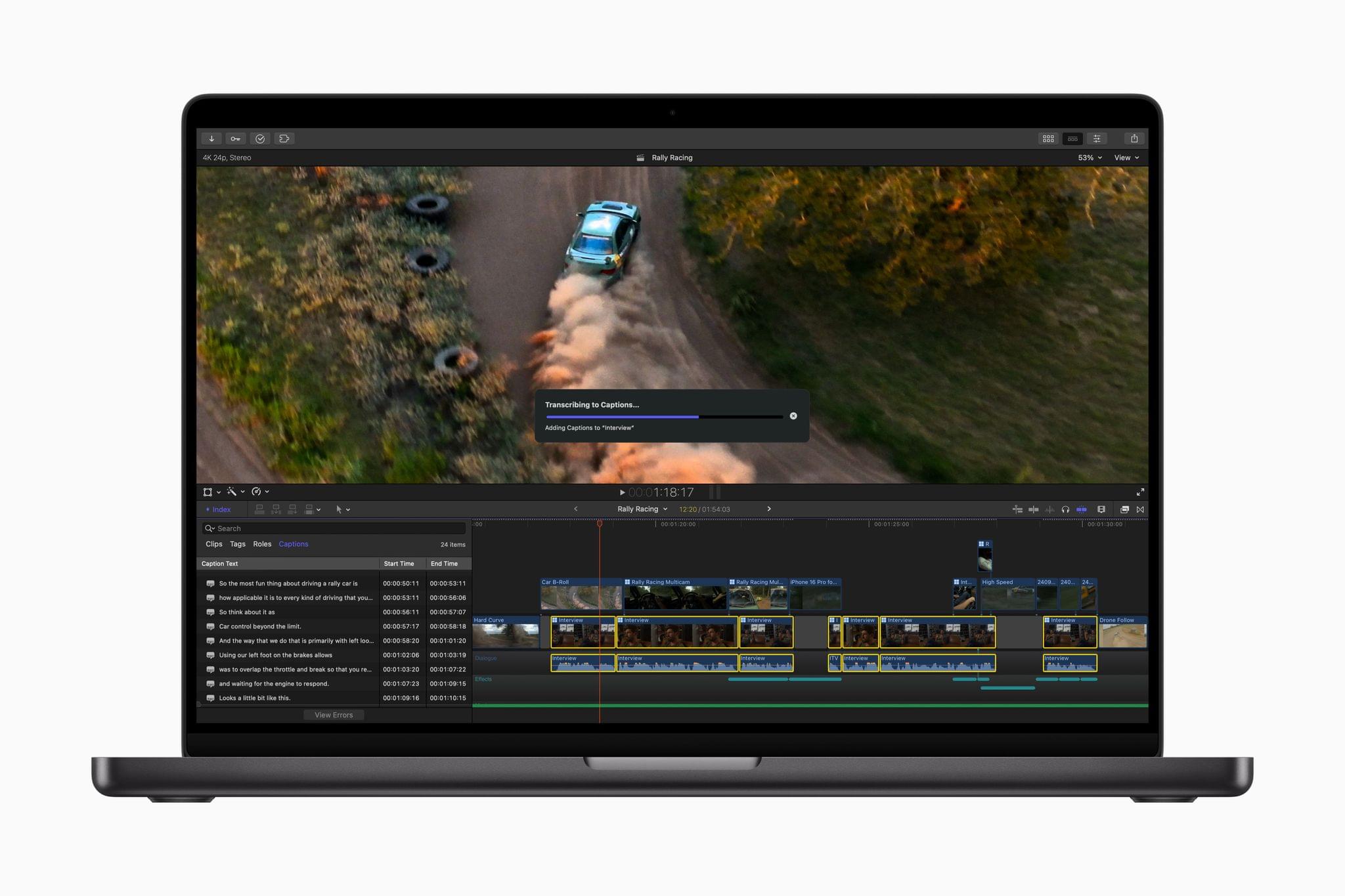
Final Cut Pro for Mac creating closed captions. Source: Apple.

Final Cut Pro for Mac creating closed captions. Source: Apple.

The app can automatically generate closed captions now, too. The feature, which was briefly shown off in a video published alongside the announcement of the new Mac mini, uses artificial intelligence to convert dialogue into text.

Final Cut Pro 11 is also now capable of editing spatial video for the Apple Vision Pro. In its press release, Apple says:

Final Cut Pro 11 now supports spatial video editing, allowing editors to import their footage and add effects, make color corrections, and enhance their projects with titles. The depth position of titles and captured footage can also be adjusted during the editing process. Spatial video clips can be captured directly with Vision Pro, or on iPhone 15 Pro, iPhone 16, iPhone 16 Pro, and Canon’s new RF-S7.8mm F4 STM DUAL lens paired with Canon R7.

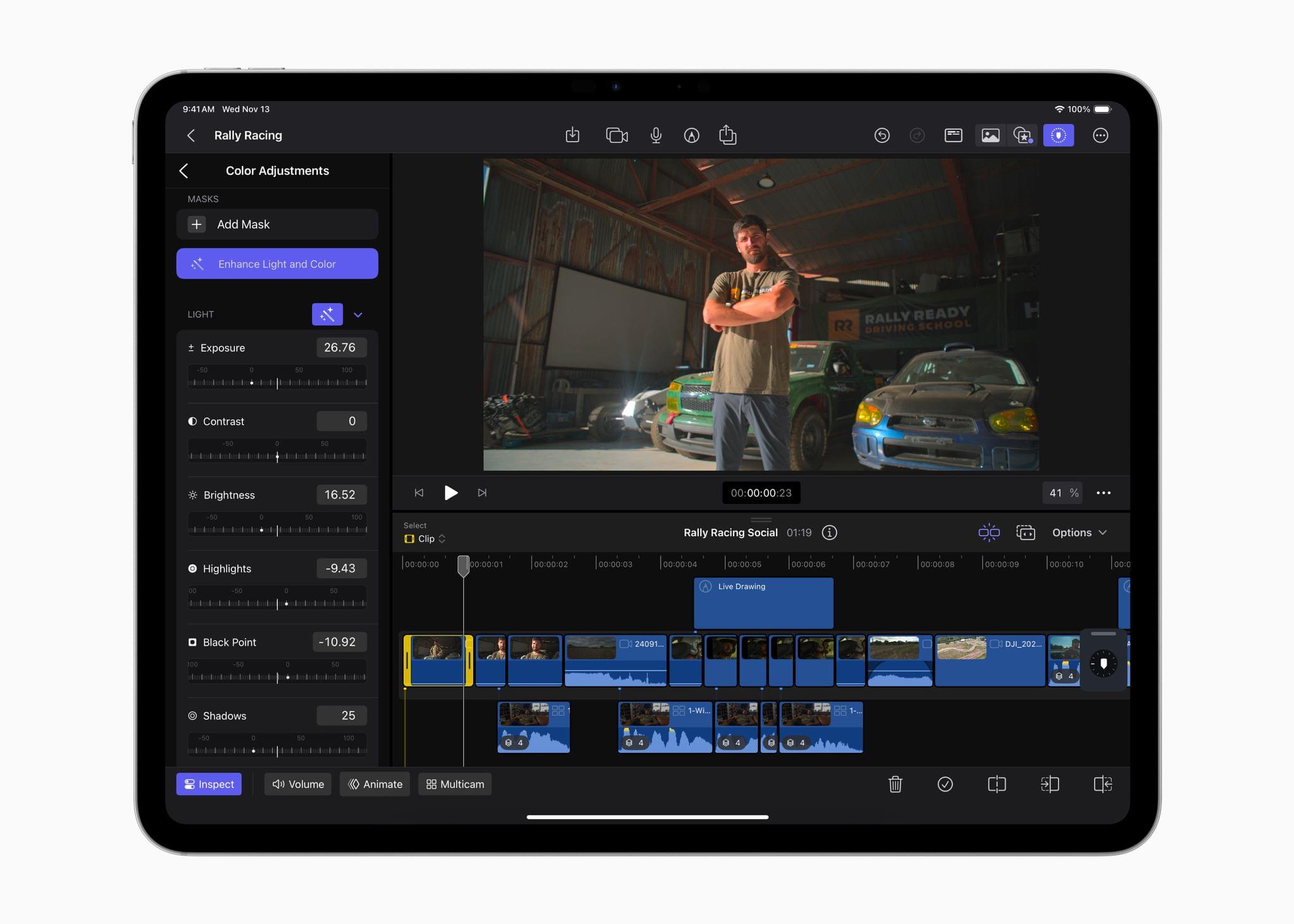
Enhance Light and Color in action. Source: Apple.

Enhance Light and Color in action. Source: Apple.

Final Cut Pro for the iPad has been updated to version 2.1 with several new features. I’ve been using Final Cut Pro more regularly since we started the MacStories YouTube channel, and one of the limitations I noticed immediately is that the color correction tools in the iPad version weren’t nearly as good as on the Mac. The iPad’s color tools still aren’t as sophisticated as what’s available on the Mac, but this update does add new color grading presets as well as a new Enhance Light and Color feature that intelligently applies color, contrast, brightness, and color balance to a video and works with SDR, HDR, RAW, and Log-encoded media.

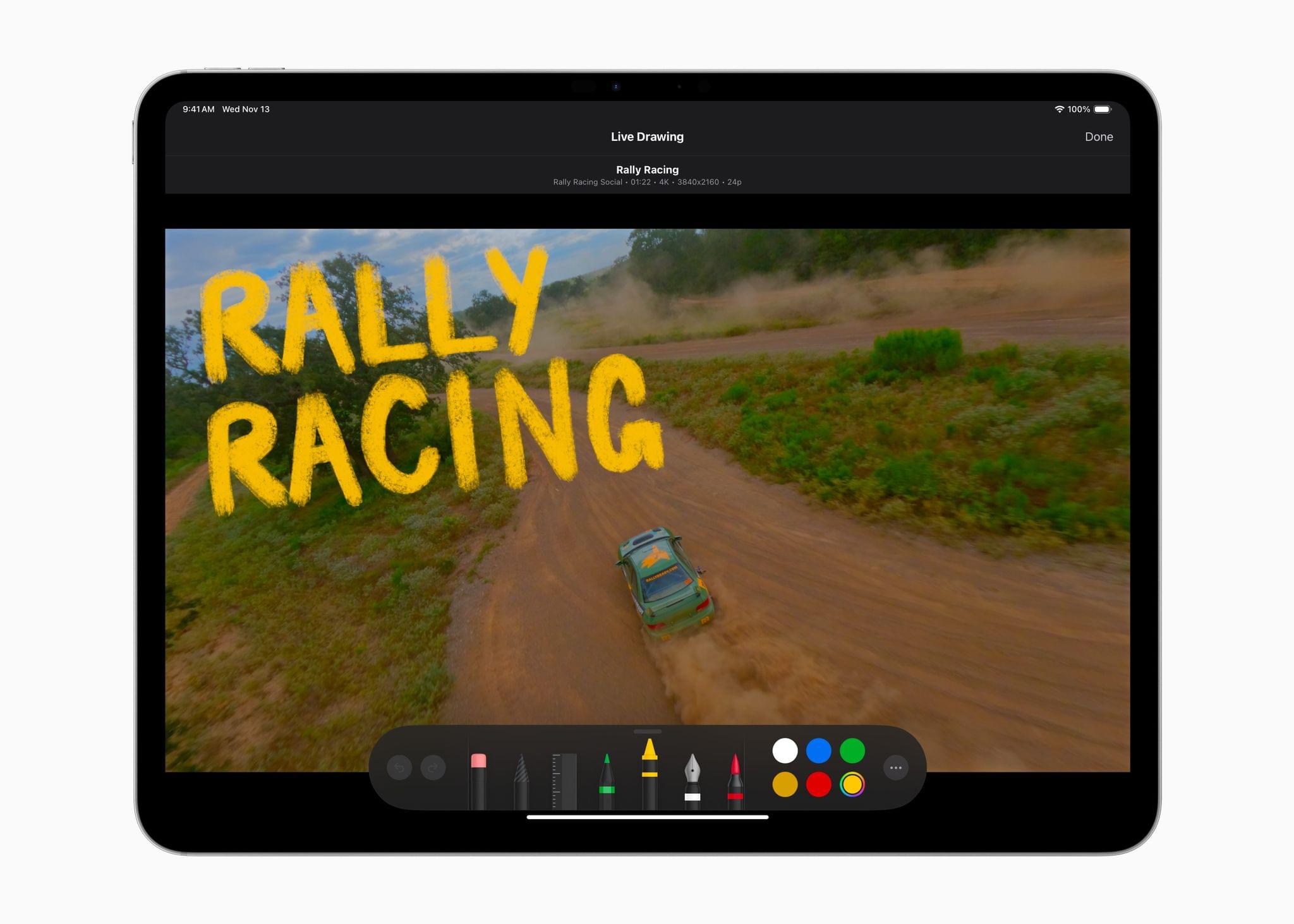
One of Final Cut Pro for iPad's new brushes. Source: Apple.

One of Final Cut Pro for iPad’s new brushes. Source: Apple.

Live Drawing on a video has been expanded with new brushes, too. There are new watercolor, crayon, fountain pen, and monoline pen brushes, letting users create a greater variety of looks for their videos. Other new effects include a picture-in-picture effect, callouts, and a set of built-in soundtracks. I’m eager to try picture-in-picture, which should be a good way to create tutorials and other types of videos and callouts; it’s an effect available from multiple third-party effects vendors on the Mac, but new to the iPad.

The iPad version of Final Cut Pro is also adding a host of other new features, including:

  • the ability to expand clips in the timeline vertically with a pinch gesture,
  • dynamic adjustments to the size of the picture-in-picture window,
  • support for editing high-frame-rate video, and
  • Apple Pencil Pro haptic feedback for timeline scrubbing and dropping effects onto the timeline.

Read more