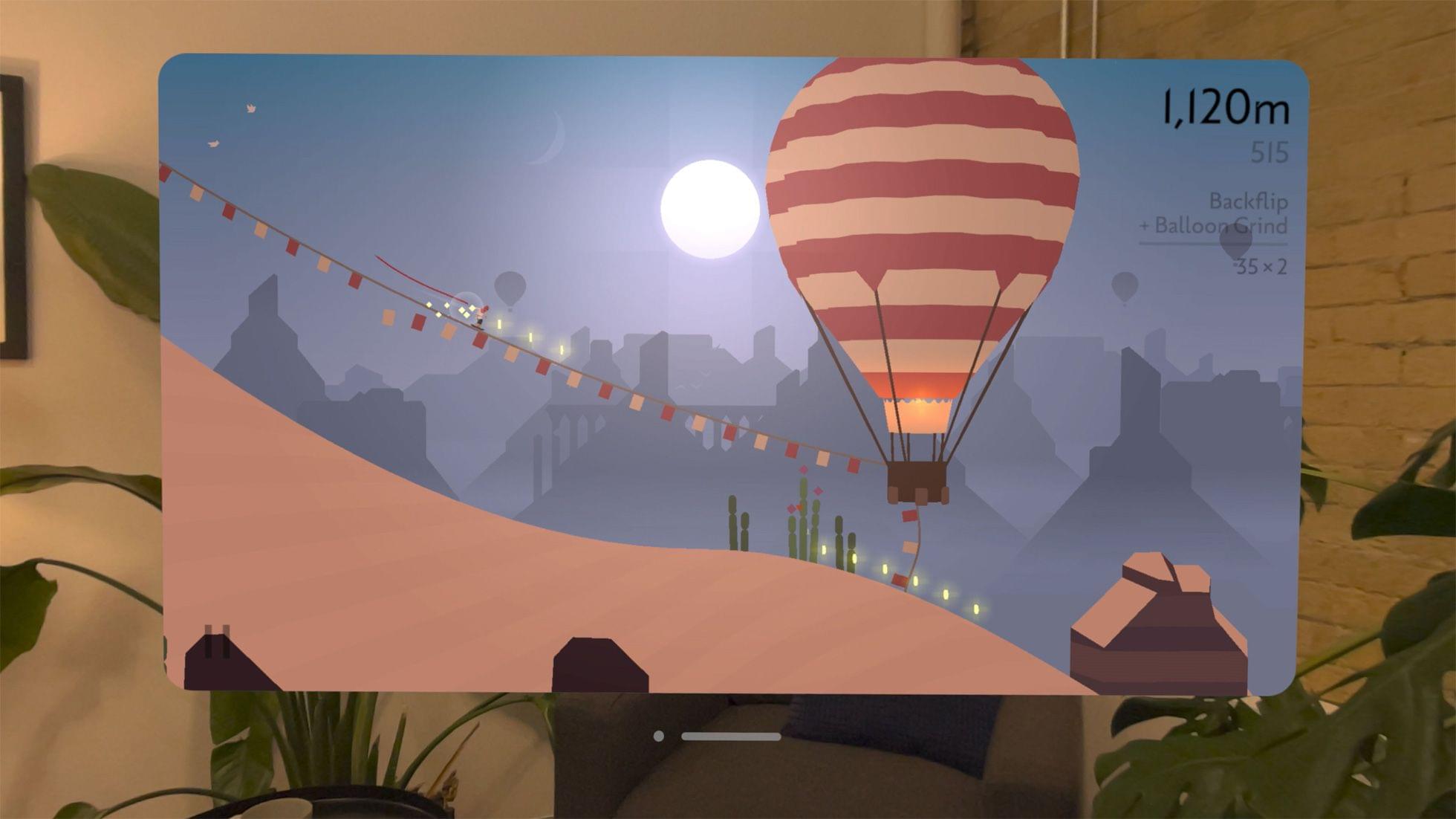
Earlier this year, Neil Long of mobilegamer.biz published an inside look at Apple Arcade from game developers’ perspectives. The story reflected developers’ frustration stemming from their interactions with Apple, project cancelations, declining revenue, and more. The story didn’t paint a pretty picture.
This week, Long is back with a follow-up story that cites anonymous developer sources, claiming that developers have to wait months for payments, Apple is slow and unresponsive to support requests and other inquiries, and the Vision Pro struggles to run ‘complex’ games.
The list of problems cited is long and worth reading in full because it has led some of Long’s sources to conclude that they’re symptoms of a more fundamental problem:
…[J]ust like last time, most developers agreed that Apple sees games and game developers as a ‘necessary evil’, and that Arcade appears to be directionless and lacking in support from the rest of the tech giant.
“Arcade has no clear strategy and feels like a bolt-on to the Apple company ecosystem rather than like it is truly supported inside the company,” said one source. “Apple 100% does not understand gamers – they have little to no info on who plays their games that they can share with developers, or how they interact with games on the platform already.”
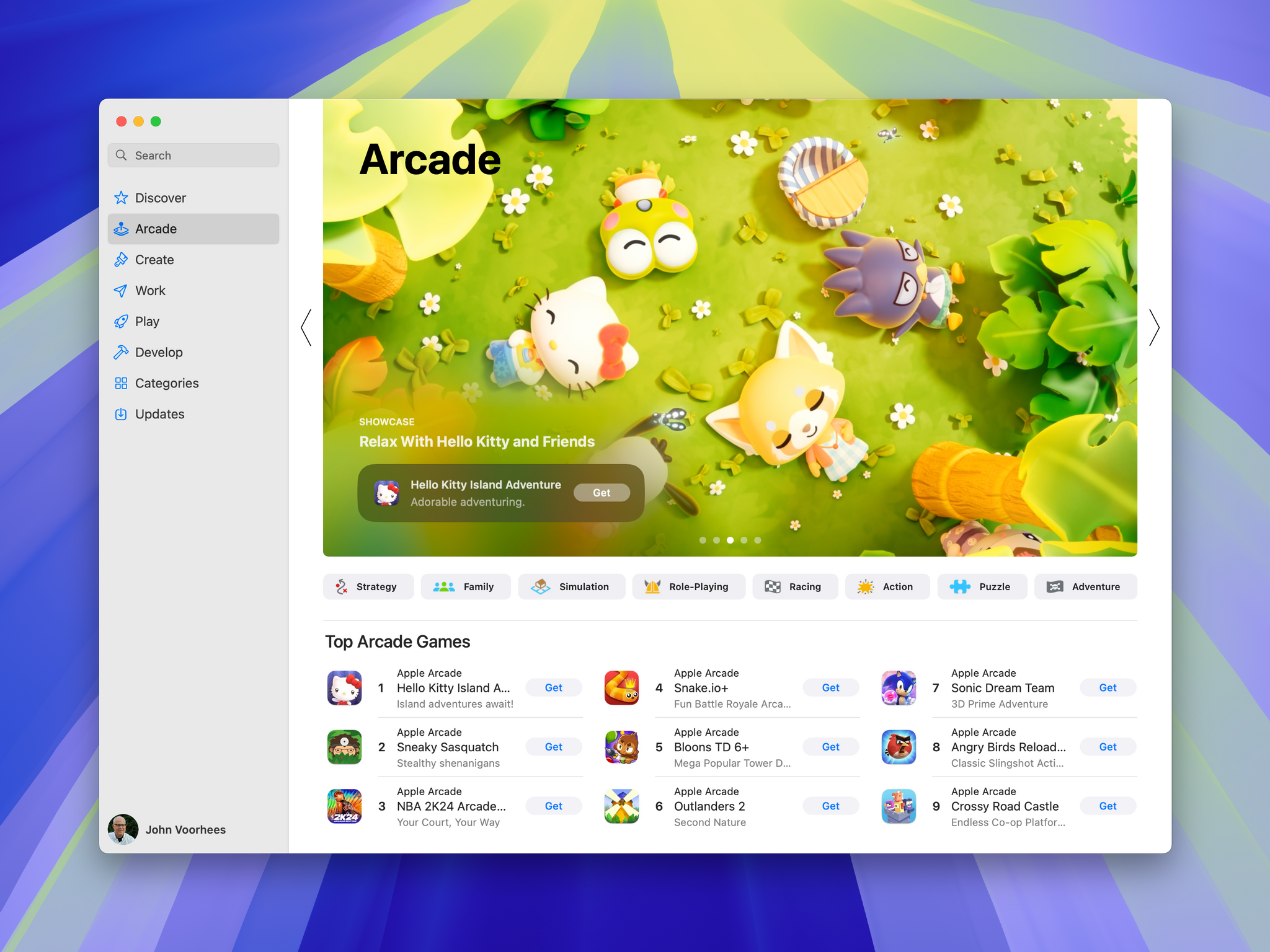
It’s important to take the complaints of unnamed sources with a grain of salt. However, it’s impossible to look at what’s going on with Arcade and App Store gaming in general – which Brendon and I discussed on NPC: Next Portable Console this week – and not conclude that Apple needs to shake up its approach to videogames.
In addition, on May 30th, Where Cards Fall, the excellent indie game by The Games Band that was published by Snowman and is already part of Apple Arcade, will be coming to the Vision Pro for the first time.
Source: Apple.
Where Cards Fall is a beautiful game that won an Apple Design Award in 2020. One of the game’s core mechanics is building structures from cards that help you advance from one level to the next, which strikes me as an excellent match for the Vision Pro’s spatial gestures.
Source: Apple.
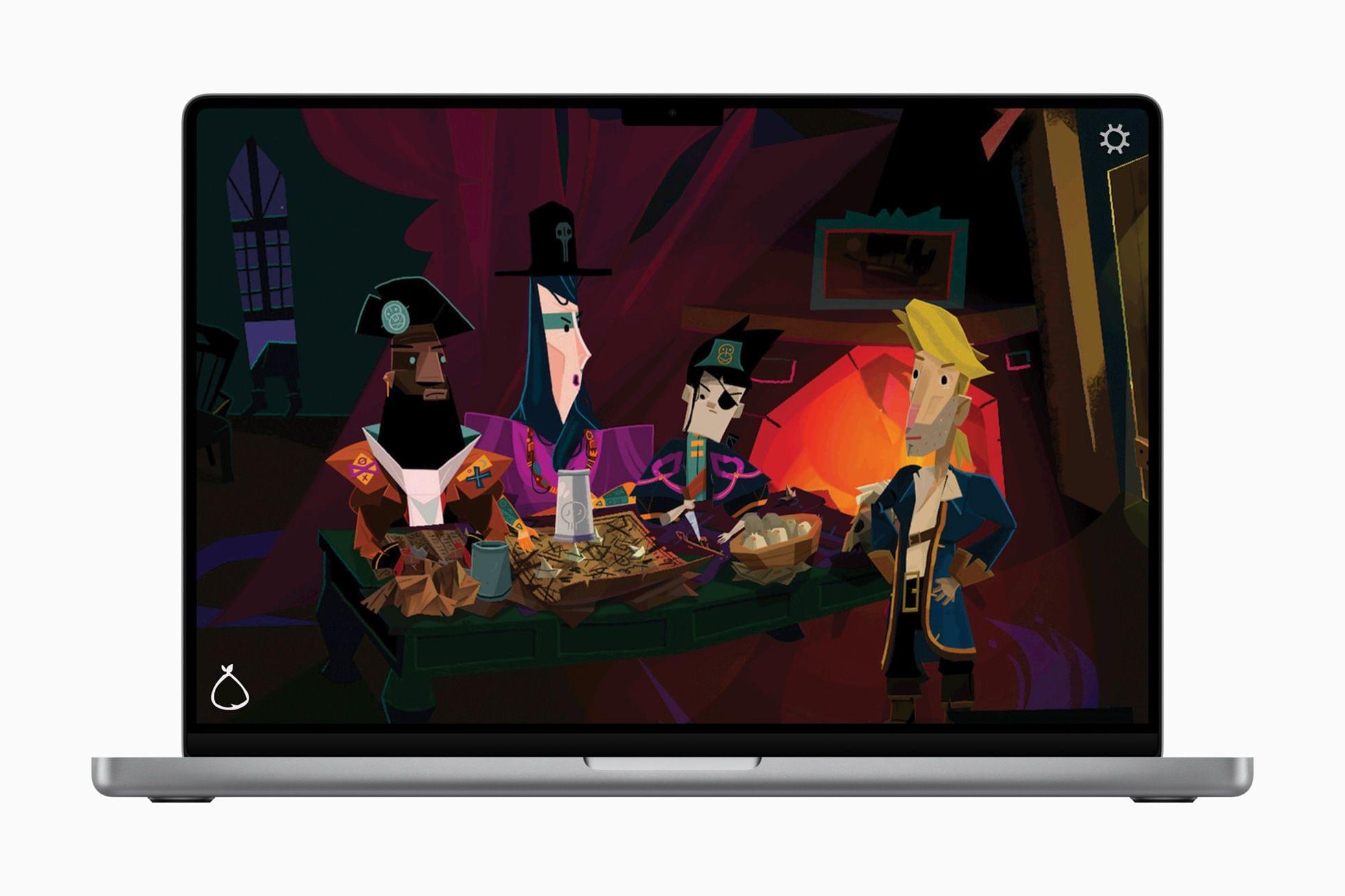
Return to Monkey Island is getting the Apple Arcade ‘+’ treatment too. As Apple describes it:
Return to Monkey Island+ is an unexpected, thrilling return of series creator Ron Gilbert that follows the legendary adventure games The Secret of Monkey Island and Monkey Island 2: LeChuck’s Revenge. The game continues the story of Guybrush Threepwood, his zombie pirate nemesis LeChuck, and his true love Elaine Marley. Return to Monkey Island+ is playable across iPhone, iPad, and Mac. Players will solve puzzles and explore the islands with a clever evolution of classic point-and-click adventure game controls.
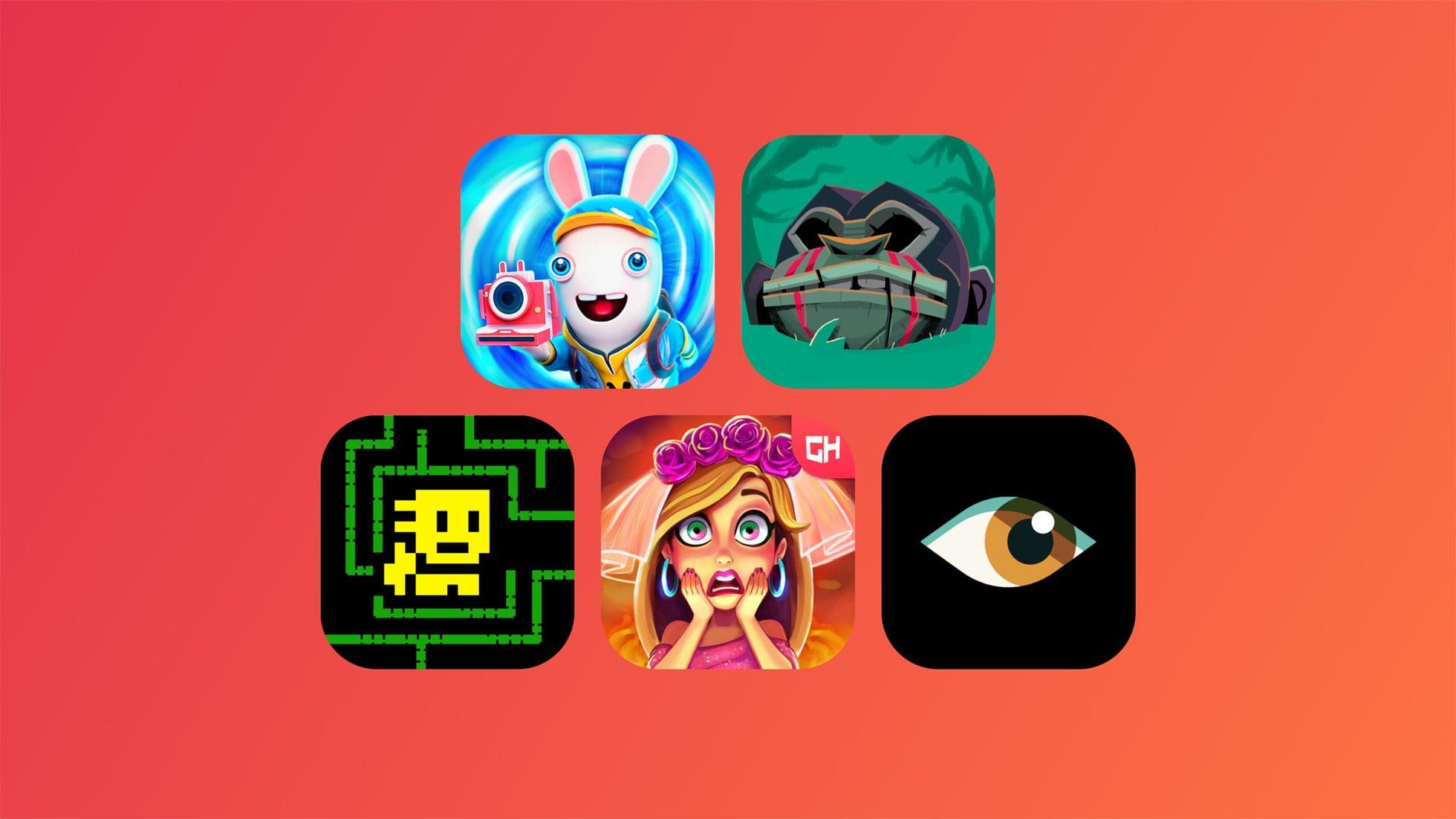
Anyone who grew up in the 90s on The Secret of Monkey Island should enjoy this game a lot. I’m also curious to try Tomb of the Mask+, a retro platformer.
I don’t agree that there is any “real” difference in prestige between mediums beyond ever-changing societal norms, all art is capable of rising to sit upon a pedestal. I also don’t agree that any art necessarily needs to rise up in that way, and games built for quick hit sessions or telling small and relatable stories are just as valuable to the culture as anything else. Apple Arcade launched with a lineup that seemed to make a statement aligning with that belief, and has since drifted away from it while Netflix Games has run with the baton.
That belief is exactly the vibe Apple Arcade started with and still has – to a degree. But it’s also a vibe that people seem to sense is fading. I hope not. As much as I enjoy AAA titles, there need to be places to showcase games from small studios and for indie ‘finds.’ I’d love Apple Arcade to continue to be one of those places.
According to multiple unnamed mobilegamer.biz sources, some game developers are unhappy with Apple Arcade, citing shrinking payouts and canceled games. No specifics about canceled projects are cited in the story. Nor are concrete revenue numbers shared. Moreover, the criticisms leveled by some developers were not universal, with some sources speaking favorably about their relationship with Apple. Clearly, however, not everyone who has worked on Arcade titles is happy.
The details of mobilegamer.biz’s story that I think are most interesting are the ones about the business terms Apple has struck with game developers. Those are details that developers seem to be contractually prohibited from talking about. I know because I’ve asked developers about how it works before. However, according to mobilegamer.biz, Arcade developers are paid an up-front fee and from a ‘bonus pool’ based on something called ‘qualifying sessions’:
“They have this opaque metric that they call a qualifying session, and bonus pool payments are made based on that,” said one source. “But no-one knows what a qualifying session actually is – it has something to do with if the game was launched, how long the player played for and how often they return. But it’s a black box, really.”
It will be interesting to see if those arrangements change in light of the purportedly declining revenue developers are earning and the money that Netflix is spending to attract games to its newish subscription-based videogame service.
We’re about three weeks away from the annual Game Developers Conference in San Francisco, and this story strikes me as an attempt to send a message to Apple by developers who feel their games have been abandoned by the service as it has evolved. Maybe Apple hasn’t been as clear with developers as some would like. However, it’s hard to imagine that game developers paying attention to Arcade are truly surprised by the projects it approves.
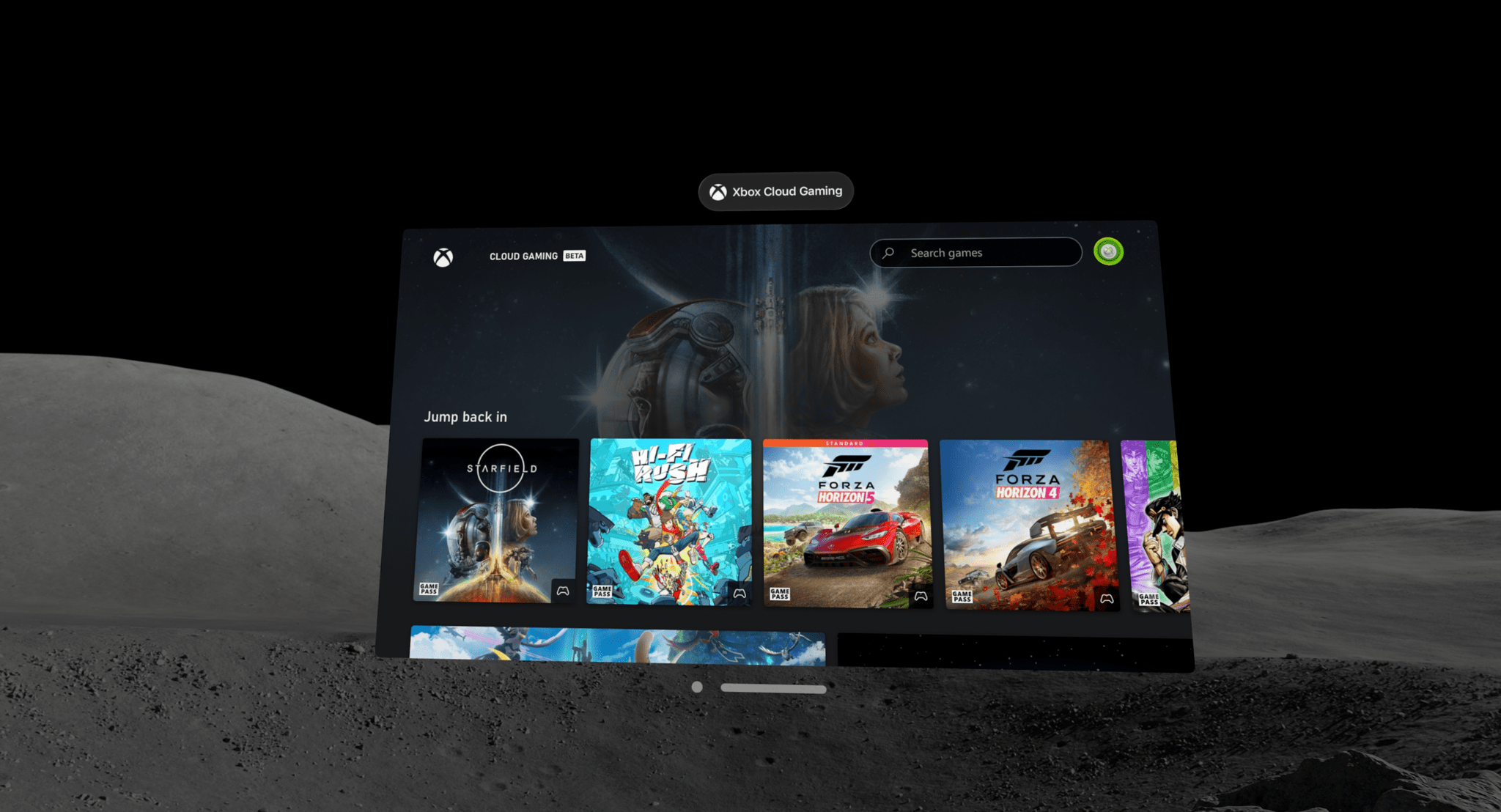
The lack of any kind of port significantly limits the type of gaming you can do in the Apple Vision Pro – or does it? Sure, even one USB-C port would make a big difference to gamers looking to play titles outside the App Store, but there is a surprisingly wide array of ways to play almost any game on the Vision Pro with the help of a combination of apps and hardware. The solutions run the gamut from simple to complex and span a range of price points. I’ve tried them all and have pointers on how to get started.
Apple announced that its Arcade game subscription service includes a dozen titles designed for spatial computing, along with over 250 total that are playable on the Apple Vision Pro.
Alex Rofman, Apple’s senior director of Apple Arcade, said in a press release that:
This is just the beginning of a new era in gaming, with players being fully immersed in stunning game worlds and interacting with games in their physical environment in amazing new ways. We’re leading the way in offering players unique spatial games on Apple Arcade that are only possible on Apple Vision Pro, and we’re excited to bring even more magical spatial gaming experiences to our customers soon.
I’ve played a little LEGO Builder’s Journey so far and it’s a lot of fun as a spatial experience, and I’ll be digging into more of these titles for a story on the site soon.
Today, Sega released Samba de Amigo: Party-To-Go, the latest incarnation of the rhythm game franchise, on Apple Arcade. Samba de Amigo debuted in 1999 in arcades, with a Sega Dreamcast version coming the next year. In those first versions of the game, you played by shaking a pair of maraca controllers to the beat of the music.
Party-To-Go has turned in the maracas in favor of touch gestures, controllers, and keyboards with a release that’s available through Apple Arcade on the iPhone, iPad, Mac, and Apple TV. Over the past several days, I’ve tried all but the Apple TV version of the game and have details and first impressions to share.
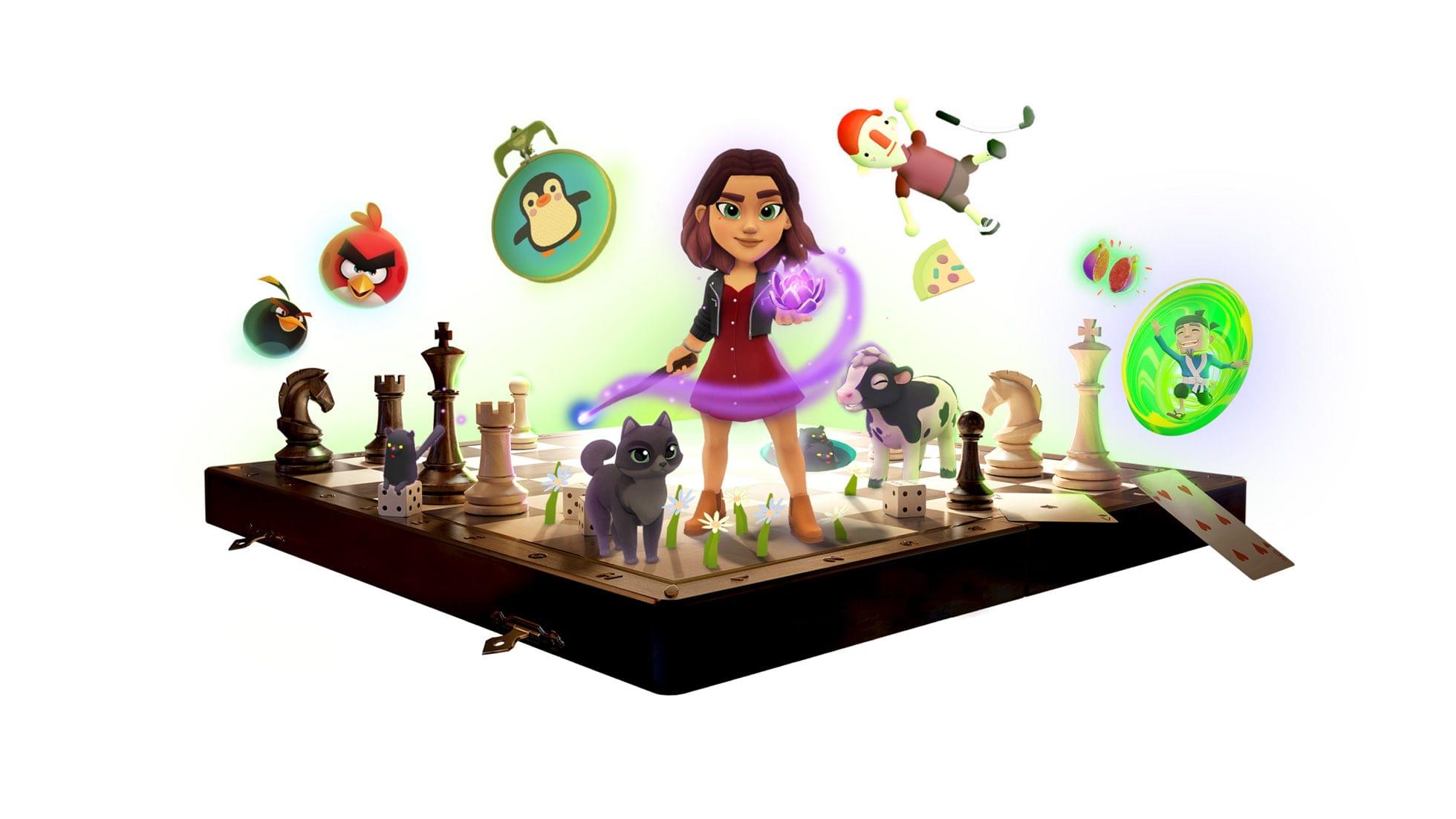
Not long ago, I linked to an in-depth profile of Netflix Games published by The Ringer. It seems Netflix has been busy getting the word out to more publications because not long after The Ringer’s post, Ash Parrish of The Verge published a story about Netflix Games from the perspective of its in-house studio, Night School, and Ripstone, an outside game developer that created the recently-released game, The Queen’s Gambit Chess.
Netflix’s gaming philosophy right now resembles a kind of patronage system. Netflix supplies its studios with resources, and they’re free to pursue whatever artistic avenue they want. This approach isn’t too far off from how game subscription services work, bringing Netflix in line with products like Xbox’s Game Pass and Apple Arcade.
Last week also saw the release of Return to Monkey Island on the iPhone and iPad. The game, which was released on consoles and Steam last fall, marks the comeback of the classic point-and-click adventure series and its creator, Ron Gilbert.
TouchArcade, which is one of the few sites to review the iOS and iPadOS versions of Return to Monkey Island was impressed:
Having now played Return to Monkey Island on basically everything but PS5, it shines on a portable. The iOS versions have controller support as well as touch support as I mentioned above, but so do the Steam Deck and Switch versions. Given the game looks, runs, and plays brilliantly on all portables I tried it on, I recommend getting it wherever you enjoy playing games the most. There is no definitive portable version because they are all excellent. My favorite version is definitely the iPad version on my iPad Pro.
If you’re a 90s gamer with nostalgia for the Monkey Island series, Return to Monkey Island sounds like a great way to revisit the series on modern hardware.
Spaceplan.
I’ve never been a big fan of clicker games. I find them too mindless for my tastes, but last week, I stumbled upon an update to Spaceplan, a weird and wonderful potato-planet themed clicker by Jake Hollands that debuted in 2017. With the update, Spaceplan runs on modern screens, adds haptic feedback, and refreshes other game elements.
At the start of the game, you need to press a button repeatedly to collect energy that can be traded for items that collect the energy for you. The catch is that items cost progressively more in collected watts as the game goes on.
Apparently, there’s a conclusion to the game, although I haven’t reached it yet. What’s drawn me into Spaceplan is the simple graphics, hypnotic electronic soundtrack, and dialogue that help build a story around an incredibly simple mechanic. As it turns out, sometimes a little mindless fun is just what I need to unwind, and Spaceplan delivers that perfectly.
Jelly Car Worlds.
Finally, I wanted to call out an update to Jelly Car Worlds, an Apple Arcade title. Jelly Car Worlds is an excellent reimagining of the original Jelly Car, which debuted about a decade earlier on the App Store. The unique physics of this cross between a racing game and platformer are incredibly fun. Worlds added a level editor, which was refined with last week’s release. The update also added the levels from the original Jelly Car game. According to TouchArcade, future updates are planned to add levels from Jelly Car 2 and 3, which will make this a great way to experience those classic levels and inspire the design of new ones in the level editor.
Game On is a periodic roundup highlighting the biggest news in gaming on Apple’s platforms. From the iPhone and iPad to the Mac and Vision Pro, we’ll cover the big-name games on Apple devices, along with notable industry and developer news.
Last week, The Ringer published an in-depth look at Netflix’s foray into videogame publishing, which, to this point, has primarily consisted of mobile games on iOS, iPadOS, and Android. The story goes back to 2017, when Netflix published a retro-style game tie-in with Stranger Things. Today, Netflix offers not only a sizeable and growing catalog of mobile games but has begun purchasing game studios like Night School, the makers of the critically acclaimed Oxenfree and the recently-released Oxenfree II. As Lewis Gordon, writing for The Ringer, explains:
Since acquiring Night School, Netflix has bought three additional existing studios outright; it has also established two, one in Helsinki and another in California. There are some 67 games in the Netflix library, playable through its iOS and Android apps; 86 more are in development, with 16 of those being made by in-house studios. Consequently, Netflix Games has swollen to 450 employees, headed up by VP of games Mike Verdu (a former Electronic Arts executive), VP of game studios Amir Rahimi (former president of mobile games company Scopely), and VP of external games Leanne Loombe (who joined from League of Legends developer Riot).
That’s a big catalog with an executive team in place that hints at Netflix’s long-term gaming ambitions. Gordon:
For the time being, Netflix is doggedly sticking to its mobile-first message: The company declined requests to interview Verdu and Rahimi, the two executives whose work will arguably bear fruit further down the line. Nor has it allowed access to anyone at its newly established studios in Helsinki or California, the latter of which is working on an all-new “AAA multiplatform game” led by game makers with considerable chops: Joseph Staten, a key creative on the Halo and Destiny franchises, and Chacko Sonny, former Overwatch executive producer.
However, it’s not clear where Netflix is heading. The company seems to be making a lot of smaller bets on multiple game categories, as Gordon explains:
Netflix’s mobile titles are a notably disparate bunch. Among others, they include a Hello Kitty rhythm game, a SpongeBob cooking game, and a handful of titles licensed from mobile juggernaut Gameloft, including arcade racer Asphalt Xtreme. There are mobile ports of prestige indies such as Kentucky Route Zero, Immortality, and Twelve Minutes, as well as a handful of similarly ambitious games that, if you were browsing for a TV show or movie, would be grouped under the “Only on Netflix” header: charming platformer Poinpy, open-world flying game Laya’s Horizon, and Ubisoft’s recent Valiant Hearts sequel. Finally, there are the adaptations of Netflix’s own IP: Too Hot to Handle, based on the salacious reality TV show; the aforementioned Stranger Things game; and Queen’s GambitChess, which will arrive on July 25.
Apple Arcade, another mobile subscription service, initially cultivated a slate of titles that shared an elegant, refined aesthetic and innovative interactivity (from vaporwave rhythm game Sayonara Wild Hearts to mechanical tinkering simulation Assemble With Care) before pivoting to more casual titles in an effort to mitigate so-called “churn” (i.e., the loss of subscribers). Netflix, by contrast, has aimed for a broad audience from the get-go. After all, the company’s remit couldn’t be wider: “We want to entertain the world,” states the marketing spiel on its website, an ethos reflected in its TV shows and movies. For every Roma there is an Extraction; for every Mindhunter, a Love Is Blind. Now, for every Laya’s Horizon there is a match-3 Stranger Things game.
One aspect of Netflix’s approach that is very different from Apple Arcade that I find fascinating is that it’s purchasing videogame studios to complement its in-house studio. When you step back, it’s an approach that’s similar to Apple TV+, which is both funding third-party shows that it publishes on its TV+ service and Apple Originals, which are created in-house. Whether that’s a formula that Apple could replicate for videogames, I don’t know, but I’d sure like to see it try.
Another fascinating aspect of Netflix’s videogame business is its expansion beyond mobile games. The mobile games it publishes are free to play with a Netflix subscription, but others are being published and sold on consoles and PCs, too. A good example is the recent release of Oxenfree II, which can be played on Apple and Android hardware for free by Netflix subscribers, but it’s also being sold on consoles and PCs for $19.99. It’s an interesting approach that adds value to a Netflix subscription but also offers outlets to play for people who don’t subscribe or prefer console and PC gaming experiences.
There’s a lot in Gordon’s story to think about and digest. Today, the number of Netflix customers who are playing its mobile games is tiny compared to the total number of subscribers. At the same time, Netflix is still clearly experimenting and in the very early days of testing the videogame waters. As a result, it’s hard to judge where the experiments might lead, but in a rapidly changing industry, it will be interesting to see if Netflix’s approach is the one that sticks.