

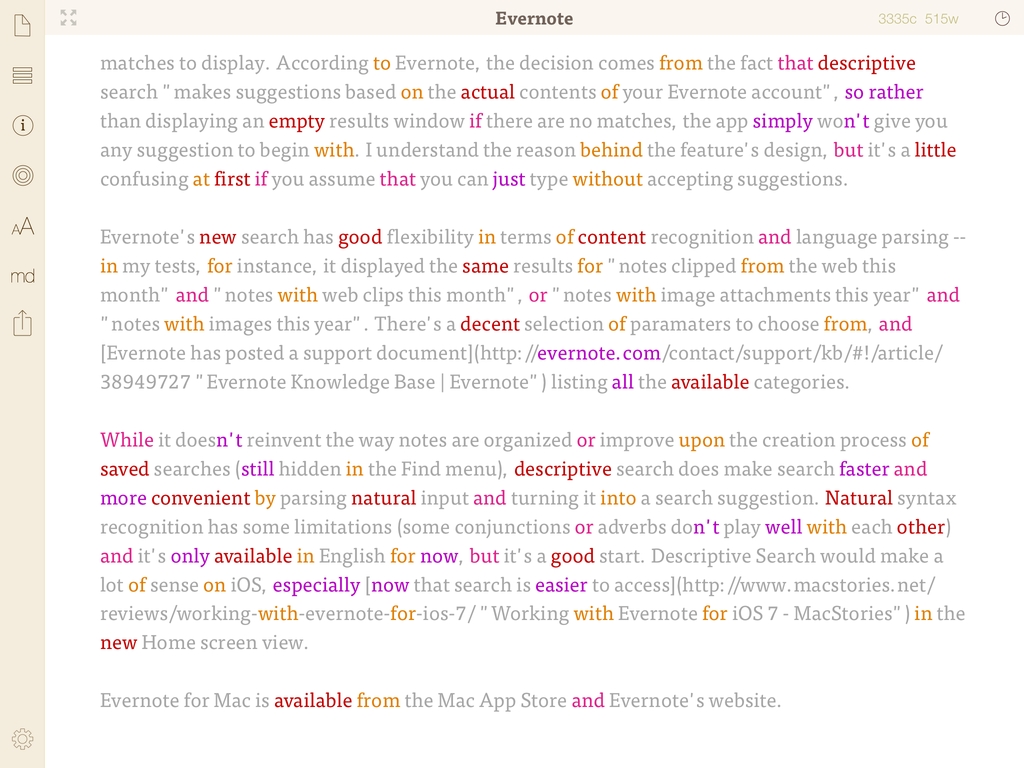
My iPad writing setup primarily consists of Evernote, Editorial, and WriteRight, three apps that I use to research, write & edit, and proofread my articles, respectively. For the past few months, I’ve been using Greg Pierce’s Phraseology 2.0 for iPad, which is out today on the App Store and which I consider a must-have companion app for people who write on the iPad and want to craft better text.
Efficient Writing On iOS with Phraseology 2.0
Collect and Share GIFs In Dropbox with GIFwrapped
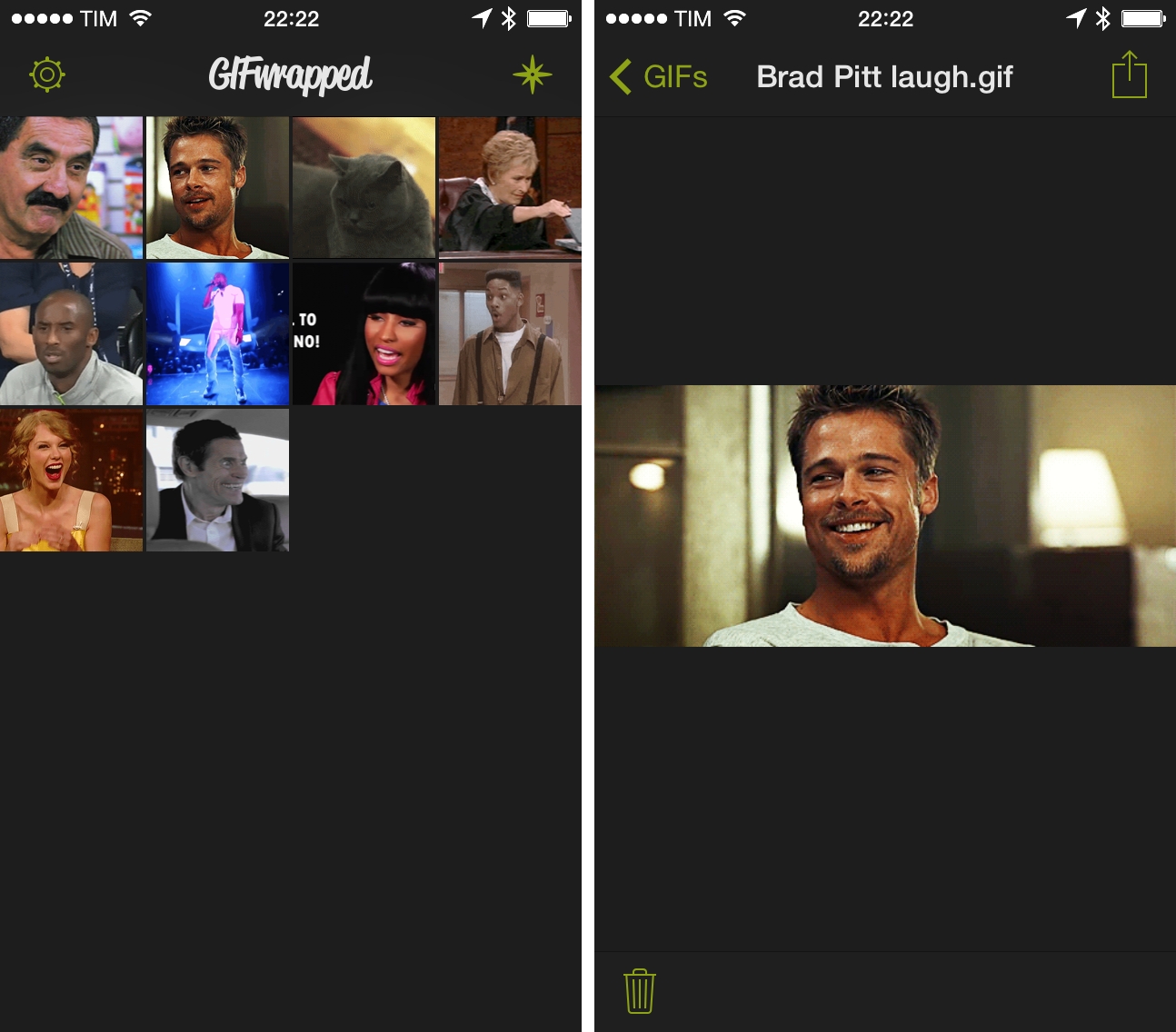
GIFwrapped, developed by Daniel Farrelly and brought to my attention by Casey Liss, is making me reconsider how I organize my collection of reaction GIFs.
Until today, I’ve stored my GIFs in Evernote, using tags to group them together and search to filter results. Just a few days ago, I noted that the improved note editor in Evernote for iOS makes for smoother GIF animations, but the sharing aspect remains one of my system’s shortcomings – when I want to get a GIF out of Evernote and send it to someone else, I have to upload it somewhere else. Evernote works as a GIF archiving tool, but it’s not optimized for it. Read more
Apple References In Futurama and The Simpsons→
With a combined 33 seasons between them, both Futurama and The Simpsons are awash with references to Apple. Some of these references take the form of biting commentary while others are much more subtle.
In compiling this list, I was lucky enough to chat with famed Simpsons writer Bill Oakley (seasons 4-8) and talented Simpsons director David Silverman (seasons 1-present). They were both gracious and kind enough to answer many-a-question and provide me (and you) with some behind-the-scenes information about the “how and why” behind some of the Apple references you’ll find sprinkled throughout this post.
Great work by Yoni Heisler at TUAW. #4 is a classic.
TAKE ACTION - Action Menu Generator For Launch Center Pro→
Nice work (and great name) by Jeff Mueller: starting from my idea for an action menu for Safari in Launch Center Pro, he made a web app to simplify the process of assembling the bookmarklet. You can choose from a set of emojis for icons, select one of the built-in actions (so you don’t have to write URL schemes), and hit Create Menu to generate a menu. It’s very simple and much better than writing code manually.
I hope that Jeff will add more app actions and emojis soon. Check it out here.
Mac Power Users 175→
Mac Power Users is one of my favorite tech podcasts, so when Katie and David asked me if I wanted to do a second episode with them, I immediately accepted.
We talked about iPad workflows, iOS automation, the future of iOS, photo management, and more. There are lots of links to apps and tools I use on a daily basis in the show notes, and I’m glad that the episode turned out well. You can listen here.
Evernote for Mac Gets Descriptive Search With Natural Language Support
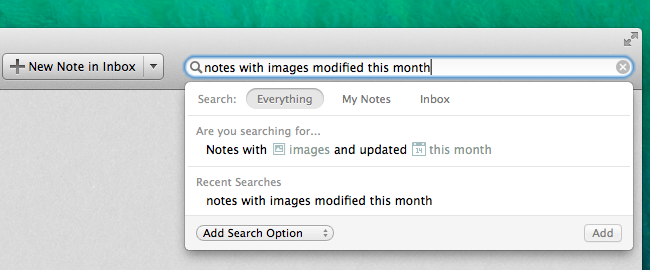
With an update released today, Evernote is bringing descriptive, natural language-based search to its Mac client. The feature, which can be activated from Evernote’s search bar, aims at making it easier to find specific notes using a natural input system for note names and content, as well as more advanced filters for date, location, device, and attachments.
Descriptive search is, essentially, a refined interface for Evernote’s existing search system, which has long enabled users to find notes by combining tokens in the search menu. Instead of clicking to choose search options and combine them, you can now type commands such as “notes created this month” or “notes with images and created this year” and Evernote will display a suggestion based on matching search results for your account. Read more
Jared Sinclair On Designing Unread→
Jared Sinclair:
Comfortable also means physical comfort, which is an aspect of mobile app design that designers often forget. Anyone with a new baby knows how convenient it is to be able to use an app with one hand. Some areas of the screen are hard to reach, especially on an iPhone 5 or later. Grip your phone in one hand observe the sweep of your thumb. It’s easy to reach objects in the center, but the navigation bar is too far away to reach without adjusting your grip. Although it’s tempting to jump to the conclusion that closer is always better, positioning an item too close to your hand can cause discomfort because of the way your thumb has to flex to reach it.
One of my favorite aspects of Unread. Check out Jared’s post for more details on his design process, as well as concepts he didn’t end up using.
Hoplite: A Mini Dungeon Turn-Based Strategy Game for iPhone and iPad
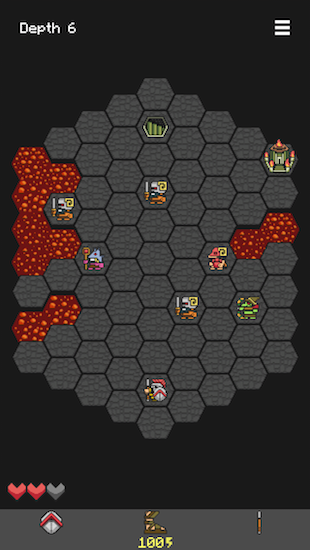
Each step feels more perilous than the last. As you dash over a pool of lava, you lunge to slay a demon archer, cornered and unprepared for the daring attack. Looking ahead it seems all but impossible to make the last jump, as demon footmen move to block the exit. Throwing your spear, you impale the dark beast, only to be greeted by a bomb that lands behind your feet. You bash away the bomb with your shield, taking out another demon as it explodes at a distance. Leaping across the last chasm, a lapse in judgement leaves you directly in the crosshairs of a second archer, who fires an arrow directly into your exposed side as you land.
And thus ends the quest for the Fleece.
This is Hoplite, where a pair of sandals, a trusty spear, sturdy shield, and three hearts are all that protect you from hordes of demons in the Underworld. Your quest is to recover the Fleece and make it out alive, but the journey is treacherous.
Safari Action Menu In Launch Center Pro
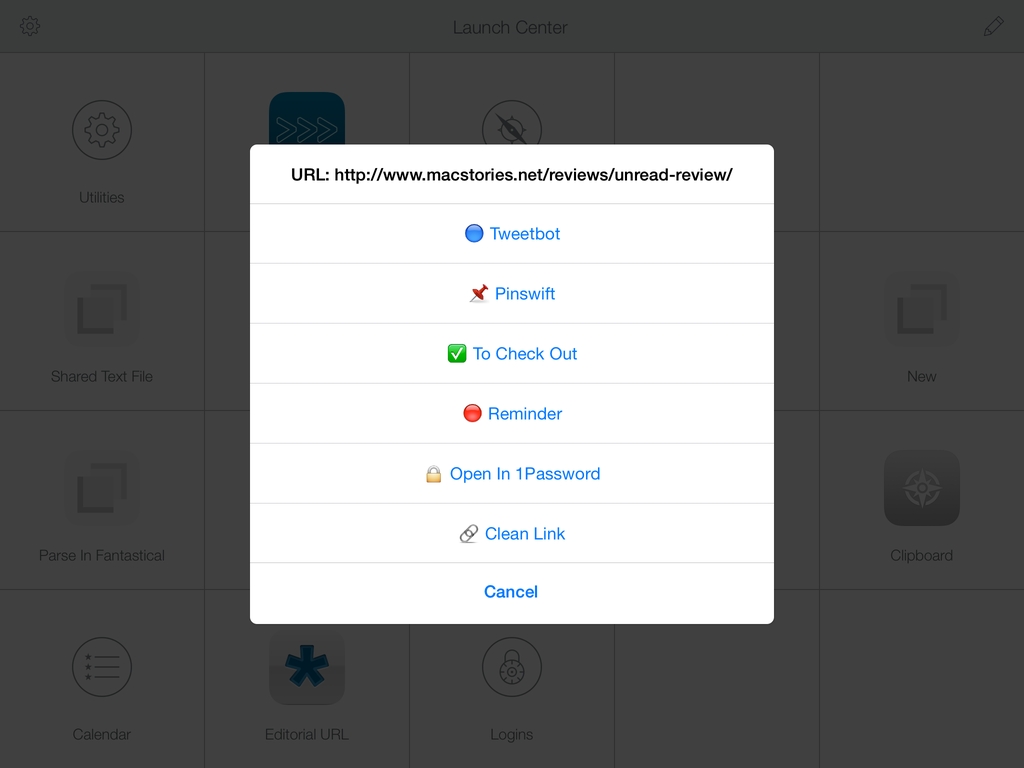
Last week, I was looking at the way I use Safari and save links to other apps and services, and I realized that I wanted a unified action menu to group some of my most used bookmarklets together. While this can be done by creating a bookmark folder in Safari, folders require too many taps on the iPhone and I’d like to have better visual differentiation between actions with unique icons for each one of them. That seemed like a good opportunity to test the capabilities of Launch Center Pro (now on the iPad as well) when it comes to lists and JavaScript, so I got to work.
A fair warning: Though my solution works, the code isn’t pretty. Until Apple improves the way apps can share information with each other, we’re stuck with hacks like URL schemes, JavaScript, and manual encoding. If you want to customize what I came up with, you’ll have to manually edit URL schemes and test everything on your own. If you’re not concerned about a bookmarklet’s prettiness, go ahead – I’m fairly satisfied with the results. Read more